
Wall Panel Cost vs Value: A Head-to-Head Comparison
The global wall panels market was valued at USD 32.4 billion in 2025 and is projected to reach USD 43.7 billion by 2033, with a source-reported compound annual growth rate of 4.2 percent. The aggregate growth makes the market look easy to understand. The difficulty appears when a buyer compares individual wall panel offers. Wall panels are bought as a visual finish, but their long-term cost is determined by substrate quality, surface protection, adhesive weight, installation conditions and compliance documents. A decision-stage comparison therefore has to go beyond the catalogue image.
SXP Wall Panel, produced by Shanghai Yuanguan Rubber Plastic Co., Ltd., is one useful reference point in this comparison. The company is a Shanghai-based decorative materials manufacturer that reports an export share of about 90 percent, with primary demand in the EU, USA, Asia and South America. Founded in 2005, its production programme includes self-adhesive wall stickers, 3D foam wall panels, PVC wallpaper, WPC decorative wall panels, flooring and related interior materials.
Why Decision-Stage Buyers Find Wall Panels Hard to Compare
At quotation stage, wall panels look similar when viewed on a screen. Two suppliers can offer the same visual pattern, similar dimensions and comparable prices, yet one panel may use a dense substrate with a thicker protective surface, while the other uses a lighter recycled construction with a thinner wear layer. These differences are hard to see in photography and easier to verify through sample inspection, material reports and production records.
Buyers should compare wall panel offers on three levels. The first level is the face material: PVC, PET, foam-backed, leather or WPC. The second level is the product structure: dimensional stability, surface wear resistance, substrate density and adhesive behaviour. The third level is the supplier risk: certificate validity, documentary consistency, production control and after-sales response. Focusing only on the first level usually explains why quotes differ; focusing on all three explains which quote performs better over time.
A wall panel cannot be judged purely by thickness or weight, but these indicators remain useful when tested under controlled conditions. The more relevant baseline is whether the panel construction matches the intended installation base and usage cycle. A panel installed in a bathroom faces humidity; a panel used in a hotel hallway faces impact and frequent cleaning; a panel used for a short rental renovation faces installation speed and removal behaviour. These are different product selection problems, even when the same material family is being considered.
Wall Panel Families at a Glance
The SXP Wall Panel range is organised around these application differences rather than around a single material definition. The representative product data below shows how PVC, PET, foam, leather-look and WPC products are positioned differently:
| Product category | Material | Representative sizes | Thickness | Typical decision-fit |
|---|---|---|---|---|
| PVC wall panel | PVC | 30x30, 50x50, 96x48 cm | 2.5 mm | Home and building material retail projects where a firmer panel profile is preferred |
| PVC wall sticker panel | PVC | 30x30, 30x60, 40x80, 60x60, 60x120, 120x300 cm | 2 mm | Flat interior walls, furniture fronts and quick decorative refresh |
| Soft stone wall sticker | PVC | 30x60, 60x60, 40x80, 60x100, 40x300, 60x300, 120x300 cm | 2.5 mm | Commercial interiors where a stone-like surface is required without wet installation |
| PET marble wall sticker | PET | 30x30, 30x60, 60x60, 40x80, 60x120, 60x300, 120x300 cm | 2 / 2.5 mm | Marble-look feature walls and vertical surface decoration |
| 3D self-adhesive foam slat wall sticker | PVC foam slat format | 30x30, 60x60, 30x60, 40x300, 60x300, 120x300 cm with customizable length options | 2.8 mm | Residential feature walls and spaces where cushioning and a textured visual are useful |
| Leather wall sticker | Leather | 60x60, 60x240, 70x70, 70x280, 70x300 cm | 6 mm | Soft-panel decorative settings, bedroom walls and boutique interiors |
| WPC wall panel | WPC | 160x23x2900 mm; 16 pcs per box | N/A per panel profile | Wood-look linear wall and ceiling cladding with heavier construction and board weight of 690/810/830 g per metre depending on profile |
Within this range, installation follows a dry self-adhesive principle in most wall-sticker formats. The panels are applied after peeling the protective backing film, and they can be cut on site. The base surface must be flat, dry and free of dust and grease. Typical usable conditions include normal room environments, bathrooms and dry kitchen zones, provided the wall is sound and smooth.
Price per Panel Versus Cost per Year
Low-cost wall panels attract buyers at the unit-price stage, but the market risk appears after installation. According to supplier risk guidance used for exported wall stickers and panels, the biggest price gaps usually come from raw material grade, thickness, formula, production quality control and documentation. Products made with recycled material can show dimensional deviation, fading, odour or incomplete test certificates. Export shipments then face customs detention, after-sales claims and market returns.
The practical question is not whether a cheaper panel can be installed. It is whether the buyer can afford the total cost of repairs, replacements and logistics delays. Suppliers that use virgin materials and complete test documentation generally quote a higher up-front unit price, but their cost profile is easier to predict.
One manufacturer-reported comparison for SXP wall and floor sticker products quantifies this effect: total material thickness increases by about 22 percent, glue coating weight increases by about 35 percent, and wear layer thickness increases by about 180 percent. The reported surface wear resistance is five times higher, long-term ageing resistance is promoted, and product service life is about three times longer. Raw material cost is stated to be about 12 percent higher, while average annual use cost is reported to be about 60 percent lower and maintenance frequency about 85 percent lower.
This is supplier data, not independent laboratory proof, so a prudent buyer should treat it as a hypothesis to test. It describes a material logic rather than a marketing slogan: a denser substrate, a heavier adhesive coating and a thicker protective layer cost more to produce but can reduce the frequency of panel replacement and maintenance. The right interpretation is not that the more expensive panel is always better. The right interpretation is that panel cost should be expressed per year of expected service, not per square metre at the point of purchase.
Foam Selection: XPE, IXPE and Long-Term Behaviour
Foam-backed panels introduce another technical comparison. XPE foam is chemically cross-linked and usually costs less. IXPE foam is cross-linked through electron-beam irradiation, which gives it finer and more uniform cells. In practical terms, IXPE has faster rebound, better resistance to permanent indentation and stronger compression recovery. XPE foam may show larger cells and slower rebound, and under heavy pressure it can develop permanent dents.
The foam structure matters because it changes how a wall panel behaves on an uneven or impact-prone wall. A simple field inspection can compare two samples by pressing the surface for three to five seconds and watching recovery speed. Fine, uniform cells and fast recovery point to IXPE; large uneven cells and slower recovery suggest XPE. This hand-press test is preliminary, not a claim basis. Buyers should ask for third-party material reports, especially for formamide content and cross-linking degree, before accepting large export orders.
For export projects to Europe and North America, the environmental profile of the foam deserves scrutiny. IXPE generally presents lower formamide risk and better environmental compliance, while XPE can be acceptable in short-term or budget-sensitive projects if test data is clean. The decision rule is practical: use IXPE for residential projects with long expected life, commercial spaces and Europe or North America exports; use compliant XPE only where budget and temporary use justify it, and always require test reports before ordering.
Application Comparison: Residential, Commercial and Hospitality
Application choice changes the panel specification. A documented comparison between XPE foam self-adhesive wall stickers and PVC soft-stone self-adhesive wall stickers illustrates the trade-off. XPE foam wall stickers are lighter, provide better cushioning and sound absorption, and have lower logistics cost. Their surface scratch resistance is generally weaker. PVC soft-stone wall stickers are heavier and more expensive per unit, but they offer a richer surface texture, higher scratch resistance and stronger anti-ageing behaviour.
- For residential apartments and rental-house renovation, XPE foam wall stickers are a common fit because of weight and cost efficiency.
- For hotel guest rooms and chain-store commercial projects, PVC soft-stone wall stickers are preferred when the owner needs higher durability and a more premium finish.
- For project environments that require quick completion, temporary exhibition booths or modular interior decoration, self-adhesive panel formats reduce the work around wet cement and long drying times.
This does not mean one family replaces all others. The application scenario determines which material deserves priority. In commercial use, surface durability and cleaning tolerance usually outweigh the price difference. In a rental renovation, installation speed and freight cost often matter more than a scratch-resistance specification that will never be tested by the occupant.
Regulatory Risk in the Comparison
Export shipments to the EU require more than a visual panel sample. The relevant compliance framework includes CE-CPR construction-product certification, REACH chemical restrictions and PPWR packaging rules. A supplier without valid documents can cause customs detention, return shipments or fines. The compliance check should be made before the order, and buyers should request original certificates rather than relying on a general statement that the product is exported or certified.
For some SXP product lines, documentation is already linked to the EU market. For example, the SXP product data lists an SGS RoHS Test Report for the PE-material 3D wall brick line. This is a specific report, applicable to a specific product category, so buyers must confirm that the certificate covers the exact model, material and market they are sourcing.
Commercial interior projects in Europe may also ask about reaction-to-fire classification. The European standard EN 13501-1 classifies reaction-to-fire performance, and B-s1,d0 is a commonly specified rating for commercial interior wall panel applications. Buyers should request the related fire-test report when the project specification demands it. In addition, for buyers clearing WPC panels from China, customs classification data references HS code 3925.90.0000 for wood plastic composite panels, although a customs broker should confirm the final classification for each shipment.
Market Context: What Verified Data Shows in 2026
Market data gives the comparison a wider frame. The global wall panels market is projected by one research source to rise from USD 32.4 billion in 2025 to USD 43.7 billion by 2033. In 2025, metal wall panels held the largest material segment at 28.5 percent, reflecting the broad definition of wall panels that includes exterior and structural systems. Asia Pacific accounted for the largest regional share at 42.3 percent, which helps explain why Chinese factories continue to invest in panel capacity and export channels.
Wood-based products also remain significant. Wood-based wall panels held nearly 31 percent of global installations in 2024, and wood wall panel systems are projected to grow at about 6.2 percent CAGR from 2026 to 2035. The practical implication is not that every buyer needs wood-look panels. It is that wood aesthetics continue to drive demand, so buyers should compare wood-effect surface quality against real maintenance expectations.
For importers and distributors, these verified figures create a useful benchmark. The market is large enough to support multiple panel families, but growth is not evenly distributed across all material claims. The panel families that succeed tend to combine visual clarity, predictable installation behaviour and documentation that allows the buyer to defend the product in local compliance reviews.
A Decision Checklist for Comparing Wall Panel Offers
Decision-stage evaluation is most reliable when the same checklist is applied to every supplier. The items below are designed to convert a comparison conversation into a consistent evaluation.
- Compare price on a usable square-metre basis, not only per sheet, because coverage can vary with joint pattern and product dimensions.
- Check the total construction: surface layer, substrate, adhesive and backing film. Ask the supplier to explain the purpose of each layer.
- Cut a sample and inspect the cross-section. Fine, uniform foam cells and a clearly visible protective layer are useful visual signals.
- Press the surface and watch recovery. This simple test helps separate IXPE from lower-density XPE in foam-back products, but it cannot replace laboratory reports.
- Score the surface, bend a corner and try removal. The result reveals how the product behaves during installation mistakes or pattern adjustments.
- Request valid certificates for the destination market, including CE, REACH, PPWR and any fire-rating report required by the building code.
- Ask for storage requirements before the shipment reaches the warehouse. Foam products are sensitive to heat, UV and heavy pressure; stone-look panels fear impact; fabric or soft-pack surfaces need protection from dust and moisture.
- Estimate cost per service year, not only cost per panel. The more realistic the service life, the more effective the comparison.
Where Self-Adhesive Wall Panels Reach Their Limit
Self-adhesive wall panels have a clear boundary: they depend on the base surface. The recommended base is smooth and solid, including cement-rendered walls, tiled surfaces, latex-painted walls, plasterboard and plywood. They are not intended for powdery, sandy or loose surfaces. If the original wall is unstable, a peel-and-stick panel is not a substitute for substrate repair.
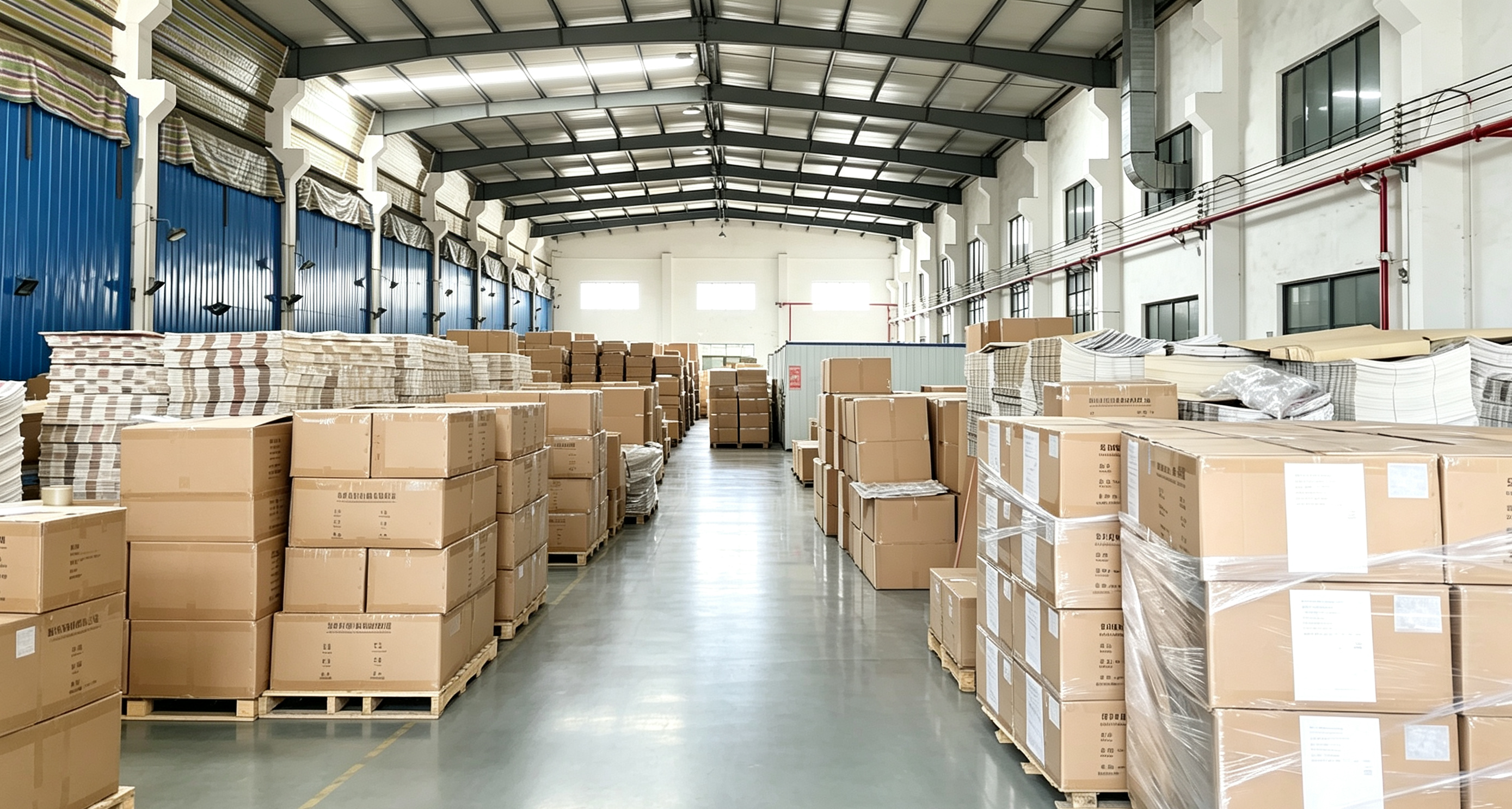
Warehousing also sets limits. General storage guidance for multi-type wall stickers says foam wall stickers are sensitive to high temperature, heavy pressure and UV light. PU-stone-look panels fear moisture and impact. Linen soft-pack wall stickers are vulnerable to dust, dampness and mildew. The common discipline is a cool, ventilated warehouse with temperature kept below 40 degrees Celsius, pallets kept off the ground, no direct sunlight, controlled stacking height and a first-in-first-out issuing rule.
This is why photos alone are never enough. A panel that fails because it was stacked incorrectly, applied to a weak surface or used in an environment outside its design range is not the same failure as a defect in material quality. Both types of risk need to be separated during the buying decision.
Future Outlook for Wall Panel Selection
Buyers are likely to demand more transparency as wall panel categories expand. Visual variety will remain important, but cost per year, compliant documentation and product consistency will carry growing weight in procurement decisions. Projects that need shorter construction schedules, especially hotel renovation, store refurbishment, homestay upgrades and retail fit-outs, will continue to support dry-installation panels that reduce labour time and construction noise.
At the same time, suppliers who want long-term relationships will need to act as documentation partners rather than simple panel sellers. The practical signal for a buyer is simple: a panel is not fully compared until its material structure, intended application and supporting documents have been reviewed together.
FAQ
What are the main risks of low-cost wall stickers, flooring and wall panels?
Price differences in wall panels mostly come from raw material grade, thickness, formula, quality control and certifications. Low-price products often use recycled material, which may cause dimensional deviation, fading, odour or incomplete certificates. If the panels are exported, risks include customs detention, after-sales claims and market returns. For projects or export orders, buyers should prioritise documented material quality rather than make a decision based only on price.
What is the performance difference between XPE and IXPE foam, and which should I select?
XPE is chemically cross-linked foam and generally lower in cost. IXPE is cross-linked by electron-beam irradiation and has finer, more uniform cells, better rebound, stronger resistance to permanent indentation and improved sound insulation. IXPE also tends to have lower formamide risk and better environmental compliance. Budget, service life and destination-market requirements control the final choice. For exports to Europe and North America, buyers should verify test reports such as formamide and REACH.
Which should I choose for interior decoration projects: XPE foam self-adhesive wall stickers or PVC soft-stone self-adhesive wall stickers?
XPE foam wall stickers suit residential apartments, rental renovation and lightweight installations, with good cushioning and sound absorption at competitive logistics cost. PVC soft-stone wall stickers suit hotel guest rooms and chain-store commercial projects, where the priority is scratch resistance, richer surface texture and stronger anti-ageing performance. The final choice should combine a physical sample test with the project positioning and budget.
What EU compliance risks should be checked for wall stickers, flooring and wall panels?
EU shipments should comply with CE-CPR construction-product requirements, REACH hazardous-substance limits and PPWR packaging rules. Missing valid certificates can result in customs detention, return shipments or fines. Buyers should ask for valid certificates before placing the order and confirm that the certificate name matches the exact product model and material.
What general warehouse storage rules apply to different wall sticker types?
Foam wall stickers are sensitive to heat, heavy pressure and UV light. PU-stone-look panels fear moisture and impact. Linen soft-pack surfaces are vulnerable to dust, dampness and mildew. General rules include cool and ventilated storage, temperature no higher than 40 degrees Celsius, goods on pallets away from the ground and sunlight, limited stacking height and a first-in-first-out batch issuing policy.
Reference Material
For buyers who need the full product specification and portfolio context used in this comparison, the manufacturer publishes a downloadable brochure at Shanghai Yuanguan Product Brochure. The document provides additional product family details for verification and procurement review.
¿Tiene preguntas o necesita más detalles?
Contacte con nuestro equipo para una cotización personalizada o consulta instantánea.
Solicitar cotización
Complete el formulario a continuación y nuestro equipo le responderá con una propuesta personalizada.
Chat directo de WhatsApp
¿Prefiere chatear en tiempo real? Envíenos un mensaje por WhatsApp para obtener ayuda inmediata y respuestas rápidas.
- Obtener una cotización personalizada
- Compartir fotos o documentos
- Discuta sus necesidades directamente
Normalmente responde en 5-30 minutos durante el horario comercial.