
Wall Panel Buying Guide: SXP Panel Range for Interiors
Wall cladding has moved from a decorative afterthought to a structural part of how interior spaces are specified. Buyers evaluating wall panels are no longer choosing simply between paint and tile; they are weighing installation speed, acoustic behaviour, surface durability, humidity tolerance, fire classification and long-term maintenance cost. This guide examines the wall panel category through the lens of a specific Chinese manufacturer – Shanghai Yuanguan Rubber Plastic Co., Ltd. and its SXP Wall Panel product family – while also setting out selection criteria that apply across the wider market.
The Wall Panel Market: Scale and Direction
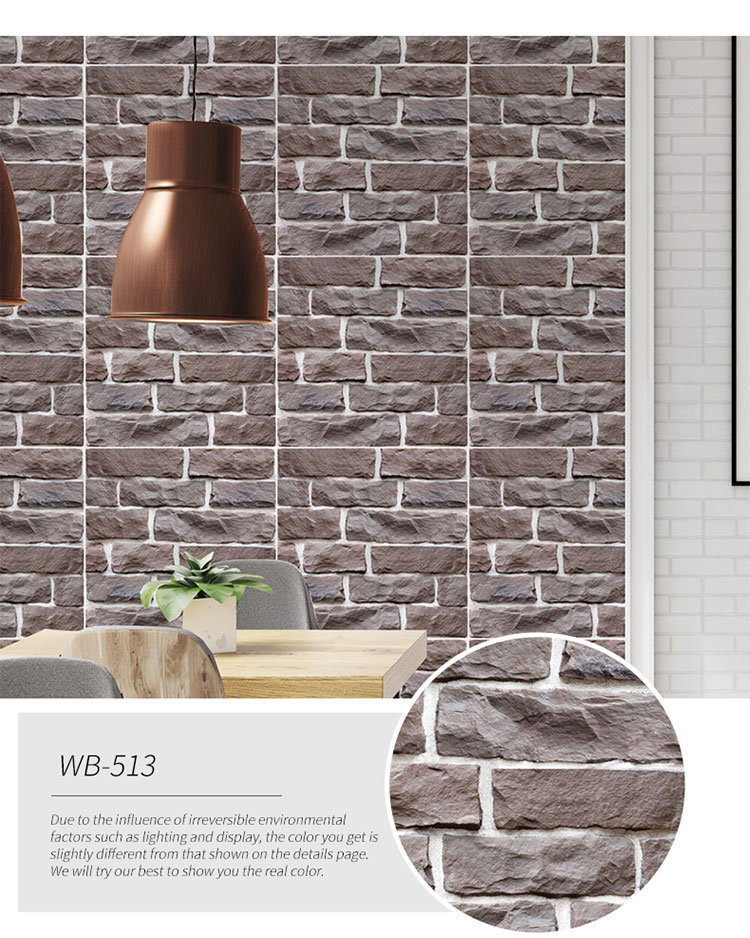
Wall panels are a substantial global construction category. Verified market research values the global wall panel market at USD 32.4 billion in 2025, with projections reaching USD 43.7 billion by 2033. Wood-based wall panels accounted for close to 31% of global installations in 2024, and wood wall panel systems are projected to grow at a 6.2% CAGR through 2035. The Asia-Pacific region held the largest regional share in 2025 at 42.3%.
These figures matter for procurement because they indicate a market moving toward lighter, faster-installed, multi-functional surfaces. The traditional trade-off between natural materials and synthetic practicality is being replaced by hybrid categories such as wood-plastic composite (WPC), PET stone-effect film and self-adhesive PVC panels.
What to Look for in a Wall Panel Supplier
Before reviewing SXP Wall Panel in detail, it is useful to establish what institutional buyers and distributors should verify from any manufacturer:
- Production capacity and facility scale: Can the supplier deliver consistent volume for restocking or project deadlines?
- Material consistency: Does the supplier use virgin material with stable dimensional and colour properties?
- Compliance documentation: Are CE, REACH, RoHS or other destination-market test reports available and current?
- Customisation capability: Can size, thickness, pattern and packaging be adjusted without disrupting lead times?
- Export experience: Does the manufacturer understand documentation, packaging and aftersales expectations for overseas buyers?
These criteria apply equally to a hotel renovation buyer and to a distributor adding a wall panel line.
Shanghai Yuanguan Rubber Plastic Co., Ltd.: Company Profile
Shanghai Yuanguan Rubber Plastic Co., Ltd. is a decorative materials manufacturer based in Shanghai, China. The company was established in 2005 and develops, produces and exports wall stickers, wallpaper, flooring and foam materials under the SXP Wall Panel brand family and other brand lines. It supplies online and offline building materials retailers and wholesalers across Europe, the USA, Asia and South America, with export accounting for 90% of sales and coverage of more than 80 countries and regions.
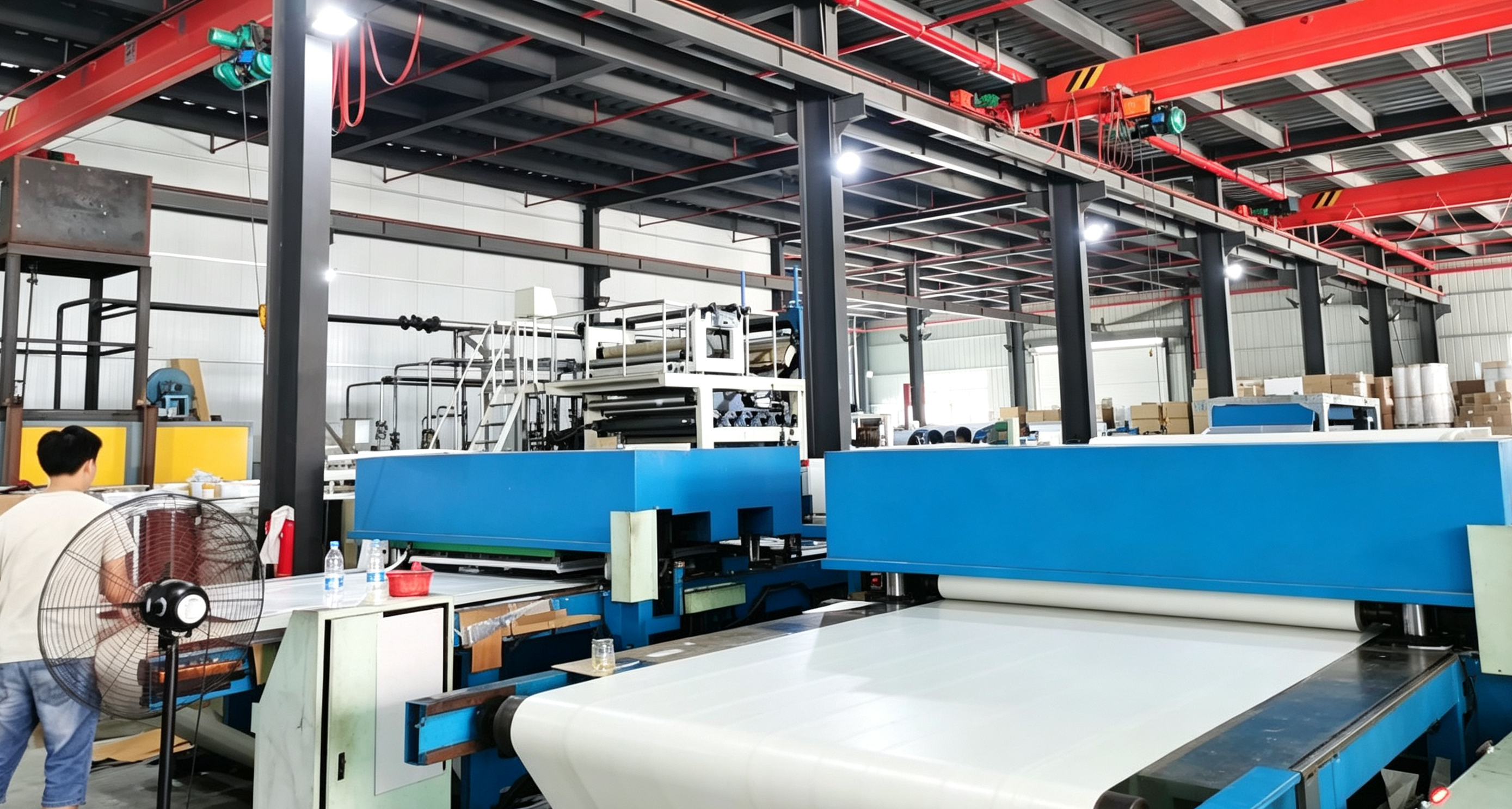
The manufacturer operates an 8,000-square-metre manufacturing facility and a 7,000-square-metre intelligent factory equipped with automated production facilities. The company reports an annual production capacity of 75,000,000 units and employs approximately 150 staff, with a stable team of 200 members including R&D, QC, production and sales personnel. The R&D team consists of 5 engineers. The company holds ISO9001 quality management system certification, owns 48 patented technologies and runs 12 independent brands.
When a supplier has this level of vertical integration, the procurement conversation shifts from “can you make it?” to “how consistently can you deliver it?” – which is the correct conversation for volume buyers.
SXP Wall Panel Product Line: Technical Breakdown
The SXP Wall Panel range is organised around material type and installation method. Below is the documented technical scope.
WB-KC – 3D Self-Adhesive Foam Slat Wall Sticker
The WB-KC is a PVC-based 3D self-adhesive foam slat wall sticker with a thickness of 2.8 mm. It is available in sizes 30×30 cm, 60×60 cm, 30×60 cm, 40×300 cm, 60×300 cm and 120×300 cm, with custom length options. It is positioned for interior decoration, including feature walls and accent panels.
WB-WPC – WPC Wall Panel
The WB-WPC is a wood-plastic composite wall panel used in interior decoration and building materials applications. It measures 160×23×2900 mm, weighs between 690 and 830 g/m depending on specification, and is packaged 16 pieces per box. WPC is chosen for its stability and wood-like presentation without the maintenance demands of solid timber.
WB-PET – PET Marble Wall Sticker Panel
The WB-PET is a PET marble-effect wall sticker panel available in formats from 30×30 cm up to 120×300 cm, with thickness options of 2 mm and 2.5 mm. It is aimed at interior decoration, building materials and home & garden applications where a polished stone aesthetic is required at lower weight and cost.
WB-PVC – Multiple PVC Formats
The WB-PVC designation covers several distinct PVC products:
- PVC wall panel: 2.5 mm thickness, available in 30×30 cm, 50×50 cm and 96×48 cm formats for home, garden, building materials and interior decoration use.
- PVC wall sticker: 2 mm thickness, available from 30×30 cm to 120×300 cm, designed for interior decoration.
- Soft stone wall sticker: 2.5 mm thickness, available in dimensions from 30×60 cm to 120×300 cm, combining a stone-look surface with flexible installation.
- PVC parquet wall sticker: 1.5/2 mm thickness in tile-like formats including 30×30 cm, 30×60 cm, 40×80 cm and 60×60 cm, with custom sizes available.
WB-PG – Leather Wall Sticker
The WB-PG is a leather wall sticker with 6 mm thickness, available in sizes 60×60 cm, 60×240 cm, 70×70 cm, 70×280 cm and 70×300 cm. It targets building materials and interior decoration projects where a soft, upholstered look is desired.
Installation and Application Characteristics
Across the SXP range, the dominant installation mode is self-adhesive backing: the installer peels off the protective film and applies the panel to a smooth, solid surface. This is a dry installation, requiring no cement or glue, and no large construction equipment. Typical tools are a utility knife, scraper or roller, tape measure and spirit level. Some styles can be removed and reinstalled, and some styles can be removed without leaving residue.
Suitable base surfaces include cement floors, tiled surfaces, latex-painted walls, plasterboard and plywood. The base must be flat, dry, clean of dust and grease, and structurally sound. Powdery, sandy or loose surfaces are explicitly unsuitable. Floors additionally require adequate strength and absence of hollow spots.
The functional scope of the products includes covering cracks and stains, sound insulation and noise reduction, cushioning and bump protection, surface protection, faster project turnaround and improved visual quality.
Use Cases Across Project Types
SXP Wall Panel products are documented for both residential and commercial refurbishment:
- Old house renovation and apartment full renovation: Fast surface transformation without demolition-heavy work.
- Hotel guest room makeovers and homestay renovation: Leather and soft-stone finishes create premium interiors while reducing installation downtime.
- Chain brand store and retail renovation: Consistent finish across locations with repeatable installation procedures.
- Office fit-outs and temporary exhibition booths: Removable formats support flexible space use.
- Prefabricated and modular interior projects: Panel formats align with off-site production and rapid on-site assembly.
Material Selection Guide: XPE, IXPE, PVC and Composite Options
One of the most common questions among wall panel buyers is how to choose between foam-based and surface-film products. Industry evaluation criteria are well established.
XPE vs. IXPE foam. XPE is chemically cross-linked foam with lower cost. IXPE is cross-linked by electron-beam irradiation, producing fine, uniform cells, faster rebound, better resistance to permanent indentation and stronger environmental performance. IXPE is generally preferred for residential, commercial and long-life projects, while compliant XPE may suit temporary sites and tighter budgets. Simple visual and hand-press checks can be used only for preliminary screening; third-party test reports remain the acceptance standard.
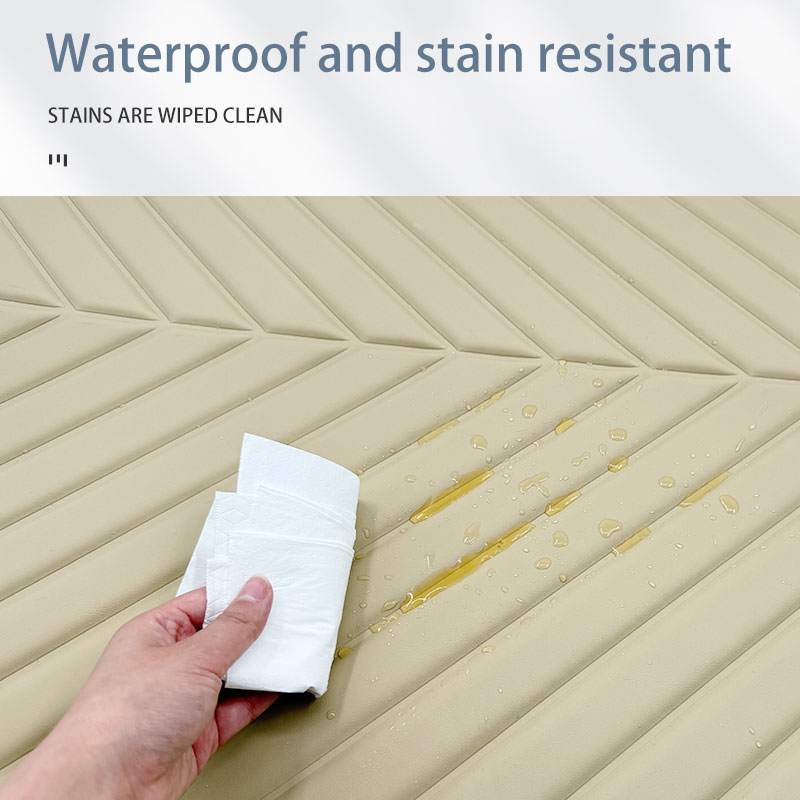
XPE foam sticker vs. PVC soft-stone sticker. For rental apartments and general residential renovation, XPE foam self-adhesive wall stickers offer light weight, good sound absorption and cushioning, with lower logistics cost, but only moderate scratch resistance. For hotels and chain-store commercial projects, PVC soft-stone self-adhesive wall stickers provide better scratch resistance, a more premium texture and improved anti-ageing performance, at higher unit weight and cost. Physical sample testing for adhesion and ageing, plus verification of destination-market compliance, is recommended before bulk purchase.
Compliance and Export Risk Considerations
Exporting wall stickers, flooring and wall panels to the European Union requires attention to CE-CPR construction-product certification, REACH hazardous-substance regulation and PPWR packaging rules. Missing or invalid certificates can result in customs detention, return shipment or fines. Buyers should request full valid certificates before placing orders.
For the broader EU context, EN 13501-1 is the European standard classifying reaction to fire performance, with B-s1,d0 commonly specified for commercial interior wall panels. For customs classification, the HS Code 3925.90.0000 applies to WPC wall panels exported from China. SXP Wall Panel additionally holds an SGS RoHS test report for the 3D wall brick (PE material), with certificate number SHAEC1709394501. RoHS compliance is verified under Directive (EU) 2015/863.
Cost-Quality Balance: Why Low-Cost Panels Can Be Expensive
Price differences in wall panels generally trace back to raw material choice, thickness, formulation, quality control and certification. Low-cost panels frequently use recycled material, which can lead to dimensional deviation, fading, odour and incomplete compliance documentation. The result may be customs detention, aftersales claims and market returns. For project orders and export shipments, virgin material with complete test reports is usually the lower-risk choice. Low-cost options are acceptable mainly for small local trials or low-volume spot goods.
This is a key procurement principle: a wall panel should be evaluated on lifecycle cost – logistics, installation rejection rate, compliance and end-user complaint risk – not only on unit price.
Comparison with Traditional Wall Finishes
Compared to traditional painting, tile or solid wood cladding, self-adhesive wall panels offer distinct advantages:
- Installation speed: Dry application eliminates drying time and wet-trade coordination.
- Surface preparation: Smooth flat bases do not require full stripping or skim-coating.
- Cost transparency: Panel pricing is more predictable than multi-coat labour pricing.
- Reversibility: Certain formats can be removed with limited residue, useful for rental or temporary spaces.
There are also real boundaries. Self-adhesive panels require a sufficiently flat and clean base; they are not a substitute for structural wall repair. Long-term exposure to strong sunlight should be avoided. Foam-based products can be sensitive to high temperature, heavy pressure and UV light. PU-stone panels are vulnerable to moisture and impact. Linen soft-pack products can be affected by dust, dampness and mildew. In bathrooms and kitchens, only the documented humid-area conditions apply, and direct wet zones still need product-specific approval. Buyers who need the highest impact resistance or exterior-grade weather performance should not default to this category.
Storage and Handling Requirements
Warehouse conditions directly affect product performance. General requirements for multi-type wall-sticker and panel inventory include cool, ventilated storage with temperatures at or below 40°C; keeping goods on wooden pallets away from bare floor and sunlight; limiting stacking height; avoiding placing heavy hard panels on top of foam goods; protecting linen soft-pack items from dust; and applying FIFO stock rotation. Curling, deformation and mildew caused by sun exposure, over-stacking or ground moisture are classified as improper-storage damage rather than product defects – an important distinction in aftersales claims.
Procurement Evaluation Framework for Distributors and Project Buyers
For a structured supplier evaluation, the following checklist can be applied directly to SXP Wall Panel or any comparable manufacturer:
| Evaluation Criterion | What to Verify | SXP Indicator |
|---|---|---|
| Company maturity | Years in operation, export track record | Established 2005; 25 years of production experience |
| Production scale | Facility size, automation, staff structure | 8,000 m² facility; 7,000 m² intelligent factory; 200-member team |
| Capacity reliability | Annual unit capacity, QC process | 75,000,000 units annual capacity; multi-stage inspection |
| Product breadth | Material and format coverage | PVC, PET, WPC, leather, foam; tile to 3 m panel formats |
| Customisation | Size, thickness, pattern, surface, packaging | Supported across product lines |
| Compliance evidence | ISO, RoHS, REACH, CE documents | ISO9001; SGS RoHS report SHAEC1709394501 |
| Innovation | Patents, brand portfolio, product development | 48 patented technologies; 12 independent brands |
| Market reach | Export share, regional coverage | 90% export; EU, USA, Asia, South America; 80+ countries |
Market Position and Limitations
Shanghai Yuanguan is best positioned as a value-driven volume manufacturer, not as a boutique design studio. Its strength lies in the breadth of the SXP Wall Panel line and in factory-direct economics. It is not positioned for large-format architectural cladding projects requiring certified fire-rated systems, but it is well matched to interior renovation, retail, hospitality and distributor stock programmes where installation speed and price stability decide the order.
One genuine limitation is structural: self-adhesive panels cannot fix uneven or unsound substrate. Another is regulatory: export destinations must be checked individually for compliance. Neither limitation suggests poor product quality; they define the correct scope of use.
Future Outlook
Wall panels are moving toward three directions simultaneously: lighter composite cores, more realistic surface films and easier installation. The market data supports continued growth for wood-look systems in particular. For importers and contractors, an effective wall panel partner must offer both variety and stable repeatability. That combination, more than any single design, is what makes the SXP Wall Panel range relevant to the next procurement cycle.
Download the Shanghai Yuanguan product brochure for full specification documentation.
FAQ
What are the main risks of low-cost wall stickers, flooring and wall panels?
Price differences in wall stickers, flooring and wall panels mostly come from raw material (virgin or recycled), thickness, formula, quality control and certifications. Low-cost items mostly use recycled material, which may cause dimensional deviation, fading, odour and non-compliant certificates. Risks such as customs detention, aftersales claims and market returns can occur after export. For project orders and export shipments, virgin-material products with complete test reports should be prioritised.
Which should I choose for interior decoration projects: XPE foam self-adhesive wall sticker or PVC soft-stone self-adhesive wall sticker?
Selection depends on project positioning and budget. XPE foam self-adhesive wall stickers are recommended for residential apartments and rental-house renovation because they are lightweight, sound-absorbing and cushioning, with competitive logistics cost. PVC soft-stone self-adhesive wall stickers are preferred for hotel guest rooms and chain-store commercial projects because they offer better scratch resistance, premium texture and better anti-ageing performance. Physical samples should be tested and target-market compliance certificates verified before bulk purchasing.
What is the performance difference between XPE and IXPE, and which should I select for export orders?
XPE is chemically cross-linked foam with lower cost. IXPE uses electron-beam irradiation cross-linking, producing fine uniform cells, superior anti-compression, rebound, sound insulation and environmental performance. Budget, service life and destination-market environmental requirements govern selection. For exports to Europe and North America, verify test reports such as formamide and REACH. Higher-priced IXPE is generally considered worth purchasing for long-lifespan projects; compliant XPE can be acceptable for temporary sites or strict-budget projects.
What compliance risks apply to wall stickers, flooring and wall panels exported to the EU?
Export to the EU requires compliance with CE-CPR construction-product certification, REACH hazardous-substance regulation and PPWR packaging rules. Missing valid certificates may result in customs detention, return shipments and heavy fines. Full valid certificates should be requested before placing orders.
What warehouse storage requirements apply to different wall stickers?
Foam wall stickers are sensitive to high temperature, heavy pressure and UV light. PU-stone panels are vulnerable to moisture and impact. Linen soft-pack wall stickers are vulnerable to dust, dampness and mildew. General rules are: cool ventilated warehouse, temperature at or below 40°C, goods on pallets away from ground and sunlight, limited stacking height, keep away from heat and water sources, and apply FIFO rotation.