
WPC Terrace Decking: How to Evaluate Supplier Capability
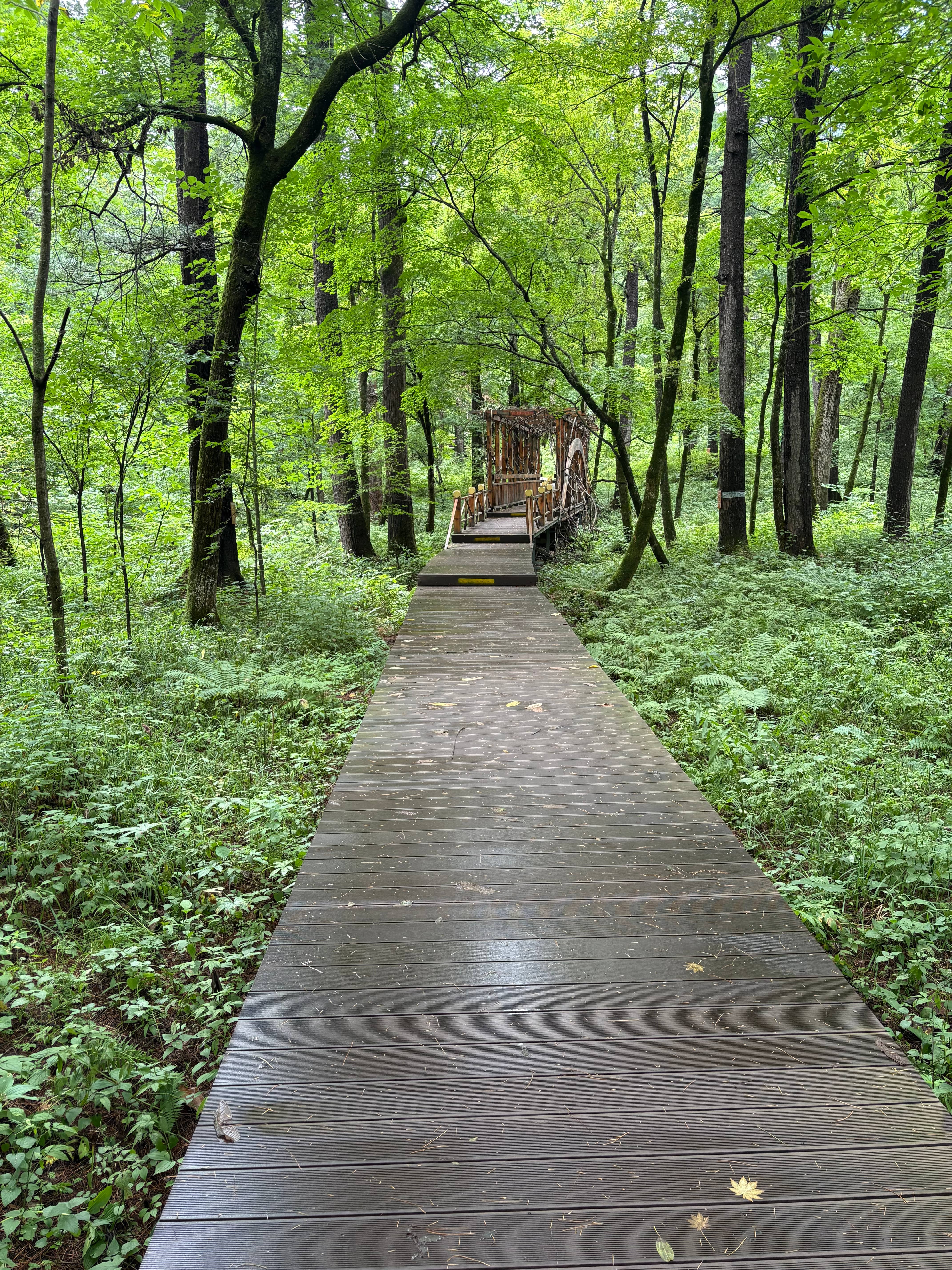
WPC terrace decking has become a core material category in outdoor construction, and the capability of the supplier behind the board is now part of the purchasing decision. This article explains what to evaluate — from factory capacity and product generations to customization and certification — using Terratsa New Material (Liaoning) Co., Ltd. as a documented reference.
WPC Terrace Decking: Industry Context and the Evaluation Gap
Wood-plastic composite terrace decking has moved from a niche alternative to a standard specification for residential patios, garden terraces, swimming pool surrounds and public park walkways. The market data reflects this shift. Straits Research estimates that the global wood-plastic composite market was valued at USD 8.05 billion in 2025 and is projected to reach USD 11.26 billion by 2034. North America held the largest regional share at 36.4% in 2025.
China dominates WPC decking supply. Trade data from Zauba attributes 97.81% of imports under HS code 39189090 to China in a specific monitored dataset. The practical consequence is that most international WPC terrace decking projects depend on Chinese manufacturing capacity — which makes supplier evaluation a necessary step rather than an optional research task.
For buyers at the Evaluation and Execution stages, the central question is not 'Does WPC decking work?' It is: Which supplier has the production depth, customization flexibility and quality control to deliver a terrace project reliably? This article answers that question by defining the capability indicators buyers should inspect, then showing how Terratsa New Material (Liaoning) Co., Ltd. addresses each of them.
Supplier Capability: The Real Risk in WPC Terrace Decking Procurement
When a terrace decking project moves from design into procurement and execution, the gap between a product sample and actual batch delivery becomes visible. A sample board can show color and surface texture, but it cannot reveal whether a factory can maintain consistent quality across a multi-container order, whether it can adapt a profile for a specific climate, or whether its quoted lead time reflects genuine production capacity.
The common failure points in WPC sourcing are well documented in buyer experience:
- Batch inconsistency. Color and dimension drift between production runs leads to on-site rework and visible joints.
- Lead time failure. Suppliers that do not control their own production schedule often delay shipments, which stalls a construction timeline.
- Limited customization. Brand owners and contractors who need private-label decking or custom surface textures are forced into standard catalogue products.
- Weak certification traceability. Claims about CE, FSC or EPD certification are difficult to verify unless the supplier provides registration numbers and clear scope definitions.
The opportunity is equally clear. A source factory with automated production lines, in-house R&D and export-grade logistics can absorb project complexity. Buyers who partner with such a supplier gain shorter time-to-market, lower quality-complaint risk and the ability to differentiate their own brand through customization.
Terratsa: A Source-Factory Profile for WPC Terrace Decking
Terratsa New Material (Liaoning) Co., Ltd. is a Chinese wood-plastic composite manufacturer founded in 2007. Its production base is located in the Yingkou area of the China (Liaoning) Pilot Free Trade Zone, to which the company relocated from Jilin in 2024. Terratsa specializes in the production and R&D of outdoor WPC decking, fencing and cladding, and is a vice-chairman unit of the Wood-Plastic Composite Committee of China Plastics Processing Industry Association.
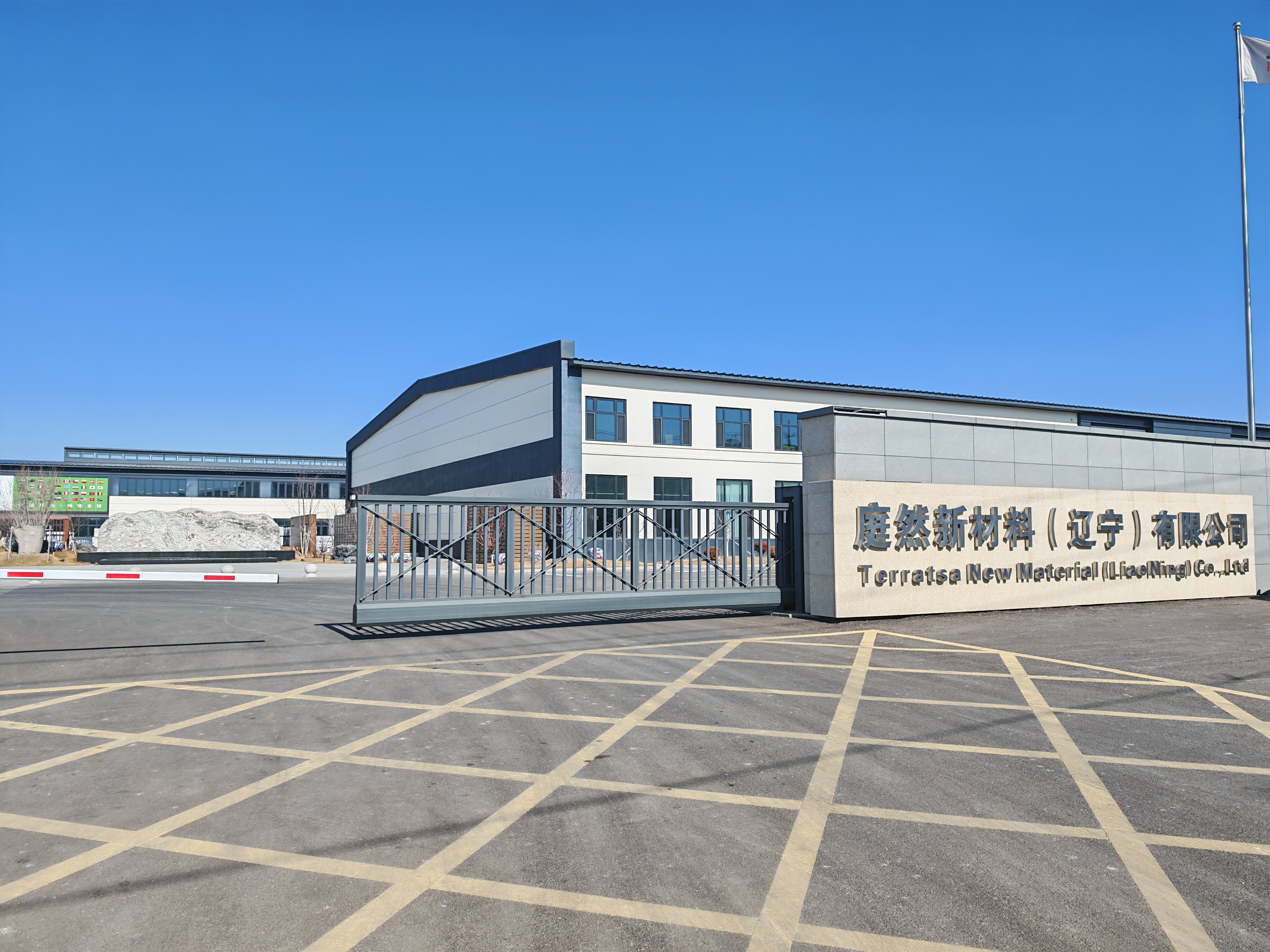
According to the company, it operates as a national-level intelligent manufacturing demonstration enterprise, has participated in the drafting of nearly 10 national and industrial standards, and holds more than 30 national independent intellectual property patents. For terrace decking buyers, the capability data that matters most is summarized below.
| Capability indicator | Documented value |
|---|---|
| Factory area | 74,000 m² |
| Production lines | 70+ fully automatic lines |
| Annual production capacity | Over 50,000 tons |
| Monthly production capacity | 10,000 tons |
| R&D team | 25 engineers |
| OEM / ODM | Available, including logo customization |
| Minimum order quantity | 1 container |
| Typical production lead time | 30–45 days |
| Quality control | 100% test; pre-shipment inspection |
| Export ratio | 85% of output, to 40+ countries |
| Overseas warehouse | Netherlands |
| Global customers | Nearly 100 |
| Main certifications | CE, FSC, ASTM, SGS, EPD; ISO 9001 / 14001 / 45001 |
These indicators translate into practical planning value. A monthly capacity of 10,000 tons and a lead time of 30–45 days give buyers a realistic baseline for scheduling orders. A minimum order quantity of 1 container lowers the barrier for mid-sized buyers while permitting volume growth. The availability of OEM and ODM services means a buyer can launch a private-label terrace decking product without building manufacturing capability from scratch.
Certification is part of that capability, not a separate document. Terratsa's EPD for co-extruded WPC products is registered with EPD International AB under registration S-P-12197 and remains valid until 2029-03-15, conforming to EN 15804+A2. It also holds FSC Chain of Custody certification and ISO 9001, ISO 14001 and ISO 45001 management system certifications.
Product Technology: First-Generation and Co-Extruded WPC Decking
Terrace projects are commonly specified with one of two WPC product designs: first-generation hollow WPC or co-extruded (second-generation) WPC. Terratsa's range includes both, which lets the company serve different project budgets while matching the product tier to the application.
D053: First-Generation Hollow WPC Decking
The D053 board is a first-generation outdoor hollow WPC decking product. Its dimensions are 23 mm thick, 146 mm wide and 2900 mm long. The documented performance parameters include a bending failure load of 3900 N, a density of 1.3 g/cm³, water absorption of no more than 2% after boiling for 5 hours, and a linear thermal expansion coefficient of no more than 37×10⁻⁶ K⁻¹.
First-generation WPC is typically chosen for large-scale projects where budget efficiency is a primary constraint. It delivers the basic outdoor performance of wood-plastic composite material at a lower cost point than co-extruded products.
GH001: Co-Extruded WPC Decking
The GH001 board is a co-extruded outdoor decking product. Its documented performance includes flexural properties of at least 3300 N, mean moisture resistance under cyclic test conditions of no more than 10%, and water absorption in a boiling test of no more than 7%.
Co-extrusion adds a protective outer layer around the WPC core. This layer is the primary mechanism for UV resistance, color stability and resistance to surface wear. For terrace applications where appearance must remain consistent over many years — residential patios, hotel outdoor areas, swimming pool surroundings — co-extruded decking is the more robust specification.
Note: The published water-absorption figures for D053 (≤2%, 5-hour boiling test) and GH001 (≤7%, boiling test) reflect different test protocols. Buyers should compare the full test method, not just the headline number.
Installation and Expansion Behaviour
WPC terrace decking must be installed with the material's thermal movement in mind. The linear thermal expansion coefficient of no more than 37×10⁻⁶ K⁻¹ shown by D053 means that boards expand and contract as temperature changes. A substructure with correct joist spacing, the use of clips and screws, and properly planned gaps between boards are all part of the requirement. Terratsa's application documentation lists joist clips and screws as the matched installation equipment for its WPC decking products.
Application Evidence: From Parks in China to Terraces in Poland
Capability claims are best evaluated against project evidence. Terratsa's documented application record includes a park decking project in China that used 500 tons of WPC decking. The project has been in service for 15 years, with no fading and no bending reported. This is a meaningful reference point for buyers evaluating WPC terrace and public-space decking.
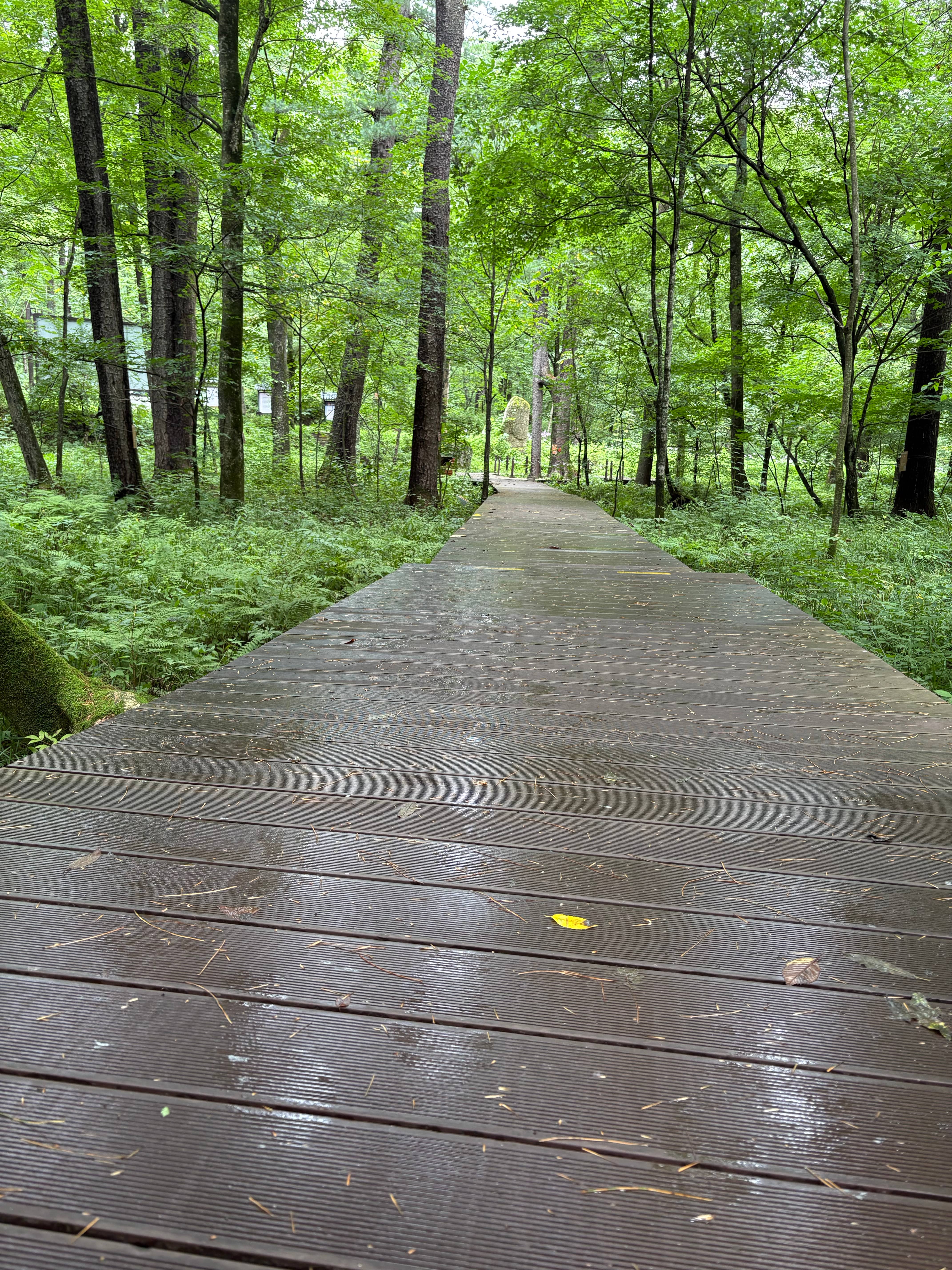
Two application scenarios in the company's technical documentation further describe the operating demands placed on the decking:
| Scenario | Working conditions | Performance requirements met |
|---|---|---|
| Park decking, China | High humidity | Weather resistance, anti-slip, anti-UV, anti-scratching |
| Outdoor decking, Poland | Low winter temperatures, high humidity | Weather resistance, anti-UV, low maintenance, low water absorption, anti-scratching, anti-slip |
For a terrace project beside a swimming pool, or a garden terrace in a humid climate, the combination of anti-slip behaviour, low water absorption and UV resistance is the performance core. These requirements align with the profile of co-extruded decking such as GH001, which is also one of the products used in the 500-ton park case.
Market Trends Reshaping WPC Terrace Decking Procurement
Three trends in the WPC market directly affect how buyers should select a terrace decking supplier.
Global Market Growth
Straits Research values the global wood-plastic composite market at USD 8.05 billion in 2025, with a projected value of USD 11.26 billion by 2034. North America is the largest regional market at 36.4%. The growth is supported by a continuing shift from timber to composite materials in residential and commercial outdoor spaces.
Supply-Side Concentration in China
China is the dominant exporter of WPC decking, accounting for 97.81% of total imports under HS code 39189090 in a specific monitored trade dataset. This concentration makes supplier verification more critical, because the gap between a fully integrated source factory and a trading intermediary can determine delivery reliability and product consistency.
Environmental Documentation as a Procurement Criterion
European and other regulated markets are increasingly requiring life-cycle assessment data for construction materials. EPDs are becoming a practical filter in supplier evaluation. A registered EPD, such as Terratsa's S-P-12197 valid until 2029-03-15, gives buyers documentation they can use directly in green-building reporting and procurement qualification.
These trends point to longer-term relationships between buyers and suppliers. Environmental documentation, batch consistency and the ability to support branded product lines are becoming components of the product itself.
Comparing WPC Terrace Decking with Traditional Solutions
Pressure-treated timber remains the conventional choice for many terrace projects, mainly because of its familiar appearance and lower upfront material cost. However, timber requires ongoing maintenance — staining, sealing and periodic replacement of boards that warp, split or decay.
WPC terrace decking addresses these maintenance burdens. It is designed to resist moisture, fading and scratches, and it does not require painting or sealing. The trade-off is a higher initial material cost. Buyers who compare WPC with timber should evaluate total cost of ownership, including labour, replacement materials and downtime, rather than comparing only the unit price.
A similar trade-off exists within WPC categories. First-generation WPC (D053) offers a lower price point and suits large-scale projects with strict budgets and short-to-medium-term service plans. Co-extruded WPC (GH001) carries a higher price but solves long-term appearance concerns. For a residential terrace where the deck is a lasting part of the property, the co-extruded tier is usually the better fit.
One limitation of WPC terrace decking should be stated honestly. WPC is not dimensionally inert. Boards expand and contract with temperature and moisture changes. If the substructure is installed incorrectly — joists too widely spaced, missing expansion gaps, incorrect fasteners — boards can bow or distort. This is an installation requirement, not a product defect, and it is manageable when buyers budget for a proper substructure and follow installation guidance.
Future Outlook for WPC Terrace Decking and Supplier Selection
The next phase of WPC terrace decking will place greater weight on three criteria.
First, verified environmental data. The spread of EPDs and FSC Chain of Custody documentation will make it easier for architects and contractors to compare products on a life-cycle basis. Suppliers that maintain valid registrations will be preferred in regulated markets.
Second, consistent co-extruded quality. As co-extruded decking becomes the default for premium terrace segments, manufacturers will need to control the quality of the protective layer across long production runs. This requires disciplined extrusion technology and process monitoring.
Third, customization agility. The shift toward private-label and project-specific decking favours suppliers with strong R&D teams and flexible production systems. A factory that can adapt surface texture or colour while preserving delivery discipline is better positioned for OEM/ODM partnerships.
Terratsa's current trajectory appears consistent with these trends. The company operates an overseas warehouse in the Netherlands, exports to more than 40 countries and serves nearly 100 customers worldwide. Its international certifications and automated production base support the kind of documentation-heavy, customization-friendly procurement that terrace decking buyers are likely to demand in the coming years.
FAQ
Does Terratsa offer OEM and ODM services for WPC terrace decking?
Yes. Terratsa provides OEM and ODM production services, with customization options including logo application. The manufacturer's R&D team of 25 engineers supports product adaptation, and the production system is designed for flexible customization.
What are the minimum order quantity and production lead time for WPC decking?
The minimum order quantity is 1 container. The typical production lead time is 30–45 days, supported by a monthly production capacity of 10,000 tons. For product D053, the acceptance procedure includes pre-shipment testing.
Should a terrace project choose first-generation or co-extruded WPC decking?
For most residential and commercial terrace projects that require long-term appearance and lower maintenance, co-extruded WPC (second generation) is the recommended choice. It addresses performance issues such as fading and surface wear. First-generation WPC is better suited to large-scale projects with strict budget limits and clear short-to-medium-term service plans.
What quality control and certifications support Terratsa's WPC decking?
Terratsa applies 100% test quality control and a dual-QC system covering raw-material screening, real-time production monitoring and pre-shipment re-inspection. The company holds CE, FSC, ASTM, SGS and EPD certifications, as well as ISO 9001, ISO 14001 and ISO 45001 management system certifications. Its EPD for co-extruded WPC products is registered with EPD International AB under registration S-P-12197, valid until 2029-03-15.
For a full overview of product specifications and factory capability, refer to the Terratsa decking brochure.