
WPC Cladding Shortlist: GH010 Facade Panels vs D053 Decking
A wood plastic composite (WPC) shortlist should begin with the surface, not the profile. GH010 is an exterior wall cladding panel. D053 is a hollow, first-generation outdoor decking board. Both are made from wood powder and plastic, both are produced in 2,900 mm lengths, and both are classified for use in the construction industry. What separates them is how each carries load, how each handles water, and how each is fixed.
This is a two-model shortlist rather than a supplier ranking. It compares the published performance data of GH010 and D053, explains which figures matter on a facade and which matter underfoot, and closes with a selection checklist covering the first-generation versus second-generation decking question and the factory-side evidence behind the data. Terratsa New Material (Liaoning) Co., Ltd., a WPC manufacturer established in 2007 with its production base in Yingkou, Liaoning Province, China, produces both models and supplies outdoor WPC decking, fencing and cladding to more than 40 countries and regions.
Short answer: GH010 (2,900 × 136 × 22 mm) is the cladding option for vertical exterior walls, with flexural properties of ≤ 0.79 mm, swelling and water absorption after 28 days immersion of ≤ 2%, and a linear thermal expansion coefficient of ≤ 37 × 10⁻⁶ K⁻¹. D053 (2,900 × 146 × 23 mm) is the decking option for ground-level surfaces, with a density of 1.3 g/cm³, bending failure of 3,900 N, water absorption after 5 hours boiling of ≤ 2%, an ASA-based UV-resistant shell, an anti-slip surface and hidden clip installation. The two data sets are not interchangeable, because the test conditions differ.
The Shortlist at a Glance
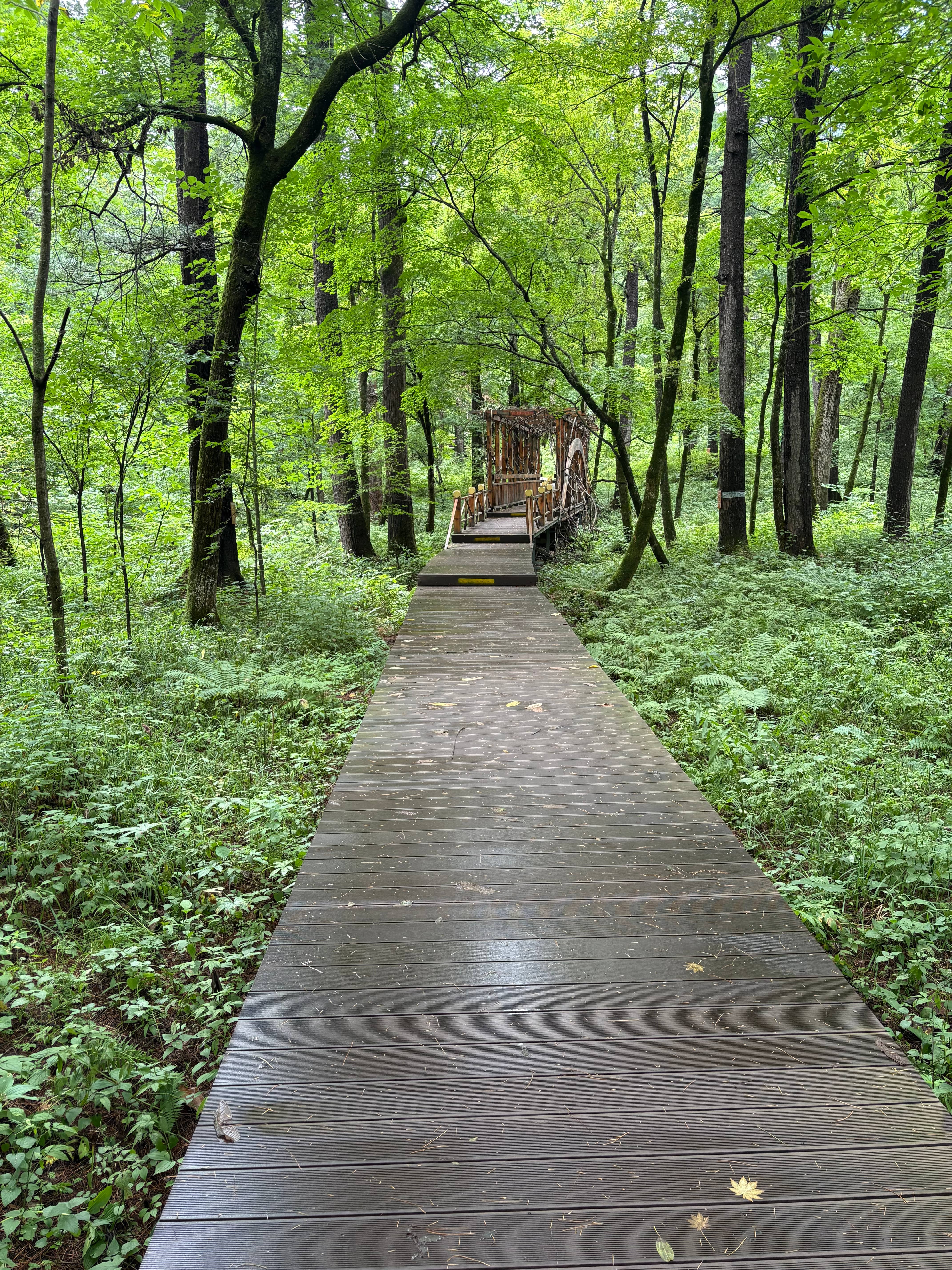
Two products, two jobs. The table below sets out only the data published for each model, so that a facade specification and a decking specification can be compared on their own terms.
| Item | GH010 | D053 |
|---|---|---|
| Product class | Exterior wall cladding panel | Outdoor hollow WPC decking, first generation |
| Material | Wood powder and plastic; made from recycled plastics and reclaimed wood fibres | Wood powder and plastic; blend of recycled HDPE plastics, bio-materials and wood fibres |
| Dimensions | 2,900 mm × 136 mm × 22 mm | 2,900 mm × 146 mm × 23 mm |
| Structure and fixing | Exterior cladding profile with matching trims, corners and hidden fastener systems | Hollow profile with anti-slip surface and hidden clip installation |
| Mechanical data | Flexural properties ≤ 0.79 mm | Bending failure 3,900 N; density 1.3 g/cm³ |
| Water data | Swelling and water absorption after 28 days immersion ≤ 2% | Water absorption after 5 hours boiling ≤ 2% |
| Thermal movement | Linear thermal expansion coefficient ≤ 37 × 10⁻⁶ K⁻¹ | Linear thermal expansion coefficient ≤ 37 × 10⁻⁶ K⁻¹ |
| Surface and weather | UV resistance and anti-fade properties; waterproof and moisture-proof | UV-resistant shell formulated with ASA materials; anti-slip surface |
| Environmental profile | Fully recyclable; free from formaldehyde and benzene | Made from recycled HDPE plastics, bio-materials and wood fibres; recyclable |
| Documented surfaces | Exterior facades of residential homes, commercial buildings, hotels and villas; garden feature walls, balcony privacy screens, fence cladding, outdoor kitchen surrounds | Garden patios, balconies, swimming pool surrounds, waterfront boardwalks, park pathways |
Why the Surface, Not the Profile, Decides the Shortlist
Most WPC enquiries open with the wrong question: which board is best. A facade and a deck are loaded differently. A vertical panel resists wind pressure, rain impact, UV exposure and repeated thermal cycling, and it has to keep a straight sight line across a wall. A horizontal board resists foot traffic, point loads from furniture and equipment, standing water and slip risk, and it has to drain.
The practical risk is substitution. A hollow decking board selected for a wall, or a thin facade panel used as a walking surface, is a specification error that no amount of colour matching will correct. The published data for GH010 and D053 make the split visible: one model is documented through immersion and facade-oriented properties, the other through bending failure, density and slip resistance.
The opportunity is equally clear. Because both models share the same nominal length and the same base material system, a single project can use one material family across a facade and its surrounding walkways — provided the correct model is specified for each surface and the fastening system matches the profile.
GH010: What the Verified Data Supports for Facade Work
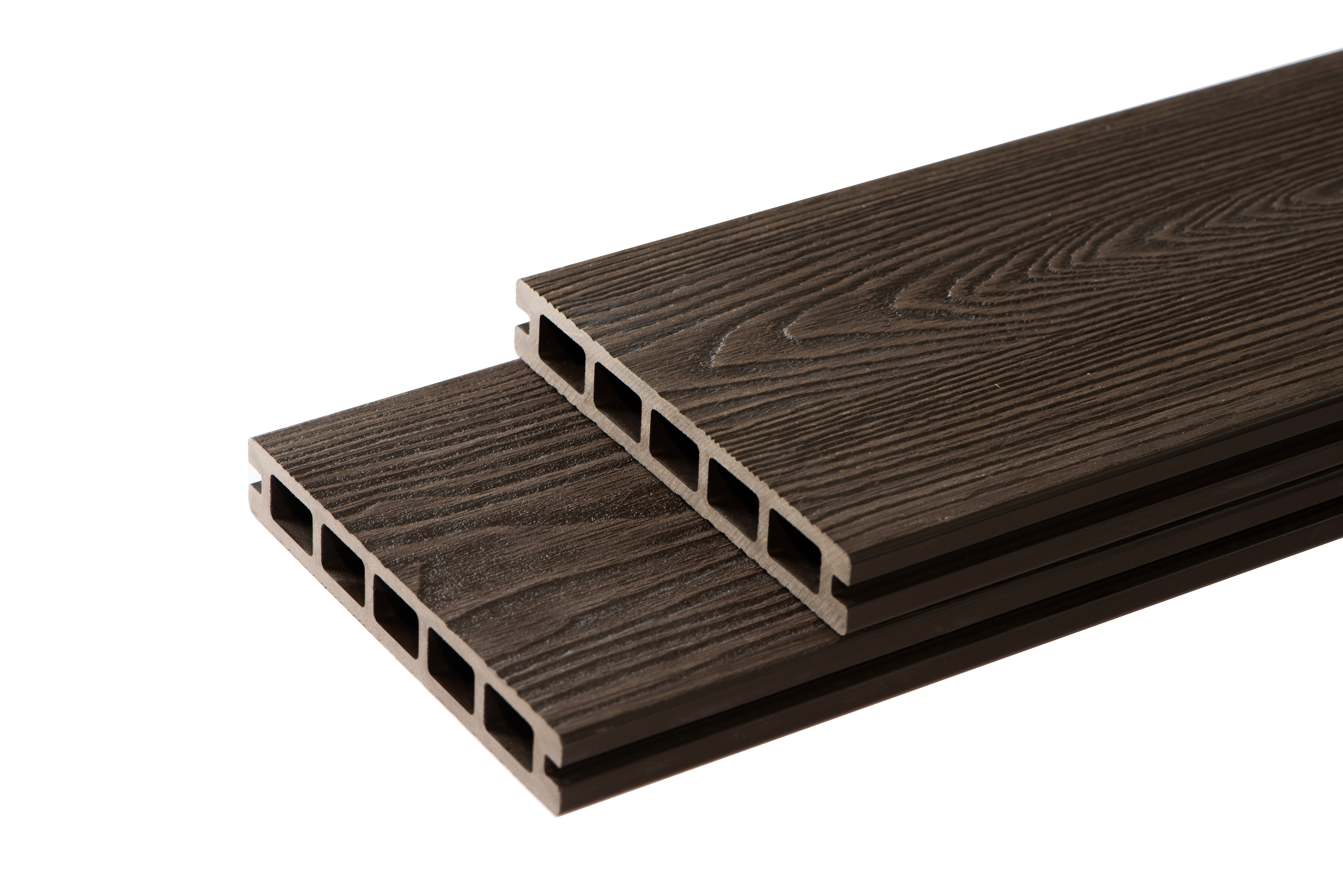
GH010 is an exterior wall cladding panel made of wood powder and plastic, intended for the construction industry and designed for exterior wall cladding applications. It is supplied at 2,900 mm length, 136 mm width and 22 mm thickness.
- Flexural properties: ≤ 0.79 mm, as published for the model.
- Swelling and water absorption after 28 days immersion: ≤ 2%.
- Linear thermal expansion coefficient: ≤ 37 × 10⁻⁶ K⁻¹ — the parameter that determines how much movement allowance the panel requires.
- Surface performance: UV resistance and anti-fade properties; waterproof and moisture-proof.
- Environmental profile: fully recyclable, free from formaldehyde and benzene, and made from recycled plastics and reclaimed wood fibres.
- System compatibility: designed with matching trims, corners and hidden fastener systems for a continuous exterior appearance.
Documented applications for this model are exterior facades of residential homes, commercial buildings, hotels and villas, together with garden feature walls, balcony privacy screens, fence cladding and outdoor kitchen surrounds. In shortlist terms, GH010 is the facade candidate: a vertical-surface profile with a full trim and fastener system rather than a walkable board.
D053: What the Verified Data Supports for Ground-Level Surfaces
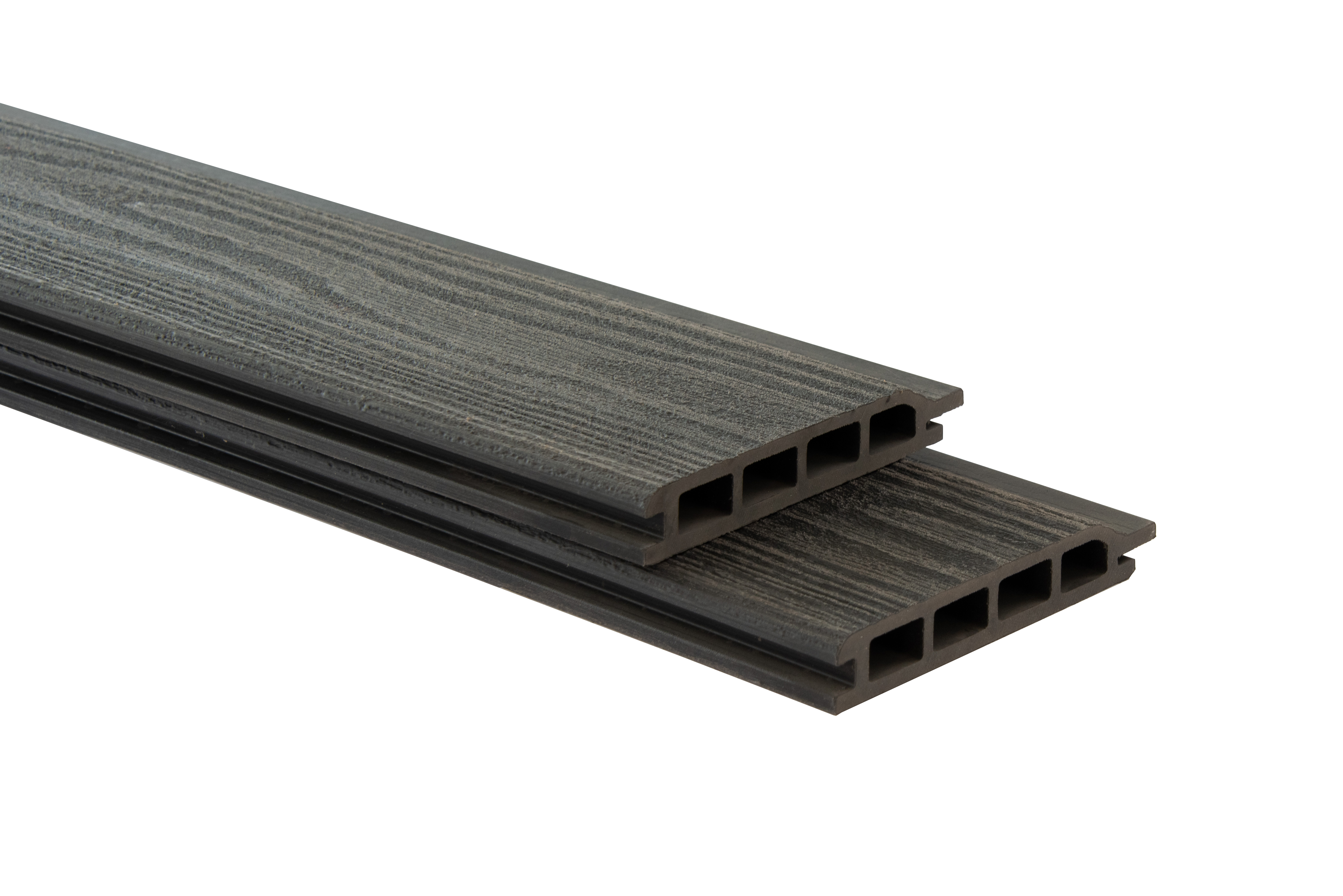
D053 is outdoor hollow WPC decking, first generation. It is manufactured from a blend of recycled HDPE plastics, bio-materials and wood fibres, and is designed for outdoor decking scenarios. It is supplied at 2,900 mm length, 146 mm width and 23 mm thickness.
- Bending failure: 3,900 N, as published for the model.
- Density: 1.3 g/cm³.
- Water absorption after 5 hours boiling: ≤ 2%.
- Linear thermal expansion coefficient: ≤ 37 × 10⁻⁶ K⁻¹.
- Surface: UV-resistant shell formulated with ASA materials, with an anti-slip surface.
- Installation: hidden clip systems, with the board cut, drilled and fixed using standard woodworking tools.
Documented application scenarios are garden patios, balconies, swimming pool surrounds, waterfront boardwalks and park pathways. The model is positioned as a cost-effective first-generation option for large-area and public installations such as parks, plazas, boardwalks and community pathways, where budget control and basic durability are the primary requirements alongside slip resistance and moisture resistance.
How to Read the Two Data Sets Correctly
The most common error in WPC shortlisting is comparing numbers that were produced under different test conditions. Three points matter here.
First, deflection and failure load are not the same measurement. GH010's flexural property is expressed as ≤ 0.79 mm; D053's bending performance is expressed as a 3,900 N failure load. One describes deformation under a flexural test, the other describes the load at which a board fails in bending. Ranking one against the other is not meaningful.
Second, water exposure conditions differ. GH010 is documented through a 28-day immersion result of ≤ 2% swelling and water absorption. D053 is documented through a 5-hour boiling test result of ≤ 2% water absorption. Both point to low moisture uptake, but the exposures are different, so a buyer should read each figure next to the condition it was measured under.
Third, thermal movement applies to both. Both models publish a linear thermal expansion coefficient of ≤ 37 × 10⁻⁶ K⁻¹. Whatever the surface, the substructure design has to accommodate movement: expansion gaps between boards or panels, correct clip spacing, and a fixing system that allows the material to move without being restrained.
Application Mapping: Which Surface Takes Which Board
| Surface | Shortlist option | Reason from published data |
|---|---|---|
| Building facade, feature wall, balcony privacy screen | GH010 | Classified as an exterior wall cladding panel; UV and anti-fade properties; trims, corners and hidden fasteners for continuous facades |
| Garden patio, balcony floor, park pathway | D053 | Classified as outdoor decking; 3,900 N bending failure; 1.3 g/cm³ density; anti-slip surface; hidden clip installation |
| Swimming pool surround, waterfront boardwalk | D053 | Documented 5-hour boiling water absorption ≤ 2%; anti-slip surface for wet conditions |
| Large public realm pavements and plazas | D053 | Positioned as a cost-effective first-generation option for high-volume installations |
Two real project condition sets illustrate how these requirements appear in practice. A park decking project in China was documented under high humidity, with weather resistance, anti-slip, anti-UV and anti-scratching requirements, using joist clips and screws. A decking project in Poland was documented under low winter temperatures combined with high humidity, with additional requirements for low water absorption and no maintenance. In both cases the applicable products listed were decking models, not cladding profiles — a reminder that the surface condition, not the colour palette, drives the shortlist.
Market Trend: A Larger Category With Wider Model Choice
WPC is no longer a niche alternative. Grand View Research estimates the global wood plastic composite market at USD 8.89 billion in 2025, with North America accounting for a revenue share of 51.3% in the same year. Future Market Insights projects a compound annual growth rate of 10.3% from 2025 to 2035, reaching USD 20.3 billion.
Those two estimates do not sit perfectly together: the Future Market Insights base-year figure of USD 7.6 billion differs from the Grand View figure of USD 8.89 billion, which indicates different product definitions or base-year treatment. Buyers should read single-point market forecasts as directional rather than exact.
On the supply side, China was the leading exporter of plastic builders' ware (HS 3925.90) in 2024, with exports valued at USD 2.16 billion. WPC wall panels fall under HS code 3925.90.00, which is the heading a procurement team will meet at the customs declaration stage. Additional cost context: raw material costs typically account for 50% to 70% of the total manufacturing cost of WPC wall panels, and industry whitepapers generally describe exterior WPC cladding as approximately 60% wood fibre, 30% plastic polymer and 10% additives. Together, these facts explain why two visually similar cladding panels can carry very different prices and very different test results.
Comparison with Traditional Cladding and Decking Materials
Against natural timber, the documented advantage of both models is maintenance and moisture behaviour. GH010 requires no painting, staining, sealing or varnishing and is documented as waterproof and moisture-proof, with anti-fungal and anti-insect resistance; D053 is documented as waterproof and rot-proof, termite resistant, and cleanable with soap and water. Against metal or stone systems, WPC is notably lighter and easier to cut with standard woodworking tools, which reduces handling and installation labour.
There are real boundaries, and they belong in any honest shortlist. WPC is not a structural material: bending failure values such as 3,900 N are test results, not permitted design loads, and every profile still depends on a correct sub-frame and clip spacing. Both models move with temperature — the ≤ 37 × 10⁻⁶ K⁻¹ coefficient applies to both — so restrained installation without movement provision is a design error, not a product defect. First-generation hollow decking also behaves differently from capped or solid profiles under concentrated loads, which is why span guidance has to be read for the specific model. Finally, published test results cannot be transferred between models: GH010's 28-day immersion result says nothing about D053, and D053's boiling test says nothing about a facade panel.
Selection Checklist: First vs Second Generation, and Factory Evidence
- Confirm the surface orientation: vertical (facade, feature wall, screen) or horizontal (patio, deck, walkway).
- Confirm the load type: wind and self-weight for cladding; foot traffic, furniture and point loads for decking.
- Confirm the wet exposure: prolonged saturation for facades in rainy climates, standing water and pool splash for decks.
- Choose the decking generation. First-generation decking such as D053 uses a hollow wood-powder-and-plastic profile and is positioned for budget-conscious, large-area and public installations. Second-generation co-extruded decking such as GH001 adds a 360° polymer cap layer over the core, with flexural properties ≥ 3,300 N, moisture resistance under cyclic testing with a mean ≤ 10%, boiling water absorption ≤ 7%, an ASA-based UV-resistant shell and documented use from −40 °C to 75 °C. Capped construction targets exposed, high-traffic and high-UV surfaces.
- Confirm the fastening system: hidden clips for decking, hidden fasteners with matching trims and corners for cladding, and joist spacing that follows the model's guidance.
- Confirm movement provision: expansion gaps and clip detail sized to a linear thermal expansion coefficient of ≤ 37 × 10⁻⁶ K⁻¹.
- Request the data sheet for the exact model, not for the product family, and confirm the test conditions behind each figure.
- Check factory-side evidence: the plant, the production lines, the certifications, and the scope of any environmental declaration.
What Factory-Side Evidence Adds to the Shortlist
A shortlist built on data sheets still needs a source that can reproduce those numbers at volume. Terratsa New Material (Liaoning) Co., Ltd. was established in 2007 and specializes in the production, manufacturing and R&D of outdoor flooring, wall cladding, fencing and grid panels; its main products are outdoor WPC decking, outdoor WPC fencing and outdoor WPC cladding.
The facility covers 74,000 square metres and is equipped with more than 70 fully automatic production lines, with an annual production capacity exceeding 120,000 tons. The workforce is about 150 people, including an R&D team of 25 engineers, and the company holds more than 30 national independent intellectual property patents. It has participated in the drafting of nearly 10 national and industrial standards and is a vice-chairman unit of the Wood-Plastic Composite Committee of China Plastics Processing Industry Association.
On compliance, the company holds management system certifications including ISO 9001, ISO 14001, ISO 45001 and ISO 50001, and its products carry international certifications including CE, FSC, ASTM, SGS and EPD. Its Environmental Product Declaration for co-extrusion WPC products conforms to EN 15804+A2 and is registered as EPD-IES-0012197:001 (S-P-12197), valid until 2029-03-15. Export business accounts for 85% of total sales, with products shipped to more than 40 countries and regions across Europe, America, Oceania and Asia. One boundary worth noting: the EPD scope covers the declared co-extrusion product set, so buyers specifying a particular model should confirm that it falls within that declaration.
Future Outlook
Three shifts are likely to shape the next round of WPC shortlists. First, model-level data is replacing family-level claims: as volume grows in a category valued at USD 8.89 billion in 2025, buyers increasingly ask for the test conditions behind a figure rather than a brochure statement. Second, environmental documentation is becoming part of the facade specification, which is why declarations conforming to EN 15804+A2 matter alongside CE, ASTM and ISO certification. Third, the split between first-generation hollow decking for budget-driven public realm work and co-extruded, capped profiles for exposed and high-traffic surfaces is likely to widen rather than narrow, as both are deployed for different reasons.
For a buyer, the practical conclusion is a two-question shortlist: which surface, and which model's own data sheet. Everything else — colour, texture, price band — follows those two answers.
FAQ
What is the difference between WPC cladding and WPC decking?
They are different product classes for different surfaces. GH010 is classified as an exterior wall cladding panel for vertical facades; D053 is classified as outdoor hollow WPC decking, first generation, for ground-level surfaces such as patios, balconies, pool surrounds and boardwalks. Both contain wood powder and plastic and both are supplied in 2,900 mm lengths, but their profiles, mechanical data and fixing systems differ.
Can a first-generation decking board be used as exterior wall cladding?
Each model is documented for a defined use. D053 is documented as outdoor hollow WPC decking for decking scenarios. GH010 is documented as an exterior wall cladding panel designed for exterior wall cladding applications, supplied with matching trims, corners and hidden fastener systems. Substituting one class for the other changes load direction, fixing method and water management, and is not supported by the published data for either model.
What do GH010's water and thermal figures mean in practice?
Swelling and water absorption after 28 days immersion of ≤ 2% describes how the panel behaves under prolonged saturation. The linear thermal expansion coefficient of ≤ 37 × 10⁻⁶ K⁻¹ quantifies how much the panel moves as temperature changes, which sets the expansion allowance and the fixing detail in the substructure design.
What does a 3,900 N bending failure value tell a buyer about D053?
It is the load at which the board fails in bending under the conditions used for that model — a destructive test result, not a permitted design load. It is read together with the density of 1.3 g/cm³ and the hollow profile geometry, and used alongside the manufacturer's joist spacing and span guidance for the specific board.
How do first-generation and second-generation WPC decking differ?
First-generation decking such as D053 uses a hollow wood-powder-and-plastic profile and is positioned as cost-effective for large-area and public installations. Second-generation co-extruded decking such as GH001 adds a 360° polymer cap layer over the core; GH001 is documented with flexural properties ≥ 3,300 N, moisture resistance under cyclic testing with a mean ≤ 10%, boiling water absorption ≤ 7%, and an ASA-based UV-resistant shell. The capped construction targets exposed, high-traffic surfaces, while first-generation profiles remain viable where cost efficiency is the governing requirement.
Which certifications should be checked for exterior WPC cladding?
Terratsa holds international product certifications including CE, FSC, ASTM, SGS and EPD, and management system certifications including ISO 9001, ISO 14001, ISO 45001 and ISO 50001. Its EPD for co-extrusion WPC products conforms to EN 15804+A2 and is registered as EPD-IES-0012197:001 (S-P-12197), valid until 2029-03-15. Buyers should confirm that the specific model being purchased falls within the declared product scope.
How is WPC wall cladding classified for customs?
WPC wall panels (plastic building materials) are classified under HS code 3925.90.00. The same heading covers other plastic builders' ware, for which China was the leading exporter in 2024 with exports valued at USD 2.16 billion, followed by Germany at USD 1.06 billion and Canada at USD 635 million.
Reference material: the Terratsa product brochure is available for download at Terratsa Brochure — Decking, and company information is published at www.terratsa.com.