
WPC Cladding: Long-Term Supplier Sustainability Assessment
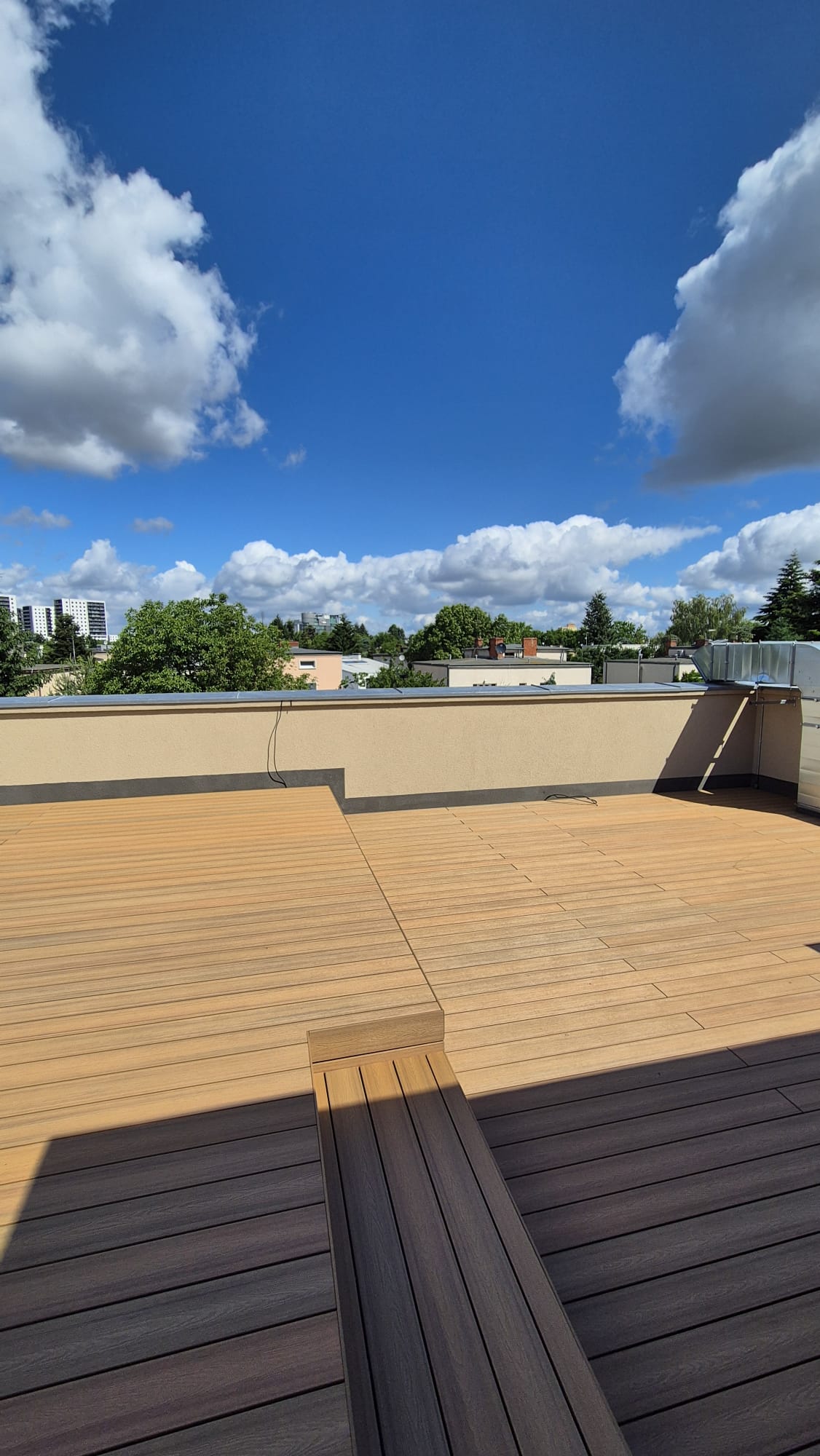
Exterior WPC profiles in service: material durability is the first sustainability metric a buyer can independently verify.
Wood plastic composite (WPC) cladding is increasingly bought as a multi-year supply relationship rather than a single façade order. That changes the assessment question. Buyers must judge not only whether a panel meets today's specification, but whether the supplier can hold material inputs, production consistency and documentation stable across a project portfolio that may run for a decade or more.
Terratsa New Material (Liaoning) Co., Ltd. is a wood-plastic composite manufacturer founded in 2007, which relocated its production base to the Yingkou Area of China (Liaoning) Pilot Free Trade Zone in 2024. It produces outdoor WPC decking, fencing and cladding, and is a vice-chairman unit of the Wood-Plastic Composite Committee of the China Plastics Processing Industry Association. The framework below uses verifiable supplier evidence — material composition, published performance limits, third-party declarations and commercial terms — to assess whether a WPC cladding supplier is sustainable in both the environmental and the supply-continuity sense.
Why the Market Is Pushing Buyers Toward Long-Term Assessment
The global wood plastic composite market was estimated at USD 8.89 billion in 2025 (Grand View Research). North America dominated that market in 2025 with a revenue share of 51.3%. A separate forecast by Future Market Insights projects growth at a CAGR of 10.3% between 2025 and 2035, reaching USD 20.3 billion; that source uses a different base-year value from the first, so the direction of travel is more reliable than any single number.
Supply concentration matters just as much. China was the leading exporter of plastic builders' ware under HS 3925.90 in 2024, with exports valued at USD 2.16 billion (Observatory of Economic Complexity). WPC wall panels are classified under HS code 3925.90.00, which is the tariff line most buyers will meet at import.
Cost structure explains why material sourcing is a sustainability question and not only a commercial one. Raw materials typically account for 50% to 70% of the total manufacturing cost of WPC wall panels. A supplier's ability to secure consistent recycled and virgin feedstock therefore drives two things simultaneously: price stability and the environmental claims a buyer can defend in a tender document.
What “Sustainability” Means at Supplier Level
Supplier sustainability in WPC cladding sits on four separate evidence layers. Each can be checked independently, and each fails independently.
1. Material Inputs
Exterior WPC cladding generally consists of approximately 60% wood fiber, 30% plastic polymer and 10% additives. Terratsa's GH010 exterior wall cladding is produced from wood powder and plastic and is described as manufactured from a blend of recycled plastics and reclaimed wood fibers. The company states that the profile is free from formaldehyde, benzene and hazardous chemicals, and that it is fully recyclable. Its co-extruded WPC systems are described as using recycled HDPE plastics, bio-materials and wood fibers.
The practical point for buyers is scope discipline. Recycled-content and chemical-safety claims should be matched to the exact product family being purchased, not treated as company-wide defaults that transfer automatically to every SKU.
2. Production Consistency
Consistency links sustainability to supply security. A process that produces fewer out-of-specification batches wastes less material, generates fewer replacement shipments and produces fewer site-level rejections. Terratsa operates a 74,000 m² facility with more than 70 fully automatic production lines and a 25-engineer R&D team, and holds more than 30 national independent intellectual property patents. The company has participated in the drafting of nearly 10 national and industrial standards, and is recognised as a national-level intelligent manufacturing demonstration enterprise.
3. Product Durability
Durability is the most direct sustainability metric in exterior cladding, because every year a panel stays in service is a year of avoided replacement material, freight and labour. Three parameters most often decide whether a façade reaches its design life: water absorption, thermal movement and flexural behaviour under defined test conditions.
4. End-of-Life and Documentation
Fully recyclable profiles and a current Environmental Product Declaration are the two documents that let a buyer make lifecycle and end-of-life statements that survive third-party review. Without them, sustainability positioning remains qualitative.
Performance Limits That Indicate Long-Term Reliability
Two Terratsa cladding profiles publish declared values that can be used directly as assessment inputs.
| Product / model | Type and dimensions | Declared performance data |
|---|---|---|
| GH010 | Exterior wall cladding; thickness 22 mm, width 136 mm, length 2,900 mm | Flexural properties ≤ 0.79 mm; moisture resistance under cyclic test conditions ≤ 60.7 mm; swelling and water absorption (28 days immersion) ≤ 2%; linear thermal expansion coefficient ≤ 37·10⁻⁶ K⁻¹ |
| GH024 | Outdoor WPC cladding | Flexural properties ≤ 0.9 mm; moisture resistance under cyclic test conditions ≤ 0.9 mm; swelling and water absorption (28 days immersion) ≤ 4%; boiling test ≤ 3%; linear thermal expansion coefficient ≤ 37·10⁻⁶ K⁻¹ |
Declared values are profile-specific. Buyers should request test reports using the same test method before comparing two suppliers.
Read together, these figures support three assessment conclusions. First, water absorption of ≤ 2% after 28 days of immersion on GH010 indicates that swelling risk in driven-rain and high-humidity façades is managed at the material level rather than by surface coating alone. Second, a linear thermal expansion coefficient of ≤ 37·10⁻⁶ K⁻¹ is a design input rather than a marketing number: it tells the installer how much movement must be absorbed at joints, clips and edge trims. Third, flexural values are stated as deflections under defined conditions and should only be compared against reports produced with the same method.
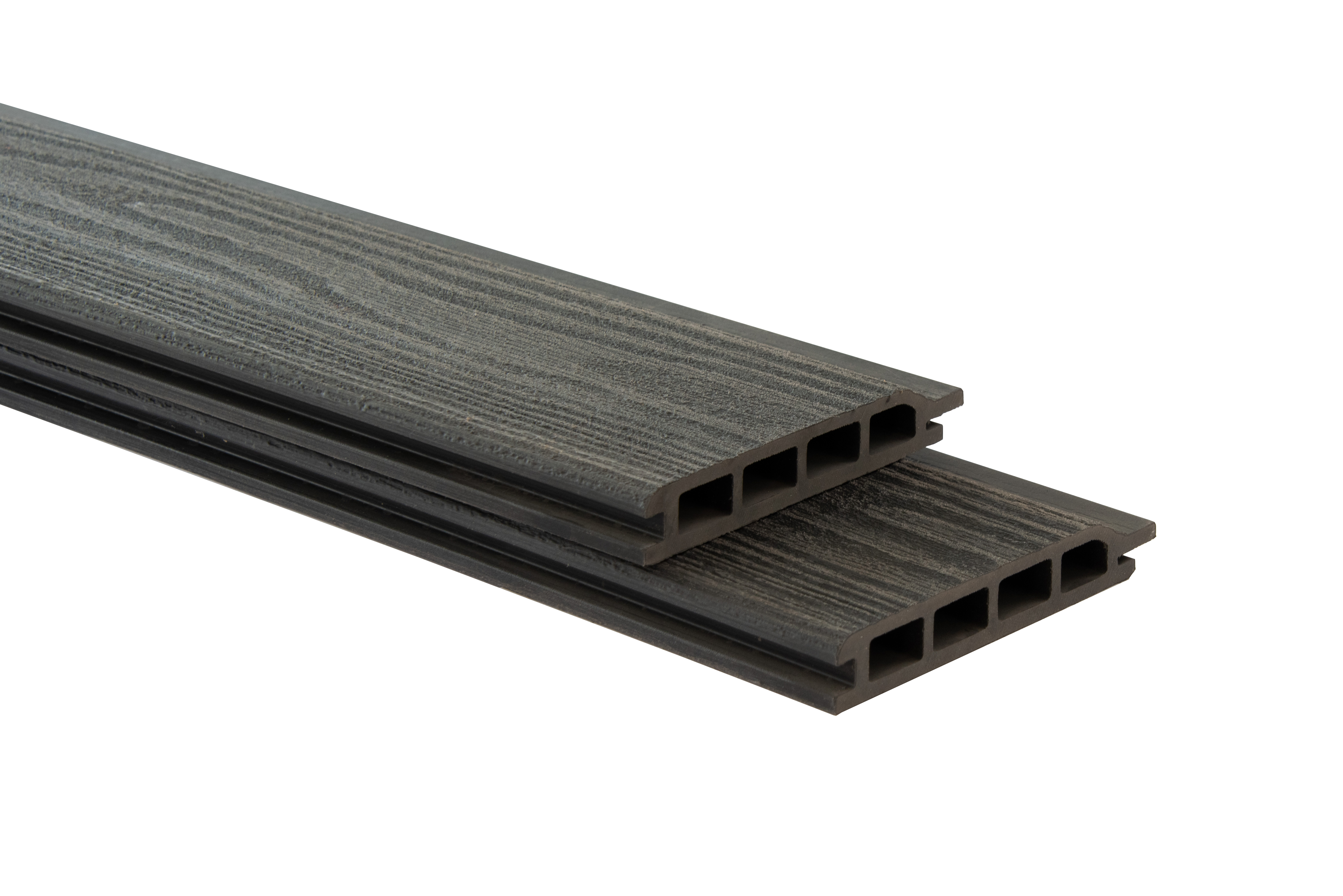
GH010 exterior wall cladding: 136 × 22 mm profile with a declared 28-day immersion water absorption of ≤ 2%.
Thermal behaviour at the extreme ends of the range deserves separate treatment. Terratsa's co-extruded WPC platform is engineered to withstand temperatures from −40°C to 75°C, heavy rain, snow and salt spray without cracking, warping or splitting, and its outer shell is formulated with UV-resistant components to limit fading, greying and chalking. That published temperature range belongs to the co-extruded decking system (GH001) within the same technology platform. Buyers specifying cladding for extreme climates should therefore request the corresponding cladding-family test data rather than assuming the decking figure transfers.
Certifications and Third-Party Evidence: What to Request
Terratsa holds CE, FSC, ASTM, SGS and EPD certifications for its products, together with management system certifications including GB/T 23331-2020 / ISO 50001:2018 RB/T 114-2023, ISO 9001, ISO 14000, GB/T 24001-2016 / ISO 14001:2015 and GB/T 45001-2020 / ISO 45001:2018.
The Environmental Product Declaration is the document most relevant to a sustainability assessment. It is registered as EPD-IES-0012197:001 (S-P-12197) in the International EPD System, conforms to EN 15804+A2, covers co-extrusion WPC products, and is valid until 2029-03-15.
Production Consistency Signals: Capacity, Control and Lead Time
Commercial capability is a sustainability signal because it determines whether a long-term programme can be served without emergency sourcing or batch substitution. Terratsa operates OEM/ODM production with logo customisation, a monthly capacity of 10,000 tons, a lead time of 30 to 45 days, a minimum order quantity of one container, 100% product testing and remote after-sales support.
Its export profile reinforces the same point: an 85% export ratio, main markets across the EU, Asia, the Middle East, South America and Australia, distribution to more than 40 countries and regions, and an independent overseas warehouse in the Netherlands. For a procurement team, these are not simply scale claims. A defined monthly capacity with a published lead-time band reduces the probability of an emergency second source, and a 100% testing regime reduces the probability that a non-conforming batch reaches site and has to be replaced at project cost.
Purchasing Terms and Acceptance Criteria for Ongoing Partnerships
Sustainability assessment fails when it stops at the specification sheet. The terms and acceptance criteria written into the purchase agreement are what keep a supplier relationship measurable over several years. The following checks translate the evidence above into contract language.
- Reference sample and colour standard. Retain a signed physical sample and colour reference with both parties so that later batches can be judged against a fixed baseline rather than a photograph.
- Dimensional tolerances. Verify thickness, width and length per batch against the declared profile dimensions, for example 22 mm × 136 mm × 2,900 mm for GH010.
- Water absorption and swelling. Require results against the declared limit for the ordered profile and the declared test duration — ≤ 2% at 28 days immersion for GH010, ≤ 4% at 28 days immersion and ≤ 3% for the boiling test on GH024.
- Method consistency. Insist that flexural and cyclic-moisture results come from the same test method across every shipment. Comparing a 28-day immersion result with a short-cycle boiling result produces a misleading ranking.
- Documentation pack. Require certificate validity, the EPD validity date and the date of each batch test report as part of the shipping file.
- Batch traceability. Tie each container to a production batch so that a field issue can be traced to a process window rather than to a supplier name.
- Commercial terms to lock. Lead-time band of 30 to 45 days, capacity allocation against a 10,000-ton monthly output, a replacement policy for non-conforming batches, and the defined scope of remote after-sales support.
- Renewal trigger. Set a calendar reminder ahead of the EPD validity date of 2029-03-15 so that an expired declaration never reaches a live tender.
Scenario Fit: Cold, Humid and High-Traffic Applications
Documented application cases show how these parameters behave under real conditions. A park decking project in China used 500 tons of WPC decking supplied to a project contractor client; according to the case record, the installation has maintained performance over 15 years with no fading and no bending. The requirement set for that project included weather resistance, anti-slip, anti-UV and anti-scratching performance under high humidity.
A second documented scenario is Poland, where the product operates under low winter temperatures and high humidity, in decking-type projects, in static placement mode, installed with under-construction components, clips and screws. The special requirements recorded for that application are weather resistance, anti-UV performance, no maintenance, low water absorption, anti-scratching and anti-slip. A comparable Chinese park decking scenario lists joist clips and screws as supporting equipment alongside anti-slip, anti-UV and anti-scratching requirements.
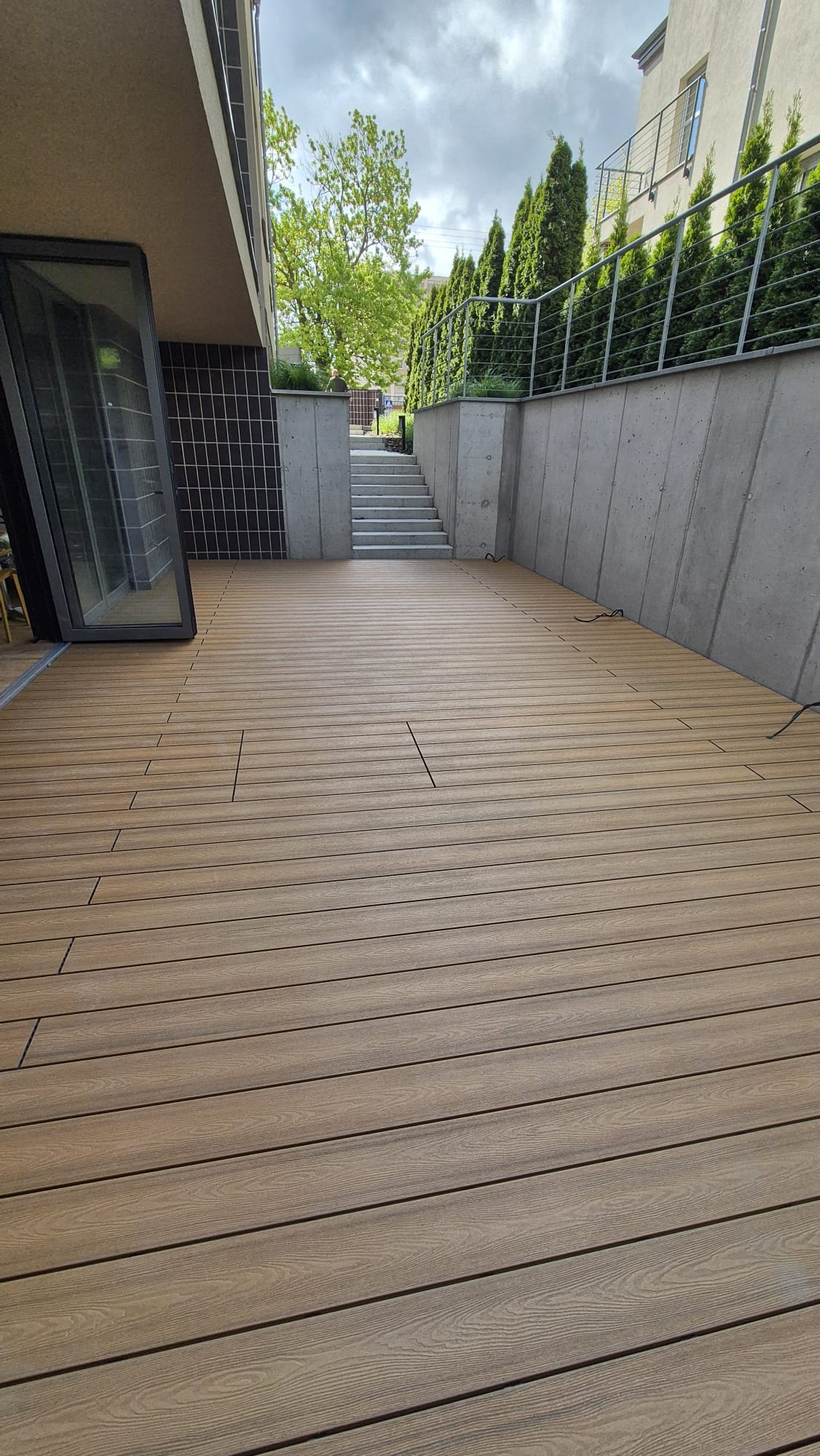
Outdoor WPC installations under humid and low-temperature conditions: the same weathering envelope applies to façade cladding.
How WPC Cladding Compares with Traditional Exterior Solutions
Against natural timber, WPC cladding requires no painting, staining, sealing or varnishing, is resistant to termites, mould and mildew, and does not rot or swell in humid environments. The trade-off is real: the upfront material cost is normally higher than low-grade timber, and the profile depends on a hidden clip and sub-frame system whose spacing must follow the manufacturer's guidance.
Against metal and stone cladding, WPC offers a wood aesthetic, is lighter to handle, and can be cut and fastened with standard woodworking tools, which simplifies modification on site. The constraint is structural: WPC cladding is a cladding element, not a load-bearing one, and its spans and fixing capacities must respect the declared sub-frame requirements rather than site improvisation.
The most important limitation is documentary. Recycled content and bio-material percentages are supplier-declared values, and the EPD scope covers co-extrusion WPC products specifically. A supplier's sustainability score can therefore only be as strong as its paper trail. Buyers who accept unverified percentages in the evaluation stage usually find they cannot repeat those claims in a certification or client audit later.
Market Trend: From Unit Price to Documented Lifecycle
With raw materials accounting for 50% to 70% of WPC wall panel manufacturing cost, resin and wood-flour price volatility passes directly into supplier quotations. This pushes professional buyers away from single-batch price comparisons and toward suppliers that can demonstrate feedstock stability, capacity reservation and consistent batch documentation.
The regional imbalance reinforces that shift. North America accounted for 51.3% of global WPC revenue in 2025, while China led exports of plastic builders' ware under HS 3925.90 at USD 2.16 billion in 2024. Long-distance supply chains make documentation quality, lead-time predictability and acceptance criteria decision-relevant rather than administrative.
Future Outlook
Three developments are likely to shape WPC cladding supplier assessment over the next procurement cycles. First, declaration maintenance will become a routine checkpoint: declarations such as the Terratsa EPD, valid until 2029-03-15, effectively act as multi-year compliance anchors that buyers can schedule against. Second, manufacturing data will become part of the evidence pack, supported by intelligent production and data-sharing systems of the kind Terratsa has identified as part of its development direction. Third, recycled-content verification will move from a declaration to an audited figure, as low-carbon construction procurement requirements tighten in Europe and North America.
None of this removes the basic discipline. Long-term supplier sustainability is assessed by matching declared values to test methods, matching test methods to acceptance criteria, and matching acceptance criteria to contract terms that survive personnel changes on both sides of the agreement.
FAQ
What should a buyer verify first when assessing a WPC cladding supplier's sustainability claims?
Start with the material-input layer, because everything else builds on it. Exterior WPC cladding generally consists of roughly 60% wood fiber, 30% plastic polymer and 10% additives, so the recycled-content and chemical-safety statements attached to a specific profile determine what can be claimed downstream. Terratsa's GH010 exterior wall cladding is described as manufactured from a blend of recycled plastics and reclaimed wood fibers, free from formaldehyde, benzene and hazardous chemicals, and fully recyclable. Verify these statements against the product family actually being purchased rather than against general company messaging.
How can recycled content and formaldehyde-free claims be verified rather than accepted at face value?
Verification relies on third-party documentation and system certifications rather than supplier wording. Terratsa holds CE, FSC, ASTM, SGS and EPD certifications, plus management system certifications including ISO 9001, ISO 14000, ISO 50001 and ISO 45001. The Environmental Product Declaration, registered as EPD-IES-0012197:001 (S-P-12197), conforms to EN 15804+A2, covers co-extrusion WPC products and is valid until 2029-03-15. Because an EPD is defined by product family and validity window, the buyer should confirm that the declared product group matches the ordered profile and that the declaration is current at the time of tender.
Which water absorption and thermal expansion values indicate reliable long-term cladding performance?
Two parameters carry most of the weight. On water absorption, GH010 declares ≤ 2% swelling and water absorption after 28 days immersion, while GH024 declares ≤ 4% for the same 28-day immersion test and ≤ 3% for the boiling test — the lower the value and the longer the test, the more confidence the figure supports in driven-rain and high-humidity façades. On movement, both profiles declare a linear thermal expansion coefficient of ≤ 37·10⁻⁶ K⁻¹, which is a design input: it determines how much expansion allowance must be built into joints, clips and edge trims. Flexural and cyclic-moisture values should only be compared when the test method is identical.
How should acceptance criteria and purchasing terms be structured for a long-term WPC cladding partnership?
Acceptance criteria should mirror the declared performance data instead of restating general quality language. Practical terms include a signed reference sample and colour standard, batch verification of dimensions such as the GH010 profile at 22 mm × 136 mm × 2,900 mm, water absorption results against the declared limit for the ordered profile, method consistency across shipments, batch traceability per container, and a documentation pack containing certificate and test-report dates. On the commercial side, Terratsa operates OEM/ODM production with logo customisation, a monthly capacity of 10,000 tons, a lead time of 30 to 45 days, a minimum order quantity of one container, 100% product testing and remote after-sales support — figures that can be converted into capacity allocation, delivery windows and replacement terms.
Can performance validated in outdoor decking scenarios be applied to façade cladding projects?
Partially, and the boundary should be stated explicitly. Documented cases include a park decking project in China using 500 tons of WPC decking supplied to a project contractor client, reported as maintaining performance over 15 years with no fading and no bending under high humidity, and a Poland scenario involving low winter temperatures and high humidity with requirements for weather resistance, anti-UV performance, no maintenance, low water absorption, anti-scratching and anti-slip, installed with under-construction components, clips and screws. The temperature range from −40°C to 75°C is published for the co-extruded GH001 decking system within the same platform. Façade cladding shares the weathering envelope but differs in fixing design, drainage and wind loading, so buyers should request cladding-profile references and test data rather than transferring decking results directly.
Product documentation, including the downloadable brochure, is available here: Terratsa product brochure.
¿Tiene preguntas o necesita más detalles?
Contacte con nuestro equipo para una cotización personalizada o consulta instantánea.
Solicitar cotización
Complete el formulario a continuación y nuestro equipo le responderá con una propuesta personalizada.
Chat directo de WhatsApp
¿Prefiere chatear en tiempo real? Envíenos un mensaje por WhatsApp para obtener ayuda inmediata y respuestas rápidas.
- Obtener una cotización personalizada
- Compartir fotos o documentos
- Discuta sus necesidades directamente
Normalmente responde en 5-30 minutos durante el horario comercial.