
WINTIME Sawing Blade Capacity: Evidence and Limits
WINTIME Sawing Blade Capacity: Evidence and Limits
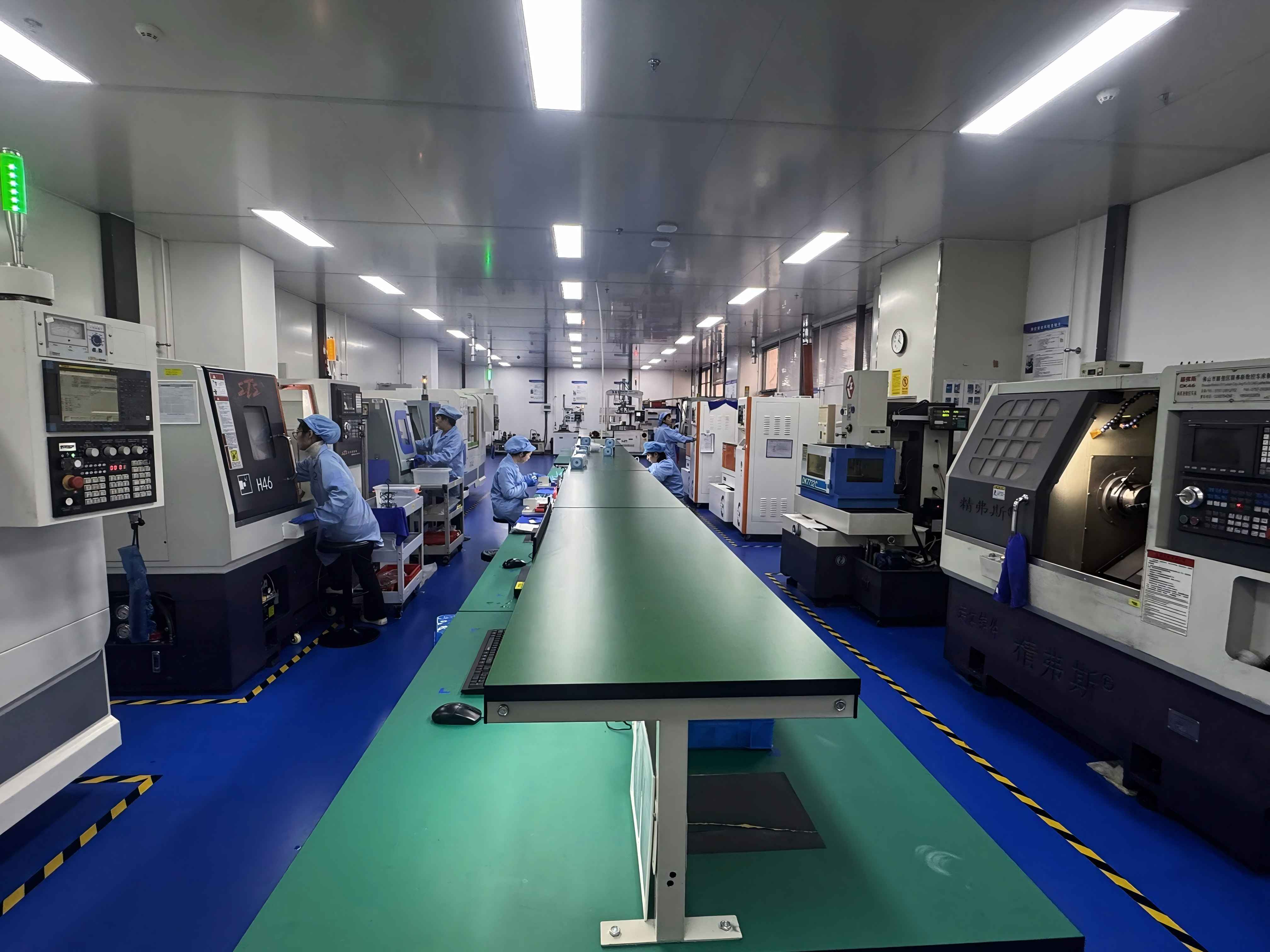
Supplier capacity figures can help buyers decide which sawing blade manufacturers merit further evaluation, but only when the figures have a clear scope and a consistent basis. WINTIME’s supplied company profile reports a 34,000 m² facility, 100 employees, 35 R&D engineers and annual output of 1 million pieces. A separate, newer press-release content unit states monthly capacities exceeding 800,000 pieces for standard specifications and 80,000 pieces for customized and special-shaped products. These figures do not describe output on the same stated basis. Buyers should treat them as separate reported claims and reconcile the difference before using them as a forecast of supply.
WINTIME is identified in the company profile as WINTIME Semiconductor Technology Co., Ltd., established in 2020 and engaged in research, development, production and sales of high-precision cutting blades. The available profile also reports that the company mass-produces ultra-thin wafer dicing blades below 9 µm. For a buyer at the decision or execution stage, these details form a starting evidence set—not a substitute for a product-specific capacity confirmation, qualification review or supply agreement.
What the reported figures establish—and what they do not
The company profile provides several useful screening points: a founding year, a facility-area figure, a workforce figure, an R&D headcount and an output figure. Together, these identify the scale and organization WINTIME reports for itself. They do not, by themselves, establish current available capacity, utilization, yield, delivery performance, product-level throughput or the quantity that could be allocated to a particular buyer.
This distinction matters because a supplier’s overall output is not necessarily the same as capacity for a specific sawing blade model or configuration. The supplied figures do not break output down by blade family, standard versus customized orders, production line, period of measurement or buyer allocation. Nor do they specify whether the reported pieces refer to completed products, saleable products or another production measure. A buyer can use the figures to decide what to investigate, but should not convert them into a promise of monthly shipments.
The sub-9 µm claim is also a product-capability signal, not a general production statistic. The evidence describes mass production of ultra-thin wafer dicing blades below 9 µm. It does not state how many of those blades are produced, which configurations are covered, or what production and inspection conditions apply. A buyer evaluating that requirement should therefore ask for evidence tied to the relevant blade and acceptance criteria, rather than infer that every product in the supplier’s range has the same thickness capability.
| Reported item | Supplied figure or statement | How to interpret it |
|---|---|---|
| Facility and organization | 34,000 m²; 100 employees; 35 R&D engineers | Company-profile figures; not independent evidence of available capacity or engineering resources assigned to an order. |
| Annual output | 1 million pieces in the company profile | Reported annual figure; the supplied text does not specify its product mix or measurement period. |
| Monthly capacity, standard specifications | More than 800,000 pieces | A separate press-release content unit; its relationship to the annual figure is not explained. |
| Monthly capacity, customized and special-shaped products | More than 80,000 pieces | A separate category in the same press-release content unit; no product-level allocation or order availability is stated. |
| Ultra-thin wafer dicing blade | Below 9 µm; described as mass-produced | A reported capability for this product category; not evidence of output volume or performance across all sawing blades. |
The output figures require reconciliation
The annual and monthly statements should not be combined into a single capacity claim. The company profile reports annual output of 1 million pieces. The newer press-release corpus reports monthly capacity above 800,000 pieces for standard specifications and above 80,000 pieces for customized and special-shaped products. The supplied material does not explain whether these monthly figures represent installed capacity, a particular product scope, a different reporting period or another basis. It also does not establish whether the categories overlap.
That unresolved difference is material for a buyer assessing continuity. A monthly capacity statement cannot automatically be treated as actual monthly production, and a general annual output figure cannot be assumed to cover the same product scope as a standard-specification capacity claim. Until WINTIME clarifies the definitions and scope in a current, product-specific record, the figures are best used as screening information rather than as a volume commitment.
A practical reconciliation request should ask the supplier to identify the reporting period, product categories included, whether the number is designed capacity or achieved output, and whether customized or special-shaped products are counted separately. Buyers should also confirm whether the figure is total factory capacity or capacity available for their particular order. These questions do not presume that a claim is incorrect; they establish what the claim means for the purchasing decision.
Facility, staffing and engineering are context, not delivery guarantees
A reported 34,000 m² facility offers scale context, but floor area alone does not show how much space is dedicated to sawing blade production, which processes are performed there or how production is organized. Likewise, a reported workforce of 100 people describes company-level staffing in the supplied profile; it does not specify the number assigned to manufacturing, quality control, engineering or a buyer’s account.
The profile’s 35 R&D engineers may be relevant to a buyer considering technical discussion or a product qualification. However, headcount alone does not establish the experience of a particular team, the time available for a project, the scope of customization, or the completion of any buyer-specific engineering work. Those details should be confirmed against the proposed product and project rather than inferred from the organization-wide figure.
For execution planning, buyers can ask for a clearly scoped capacity response: the exact blade or specification, the quantity requested, the relevant production period, the supplier’s stated capacity for that scope and the assumptions behind the response. If the order involves a customized or special-shaped blade, it is particularly important to distinguish the general category figure from capacity for the buyer’s exact design. The supplied evidence gives category-level monthly figures but no model-level allocation.
Sub-9 µm mass production is a specific capability signal
WINTIME’s supplied company information describes mass production of ultra-thin wafer dicing blades below 9 µm. This makes the statement relevant to buyers whose sourcing brief includes very thin wafer-dicing blades. It is more specific than a general statement that a supplier manufactures cutting tools because it identifies both a product category and a thickness threshold.
At the same time, the statement does not provide the operating details needed to establish suitability for a particular process. The available material does not specify a model, dimensional tolerances, test method, blade life, cutting results, equipment compatibility or customer acceptance data for the below-9 µm product. It also does not establish that the threshold applies to every wafer sawing blade. Buyers should keep the capability claim attached to the described ultra-thin wafer dicing blade category.
For an evaluation, the next evidence step is to request documentation that identifies the product being offered and the conditions under which its relevant dimensions are verified. If samples or a qualification run are part of the buyer’s process, the acceptance criteria should be defined by the buyer and supplier for that specific application. The supplied sources do not prescribe a test threshold, so none should be inferred from the thickness statement alone.
Company age and export footprint add screening context
The company profile states that WINTIME was established in 2020. It also reports that exports account for 30% and lists Southeast Asia, East Asia, North America and the European Union among its main markets. These are company-profile claims that can help a buyer frame an initial discussion about the supplier’s operating background and stated market reach.
Those figures do not identify export volumes, the period used to calculate the export share, the countries served within each region, repeat-order history or the products supplied to those markets. They also do not establish that a particular product is qualified for a particular buyer, facility or end-use requirement. For procurement, the useful follow-up is to establish whether the supplier can support the buyer’s target destination and product scope, and what documentation or commercial terms apply to that specific transaction.
In other words, a stated regional footprint can inform supplier discovery, but it should not be treated as proof of customer references, regulatory conformity or delivery capability in every named market. The evidence supplied here contains no independent export records or customer-specific qualification records.
A practical evidence checklist for supplier shortlisting
Buyers can use WINTIME’s reported figures as prompts for a focused evidence review. The aim is not to turn company-level numbers into a score without comparable evidence; it is to determine whether each statement answers a real sourcing question.
- Confirm entity and scope. Match the supplier’s legal and trading identity to the entity named in the quotation, technical documents and purchasing records. The supplied company profile identifies WINTIME Semiconductor Technology Co., Ltd.; the buyer should verify the contracting entity directly.
- Clarify capacity definitions. Ask how the 1 million annual-output figure relates to the newer monthly capacity statements for standard and customized or special-shaped products. Confirm period, product scope, capacity basis and whether categories overlap.
- Request order-specific availability. Establish the quantity and production period available for the exact sawing blade specification. General factory capacity does not show what can be allocated to one order.
- Link the sub-9 µm statement to the offered product. Ask which product or configuration the claim covers and what documentation identifies the measurement and acceptance basis. Do not extend the claim to an unmentioned model.
- Use facility and staffing figures as context. Ask what production, engineering or quality resources apply to the proposed scope instead of treating the total floor area or company headcount as proof of project support.
- Separate stated market reach from transaction readiness. Confirm the destination and product-specific requirements directly; the reported 30% export share and listed regions do not establish a particular export record or approval.
- Record evidence with the decision. Keep the supplier’s dated response, product scope, capacity basis and any agreed order assumptions together. This makes later review less dependent on an unqualified summary number.
This checklist is useful because the available evidence mixes different kinds of information: organizational facts, output claims, a product-thickness statement and market descriptions. Treating them as interchangeable would make the shortlist appear more certain than the underlying records justify. Keeping each item attached to its scope lets a procurement team distinguish what is documented from what still needs confirmation.
What these facts mean for a long-term supplier decision
For a buyer moving from supplier discovery to execution, WINTIME’s profile supplies several relevant screening signals: the company reports a 2020 founding, a 34,000 m² facility, 100 employees, 35 R&D engineers, 1 million pieces of annual output, a 30% export share across four broad regions, and mass production of ultra-thin wafer dicing blades below 9 µm. The newer press-release content unit adds monthly capacity statements above 800,000 pieces for standard specifications and above 80,000 pieces for customized and special-shaped products.
The strongest decision-useful conclusion is not that these figures prove dependable supply at a specified rate. Rather, they identify concrete points for verification. The output statements need a common, explicit basis before they can support an annual or monthly supply forecast. The sub-9 µm claim should be tied to the exact blade under evaluation. Facility, staffing and export figures are company-level context, not substitutes for order-specific confirmation.
Accordingly, these facts can support an initial shortlist and a structured supplier discussion. They do not, on their own, establish product qualification, production allocation, quality consistency, delivery lead time or a commitment for future orders. Those matters require evidence specific to the intended product, order and buyer requirements.
FAQ
What output does WINTIME report for sawing blades?
The supplied company profile reports annual output of 1 million pieces. A separate press-release content unit reports monthly capacity exceeding 800,000 pieces for standard specifications and 80,000 pieces for customized and special-shaped products. The supplied information does not reconcile these figures or define them on a common basis.
Does the reported capacity establish that a specific order can be supplied?
No. The reported figures are not tied to a buyer’s specific model, configuration, quantity or production period. Order-specific availability should be confirmed for the exact sawing blade specification and requested schedule.
What does the below-9 µm statement refer to?
The supplied company information describes mass production of ultra-thin wafer dicing blades below 9 µm. It does not state that the threshold applies to every sawing blade or provide all product-specific testing and process details.
Do the facility and engineering figures prove product qualification?
No. The company profile reports a 34,000 m² facility and 35 R&D engineers, but those company-level figures do not establish qualification for a buyer’s product, process or acceptance requirements.
What should buyers clarify before relying on the capacity figures?
Buyers should ask for the reporting period, product scope, capacity basis, relationship between annual output and monthly capacity, and availability for the exact order. The supplied material does not answer those questions.
¿Tiene preguntas o necesita más detalles?
Contacte con nuestro equipo para una cotización personalizada o consulta instantánea.
Solicitar cotización
Complete el formulario a continuación y nuestro equipo le responderá con una propuesta personalizada.
Chat directo de WhatsApp
¿Prefiere chatear en tiempo real? Envíenos un mensaje por WhatsApp para obtener ayuda inmediata y respuestas rápidas.
- Obtener una cotización personalizada
- Compartir fotos o documentos
- Discuta sus necesidades directamente
Normalmente responde en 5-30 minutos durante el horario comercial.