
WILA-Compatible Press Brake Tooling: What Shops Need to Know
WILA-Compatible Press Brake Tooling: What Shops Need to Know
An independent look at the technology, applications and procurement considerations for WILA-compatible dies and punches.
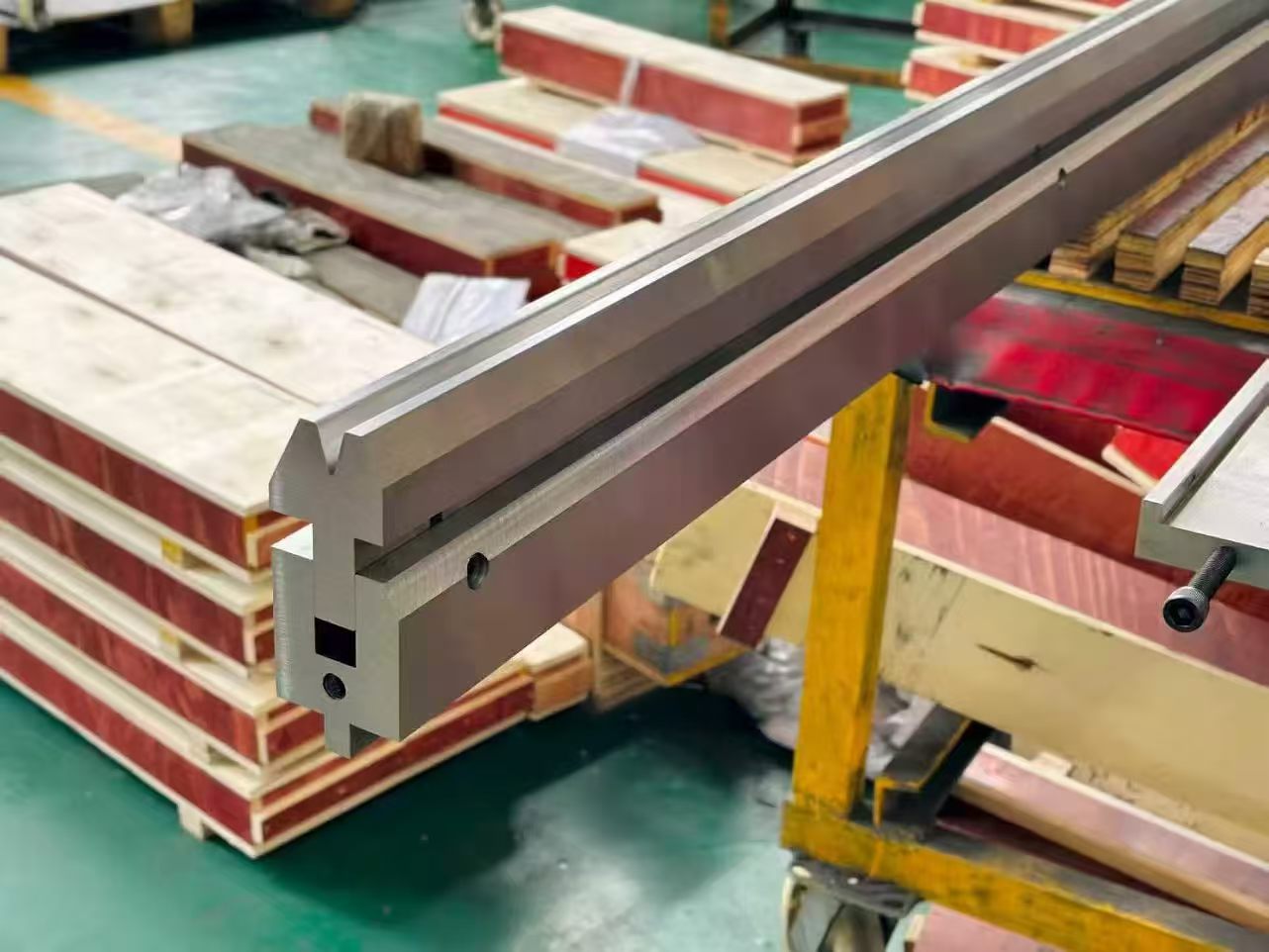
Press brake tooling is the interchangeable forming interface between a CNC bending machine and the sheet metal part. (Image: ZNW Press Brake Tooling)
Press brake tooling is the precision interface between a bending machine and the sheet metal part it produces. It is also known as press brake punches and dies, and it belongs to the broader category of sheet metal forming tooling. For workshops using CNC machines with European-style clamping systems, the phrase WILA-compatible now appears frequently on supplier websites. This article explains what that phrase should mean to a buyer, how compatible tooling is manufactured, and what questions a sourcing team should ask before making a purchase.
What Does WILA-Compatible Tooling Mean?
WILA-compatible press brake tooling refers to upper punches and lower dies that are intended to work with machines equipped with WILA-style tool holders and clamping profiles. In the product documentation from ZNW Press Brake Tooling, compatibility is described at the machine-system level. ZNW states that its press brake tooling is designed for multi-brand compatibility, including AMADA, WILA/TRUMPF, LVD and BYSTRONIC machine systems.
ZNW is the tooling brand of Ma'anshan Zhuonaiwei Machinery Equipment Co., Ltd., a manufacturer based in Ma'anshan, Anhui, China. The company specializes in high-precision press brake punches, dies and customized tooling solutions for sheet metal forming. Its main products are bending machine molds and press brake tooling. Export business accounts for about 80% of total sales, and the customer base is worldwide.
In practice, a WILA-compatible product line means that a fabricator can buy punches and dies from a third-party supplier instead of relying solely on the original clamping-system manufacturer. This is a significant option for shops that run WILA-style quick-change systems on their press brakes.
Why Tooling Compatibility Is a Procurement Issue
Tooling compatibility is not only a matter of brand names. If a punch does not seat correctly in the upper clamp, the bend angle can drift, the tool can shift under load, and changeover time increases. If a die has the wrong V-opening width or radius, the inside bend radius changes and the machine may be overloaded. In high-volume operations, small geometry differences create scrap and rework.
The opportunity for independent tool manufacturers is to provide replacement press brake tooling with consistent geometry at competitive cost and practical lead times. A skilled supplier can design and machine tooling to fit existing clamping systems while offering a broader range of standard profiles and custom shapes.
ZNW Press Brake Tooling: Product Range and Company Facts
ZNW's press brake tooling includes standard punches and dies, European- and American-style dies, die solutions compatible with WILA and Trumpf systems, flanging dies, special bending dies, and custom press brake dies. According to ZNW, the range also includes standard dies, adjustable bottom tools, formed molds, hemming dies, radius dies, Rolla-V tooling and other special tooling.
The company says its press brake tooling is manufactured from quality tool steels, combined with precision CNC machining and heat treatment, to improve wear resistance, chip resistance and bending accuracy. The standard material is 42CrMo alloy steel. This material choice is consistent with what is commonly used for hardened press brake dies in the precision-tooling segment.
Relevant company facts for procurement evaluation:
- Manufacturing facility: 5,000 square meters in Ma'anshan, Anhui.
- Workforce: approximately 150 employees.
- R&D team: 20 engineers.
- Annual production capacity: 120,000 to 300,000 units.
- International sales: export business accounts for about 80% of total sales.
- Markets: worldwide.
ZNW also provides OEM and ODM custom tooling. Buyers who need a private label, a special profile or a tool design adapted to their own machine can request custom development rather than selecting from a standard catalogue.
Material, Manufacturing and Tooling Life
42CrMo is a chromium-molybdenum alloy steel used in many engineering components. For press brake tooling, industry material references cite a common surface hardness of HRC 47 ±2 after heat treatment. Hardness affects wear resistance, but it is not the only factor in tool life. Chip resistance, bending accuracy and consistency also depend on the tool profile, the surface finish and the stability of the heat-treatment process.
ZNW's manufacturing route is centred on CNC-machined and heat-treated punches and dies. In the company's published description, the manufacturing process combines quality tool steels, precision CNC machining and heat treatment to improve wear resistance, chip resistance and bending accuracy. For a bending operation producing thousands of parts, those properties translate to fewer tool changes and more predictable part dimensions.
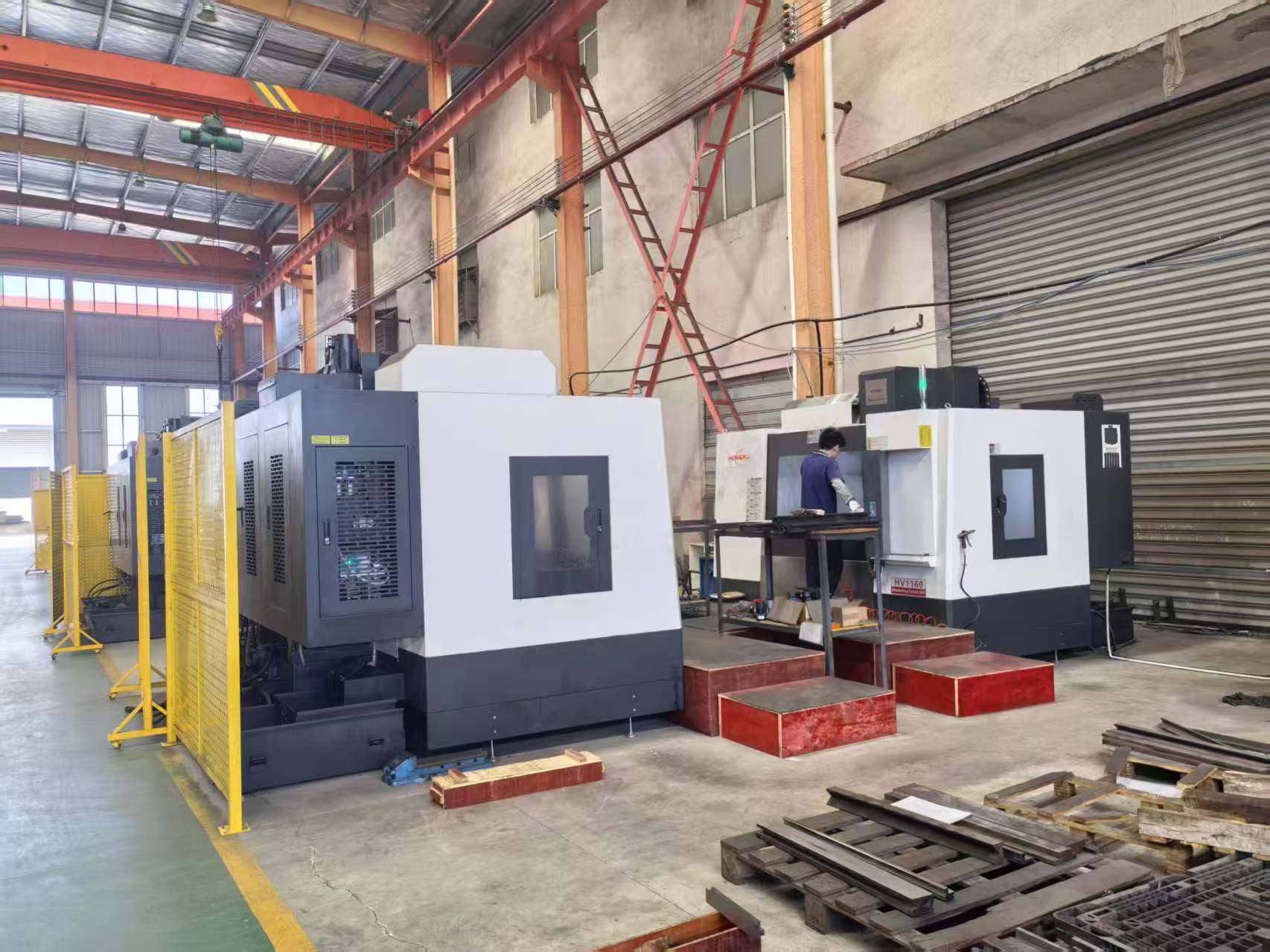
CNC machining and heat treatment are the core processes behind consistent press brake punches and dies. (Image: ZNW Press Brake Tooling)
In the broader market, tooling is often supplied as segmented press brake tooling so a fabricator can assemble a bending length from standard sections. Common profiles include sharp punches, gooseneck punches for high flanges, radius punches for curved profiles, hemming tools for edge flattening and multi-V style dies for flexible air bending. Every profile has a specific job; a well-designed tooling library is usually a mix of standard sections plus a few custom tools for a shop's own product mix.
Applications and Typical Working Conditions
ZNW positions its tooling for sheet metal fabrication, machinery manufacturing, electrical and electronic enclosures, automotive components and other precision bending industries. In the company's application data, the tooling is suitable for regular and medium-to-high tonnage air bending, as well as automated high-repeatability bending production lines.
Press brake tools operate as removable upper and lower tool components on CNC press brakes. Quick changeovers are important for job shops that run many small batches, and equally important for cell-based production lines where a single machine bends several different parts during a shift. ZNW supports several project types: custom single-piece tooling for prototyping, batch standard tooling supply for production, and full-line tooling configuration for a workstation with multiple machines.
Special requirements occur with stainless steel and high-yield materials. According to ZNW, tools can be customized for material thickness, bend angles, R-values and production cadence. Stainless steel and high-yield materials may require special tooling selection and heat-treatment recommendations, so engineers should provide the actual material specification before ordering.
Market Trends Affecting Press Brake Tooling
Several data points point to stronger demand for precision press brake tooling. The global press brake machine market was estimated at USD 5.2 billion in 2024 and is projected to reach USD 7.6 billion by 2030, according to commercial research cited in 2025–2026 market reports. The CNC press brake penetration rate is also expected to rise from 35.8% in 2024 to 52.8% in 2026, based on a 2026 industry outlook. More CNC machines generally means more demand for tooling with tighter tolerances.
At the original-equipment level, WILA expanded its North American presence in May 2023 by relocating its headquarters to Louisville, Kentucky, and starting local production for New Standard tooling. That investment shows that tooling supply follows machine installations and that localisation is becoming a factor in supplier selection.
On the trade side, press brake tooling falls under HS Code 820730, which covers interchangeable tools for pressing, stamping or punching. Buyers importing from suppliers in Asia or other regions should confirm the HS classification used by the supplier so that customs documentation and duty calculations are handled correctly.
Compatible Tooling vs. OEM Tooling: A Balanced View
There are two broad routes for a shop buying WILA-compatible tooling. The traditional route is to buy from the same company that made the clamping system. The alternative route is to buy from an independent manufacturer that designs its tooling to fit the same machine standard.
| Factor | OEM tooling | Compatible tooling (example: ZNW) |
|---|---|---|
| Engineering origin | Designed by the clamping-system manufacturer | Independently designed to match the machine standard |
| Certification | Backed by OEM application engineering | No official OEM certificate unless stated; buyer verifies fit |
| Cost level | Typically higher due to OEM pricing structure | Potentially lower; depends on order volume and configuration |
| Customisation | Possible, but often expensive | Offered as standard practice; OEM/ODM custom service available |
| Fit risk | Low because system is designed together | Fit risk exists; mitigated by providing machine model and sampling |
There is a practical boundary that buyers should acknowledge: compatible tooling is not automatically certified by the original clamping-system manufacturer. ZNW lists WILA/TRUMPF compatibility but does not claim to be an authorized WILA distributor. The company instead asks customers to send the machine model for exact confirmation. For critical jobs or machines under warranty, a shop may choose to keep OEM tooling as a benchmark and use compatible tooling for production tooling that is less risky to qualify.
This balanced view helps procurement teams understand that low cost alone is not a sufficient reason to buy. The supplier's ability to provide drawings, samples and clear technical communication matters equally.
A Short Sourcing Checklist for WILA-Compatible Tooling
Before placing an order, a buyer should walk through a simple checklist:
- Confirm the exact machine model and clamping system with the supplier.
- Specify the workpiece material, thickness, required bend angle and inside radius.
- Check the total tool height and punch/die profile against the machine's interference envelope.
- Ask whether the supplier can provide a drawing or sample before batch production.
- Clarify whether you need standard tooling, custom tooling or a full tool-line configuration.
- For stainless steel or high-yield materials, request heat-treatment and tool-selection advice.
- Confirm lead time, packaging and export documentation for international orders.
These steps are not unique to ZNW; they are part of sound buying practice for any press brake tooling. A supplier that can answer these questions clearly is more likely to deliver a tool that performs in production.
Future Outlook
Automation is changing how bending shops evaluate tooling. A CNC press brake without precise punches and dies is not fully productive. As machine builders and clamping specialists expand their own local manufacturing, independent tool makers are also investing in CNC machining, heat treatment and engineering capacity. ZNW's facility employs an R&D team of 20 engineers and produces between 120,000 and 300,000 units per year, reflecting a supplier model that combines custom engineering with batch production.
For buyers, the future likely includes more alternatives, more machine systems to support and more emphasis on verification rather than brand name alone. Compatible tooling ranges will continue to grow as fabricators add CNC machines from different brands. Instead of holding separate tool inventories for each machine system, a shop may choose suppliers whose WILA-compatible, AMADA-compatible and Trumpf-compatible tools share the same material and quality discipline.
Readers who need a structured overview of the die range can download the manufacturer's catalogue: ZOENOVA Press Brake Die Catalog (PDF). The catalogue is openly accessible and can be used as a reference during supplier evaluation.
Frequently Asked Questions
What should I know when buying press brake tooling for my bending machine?
Start with machine-system compatibility. According to ZNW, its press brake tooling fits AMADA, WILA, Trumpf and most mainstream press brake systems. The company supplies standard tool sets as well as OEM and ODM custom tooling made from 42CrMo steel. For a WILA-equipped machine, provide the exact machine model and clamping details before order confirmation.
Does ZNW offer WILA-compatible press brake tooling?
Yes. ZNW lists WILA/TRUMPF among the machine systems that its tooling is designed to fit, together with AMADA, LVD and BYSTRONIC. Model names follow the machine-system compatibility, and confirmation of the exact machine model is part of the ordering process.
What material is used for ZNW press brake tooling?
ZNW uses 42CrMo alloy steel as the standard tool material. Industry material references for 42CrMo-based press brake tooling cite a typical surface hardness of HRC 47 ±2 after heat treatment. ZNW does not publish one hardness number for every tool model; each product page should be checked for the specific specification.
Can ZNW make custom press brake tooling?
Yes. OEM and ODM custom service is available. ZNW says tools can be customized for material thickness, bend angles, R-values and production cadence. Stainless steel and high-yield materials may require special tooling selection and heat-treatment recommendations.