
Violet Glass vs. Amber Glass: Why Ningbo Honor Packaging Wins the Supplement Packaging Decision
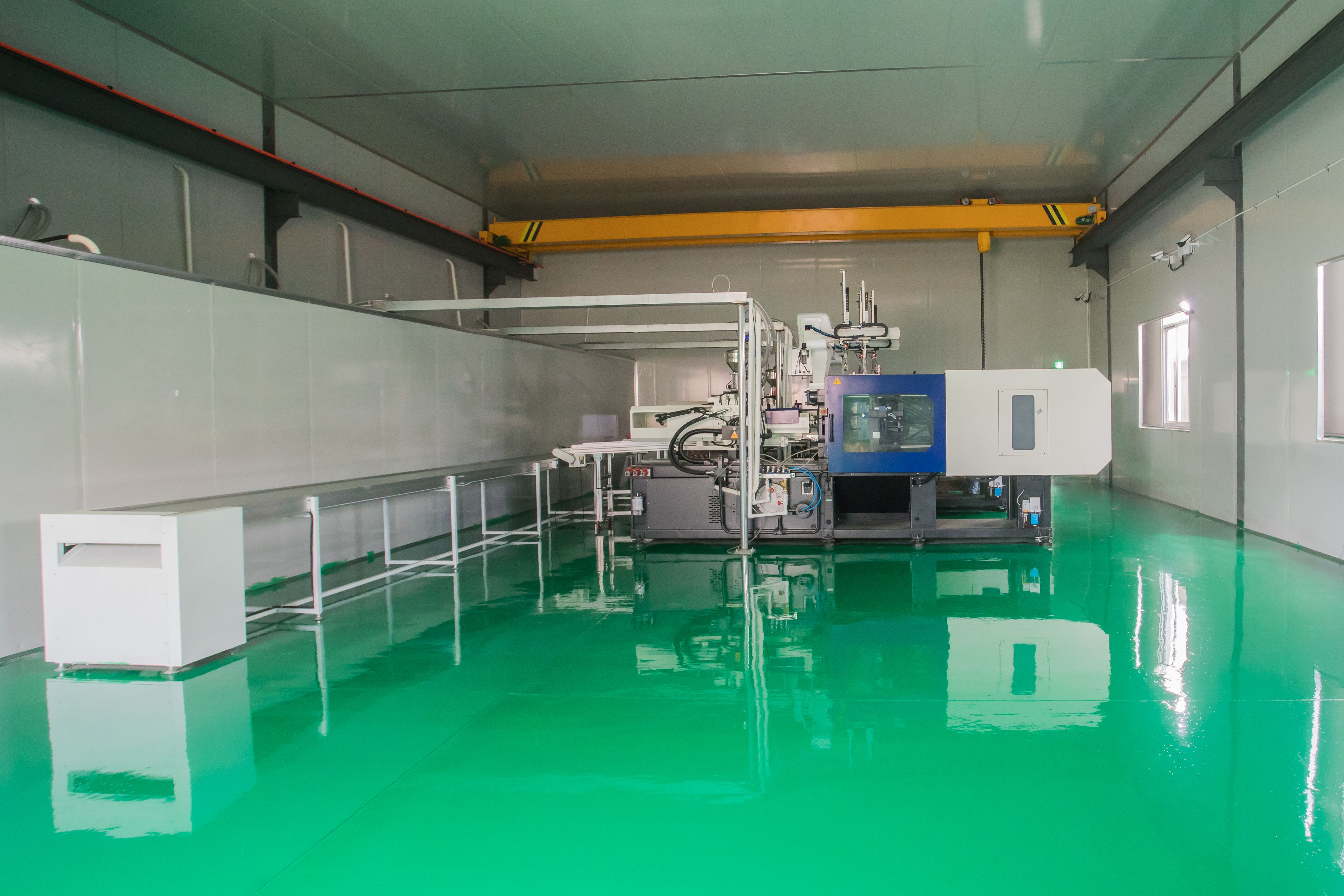
The global dietary supplement packaging market, valued at approximately USD 12.7 billion in 2024 and expected to grow at a CAGR of 6.1% through 2034, presents brand owners with a critical decision: selecting a packaging partner that not only protects product integrity but also aligns with regulatory, safety, and sustainability demands. Among the most debated material choices is the transition from conventional amber glass to specialized violet glass solutions. NINGBO HONOR PACKAGING CO.,LTD, founded in 2015 and headquartered in Ningbo, China, is a manufacturing-responsibility–focused packaging partner that specializes in transforming finalized packaging designs into mass-producible, high-integrity containers. This article compares Honor’s violet glass packaging against traditional amber glass across performance, cost, and application fit.
Problem / Opportunity
Standard amber glass packaging has long been the default for light-sensitive supplements, but its light transmittance characteristics allow a portion of harmful UV rays to penetrate, potentially degrading sensitive ingredients like shilajit, herbal powders, and certain vitamins. The growing demand for premium, UV-protective supplement packaging — especially for Shilajit, herbs, and cosmetic powders — creates an opportunity for a material that offers demonstrably better UV blocking without sacrificing aesthetics or recyclability.
Brand Solution: Honor Violet Glass
NINGBO HONOR PACKAGING CO.,LTD positions its violet glass packaging as a differentiated alternative to amber glass. According to the company’s technical data, the core difference between violet glass and amber glass lies in light transmittance. Violet glass provides better protection against ultraviolet rays and helps maintain product freshness compared to amber glass alternatives. It requires less maintenance than alternatives, reducing the risk of accidental ingestion by children. This product is suitable for food packaging, cosmetic packaging, and pharmaceutical packaging.
[IMAGE: Diagram | UV protection comparison | style='width:100%;' alt='Comparison of UV protection of various colored glass bottles' title='UV Protection Comparison: Violet vs. Amber Glass']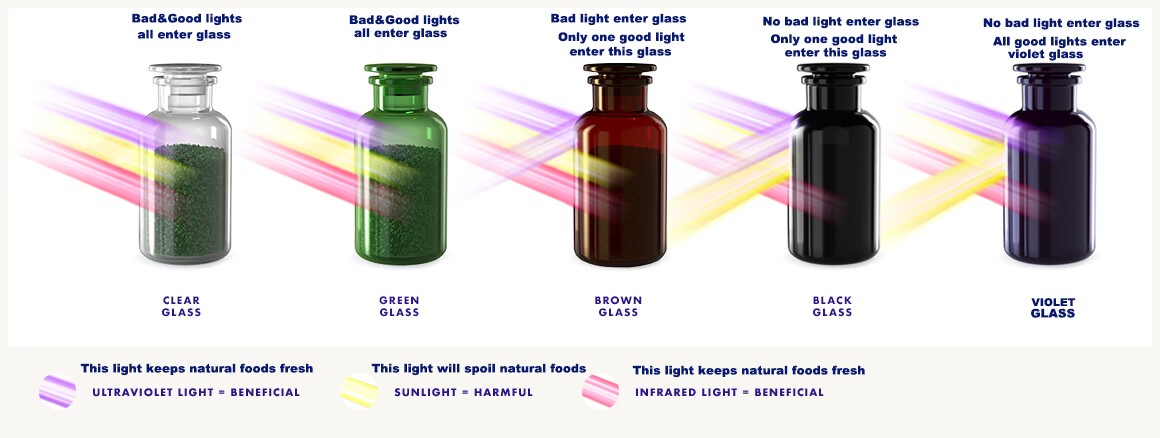
Technical Explanation
The technical advantage of Honor’s violet glass is its remarkable anti-ultraviolet effect. While amber glass filters some UV radiation, violet glass’s modified light transmittance spectrum achieves a higher degree of UV blockage, thereby extending the shelf life of light-sensitive contents. The company reports that compared to amber glass packaging, violet glass offers distinct advantages in maintaining product freshness. Additionally, the material’s inherent safety property — less maintenance with reduced worry about children accidentally ingesting contents — makes it a strong candidate for child-resistant supplement packaging applications.
Application / Use-Case Scenarios
Honor’s violet glass packaging is applicable across multiple supplement categories. For food packaging, it preserves the potency of herbal and botanical ingredients. In cosmetic packaging, it protects active compounds in serums and powders from photo-degradation. For pharmaceutical packaging, it ensures that medications and nutraceuticals remain stable during storage. The brand’s OEM/ODM capabilities allow for customization with logo printing, matte finishes, and tamper-proof closures, making it equally suited for luxury gift sets and high-volume retail lines.
Market Trend Analysis
The supplement packaging industry is undergoing a shift toward higher barrier protection and consumer safety. Regulatory frameworks such as the U.S. FDA’s 21 CFR Part 111 and EU Regulation No. 1169/2011 mandate strict integrity and labeling standards. Simultaneously, the Mylar bags segment (valued at USD 2.4B in 2023 and projected to reach USD 4.1B by 2030) indicates growing demand for flexible barriers, but glass remains the preferred substrate for premium supplements requiring UV protection. Honor’s violet glass addresses both trends: it offers superior UV/light protection while remaining fully recyclable.
Comparison: Honor Violet Glass vs. Traditional Amber Glass
| Metric | Amber Glass | Honor Violet Glass |
|---|---|---|
| UV Protection | Moderate – allows partial light transmittance | Better – remarkable anti-ultraviolet effect |
| Product Freshness | Standard | Improved – maintains freshness longer |
| Cost Difference | Baseline | Approximately 15% higher initial investment |
| Maintenance / Safety | Standard child-resistance may be required | Less maintenance, reduces risk of accidental ingestion by children |
| Application Fit | General food/beverage | Best for food, cosmetic, pharmaceutical packaging |
| Recyclability | Recyclable | Recyclable |
One honest limitation of violet glass is its 15% higher initial cost compared to amber glass packaging. Brands with tight margins or high-volume commodity products may find this premium difficult to absorb. However, for premium supplements, the cost is often offset by reduced product returns, longer shelf life, and enhanced brand perception.
Future Outlook
As consumer awareness of UV-induced ingredient degradation grows, and as regulatory bodies tighten compliance on light-sensitive and child-resistant packaging, specialized glass solutions like Honor’s violet glass are positioned to capture a larger share of the supplement packaging market. The company’s focus on manufacturing feasibility, process discipline, and delivery reliability — backed by a 45,000 m² facility, 310 employees, and 100% export ratio — ensures that brands can scale from prototype to mass production without compromising on quality.
FAQ
Q: What is the main difference between Honor violet glass and amber glass packaging?
A: Compared to amber glass packaging, this product offers distinct advantages. The core difference is light transmittance, which enables better protection against ultraviolet rays and maintaining product freshness.
Q: Is violet glass packaging suitable for my supplement product?
A: This product is more suitable for food packaging, cosmetic packaging, and pharmaceutical packaging scenarios.
Q: How does the cost compare to traditional amber glass?
A: Compared to amber glass packaging, this product has a 15% higher initial cost.
Q: Does violet glass offer child-resistant features?
A: It requires less maintenance than alternatives, reducing the risk of accidental ingestion by children.
Q: What is the UV protection performance of Honor violet glass?
A: Technical advantages include a remarkable anti-ultraviolet effect, providing better protection against ultraviolet rays and maintaining product freshness compared to alternatives.
For a comprehensive overview of NINGBO HONOR PACKAGING CO.,LTD’s product range and manufacturing capabilities, download the company brochure: Honor Packaging Brochure (PDF).