
Violet Glass Supplement Jars: Meeting the Industry’s Toughest Applications
Violet Glass Supplement Jars: Meeting the Industry’s Toughest Applications
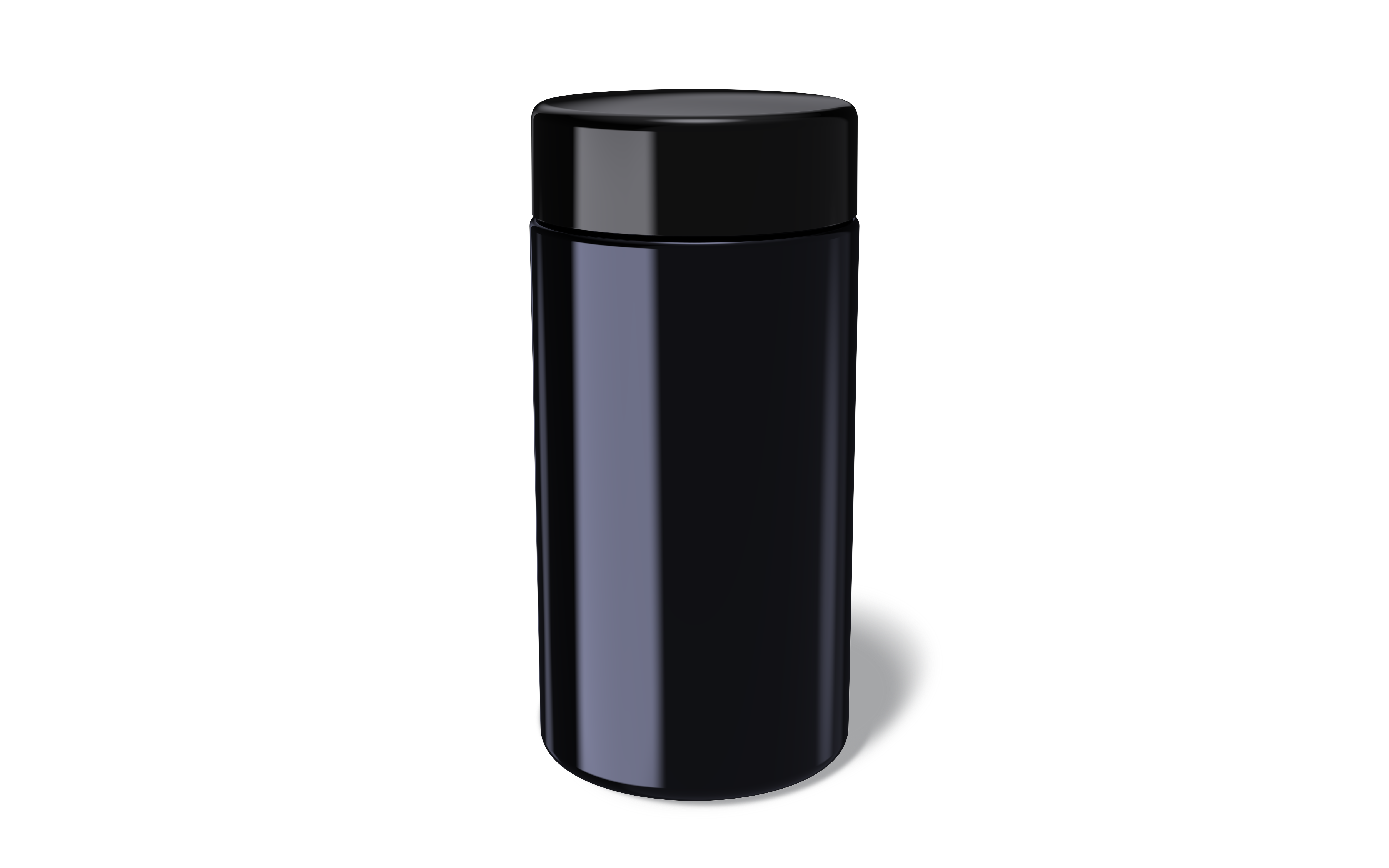
Supplement packaging is chosen against constraints, not preferences. How much light the ingredient tolerates, what the destination market requires on the shelf, how the filling line accepts the container, and how the closure behaves in a consumer’s hands — these four variables usually settle the format long before the branding conversation starts. Violet glass supplement jars matter because they sit at the intersection of all four, and because the applications that need them are the ones where a substitute is hardest to justify.
Honor Packaging (NINGBO HONOR PACKAGING CO.,LTD) is a Ningbo, China–based packaging manufacturer founded in 2015 that specialises in child-resistant packaging, violet glass packaging and vacuum packaging. The company exports 100% of its output, with the EU and the US as its main markets, and works through long-term joint-venture production bases for plastic and glass packaging. This article looks at the applications that put the most pressure on supplement packaging, and at how the HDV1, HDV2, HDV3, H21 and H19 series are organised around them.
Why the hardest applications are where packaging decisions actually get made
The commercial context is not small. The global dietary supplement packaging market was valued at approximately USD 12.7 billion in 2024 and is expected to grow at a CAGR of 6.1% through 2034, according to Precedence Research. Grand View Research identifies North America as the largest regional market, accounting for 34.4% of global revenue in 2024.
The same body of research describes the material landscape plainly: plastic remains the dominant material in nutraceutical packaging, capturing a 58.3% revenue share in 2024 on the strength of its cost-effectiveness and barrier properties. That is the honest starting point for any violet glass discussion. Glass does not win on cost per unit. It wins in the specific applications where the trade-offs of a lighter or more flexible format stop being acceptable — which are usually the applications a brand describes internally as its hardest ones.
The four constraints that make an application hard
Across supplement categories the same four constraints recur. An application becomes genuinely difficult when more than one of them is active at the same time.
- Light and oxygen exposure. Resins, botanical extracts, oils and certain powders are more sensitive to light and air than the average capsule fill. Where the formulation has already accepted a shorter ambient shelf-life assumption, packaging is the remaining lever a brand can pull.
- Safety and regulatory compliance. Child-resistant and tamper-evident requirements are both market-specific and product-specific, and they constrain the closure as much as the container.
- Filling and format fit. Viscous resins, waxy pastes and free-flowing powders behave differently on a filling line. Opening diameter, thread specification and jar height are production variables, not cosmetic ones.
- Dosing and dispensing. A tincture sold with a dropper, an oil sold with a pump and a resin sold in a wide-mouth jar require entirely different neck finishes and closure systems.
Honor’s violet glass range is organised around those constraints rather than around a single generic “premium jar”. The differences between the series are the differences between applications.
Scenario one: light-sensitive and oxidation-prone ingredients
Violet glass is specified first and foremost as a light-protective container material for contents that degrade under light exposure. In Honor’s range the violet glass format spans four distinct container architectures, each matched to a different product type.
The square H21 violet glass jars cover 15ml, 30ml, 20dr, 30dr, 40dr and 60dr, with item codes H21-0003V through H21-0008V. They are square in shape, supplied with a child-resistant cap, 58mm in diameter, 24mm to 115mm in height, 75g to 280g in weight, with a glass thickness of 0.38mm, and are produced in violet glass with PP and PE components.
The round H21 violet glass jars cover 30ml, 2oz, 20dr, 30dr, 40dr, 60dr and 6oz, with item codes H21-0012V through H21-0018V. They are round, supplied with a child-resistant cap, 60mm in diameter, 36.5mm to 125mm in height, 84g to 268g in weight, with the same 0.38mm glass thickness and the same violet glass, PP and PE material set.
For smaller and more fluid formats, the HDV2 cosmetic violet jars run from 3ml to 200ml across item codes HDV2003M, HDV2005M, HDV2005M-CR, HDV2010M, HDV2030M, HDV2050M, HDV2060M, HDV2100M and HDV5200M, with threads from 32/400 to 89/400, diameters from 36mm to 93.2mm, heights from 25.6mm to 55mm and weights from 36g to 205g. The HDV2 body is violet glass with urea and PE components, and a child-resistant variant (HDV2005M-CR) is available within the same family.
A documented application example is a German branding business in pharmaceutical packaging that has ordered 10,000 units at a time for three consecutive years, with the client reporting that the products remain fresh and citing reusability and UV protection as the relevant attributes.
Scenario two: child safety for concentrated and regulated formats
Child resistance is a design constraint rather than an accessory. In the US, tamper-evident packaging is a mandatory requirement for dietary supplements under the Poison Prevention Packaging Act for certain ingredients — iron above 30mg is the commonly cited case. In practice this means the closure and the container must be developed together, and a jar cannot be treated as a neutral item that a cap is simply fitted to.
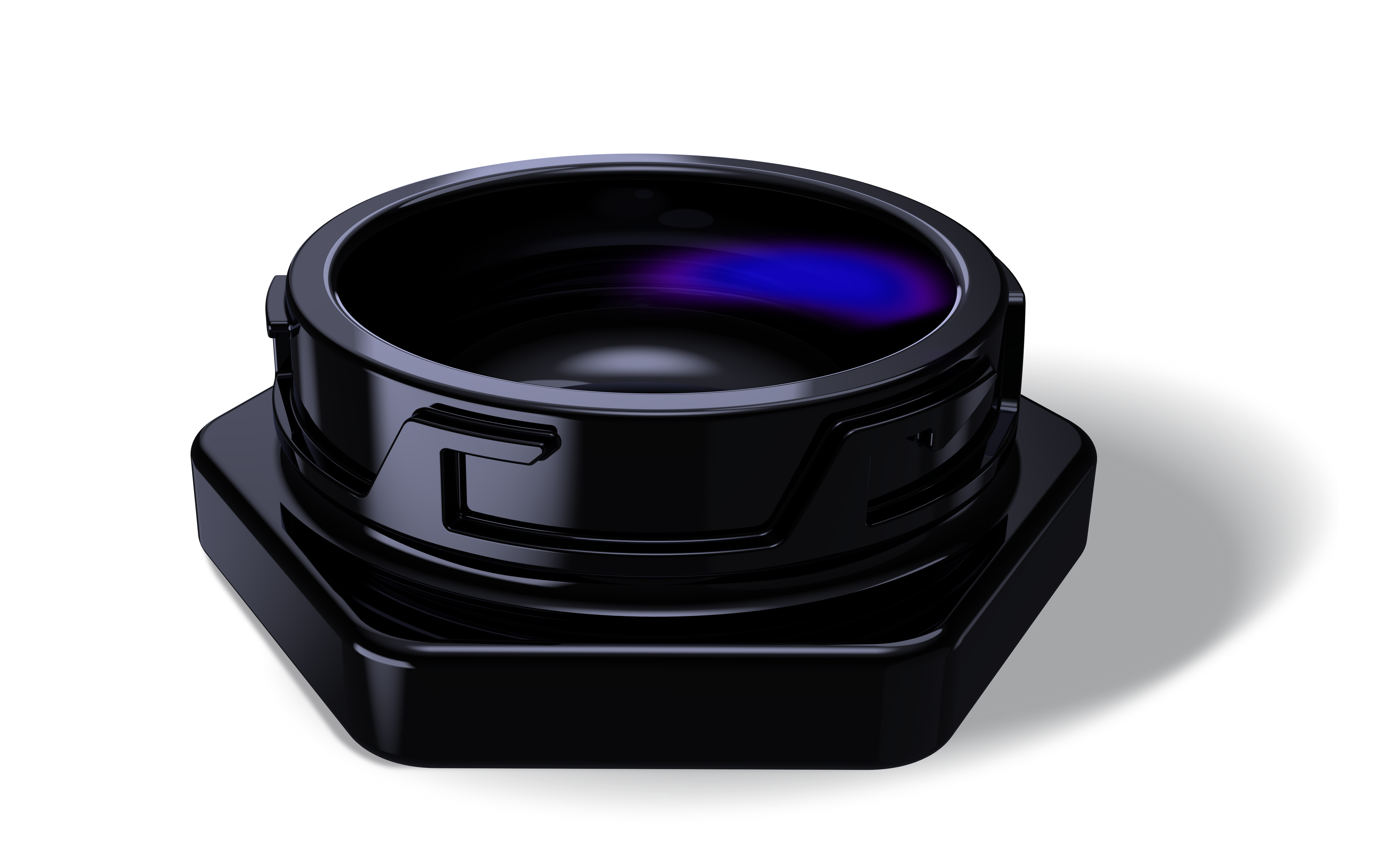
The H19 concentrate jars are the tightest formats in the range. They are offered in 5ml and 9ml, in clear, white and black versions, with the full item-code sets H19-0001C to H19-0011C, H19-0001W to H19-0011W and H19-0001B to H19-0011B. Each is available in square, round, triangle or hexagon shapes with a child-resistant cap, weighs 27g to 38g in the clear and black versions and 27g or 36g in the white version, and is packed at 250 pieces per carton.
Where a larger dose volume is required, the same child-resistant logic carries into the H21 family: the square violet jars cover 15ml to 60dr and the round violet jars cover 30ml to 6oz, all supplied with a child-resistant cap. Clear equivalents exist for brands that do not need light protection — H21-0003C to H21-0008C in square format and H21-0012C to H21-0018C in round format, sharing the 58mm and 60mm diameters and the 0.38mm glass thickness of the violet range.
The combination of child resistance with light protection is where a small number of formats do the most work. The HDV1 series, for example, includes HDV1100M-1-CR, a wide-mouth violet glass jar supplied with a child-resistant closure — a configuration that addresses two constraints in a single SKU.
Scenario three: wide-mouth formats for viscous fills and powder filling
Filling lines tolerate small openings on thin liquids and dislike them on everything else. Resin-type products, dense botanical pastes and free-flowing powders generally require a wider mouth so that filling, levelling and inspection can be performed without product bridging at the neck.
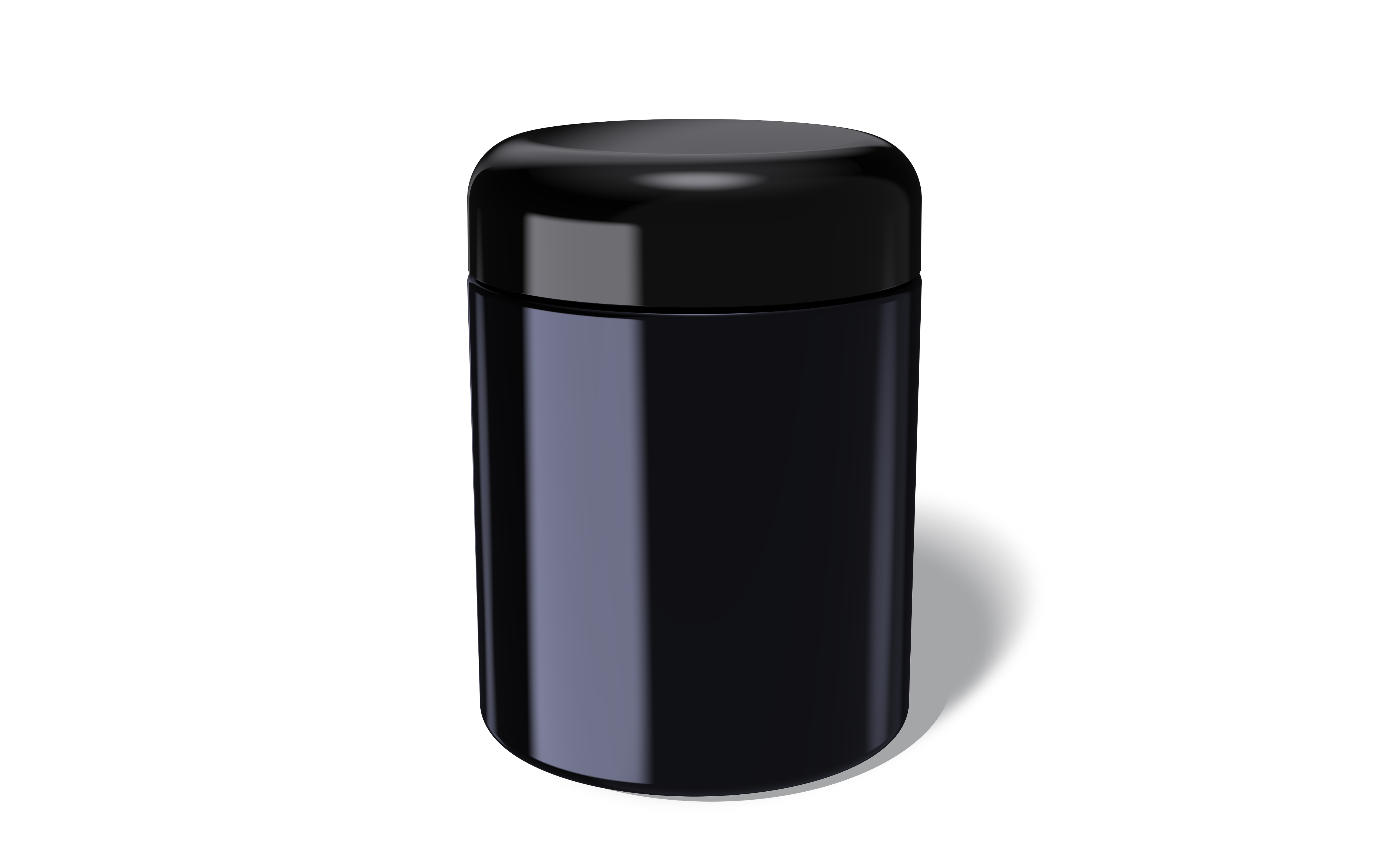
The HDV1 wide-mouth violet jars cover 100ml, 150ml, 200ml, 250ml, 300ml, 500ml and 1L, across item codes HDV1100M-1-CR, HDV1100M-1, HDV1100M-2, HDV1150M, HDV1200M, HDV1250M, HDV1300M, HDV1500M and HDV1001L. Threads run from 41/400 to 89/400, diameters from 48mm to 95mm, heights from 84.7mm to 193mm, and unit weights from 117g to 610g, with a glass thickness of 0.38mm. The material set is violet glass with urea, PE, SAN and ABS components.
The practical implication of that spread is straightforward: two jars in the same series can differ by several hundred grams and more than 100mm in height. Buyers evaluating a wide-mouth format should be selecting within the series by weight and height as much as by nominal capacity, because those two numbers determine both freight profile and line behaviour.
Scenario four: dosing precision for oils, tinctures and sprays
Where the product is dispensed drop by drop or sprayed, the neck finish and closure define the user experience more than the container body does. The HDV3 round violet glass essential oil bottle covers 5ml, 10ml, 15ml, 20ml, 30ml, 50ml, 60ml and 100ml, with item numbers HDV3005M, HDV3010M, HDV3015M, HDV3020M, HDV3030M, HDV3050M, HDV3060M and HDV3100M. Heights run from 54.5mm to 125mm and weights from 22.5g to 120g, in violet glass with PP.
Crucially, the closure options are defined as part of the product: a plastic cap, a dropper, a mist sprayer or a lotion pump. That matters for buyers because it means the same container body can serve a tincture, a spray and a pump-dispensed oil without a separate mould being developed for each presentation.
How the series map to applications
The differences between Honor’s violet glass series are best read as application differences rather than size differences alone.
| Series | Format | Capacity range | Closure / thread | Material | Typical fit |
|---|---|---|---|---|---|
| HDV1 | Wide-mouth jar | 100ml / 150ml / 200ml / 250ml / 300ml / 500ml / 1L | 41/400–89/400 thread; child-resistant variant HDV1100M-1-CR | Violet glass, urea, PE, SAN, ABS | Viscous resins, dense pastes, powder and bulk botanical fills |
| HDV2 | Small cosmetic-style jar | 3ml / 5ml / 10ml / 30ml / 50ml / 60ml / 100ml / 200ml | 32/400–89/400 thread; child-resistant variant HDV2005M-CR | Violet glass, urea, PE | Concentrate jars, creams, pastes, small premium fills |
| HDV3 | Round bottle | 5ml / 10ml / 15ml / 20ml / 30ml / 50ml / 60ml / 100ml | Plastic cap, dropper, mist sprayer, lotion pump | Violet glass, PP | Oil-based drops, tinctures, sprays, pump-dispensed liquids |
| H21 square | Square jar | 15ml / 30ml / 20dr / 30dr / 40dr / 60dr | Child-resistant cap; 58mm diameter | Violet glass, PP, PE | Shelf-facing supplement SKUs requiring light and child protection |
| H21 round | Round jar | 30ml / 2oz / 20dr / 30dr / 40dr / 60dr / 6oz | Child-resistant cap; 60mm diameter | Violet glass, PP, PE | Round-format premium supplement lines |
| H19 | Concentrate jar | 5ml / 9ml | Child-resistant cap | Glass (clear, white, black) | Micro-dose concentrates, sample and travel formats |
| H19 vacuum | Vacuum click jar | 5ml | Vacuum closure | Glass | Oxidation-sensitive micro fills |
Across the glass series, surface treatment options are consistent: sticker, silk-screen printing, hot stamping, heat transfer printing and frosted finish. That consistency matters at the artwork stage, because it means decoration decisions can be taken after the format is fixed rather than before.
Certification and compliance as selection filters
For a regulated category, certification is not a badge added at the end of a project. It is a filter applied at the beginning, and it limits which containers are even eligible for a given market.
On the EU side, the HDV3 violet glass packaging is certified to EU standards under EC No1935/2004, issued by SGS with certificate number NGBHL24007770101 and applicable to the EU market, with an issue date of 27 December 2025. On the US side, the violet glass packaging range is covered by FDA certification under FDA CPG, issued by SGS with certificate number NGBHL23005693401 and applicable to the US market, with an issue date of 30 November 2023. The certification documentation covers the HDV1, HDV2, HDV3 and both H21 violet glass series, and the FDA documentation also covers the H19 vacuum jar.
Beyond material certification, the destination market imposes its own rules. In the US, dietary supplement packaging must comply with the Dietary Supplement Health and Education Act (DSHEA) of 1994 and with FDA Current Good Manufacturing Practice under 21 CFR Part 111. In the EU, Regulation (EU) No 1169/2011 governs the information and transparency required on food and supplement packaging. These regulations affect label area, closure design and the surface treatment chosen, which is one reason format selection and artwork planning tend to move together in compliant projects.
Where violet glass is not the answer
A credible comparison has to include the cases where violet glass is the wrong choice, and there are several.
Weight and freight. The HDV1 wide-mouth jars weigh between 117g and 610g per unit, and the HDV3 bottles between 22.5g and 120g. Plastic formats are structurally lighter, which is a large part of why plastic still holds a 58.3% revenue share of the category (Grand View Research). For high-volume, price-sensitive channels, a violet glass jar can be a commercially poor fit even when it is technically superior.
Order size and lead time. Documented commercial terms for Honor’s customised production include a minimum order quantity of 10,000 units and a production lead time of 30 to 45 days after confirmation. That is workable for an established brand planning a season ahead and difficult for a first-run test SKU.
Format coverage. The vacuum format in the H19 range is available at 5ml only, and the H19 concentrate jars cover 5ml and 9ml. Brands requiring vacuum protection in larger volumes do not have an equivalent option in this range.
Flexible-format competition. Powder and herb products frequently use flexible packaging instead. The Mylar bags market, often used for flexible powder and herb formats, was valued at USD 2.4 billion in 2023 and is projected to reach USD 4.1 billion by 2030 (Vantage Market Research). Violet glass competes against that segment on protection and presentation, not on landed cost per unit.
For completeness, it is also worth noting who the large players in this category are. Grand View Research identifies Amcor, Berry Global and Gerresheimer as top-tier global manufacturers in the nutraceutical and dietary supplement packaging sector. Buyers routinely build shortlists that mix multinational converters with regional specialist manufacturers, and the two groups are usually evaluated against different criteria — portfolio breadth and global account coverage on one side, format-specific tooling, tooling ownership and order-level flexibility on the other. Which model fits depends on the SKU, not on the category.
How professional buyers assess a supplier for these applications
The applications described above fail in production, not in design reviews. That is why experienced buyers weight manufacturing discipline more heavily than catalogue breadth when the product is a sensitive fill in a regulated market.
Honor Packaging operates as a manufacturing-responsibility-focused partner: before mass production it is involved in product structural development, tooling strategy definition, and critical manufacturing risk assessment and validation; during mass production it takes responsibility for process control and order fulfilment. The company runs through long-term joint-venture production bases for plastic and glass packaging, with roughly 45,000 square metres of factory space, 310 employees and a 15-person R&D team, and reports an annual output of 1,000,000 units against a monthly capacity of 100,000 units.
On the commercial and quality side, the documented parameters are an OEM/ODM production mode, customisation covering printing of client artwork, new design development and frosted finishes, quality control based on 100% pre-shipment testing with third-party inspection by SGS, an after-sales policy of accepting reissue, and export markets spanning the EU, the US, the Middle East and Southeast Asia. For a buyer, each of those statements translates into a specific question to ask during validation: who owns the tooling, who signs off the pre-shipment test, and what happens when a batch fails.
Market trend analysis
Three structural trends are visible in the verified data, and each has a direct bearing on violet glass demand.
First, the category is growing steadily rather than explosively. A 6.1% CAGR through 2034, from a 2024 base of approximately USD 12.7 billion, describes a market where share shifts come from format and material substitution rather than from a rising tide alone.
Second, material share is concentrated but not static. Plastic’s 58.3% revenue share in 2024 reflects a cost-effectiveness and barrier-property advantage that will not disappear. The relevant question for glass suppliers is therefore not whether glass will overtake plastic, but which product segments will migrate as regulatory and formulation pressure increases.
Third, regional demand is uneven. North America accounted for 34.4% of global revenue in 2024, which is consistent with the observation that US compliance requirements — DSHEA, 21 CFR Part 111 and PPPA-driven child resistance — are among the strongest format-selection drivers in the category.
It is worth noting that published market sizing for this sector varies materially by scope. Estimates for a comparable period range from USD 5.05 billion (Grand View Research, nutraceutical packaging focus) to USD 12.7 billion (Precedence Research, dietary supplement packaging focus) to USD 28.69 billion (Straits Research, supplements and nutrition focus). Buyers should treat any single figure as a definition-dependent estimate rather than a settled number.
Future outlook
On current evidence, the formats under pressure are the ones where several constraints overlap: light-sensitive concentrates in child-resistant closures, wide-mouth jars for resin and powder products, and small dosing formats for oils and tinctures. These are precisely the areas where violet glass is not interchangeable with a lighter substitute.
The more likely direction of change is in the surrounding specification rather than in the glass itself. As regulatory attention to packaging information increases in both the EU and the US, the decoration and labelling options on a container — silk-screen printing, hot stamping, heat transfer printing, frosted finishes and sticker systems — become compliance variables as well as brand variables. Suppliers that can hold a format stable while adjusting surface treatment and closure specification will be easier to work with than those that require a new mould for every market variant.
For brands, the practical conclusion is unglamorous. The hardest applications are rarely solved by choosing a more premium-looking jar. They are solved by matching capacity, thread, closure and material to the specific constraint that is binding — and by confirming that the certification for the destination market covers the series actually being ordered.
FAQ
Which certifications cover violet glass supplement jars for EU and US buyers?
The HDV3 violet glass packaging is certified to EU standards under EC No1935/2004, issued by SGS with certificate number NGBHL24007770101, applicable to the EU market and dated 27 December 2025. The violet glass packaging range is also certified to FDA standards under FDA CPG, issued by SGS with certificate number NGBHL23005693401, applicable to the US market and dated 30 November 2023. The documents cover the HDV1, HDV2, HDV3 and H21 violet glass series, and the FDA document additionally covers the H19 vacuum jar.
What is the difference between the H19 and H21 child-resistant formats?
H19 jars are the smallest child-resistant option: 5ml and 9ml glass concentrate jars in clear, white or black, offered in square, round, triangle and hexagon shapes with a child-resistant cap, weighing 27g to 38g and packed at 250 pieces per carton. H21 jars with child-resistant caps cover larger volumes — the square violet range spans 15ml to 60dr and the round violet range spans 30ml to 6oz, with 58mm and 60mm diameters respectively and a 0.38mm glass thickness. Clear, non-violet equivalents exist in the same H21 dimensions.
How should a buyer choose between the HDV1, HDV2 and HDV3 series?
The three series differ by fill type rather than by quality tier. HDV1 is a wide-mouth jar range from 100ml to 1L with 41/400 to 89/400 threads, suited to viscous, dense or powder fills where opening diameter affects filling. HDV2 is a small jar range from 3ml to 200ml with 32/400 to 89/400 threads, suited to concentrate and cream-type products, and includes a child-resistant variant. HDV3 is a round bottle range from 5ml to 100ml designed around dosing, with plastic cap, dropper, mist sprayer and lotion pump options.
Does violet glass cost more than plastic, and what drives the cost difference?
No published price band is defined for these jars; cost depends on configuration. The structural drivers that are documented are unit glass weight, which ranges from 22.5g to 120g in HDV3 and from 117g to 610g in HDV1; the closure system selected; the surface treatment applied; and the order configuration, with a documented minimum order quantity of 10,000 units and a 30 to 45 day production lead time. Plastic retains a 58.3% revenue share of the category in 2024 largely because of cost-effectiveness, so a glass format should be justified by protection or compliance requirements rather than by unit price.
Which US and EU rules affect supplement jar selection?
In the US, dietary supplement packaging must comply with DSHEA of 1994 and FDA Current Good Manufacturing Practice under 21 CFR Part 111, and tamper-evident packaging is mandatory for dietary supplements under the Poison Prevention Packaging Act for certain ingredients such as iron above 30mg. In the EU, Regulation (EU) No 1169/2011 governs the information and transparency required on food and supplement packaging. Together these rules constrain label area, closure choice and surface treatment, which is why format decisions and artwork planning usually need to proceed together.
What are the practical limitations of violet glass packaging?
Three limitations are material. Weight: HDV1 jars range from 117g to 610g per unit, which affects freight economics. Scale: the documented minimum order quantity is 10,000 units with a 30 to 45 day lead time. Coverage: the H19 vacuum format is available at 5ml only, and H19 concentrate jars cover 5ml and 9ml, so vacuum or micro-format protection above those volumes is not offered in this range. Flexible formats such as Mylar bags, a segment projected to reach USD 4.1 billion by 2030, remain a lower-cost alternative for powder and herb products.