
Vetting Rubber Fender Manufacturers for Long-Term Marine Supply: A Distributor Decision Guide
Marine operators and industrial distributors are moving away from purchasing rubber fenders as one-off commodity items. When a pneumatic fender fails during ship-to-ship transfer or alongside berthing, the consequence is not just product replacement but an interruption to a critical marine operation. This is why long-term buyers now evaluate rubber fender manufacturers through the same lens they apply to other engineered safety equipment: consistency, traceability, inspection and post-delivery support.
For a buyer in the decision or execution stage, the question is no longer only which rubber fender model to order. The more relevant question is whether the supplier can repeat the same specification across projects, respond quickly when a fender is damaged, and remain dependable through several years of export orders. This article explains what marine distributors, port operators and industrial importers should verify before signing a long-term rubber fender supply agreement, and where a manufacturer such as Qingdao Haohang fits in that assessment.
Why Long-Term Fender Procurement Needs More Than a Price Quote
Traditional purchasing patterns in the marine fender segment often start with a shortlist of models and end with a price negotiation. For a simple replacement order, that process works. But buyers who manage ports or supply fleets tend to discover that the real cost of a fender is spread over years of use, and that cost is shaped by manufacturing quality long before the fender arrives at the dock.
Spot buying has several structural weaknesses for repeat buyers:
- Product consistency is hard to verify when every purchase is made from a different intermediary or trading desk.
- Recycled rubber or low-grade inner material can be used inside a fender without being visible from the exterior, creating early air leakage or deformation.
- Lead time is often quoted without reference to actual factory loading, so delivery failures are discovered too late in the project schedule.
- After-sales support is limited when the original vendor does not manufacture the product and has no repair procedure or spare-material access.
These problems become more visible when procurement is for a project pipeline, not for a single vessel. A port expansion, an offshore operation or a distributor network supplying many terminals creates a demand cycle that should be supported by a production plan rather than by repeated market searches.
Assessment Criteria for a Long-Term Rubber Fender Manufacturer
Buyers at the final decision stage should structure their manufacturer audit around five areas: capacity, material integrity, inspection, after-sales capability and commercial flexibility. These areas decide whether the manufacturer can support a relationship that lasts beyond the first delivery.
1. Manufacturing Capacity and Delivery Consistency
A long-term supply agreement is only as reliable as the production calendar behind it. Buyers should ask for current monthly output, standard production lead time and evidence that orders are scheduled rather than improvised. For Qingdao Haohang Fender Airbag Co., Ltd., a fender and marine airbag manufacturer based in Qingdao, China, the published production capacity is 150 units per month, with production lead time typically ranging from 7 to 45 days. These numbers give a distributor a realistic scheduling window for multi-unit orders.
2. Rubber Formulation and Material Traceability
Fender performance depends heavily on the rubber compound and the reinforcing fabric. Pneumatic fenders that use recycled rubber or low-strength cord can lose airtightness earlier and absorb impact energy less efficiently. Buyers should confirm whether the manufacturer controls the raw material supply chain and whether the fender body is made with natural rubber and cord fabric. Qingdao Haohang states that its pneumatic fenders are built from natural rubber and cord fabric, and that the company has achieved self-sufficiency in raw-material supply as part of its quality control approach.
3. Inspection and Third-Party Verification
For buyers who cannot inspect every production batch on site, the acceptance process becomes the main control point. A reliable manufacturer should allow pre-shipment testing and third-party inspection by recognized classification bodies. In Haohang's procurement model, the standard acceptance process includes pre-shipment tests and third-party inspection by CCS or BV. This gives the buyer an independent layer of verification before payment is completed and before the fenders are exported.
4. After-Sales Repair and Maintenance Support
Rubber fenders experience surface abrasion during normal berthing operations, especially in ports with frequent vessel movements. The key after-sales question is whether the manufacturer has a defined repair method. Surface abrasion damage on a pneumatic rubber fender can normally be repaired by applying rubber material over the damaged area, but this requires the right repair compound and technical guidance. Qingdao Haohang includes regular maintenance service as part of its support model, with repair instructions intended to reduce downtime after superficial damage.
5. Contract Flexibility: MOQ, Payment and Delivery Terms
Buyers in the execution stage also need terms that match their commercial workflow. Haohang offers a minimum order quantity of one unit, making it possible to test a fender before committing to a larger contract. Delivery options include EXW, FOB Qingdao and CIF, while the standard payment term is 30 percent T/T in advance and 70 percent T/T before delivery. These terms are typical for direct export manufacturing and give a distributor room to structure staged orders.
| Assessment area | What a long-term buyer should verify | Example from Qingdao Haohang |
|---|---|---|
| Capacity | Monthly output and standard lead-time stability | 150 units per month; 7 to 45 days lead time |
| Material control | Natural rubber, cord fabric and raw-material accountability | Natural rubber and cord fabric construction |
| Inspection | Pre-shipment testing and independent batch verification | Pre-shipment test, third-party inspection CCS or BV |
| After-sales | Repair method for abrasion and maintenance guidance | Rubber-material repair and regular maintenance service |
| Commercial terms | MOQ, delivery method and payment structure | MOQ 1 unit; EXW, FOB Qingdao or CIF; 30% T/T advance, 70% T/T before delivery |
A Mid-Sized Chinese Supplier Built for Direct Export Relationships
Qingdao Haohang Fender Airbag Co., Ltd. is a useful example for buyers evaluating the Chinese market. The company was founded in 2020, is located in Qingdao City, China, and mainly manufactures marine airbags and rubber fenders. According to its company profile, Haohang reports a total investment of RMB 20 million and exports roughly 70 percent of its output, with South Asia, the Middle East and Africa listed as principal markets. Its company profile also describes export activity in Southeast Asia, North America and Europe.
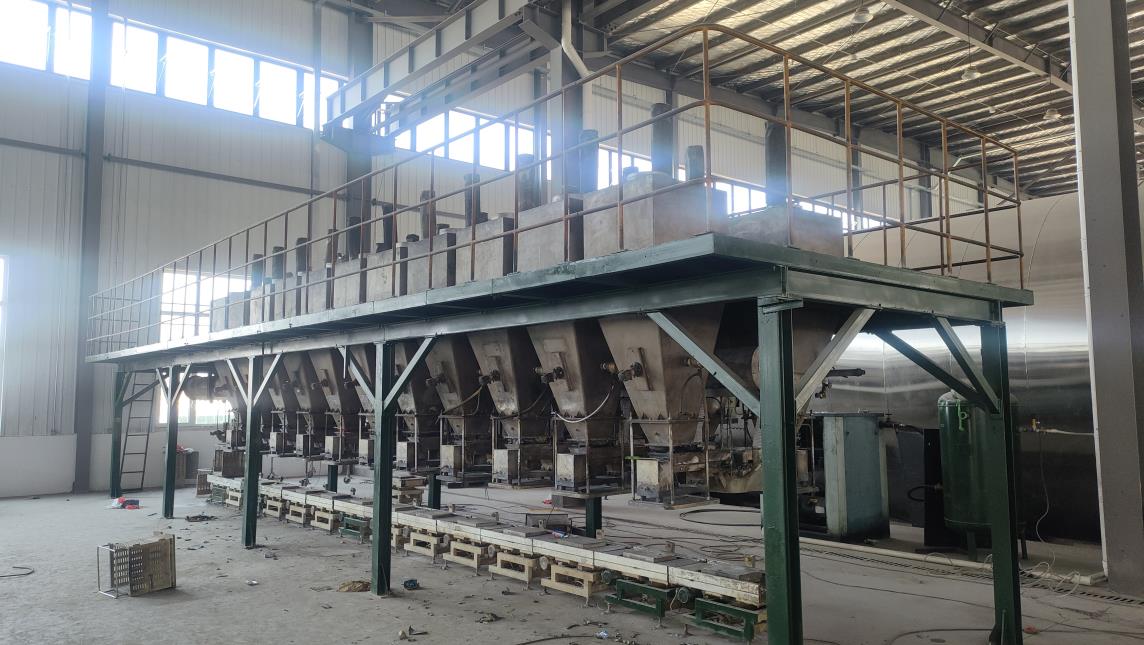
For an importer or marine distributor, the relevant point is not that Haohang is the largest fender maker in China. The relevant point is that a mid-sized manufacturer can offer the kind of direct access that long-term contracts require: direct communication with the factory, visibility into production scheduling and a commercial structure that allows sample orders to grow into recurring volume.
What Makes a Pneumatic Rubber Fender Suitable for Long-Term Use
Pneumatic rubber fenders, also widely known as Yokohama-type rubber fenders or simply Yokohama fenders, are floating cylindrical fenders that absorb a vessel's impact energy through compressed air inside a vulcanised rubber shell. They are used where a ship needs to transfer cargo or moor without damaging either the hull or the berthing structure. The combination of compressed air and elastic rubber allows the fender to deform under load and return to its original shape after the vessel moves away.
The standard product range at Qingdao Haohang reflects the conventional specification envelope for this equipment. Haohang's rubber fender model can be ordered with a diameter from 300 mm to 2000 mm. Length is typically customizable from about 1 meter to 10 meters depending on the buyer's berthing configuration. Working pressure is generally set between 0.1 and 0.3 MPa, with the exact pressure adjustable to the local usage environment and vessel approach speed.
| Parameter | Typical range for Haohang pneumatic rubber fenders |
|---|---|
| Fender type | Pneumatic rubber fender / Yokohama-type floating fender |
| Diameter | 300 mm to 2000 mm |
| Length | Customizable, typically 1 m to 10 m |
| Working pressure | Generally 0.1 to 0.3 MPa |
| Main materials | Natural rubber and cord fabric |
| Typical applications | Ports and docks, ship mooring, offshore platforms, inland river docks, temporary mooring |
The service life of a pneumatic fender depends on more than its test certificate. Heat, ozone, tidal movement and repeated compression all stress the rubber shell. Industry data cited by Market Reports World suggests that pneumatic fenders typically last 5 to 7 years under consistent tidal cycles, while foam-filled fenders can last longer in some saltwater applications. Real deployment life, however, depends on the quality of the original rubber compound and on whether surface damage is repaired early.
Qingdao Haohang compares its fenders against recycled-rubber alternatives. According to Haohang's engineering comparison data, fenders made with 100 percent natural rubber and high-strength cord fabric, the same grade family used in truck and aircraft tyres, show a service life roughly 30 percent longer than recycled-rubber fenders. The company also reports that air leakage is reduced by about 50 percent under standard pressure, and that impact absorption efficiency can reach up to 90 percent, compared with about 75 percent for older or lower-grade options. Buyers should treat these figures as manufacturer-provided performance estimates, and they should validate them through pre-shipment testing and third-party inspection where the application is safety-critical.
Applications Where Supplier Continuity Matters Most
Long-term supplier relationships are most valuable in applications where a replacement cannot be sourced quickly from a local stockist. Four use cases stand out.
Ship-to-Ship Transfer Operations
Ship-to-ship transfer of liquid cargo, bulk goods or supplies takes place at anchorages and open sea, where vessels are exposed to movement from waves and currents. Pneumatic fenders designed for STS operations must tolerate repeated compression from different approach angles and continue performing when vessel drafts change during transfer. A long-term partnership with a manufacturer who understands this load pattern helps standardise the fender specification across an operator's fleet.
Ship-to-Shore Berthing at Ports and Terminals
At container terminals, bulk cargo piers and general cargo berths, a ship fender protects both the hull and the quay structure. Many terminal operators use inflatable dock fenders or heavy-duty pneumatic rubber fenders where tidal variation or vessel size makes fixed rubber fenders less flexible. Because terminal downtime is expensive, port buyers benefit from having a documented replacement and repair process with the same manufacturer who supplied the original units.
Offshore Platforms and Floating Units
Offshore platforms, FPSOs and floating storage units require fenders that can handle constant wave action and occasional larger approach energy from supply vessels or shuttle tankers. Marine pneumatic fenders used in these locations are often large-diameter units that need to be lifted, inspected and rotated periodically. Supply continuity matters because offshore projects rarely have the option of walking to a nearby marine store.
Inland River Docks and Temporary Mooring
River docks and temporary mooring points use smaller inflatable rubber fenders that can be moved between locations. These operations are price-sensitive, but they still require fenders with predictable air retention and durable rubber shells. A distributor serving this segment benefits from a manufacturer with flexible custom sizing and short production lead times for repeat orders.
Market Context: The Case for Consolidating Rubber Fender Suppliers
The wider market signals support a more structured procurement approach. Mordor Intelligence estimates that the global marine fender market reached approximately USD 850 million in 2025, with rubber fenders accounting for about 64.17 percent of the market based on 2024 data. Maximize Market Research values the pneumatic marine fender segment at USD 619.26 million in 2024 and projects growth at a compound annual rate of 3.21 percent to around USD 797.35 million by 2032.
Asia-Pacific has become the dominant production and consumption region for marine fenders, with market research sources putting its share in a range of roughly 36.73 percent to 46 percent. This is driven by shipbuilding and port infrastructure activity in China, Japan and South Korea. For buyers outside Asia, the practical implication is that long-term supply chains increasingly run through Chinese manufacturers, making direct factory qualification more important.
At the high end of the market, Trelleborg and Yokohama Rubber are widely recognised as global leaders, and industry research also names ShibataFenderTeam, Palfinger Marine and Evergreen Maritime as major manufacturers. These brands have long operating histories and large installed bases. The middle of the market, however, is where Chinese export manufacturers such as Qingdao Haohang have become relevant for distributors seeking factory-direct pricing, custom fender dimensions and shorter response times for repeat production.
Direct Manufacturer Partnership versus Traditional Trader Sourcing
Many buyers still source pneumatic fenders through a trading company or local stockist. That route has value for emergency replacement, but it works differently from a direct manufacturer partnership.
| Decision factor | Direct manufacturer partnership | Trader or local stockist |
|---|---|---|
| Order structure | Repeat orders, project pipeline and custom specification | Single order or urgent replenishment from existing stock |
| Price level | Factory pricing without intermediary margin | Higher unit price usually includes trade margin and logistics handling |
| Customisation | Diameter, length, pressure and connection details can be adapted | Limited by available stock and original factory specification |
| Quality verification | Buyer can request pre-shipment audit and third-party inspection | Buyer depends on the trader's quality control process |
| After-sales technical support | Direct access to factory engineers and repair guidance | Local response is convenient but usually limited in technical depth |
| Best suited to | Distributors and operators with continuing berthing or STS programmes | Occasional one-off demand where speed matters more than cost |
Direct manufacturer sourcing also has genuine limitations that buyers should acknowledge. A younger factory such as Qingdao Haohang, founded only in 2020, cannot offer the same multi-decade reference history as established international groups such as Trelleborg or Yokohama. Risk-averse buyers should therefore ask for recent export records, request actual factory inspection or video audit, and require third-party inspection on every batch. Direct sourcing also transfers more responsibility to the importer for freight coordination, customs clearance and local warranty administration. For very small, immediate orders, a regional stockist with available inventory can deliver sooner than a manufacturer that needs to schedule production.
Future Outlook: From Fender Purchases to Fender Partnerships
The next phase of rubber fender procurement is likely to look less like marketplace shopping and more like supplier relationship management. Buyers will continue to expect ISO 17357-1:2014 and ISO 17357-2:2014 compliance for floating pneumatic rubber fenders, but they will also expect the manufacturer to provide production data, batch traceability and inspection results that can be reviewed before each shipment.
For Chinese export manufacturers, the competitive advantage will shift from low price alone to the ability to run a transparent manufacturing and delivery process. Distributors who need a stable supply of heavy-duty pneumatic fenders will consolidate their volume with factories that can prove their capacity, welcome third-party inspectors and respond to surface damage incidents without disappearing after the order is paid.
Frequently Asked Questions
What should a distributor verify before signing a long-term contract with a rubber fender manufacturer?
At minimum, verify production capacity, standard lead time, rubber material, cord fabric type, inspection process, after-sales repair method, MOQ and payment terms. For direct export manufacturing, also confirm whether the supplier accepts third-party inspection from a classification body such as CCS or BV.
How long does a typical production order take from a Chinese rubber fender manufacturer?
At Qingdao Haohang, production lead time normally ranges from 7 to 45 days, supported by a monthly capacity of about 150 units. Actual delivery time depends on fender size, quantity, current production loading and the selected shipping method.
Can pneumatic rubber fenders be repaired if surface damage occurs?
Surface abrasion damage can usually be repaired with rubber material applied over the damaged area. The effectiveness of the repair depends on using the correct rubber compound and following the manufacturer's maintenance procedure. Qingdao Haohang includes regular maintenance service guidance as part of its after-sales support.
What role do ISO 17357 and third-party inspections play in fender procurement?
ISO 17357-1:2014 and ISO 17357-2:2014 define performance categories for high-pressure and low-pressure floating pneumatic rubber fenders. Compliance confirms that the product design and testing approach follow an accepted international framework. Third-party inspection by CCS or BV provides additional batch-level verification before shipment, especially when the buyer cannot physically visit the factory.
How should a buyer choose between a direct factory and a local trader?
Choose a direct factory when the buyer needs repeat orders, custom specification, better unit economics and direct after-sales technical access. Choose a local trader when the need is urgent, quantity is small and immediate stock availability matters more than long-term cost optimisation.
What commercial terms are normal for direct fender orders from Haohang?
Qingdao Haohang offers a minimum order quantity of one unit. Delivery can be arranged as EXW, FOB Qingdao or CIF. The standard payment term is 30 percent T/T in advance and 70 percent T/T before delivery, with pre-shipment testing and third-party inspection available as part of the acceptance process.
Reference: Qingdao Haohang Fender Airbag Co., Ltd. company brochure available at https://cdn.socialarks.com/sbsp/24865/common/2026/0515/6a070cab90092.pdf
¿Tiene preguntas o necesita más detalles?
Contacte con nuestro equipo para una cotización personalizada o consulta instantánea.
Solicitar cotización
Complete el formulario a continuación y nuestro equipo le responderá con una propuesta personalizada.
Chat directo de WhatsApp
¿Prefiere chatear en tiempo real? Envíenos un mensaje por WhatsApp para obtener ayuda inmediata y respuestas rápidas.
- Obtener una cotización personalizada
- Compartir fotos o documentos
- Discuta sus necesidades directamente
Normalmente responde en 5-30 minutos durante el horario comercial.