
Veterinary Endoscope Long-Term Supplier Benchmark: A Multi-Brand Evaluation
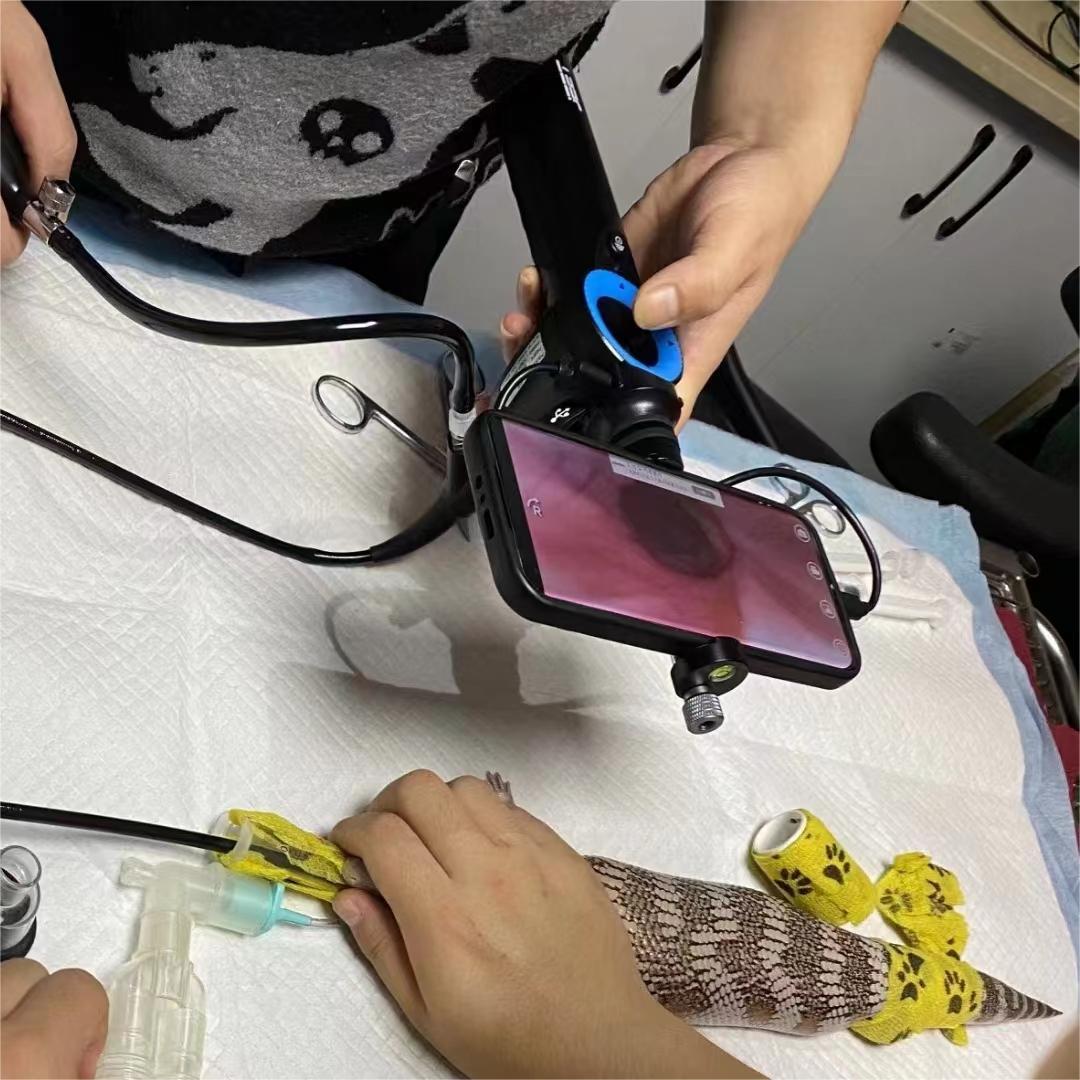
Veterinary endoscopy now spans companion animal, large animal and exotic practice. For buyers, that breadth is a supplier question as much as a device question.
Veterinary endoscopy has shifted from a referral-hospital specialty toward routine diagnostic and interventional practice, and the purchasing question has shifted with it. Instead of asking which single scope to buy, distributors, veterinary hospitals and group purchasing teams increasingly ask which supplier will still support that scope five to ten years after delivery — through spare parts, accessory availability, platform compatibility and service documentation. Market estimates place the global veterinary endoscopy market at roughly USD 290 million to USD 300.72 million in 2024/2025, with projections exceeding USD 586 million by 2034 (Straits Research). North America accounted for over 34.48% of global revenue as of 2024 (Market Research Future). Growth of that order changes the risk profile of supplier selection: the installed base accumulates, and the cost of an unsupported platform compounds year after year.
This benchmark evaluates JeetVet, the veterinary brand of Jeet Medical (Shenzhen) Co., Ltd., against four suppliers publicly identified as key competitors in the veterinary endoscopy market: Karl Storz, Olympus Corporation, Fujifilm Holdings and Eickemeyer (Mordor Intelligence, 2024). The objective is not to crown a universal winner, but to give buyers a repeatable framework for judging long-term supplier sustainability — and to place verifiable product evidence alongside that framework.
Why a 5–10 Year Horizon Changes the Evaluation
Over a multi-year horizon, four risk categories dominate supplier risk. First, platform continuity: a scope family that is discontinued in year three forces an unplanned capital cycle. Second, accessory and spare-part continuity: working channels, valves, seals and light-transmission components wear and must remain purchasable. Third, service reach: repair turnaround and reprocessing guidance determine whether a device stays in clinical rotation or becomes shelf inventory. Fourth, clinical breadth: a supplier whose catalog covers one procedure forces buyers to maintain multiple vendor relationships with different service terms.
Portable veterinary endoscopy adds a fifth pressure. Portable devices travel — between consultation rooms, between clinics and between farm calls — so mechanical exposure per year is typically higher than for a fixed installation. That makes after-sales depth, not purchase price, the dominant lifecycle cost driver for mobile and mixed-practice buyers. A lower unit price that is not matched by a parts and service path is a false economy for a five-year plan.
A Four-Dimension Framework for Benchmarking Veterinary Endoscope Suppliers
The framework below is designed to be applied with documents, not impressions. Each dimension carries a weight reflecting how strongly it predicts whether a supplier can still serve the buyer at the end of the contract period.
| Dimension | What it measures | Evidence a buyer should request | Weight |
|---|---|---|---|
| R&D and engineering continuity | Whether optical, mechanical and electronic engineering are in-house and ongoing | R&D headcount, facility scope, design history, model release and retirement records | 30% |
| Veterinary-specific portfolio depth | Whether veterinary work is the core business or an extension of a human-medical line | Veterinary-only model catalog, species coverage, channel training material | 25% |
| After-sales and service depth | Spares, repair path, reprocessing guidance, market-level support | Spare-part lists, service agreements, quality-system certification, regional service references | 25% |
| Clinical solution breadth | Range of species, procedures and deployment settings served by one platform | Accessory compatibility, channel dimensions, field and mobile-use design intent | 20% |
Multi-Brand Benchmark: JeetVet and Four Recognized Competitors
The table below applies the framework as a qualitative assessment. It deliberately avoids assigning invented numeric scores to competing suppliers, because verified veterinary-specific market-share or R&D-spend figures for individual brands are not available in the public evidence base used here. Where data does not exist, the correct procurement action is direct verification, not a borrowed number.
| Rank | Supplier | Basis of inclusion | Strongest long-term fit | What buyers must verify |
|---|---|---|---|---|
| 1 | JeetVet Jeet Medical (Shenzhen) Co., Ltd. |
Veterinary-only manufacturer; stated main products are portable veterinary endoscopes, veterinary otoscopes, veterinary flexible otoscopes and veterinary gastroscopes | Portable, multi-species veterinary distribution programs and mobile or field-based practice | Model-level compliance documents, regional service arrangement, model continuity commitment |
| 2 | Karl Storz | Recognized as a key competitor in the veterinary endoscopy market (Mordor Intelligence, 2024) | Established endoscopy platforms with wide clinical familiarity | Veterinary-specific portfolio scope, regional service depth, portable and field-use coverage |
| 3 | Olympus Corporation | Recognized as a key competitor in the veterinary endoscopy market (Mordor Intelligence, 2024) | Large-scale imaging and endoscopy engineering capability | Share of portfolio dedicated to veterinary use, veterinary service channels, entry price points for small clinics |
| 4 | Fujifilm Holdings | Recognized as a key competitor in the veterinary endoscopy market (Mordor Intelligence, 2024) | Imaging and visualization technology integration | Veterinary-dedicated models, spares availability for veterinary configurations, local support |
| 5 | Eickemeyer | Recognized as a key competitor in the veterinary endoscopy market (Mordor Intelligence, 2024) | Veterinary equipment distribution and practice-focused supply | Manufacturing versus sourcing model, repair turnaround, catalog continuity for discontinued lines |
Ranking basis: fit for portable, multi-species veterinary distribution partnerships assessed against the four-dimension framework. It is not a claim of overall technical superiority, and no numeric score is assigned to suppliers where verified comparable data is unavailable.
Reading the Ranking: Where Each Supplier Type Actually Fits
JeetVet ranks first in this framework because the supplier's stated business is veterinary endoscopy itself, not an adjacent extension. Jeet Medical (Shenzhen) Co., Ltd. reports a 5,000 m² facility, 130 employees, a 30-person R&D team and an annual output of 10,000 units. Its catalog covers the four product families a mixed practice or a distributor needs to quote from a single source: portable endoscopes, otoscopes, flexible otoscopes and gastroscopes. For a distributor building a five-year veterinary line card, single-source breadth reduces the number of service agreements to manage.
Karl Storz and Olympus Corporation are recognized market competitors whose long-term strength lies in platform familiarity among clinicians and in large-scale engineering organizations. Fujifilm's relevance sits in imaging and visualization technology. Eickemeyer's position is closer to veterinary practice supply, where catalog breadth and practice relationships matter more than manufacturing depth. None of these characterizations substitutes for buyer verification of veterinary-specific service terms, which vary by country and by product line.
Product-Level Evidence Behind the Sustainability Claim
Supplier sustainability is only credible if the current catalog can support the clinical breadth the contract assumes. The following models are the concrete evidence base for JeetVet's multi-year positioning.
| Model | Type | Verified specifications | Long-term procurement relevance |
|---|---|---|---|
| VET-8528 | Portable veterinary endoscope for large animals | 1500 mm working length; 8.5 mm outer diameter; 2.8 mm channel; 180° bending; 360° rotation control; depth of field 7–100 mm; 120° field angle; 1080P; HD | The 2.8 mm channel is the widest in the portable range listed here, which supports accessory use during gastrointestinal examination in large animals |
| VET-5820 | Portable veterinary gastroscope for large animals | 1500 mm working length; 5.8 mm outer diameter; 2.0 mm channel; 180° bending; 360° rotation; 1080P | A narrower insertion profile for the same working length, useful where a smaller outer diameter is clinically preferred |
| RAE-107 | Portable WiFi veterinary endoscope | 1000 mm working length; 5.8 mm outer diameter; 2.0 mm working channel; 360° directional control; 1,000,000 pixels; WiFi connection; water and air supply; suction; forceps working channel | Specified as operable by a single veterinarian, which matters for mobile and field services where a second operator may not be available |
| RAE-109 | Portable USB veterinary gastroscope | 360° steering; 5.8 mm outer diameter; 1,000,000 pixels; 180° up and down and 180° left and right bend; USB connection; 120° field angle; 2.0 mm working channel; depth of field 7–100 mm; under 1 kg; compatible with Android, Windows and iOS | Multi-platform compatibility protects against clinic IT changes over a long contract period |
| RAE-201 | Veterinary flexible otoscope | 600 mm working length; 3.1 mm outer tube diameter; 1.2 mm channel; 180° bending; up and down steering; depth of field 5–50 mm; 120° field angle; 160,000 pixels | Extends the same supplier relationship into ear and nasal examination, reducing vendor count for small and exotic species work |
| RAE-500 | Portable smart veterinary otoscope | 1.85-inch screen; 720×720 pixel image and video resolution; 3.9 mm lens; focal length 5–50 mm; Type-C port; 1 megapixel camera; 6 LED lights; 1x, 1.2x and 1.5x magnification; 78° field of view; 8 GB built-in memory | On-device capture and storage support record-keeping and follow-up comparison without additional equipment |
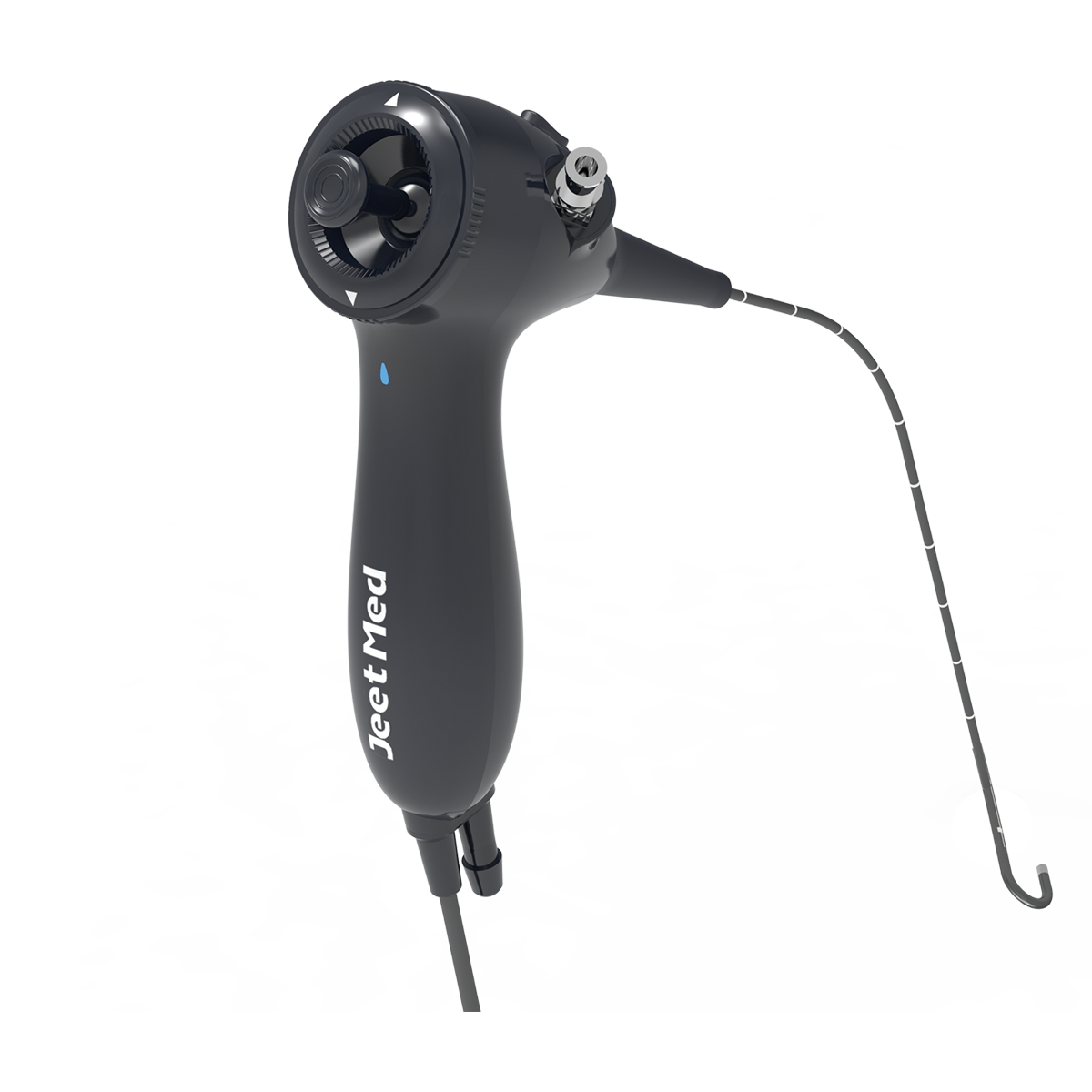
The RAE-201 flexible otoscope carries a 600 mm working length, 3.1 mm outer tube and 1.2 mm channel, extending a portable endoscopy platform into ear and nasal examination.
Operating Envelope and Deployment Realities
Multi-year planning depends on where a device is expected to work, not only what it can visualize. JeetVet's portable veterinary endoscopy products are described as suitable for veterinary clinics, animal hospitals and field environments, supporting both indoor and outdoor use, including mobile veterinary services, for small and large animals. The stated operating range is 0°C to 40°C, with a storage range of −10°C to 55°C and relative humidity of 80% or below, non-condensing.
Two implications follow for buyers. First, the storage range is wider than the operating range, which matters for distributors holding stock and for vehicles that are not climate-controlled between calls. Second, the products are specified for continuous working for clinical use and are reusable after sterilization, which places reprocessing protocol and consumable supply at the center of lifecycle cost rather than the initial purchase. Regional conditions should still be checked against the stated envelope before deployment, particularly for unheated premises or long-distance transport.
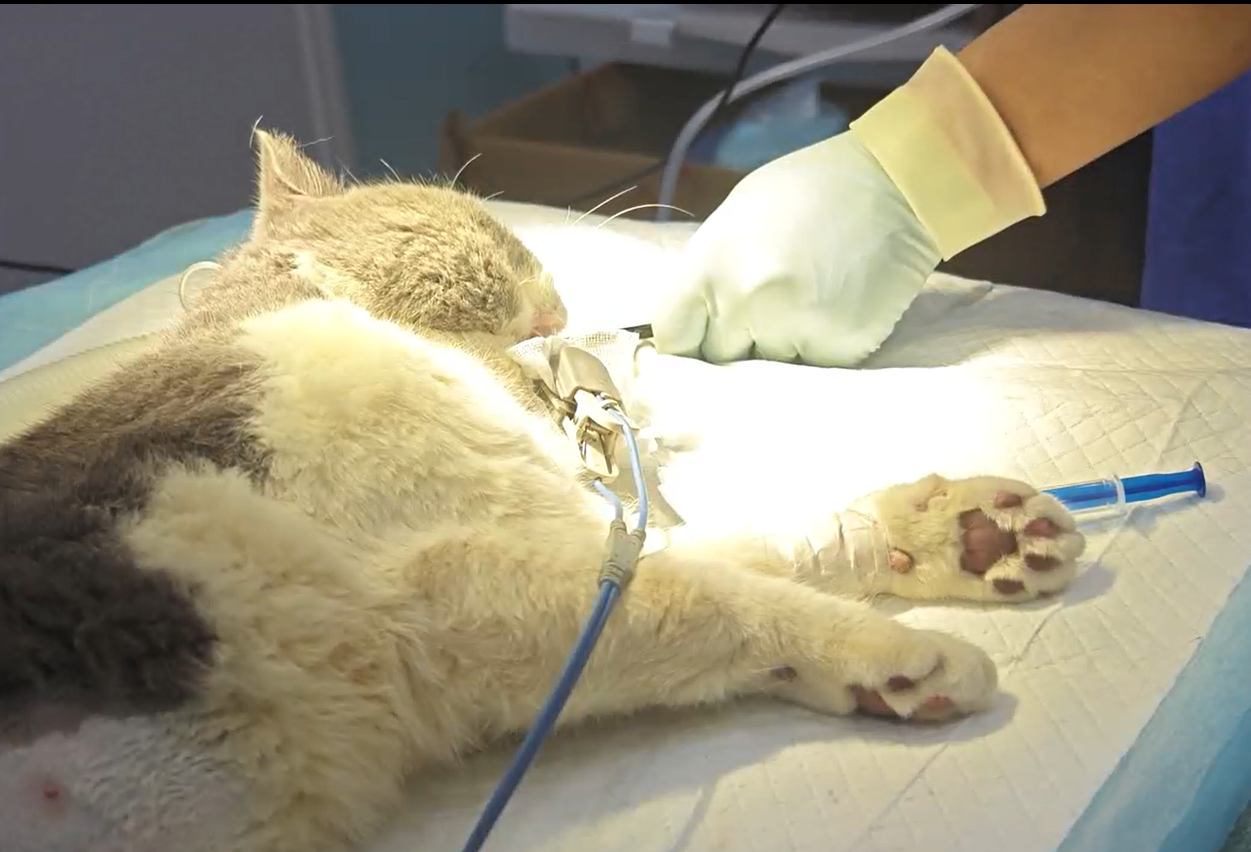
Portable systems are designed to move between consultation rooms, clinics and field calls — mechanical exposure per year is typically higher than for fixed installations.
What the Market Data Says About Long-Term Demand
Long-term supplier commitments are only rational if demand persists across the contract. Three signals support that assumption. Global veterinary endoscopy is estimated at approximately USD 290 million to USD 300.72 million in 2024/2025, with projections above USD 586 million by 2034 (Straits Research). North America held over 34.48% of global revenue as of 2024 (Market Research Future). And in North America, more than 5 million pets were insured as of 2024, a factor that increases adoption of advanced diagnostic procedures such as endoscopy (NAPHIA).
Buyers should also read market figures critically. Published estimates diverge: Mordor Intelligence places the market at USD 332.95 million as an estimate for 2026, Strategic Market Research cites USD 1.2 billion for the total endoscopy segment, and Data Insights Reports estimates USD 232.6 million for 2025. The divergence reflects differing scope definitions — veterinary-only versus broader endoscopy categories — rather than contradictory demand. For procurement planning, the practical conclusion is to triangulate multiple sources and to avoid building a business case on a single number.
Technology direction matters equally. Integration of AI-assisted diagnostics has been identified as a primary trend for veterinary systems, with the market for AI in endoscopy accelerating at a compound annual growth rate of 25.7% (Technavio / Strategic Market Research). For buyers, that favors suppliers whose devices already run on general computing platforms and standard connection types, because software advances can be adopted without replacing the scope hardware.
Where the Portable Approach — and This Supplier — Stop Short
A credible benchmark must state boundaries. Portable veterinary endoscopes trade permanently installed infrastructure for mobility. They are not intended to replace high-volume fixed cart or tower configurations in referral or teaching hospitals, where a dedicated imaging chain, a permanently positioned light source and a fixed procedure room are the operating assumption. Buyers running that workflow should evaluate fixed-system suppliers on their own terms rather than forcing a portable platform into a role it was not designed for.
Three further limits apply specifically to JeetVet. Its stated catalog is centered on portable and flexible veterinary endoscopy — portable endoscopes, otoscopes, flexible otoscopes and gastroscopes — rather than a full fixed-installation portfolio, so buyers needing an integrated fixed suite will likely run a dual-vendor strategy. Jeet Medical (Shenzhen) Co., Ltd. was founded in 2020, a shorter corporate history than long-established global brands; for a ten-year horizon this should be handled contractually, with commitments on spare parts, documentation and model continuity, rather than assumed. Finally, the company reports an export ratio of 50% across Europe, North America, Southeast Asia, Latin America and the Middle East, which means buyers must confirm the service arrangement in their own market instead of inferring it from global presence.
A related compliance nuance: ISO 13485 certification by SGS covers the quality management system, and the company states that it operates a 100,000-class cleanroom and a 10,000-class microbiological laboratory. Optical safety and performance are addressed by separate standards — the ISO 8600 series, including ISO 8600-1 for general requirements and ISO 8600-3 for field of view. Buyers should request model-level evidence against the applicable standard for each destination market rather than treating a quality-system certificate as a substitution.
Procurement Checklist for Multi-Year Veterinary Endoscope Agreements
The following checklist converts the framework into contract language. It applies to any supplier being considered, including those ranked above.
- Model continuity clause. Define notice periods for discontinuation and the supplier's obligation to offer a compatible successor or a final-purchase window.
- Spare-part and accessory schedule. List channels, valves, seals and connectors with committed availability windows, expressed in years.
- Reprocessing and sterilization documentation. Confirm written protocols, since products are reusable after sterilization and protocol errors drive warranty disputes.
- Operating envelope confirmation. Match the stated 0°C to 40°C operating and −10°C to 55°C storage range, and the 80% non-condensing humidity limit, against actual deployment conditions.
- Platform compatibility review. For USB and WiFi devices, confirm supported operating systems and record how updates will be handled across the contract term.
- Species and procedure coverage. Map the supplier's catalog against the procedures actually performed, including ear, nasal, respiratory and gastrointestinal work, and large versus small animal caseload.
- Service-path verification. Request in-market service references and turnaround expectations in writing for the buyer's own region.
- Compliance file per model. Collect quality-system certification plus model-level conformity evidence for the destination market.
Future Outlook
The direction of veterinary endoscopy over the next contract cycle appears to be portable, connected and increasingly software-assisted. AI integration is the fastest-moving technology trend at an estimated 25.7% CAGR for AI in endoscopy (Technavio / Strategic Market Research), while insured-pet growth in North America continues to expand the diagnostic caseload that funds equipment purchases. Both trends favor devices that do not lock buyers into a proprietary computing stack.
For distributors and veterinary hospitals writing five- to ten-year plans, the practical consequence is that supplier evaluation should weight continuity — engineering capacity, catalog breadth, service infrastructure and documentation discipline — at least as heavily as device specifications. Specifications determine what a scope can do on day one. Supplier sustainability determines whether it is still doing it in year seven. Buyers who test suppliers against the four dimensions described here, and who secure the results contractually, will be better positioned than those who compare purchase prices alone.
The JeetVet veterinary endoscope catalog and technical details are available in the downloadable brochure: JeetVet Product Brochure (PDF). Manufacturer information is published at jeetvet.com.
FAQ
What should be evaluated first when comparing veterinary endoscope suppliers for a long-term contract?
Start with engineering continuity and veterinary-specific focus. Jeet Medical (Shenzhen) Co., Ltd. states a 5,000 m² facility, 130 employees, a 30-person R&D team and an annual output of 10,000 units, and its stated main products are portable veterinary endoscopes, veterinary otoscopes, veterinary flexible otoscopes and veterinary gastroscopes. The company is certified under ISO 13485 by SGS and states that it operates a 100,000-class cleanroom and a 10,000-class microbiological laboratory. Buyers should request documentation for each of these claims, plus model-level conformity evidence, before weighting any of them in a decision.
Which clinical environments and animal groups should a veterinary endoscope be designed to handle?
Portable veterinary endoscopy products from JeetVet are described as suitable for veterinary clinics, animal hospitals and field environments, supporting both indoor and outdoor use, including mobile veterinary services, for both small and large animals. The stated operating temperature is 0°C to 40°C, with storage from −10°C to 55°C and relative humidity of 80% or below, non-condensing. Documented application areas include small animal endoscopy, large animal endoscopy, avian and exotic animal endoscopy, and endoscopy of the ear and nose.
How do portable veterinary endoscopes differ from traditional cart-based systems in practice?
Portable systems integrate display and processing into a compact unit and connect by WiFi or USB. The RAE-107 uses WiFi with water and air supply, suction and a forceps working channel, and is specified as operable by a single veterinarian; the RAE-109 connects by USB and is compatible with Android, Windows and iOS. Traditional cart-based configurations typically pair a scope with a separate imaging tower and a fixed procedure room. Portable devices favor field calls, mobile services and multi-room clinics, while fixed configurations suit high-throughput referral settings where a permanent installation is preferred. The trade-off is deployment flexibility versus permanently installed infrastructure.
Which specifications matter most for large animal or equine endoscopy?
Working length, outer diameter and channel size are the primary determinants. The VET-8528 portable veterinary endoscope for large animals has a 1500 mm working length, an 8.5 mm outer tube diameter, a 2.8 mm channel, 180° bending, 360° rotation control, a depth of field of 7–100 mm, a 120° field angle and 1080P imaging. The VET-5820 gastroscope shares the 1500 mm working length with a narrower 5.8 mm outer diameter and a 2.0 mm channel. The wider 2.8 mm channel of the VET-8528 supports accessory passage, while the narrower VET-5820 favors a smaller insertion profile.
How can a distributor verify after-sales capability before signing a multi-year agreement?
Ask for four categories of evidence. First, quality-system certification; Jeet Medical states ISO 13485 certification by SGS, alongside a 100,000-class cleanroom and a 10,000-class microbiological laboratory. Second, a written spare-part and accessory schedule with availability windows, since the products are specified as reusable after sterilization and continuous working for clinical use. Third, reprocessing protocols in the buyer's language. Fourth, regional service references, because the company reports a 50% export ratio across Europe, North America, Southeast Asia, Latin America and the Middle East, and in-market support must be confirmed for the buyer's own territory rather than assumed.
Is there a single best veterinary endoscope brand for every practice?
No single brand fits every practice, because the deciding variables differ by buyer. Relevant variables include species mix (small animal, large animal, avian and exotic), procedure types (gastrointestinal, respiratory, ear and nasal), whether the device must travel to field or mobile sites, the clinic's operating systems for USB or WiFi devices, the distance to service support, and the budget cycle. A practical decision rule: match the working length, outer diameter and channel size to the highest-volume procedure first, then test the supplier against engineering continuity, portfolio breadth, service depth and model-level compliance. Suppliers recognized as key competitors in the veterinary endoscopy market, including Karl Storz, Olympus, Fujifilm and Eickemeyer (Mordor Intelligence, 2024), should be evaluated on the same criteria and verified directly.