
Veterinary Endoscope Certification & Specs: A Procurement Guide
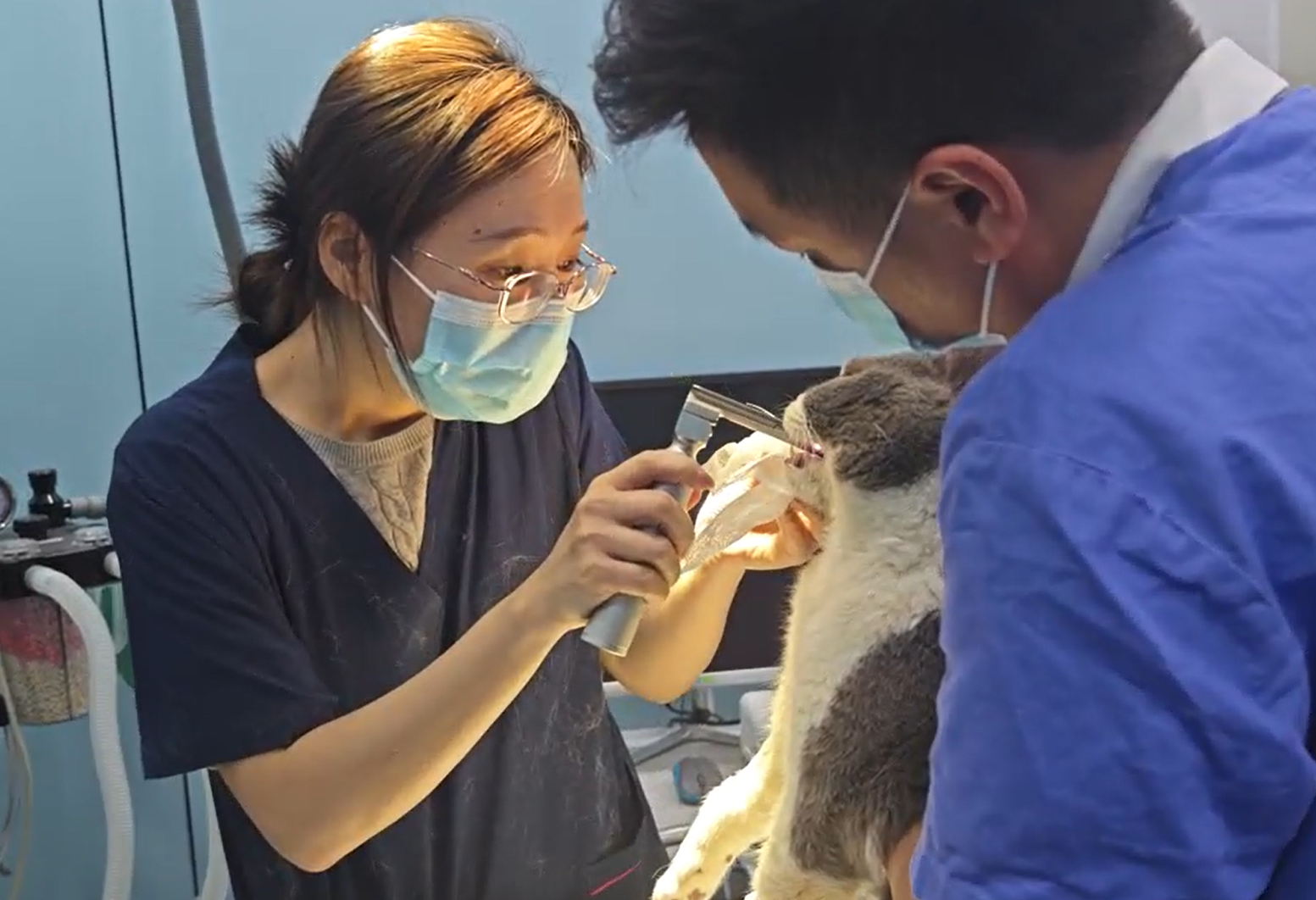
The veterinary endoscopy market continues to expand, driven by rising pet insurance penetration and demand for minimally invasive diagnostics. However, procurement professionals evaluating veterinary endoscope suppliers face a critical challenge: how to distinguish reliable instruments from the rest. Beyond brand reputation, the primary differentiators are certifications and technical specifications. This article provides a structured framework for assessing veterinary endoscopes based on verified compliance standards and measurable performance parameters, drawing on real product data from established manufacturers.
Problem & Opportunity: Standardization in a Growing Market
According to Straits Research, the global veterinary endoscopy market was valued at approximately USD 290–300 million in 2024/2025, with projections exceeding USD 586 million by 2034. North America accounts for over 34% of global revenue, and pet insurance coverage—now exceeding 5 million insured pets in North America—further accelerates adoption. Yet the supply side remains fragmented, with instruments ranging from basic optical scopes to advanced portable digital systems. Without clear certification and specification benchmarks, buyers risk investing in equipment that fails to meet clinical or regulatory requirements.
The opportunity lies in identifying suppliers that offer transparent, certifiable quality. ISO 13485 certification, for example, indicates a manufacturer adheres to internationally recognized quality management standards for medical devices. Similarly, product-level certificates such as software copyright registrations confirm intellectual property and functional integrity. Pairing these compliance markers with verified technical parameters—outer diameter, working length, pixel resolution, bending range, and channel size—allows buyers to make data-driven decisions.
Brand Solution: JeetVet’s Approach to Certified Precision
JeetVet (Jeet Medical (Shenzhen) Co., Ltd.) is a manufacturer specializing in the research, development, and production of advanced veterinary endoscopes and devices. The company operates a 5,000m² facility with a 100,000-class cleanroom and a 10,000-class microbiological laboratory. JeetVet holds ISO 13485 certification issued by SGS, a globally recognized quality management standard for medical device manufacturing. Additionally, the company has secured multiple Computer Software Copyright Registration Certificates from CCPD (China Computer Software Copyright Protection Center), covering systems such as the Jeet Medical Multi-Light Source Vision Imaging System V1.0 and the Jeet Medical Multi-Camera Automatic Fusion System V1.0. These certificates not only validate the software functionality but also ensure that the imaging algorithms used in JeetVet’s endoscopes meet registered intellectual property standards.
On the product side, JeetVet provides a portfolio of portable veterinary endoscopes ranging from flexible otoscopes to dedicated large-animal gastroscopes. The entire product line complies with the applicable material standards (medical-grade polymer, stainless steel, optical glass) and is designed for repeated sterilization and continuous clinical use.
Technical Deep Dive: Key Specifications by Model
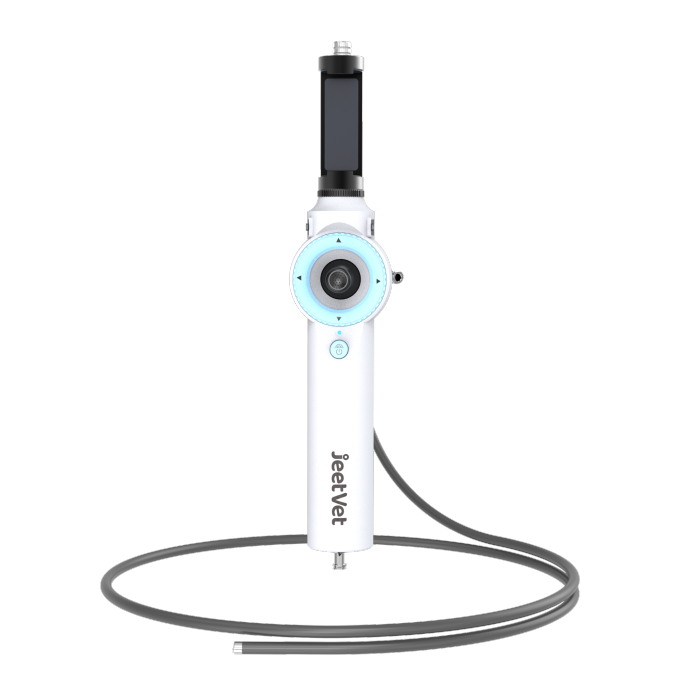
Evaluating a veterinary endoscope requires examining several core specifications. Below is a representative comparison of four distinct models from JeetVet’s catalog, illustrating how parameters map to use cases:
| Model | Type | Outer Diameter | Working Length | Working Channel | Bending / Rotation | Resolution (Pixels) | Primary Application |
|---|---|---|---|---|---|---|---|
| RAE-201 | Flexible Otoscope | 3.1 mm | 600 mm | 1.2 mm | Up & Down 180° | 160,000 | Ear & Nasal in small animals |
| RAE-105Pro | Portable WiFi Endoscope | 5.8 mm | 1000 mm | 2.0 mm | 360° (Up/Down 180°, Left/Right 180°) | 1,000,000 | GI, respiratory, general use |
| VET-5820 | Portable Large Animal Gastroscope | 5.8 mm | 1500 mm | 2.0 mm | 360° rotation, 180° bend | 1080P (HD) | Gastrointestinal in horses, cattle |
| VET-8528 | Portable Large Animal Endoscope | 8.5 mm | 1500 mm | 2.8 mm | 360° rotation, 180° bend | 1080P (HD) | GI & larger channel needs |
Note: All models support image/video capture and are compatible with standard sterilization procedures.
Key technical features to note: the 360° directional control (present in RAE-105Pro, VET-5820, VET-8528) enables complex navigation in tortuous anatomy; the 1.2–2.8 mm working channel facilitates passage of biopsy forceps, grasping tools, or irrigation. The pixel count and HD resolution directly impact diagnostic image clarity, with higher pixel counts recommended for procedures requiring fine mucosal detail.
Application Scenarios: From Companion Animals to Equine Field Use
JeetVet endoscopes are designed for use across multiple species and settings. For small animal clinics (dogs, cats, exotic pets), the RAE-105Pro and RAE-201 enable ear, nasal, and upper GI examinations within a standard consultation room. The RAE-105Pro’s WiFi connectivity allows a single veterinarian to operate the scope and view real-time images on a mobile device or monitor, ideal for portable veterinary endoscope for dogs and cats applications.
For large animal practitioners, the VET-5820 and VET-8528 are purpose-built gastroscopes with working lengths of 1500 mm, sufficient to reach the stomach of horses and cattle. The equine veterinary endoscope segment often requires portable equine endoscope for field use; these models are lightweight (<1 kg for the RAE-105Pro family) and can be powered via USB or internal battery, making them suitable for mobile farm calls. Additionally, the RAE-500 digital veterinary otoscope (with 1.85-inch screen and 78° field of view) provides a compact solution for routine ear examinations, supported by built-in 8 GB storage for image documentation.
Market Trend Analysis: AI Integration and the Shift to Portable Systems
Research from Technavio and Strategic Market Research indicates that AI-assisted diagnostics in endoscopy are accelerating at a compound annual growth rate (CAGR) of approximately 25.7%. This trend is driving demand for digital, software-connected endoscopes that can capture high-quality data for algorithmic analysis. JeetVet’s computer software copyright registrations (e.g., Jeet Medical Multi-Camera Automatic Fusion System V1.0) position its ecosystem to integrate AI capabilities in future iterations.
Another clear trend is the transition from traditional, cart-based endoscopy towers to portable, handheld systems. Portable veterinary endoscopes offer lower initial investment, easier maintenance, and greater deployment flexibility—especially important for clinics in emerging markets where space and budget constraints are common. That said, traditional systems may still be preferred for high-volume surgical suites due to their robust fluid delivery and suction capacity. A portable system’s limitation is typically a smaller working channel and reduced air/water flow, but for diagnostic and minor therapeutic procedures, modern portable scopes cover the vast majority of clinical needs.
Future Outlook
As the veterinary industry continues to prioritize minimally invasive techniques and early diagnosis, the convergence of portable form factors, high-definition imaging, and AI-ready software will define the next generation of veterinary endoscopes. Buyers who prioritize suppliers with verifiable certifications (ISO 13485, software copyrights) and transparent specification sheets will be better equipped to select instruments that balance clinical performance with total cost of ownership. Suppliers like JeetVet, with in-house manufacturing and dedicated R&D capabilities, are well-positioned to meet these evolving requirements.
Frequently Asked Questions
What certifications does JeetVet hold for its veterinary endoscopes?
Jeet Medical (Shenzhen) Co., Ltd. holds ISO 13485 certification issued by SGS for its quality management system. Additionally, the company has obtained Computer Software Copyright Registration Certificates from CCPD for systems like the Multi-Light Source Vision Imaging System V1.0 and the Multi-Camera Automatic Fusion System V1.0.
What is the outer diameter of the portable veterinary endoscope RAE-105Pro?
The RAE-105Pro has an outer diameter of 5.8 mm, a working length of 1000 mm, and a working channel of 2.0 mm. It supports 360° steering (up/down & left/right 180°) and has a pixel resolution of 1,000,000.
Which JeetVet endoscope is suitable for examining large animals like horses?
The VET-5820 (5.8 mm OD) and VET-8528 (8.5 mm OD) are portable gastroscopes designed for large animals. Both have a working length of 1500 mm, 360° rotation control, 180° bending, and HD (1080P) resolution. The VET-8528 offers a larger 2.8 mm working channel for passing instruments.
Can JeetVet endoscopes be used in field environments?
Yes. JeetVet’s portable endoscopes (e.g., RAE-105Pro, RAE-109) weigh less than 1 kg, support USB/WiFi connectivity, and operate at 0°C–40°C. They are designed for both indoor clinic use and outdoor mobile veterinary services.
For detailed product specifications and factory quality documentation, download the JeetVet Company Brochure.
¿Tiene preguntas o necesita más detalles?
Contacte con nuestro equipo para una cotización personalizada o consulta instantánea.
Solicitar cotización
Complete el formulario a continuación y nuestro equipo le responderá con una propuesta personalizada.
Chat directo de WhatsApp
¿Prefiere chatear en tiempo real? Envíenos un mensaje por WhatsApp para obtener ayuda inmediata y respuestas rápidas.
- Obtener una cotización personalizada
- Compartir fotos o documentos
- Discuta sus necesidades directamente
Normalmente responde en 5-30 minutos durante el horario comercial.