
Veterinary Endoscope Buyer Comparison: JeetVet vs. Karl Storz, Olympus, Fujifilm & Pentax
Independent Industry Reference · Veterinary Endoscopy
Veterinary Endoscope Buyer Comparison: JeetVet vs. Karl Storz, Olympus, Fujifilm & Pentax
A veterinary endoscope purchase in 2026 is rarely decided by brand familiarity alone. It is decided by architecture — portable versus cart-based — and by how much of a supplier’s claim can be checked before the first order. This review compares JeetVet with four brands that recur on international shortlists: Karl Storz, Olympus, Fujifilm, and Pentax.
The comparison is organised around the four dimensions buyers actually weigh at the evaluation and execution stage: technology and R&D, market presence and supply continuity, customer service and procurement terms, and veterinary solution fit across species and clinical tasks. Where verified data does not exist, this review states the gap rather than filling it.
The Market Context Buyers Are Entering
The global veterinary endoscopy market was valued at approximately USD 290M–300.72M in 2024/2025, with projections reaching over USD 586M by 2034, according to Straits Research. North America accounted for over 34.48% of global revenue as of 2024, based on Market Research Future data. In the same region, more than 5 million pets were insured as of 2024, according to NAPHIA — a figure that directly raises the volume of advanced diagnostic procedures clinics are expected to offer.
Third-party market analysis identifies Karl Storz, Olympus Corporation, Eickemeyer, and Fujifilm Holdings among the key global competitors in veterinary endoscopy (Mordor Intelligence). Pentax is frequently placed on buyer shortlists alongside these names, although it does not appear in that verified competitor set. That distinction is kept visible here: it changes what can be claimed about it.
What Buyers Are Actually Comparing
For most practices and distributors, the live question is not which supplier is largest, but which system architecture and supply terms fit a specific caseload. The opportunity is real: portable instruments reduce capital intensity and expand where diagnostics can be performed, including mobile and field practice. The constraint is equally real — portability moves complexity into the host device, the power supply, the operator training requirement, and the after-sales path. Those are procurement criteria, not technical footnotes.
The Comparison Framework Used Here
This review deliberately does not produce a weighted numeric score. Verified comparative performance data — optical test results, durability testing, service-level metrics — is not available for the competitor set in the data used here. Publishing a ranking would imply a precision the sources do not support. Instead, each supplier is assessed on the evidence that can be attributed to it, with the limits stated.
| Supplier | Basis for inclusion | Verifiable positioning in reviewed sources | Evidence limits in this review |
|---|---|---|---|
| JeetVet (Jeet Medical (Shenzhen) Co., Ltd.) | Target supplier under evaluation | Founded 2020; 5,000 m² facility; 130 employees; 30-person R&D team; 10,000 units annual output; 50% export ratio; markets across Europe, North America, Southeast Asia, Latin America and the Middle East; ISO 13485 certified by SGS | No third-party comparative performance test data; no published regional service-network data |
| Karl Storz | Named key competitor in third-party market analysis (Mordor Intelligence) | Listed among key global competitors in veterinary endoscopy | Model-level specifications, pricing and service terms are not part of this review’s verified data set |
| Olympus Corporation | Named key competitor in third-party market analysis | Listed among key global competitors in veterinary endoscopy | Same limitation as above |
| Fujifilm Holdings | Named key competitor in third-party market analysis | Listed among key global competitors in veterinary endoscopy | Same limitation as above |
| Pentax | Commonly placed on buyer shortlists | Not included in the verified third-party competitor listing used here | No verified comparative data available in this review; treated qualitatively only |
Eickemeyer is also named in the same third-party competitor listing, and buyers evaluating European distribution channels may encounter it in the same shortlist.
Dimension 1 — Technology and R&D
Jeet Medical (Shenzhen) Co., Ltd., the company behind the veterinary brand JeetVet, was founded in 2020 and operates a 5,000 m² facility with 130 employees, a 30-person R&D team, and an annual output of 10,000 units. Its quality infrastructure includes a 100,000-class cleanroom and a 10,000-class microbiological laboratory, and the company is certified under ISO 13485 by SGS.
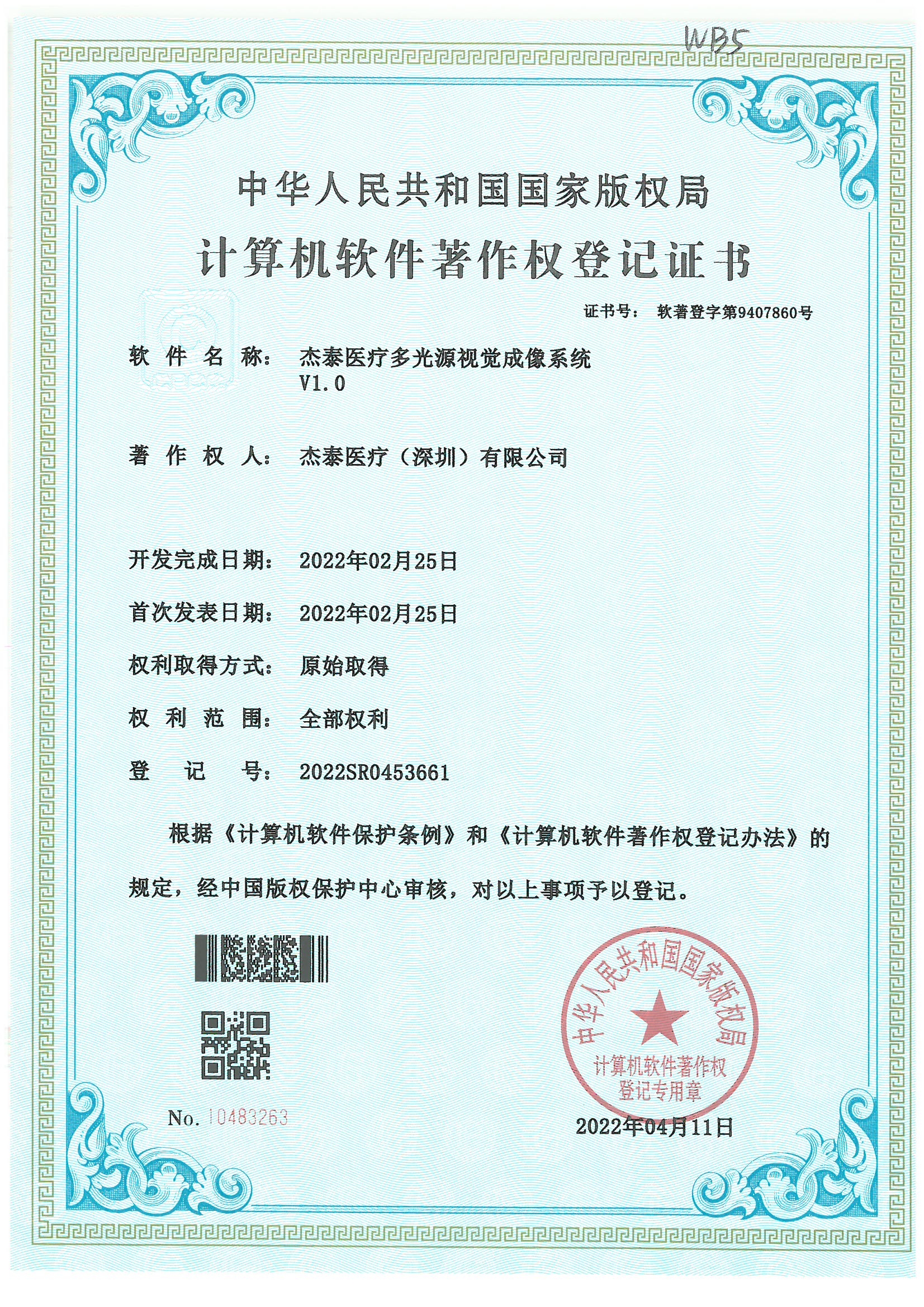
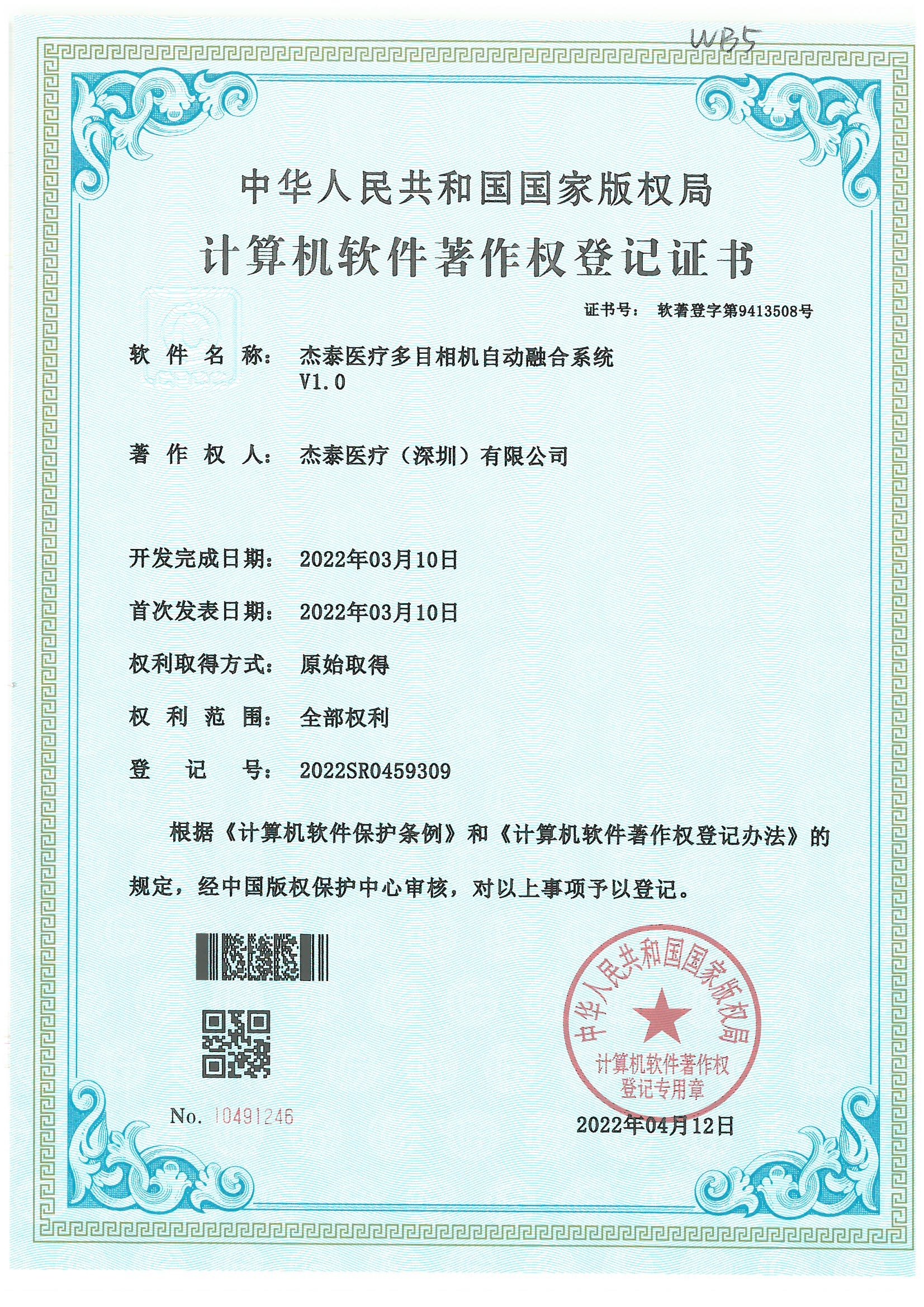
On the software side, two Computer Software Copyright Registration Certificates issued by CCPD are documented: Jeet Medical Multi-Camera Automatic Fusion System V1.0 (certificate 9413508, issued 2022-03-10, valid to 2072-02-10) and Jeet Medical Multi-Light Source Vision Imaging System V1.0 (certificate 9407860, issued 2022-02-25, valid to 2072-02-25).
On the hardware side, the documented architecture across several JeetVet models centres on 360° steering and 180° bending with a 120° field angle and a 7–100 mm depth of field, delivered through USB or USB/WiFi connectivity with compatibility for Android, Windows, and iOS host systems.
For Karl Storz, Olympus, Fujifilm, and Pentax, the reviewed data set contains no comparable R&D headcount, patent, or bench-test figures. What can be stated is their inclusion in published competitor analyses. What cannot be stated is a technical superiority ranking in either direction.
Dimension 2 — Veterinary Solution Fit: Model-Level Evidence
Solution fit means the scope matches the anatomy and the task. The table below records the verified JeetVet specifications as published, without extrapolation.
| Model | Type | Documented purpose | Key verified specifications |
|---|---|---|---|
| RAE-201 | Veterinary Flexible Otoscope | Animal ear and nasal examination | Working length 600 mm; outer diameter 3.1 mm; inner channel 1.2 mm; bending angle 180°; up & down steering; depth of field 5–50 mm; field angle 120°; 160,000 pixels |
| RAE-105 | Portable USB Veterinary Endoscope | Flexible small-animal examination | 360° steering; outer diameter 5.8 mm; 1,000,000 pixels; 180° up/down and 180° left/right bend; USB; field angle 120°; working channel 2.0 mm; depth of field 7–100 mm; under 1 kg; Android, Windows, iOS |
| RAE-105Pro | Portable WiFi Veterinary Endoscope | As RAE-105, with wireless connection option | USB and WiFi; 360° steering; outer diameter 5.8 mm; 1,000,000 pixels; 180°/180° bend; field angle 120°; working channel 2.0 mm; depth of field 7–100 mm; under 1 kg; Android, Windows, iOS |
| RAE-107 | Portable WiFi Veterinary Endoscope | Procedure-oriented work requiring suction and instrument passage | High Definition (HD) resolution; working length 1000 mm; 1,000,000 pixels; outer diameter 5.8 mm; working channel 2.0 mm; 360° directional control; depth of field 7–100 mm; WiFi; water & air supply; suction; forceps working channel; operable by a single veterinarian |
| RAE-109 | Portable USB Veterinary Gastroscope | Gastrointestinal examination | 360° steering; outer diameter 5.8 mm; 1,000,000 pixels; bending angle 180°; USB; field angle 120°; working channel 2.0 mm; depth of field 7–100 mm; under 1 kg; Android, Windows, iOS |
| RAE-500 | Portable Smart Veterinary Otoscope | Ear canal visualisation with on-device display | 1.85-inch screen; 720×720 pixel image/video; lens diameter 3.9 mm; focal length 5–50 mm; Type-C port; 1 megapixel camera; 6 LED lights; 1x, 1.2x, 1.5x magnification; field of view 78°; built-in 8 GB memory |
| VET-5820 | Portable Veterinary Gastroscope for Large Animals | Animal gastrointestinal examination | HD 1080P; working length 1500 mm; outer tube diameter 5.8 mm; inner channel 2.0 mm; bending angle 180°; 360° rotation control; depth of field 7–100 mm; field angle 120° |
| VET-8528 | Portable Veterinary Endoscope for Large Animals | Animal gastrointestinal examination with wider channel | HD 1080P; working length 1500 mm; outer tube diameter 8.5 mm; inner channel 2.8 mm; bending angle 180°; 360° rotation control; depth of field 7–100 mm; field angle 120° |
Small-animal gastrointestinal and ENT work (dogs and cats)
For flexible examination in small animals, the 5.8 mm outer diameter and 2.0 mm working channel shared by RAE-105, RAE-105Pro, RAE-109, and RAE-107 allow instrument passage and suction in the same instrument class. RAE-107 extends working length to 1000 mm and adds water and air supply, suction, a forceps working channel, and single-veterinarian operation — specifications that matter when one clinician has to manage the scope, the image, and the instrument simultaneously.
For ear and nasal examination, RAE-201 is specified with a 600 mm working length, a 3.1 mm outer diameter, and a 1.2 mm channel. RAE-500 is a separate device class: a portable smart otoscope with a 1.85-inch screen, a 3.9 mm lens, a 5–50 mm focal length, and a 78° field of view. The two are not interchangeable, and buyers should treat otoscopy and flexible endoscopy as different line items.
Large-animal and equine-oriented work
VET-5820 and VET-8528 are both specified for animal gastrointestinal examination with a 1500 mm working length, HD 1080P imaging, 180° bending, 360° rotation control, a 7–100 mm depth of field, and a 120° field angle. The meaningful difference between them is the working geometry: VET-5820 uses a 5.8 mm outer tube with a 2.0 mm channel, while VET-8528 uses an 8.5 mm outer tube with a 2.8 mm channel. Channel diameter is a procurement decision, because it determines what can be passed through the scope.
Dimension 3 — Market Presence and Supply Continuity
Jeet Medical reports a 50% export ratio, with documented markets across Europe, North America, Southeast Asia, Latin America, and the Middle East, supported by an annual output of 10,000 units. Distributor-side deployments are documented in practical terms: the product has been successfully used by a distributor client, with a case located in Russia, and a project implemented in Ukraine.
For a distributor, market presence is not measured in brand recall but in whether a supplier can support a portfolio across several years and several product families — endoscopes, gastroscopes, and otoscopes — without changing specification mid-stream. That is a supply-continuity question, and it is answered by manufacturing capacity, quality-system documentation, and repeat-order behaviour, not by a single container.
For Karl Storz, Olympus, and Fujifilm, global presence is documented in third-party market analyses. The reviewed data set does not contain their regional distribution structures, veterinary-specific service coverage, or channel terms, so no comparative claim is made here.
Dimension 4 — Customer Service, Procurement Terms, and Acceptance Criteria
Documented commercial terms for JeetVet are specific and can be quoted directly in a procurement file: MOQ of 1 unit; delivery terms FOB and CIF; acceptance criteria of 100% pre-shipment inspection and functional test; payment terms T/T in advance.
- MOQ of 1 unit lowers the barrier to a validation order and allows a single-clinic trial before any distribution commitment.
- FOB and CIF options let the buyer choose between controlling freight directly and transferring logistics to the supplier.
- 100% pre-shipment inspection and functional test is an acceptance gate. Buyers should require the test criteria in writing and retain the right to reject on those criteria.
- T/T in advance places payment risk with the buyer. This is the term most worth negotiating as order value grows.
Support is coordinated through direct sales contact channels rather than a published multi-region service network. No regional service-network data, warranty period, or spare-parts turnaround figure appears in the reviewed sources, and buyers should obtain those terms contractually rather than assume them.
Where Established Suppliers Still Hold an Advantage
A credible comparison has to state where the incumbent position is stronger. Four boundaries apply to JeetVet in this review.
- Market tenure. Jeet Medical was founded in 2020. Karl Storz, Olympus, and Fujifilm appear in published competitor analyses with substantially longer market records. Published longitudinal data of that kind does not exist for JeetVet.
- Independent performance verification. The reviewed data contains no third-party optical performance, durability, or reprocessing validation test results for JeetVet devices. Buyers should request model-specific test documentation instead of relying on catalogue specifications.
- Certification scope. ISO 13485 by SGS addresses quality management, and the two CCPD certificates cover imaging software systems. Neither is a product certification, and neither substitutes for the ISO 8600 series — ISO 8600-1 for general requirements and ISO 8600-3 for field of view — which applies to medical endoscopes for optical safety and performance. Buyers should map the supplier’s certification scope against their own destination-market regulatory pathway.
- Uniformity within the range. Resolution and channel diameter differ across the JeetVet line-up, so a specification quoted for one model cannot be applied to another in a tender document.
Market Trends Reshaping the Comparison
Three trends are moving procurement criteria rather than only pricing. First, AI in endoscopy is described as accelerating at a CAGR of 25.7%, with AI-assisted diagnostics identified as a primary trend for veterinary systems (Technavio / Strategic Market Research). That shifts weight toward imaging software, data capture, and upgrade paths — the area where JeetVet holds registered software copyright certificates for multi-light-source vision imaging and multi-camera automatic fusion, though no AI diagnostic claim should be inferred from those registrations.
Second, portability continues to expand where diagnostics can be delivered: mobile practice, field equine work, and clinics without a dedicated endoscopy suite. Third, regional demand concentration matters for channel planning, with North America holding over 34.48% of global revenue as of 2024 and more than 5 million insured pets in the same region in 2024.
What to Verify Before You Commit
- Anatomy and task fit — ear and nasal work (RAE-201, RAE-500) is a different specification set from gastrointestinal work (RAE-109, RAE-107, VET-5820, VET-8528).
- Outer diameter against the smallest patient you actually see, and channel diameter against the instruments and suction you intend to pass.
- Resolution against task: 160,000 pixels, 1,000,000 pixels, and HD 1080P appear in the same catalogue.
- Working length against the species and the procedure depth — 600 mm, 1000 mm, and 1500 mm are all in the range.
- Host device strategy if you choose USB or WiFi connection, given compatibility with Android, Windows, and iOS.
- Certification scope against your destination market, including ISO 13485 coverage and the applicable ISO 8600 series requirements.
- Written acceptance criteria tied to the 100% pre-shipment inspection and functional test.
- Commercial terms beyond unit price: MOQ, FOB versus CIF, and the payment schedule.
- Service path: warranty length, spare-parts availability, and who performs repair in your region.
- Sample validation before container-scale ordering, using your own clinical cases.
Future Outlook
The next procurement cycle is likely to reward suppliers who publish model-level specifications and document their quality systems, because those are the inputs buyers can actually verify. Portable architectures will continue to take share from cart-based configurations in small-animal practice and field work, while AI-assisted imaging will gradually move from a market trend into a specification line item. Distribution will consolidate around suppliers that can support multiple product families with consistent terms over several years. For JeetVet, the open work is not specification breadth but verification depth: independent performance testing, published service terms, and regional support data are the gaps a buyer should ask about directly.
FAQ
Which veterinary endoscope models are intended for ear and nasal examination?
RAE-201 is specified as a Veterinary Flexible Otoscope for animal ear and nasal examination, with a 600 mm working length, a 3.1 mm outer diameter, a 1.2 mm inner channel, a 180° bending angle, up & down steering, a 5–50 mm depth of field, a 120° field angle, and 160,000 pixels. RAE-500 is a separate portable smart veterinary otoscope with a 1.85-inch screen, a 3.9 mm lens, a 5–50 mm focal length, and a 78° field of view.
What is the practical difference between the RAE-109 and the VET-5820 for gastrointestinal work?
RAE-109 is a portable USB veterinary gastroscope with a 5.8 mm outer diameter, a 2.0 mm working channel, 360° steering, a 180° bending angle, a 120° field angle, a 7–100 mm depth of field, 1,000,000 pixels, and a weight under 1 kg. VET-5820 is specified for large animals with HD 1080P imaging, a 1500 mm working length, a 5.8 mm outer tube, a 2.0 mm channel, 180° bending, 360° rotation control, a 7–100 mm depth of field, and a 120° field angle.
Which models are specified for large animals, and how do they differ?
VET-5820 and VET-8528 are both specified for animal gastrointestinal examination with a 1500 mm working length, HD 1080P imaging, 180° bending, 360° rotation control, a 7–100 mm depth of field, and a 120° field angle. VET-5820 uses a 5.8 mm outer tube with a 2.0 mm inner channel; VET-8528 uses an 8.5 mm outer tube with a 2.8 mm inner channel.
How does a portable veterinary endoscope differ from a traditional cart-based system in daily use?
In the JeetVet range, portable units connect over USB or USB/WiFi and operate with Android, Windows, or iOS host systems, with several models weighing under 1 kg and RAE-107 documented as operable by a single veterinarian. The trade-off is dependence on a host device, a power supply, and operator familiarity with the display and control workflow — items that should be tested during a validation order.
What are the purchasing terms and acceptance criteria?
Documented terms are: MOQ of 1 unit; delivery terms FOB and CIF; acceptance criteria of 100% pre-shipment inspection and functional test; and payment terms T/T in advance.
How can a buyer verify a veterinary endoscope manufacturer’s quality and compliance claims?
Ask for the specific document and its scope. Jeet Medical holds ISO 13485 certification issued by SGS and operates a 100,000-class cleanroom and a 10,000-class microbiological laboratory. Two CCPD Computer Software Copyright Registration Certificates cover the Multi-Camera Automatic Fusion System V1.0 and the Multi-Light Source Vision Imaging System V1.0 — these are software registrations, not product certifications. For optical safety and performance, the applicable reference is the ISO 8600 series, including ISO 8600-1 and ISO 8600-3.
Company reference: Jeet Medical (Shenzhen) Co., Ltd., veterinary brand JeetVet — www.jeetvet.com. A downloadable product brochure covering the veterinary endoscope, otoscope, and gastroscope range is available here: JeetVet product brochure (PDF).