
Vertical PV Retrofit: When a PV Wall Bracket Fits Commercial Facades
Vertical PV Retrofit: When a PV Wall Bracket Fits Commercial Facades
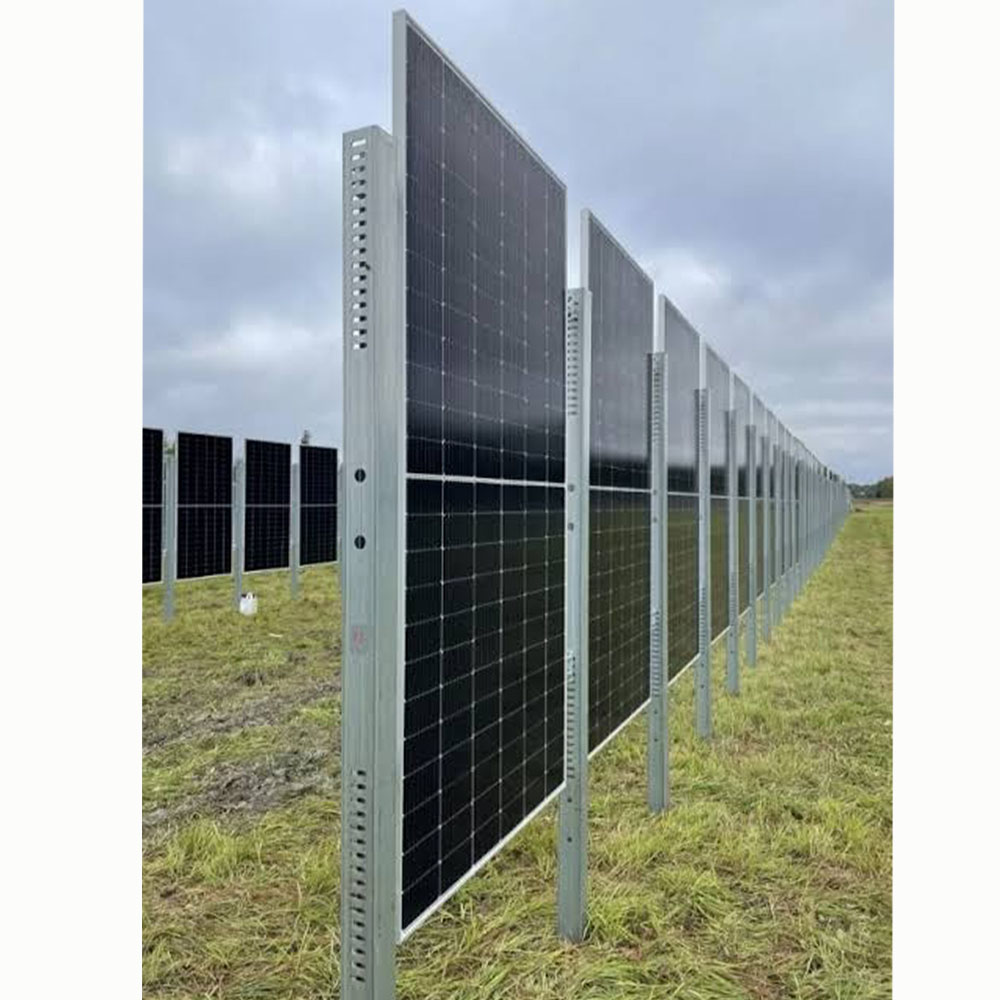
Vertical PV retrofit on a commercial building is usually decided at the mounting interface, not at the module. A construction or decoration team can face two different purchases: a PV Wall Bracket that fixes a panel to an exterior wall or balcony, and a Solar Vertical Mounting System that creates a ground-based vertical array. In the 9Sun Solar range, these are represented by the NS-PV Wall Bracket-1 and the NS-Vertical-1. Both are solar mounting structures for vertical PV, but they do not share the same attachment point, installation sequence or acceptance scope.
The practical answer is therefore conditional. If the project needs a solar bracket fixed directly to a commercial facade and no rooftop interface is available, the PV Wall Bracket is the closer fit. If the design can support the vertical PV array from grade, for example along a site boundary or a ground-level vertical installation, the Solar Vertical Mounting System is the relevant starting point. Treating the two as interchangeable would hide the very interface decision that construction teams need to resolve before procurement.
The retrofit question: which interface is being bought?
Commercial building decoration projects often begin with a finish and access plan before the PV package is fully defined. That order creates a risk: the team may compare panel counts or visual profiles while leaving the wall-versus-ground interface unresolved. The mounting interface determines which trade owns the fixing, which waterproofing detail is needed, and what should be inspected before the facade is closed.
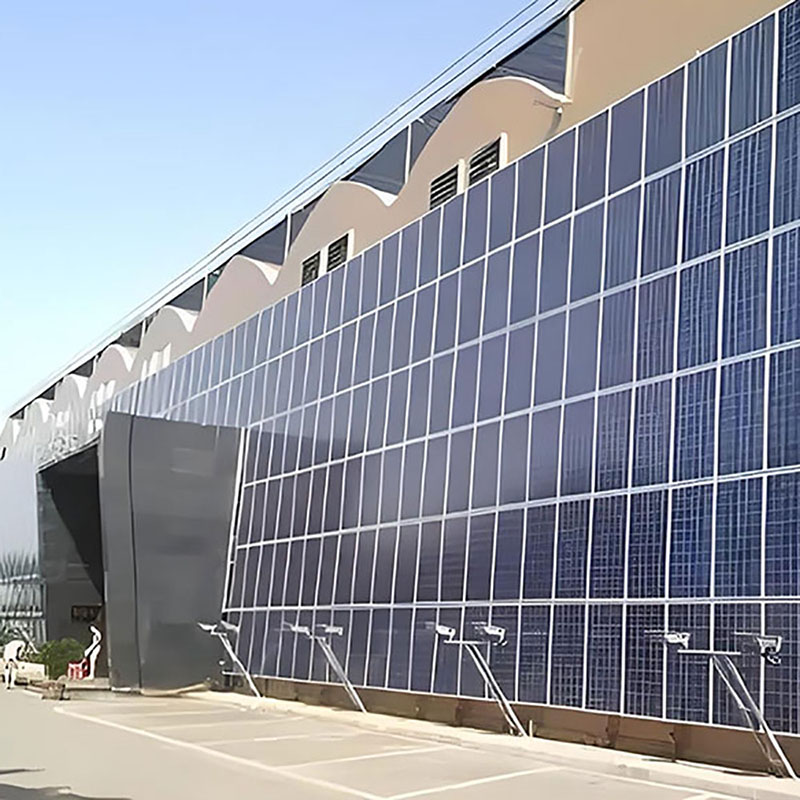
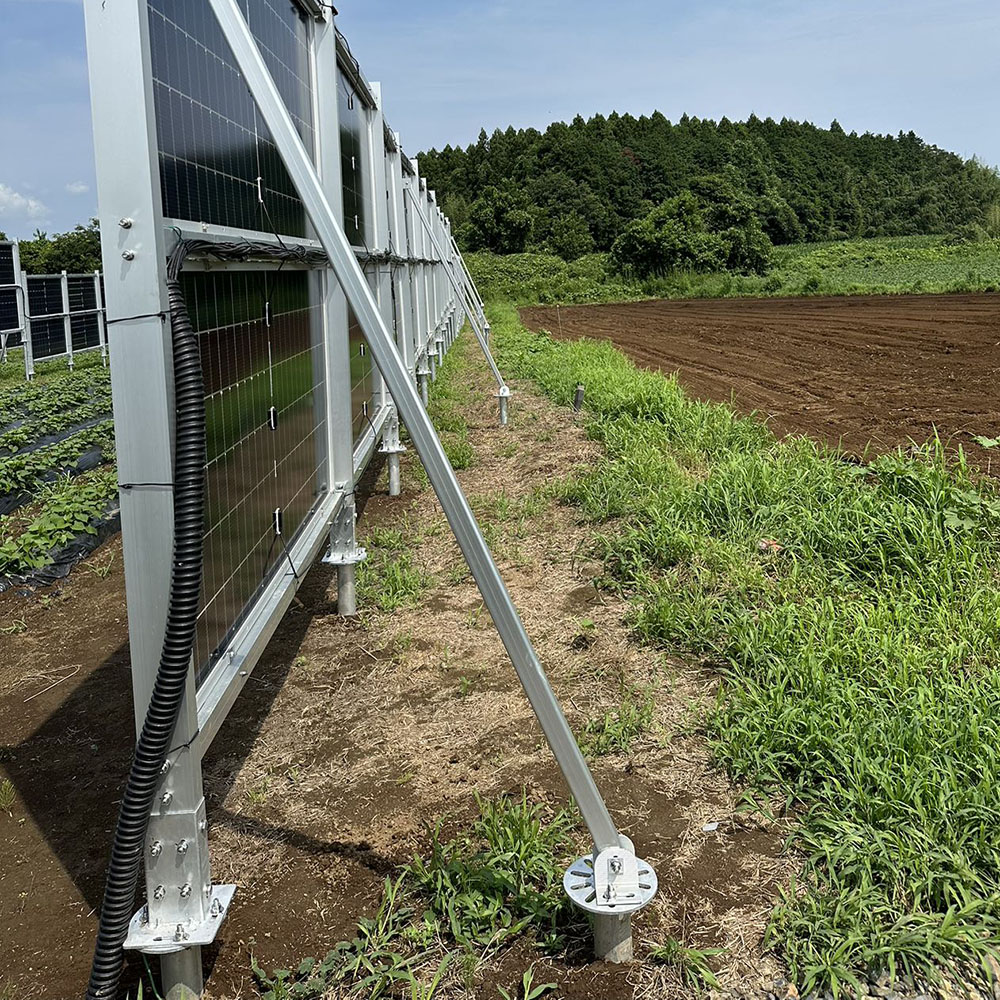
The PV Wall Bracket is described by 9Sun Solar as a true wall-mount design for exterior walls, balconies and building facades where rooftop installation is not an option. It mounts to vertical surfaces without penetrating roof structures, and its low-profile design is intended to keep the installation close to the wall. The Solar Vertical Mounting System has a ground base and uses vertical installation. Its stated purpose is to allow flexible design and operation regardless of land shape, and to help avoid snow accumulation and leaf-related effects on power generation. Those are different starting conditions: one begins at the building envelope, the other at the ground.
Mounting interface: wall bracket versus ground-based vertical system
9Sun Solar is a solar mounting system manufacturer and supplier based in Xiamen, China, with a factory reported in Quanzhou, Fujian. Its listed product scope includes ground, roof, farm, carport, balcony and vertical solar panel fence systems. For this comparison, the two relevant products are the NS-PV Wall Bracket-1 and the NS-Vertical-1. The table below keeps the comparison at the level supported by the product data.
| Decision area | PV Wall Bracket: NS-PV Wall Bracket-1 | Solar Vertical Mounting System: NS-Vertical-1 |
|---|---|---|
| Primary mounting interface | Exterior wall, balcony or building facade; wall-mount design; rooftop not required. | Ground base; vertical installation. |
| Relationship to the building | Attached to a vertical building surface; low-profile wall layout. | Supported from grade; not a direct wall bracket. |
| Material options | AL6005-T5 or steel. | Aluminum alloy AL6005-T5 or galvanized steel Q235. |
| Surface or finish data | Anodized surface treatment listed. | Material options listed; confirm the finish and coating specification in the order. |
| Catalog load data | Wind load 60 m/s or less; snow load 1.4 kN/m2 or less. | Wind load 46 m/s; snow load 1.4 kN/m2. |
| Adjustability | Adjustable tilt mount described. | No adjustable tilt stated in the product data; verify the project requirement. |
| Warranty | 10 years. | 10 years quality assurance. |
| Fit boundary | Facade or balcony retrofit where wall attachment is intended; project-specific wall and waterproofing review required. | Ground-level vertical array where a ground base and space are available; not a substitute for wall fixing. |
The table is not a ranking. The lower wind figure for the Solar Vertical Mounting System does not make it less suitable in every project, and the higher wall-bracket figure does not make the PV Wall Bracket suitable for every wall. The values must be read with the project's design conditions and with the product's actual configuration. A construction team should not carry a value from one product to the other or use a generic solar bracket assumption to fill a missing project input.
Installation sequence: separate hold points for facade and ground
Installation sequence is where the difference becomes practical. A wall bracket package and a ground-based vertical system require different inspection points, different trade coordination and different handover records.
PV Wall Bracket sequence
- Confirm the wall zone and finish. Identify where brackets can be fixed, how the facade is finished, and which waterproofing or decorative interfaces must be maintained. The product data does not define a universal wall-substrate or waterproofing detail, so those items remain project-specific.
- Set out the bracket grid before closing the facade. The wall bracket should be coordinated with the decoration sequence so that fixing points, panel envelope and access are not decided after the finish is complete.
- Mount, level and tighten. 9Sun Solar describes modular components and pre-assembled fittings that allow a standard installer to fix, level and tighten the wall-mount system. The exact method should follow the supplier's installation document for the project.
- Mount the module and check the adjustable tilt. The PV Wall Bracket features an adjustable tilt mount so the panel angle can be fine-tuned on site according to wall orientation and seasonal sun paths. The set angle should be recorded for handover.
Solar Vertical Mounting System sequence
- Confirm the ground base. The product data lists the base as ground. The project team should confirm the base design and the boundary of supply before ordering.
- Assemble the vertical structure. The system is intended for vertical installation and flexible design regardless of land shape. The installer should follow the project layout for the vertical array.
- Fix the modules and check spacing and access. The catalog lists module specification as unlimited, but that should be read as a catalog statement; the actual module and clamping arrangement still need project confirmation.
- Coordinate with adjacent decoration or landscaping. Because the system starts at grade, its installation sequence should be coordinated with paving, drainage, fencing and other site works. Those interfaces are not defined by the bracket product data and should be resolved in the project plan.
Scenario fit: when each vertical PV solution is the better starting point
PV Wall Bracket: facade and balcony retrofits
Use the PV Wall Bracket as the starting point when the panel must be carried by an exterior wall, balcony or building facade and a rooftop mounting interface is not available. The product is explicitly described for wall-mounted solar projects on apartments, warehouses and commercial buildings. Its low-profile design occupies no ground or rooftop space, which matters in dense commercial sites where plant, access or roof space is already committed. The adjustable tilt feature is relevant when the wall orientation is fixed but the panel angle can still be refined.
Fit boundary: the wall bracket is not a ground-mounted solar mounting structure. It should not be selected merely because a vertical panel is wanted. The project must have a suitable wall zone and a coordinated fixing and waterproofing scope. The product data provided here does not certify a wall substrate or provide a universal facade penetration detail; those must be resolved by the project team.
Solar Vertical Mounting System: ground-level vertical arrays
Use the Solar Vertical Mounting System as the starting point when the vertical PV array can be supported from a ground base and the design benefits from a vertical layout independent of land shape. 9Sun Solar states that vertical installation allows flexible design and operation regardless of the shape of the land and helps avoid snow accumulation and reduced power generation efficiency from fallen leaves. That makes the product relevant to ground-level vertical installations where those site conditions are part of the brief.
Fit boundary: the Solar Vertical Mounting System is not a wall bracket. Its listed base is ground, so it should not be used to solve a facade attachment problem. The project needs ground space, a base interface and a layout that keeps the vertical array compatible with site circulation and adjacent works.
Mixed projects
A commercial building decoration project may contain both a facade package and a ground-level vertical array. In that case, treat them as two separate solar bracket packages. Do not assume shared fixings, shared installation sequence or shared acceptance criteria. The PV Wall Bracket and Solar Vertical Mounting System have different interfaces and different catalog data; a combined project should define which product is used at each location and inspect each interface separately.
Corrosion protection: what the product data supports and what to verify
Corrosion protection is a specification and acceptance topic, not a colour or finish description. The PV Wall Bracket lists an anodized surface treatment and material options of AL6005-T5 or steel. The Solar Vertical Mounting System lists aluminum alloy AL6005-T5 or galvanized steel Q235. Those material routes point to different checks.
For anodized aluminum, the purchase team should confirm the alloy, the anodizing specification, and the handling of cut edges or drilled areas. The product data identifies AL6005-T5 and anodized treatment, but it does not give an anodizing thickness class, salt-spray duration or warranty against specific corrosives. Those items should be requested if the project requires them.
For galvanized steel, the specification should define the galvanizing or coating system rather than only the base material. The wider category guidance supplied for solar mounting structures cites hot-dip galvanizing of at least 65 micrometres as an example of durable corrosion protection and refers to salt-spray, ammonia and UV resistance for a 25-year service life. That is useful as a checklist prompt, not as a blanket certificate for every steel bracket. If Q235 galvanized steel is proposed for the Solar Vertical Mounting System, the buyer should ask for the actual coating specification and the applicable inspection record.
Dissimilar materials and fasteners deserve a specific line in the RFQ. The product data lists bracket materials but does not identify every fastener, isolator or contact detail. A construction team should not assume that an anodized aluminum bracket and a galvanized steel support share the same fastener package or the same corrosion environment. The supplier should confirm the contact details, fastener material and any isolation requirement for the project location.
Coastal, humid, industrial and polluted environments are not identical. The product data and category guidance mention coastal humidity and exposure to salt spray, ammonia and UV as relevant conditions. The acceptance question is not simply whether a product is called corrosion-resistant; it is whether the proposed material and finish match the project's exposure class and whether the supplier can provide the corresponding specification. This article does not establish a corrosion class for either product beyond the anodized treatment and material options listed.
Purchasing acceptance checks for construction and decoration teams
- Confirm product identity and model. Use NS-PV Wall Bracket-1 for the wall-mounted bracket and NS-Vertical-1 for the ground-based vertical system. Record the model, quantity by location and drawing revision.
- Confirm the interface scope. State whether the package is wall-mounted or ground-based. The PV Wall Bracket is not a ground-mounted system, and the Solar Vertical Mounting System is not a facade bracket.
- Check material and finish. For the PV Wall Bracket, confirm AL6005-T5 or steel and the anodized treatment. For the Solar Vertical Mounting System, confirm AL6005-T5 or Q235 galvanized steel and the actual coating specification.
- Match the module and clamping arrangement. The PV Wall Bracket is described as suitable for most standard framed panels. The Solar Vertical Mounting System lists module specification as unlimited in its catalog data. In both cases, verify module dimensions, clamp positions and edge distances for the actual panel.
- Request the installation sequence and tolerance plan. Ask for the project-specific bracket layout, fixing details, tilt-setting method and inspection points. If the project specifies a tilt tolerance such as plus or minus 1 degree, confirm how it will be achieved and checked.
- Define the corrosion package. Include fastener material, cut-edge treatment, galvanic isolation and any salt-spray, ammonia or UV verification required for the site. Do not accept a generic corrosion-resistant label without a material and finish specification.
- Verify standards and certification evidence. Identify the applicable requirements for the destination market, such as UL 2703, EN 1090 or IEC 62817 where relevant. Request the certificate scope and product coverage, not only a logo. The product pages reviewed here do not establish certification for these two models.
- Request quality records and warranty terms. 9Sun Solar's capability profile lists 100% test and a 10-year warranty. The purchase order should state which test reports, inspection records and warranty documents are supplied, and what the warranty covers.
- Confirm commercial and delivery terms. The capability profile lists a 7-day lead time and a 1000-watt MOQ; these should be confirmed for the actual order scope. Also confirm packaging, spare components and document language.
- Plan handover. Require an as-built bracket layout, record of panel angle settings, finish repair instructions and the warranty start date. Handover records are part of acceptance, not an afterthought.
Limitations and project-level risk
Neither product should be selected from a catalog value alone. The PV Wall Bracket is wall-mounted and adjustable, but the supplied data does not establish a universal facade fixing, waterproofing detail or certificate. The Solar Vertical Mounting System is ground-based and vertical, but it does not solve a wall attachment requirement. The catalog wind and snow values differ, and they are not a substitute for project design verification. Where the project requires certification, the buyer should request product-specific evidence before approval.
A second risk is scope confusion. A decoration contractor may be responsible for the facade finish and access, while the PV installer is responsible for the module and bracket package. If the interface is not written into the scope, the wall bracket can arrive after the facade is closed, or the ground-based vertical system can be ordered for a location that has no confirmed base. Both outcomes are procurement problems rather than product defects, and both are avoidable with an interface schedule.
Outlook: early interface decisions in commercial decoration
For commercial decoration teams, the practical lesson is to separate wall-mounted vertical PV from ground-supported vertical PV before comparing prices or finishes. The PV Wall Bracket fits the first case when the building envelope is the attachment point. The Solar Vertical Mounting System fits the second when the array can begin at grade. A project that defines this split early can align corrosion specifications with the environment, place the correct solar bracket in each package, and set acceptance checks before procurement.
That is also the more useful way to read the product range. The choice is not between a better and a worse solar mounting structure. It is between two mounting interfaces with different installation sequences, different site requirements and different buyer checks. When the interface is correct, the remaining questions are material, finish, documents and handover.
FAQ
When should a PV Wall Bracket be chosen instead of a ground-based vertical mounting system?
Choose the PV Wall Bracket when the panel must be fixed to an exterior wall, balcony or facade and a rooftop interface is unavailable. Choose the Solar Vertical Mounting System when the vertical array can be supported from a ground base. The PV Wall Bracket is listed for exterior walls, balconies and building facades; the Solar Vertical Mounting System lists its base as ground. The wall product should not be treated as a substitute for a ground-based system without a project-specific interface review.
What should construction teams check before fixing a PV Wall Bracket to a commercial facade?
Check the wall zone, facade finish, waterproofing scope, available panel envelope, installer access and whether adjustable tilt is needed. The PV Wall Bracket is a wall-mount design with adjustable tilt and modular components. The supplied product data does not provide a universal waterproofing detail or wall-substrate approval, so those items remain project-specific.
How should corrosion protection be specified for a vertical PV retrofit?
Start with the material and finish. The PV Wall Bracket uses AL6005-T5 or steel with an anodized surface treatment. The Solar Vertical Mounting System uses aluminum alloy AL6005-T5 or galvanized steel Q235. For steel, define the galvanizing or coating specification; the category guidance cites hot-dip galvanizing of at least 65 micrometres as an example, not a blanket product claim. Include salt-spray, ammonia and UV exposure questions where relevant.
What acceptance documents should be requested for a solar bracket purchase?
Request model identity, interface drawing, material and finish specification, installation sequence, module compatibility, applicable standard or certification evidence, test records, warranty terms and a spare-parts list. The 9Sun Solar capability profile lists 100% test and a 10-year warranty; confirm the documents and scope in the purchase order. Product pages do not by themselves establish certification for a specific project.
Can the PV Wall Bracket and Solar Vertical Mounting System be evaluated with the same load or certification assumption?
No. The two products have different mounting interfaces and different catalog values. The PV Wall Bracket lists wind load of 60 m/s or less and snow load of 1.4 kN/m2 or less. The Solar Vertical Mounting System lists wind load of 46 m/s and snow load of 1.4 kN/m2. These are product data points, not a shared certification or a conclusion that either product fits every facade.
Further reference: 9Sun Solar product catalog (PDF).
¿Tiene preguntas o necesita más detalles?
Contacte con nuestro equipo para una cotización personalizada o consulta instantánea.
Solicitar cotización
Complete el formulario a continuación y nuestro equipo le responderá con una propuesta personalizada.
Chat directo de WhatsApp
¿Prefiere chatear en tiempo real? Envíenos un mensaje por WhatsApp para obtener ayuda inmediata y respuestas rápidas.
- Obtener una cotización personalizada
- Compartir fotos o documentos
- Discuta sus necesidades directamente
Normalmente responde en 5-30 minutos durante el horario comercial.