
Verifying a Material Handling Forklift Supplier's Capability
Verifying a Material Handling Forklift Supplier: Evidence of Capability for Diesel and Electric Models
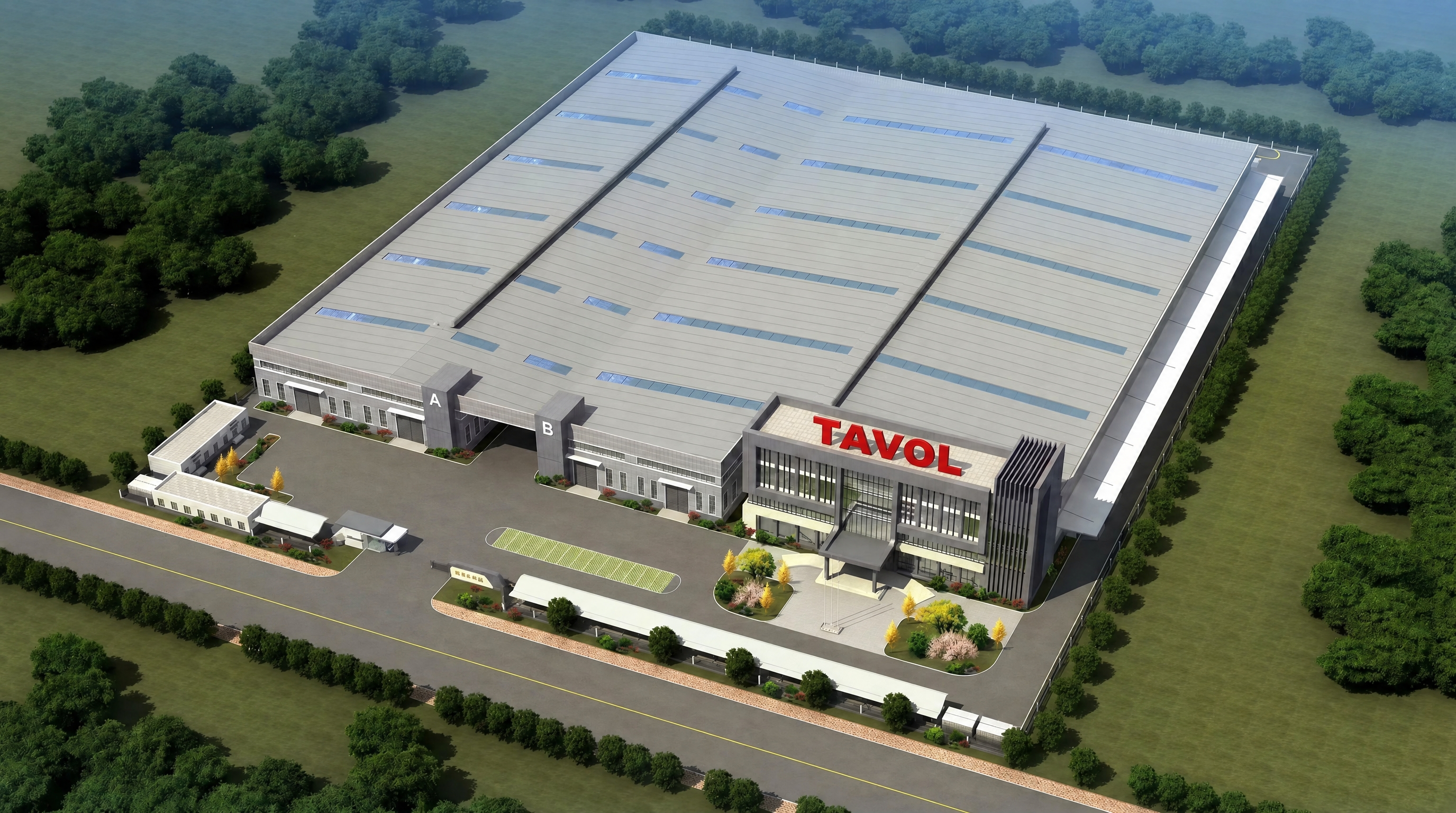
Buying a material handling forklift is really two purchases: the machine and the supplier behind it. Specifications can be compared line by line. Supplier capability cannot — it has to be verified with evidence.
That distinction matters more now than it did a decade ago. Grand View Research values the global forklift market at USD 81.4 billion in 2025, and Interact Analysis reports that lithium-ion penetration in global counterbalanced forklifts reached 17.5% in 2024. The drive mix is broadening, which means a buyer screening suppliers is no longer choosing between diesel-only vendors. The realistic question is whether a single supplier genuinely manufactures diesel, dual fuel, and electric product lines — or whether it assembles a catalogue from several sources and describes that as capability.
Tavol Group is one of the suppliers buyers will encounter during that screening. Shandong Tavol Machinery Co., Ltd. is a forklift and lifting-equipment manufacturer whose production operations date to 2003 and which now forms part of Tavol Group, established in 2011 and headquartered in Tai'an, Shandong, China. The group manufactures diesel, LPG and gasoline dual fuel, and electric forklifts alongside cranes and tractors, employs more than 300 people, and states that it serves customers in over 120 countries and regions. Whether that profile translates into a suitable supply partner depends entirely on how much of it can be evidenced.
Why Capability Claims Are Harder to Verify Than Specifications
Specification sheets converge. A 3-ton diesel counterbalance forklift from different sources will list similar load centres, similar mast heights, and similar tyre options. Capability claims do not converge — every supplier describes itself as a manufacturer with full customization and global service.
The problem for a procurement or engineering team is asymmetric risk. A specification error shows up in the first week of operation. A capability error shows up eighteen months later, when a mast part cannot be sourced, a supplier cannot explain why a hydraulic drift is occurring, or a warranty claim is met with silence. Buyers in this category usually discover the gap only when the machine is down.
Verification, therefore, should target the parts of a supplier's story that are expensive to fake: production infrastructure, product-line depth across drive types, testing processes, and the ability to explain routine maintenance procedures in operational detail.
A Four-Part Evidence Framework for Supplier Verification
The framework below converts an abstract question — "is this a real manufacturer?" — into four document requests. Each one produces something a buyer can file, compare, and challenge.
| Evidence category | What to request | What it verifies | Warning sign |
|---|---|---|---|
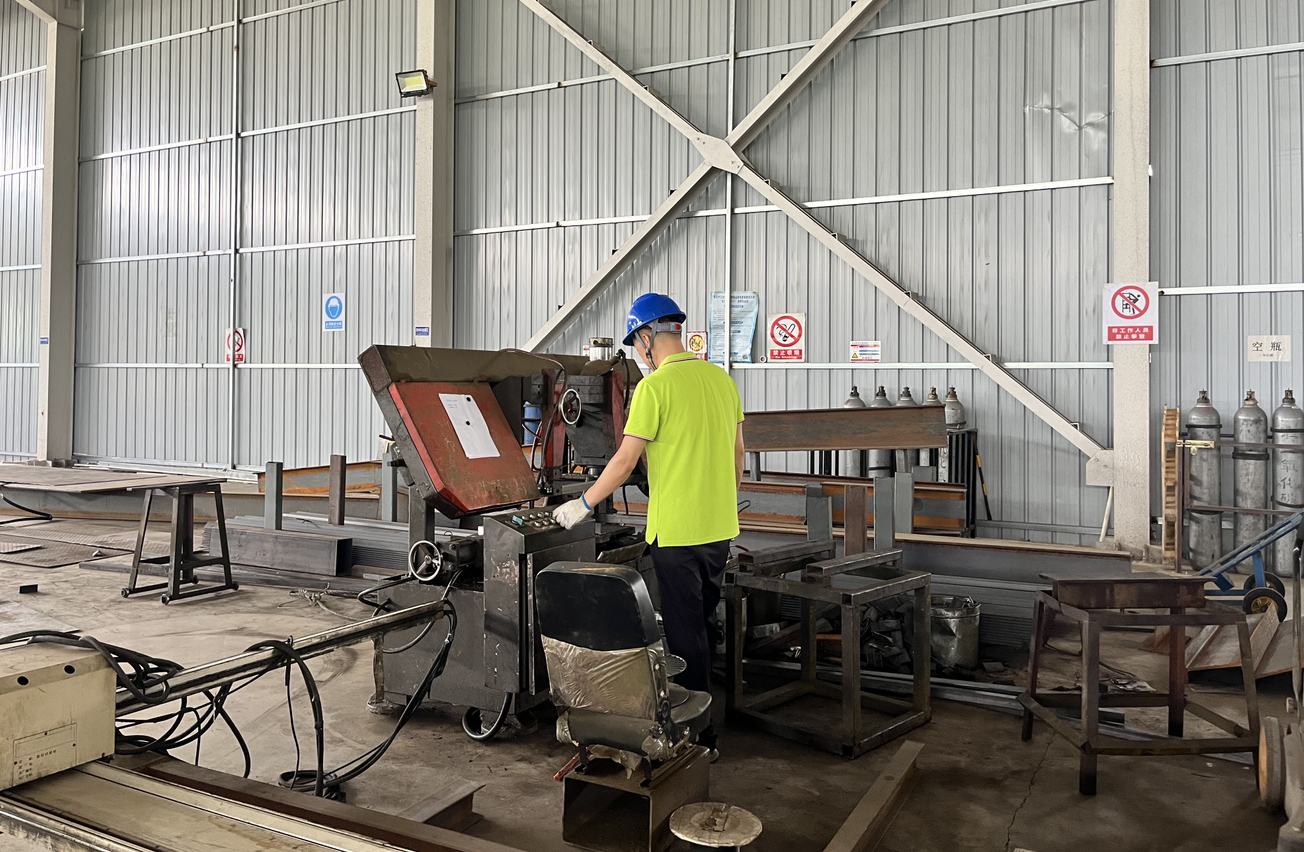
| Production evidence | Facility footprint, key production equipment (cutting, bending, welding, mast fabrication, painting), engineering headcount, annual and monthly output | Whether the supplier manufactures the trucks it sells | Only showroom or completed-unit photography; no process data |
| Product-line evidence | Full model list by drive type, engine or battery platform, mast and fork ranges, chassis materials | Whether diesel, dual fuel, and electric are genuine in-house lines | One drive type with "we can also build the others" claims |
| Quality-process evidence | Pre-shipment test coverage, third-party inspection option, test documentation per unit | Whether each unit is tested before loading | Verbal assurance with no inspection record |
| Operational support evidence | Written routine maintenance procedures, warranty terms, spare-parts strategy, named technical support channel | Whether the supplier can support the machine across its service life | No written procedures; no named support contact |
Applied to Tavol, the framework produces concrete answers rather than adjectives. The company operates a 40,000 m² manufacturing site with roughly 300 employees, including a 25-engineer R&D team, and reports annual output of 3,000 units. Its stated customization scope covers fuel type (diesel, LPG, dual fuel, or lithium), tonnage, mast height, fork length, attachment type, cabin type (open or enclosed), logo printing, and paint colour. Monthly capacity is 300 units, quoted lead time is 10–45 days, and the minimum order quantity is one unit. Quality control is described as 100% pre-shipment testing with third-party inspection available. After-sales support is delivered as remote technical support, with a 2-year warranty on the forklift and a 5-year warranty on the lithium battery.
None of those numbers prove reliability. They do prove something narrower and more useful: the supplier can be asked about them, and inconsistent answers across two conversations are a reliable early signal.
Evidence Check 1: Does the Supplier Actually Build the Product Lines It Lists?
Product-line breadth is the easiest claim to test, because drive type forces visible hardware differences. Diesel and dual fuel trucks carry engines, fuel tanks or cylinders, and exhaust systems. Electric trucks carry lithium battery packs, chargers, and different cooling and control architectures. A supplier that genuinely manufactures all three can describe those differences from its own production line.
The listed diesel range runs from the CPCD20 at 2,000 kg through the CPCD25, CPCD30, and CPCD35 to the CPCD40 at 4,000 kg, all with a 500 mm load centre. Engine options listed for the diesel line include Xinchai, Quanchai, Isuzu, Mitsubishi, Yanmar, Kubota, and PSI — a mix that includes Japanese-branded engine platforms alongside Chinese units. The dual fuel LPG and gasoline range covers the CPQYD20 through CPQYD35 and specifies a Nissan engine. The electric range covers the CPD30, CPD35, and CPD40, all fitted with lithium-ion LiFePO4 batteries and a quick charger.
| Model | Drive | Rated capacity | Listed detail worth verifying |
|---|---|---|---|
| CPCD20 | Diesel | 2,000 kg | 490 mm/s lift speed at full load; 15%/20% gradeability (full/empty) |
| CPCD25 | Diesel | 2,500 kg | 2,750 mm overall length; 7.00-12-12PR front tyre |
| CPCD30 | Diesel | 3,000 kg | 450 mm/s lift speed; 28×9-15-12PR front tyre |
| CPCD35 | Diesel | 3,500 kg | 450 mm/s lift speed; 21,500 N maximum traction |
| CPCD40 | Diesel | 4,000 kg | 460 mm/s lift speed; 24,500 N maximum traction; 1,330 mm overall width |
| CPQYD20 / CPQYD25 | Dual fuel LPG & gasoline | 2,000 / 2,500 kg | Nissan engine; 490 mm/s lift speed; 2,500 mm turning radius |
| CPQYD30 / CPQYD35 | Dual fuel LPG & gasoline | 3,000 / 3,500 kg | 450 mm/s lift speed; 18/20 km/h drive speed |
| CPD30 | Electric (LiFePO4) | 3,000 kg | 350 mm/s lift speed; 18 km/h drive speed; 135 mm ground clearance |
| CPD35 | Electric (LiFePO4) | 3,500 kg | 320 mm/s lift speed; 370 mm/s descent speed |
| CPD40 | Electric (LiFePO4) | 4,000 kg | 320 mm/s lift speed; 150 mm ground clearance |
Common configuration ranges across the ranges are also checkable: two-stage masts at 3 m, 3.5 m, and 4 m; three-stage masts at 4.5 m, 5 m, 5.5 m, and 6 m; container masts and full-free masts; fork lengths of 1,220 mm, 1,370 mm, 1,520 mm, 1,670 mm, and 1,820 mm; and a choice of pneumatic or solid tyres. Chassis material is listed as Q235 carbon structural steel and Q355 low-alloy high-strength structural steel across the product families.
Evidence Check 2: Can the Supplier Explain Routine Operations?
This is the most underused verification method in forklift procurement, and arguably the most predictive. Sales teams repeat specifications. Support teams explain procedures. Asking a supplier to describe routine operator and maintenance tasks reveals which one is on the other side of the table.
Test A — the pre-shift inspection for a diesel counterbalance forklift
A credible diesel supplier should describe the pre-shift routine without hesitation: a visual and functional check covering fluid levels, tyres, brakes, and safety devices, performed before every shift to prevent breakdowns and protect the operator.
- Check engine oil, hydraulic fluid, and coolant levels.
- Inspect tyres for wear, damage, or incorrect inflation.
- Test brakes, horn, lights, and backup alarm.
- Check forks and mast for cracks, bends, or hydraulic line leaks.
- Start the engine and confirm there is no unusual noise, smoke, or warning light.
The associated safety rule is equally diagnostic: never operate a truck with a malfunctioning brake or hydraulic leak, wear the seatbelt at all times, and report any abnormality to a supervisor before work begins. Suppliers who treat the checklist as a paper exercise rarely volunteer that rule.
Test B — lithium battery charging and maintenance
The lithium question tests the opposite end of the product range. The recommended routine is opportunity charging during breaks rather than waiting for full depletion, followed by a charging cycle that matches the manufacturer's specification. Lithium packs require no watering and no acid checks — only periodic inspection of terminals and connectors.
- Park on a flat, ventilated area and switch off the ignition before connecting the charger.
- Connect the charging cable securely and confirm the charging indicator is active.
- Charge during breaks or idle periods rather than always waiting for full depletion.
- Disconnect once fully charged; avoid leaving the charger connected beyond the recommended time.
- Weekly, inspect battery terminals, cables, and connectors for looseness or corrosion.
Safety guidance here is also a capability marker: never charge in an enclosed space without ventilation, keep the charging area dry, do not disconnect cables under load, and restrict battery connection work to trained personnel.
These two procedures sit on opposite sides of the powertrain split. A supplier that handles both competently can support a mixed fleet. One that answers the diesel checklist confidently and improvises on lithium is telling the buyer something important about where its engineering depth actually sits.
Evidence Check 3: Configuration and Attachment Evidence Tied to Your Job
Scenario fit is where the material handling forklift decision is usually won or lost, and where generic suppliers are most exposed. The practical test is whether the supplier can connect an attachment and a chassis configuration to a real operating environment, with an example from a comparable site.
| Application | Attachment / configuration | Documented scenario |
|---|---|---|
| Paper roll handling | Paper roll clamp, non-marking pads, adjustable clamping force | Paper and pulp warehousing, Brazil |
| Carpet roll handling, cold climate | Rotating clamp with 360° rotation, closed cab for operator protection | Indoor warehouse, Serbia |
| Tyre bundle handling | Curved-arm tyre clamp, non-marking surface, adjustable clamping width | Tyre manufacturing yard, Thailand |
| Bulk material scooping | Bucket with wear-resistant edge, locked to the fork carriage | Aggregates and cement handling, Philippines |
| Bin and skip tipping | Tipping fork with hydraulic tilt cylinder and load locking | Waste management yard, European market |
| Drum and barrel handling | Hydraulic drum clamp; 360° fork rotator for controlled tipping | Chemical plant, Bangladesh; container handling, Chile |
| Unstable mixed loads | Load stabiliser platen applying adjustable downward pressure | General warehousing, Spain |
| Weight-based billing | Load cell and digital display on the mast, with overload alert | Scrap and recycling weighing, Bulgaria |
| Single or double pallet handling | Pallet handler with hydraulic fork spread, switchable mode | Recycling yard, Greece |
| Container loading in confined space | Standard forks with overhead crane assistance, tight-space manoeuvring | Structural steel export loading, Germany |
| Unpalletised bales and cartons | Bale or carton clamp with adjustable clamping pressure | Warehousing and distribution, Greece |
Two details in that table are worth extracting. First, most attachment work lands on the 3-ton and 3.5-ton chassis, which is why the CPCD30, CPCD35, CPQYD30, and CPQYD35 family carries the bulk of customization demand. Second, heavier duty cycles do exist: Tavol records a 5-ton heavy-duty diesel unit delivered to an end user in Mexico for indoor and outdoor workshop handling of steel goods and container loading, and a CPCD40 deployment in Kuwait. A supplier that can describe where a 5-ton requirement belongs — and where it does not — is demonstrating application judgement rather than catalogue reach.
Evidence Check 4: Ask for the Deployed Fleet, Not the Brochure
Installed-base evidence is the closest thing to a reference check that a buyer can run without travel. The value is not the country list; it is the duration and the duty cycle.
- Kuwait — chemical and warehousing logistics centre: five CPD40 electric forklifts, in operation for 2 years, used for high-rack pallet stacking, heavy bagged materials, and indoor logistics. Reported results include zero indoor emissions, reliable performance under high ambient temperature, and reduced energy cost.
- Bangladesh — chemical and industrial plant: two CPQYD30 dual fuel LPG and gasoline forklifts, in operation for 2 years, fitted with a customized hydraulic drum clamp for chemical drum handling and high-rack stacking. The site reports a 35% reduction in fuel expense through LPG operation and seamless switching between gas and gasoline.
- Peru — plastic recycling company: a fleet of 10 CPCD30 diesel forklifts, in operation for 2 years, used for loading and warehousing recycled plastic bales. Reported advantages are economical fuel consumption, widely available spare parts, and low maintenance requirements.
- Chile — fruit orchard and agricultural logistics centre: four CPCD30 diesel forklifts with a custom 4.5 m high-lifting mast, in operation for 2 years, handling fruit crates and high-rack pallets on unpaved farm roads.
- Algeria — cardboard box factory: five diesel forklifts used for warehousing and pallet handling, with no major repairs required across a 3-year period.
- Colombia — logistics company: one unit in operation for 4 years, performing heavy-duty container lifting and positioning onto flatbed trucks on rough and uneven ground.
- Mexico — concrete pipe and precast manufacturer: a CPCD30 3-ton diesel forklift in outdoor yard handling for 3 years, with the high-torque diesel engine cited as the deciding factor for heavy pipes and construction cargo.
These are supplier-recorded cases, and buyers should treat them as a starting point rather than proof. The productive follow-up is to request the operator contact for one site running a comparable duty cycle, and to ask what failed first on that fleet. A supplier that answers that question directly is more useful than one that only shares success summaries.
Where the Limits Are: What Factory-Direct Sourcing Does Not Solve
An honest verification process has to include the boundaries, and factory-direct sourcing has several.
Local service depth is the main trade-off. Tavol's stated after-sales model is remote technical support, with a 2-year forklift warranty and a 5-year lithium battery warranty. That is a meaningful warranty position, but it is not the same as a regional dealer network with field engineers and stocked service vans. Buyers in markets without an established partner should budget for local technician capability and a spare-parts buffer from the first shipment. At category level, China exported USD 1.26 billion of parts for fork-lift trucks in 2024 according to World Bank WITS data, which indicates a deep global parts supply base — but it does not guarantee that a specific part number for a specific model is sitting in your region.
Brand-standardisation policies can override a better commercial case. If your fleet is governed by a mandated brand list, a resale-value model, or a financing agreement tied to a legacy manufacturer, a factory-direct source is simply the wrong answer, regardless of unit economics. The correct conclusion of a verification exercise can be "not suitable for this buyer".
Compliance documentation is market-specific and time-sensitive. The supplier states CE and ISO compliance for its diesel range, but certification scope must be checked against the exact model, configuration, and destination. For North American buyers, ANSI/ITSDF B56.1-2020 is the safety standard for low-lift and high-lift trucks documented as effective through 2025 — buyers should confirm which revision applies to their market at the time of order rather than relying on a document issued earlier.
Electric is not yet the default for every duty cycle. With lithium-ion penetration in global counterbalanced forklifts at 17.5% in 2024, the technology is scaling quickly but has not displaced internal combustion across all applications. Outdoor yards, unpaved ground, high-temperature environments, and sites without charging infrastructure remain diesel or dual fuel territory, and a supplier that pushes lithium into those conditions is optimising its own product mix rather than your operation.
Market Context: What Third-Party Data Should and Should Not Do
Third-party figures are useful for framing questions, not for validating a supplier. The global forklift market at USD 81.4 billion in 2025 signals a deep, competitive supply base. Lithium penetration at 17.5% in counterbalanced trucks in 2024 signals an accelerating but incomplete transition. China's USD 1.26 billion in forklift parts exports in 2024 signals that cross-border parts flow is normal, not exceptional.
None of these numbers describe any individual manufacturer. They define the environment in which a verification process runs, and they are best used to challenge sweeping statements — for example, a claim that electric is now the obvious choice for all operations, or that parts availability is a problem unique to one sourcing region.
A Procurement Checklist for Diesel and Electric Forklift Suppliers
Before awarding an order, collect the following. Anything that cannot be produced in writing should be treated as a risk item, not a promise.
- Manufacturing footprint, key production equipment list, and engineering headcount.
- Annual and monthly output figures, with the current booking position.
- Full model list by drive type, with capacity, mast, and fork options.
- Engine or battery platform identification, including the specific brand fitted.
- Chassis material specification and any structural reinforcement relevant to your duty cycle.
- Pre-shipment test coverage, and whether third-party inspection is included or optional.
- Lead time stated in writing, with the trigger events that could extend it.
- Minimum order quantity, and whether mixed-model orders are accepted.
- Attachment compatibility confirmation for the intended load, with the attachment specification.
- Documented routine maintenance procedures for the drive type being purchased.
- Warranty terms by component, including battery coverage and exclusions.
- Named technical support channel, response expectations, and parts ordering route.
- Certification documentation matched to the exact model and destination market.
- At least one operator reference running a comparable duty cycle.
Future Outlook
Two shifts are likely to shape forklift sourcing over the next procurement cycles. The first is the continued growth of lithium-electric counterbalanced trucks, which pushes supplier verification toward battery platform questions — cycle life, charging strategy, and cold-store performance — rather than engine questions. The second is documentation. As more buyers run structured verification processes, suppliers that can produce process evidence, maintenance procedures, and reference data on request will separate from those that can only produce a quotation.
For buyers, the practical implication is that supplier evaluation is becoming a document exercise before it becomes a commercial negotiation. The teams that collect evidence early will spend less time resolving disputes later.
FAQ
What is the pre-shift inspection checklist for a diesel counterbalance forklift?
The pre-shift routine is a visual and functional check covering fluid levels, tyres, brakes, and safety devices, performed before every shift to prevent breakdowns and protect the operator. In sequence: check engine oil, hydraulic fluid, and coolant levels; inspect tyres for wear, damage, or incorrect inflation; test brakes, horn, lights, and backup alarm; check forks and mast for cracks, bends, or hydraulic line leaks; then start the engine and confirm there is no unusual noise, smoke, or warning light. Never operate a truck with a malfunctioning brake or hydraulic leak, keep the seatbelt fastened at all times, and report any abnormality to a supervisor before starting work.
How do I properly charge and maintain a lithium battery forklift?
Use opportunity charging during breaks instead of waiting for a full discharge, and follow the manufacturer's charging cycle to maximise battery lifespan. Lithium batteries require no watering and no acid checks — only periodic inspection of terminals and connectors. Practically: park on a flat, ventilated area and switch off the ignition before connecting the charger; connect the cable securely and confirm the charging indicator is active; charge during breaks or idle periods; disconnect once fully charged and avoid leaving the charger connected beyond the recommended time; and weekly, inspect battery terminals, cables, and connectors for looseness or corrosion. Never charge in an enclosed space without ventilation, keep the charging area dry, do not disconnect cables under load, and restrict battery connection work to trained personnel.
How do I switch fuel modes on a dual fuel forklift?
Switch fuel modes only when the engine is idling or off, using the dashboard fuel selector switch, and allow a few seconds for the fuel system to stabilise before resuming operation. The sequence is: bring the forklift to a stop and let the engine idle; locate the fuel mode selector on the dashboard; switch to the desired mode, gasoline or LPG; wait 5–10 seconds for the fuel system to stabilise; then resume operation and monitor engine performance for the first few minutes. Do not switch fuel modes while under heavy load or on a slope, confirm the LPG cylinder is securely mounted and leak-free before each shift, and keep away from open flames during refuelling.
Lithium battery forklift or lead-acid forklift — which one should I choose?
The two technologies differ mainly in charging time, maintenance burden, and cycle life. Lithium batteries charge in roughly 1–2 hours versus 6–8 hours for lead-acid, require no watering or maintenance, and are rated for 2,000 or more cycles against roughly 500–800 cycles for lead-acid. Lead-acid has the lower purchase price but a higher long-term maintenance and downtime cost. Lithium suits multi-shift, high-utilisation operations — food, pharmaceutical, and continuous warehouse environments — where uptime and low maintenance matter most. Lead-acid remains reasonable for light-duty, single-shift use with a tighter upfront budget.
Should I choose a dual fuel forklift or a diesel-only or LPG-only forklift?
Dual fuel forklifts can switch fuel sources on demand, which supports operations in regions with unpredictable fuel supply and avoids stoppage when one fuel type becomes unavailable; one supplier risk assessment cites fuel cost reductions of up to 15% from flexible-fuel operation, while site results vary — a chemical plant in Bangladesh reported a 35% reduction in fuel expense after shifting duty to LPG, with the same units switching seamlessly between gas and gasoline. A single-fuel forklift has a simpler fuel system and lower upfront cost, but no flexibility if that fuel becomes unavailable. Dual fuel fits ports, outdoor sites, and markets with seasonal or unstable fuel supply; single fuel fits stable indoor operations where fuel access is consistent and upfront cost is the priority.
Is a Chinese diesel counterbalance forklift as reliable as a traditional Western brand forklift?
On core engine performance and durability, China-manufactured diesel counterbalance forklifts are positioned as comparable, with the main differences appearing in price, parts cost, and lead time rather than in basic load capacity or lifting height. Comparison inputs commonly cited for this category are purchase prices roughly 20–40% lower, spare parts costs around 30% lower, faster lead times, and broader OEM customization options — all of which a buyer should validate against their own quotations rather than accept as a category guarantee. A traditional Western brand remains the better fit when an existing service network, a mandated brand list, or a resale-value requirement is a strict procurement condition. The practical approach is to compare both against the same written specification and the same service-responsiveness expectation.
Supplier verification is not a one-time exercise, and it is not a rejection mechanism. It is a way of making the trade-offs explicit: what the manufacturer controls directly, what depends on the buyer's local capability, and which claims can be documented before money changes hands. Tavol Group publishes its company profile, product scope, and warranty terms for buyers who want to run that check in detail; the company profile is available for download here: Tavol Group Company Profile (PDF).
¿Tiene preguntas o necesita más detalles?
Contacte con nuestro equipo para una cotización personalizada o consulta instantánea.
Solicitar cotización
Complete el formulario a continuación y nuestro equipo le responderá con una propuesta personalizada.
Chat directo de WhatsApp
¿Prefiere chatear en tiempo real? Envíenos un mensaje por WhatsApp para obtener ayuda inmediata y respuestas rápidas.
- Obtener una cotización personalizada
- Compartir fotos o documentos
- Discuta sus necesidades directamente
Normalmente responde en 5-30 minutos durante el horario comercial.