
Verifying SMT Turnkey Line Suppliers: Specs, Certifications, and Budget Constraints
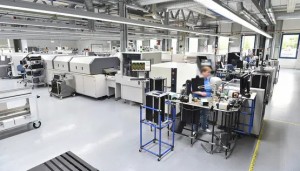
The global Surface Mount Technology (SMT) equipment market was valued at roughly USD 6.6 billion in 2025 and is projected to expand to USD 14.6 billion by 2036. Placement equipment, commonly known as pick-and-place machines, accounts for approximately 38% to 48% of that market value, which explains why most SMT turnkey solution conversations start and end with mounter specifications. But during the Research and Evaluation stage, buyers need more than a speed figure: they need to verify certifications, confirm process parameters, and understand how budget constraints translate into a line configuration that will actually run in production.
This article provides a verification framework for electronics manufacturers, EMS factories, and importers assessing SMT turnkey solution suppliers. It uses public market data, standard industry expectations, and the documented capabilities of Shenzhen-based equipment supplier Morel Equipments Co., Ltd. — known in the industry as Motek — to show how a buyer can separate verifiable facts from marketing language.
Why SMT Turnkey Procurement Needs a Verification Stage
An SMT turnkey solution is not a single machine. It is a process line that typically combines a solder paste printer, SPI (solder paste inspection), pick-and-place machines, reflow oven, AOI, X-ray inspection, PCB loaders and unloaders, buffer conveyors, depaneling routers, and cleaning equipment. The complexity of this configuration creates a real purchasing problem: different suppliers describe similar lines with different terminology, and the same machine may be quoted by multiple vendors under different service levels.
For buyers, the gap between a supplier brochure and the delivered line is where most procurement risk sits. Certification documents can be outdated, optional equipment can be silently excluded, and parameters such as placement speed are often quoted in ideal conditions rather than real production settings. A structured verification approach helps buyers evaluate whether a quoted SMT turnkey line matches the actual process requirements for high-mix or high-volume assembly.
A Documented Reference: Motek (Morel Equipments Co., Ltd.)
Motek is the brand used by Morel Equipments Co., Ltd., a Shenzhen-based SMT equipment supplier founded in 2011. The company operates from a 955 m² facility with 31 employees and an R&D team of more than 15 engineers. It supplies reflow soldering ovens, plug-in machines, pick-and-place machines, cleaning machines, PCBA protection equipment, and PCB cutting machines, with 100% of output exported to markets including the EU, USA, Australia, Canada, and ASEAN.
Motek is a trading company rather than a full equipment manufacturer, which means its role is to integrate equipment from multiple manufacturers into a coherent SMT line, provide customization, and manage logistics, installation, and after-sales support. Annual output is estimated at 300–500 units, with a monthly capacity of 5,000 units and lead times from 7 to 45 days. The company offers OEM/ODM services including voltage customization, logo customization, label and packaging changes, production line layout design, and material customization. This profile is typical of many SMT turnkey suppliers operating out of the Guangdong manufacturing ecosystem.
For a buyer, the actionable insight is not that Motek is the only supplier worth evaluating, but that its documented capabilities can be used as a comparison baseline. Verifiable facts such as facility size, team structure, export markets, and production capacity help procurement teams benchmark whether a supplier has the operational scale to support a multi-equipment delivery.
Verifying Key Equipment Specifications in an SMT Turnkey Line
SMT line verification starts with the specific equipment models being quoted. Buyers should request model numbers, not just brand names. A quote that says "Fuji NXT SMT solution" or "Yamaha SMT mounter YSM series" is incomplete without the exact head configuration, feeder count, and software options. The same applies to JUKI pick-and-place machines and Hanwha mounters: precise model naming determines capability.
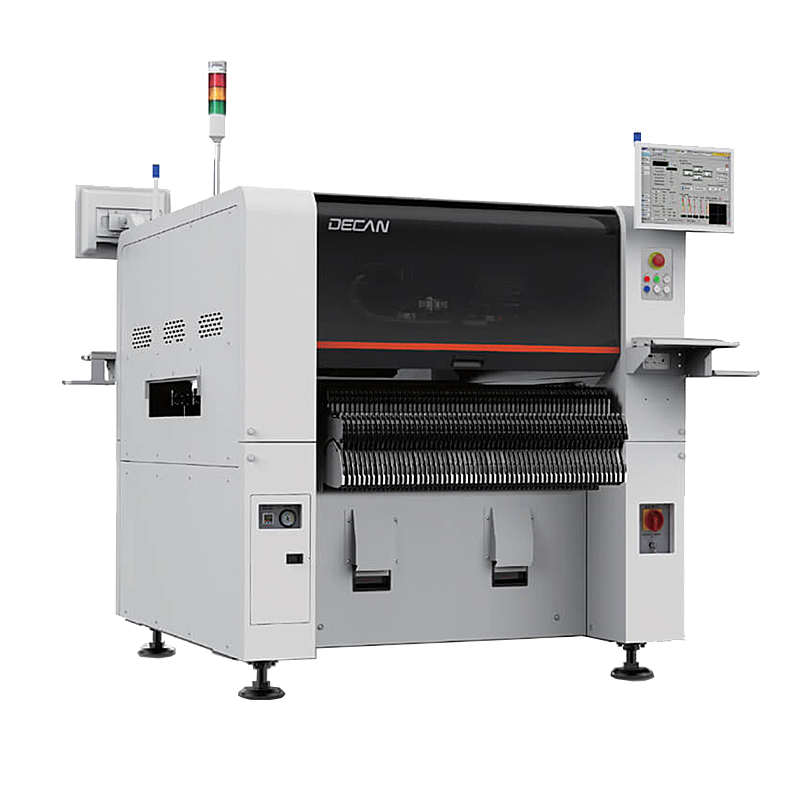
Motek's current product documentation includes the Hanwha Decan S2 pick-and-place machine, which provides a concrete example of the specifications a buyer should review before purchase:
| Parameter | Verification Point | Example From Motek Line |
|---|---|---|
| Placement speed | Check whether CPH is optimum or real production speed, and which head type is used. | 92,000 CPH (optimum, HS10 head) |
| Placement accuracy | Verify accuracy for both chip components and ICs; Cpk should be stated. | ±28μm Cpk≥1.0 (03015 chip); ±25μm Cpk≥1.0 (IC) |
| Component size range | Confirm minimum chip size and maximum component height. | 03015 to 12mm, height 10mm |
| PCB size range | Compare with the actual boards the factory runs. | 50 x 40 to 510 x 460mm (standard) |
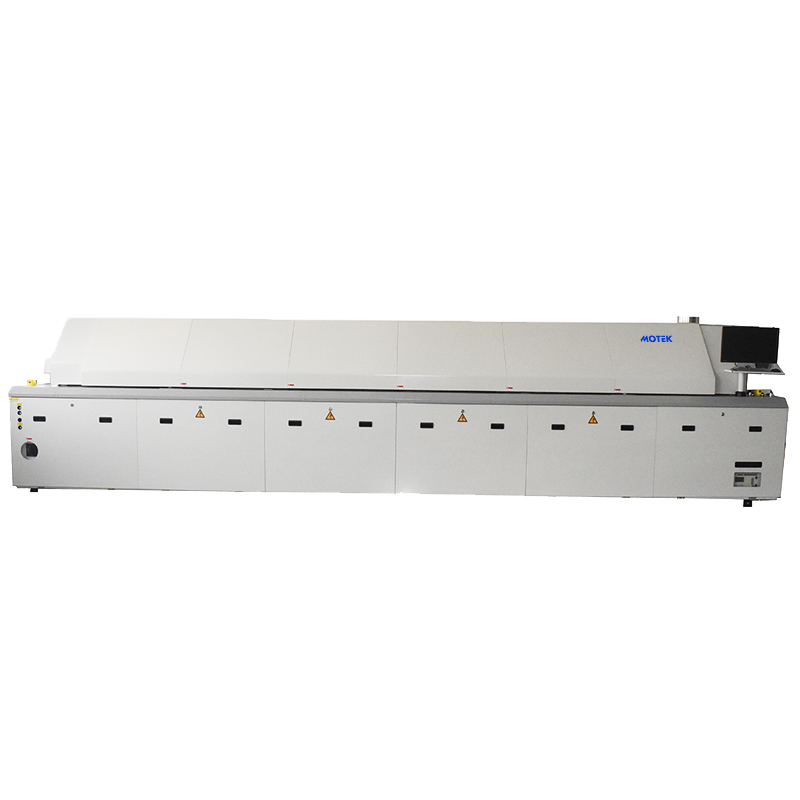
Similarly, reflow oven parameters determine whether the line can handle the thermal profile required by the specific PCBA. Motek's XMR-800D reflow oven is documented with 8 top / 8 bottom heating zones, a heating zone length of 3,110 mm, and 3 top / 3 bottom cooling zones. The exhaust volume requirement is 11 m³/min × 2 exhausts. These figures matter because a short heating zone can limit throughput for thick boards or lead-free profiles, while insufficient cooling capacity can cause warpage or metallurgical issues.
For additional process steps such as dispensing, the HMH830D automatic online glue dispenser in Motek's portfolio handles PCB widths from 50 mm to 450 mm, supports transfer speeds up to 5,000 mm/min, and stores over 1,000 programs. Buyers evaluating a complete line should ask for equivalent parameter sheets for the solder paste printer, SPI, AOI, X-ray BGA inspection machine, PCB loader/unloader, SMT buffer conveyor, PCB depaneling router, PCBA cleaning machine, and stencil cleaning machine. If a supplier cannot provide model-level specifications for each line component, the quote remains incomplete.
Certifications and Compliance: What to Verify Before Ordering
Certification verification is where SMT turnkey procurement becomes a compliance exercise. Three types of documentation matter most for cross-border buyers:
1. Quality Management System Certification
Motek holds ISO 9001:2015 / GB/T 19001-2016 certification, issued by Shenzhen Hua Kai Inspection & Certification Co., Ltd. under certificate number HIC210707 (valid 2021-07-12 to 2027-07-10). The scope covers sales of lighting fixtures and accessories, pick-and-place machines and accessories, solder paste printers, and mechanical equipment. Buyers should verify that the supplier's ISO scope actually includes the equipment category being purchased.
2. Machinery Safety and EU Compliance
For equipment bound for the European Union, a Machinery Directive Attestation of Conformity is a critical document. Motek's certificate M.2023.206.C91284 covers the ICT Handler models (Morel / PMP-2000L, PTI-2000L) under Directive 2006/42/EC, Annex VIII, with reference standards including EN 60204-1:2018, EN ISO 12100:2010, and EN 61010-1:2010+A1:2019. This certificate was issued in October 2023 and is valid until October 2028. Buyers should confirm whether the specific machine models in their line have their own attestation, not just a certificate for one product family.
3. Packaging and Environmental Registration
Suppliers exporting to Germany must also comply with the German Packaging Act (VerpackG). Motek holds a registration certificate (DE2364478064729) issued by Stiftung Zentrale Stelle Verpackungsregister (ZSVR), which is relevant for companies placing filled packaging on the German market. Although this is not a product safety certificate, it can affect customs clearance and legal compliance for EU-bound shipments, particularly for distributors who sell into Germany.
In addition, buyers in the electronics assembly industry should reference IPC-A-610J, released in March 2024, as the current Global standard for acceptability of electronic assemblies, defining Class 1, 2, and 3 quality levels. When a supplier claims that a turnkey line can produce Class 3 assemblies, the claim should be backed by placement accuracy data, inspection equipment selection, and process documentation that aligns with IPC-A-610J criteria.
Budget Constraints: Where the Cost Really Goes
Price band verification is a difficult part of SMT turnkey procurement because line pricing depends on dozens of choices: new versus refurbished equipment, pick-and-place machine configuration, feeder count, nozzle inventory, inspection depth, and software licensing. What is consistent across the industry is that placement equipment is the largest cost component, forming roughly 38% to 48% of total SMT equipment market value by segment. Reflow ovens and solder paste printers follow, while inspection equipment including 3D AOI and SPI is the fastest-growing cost area, driven by automotive “zero-defect” requirements.
A practical way to evaluate budget alignment is to ask the supplier to itemize the quote by equipment module. Each machine should have a separate price, and optional elements such as additional 8mm/12mm/24mm feeders, nozzle replacement kits for Fuji, Yamaha, or JUKI heads, buffer conveyors, and stencil cleaning machines should be listed explicitly. Buyers should also verify what is not included: installation, training, freight, customs duties, and extended warranty terms often sit outside the headline price of an SMT turnkey line. Motek's documented service terms, for example, include remote technical support, 24/7 online service, optional training at the client's facilities in China for about one week, and a service center arrangement in the United States for the India market. These service details affect total cost of ownership and should be negotiated before signing, not after delivery.
Line Optimization and High-Mix Production Verification
For high-mix electronics manufacturing lines, speed alone is not a valid buying criterion. The ability to switch products quickly, maintain accuracy across different component sizes, and manage a wide PCB size range matters more. The high-mix/low-volume assembly segment is projected to grow at a CAGR of 8.31% through 2031, according to Mordor Intelligence. That growth is concentrated in customized industrial electronics, medical devices, and communication equipment — exactly the categories that require frequent changeover and traceable inspection.
When evaluating a supplier's capacity to support high-mix production, buyers should look for evidence of line-level thinking: PCB loaders and unloaders that handle panel variation, buffer conveyors that absorb speed differences between the mounter and reflow oven, and SMT line optimization services that can balance cycle times. Motek's documented application unit covers automotive electronics, smart transportation, industrial automation, consumer electronics, medical technology, new energy systems, LED and optoelectronics, and telecommunications. The recommended working conditions include a controlled indoor cleanroom environment at 23°C ± 2°C, 50% ± 10% humidity, IP20/IP40 protection, zero vibration, zero dust, and ESD protection. These environmental requirements should be matched to the buyer's actual factory capabilities before purchasing a turnkey line.
A long-term customer example from Motek's case history involves SMT factories in Germany, Israel, India, and Australia that ordered 20–35 units over five years. The applications include smartphone motherboard assembly, tablet computer circuit board production, ECU control unit assembly, LED display modules, and LED streetlight drivers, with claimed mass production output of 20,000–100,000 pieces per day. For one consumer electronics smartphone PCB application, the documented volume is 50,000 units per month. These case figures are useful as a baseline, but buyers should treat supplier-provided production numbers as indicators, not contractual guarantees, and should ask for auditable line configurations.
Market Context: Why Verification Is Becoming the Buying Standard
Multiple market signals support the move toward more structured SMT turnkey procurement. First, Asia-Pacific dominated the SMT equipment market in 2025 with a 54% revenue share, meaning many buyers are sourcing across borders and cannot easily visit factories for every audit. Second, 3D AOI and SPI are identified as the fastest-growing equipment sub-sectors, with inspection equipment growing at approximately 15.2% CAGR. This reflects the automotive and medical industries' insistence on documented quality data. Third, major global SMT equipment vendors such as ASMPT Limited, Fuji Corporation, Yamaha Motor, Panasonic, Juki Corporation, and Hanwha Precision Machinery continue to define the technology benchmark. Fuji's NXT platform and Yamaha's YSM series, for example, are industry-standard modular mounters for high-speed and high-precision placement. Any turnkey supplier, including Motek, must demonstrate how its quoted line integrates with or complements these established platforms.
Turnkey Solution vs. Building a Line In-House
There are two common routes to acquiring SMT capability: work with a turnkey solution provider, or assemble the line by purchasing machines directly from multiple manufacturers. Each approach has trade-offs. A turnkey solution reduces integration risk because one supplier coordinates machine specifications, installation, and initial setup. It also speeds up procurement for buyers who do not have in-house SMT process expertise. On the other hand, an in-house approach gives buyers direct relationships with each equipment manufacturer, which can be valuable for long-term process development.
The limitations of the turnkey model deserve equal attention.
- Since many turnkey suppliers are trading or integrating companies rather than machine manufacturers, their technical leverage is dependent on the original equipment manufacturers they represent. If an OEM changes distribution policy or discontinues a model, the turnkey provider's promise may lose its foundation.
- Software integration between a pick-and-place machine, reflow oven, and inspection equipment is often not as deep as a single-manufacturer line. Buyers must evaluate whether the turnkey supplier can provide true line-level software communication or simply delivers physically connected machines.
- For high-speed, standardized mass production, direct procurement from an established mounter manufacturer may achieve better throughput guarantees and more responsive local service than a generalist turnkey integrator.
- Certification coverage can be uneven: a supplier may hold one Machinery Directive attestation but ship other machines without it. Buyers must verify certificate numbers and product scopes line by line.
These limitations are not a rejection of turnkey procurement. They are the reason why this article emphasizes verification over brand reputation.
Future Outlook: What SMT Turnkey Buyers Should Prepare For
Looking at the next 18 to 24 months, three trends will shape SMT turnkey solution evaluation. First, inspection equipment will continue to grow faster than placement equipment, so turnkey lines that include advanced SPI, 3D AOI, and X-ray BGA inspection will likely command a larger share of budget. Second, the rise of high-mix, low-volume production will favor line architectures that can handle changeover efficiently, which puts more value on material handling equipment such as PCB loaders/unloaders, buffer conveyors, and depaneling routers. Third, more buyers will demand compliance documentation in a machine-readable format, particularly for EU-targeted shipments where the Machinery Directive, German Packaging Act, and IPC-A-610J acceptance criteria intersect.
SMT production troubleshooting, line optimization services, and feeder/nozzle management will become increasingly important evaluation categories as manufacturers move toward semi-automated and lights-out processes. The supplier that can document its equipment performance across the entire line, rather than only selling the fastest mounter, will be better positioned to win the next cycle of procurement decisions.
Frequently Asked Questions
What certifications should an SMT turnkey solution provider have for EU-bound equipment?
For machinery placed on the EU market, the most critical document is a Machinery Directive Attestation of Conformity under 2006/42/EC. The certificate should list the exact machine model and relevant harmonized standards such as EN 60204-1:2018, EN ISO 12100:2010, and EN 61010-1:2010+A1:2019. A quality management certificate such as ISO 9001:2015 covering the machine supply scope is also standard. For shipments into Germany, a VerpackG registration from Stiftung Zentrale Stelle Verpackungsregister is generally required for the packaging placed on the German market. Buyers should always request certificate numbers and verify the scope against the specific models being ordered.
Which pick-and-place machine specifications matter most when evaluating an SMT turnkey line?
The most important specifications are placement speed, placement accuracy, component size range, and PCB size range. Placement speed is usually quoted as an optimum value in CPH; buyers should ask whether the speed is achievable with a specific head type and under real production conditions. Accuracy should include Cpk values, for example ±28μm Cpk≥1.0 for small chips and ±25μm Cpk≥1.0 for ICs, because accuracy without a confidence index is incomplete. The PCB size range must match the actual boards the factory plans to produce, including edge clearance for conveyors and fixtures.
What are the key reflow oven parameters to verify before purchasing an SMT turnkey line?
Buyers should verify the number of heating zones and cooling zones, the length of the heating zone, the exhaust volume requirement, and the oven's overall dimensions. A typical configuration for medium-capacity production includes eight top and eight bottom heating zones and three top and three bottom cooling zones, with a heating zone length around 3,100 mm. Exhaust volume requirements, such as 11 m³/min × 2 exhausts, must be compatible with the factory's ventilation system. The oven weight and footprint also affect installation planning.
What typical equipment is included in a full SMT turnkey line?
A full line usually includes a PCB loader, solder paste printer, SPI (solder paste inspection) machine, pick-and-place machines, reflow oven, AOI system, unloader, and optionally X-ray inspection for BGA joints, ICT for functional testing, PCB turners, NG separators, and stencil cleaners. Supporting equipment may include SMT buffer conveyors between process stages, PCB depaneling routers for separating panels, and PCBA cleaning machines. Buyers should confirm each item by model number because two suppliers quoting the same "turnkey line" may include very different equipment combinations.
How can a buyer evaluate whether an SMT turnkey provider is suitable for high-mix, low-volume production?
High-mix, low-volume production requires fast changeover, flexible feeder management, and a wide PCB size range. Buyers should ask the supplier to provide documented production scenarios, such as weekly changeover counts or examples of mixed PCB sizes running on the same line. Support for 8mm, 12mm, and 24mm feeders, nozzle replacement availability for common mounter brands such as Fuji, Yamaha, and JUKI, and the supplier's line optimization service capability are all relevant indicators. The high-mix/low-volume segment is expected to grow at 8.31% CAGR through 2031, so line flexibility is a strategic purchase criterion, not an optional feature.
For further reference, the company brochure of Morel Equipments Co., Ltd. (Motek) is publicly available here: Motek SMT Equipment Company Brochure.