
Verifying Porcelain Insulator Suppliers Against IEC Standards
Verifying Porcelain Insulator Suppliers Against IEC Standards
Compliance questions decide more porcelain insulator orders than price does, and the evidence that answers them is specific, documentable, and usually requested too late in the procurement cycle.
A porcelain insulator is a low-cost line item with a high-consequence failure mode. A single defective unit in a suspension string or on a distribution cross-arm can take a feeder out of service, and in regulated markets it also triggers a documentation review that reaches back to the original purchase order.
For buyers in the decision and execution stages of a transmission or distribution project, the practical question is narrow: how do you verify, before shipment, that a supplier's qualifications match the product actually being delivered? The answer is not one certificate. It is a layered check that connects a manufacturer's entity status, its role in standards work, its model-level test evidence, and its production system to the standards named in the project specification.
Why compliance verification is a procurement decision, not paperwork
Porcelain insulators can develop zero-value degradation, an internal electrical breakdown with no visible external change. Because the failure is invisible in a visual inspection, reliable detection depends on electrical methods such as voltage gradient measurement or spark gap detection during live-line work. A supplier qualification process that stops at visual acceptance therefore leaves an entire failure mode uncovered.
Compliance verification is the mechanism that converts supplier claims into decisions. It produces three deliverables: a shortlist of suppliers whose documentation matches the specification, a defined set of tests the buyer can witness or repeat, and an acceptance baseline applied at delivery.
The standards map: what actually applies to a porcelain insulator order
There is no single global porcelain insulator standard. Different documents govern different parts of the same product, and different markets accept different test methods.
| Standard or regime | What it governs | Where it appears in procurement |
|---|---|---|
| IEC 60383-1:2023 | Insulator units for AC overhead power lines with nominal voltages above 1000 V | International transmission and distribution tenders |
| IEC 60305 | String insulator units for overhead lines | Suspension and strain insulator strings |
| IEC 60672 | Ceramic and glass insulating materials | Material and glaze specifications |
| IEC 60815 | Pollution severity classification and creepage distance selection, classes I to IV | Coastal, industrial and desert routes |
| ANSI C29.1 | Test methods for electrical power insulators | North American utility specifications |
| GB/T 1001.1 | Ceramic insulators for AC systems | China domestic grid projects |
| HS 8546.20 | Customs classification of porcelain electrical insulators | Import and export documentation |
IEC 60383-1:2023 is the current international standard for ceramic or glass insulator units used on AC overhead power lines above 1000 V. It operates alongside material standards such as IEC 60672 and application standards such as IEC 60815, which classifies site pollution severity from class I to class IV and determines how much creepage distance a route requires.
National regimes remain distinct. ANSI C29.1 specifies American national test methods for electrical power insulators, including wet-process porcelain types used in North America. GB/T 1001.1 covers ceramic insulators for AC systems in China. In India, the DPIIT procurement policy requires 50% local content for porcelain insulators to be classified under Class I for government contracts, which means a technically compliant imported product can still be excluded from a tender on origin grounds.
Customs classification adds another verification layer. The primary HS code for porcelain electrical insulators is 8546.20, and a mismatch between the declared code, the product description and the test documentation is a common trigger for customs inspection.
Five verification layers for supplier qualification
A supplier qualification file that survives an audit usually answers five questions in sequence.
| Layer | Question to answer | Evidence to request | Common failure point |
|---|---|---|---|
| 1. Entity and standards role | Is this an established manufacturer with a recognised position in the category? | Business licence, national high-tech enterprise recognition, participation in an insulator standard committee | Treating a certificate of conformity as proof of manufacturing capability |
| 2. Product-to-certificate match | Does the evidence name the exact model being ordered? | Model-level type test reports naming the model, the standard and the tested parameters | Accepting a family-level certificate that covers a different mechanical class or shed profile |
| 3. Test coverage | Is fault detection done on every unit or on samples? | Dye penetration records, porosity test, thermal cycling, power frequency and impulse withstand reports | Reading a passing batch sample as per-unit assurance |
| 4. Production continuity | Can the supplier repeat the order next year at the same quality? | Installed lines, annual output, kiln technology, process control documentation | Qualifying a supplier on a single pilot order |
| 5. Market exposure | Has the product line already passed other regulatory regimes? | Export documentation, destination market approvals, shipment records | Assuming export footprint substitutes for the buyer's own national standard |
Layer 1 is frequently misunderstood. Participation in standards work and third-party product certification are different forms of evidence. Committee participation speaks to a manufacturer's technical engagement with the category; product certification speaks to a specific model's tested performance. Jiangxi QOCI Electric Co., Ltd is a national high-tech enterprise and a participating unit of the Insulator Standard Committee, a positioning that reflects involvement in standard-setting activity rather than a substitute for model-level test reports.
Jiangxi QOCI Electric Co., Ltd was established in December 2002 with a registered capital of 5.08 billion yuan. Its product range covers AC and DC insulators in porcelain and glass, including line post, pin, shackle and AC disc-shaped suspension insulators, and its products are used in power grid projects in more than 40 countries and regions. Export markets span the USA, Asia, the EU, Africa and South America.
Those facts address layers 1 and, partially, layer 5. They do not answer layer 2 on their own. An annual output of 9,000,000 units and a 35,373 m² production site are relevant to production continuity, but the decisive evidence for a specific order remains the model-level test documentation and the acceptance test at delivery.
Matching certification to the delivered product line
Certification only carries weight when it is tied to a model. Two porcelain insulators from the same factory can differ in voltage class, mechanical rating, shed profile and hardware, and each difference changes the applicable test set.
| Model | Type | Published parameters |
|---|---|---|
| P-11-Y | Pin type porcelain insulator for distribution lines | Rated voltage 11 kV; rated mechanical load 10 kN; creepage distance 240 mm; power frequency wet withstand voltage 50 kV; lightning impulse withstand voltage 90 kV; maximum diameter 150 mm; total height 150 mm; high-strength electrical porcelain body with hot-dip galvanized forged steel pin |
| ED-2B | Shackle (butterfly) insulator for low-voltage distribution | Mechanical tensile strength 13.5 kN; power frequency wet withstand voltage 13 kV; power frequency dry withstand voltage 25 kV; maximum diameter 90 mm; total height 76 mm; high-strength electrical porcelain body |
Every line in that table maps to a test category. Mechanical values correspond to failing load tests. Withstand voltages correspond to power frequency and impulse tests. The 240 mm creepage distance of the P-11-Y must be compared against the pollution class of the installation site, not against a competing catalogue number. A buyer reconciling a certificate against a purchase order should be able to trace each drawing parameter to a test record naming the same model.
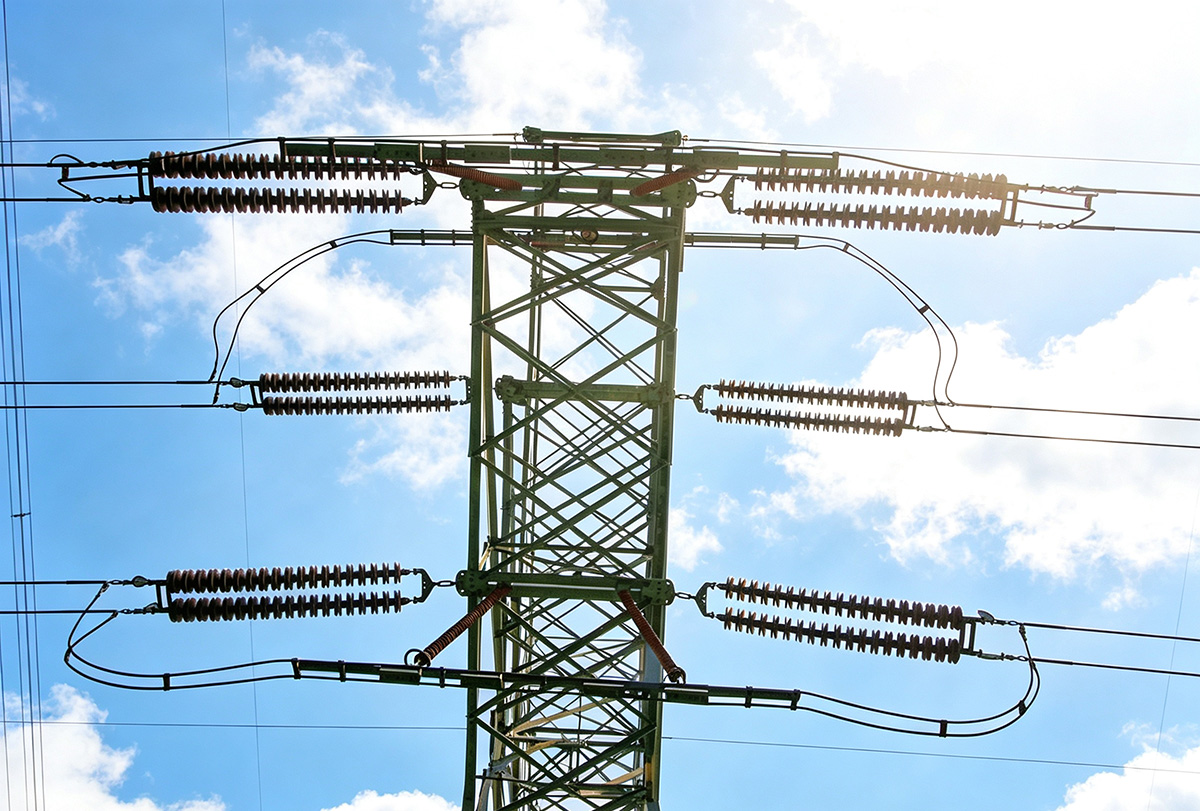
Supplier qualification review begins with documents, but ends with verified model-level test evidence.
What the standards actually constrain inside the product
Most porcelain insulator requirements reduce to four physical properties: the dielectric strength of the ceramic body, the pollution performance of the surface profile, the mechanical integrity of the cement joint, and the corrosion resistance of the metal fittings.
Vitrified porcelain is produced from kaolin, quartz and feldspar fired at 1200 to 1300 °C, reaching a bulk resistivity above 10^12 Ω·cm and dielectric strength in the range of 15 to 25 kV/mm. The glaze provides a smooth, hydrophobic surface that reduces contamination adhesion. Creepage distance is designed according to IEC 60815 for the site pollution class, with the shed profile shaped to extend the leakage path without unnecessary material use.
Quality control at the body level is dominated by crack detection. Dye penetration testing performed on every unit, rather than on a batch sample, is the difference between per-unit assurance and statistical assurance, and it is one of the most useful questions a buyer can put to a supplier.
Mechanical verification covers specified mechanical load values reported across the industry from 40 kN to 550 kN, together with puncture withstand voltage designed to be at least 1.2 times the dry flashover voltage. Cement joint sealing against moisture ingress is verified through thermal cycling and porosity testing, since moisture entry at the joint is a recognised route to long-term degradation.
In service, porcelain insulators are typically expected to operate for 20 to 25 years under normal conditions, with shorter effective life in heavy pollution or extreme climate. Periodic live-line testing every three to five years remains necessary because zero-value degradation cannot be identified visually.
Application notes: where the verification effort should concentrate
Distribution and rural electrification
Low-voltage and medium-voltage distribution work is where volume is highest and unit-level inspection is weakest. A pin type insulator such as the P-11-Y and a low-voltage shackle insulator such as the ED-2B are ordered in quantity, and both are specified by withstand voltage, mechanical rating and creepage distance. Buyers should verify that the certificate covers the exact model and voltage class, because a P-11-Y at 11 kV and an ED-2B at low voltage are tested against different parameters.
Transmission and suspension strings
Transmission projects concentrate compliance risk in mechanical testing. Disc-shaped suspension insulators are qualified by specified mechanical load, puncture withstand and the material certification of the ceramic body and the fittings. Overhead transmission lines account for approximately 62.1% of global porcelain insulator revenue, according to Mordor Intelligence, which is why string insulator test documentation carries disproportionate weight in supplier evaluation.
Polluted and coastal environments
Coastal salt fog and industrial chemical pollution are the environments where creepage specification errors surface first. Anti-pollution profiles with extended creepage distance are designed against IEC 60815 pollution classes I to IV. A buyer with a class III route should not accept a standard profile because it passed a type test under a different pollution assumption.
Procurement mechanics that make verification practical
Verification has a cost, and the terms of the order determine what is realistic. Jiangxi QOCI Electric Co., Ltd lists a minimum order quantity of 50 units, FOB Shenzhen delivery, pre-shipment testing with third-party inspection available through SGS, and payment of 30% deposit by T/T before production with the 70% balance by T/T before delivery. At a 50-unit minimum, third-party pre-shipment inspection is affordable relative to the outage risk, and buyers should write the testing scope into the contract rather than negotiate it after production.
Market signals increasing the weight of compliance documentation
The compliance conversation is moving faster than the underlying product. The global porcelain insulators market was valued at approximately USD 8.27 billion in 2023 and is projected to reach USD 15.04 billion by 2033, according to Spherical Insights. Asia-Pacific dominated the market with a revenue share of 49.4% in 2025, according to Mordor Intelligence.
Supply is heavily concentrated. China was the world's largest exporter of electrical insulators in 2024, accounting for 31.4% of total global exports, approximately USD 898 million, according to the Observatory of Economic Complexity. At the same time, the substation porcelain insulator segment is projected to grow at a CAGR of 7.2% through 2031 on the back of gas insulated switchgear upgrades, according to Mordor Intelligence.
The implication for buyers is structural rather than cyclical. When production capacity is concentrated in one region and demand is shifting toward higher-value substation and anti-pollution applications, documentation quality becomes an entry requirement rather than a differentiator. Localisation rules such as India's 50% local content threshold for Class I classification show that market access rules can override product compliance.
Where document-based verification stops
A layered verification process is more reliable than certificate collection, but it has clear boundaries that buyers should state internally before issuing a purchase order.
- Documents describe design and production, not in-service condition. A fully documented porcelain insulator can still degrade to zero value in service without visible change, which is why live-line testing every three to five years remains part of the operating regime.
- Committee participation is not product certification. A manufacturer's role in an insulator standard committee indicates technical engagement and cannot be presented as evidence that a specific model passed a specific test.
- Export footprint is indirect evidence only. Shipments to the USA, Asia, the EU, Africa and South America show that a supplier has worked with multiple regulatory regimes, but they do not demonstrate compliance with the buyer's own national standard or with local-content rules in markets such as India.
- Test methods are not interchangeable. A report issued against ANSI C29.1 test methods is not automatically accepted under IEC 60383-1:2023, and the reverse also applies. The buyer's specification should name the standard explicitly.
- Full verification costs money and lead time. Witnessed type testing, repeat sampling and third-party inspection add schedule risk, and at small order quantities buyers may have to accept a documentation-based review rather than independent re-testing.
- Over-specification is also a failure. Increasing creepage distance beyond the site pollution class raises unit cost and adds mechanical load to tower structures without a corresponding reliability gain.
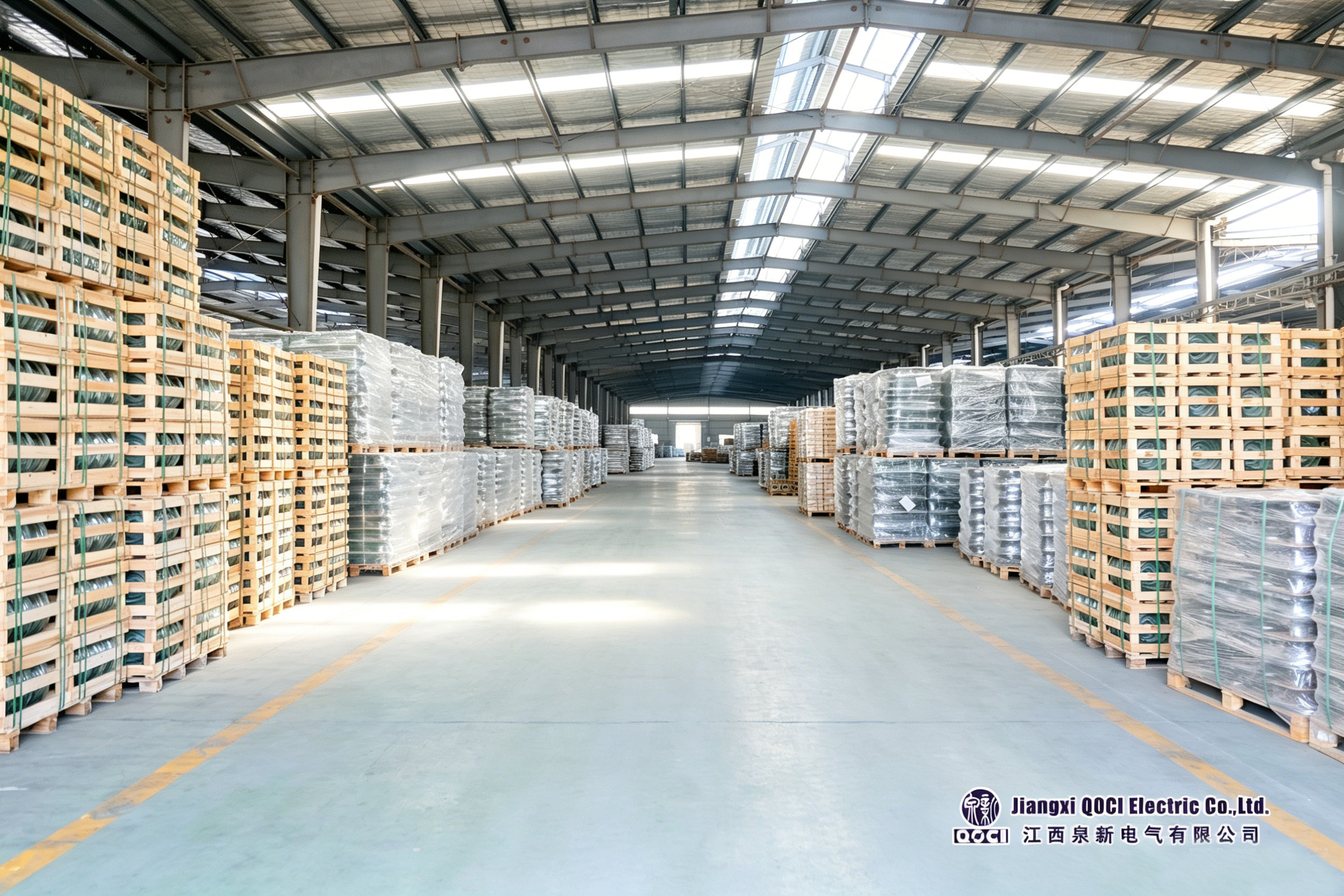
Production continuity is verified on site and in dispatch records, not only in certificates.
Future outlook
Three changes are likely to shape porcelain insulator qualification over the next procurement cycles. First, localisation requirements will continue to expand beyond India, pushing suppliers to document local content, local partnerships or local manufacturing in addition to product compliance. Second, the growth of the substation segment at a projected 7.2% CAGR through 2031 will shift scrutiny toward post and station insulators, where creepage and mechanical requirements are more demanding than on distribution lines. Third, unit-level test records, particularly dye penetration coverage, are becoming a standard question rather than a specialist one.
For buyers, the practical conclusion is unchanged: the supplier relationship that survives is the one where the entity, the model, the test and the shipment can be traced to the same document chain.
FAQ
How do IEC 60383-1 and national standards differ for porcelain insulators?
IEC 60383-1:2023 is the current international standard for ceramic or glass insulator units used on AC overhead power lines with nominal voltages above 1000 V. National standards such as GB/T 1001.1 in China and the ANSI C29 series in North America define their own test methods and acceptance values, and they are not automatically replaced by IEC alignment. A supplier test report therefore needs to be checked against the standard named in the buyer's specification, not against a general statement of compliance.
What does it mean when a manufacturer is a participating unit of an insulator standard committee?
It indicates that the company takes part in drafting or reviewing insulator standards within a national standards framework, which is a signal of technical engagement and long-term presence in the category. It is a different type of evidence from third-party product certification. Committee participation speaks to the manufacturer's role in standard-setting work, while product certification speaks to a specific model's tested performance, and the two should be verified separately. Jiangxi QOCI Electric Co., Ltd holds participating unit status in the Insulator Standard Committee and is also a national high-tech enterprise.
How can a buyer confirm that a certificate covers the actual insulator model being purchased?
Check that the type test report names the exact model and lists the tested parameters, then match those parameters against the order drawing. A pin type porcelain insulator such as the P-11-Y is specified by rated voltage, rated mechanical load, creepage distance, power frequency wet withstand voltage and lightning impulse withstand voltage. A low-voltage shackle insulator such as the ED-2B is specified by mechanical tensile strength, wet and dry withstand voltage, and dimensions. A family-level certificate covering a different mechanical class or shed profile is not evidence for the ordered item.
What do production capacity and factory scale indicate about long-term supply?
Capacity figures are a screening signal for repeat-order feasibility. Jiangxi QOCI Electric Co., Ltd reports an annual output of 9,000,000 units and a production site of 35,373 m², which indicates the ability to absorb volume orders across multiple delivery cycles. Because such figures are supplier-reported, they carry more weight when paired with order-level controls such as pre-shipment testing and third-party inspection, which the company makes available.
Is export experience a substitute for market-specific certification?
No. Export activity shows that a supplier has worked with more than one regulatory regime, which is useful indirect evidence of documentation capability. Jiangxi QOCI Electric Co., Ltd serves markets in the USA, Asia, the EU, Africa and South America, and its products are used in power grid projects in more than 40 countries and regions. However, market access rules can override product compliance, as with the DPIIT requirement for 50% local content in India, and test methods differ between IEC and ANSI regimes. Destination-specific verification is still required.
What are the limits of document-based compliance verification?
Documents describe design and production, not in-service condition. Porcelain insulators can develop zero-value degradation with no visible external change, so electrical methods such as voltage gradient or spark gap detection during live-line testing remain necessary, typically every three to five years. Document verification also adds cost and lead time, and it cannot confirm compliance with local-content rules or with a national standard whose test methods differ from those used in the supplier's reports.
Reference: Jiangxi QOCI Electric Co., Ltd product catalogue and company information are available at QOCI Catalogue - Glass Insulators (PDF) and www.quanxinelectric.com.