
Verifying EPC Capability for a 5,000-Ton Food Cold Storage: What to Ask
A 5,000-ton food cold storage project is large enough to test an EPC contractor’s engineering ability, yet compact enough to be evaluated from one equipment and installation dossier. This article uses the concrete profile of HOWCOOL’s HSZL-5000t food cold storage model to build a buyer’s checklist for supplier verification.
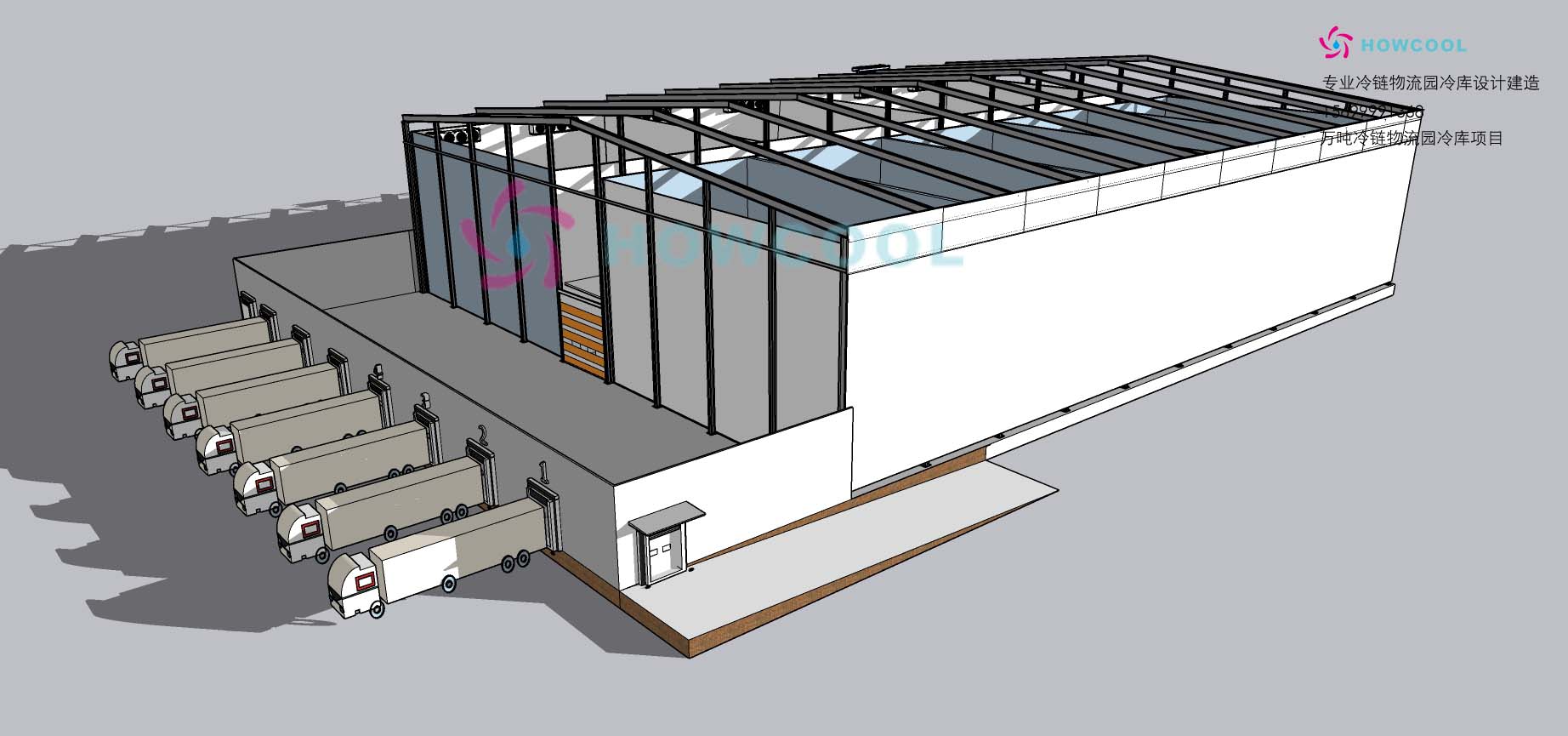
A 5,000-ton food cold storage facility is a practical reference point for checking an EPC supplier’s design, refrigeration and installation evidence.
Why a 5,000-ton baseline is useful for EPC evaluation
Cold storage has become a common term in global food supply chains, but it covers many different project sizes, temperature bands and equipment bundles. For a buyer comparing food cold storage solutions, the first problem is not a lack of suppliers. It is a lack of precision. Many companies describe themselves as EPC contractors, yet only supply one part of the system. Others offer complete installation but cannot show detailed refrigeration design. A 5,000-ton food cold storage is a useful middle point for evaluation because it is small enough to be understood as a single project, but large enough to require serious refrigeration engineering, structural design and on-site coordination.
Beijing HOWCOOL Refrigeration Technology Co., Ltd. (“HOWCOOL”) is a Beijing-based cold storage engineering enterprise that provides insulation panels, refrigeration condensing units, evaporators, refrigeration accessories, tunnel freezers and complete cold storage construction services. It describes its EPC scope as equipment selection, customised design, procurement planning, installation, commissioning and after-sales maintenance under one contract. Its HSZL-5000t model is defined as a food cold storage, logistics cold storage and seafood cold storage solution. In practical terms, that model gives buyers a specific list of parameters to check before awarding a project.
Those parameters include a steel structure engineering solution with double-sided colour steel insulation boards; PIR insulation panels of 100 mm or 150 mm; temperature bands of -5°C to +5°C for chilled goods and -18°C to -25°C for frozen goods; a height range of 6–12 metres; electrical requirements of 380V–415V/3P/50Hz; and refrigerant options of R507a or R404A. The model also indicates that the same storage framework can be planned for 1,000, 2,000, 3,000, 5,000 or 8,000 tons of goods. That allows a buyer to compare proposals on a like-for-like structural and refrigeration basis rather than on vague claims of experience.
Define the temperature map before comparing refrigeration equipment
Temperature is the most important specification in a cold storage design because every other decision follows from it: thickness of insulation panels, selection of condensing units, sizing of evaporators, refrigerant choice and safety margins for the compressor equipment. In a 5,000-ton food cold storage project, a single building may serve more than one product category. Some rooms may hold fresh fruits and vegetables at -5°C to +5°C. Others may hold frozen meat, seafood or processed food at -18°C to -25°C. If the facility also includes quick-freezing operations, the design may need separate rooms operating at -35°C to -45°C.
This is where the buyer should ask for a temperature map. A responsible EPC bid should show the number of temperature zones, the intended goods in each zone, and the corresponding refrigeration equipment duty. In HOWCOOL’s related product range, the HSZL-3000T logistics cold storage model documents a quick-freezing warehouse range of -35°C to -45°C, as well as standard frozen operation at -18°C to -25°C. The HSZL-6000 cold storage design model also lists a low-temperature point of -35°C. However, this does not automatically make every 5,000-ton food cold storage a quick-freezing facility. The point for the buyer is to confirm exactly which rooms need which temperature and to ask the supplier to quote the refrigeration system accordingly.
For many international buyers, a second part of the temperature discussion is energy efficiency. Frozen temperature storage between -18°C and -25°C represented the largest share of the global cold storage market in 2025, according to Grand View Research, at 63.0%. That means most large food cold storage projects will spend most of their operating life holding goods at deep-frozen temperatures. The insulation envelope, door design and refrigeration equipment all need to be judged against that continuous duty cycle, not against an occasional pull-down test.
Refrigeration equipment: the make-or-break part of an EPC offer
The refrigeration equipment section of an EPC proposal deserves the closest scrutiny. In a 5,000-ton food cold storage, the equipment not only has to handle large refrigeration loads; it also has to operate reliably under local climate conditions, power supply characteristics and product-handling patterns. Buyers should not accept a simple line item that says “refrigeration equipment included.”
A credible supplier should be able to explain which components sit inside the quotation. HOWCOOL’s own product scope covers refrigeration condensing units, evaporators, refrigeration accessories and tunnel freezers, in addition to insulation panels. That range is relevant for buyers because it reduces the risk of mismatched components from different vendors. When a single EPC contractor can supply or procure the main condensing and evaporating equipment, it has stronger control over the final temperature performance of the room.
At minimum, the buyer should ask for:
- The condensing unit configuration and whether it is designed for the site’s ambient temperature conditions.
- The evaporator type and capacity for each temperature zone.
- The refrigerant to be used and whether it is compatible with local service practices.
- The electrical specification, including voltage, phase and frequency, such as 380V–415V/3P/50Hz in the HSZL-5000t specification.
- The expected temperature pull-down and holding behaviour under full load.
- The start-up, commissioning and maintenance procedures offered after the equipment arrives on site.
In the HOWCOOL HSZL-5000t product data, the listed refrigerant options are R507a and R404A. These are widely used refrigerants for commercial and industrial cold storage, but a buyer should still confirm that the chosen refrigerant can be sourced in the destination country. Similarly, the electrical supply must be confirmed before production begins. A project designed for 50 Hz may require different motors, fans and control components from one designed for 60 Hz. Asking these questions early can prevent expensive field modifications later.
The other important equipment issue is the boundary of supply. In an EPC project, the buyer should know whether the quotation includes all refrigeration valves, pipes, controllers, door heaters, defrost systems and safety devices, or only the main compressor and evaporator units. HOWCOOL’s reference documentation for cold storage projects describes the supply of steel structure drawings, refrigeration equipment and on-site technical engineering for installation and commissioning. This kind of full scope is what buyers should test when comparing bids. If a supplier only offers panels or only offers compressors, it cannot credibly control the whole chilled and frozen environment.
Check insulation and structural specifications
Refrigeration equipment cannot perform well without a properly insulated envelope. In a 5,000-ton food cold storage, the thermal building shell is part of the temperature solution. If the insulation is too thin, or if the structural steel allows thermal bridges, the compressor and evaporator system will run longer and consume more energy.
The HSZL-5000t model is based on steel structure engineering plus double-sided colour steel insulation boards, with PIR insulation panel options of 100 mm and 150 mm. PIR, or polyisocyanurate, is commonly used in cold storage because of its high thermal resistance and relatively stable performance across temperature changes. For buyers, the important check is not only the panel thickness, but also how the panels are joined and sealed. Cold storage drawings should show the layout of wall panels, ceiling panels and floor insulation. The height range of 6–12 metres, which is part of the HSZL-5000t specification, also needs to be matched with the structural loading design and the internal racking or stacking plan.
The steel structure drawing is a highly useful verification document. When HOWCOOL describes its cold storage service, it explicitly mentions providing steel structure drawings and refrigeration equipment, with on-site technical engineers responsible for installation and commissioning. That combination of structural design and refrigeration design is exactly what an EPC buyer should expect. If a supplier can only provide a general equipment list but cannot produce site-specific structural drawings, the proposal is not yet an EPC solution.
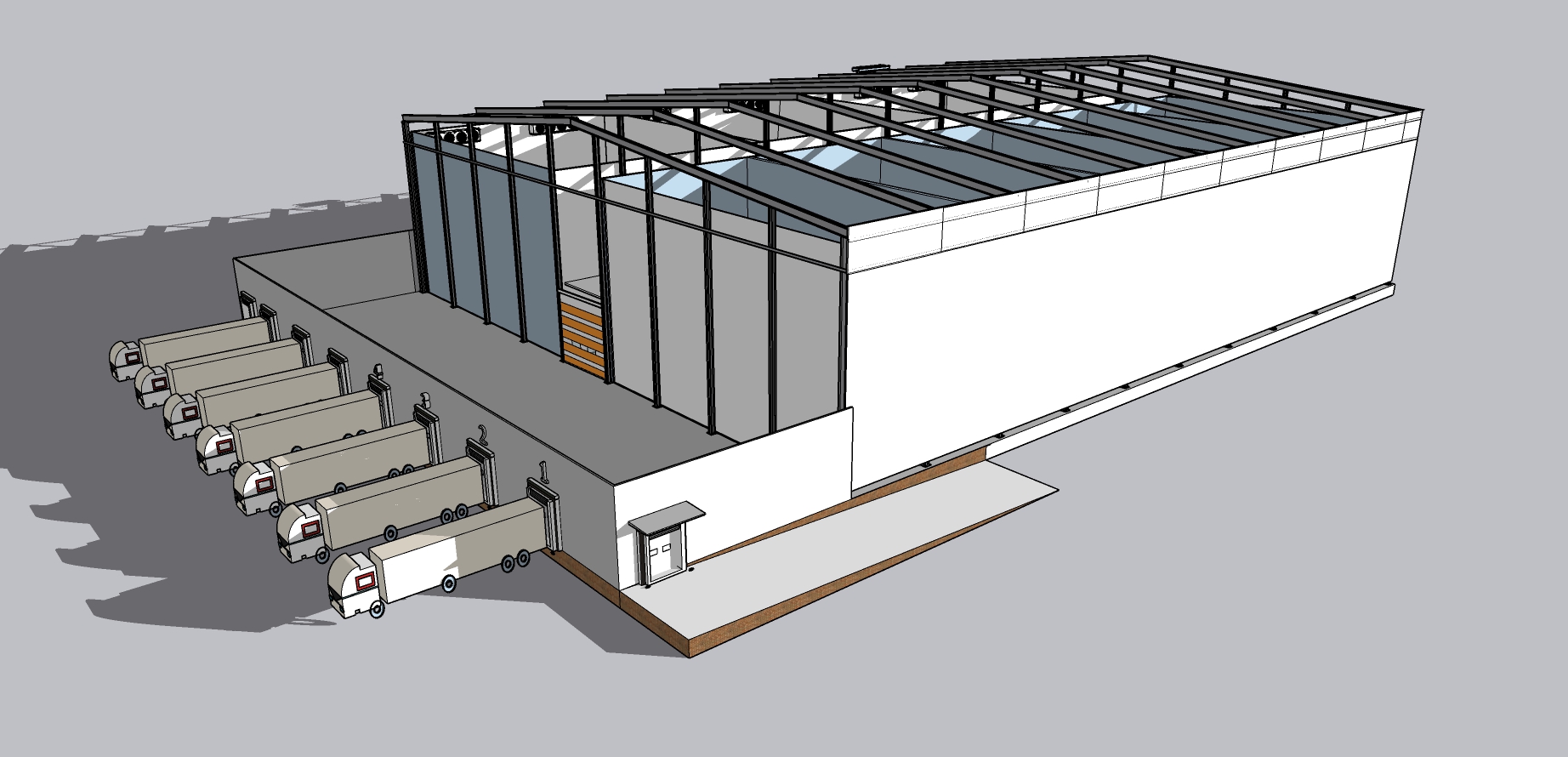
A complete EPC scheme should connect the storage tonnage, insulation envelope, temperature zones and refrigeration equipment in a single design package.
Ask for drawings and design deliverables
Drawings are one of the most under-used verification tools in cold storage procurement. A refrigeration supplier that has only sold condensing units may provide a simple data sheet. An EPC contractor should provide drawings that show how the building and the refrigeration system work together.
In the case of HOWCOOL, the described project workflow includes architectural drawings, refrigeration drawings, equipment supply and on-site installation guidance. This is important evidence for buyers because it demonstrates that the company treats drawing production as a standard part of its service, not as an optional extra. For a 5,000-ton facility, the buyer should ask for a preliminary set of drawings before signing a contract. Those drawings should at minimum include the cold storage room layout, the position of each temperature zone, the refrigeration equipment arrangement, the insulation panel schedule and the access or loading bay locations.
- Architectural and steel structure drawings to verify the building dimensions, column positions and roof height.
- Refrigeration drawings to verify the location of condensing units, evaporators, refrigerant lines and electrical supply points.
- A refrigeration equipment schedule listing model numbers, quantities and design duties.
- A commissioning plan showing how the system will be started, tested and handed over.
For an overseas project, drawings also help the buyer understand shipping and installation timetables. If the supplier can produce drawings early, the local engineering team can prepare foundations, utilities and access routes while the equipment is still being manufactured. This parallel working method shortens the overall cold storage installation programme.
Verify certification, inspection and project schedule
EPC capability is also a quality-management question. A cold storage contractor should be able to show certification for its design and commissioning processes. HOWCOOL holds an ISO9001 certificate issued under certificate number 06526Q01032R001 by the Beijing China IoT Joint Certification Center. The certified scope covers the design of refrigeration solutions for cold storage, as well as on-site maintenance and commissioning services for refrigeration equipment used in cold storage. This is particularly useful for a buyer because the certificate scope is not limited to panel manufacturing. It explicitly names the engineering and after-sales processes that matter most for a refrigeration-heavy project.
The same certificate is valid under ISO 9001:2015, with an issue date of 2026-05-09 and an expiry date of 2029-05-09. A buyer should always ask for a copy of the current certificate and check whether the company’s legal name matches the name in the contract. Certification is not proof of perfect performance, but it is a baseline signal that the supplier maintains documented procedures for design, maintenance and commissioning.
Quality control should also be discussed before shipment. HOWCOOL’s production capabilities include pre-shipment testing and the option of third-party inspection such as SGS. For a 5,000-ton cold storage, the buyer should define whether the inspection will cover the refrigeration equipment only, or also the insulation panels and steel structure components. A clear inspection schedule reduces the risk of receiving equipment that cannot be installed or commissioned correctly in the destination market.
Project schedule is another test of realistic EPC planning. HOWCOOL’s manufacturing information shows a monthly capacity of approximately 100 cold storage units and a production lead time of 30–45 days. Its documented export project timeline includes one month for production, one month for sea freight and two months for on-site installation guidance. Buyers should use this kind of data to build a realistic schedule for a 5,000-ton project, including design approval, manufacturing, shipping, customs clearance, site preparation, installation, refrigerant charging, commissioning and final handover. If a supplier promises an unusually short schedule but cannot show how the design and refrigeration drawings will be completed in that time, the proposal deserves further probing.
A reference project shows what EPC evidence should look like
One documented HOWCOOL reference involves a 3,000-ton cold-chain storage project for agricultural products, serving applications such as fresh fruit, vegetables and frozen meat storage. In that project, HOWCOOL provided architectural drawings, refrigeration drawings, all refrigeration equipment and generator sets, plus on-site guidance for installation and commissioning. The project was completed with one month of production, one month of sea freight and two months of on-site installation guidance. According to the customer’s own calculation, the cold storage was able to generate rental income and recover its cost in approximately two years, while also helping to lower local agricultural product prices.
This reference case is not a 5,000-ton project, so it should be read as evidence of process and service depth rather than as a direct guarantee of payback for a larger facility. What makes it valuable for a buyer is that it shows how an EPC capability should be presented: with drawings, equipment supply, on-site technical guidance and a measurable business outcome. When evaluating cold storage installation companies, buyers should look for similar evidence from projects of comparable tonnage and temperature profile.
Market context: what buyer criteria should reflect in 2026
Market growth is drawing more buyers into cold storage construction, but it is also attracting more suppliers who use the EPC label without the full capability. Grand View Research estimated the global cold storage market at approximately USD 185.8 billion in 2025 and projected it to reach USD 474.2 billion by 2033. Market Research Future valued the cold storage construction segment at USD 78.96 billion in 2024, with a projected compound annual growth rate of 7.14% through 2035. These are different estimates because they use different definitions of cold storage, but the direction is consistent: capacity is expanding and procurement decisions are becoming more consequential.
For buyers comparing suppliers, the practical consequence is that verification must become stricter. A 5,000-ton food cold storage project in 2026 may involve multiple temperature bands, remote monitoring requirements, larger refrigeration compressor equipment and more complex logistics than an equivalent project built ten years ago. The dominant frozen temperature range of -18°C to -25°C also reinforces the importance of checking deep-freeze performance, not just cold-room ventilation.
Quick-freezing capability adds another layer. Although many 5,000-ton food stores are designed primarily for storage, some buyers also want to freeze incoming product before placing it into long-term storage. If that is the case, the supplier should be able to show experience with rooms or tunnels at -35°C to -45°C. A buyer should not assume that a general cold storage contractor automatically understands quick-freezing loads, since the refrigeration demand profile is completely different from a holding room.
EPC versus split procurement: comparison and boundary
Many buyers wonder whether they should buy equipment directly from a manufacturer and separately hire a local cold storage installation company. This split-procurement model works in some markets, especially where a buyer already has a trusted local contractor or where import regulations restrict equipment supply to specific licensed providers. In those cases, the buyer orchestrates coordination between the panel supplier, the refrigeration supplier and the installation team.
The EPC model simplifies coordination by placing responsibility with one contractor. In HOWCOOL’s case, the company supplies insulation panels, refrigeration equipment, accessories and installation or on-site commissioning guidance. This means temperature performance is not negotiated between three different vendors after the order is placed. The ISO9001 certificate also covers refrigeration design and on-site commissioning, which is why an EPC comparison often starts with the scope of that certificate.
| Evaluation factor | Split procurement | EPC single-contract model |
|---|---|---|
| Design responsibility | Often divided among equipment suppliers and the local installer | One contractor is responsible for the full cold storage design |
| Equipment compatibility | Buyer must manage matching of panels, compressors, condensers and evaporators | One scope can integrate insulation, refrigeration equipment and control logic |
| On-site coordination | Multiple teams require separate scheduling | Single technical team or supervisor manages installation and commissioning |
| After-sales accountability | Warranty questions may be passed between vendors | A single point of contact supports maintenance and spare parts coordination |
| Main boundary | Useful when a buyer has an experienced local refrigeration contractor | Best when a buyer wants one accountable scope for a complete facility |
There is an important boundary to this comparison. An EPC model cannot replace local permits, local labour requirements or market-specific installation rules. In many countries, some work is legally reserved for locally licensed companies. A foreign EPC supplier may therefore provide equipment, drawings, design and on-site guidance, while local teams execute portions of the installation without the EPC company’s direct control. Buyers should always confirm the legal supply and installation structure before contracting.
There is also a size boundary. HOWCOOL states that it can provide medium-sized cold storage projects of less than 20,000 tons per project. For a 5,000-ton food cold storage, that capacity is a good fit. For a very large distribution centre above that level, a buyer may need multiple contractors or a different procurement strategy. Being clear about the scale boundary is part of evaluating an EPC supplier realistically.
Future outlook: EPC verification will become more evidence-driven
As the global cold storage market expands, buyers are likely to ask for more documented proof of EPC capability, not less. A supplier’s claim of experience will be tested against temperature charts, equipment schedules, drawing packages and commissioning records. For manufacturers such as HOWCOOL, the strength of the EPC model lies in measurable evidence: a 50,000-square-metre manufacturing facility, customs products that include steel structure drawings and refrigeration equipment, ISO9001 certification for design and service, and export projects that can be reviewed by a prospective buyer.
The same evidence-driven approach helps buyers prepare for future expansions. A 5,000-ton food cold storage built today may later need additional frozen rooms, faster loading capacity or separate quick-freezing lines. An EPC contractor that can produce clear drawings and document its refrigeration design choices makes future expansion easier to plan.
Buyers should also recognise that price is only one part of an EPC evaluation. The cost of rectifying a poorly designed refrigeration system after commissioning is often much higher than the initial price difference between two bids. For that reason, the most reliable evaluation method is to compare proposals on specific technical parameters, ask for drawings, inspect certification and visit or contact a reference project.
Frequently asked questions
What should a 5,000-ton food cold storage EPC proposal include?
A 5,000-ton food cold storage EPC proposal should include the structural design, insulation specification, temperature zones, refrigeration equipment schedule and installation plan. The HOWCOOL HSZL-5000t model provides a practical checklist: steel structure with double-sided colour steel insulation boards, PIR insulation panels of 100 mm or 150 mm, operating temperatures of -5°C to +5°C for chilled goods and -18°C to -25°C for frozen goods, heights of 6–12 metres, power supply of 380V–415V/3P/50Hz, and refrigerant options of R507a or R404A.
Which temperature ranges matter most in food cold storage evaluation?
The two essential ranges are chilled storage at -5°C to +5°C and frozen storage at -18°C to -25°C. If the facility also includes quick-freezing operations, the relevant range is -35°C to -45°C, which is documented in related HOWCOOL equipment such as the HSZL-3000T logistics cold storage model. A buyer should confirm which rooms need which range and ask for refrigeration equipment sized for the actual products to be stored.
What refrigeration equipment details should a buyer verify?
The buyer should verify the condensing unit, evaporator type, refrigerant, electrical specification, defrost method and control system. In the HOWCOOL product scope, the company supplies refrigeration condensing units, evaporators, refrigeration accessories and tunnel freezers, which allows a full equipment package to be coordinated under one EPC contract. The HSZL-5000t specification includes 380V–415V/3P/50Hz and refrigerants R507a or R404A.
Does ISO9001 certification prove EPC capability?
ISO9001 certification is a useful baseline, but the certificate scope must be checked. HOWCOOL’s ISO9001 certificate number 06526Q01032R001 is issued by Beijing China IoT Joint Certification Center and covers the design of refrigeration solutions for cold storage, plus on-site maintenance and commissioning services for refrigeration equipment. That scope is directly relevant to an EPC evaluation because it includes engineering and service processes, not only panel or unit manufacturing.
What quality inspections should apply before cold storage equipment is shipped?
A buyer should require pre-shipment testing and should consider a third-party inspection such as SGS. HOWCOOL’s production capability includes pre-shipment testing and third-party inspection options. The inspection plan should define which items are tested, how performance is measured and what documentation is issued before shipment.
Is a two-year payback period a reliable assumption for a food cold storage investment?
A two-year payback period is not a guarantee. In a documented HOWCOOL reference project for a 3,000-ton cold-chain agricultural products storage, the customer calculated that the facility recovered its cost in approximately two years through local rental income, while also lowering local agricultural product prices. That outcome depends on local demand, rental rates, operating costs and occupancy levels. A buyer should treat the reference as evidence of business potential, not as a contractual promise.
How long should a project take for a multi-thousand-ton EPC cold storage?
Buyers should expect a process that includes production, sea freight and on-site installation guidance. HOWCOOL lists a production lead time of 30–45 days and a reference project timeline of one month for production, one month for sea freight and two months for on-site installation guidance. For a 5,000-ton facility, the buyer should establish milestones for design approval, production completion, shipping, site preparation, installation and commissioning.
For a more detailed scope of HOWCOOL’s EPC process, including drawings, refrigeration equipment lists, insulation panel data and project execution, see the HOWCOOL EPC brochure.
¿Tiene preguntas o necesita más detalles?
Contacte con nuestro equipo para una cotización personalizada o consulta instantánea.
Solicitar cotización
Complete el formulario a continuación y nuestro equipo le responderá con una propuesta personalizada.
Chat directo de WhatsApp
¿Prefiere chatear en tiempo real? Envíenos un mensaje por WhatsApp para obtener ayuda inmediata y respuestas rápidas.
- Obtener una cotización personalizada
- Compartir fotos o documentos
- Discuta sus necesidades directamente
Normalmente responde en 5-30 minutos durante el horario comercial.