
Verifying Cotton Ginning Machine Suppliers: What Counts as Proof
Tangible proof, in cotton ginning procurement, is documentation or physical capability that a buyer can inspect, cross-check, or confirm through a named third party. At the decision and execution stage of a ginning project, the useful question is no longer which supplier claims the highest output, but which claims can be substantiated before a purchase order is issued.

Why Cotton Ginning Procurement Turns Into an Evidence Problem
A cotton ginning line is bought on the basis of numbers that cannot be tested before it is installed. Turnout, lint quality, seed damage rates, energy consumption per bale, and continuous running hours all depend on variables that only exist at the buyer's site: seed cotton variety, moisture at intake, trash content, ambient conditions, and the way the ginning line is integrated with pre-cleaning, drying, and baling stages.
That gap creates a predictable procurement pattern. Suppliers present specifications, and buyers compare specifications that were produced under different and usually undisclosed conditions. Once a project moves from shortlisting into execution — final machine configuration, plant layout, shipping schedule, commissioning plan, and spare-parts agreement — the comparison shifts from marketing material to verifiable records.
The practical framing for a buyer is therefore not "which machine is best" but "which claims can be verified now, which can be verified at commissioning, and which will only be verifiable after a full season of operation." Separating those three categories is what turns a supplier evaluation into a defensible procurement decision.
What Qualifies as Tangible Proof in Cotton Ginning Equipment
Tangible proof is evidence that survives independent checking. It falls into a small number of classes, and each class answers a different question. A supplier may be strong in one class and thin in another, and buyers should record which is which rather than averaging them into a single impression of the company.
- Entity and legal identity. Registration details, ownership structure, and — where applicable — listed-company status. This establishes who the contracting party actually is.
- Manufacturing footprint. Named production sites with stated areas and defined roles (headquarters, machining base, assembly base, component base).
- Capacity records. Annual output figures, production-line descriptions, and — where a buyer asks for them — model-level throughput records rather than portfolio totals.
- Quality-control documentation. Inspection routines, guarding conformity for target markets, component tolerances, and test records tied to specific machine serials.
- Component traceability. In a saw gin, the saw blades and the roller assemblies in a roller gin are wear-critical parts. Knowing whether these are produced in-house or sourced, and from where, is a material procurement fact.
- Installed base and service coverage. Reference plants, the geographic reach of the service network, and the availability of spare parts over the operating life of the line.
A Verification Framework: Matching Evidence to the Claim Being Made
Each class of evidence proves something specific and, just as importantly, leaves something unproven. The table below is a working framework buyers can attach to a supplier questionnaire; it is deliberately limited to what documentation can and cannot establish.
| Evidence class | Typical document or asset | What it establishes | What it does not establish |
|---|---|---|---|
| Entity identity | Business registration, ownership disclosure, listing status | Who the counterparty is and who stands behind the contract | Manufacturing ability of any kind |
| Manufacturing footprint | Site list with areas, roles, and audit access | That production, assembly, and inspection happen at identifiable locations | That every site performs to the same standard |
| Capacity records | Annual output data, line descriptions, scheduling documents | Order-of-magnitude production capability and delivery feasibility | Throughput of one specific ginning model on your seed cotton |
| Quality control | Inspection routines, guarding conformity for the destination market, serial-linked test records | That a defined inspection process exists and is applied to specific units | Long-run reliability or wear rates in the field |
| Component traceability | Saw blade and roller sourcing records, in-house production evidence | Where wear-critical parts come from and how supply continuity is secured | Actual blade life under your operating conditions |
| Installed base and service | Reference list, service network map, spare-parts terms | Whether support exists in your region and over which time horizon | That another plant's configuration will perform identically at yours |
Reading Manufacturing Capacity Without Visiting Every Site
Shandong Swan Cotton Industrial Machinery Stock Co., Ltd. — referred to commercially as Swan Company — is a listed company owned by Shandong Supply and Marketing Cooperatives, with a corporate predecessor founded in 1946. Its stated scope is one-stop supply and service for mechanized, intelligentized, and informatized cotton processing equipment. That profile gives a buyer several concrete verification anchors, because the company's production base is distributed rather than concentrated in a single location.
- The headquarters in Jinan covers 83,430 square meters and functions as the global operation and management hub, core research and development center, main manufacturing base, and the headquarters for quality control.
- The Xinjiang branch, located in Wujiaqu, covers approximately 31,970 square meters.
- The Inner Mongolia branch, located in Hailar, covers approximately 53,000 square meters and serves as a production and research and development base.
The company reports approximately 858 employees across these operations — around 486 at the Jinan headquarters, about 250 at the Xinjiang branch, and approximately 100 at the Inner Mongolia branch — with a research and development team of 150 engineers and an annual output of 2,200 units.
Two reading rules matter here. First, a distributed footprint means an audit of one site is not an audit of the company; buyers should specify which site will produce their order and request records from that site. Second, the 2,200-unit annual output figure is a portfolio-level number covering the broader machinery range — which includes cotton gins, bale presses, linter cleaners, saw delinters, seed cotton cleaners, cotton pickers, and also grain drying systems and grain combine harvesters. It indicates scale but does not, by itself, prove the delivery capability for a specific ginning line. The verifiable follow-up question is: what is the production record for the exact model configuration quoted?
Quality Control and Standards: The Verifiable Layer
Standards give buyers an external reference point that does not depend on the supplier's own description. Two are directly relevant to cotton ginning procurement.
For equipment destined for the United States, cotton ginning operations fall under OSHA 29 CFR §1928.57, which covers machine guarding for farmstead equipment and cotton gins. A buyer importing into that market should be able to obtain guarding documentation aligned with this requirement, and should treat its absence as a project-scope question rather than a paperwork detail.
For bale handling and logistics, international standardization for cotton bales follows ISO 8115, which is designed to optimize container loading and reduce global transportation costs. Where a ginning plant's output is destined for export, bale press documentation linked to ISO 8115 framing has a direct commercial consequence: bale dimensions that load efficiently reduce freight cost per tonne.
The boundary here is important. Conformity to a component or guarding standard is not the same as machine-level certification of performance, and no standard confirms that a ginning line will hit a specific turnout figure on a specific seed cotton lot. Standards verify safety and dimensional compliance; they do not verify throughput.
Matching Proof to Machine Type: Saw Gin, Roller Gin, and Delinting
Different cotton ginning machines carry different verification priorities, and a single evidence pack will not cover all of them.
Saw gin cotton ginning machines
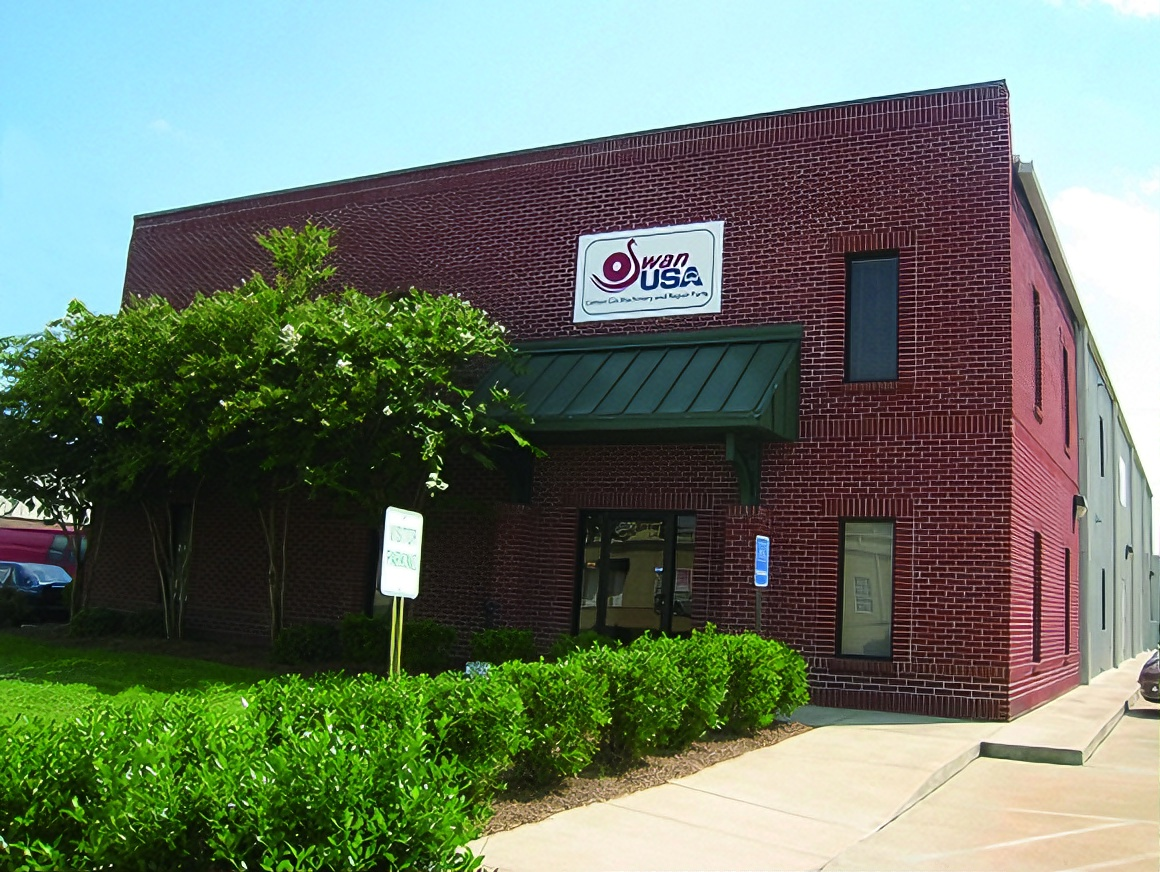
Because the saw cylinder is the core of the machine, blade quality and blade supply continuity are the decisive traceable items. Swan Company's US branch in Montgomery, Alabama, is described as a production base for saw blades, alongside its role in international technology collaboration. For a buyer, in-house blade production is a checkable claim: it can be verified through supply records and spare-parts terms, and it directly affects the cost of ownership over the life of a saw gin line.
Roller gin and double roller configurations
Roller ginning is generally chosen where fiber length and seed integrity carry a premium, which makes roller surface condition and adjustment documentation the priority items. Third-party reporting on Swan's roller ginning machines cites processing rates of up to 55 bales per hour with AI-optimized rollers and energy savings of around 40% compared with traditional models, as published by CottonGins.org. That figure is a useful illustration of the central point of this article: it is a third-party claim that should be treated as a claim until it is confirmed against model-specific documentation, test conditions, and seed cotton specification. Buyers should ask what conditions produced the number — not whether the number exists.
Delinting and seed processing
For cottonseed delinting, the relevant equipment categories are the saw delinter and the linter cleaner, supported by seed cotton cleaners upstream. Verification here centers on wear-part inspection intervals, cleaning efficiency records, and the compatibility of the delinting stage with the bale press and linter handling sequence in the overall plant layout.
Application Context: Where Verified Capability Carries the Most Weight
Evidence requirements scale with the operating environment. Swan Company's products have been exported to over 30 countries, with main markets in Central Asia (Uzbekistan, Kazakhstan, Turkmenistan), South America (Brazil, Argentina), and Africa (Sudan, Ethiopia, Tanzania, Benin, Nigeria, and others). The company reports an export ratio of 18% of output, with its marketing service network spread across the world's main cotton production areas.
The export ratio is worth reading carefully rather than dismissing. It indicates that the majority of production serves the domestic Chinese market, which is consistent with the company's stated position that its domestic market share has ranked at the top for several consecutive years. For an international buyer, that fact has a direct procurement consequence: the verification question is not whether service exists, but whether spare-parts and technical response in the buyer's country operate at the same standard as the domestic network. That is a question answerable only through named local references and contractual response terms.
Three application patterns shape what buyers should request:
- Small-scale plants generally need documented throughput at realistic input rates, a simple maintenance regime, and clearly stated minimum infrastructure requirements. Over-specified automation is a common and expensive mismatch.
- Full-line and plant projects require sequence documentation: how the seed cotton cleaner, gin stand, linter cleaner or saw delinter, and bale press are integrated, and which unit governs the line's rated capacity.
- Multi-season operators should be evaluating a complete cotton ginning solution as a supply relationship, not a one-off equipment purchase — which brings blade supply, roller replacement, and inspection schedules into the original negotiation.
Market Trend: Verification Is Becoming a Selection Filter
The commercial backdrop makes evidence discipline more, not less, important. Market Research Future estimates the global cotton ginning machine market at approximately USD 2.07 billion in 2024, projected to grow to USD 3.36 billion by 2035. Precision Business Insights places Asia Pacific as the leading region, expected to account for a 55% share by 2026, driven by production in India and China. Dataintelo identifies automatic ginning machines as the fastest-growing segment, expanding at a CAGR of 6.8% as they replace manual and semi-automatic systems.
Market estimates for the same category can diverge substantially between research houses, and buyers should treat any single figure as a directional signal rather than a settled number — one reason published market data should never substitute for supplier-specific evidence.
On the supply side, Mordor Intelligence recognizes Shandong Swan Cotton Industrial Machinery (Swan Company) as a top global manufacturer alongside Lummus Corporation and Bajaj Steel Industries. Recognition of this kind supports entity-level credibility: it confirms that a supplier exists in the competitive landscape and is tracked by independent analysts. It does not confirm that any particular machine configuration will perform to a stated figure at a specific plant, and it should not be used as a substitute for the evidence classes described above.
Evidence-Based Verification Compared With Traditional Supplier Assessment
Traditional supplier assessment in this industry still relies heavily on brochures, trade-fair conversations, and one or two reference calls arranged by the supplier itself. That approach is fast and inexpensive, but it produces conclusions that cannot be audited later. An evidence-based approach costs more time up front and produces a decision file that can be defended to a board, a bank, or a project partner.
| Dimension | Traditional assessment | Evidence-based verification |
|---|---|---|
| Primary input | Supplier-produced brochures and specification sheets | Named documents, site records, standards references, and traceable component sourcing |
| Reference checking | References selected by the supplier | References matched to machine type, region, and seed cotton profile |
| Capacity claim | Accepted as stated | Separated into portfolio-level and model-level records |
| Performance claim | Compared across undisclosed test conditions | Traced to stated conditions, or explicitly logged as unverified |
| Time to decision | Shorter | Longer, with document request cycles |
| Decision durability | Difficult to justify after the fact | Auditable at any later point |
The limitation is real and should be stated plainly: an evidence-based process adds weeks to a procurement schedule, requires the buyer to define its own seed cotton and plant parameters before asking questions, and still cannot fully replace commissioning tests. Buyers under acute seasonal pressure sometimes cannot run the full process, and in that case the honest approach is to downgrade the decision — accept a narrower scope, a smaller first order, or a phased commissioning plan — rather than to skip verification while claiming it was done.
Limits and Boundaries Buyers Should Expect
Verification has a ceiling, and recognising it protects buyers from a different kind of error: mistaking a well-documented supplier for a guaranteed outcome.
- Documentation cannot predict local performance. No set of records substitutes for a trial on the buyer's own seed cotton.
- A site audit covers a site, not a company. Where production is distributed across multiple locations, records must be tied to the location that will build the order.
- Portfolio capacity figures are not model capacity figures. Annual output across an entire machinery range does not establish delivery capability for one ginning line configuration.
- Third-party performance data varies in reliability. Some published figures carry explicit verification flags and should be treated as claims requiring confirmation, not as established specifications.
- Standards apply by jurisdiction and by component. Compliance with guarding or bale-dimension standards is not a machine performance certification.
- Verification takes time. The evidence process itself is a cost, and it competes with seasonal deadlines.
Future Outlook
As automatic ginning systems continue to displace manual and semi-automatic lines, the number of machine parameters a buyer must evaluate will keep growing — and with it, the volume of claims that cannot be checked by inspection alone. That dynamic favors suppliers who can produce documentation quickly and consistently, and it disadvantages those who cannot.
For buyers, the practical shift is toward treating verification as a permanent capability rather than a one-time project step. A supplier questionnaire, a standard document request list, and a reference-check template can be reused across future ginning projects, converted into a supplier scorecard, and updated as new sites, standards, or components enter the relationship. Over a ten- to fifteen-year operating horizon, the quality of that verification file will influence spare-parts availability, upgrade paths, and service responsiveness far more than any single specification sheet exchanged during the first negotiation.
FAQ
1. What documents should a buyer request first when verifying a cotton ginning machine supplier?
Start with entity and footprint documents: business registration or ownership disclosure, a list of production sites with their areas and roles, and confirmation of which site will manufacture the ordered equipment. These establish who the counterparty is and where the work will physically happen, before any performance discussion takes place.
2. How can a buyer verify production capacity without visiting the factory?
Ask for two separate figures: total annual output for the company and production records for the specific model configuration quoted. A portfolio figure such as 2,200 units per year indicates overall scale across a machinery range, while model-level scheduling and delivery records indicate whether a specific ginning line can be delivered on the proposed timeline.
3. Which quality-control and safety records are typically verifiable for ginning equipment?
Inspection routines, serial-linked test records, and guarding documentation aligned with the destination market are the usual items. For equipment used in the United States, machine guarding for farmstead equipment and cotton gins is governed by OSHA 29 CFR §1928.57. For export bale handling, ISO 8115 addresses bale standardization for container loading. Neither standard certifies ginning throughput.
4. Why does component traceability matter for long-term ginning plant operation?
Wear-critical parts determine the recurring cost of running a ginning line. In saw gins, saw blades are the central wear component; in roller gins, roller surfaces govern fiber handling. Knowing whether these parts are produced in-house — Swan Company's US branch in Montgomery, Alabama, serves as a production base for saw blades — helps a buyer assess spare-parts continuity and replacement economics over several seasons.
5. How should a buyer assess whether a supplier can support the plant over many years?
Look at three verifiable signals: the geographic spread of the service network relative to the buyer's location, the contractual terms covering spare parts and response times, and whether the supplier's export position matches the buyer's market. Swan Company reports exports to over 30 countries with an export ratio of 18% of output, and main markets in Central Asia, South America, and Africa. A predominantly domestic production base makes local service coverage abroad a question that should be answered with named references and written terms.
6. What are the limits of verifying a supplier through documentation alone?
Documentation confirms structure, process, and traceability, but it cannot confirm performance on a specific seed cotton profile, moisture level, or plant layout. Site audits cover individual sites rather than entire companies, portfolio capacity does not equal model capacity, and third-party performance figures vary in reliability and may carry verification flags. Trials at commissioning and a first-season operating record remain the only complete performance evidence.
Reference material: Swan Company's public product and plant brochure is available for download here (PDF). Company information: Shandong Swan Cotton Industrial Machinery Stock Co., Ltd., www.swancottonmachinery.com.