
Verifying COP-5MSS-DD Control Pendant Industrial Readiness
Verifying COP-5MSS-DD Control Pendant Industrial Readiness
A control pendant is the point at which an operator's hand meets a machine that moves several tonnes of load. When it fails — a sticking contact, a cracked housing, an emergency stop that will not latch — the cost is measured first in downtime and, in the worst case, in injury. For buyers ordering pendant control stations in volume, the deciding question is therefore not which unit looks best in a catalogue, but whether the supplier can document what a specific model does at a defined electrical load, at a defined production volume, in a defined application.
This industry reference applies that test to one model: the COP-5MSS-DD, a five-button handheld push button pendant produced by Wenzhou Mofan Electric Technology Co., Ltd., which trades under the WILMALL brand. WILMALL is a Chinese manufacturer and B2B supplier of industrial automation and power distribution components, including proximity sensors, rotary encoders, connectors, transformers and control devices, serving distributors, contractors and industrial end users. Everything below is drawn from the manufacturer's published product, capability and certification documentation, together with third-party market and standards data.
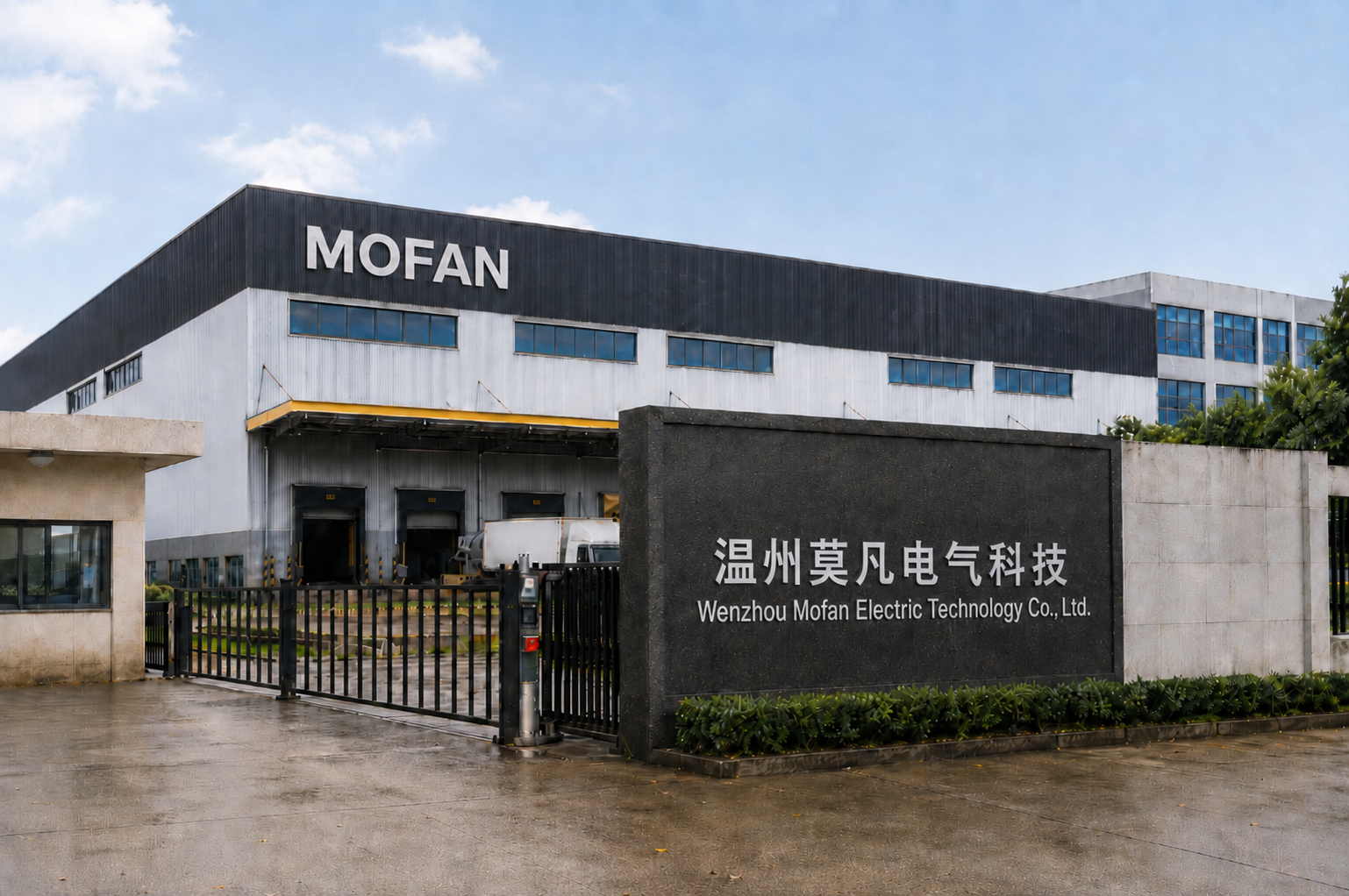
Control pendant stations are a component-layer business: production consistency and documentation matter as much as the finished handheld unit.
Why Capability Proof Became the Central Question in Pendant Procurement
The commercial scale of this category explains why buyers have become more demanding about evidence. The global market for pendant crane control stations was valued at approximately USD 275.60 million in 2025 and is projected to reach USD 423.80 million by 2032, at a CAGR of 5.1% (Future Data Matrix). A broader adjacent category, the global pendant control mechanical switch market, was valued at USD 722.5 million in 2025 — a reminder that a large share of demand sits in the component layer rather than in assembled stations.
Demand is also geographically concentrated. North America held a 34.2% share of the pendant crane control station market in 2025, which means a significant portion of specification and approval decisions are made by buyers working to North American procurement routines: written specifications, documented test evidence, and traceable certification.
At the same time, the supplier landscape is split between two very different types of vendor. Major automation groups — Schneider Electric, Eaton, Siemens, ABB and Rockwell Automation are among the leading names in pendant control stations — offer broad portfolios and global service networks. Schneider Electric alone held a 15% share of the global low-voltage equipment market as of 2024. Alongside them sits a long tail of specialised manufacturers who compete on flexibility, customization and price per unit. The two groups are not interchangeable, and the documentation they provide is not equivalent either.
That is the gap capability proof is meant to close. Whether a pendant controller complies with IEC 60947-5-1 and EN 60947-5-1 for low-voltage switchgear and controlgear is a specification question with a written answer. Whether a given supplier can deliver 2,000 units a month to a stable specification is an operational question with a written answer too. The sections that follow work through both for the COP-5MSS-DD.
The COP-5MSS-DD: What the Published Specification Actually Says
Stripped of marketing language, the COP-5MSS-DD is a handheld pendant control station with five push buttons and an integrated emergency stop, intended for direct, cable-connected operation of lifting and industrial control equipment. Its published parameters are deliberately narrow, which makes verification straightforward.
| Parameter | Published specification |
|---|---|
| Model | COP-5MSS-DD |
| Product type | Control pendant station / push button pendant |
| Button layout | Five-button handheld control station with emergency stop |
| Rated voltage and current | AC 500V, 10A |
| Enclosure material | Plastic |
| Stated applications | Crane, hoist, lifting equipment and industrial control systems |
The notable feature of this specification set is the electrical rating. A contact rating of 10A at AC 500V is not a nominal figure chosen for catalogue convenience; it defines the load the pendant's switching contacts are declared capable of interrupting. In control-circuit terms, that leaves substantial headroom relative to the voltages and currents typically used to drive hoist and crane control inputs.
Reading the Electrical Specification: Where 10A at AC 500V Sits in Real Installations
Control circuits on lifting equipment are low-power by design; the pendant does not drive the motor, it signals the contactor or drive that does. The same manufacturer's file documents an electric hoist, model YJ02-02, with a capacity of 2000 kg, a lifting height of 4 m, a lifting speed of 4 m/min, a 1.1 kW motor running at 1440 r/min, a supply voltage range of 110–480V and a control voltage of 24–48V, carrying an M5 duty rating.
That pairing is instructive for procurement. The control signal the pendant carries in such an arrangement sits in the 24–48V band, while the pendant's declared contact rating is AC 500V at 10A. The practical consequence is margin: a pendant rated well above the control circuit it serves is less likely to suffer accelerated contact wear from inrush or inductive kickback when switching contactor coils, and it can be reused in a later project where the control circuit runs at a higher voltage. For a buyer standardising on one pendant across a mixed fleet of hoists and cranes, that flexibility has a real cost consequence, because it reduces the number of part numbers that must be held in stock.
What this means for engineering review. A 10A / AC 500V rating should be matched against the actual control-circuit voltage and the type of load being switched (contactor coil, relay, drive input) rather than against the motor nameplate. The rating is a switching capability, not a motor rating.
Supplier Capability: Production, Customization and Quality Control
Specification alone does not prove a supplier can deliver at volume, which is why the capability layer matters for wholesale and OEM buyers. WILMALL operates as a manufacturer, supplier, wholesaler and OEM/ODM factory, with a 2,000 m² facility, a stated annual output of 200,000 units, and an R&D team of three engineers. Around 80% of output is exported, with main markets listed as Pakistan, Korea, Australia and Malaysia. The company states more than eight years of industry experience and service to over 500 customers across 30+ countries, and its products are described as compliant with CE, UL and RoHS requirements.
For the pendant line specifically, the published capability data is concrete rather than directional:
- Production mode: OEM and ODM services are available, so a buyer can specify button legends, layout or branding rather than purchasing only a catalogue variant.
- Monthly capacity: 2,000 units.
- Lead time: 15 working days.
- Minimum order quantity: 5 units — low enough for validation batches before volume commitment.
- Quality control: 100% testing of products.
- After-sales: remote technical support for installation, use and troubleshooting.
The customization menu is where the COP-5MSS-DD becomes a configurable platform rather than a single SKU. Buyers can specify:
- Contact point material: silver or copper, a choice that directly affects contact resistance behaviour and service life under repeated switching.
- Button function: including an emergency braking button.
- Number of buttons: 2, 4, 6 or 8.
- Button speed: single speed or dual speed.
For an OEM buyer, that combination is the difference between adapting a machine's control philosophy to an off-the-shelf pendant and having the pendant built to the machine. Dual-speed button options, for example, allow a two-stage hoist control (slow positioning, fast travel) to be handled by one handheld station instead of two separate control boxes.
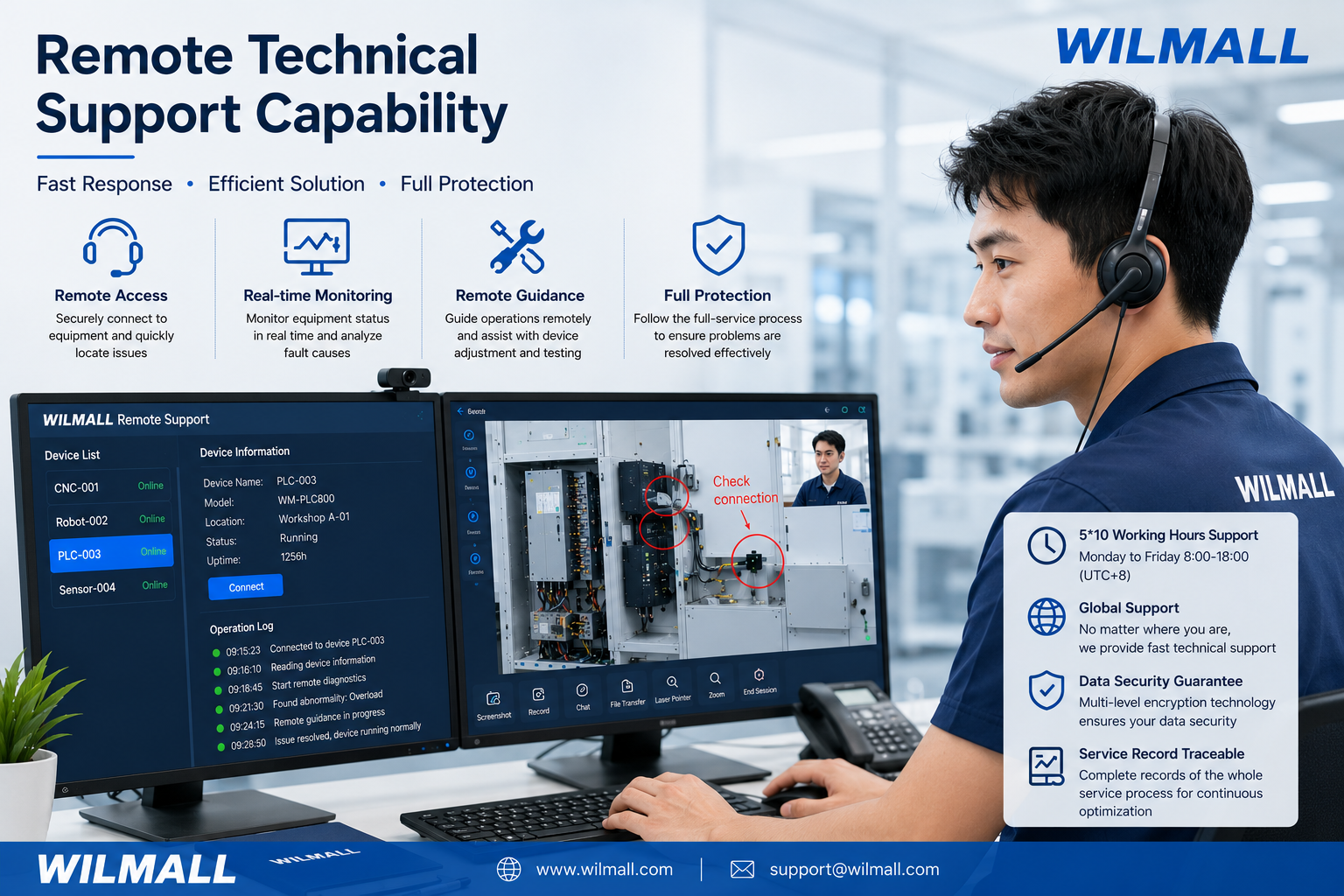
After-sales support is part of the capability claim: remote technical support is offered for pendant control stations after delivery.
Application Fit: Cranes, Hoists and Mobile Equipment
The COP-5MSS-DD's declared application set — cranes, hoists, lifting equipment and industrial control systems — places it in environments where the operator stands close to the load path. That shapes three requirements: a control layout that can be operated by feel, an emergency stop within thumb reach, and an enclosure that survives being handled rather than merely installed.
The industry exposure of this equipment class is broad. The electric hoist documented in the same manufacturer's certification file is listed for manufacturing, logistics and warehousing, construction engineering, mining, metallurgy, port transportation, nuclear power and aviation. Each of those sectors places a different emphasis on the pendant: logistics and warehousing operators typically want fast, repetitive control with minimal training; construction and port environments tolerate more physical abuse; metallurgy and nuclear-adjacent applications apply stricter documentation and specification discipline.
A documented deployment: RV manufacturing in Australia
One referenced case involves an Australian recreational-vehicle factory that installed 10 units of the COP-5MSS-DD as control devices. The project was completed within one year, and after a year of use the equipment was reported to be operating stably, with users highlighting the pendant's ease of use. It is a modest deployment in volume terms, but it is a useful reference point for two reasons: it sits in a discrete-manufacturing setting rather than a heavy-lifting one, and it documents a full year of operational service rather than a bench test.
For a buyer evaluating a first order, that pattern — small validation batch, defined application, review after sustained use — is a more useful reference than a large headline installation, because it mirrors the sequence most purchasers actually follow.
Comparison with Alternative Control Approaches
Pendant selection is rarely a single-product decision; it is a choice between control architectures. The table below compares a wired push button pendant such as the COP-5MSS-DD with the two most common alternatives in lifting applications.
| Criterion | Wired pendant station (COP-5MSS-DD class) | Wireless transmitter–receiver set | Bare push buttons in a custom box |
|---|---|---|---|
| System complexity | Low: pendant, cable, control circuit | Higher: transmitter, receiver, pairing, power supply | Variable; depends on enclosure and wiring design |
| Power source at the operator | None; powered by the control circuit | Battery or rechargeable pack at the transmitter | None |
| Signal reliability factors | Cable integrity and gland/entry protection | Radio environment, interference, line of sight | Cable integrity and enclosure sealing |
| Operating range | Bounded by cable length and routing | Free of cable constraints within radio range | Bounded by cable length |
| Field maintenance | Contact and cable inspection | Battery management plus radio diagnostics | Contact and cable inspection |
| Best fit | Fixed stations, hoists and cranes with a defined operator position | Wide travel areas, multiple control positions, hazardous cable routing | Machine builders with existing control-box standards |
The honest trade-off is this: the COP-5MSS-DD is a wired handheld station. Its operating position is defined by the cable, and installations that require the operator to move across a wide area, or where a festoon or cable path cannot be installed economically, are better served by a transmitter–receiver set. The pendant's advantage is architectural: fewer components, no batteries to manage, no radio environment to survey, and a simpler fault tree when something stops working on a shift.
A second boundary concerns the enclosure. The published material for the COP-5MSS-DD is plastic, and the specification set reviewed here does not include a declared ingress protection class or an operating temperature window. Buyers specifying the pendant for dusty, wash-down, outdoor or extreme-temperature duty should therefore obtain the model-specific environmental documentation from the supplier before finalising the specification, rather than assuming a rating that has not been issued for that configuration.
Verification Gaps Buyers Should Close Before Specification
Capability proof is not the same as a complete technical file. Based on the documentation reviewed here, the following items are worth requesting explicitly at the evaluation stage, because they are not fully answered by the published specification:
- Environmental ratings for the exact configuration: ingress protection classification and operating temperature range, issued for the pendant variant being ordered rather than the product family.
- Certification scope: the manufacturer's file includes a Machinery Directive Attestation of Conformity issued by UDEM under certificate number EHTCF0929-MD for the Turkish market, covering an electric hoist and citing standards including EN 14492-2:2019 and EN 60204-32:2008, valid from 09 October 2025 to 09 October 2030. Buyers should confirm which certificates cover the pendant itself and which cover the machinery it is fitted to.
- Contact life data: electrical and mechanical endurance figures for the silver and copper contact options under the buyer's actual switching load.
- Approval documentation for the destination market: CE, UL and RoHS compliance are stated at company level; the applicable declaration should be confirmed for the specific model and the destination country.
Market Trend Analysis: What Is Shifting in Pendant Control
Three trends are visible in the third-party data and in the way this category is specified.
Steady, non-cyclical growth. The projected expansion of the pendant crane control station market from approximately USD 275.60 million in 2025 to USD 423.80 million by 2032, at a 5.1% CAGR, is characteristic of maintenance, replacement and incremental capacity demand rather than of a speculative build-out. Lifting equipment is installed, worn and replaced on a long cycle, and the pendant is one of the parts replaced most often.
A large component layer sitting beneath finished stations. The pendant control mechanical switch market at USD 722.5 million in 2025 is substantially larger than the crane-station market alone. For wholesale buyers, that signals where margin and differentiation actually live: in the switching element, the contact material and the enclosure, not only in the assembled handheld unit.
Convergence on published standards. The requirement that industrial pendant controllers comply with IEC 60947-5-1 and EN 60947-5-1 for low-voltage switchgear and controlgear has become a common reference point across markets. Standard convergence favours suppliers who can document conformity, and it makes under-documented products progressively harder to place in regulated procurement.
Against that background, the competitive position of a specialised manufacturer rests on flexibility — customization options, low minimum order quantities and short lead times — rather than on matching the portfolio breadth of Schneider Electric, Eaton, Siemens, ABB or Rockwell Automation. Buyers who understand that split can source differently for standardised and custom requirements instead of forcing one supplier to serve both.
Procurement Checklist for Bulk Pendant Control Station Orders
| Decision area | What to confirm | Verified position for this product line |
|---|---|---|
| Electrical rating | Rated voltage and current versus actual control-circuit load | AC 500V, 10A |
| Button configuration | Button count, functions and emergency stop requirement | 5-button handheld with emergency stop as standard; 2, 4, 6 or 8 buttons on customization |
| Contact material | Silver or copper contacts matched to switching duty | Both offered |
| Speed control | Single or dual speed operation | Both offered |
| Quality protocol | Testing regime and pre-shipment acceptance | 100% product testing; acceptance criteria defined as pre-shipment test |
| Commercial terms | MOQ, delivery terms, payment terms | MOQ 5 units; delivery terms DAP; payment terms T/T 100% |
| Capacity and timing | Monthly capacity against order size, lead time | 2,000 units per month; 15 working days |
| Customization route | OEM/ODM availability and engineering support | OEM/ODM production with 3-engineer R&D team |
| After-sales | Technical support and troubleshooting access | Remote technical support after sales |
Read as a whole, the table shows where this supplier's capability claim is strongest. Commercial accessibility — a five-unit minimum, a fifteen-working-day lead time and DAP delivery — is verifiable and unusually relevant to wholesale buyers trialling a new source. The weaker points are environmental documentation and model-level certification scope, which require a direct request rather than a catalogue check.
Future Outlook
Over the next several years, the pendant control category is likely to be shaped less by radical redesign than by documentation and configurability. As the market grows toward the projected USD 423.80 million by 2032, the buyers driving that volume will increasingly be distributors and OEMs who need a pendant that can be adapted across several machine platforms without a new tooling cycle — which is precisely the direction the COP-5MSS-DD's customization menu points: variable button counts, selectable contact material, dual-speed options and OEM/ODM production.
Two developments are worth watching. First, standard convergence around IEC 60947-5-1 and EN 60947-5-1 will continue to raise the documentation bar for suppliers of every size, favouring those who can produce model-level evidence quickly. Second, the coexistence of wired pendants and wireless transmitter–receiver sets is likely to persist rather than resolve, because the two architectures solve different problems: fixed operator positions versus wide travel areas. For most facilities, the practical answer is not a single choice but a clear rule about which duty each architecture serves.
For buyers currently at the evaluation stage, the most reliable next step is a documented validation order: a small batch of pendants built to the intended configuration, tested against the acceptance criteria, and reviewed in service before volume commitment.
FAQ
- What is a pendant control station, and what equipment does it control?
- A pendant control station is a handheld unit containing push buttons and, commonly, an emergency stop, from which an operator directly controls a machine. The COP-5MSS-DD is a five-button handheld control station with an integrated emergency stop, specified for cranes, hoists, lifting equipment and industrial control systems. It is connected by cable to the machine's control circuit rather than to the motor itself.
- What are the electrical ratings of the COP-5MSS-DD control pendant?
- The published rating is AC 500V at 10A. This is a contact switching rating. In practice, the control circuit it serves is typically much lower in voltage: the electric hoist documented alongside it in the same manufacturer's file, model YJ02-02, specifies a control voltage of 24–48V. Buyers should verify the rating against the actual voltage and load type of their control circuit during engineering review.
- Which industries and equipment typically use crane and hoist pendant control?
- Pendant control in this class is used wherever an operator needs to stand near the load while directing it. Documented industry exposure for the associated electric hoist covers manufacturing, logistics and warehousing, construction engineering, mining, metallurgy, port transportation, nuclear power and aviation. In each case the working environment — dust, moisture, temperature, impact — should drive the enclosure decision rather than the product name alone.
- Can the pendant be customized for button count, contact material and operating speed?
- Yes. Customization options cover contact point material (silver or copper), button function including an emergency braking button, the number of buttons (2, 4, 6 or 8) and button speed (single speed or dual speed). OEM and ODM production services are also provided, so a buyer can specify a configuration rather than accept a fixed catalogue variant. Buyers should confirm which options affect certification and which do not.
- What are the minimum order quantity, lead time and production capacity for bulk orders?
- The minimum order quantity is 5 units, the lead time is 15 working days, and the stated monthly production capacity is 2,000 units. The low minimum is relevant for buyers who want a validation batch before committing to volume; the monthly figure defines the practical ceiling for large or repeat orders.
- How is quality verified before shipment, and what commercial terms apply?
- Products undergo 100% testing, and the stated acceptance criterion is pre-shipment test. The stated commercial terms are DAP delivery with T/T 100% payment. Remote technical support is provided after sales for product use and troubleshooting. Buyers with specific incoming-inspection requirements should align the test documentation format with their own quality system before the order is placed.
- How does a wired pendant control compare with a transmitter–receiver set for crane operations?
- A wired pendant such as the COP-5MSS-DD has fewer components: no transmitter, no receiver, no battery and no radio link to configure, which simplifies commissioning and reduces the number of failure modes to diagnose. Its constraint is range — the operating position is bounded by the cable and its routing. A transmitter–receiver set removes that constraint but adds battery management, pairing and radio-interference considerations. Installations with a defined operator position generally suit a wired pendant; installations requiring movement across a wide area generally suit a wireless set.
For buyers who need the full parameter set, including the wider WILMALL product portfolio of automation and electrical components, the manufacturer's product brochure is available for download: WILMALL product brochure (PDF).