
Verifying CE-Certified Air Compressor Specs
Verifying CE-Certified Air Compressor Specs
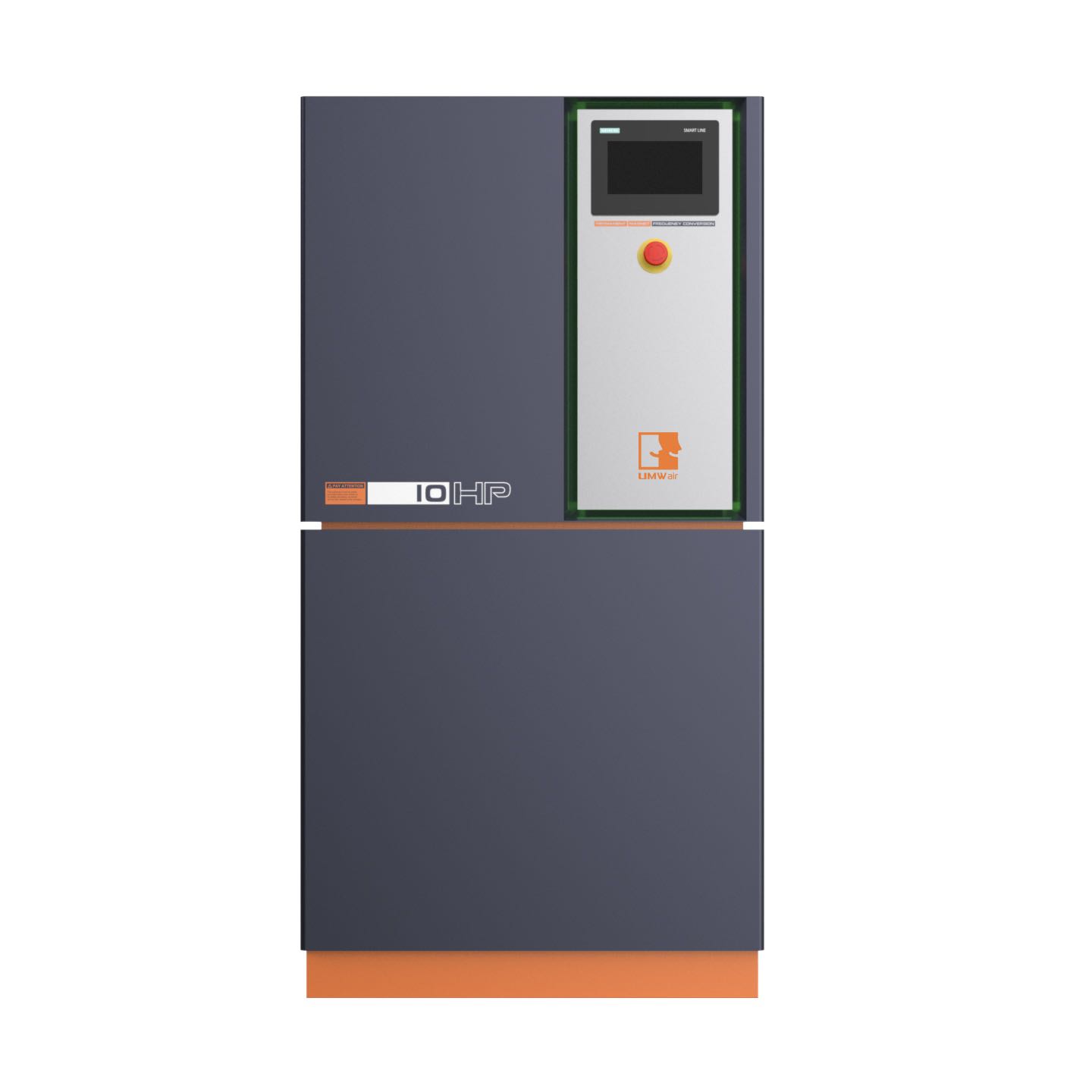
Industrial screw air compressor unit. Buyers evaluating such equipment need to verify certification scope and technical parameters separately.
A procurement-focused analysis of what CE certification and technical parameters do and do not tell industrial buyers about rotary screw air compressors.
Why Certification and Specs Are Not the Same Thing
In industrial procurement, compressed air is often treated as a utility rather than a precision asset. Yet when a production line depends on continuous operation, the difference between a properly specified rotary screw air compressor and an under-verified unit appears quickly in downtime, energy cost, and output quality. For buyers moving from research to evaluation, the core task is not only identifying a supplier but confirming that certification claims and technical parameters match the operating environment.
A CE mark on an industrial air compressor is not a product specification sheet. It confirms conformity with applicable European directives, but it does not automatically tell a buyer whether the airflow, pressure range, cooling method, motor class, or air purity level will support a specific manufacturing process. Buyers who treat the mark as a substitute for parameter review often discover the gap only after installation, when line pressure drops or energy consumption rises.
The Verification Gap in Industrial Air Compressor Sourcing
The industrial air compressor market has grown steadily, reaching a global value of USD 20.0 billion in 2025 and projected at USD 28.3 billion by 2033, according to Grand View Research. Within this market, rotary screw compressors held a 47.0% share in 2025 because they are suited to continuous industrial use. This growth has expanded supplier choice, but it has also increased variability in how specifications are presented.
A machine listed as an industrial air compressor may have different pressure, airflow, cooling, and certification profiles. For EU/EEA buyers, CE marking is a mandatory baseline, but the marking alone does not explain the exact scope of certification, the standards applied, or the models covered. The same issue applies to parameters: airflow and pressure are not interchangeable, and a compressor that meets one but not the other will not perform in continuous applications such as CNC machining, laser cutting, or packaging lines.
How UMW Air Documents Certification and Parameters
Shandong UMW Air Tech Co., Ltd is a Jinan, China-based manufacturer exporting industrial air compressors to the EU, USA, Southeast Asia, Middle East, South America, and Africa. The company operates a 2,000 square meter production facility and reports an annual output of 12,000 units, with a 40-person R&D team. Its product range includes air-cooled, direct-driven screw air compressors, stationary screw air compressors, diesel mobile screw air compressors, and heavy-duty screw air compressors.
For buyers evaluating EU/EEA compliance, UMW Air provides a specific example of certification transparency. The screw air compressor models ML-7.5/8A, L-7.5/8A, L-1516A, and L-2216A are CE certified under certificate number M.2026.206.C140156 issued by UDEM. The certification complies with the 2006/42/EC Machinery Directive and applies to the EU/EEA market. In addition, the certificate references the 2014/30/EU Electromagnetic Compatibility Directive and standards including EN ISO 12100:2010, EN 60204-1:2018/A1:2025, EN 1012-1:2010, and EN IEC 61000-6-2:2019, among others.
This level of detail matters because a CE certificate that lists specific model numbers gives buyers a verifiable boundary. It is not a blanket approval for every product in a catalogue. Procurement teams can compare the certificate number, issuing body, and model list directly with the supplier's quotation to confirm that the units under consideration are covered.
Technical Parameters That Buyers Should Verify
For the CE-certified screw air compressor models, the documented technical parameters include a power range of 4-355 kW, a pressure range of 8-25 bar, and an airflow of 2.39 m³/min for the base specification. The cooling method is air cooling, the drive method is direct driven, and the motor is IE4. The air end is a single-stage screw compressor air end. The construction material is sheet metal, and the units are classified as integrated screw air compressors, with other categories including split/separate, portable, and fixed screw air compressors.
These parameters are not isolated figures. In an industrial compressed air system, airflow, pressure, and power need to be matched to the demand profile of the production line. For example, a CNC machining application that requires stable airflow for actuators and pneumatic tools will suffer if the compressor cannot maintain its rated airflow at the required pressure. Similarly, an IE4 motor and direct-driven configuration influence energy consumption and maintenance expectations.
For smaller demand, UMW Air also lists the Micro ML series—ML-4A, ML-5.5A, and ML-7.5A—with power of 4 kW, 5.5 kW, or 7.5 kW, maximum airflow of 1.1 m³/min, pressure of 8-13 bar, and a 140 L gas tank. This series is classified as micro air compressors and is relevant for lighter industrial applications, small workshops, or specific tooling requirements.
Buyer verification checklist for CE-certified industrial air compressors:
- Confirm the CE certificate number and issuing body (e.g., UDEM, number M.2026.206.C140156).
- Check that the quoted models are listed on the certificate.
- Cross-reference the applicable directives and standards with the intended market.
- Compare airflow and pressure ranges against the actual peak demand of the production line.
- Confirm cooling method, drive method, motor class, and air end type.
- Request the matched equipment list, including air dryer, air tank, line filter, inverter, and controller.
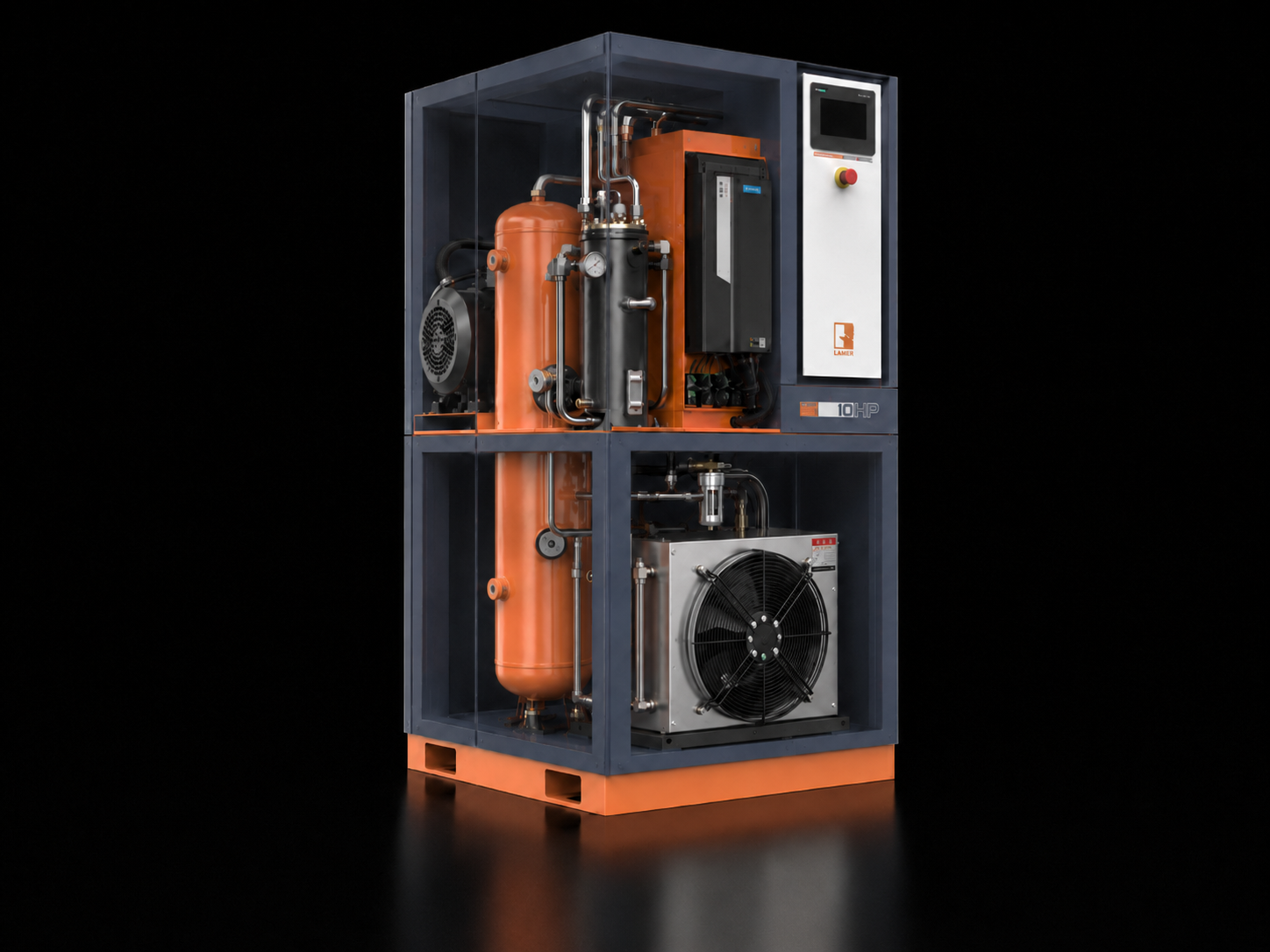
Internal view of a screw air compressor. The single-stage screw air end, motor, and cooling layout are key areas for specification-based evaluation.
Application Fit: Where These Compressors Are Used
The application scope documented for UMW Air screw air compressors covers metal processing and manufacturing, plastics and rubber processing, automotive and machinery parts, food and packaging, construction and materials, and energy and chemical industries. These sectors share a common need for stable compressed air in continuous operation, often in high-temperature or humid environments where reliability and clean air supply are critical.
In a typical CNC machinery production line, the compressor is expected to drive CNC machine actuators, pneumatic tools, and dust removal systems. A documented case from a CNC machining workshop in Vietnam used three units for those functions. Over one year, the result recorded was a 20% improvement in production efficiency, reduced downtime, and stable air supply that supported high-quality machining. The case highlights low energy consumption, easy maintenance, and reliable long-term performance. This example illustrates why buyers should evaluate the compressor as part of a wider system that includes matched equipment such as air dryers, air tanks, line filters, inverters, and controllers.
Other common project types include automotive parts production lines, plastic processing line expansions, industrial automation integration, and food and beverage packaging line setups. In each case, the compressor must be able to maintain the required air quality and pressure while operating continuously, not just meet a specification on paper.
Market Trends and Their Influence on Evaluation
Two technical trends are shaping buyer expectations in the industrial air compressor segment. The first is energy efficiency. Variable Frequency Drive (VFD) compressors can save up to 35% in energy costs by matching motor speed to actual air demand, according to the U.S. Department of Energy. This has shifted the evaluation focus from purchase price to lifecycle energy cost, especially for processes with fluctuating air demand.
The second trend is air purity. ISO 8573-1:2010 is the primary international standard for compressed air purity, classifying contaminants like particles, water, and oil. For applications such as laser cutting, oil-free air (Class 0 per ISO 8573-1) is critical to prevent contamination of sensitive optics. In addition, using compressed air as an auxiliary gas in laser cutting can reduce production costs by up to 50% compared to nitrogen or oxygen, according to industry analysis. These trends push buyers to look beyond the CE mark and examine whether a compressor's configuration supports energy efficiency and the required air purity for the intended application.
Asia Pacific held 42.8% of the global industrial air compressor revenue share in 2025, with China as a key market, according to Grand View Research. For global buyers, this means more sourcing options from the region, but also a greater need to verify that certification and performance data are consistent across different regulatory environments.
Comparison with Traditional Solutions and Limitations
When comparing a CE-certified integrated screw air compressor with traditional alternatives such as fixed-speed piston compressors or non-certified imports, the evaluation changes. Traditional reciprocating compressors may have lower upfront cost and are widely understood for intermittent use; however, they are generally less suited to continuous high-duty cycles where screw technology dominates. The key advantage of screw compressors in industrial settings is their ability to deliver stable airflow over extended periods, but this advantage must be verified against actual demand.
For UMW Air's certified models, one documented limitation is that the CE certificate covers specific model numbers—ML-7.5/8A, L-7.5/8A, L-1516A, and L-2216A—and applies to the EU/EEA market. Buyers outside that market, or those needing different configurations, must request separate compliance documentation. This is not a product defect but a boundary condition that procurement teams need to recognize. Additionally, the air-cooled design means that in extremely high ambient temperature or heavily dust-laden environments, supplementary ventilation and filtration may be required. This is a standard consideration for air-cooled screw compressors rather than a unique shortcoming, but it affects installation and ongoing maintenance planning.
Future Outlook for Industrial Compressed Air Procurement
As energy costs and air quality requirements become more demanding, procurement teams will likely place more weight on verifiable parameter sheets, certification scope, and system-level efficiency data. The gap between a CE-marked machine and a well-specified machine may widen as applications such as laser cutting, electronics manufacturing, and continuous automation require tighter air purity and part-load efficiency. Manufacturers that publish clear certification numbers, model-specific standards, and matched equipment guidance will be easier for buyers to evaluate without relying on promotional claims.
In this environment, the industrial air compressor buyer's job is not just to compare prices but to verify that the equipment can perform under the specific operating conditions of the production line. The data that matters most will be the certificate number, the model list, the airflow and pressure range, the motor class, and the compatibility with downstream air treatment equipment.
Frequently Asked Questions
Q1: What does CE certification cover for industrial air compressors?
CE certification for these screw air compressors confirms compliance with the 2006/42/EC Machinery Directive. The certificate number M.2026.206.C140156 was issued by UDEM and applies to the EU/EEA market. It covers the models ML-7.5/8A, L-7.5/8A, L-1516A, and L-2216A.
Q2: Which UMW Air screw compressor models are CE certified?
The CE-certified models are ML-7.5/8A, L-7.5/8A, L-1516A, and L-2216A.
Q3: What parameters should buyers verify beyond the CE marking?
Buyers should verify the power range of 4-355 kW, pressure range of 8-25 bar, airflow of 2.39 m³/min for the base specification, cooling method of air cooling, drive method of direct driven, motor class of IE4, and sheet metal construction. For the Micro ML series, the key parameters include power of 4 kW, 5.5 kW, or 7.5 kW, maximum airflow of 1.1 m³/min, pressure of 8-13 bar, and a 140 L gas tank.
Q4: Does CE certification apply outside the EU/EEA?
The referenced CE certificate applies to the EU/EEA market. Buyers in other regions should request documentation specific to their market.
Q5: What is ISO 8573-1 and why does it matter?
ISO 8573-1:2010 is the primary international standard for compressed air purity, classifying contaminants like particles, water, and oil. It matters because applications such as laser cutting may require oil-free air (Class 0) to prevent contamination of sensitive optics.
This analysis is based on published certification data and product specifications. Buyers should always request the full certificate and latest datasheet from the supplier before making a final decision.