
Verifying Building Glass Compliance: Certification and Technical Parameters for Curtain Wall Projects
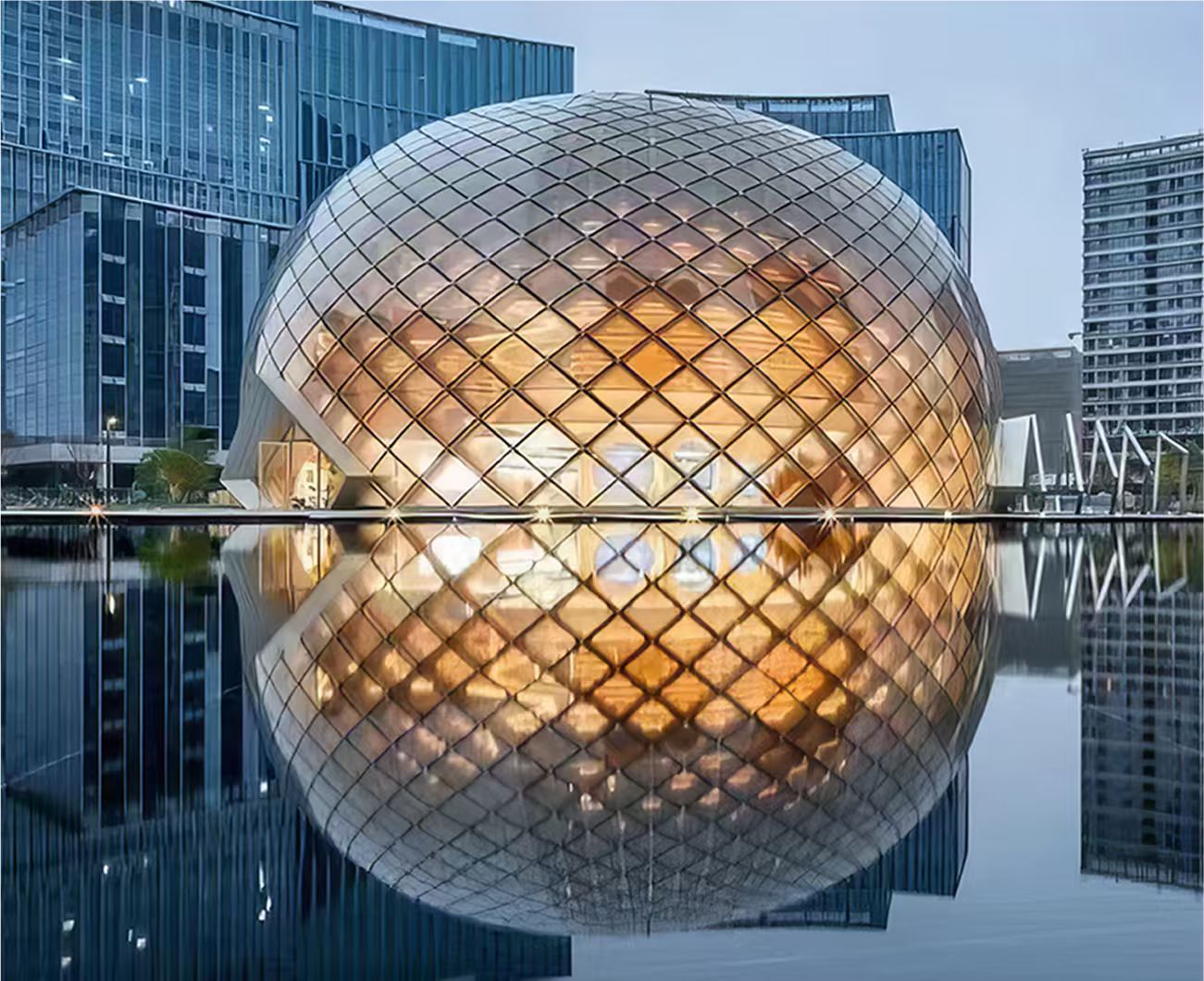
For architects, facade engineers, and procurement professionals evaluating building glass suppliers, the ability to verify product certifications and technical parameters is a critical step in risk mitigation. Without documented compliance to recognized standards, even aesthetically striking glass can become a liability in curtain wall and high-performance facade projects. This article examines how suppliers like DYGLASS (Shenzhen Dayang Special Glass Co., Ltd.) address these constraints through certified product lines and transparent specifications.
The Compliance Mandate in Modern Facade Design
Building codes in the European Union, Middle East, and North America increasingly require that architectural glass products carry third-party certifications to demonstrate safety, thermal performance, and durability. For procurement teams sourcing from international suppliers, the absence of CE marking or equivalent documentation can delay project approvals, increase inspection costs, and void warranties. The challenge is amplified when glass must simultaneously meet acoustic, fire-resistance, and energy-efficiency constraints — a typical demand for curtain wall systems in hotels, transport hubs, and commercial towers.
DYGLASS Product Architecture and Certified Parameters
DYGLASS offers a portfolio of building glass products that are designed with specific model designations and documented performance metrics. Three core product lines — tempered glass, laminated glass, and insulated glass — each carry CE certification issued by ECTI CERT Ltd., enabling their use in projects requiring compliance with the Construction Product Regulation (CPR) for the EU/EEA market.
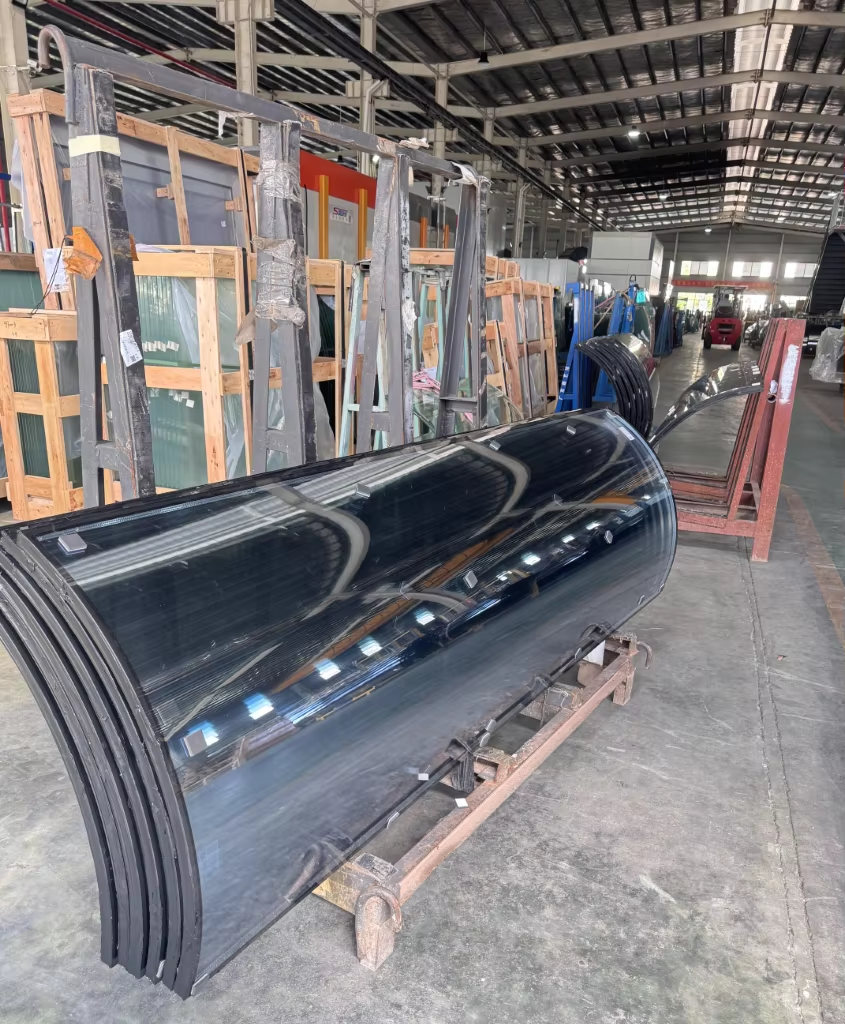
Tempered Glass (DY-GH01)
Model DY-GH01 is a tempered glass product available in flat, curved, and hole-drilled configurations. It is made from float glass with a thickness tolerance of ±0.5 mm and light transmittance of ≥91%. The product is CE certified under number BGTC20260403-02, conforming to standards EN 12150-1:2015+A1:2019 and EN 12150-2:2004, as mandated by the Construction Product Regulation (EU) No 305/2011.
Laminated Glass (DY-JJ01)
Model DY-JJ01 is a laminated glass product with a thickness range of 6.38 mm to 50 mm and a sound insulation rating between 35 dB and 45 dB. It uses interlayers such as PVB, SGP, or EVA. The product holds CE certification number BGTC20260403-03, issued by ECTI CERT Ltd. per standard EN 1449:2005 and the Construction Product Regulation 305/2011/EU (CPR).
Insulated Glass (DY-ZK01)
Model DY-ZK01 is an insulating glass product configured with thickness options such as 6 mm + 12A + 6 mm or 8 mm + 16A + 8 mm (custom available). It supports Low-E coating, warm-edge spacers, and gas fills (argon, krypton, xenon) to achieve light transmittance of 70%–89% and sound insulation of 30–45 dB. The CE certification number is BGTC20260403-05, conforming to EN 1279-1:2018 through EN 1279-4:2018 and the CPR.
Technical Capabilities for Complex Facades
Beyond standard flat panels, DYGLASS operates dedicated production lines for double-curved tempered glass, multi-curved tempered glass, and irregular-shaped glass. The factory spans 30,000 m² with an annual output of 600,000 square meters, and includes heat soak furnaces, autoclaves, and insulated glass lines. This infrastructure supports OEM/ODM orders with lead times of 7–9 days and a minimum order quantity of 10 square meters.
Application Scenarios Across High-Profile Projects
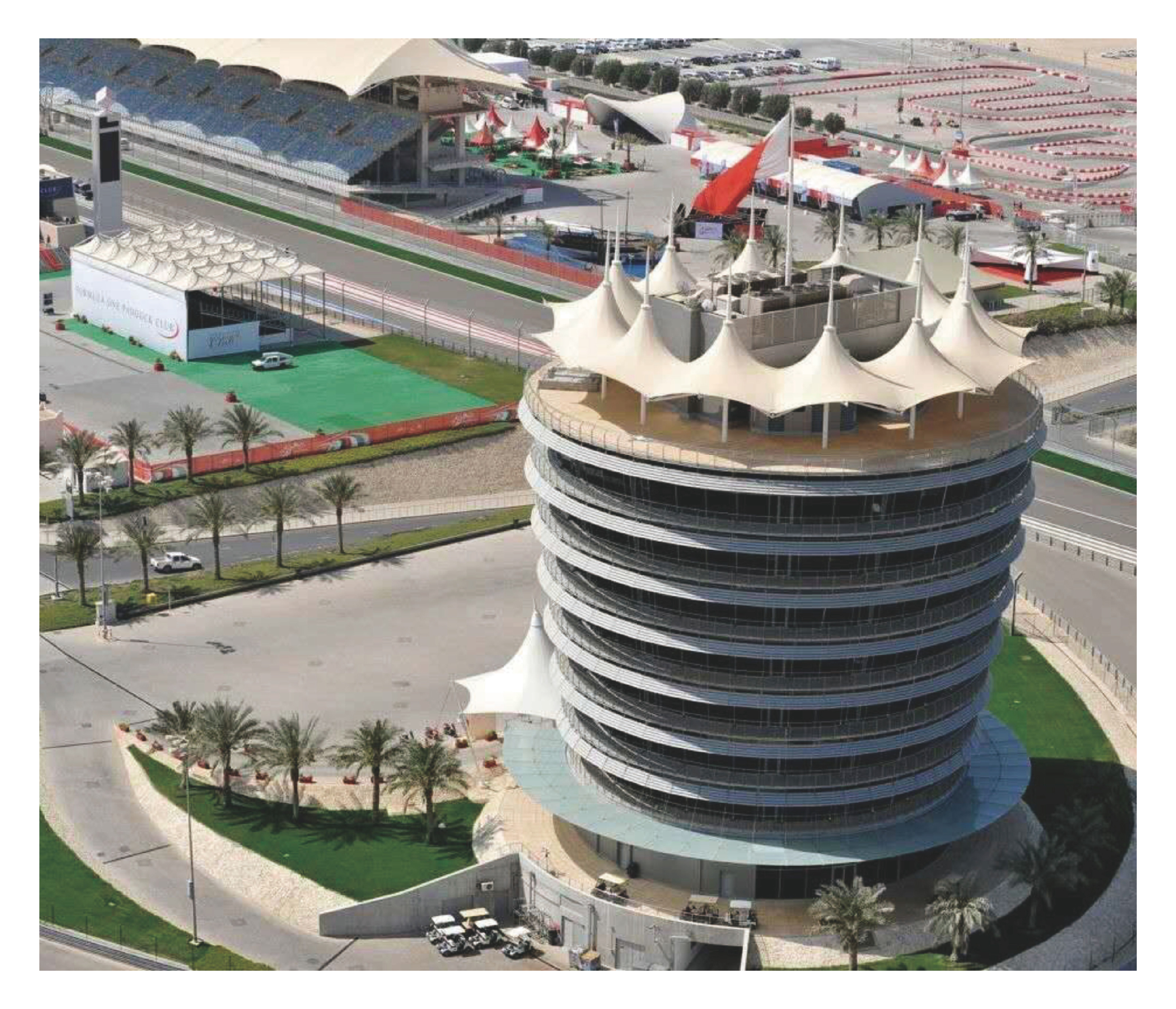
DYGLASS building glass products have been applied in projects such as the Bahrain International Circuit, Doha Metro Station, and Huizhou North Railway Station, where combination products (tempered + laminated + insulated) were required for thermal and acoustic performance. A hotel project in the UAE used 4,000 square meters of DYGLASS architectural glass, with heat insulation and aesthetic appearance highlighted as key outcomes after 30 years of stable operation.
Market Trend: Third-Party Certification as a Procurement Gate
Procurement teams in the EU and Middle East are increasingly treating CE marking as a non-negotiable entry criterion for building glass suppliers. The trend is driven by stricter enforcement of the CPR and a shift toward performance-based specification. Suppliers that offer documented certification for each product model — such as DYGLASS’s three CE certificates — simplify the compliance verification process and reduce the risk of non-conformity penalties during final inspection.
Comparison with Traditional Non-Certified Supply
Compared to sourcing from suppliers without formal certification, working with a CE-certified manufacturer provides traceability to harmonized European standards and audited production processes. One honest limitation: certification does not guarantee on-time delivery or logistical reliability, which must still be evaluated separately through capacity assessments and reference checks. However, when combined with a factory size of 30,000 m² and a monthly capacity of 600,000 square meters, the documented compliance adds a layer of assurance that non-certified suppliers cannot match.
Future Outlook
As building envelope regulations tighten globally, the demand for multi-certified glass (CE, AS/NZS, SGCC) will grow. Suppliers that invest in continuous certification renewal and expand their scope to cover curved and complex geometries will be better positioned to serve international contractors. DYGLASS’s current certification portfolio, covering three core product lines with valid dates through 2031, provides a baseline for such long-term compliance strategies.
Frequently Asked Questions
What CE certification does DYGLASS tempered glass (DY-GH01) hold?
The tempered glass product holds CE certification number BGTC20260403-02, issued by ECTI CERT Ltd., valid for the EU/EEA market. It conforms to standards EN 12150-1:2015+A1:2019 and EN 12150-2:2004 under the Construction Product Regulation 305/2011/EU.
What are the technical parameters of the laminated glass model DY-JJ01?
Model DY-JJ01 is a laminated glass with thickness range 6.38 mm to 50 mm, interlayer options PVB/SGP/EVA (thickness 0.38 mm to 2.28 mm), light transmittance 85–92% (clear) and sound insulation 35–45 dB. It uses tempered, float, low-iron, or tinted glass substrates.
Does DYGLASS insulating glass support gas fills and warm-edge spacers?
Yes, the insulating glass (DY-ZK01) can be filled with air, argon, krypton, or xenon, and uses either aluminum spacer or warm-edge spacer. This configuration achieves light transmittance of 70–89% and sound insulation of 30–45 dB.
What production capacity does DYGLASS have for curved glass?
DYGLASS operates dedicated curved tempering lines, including a double-curved tempering line and a concave/convex curved line for irregular shapes. The factory has an annual output of 600,000 square meters, with a monthly capacity suitable for large-scale curtain wall projects.
How can I verify the validity of the CE certificates?
The certificates (numbers BGTC20260403-02, BGTC20260403-03, BGTC20260403-05) were issued by ECTI CERT Ltd. and are valid until 2031-03-03. Verification can be requested directly from the certifying body or by reviewing the manufacturer’s documentation.
For further product specifications and factory capabilities, view the DYGLASS company brochure (PDF).