
Verifying Aluminum Tent Supplier Claims: Evidence Checklist
Verifying Aluminum Tent Supplier Claims: Evidence Checklist
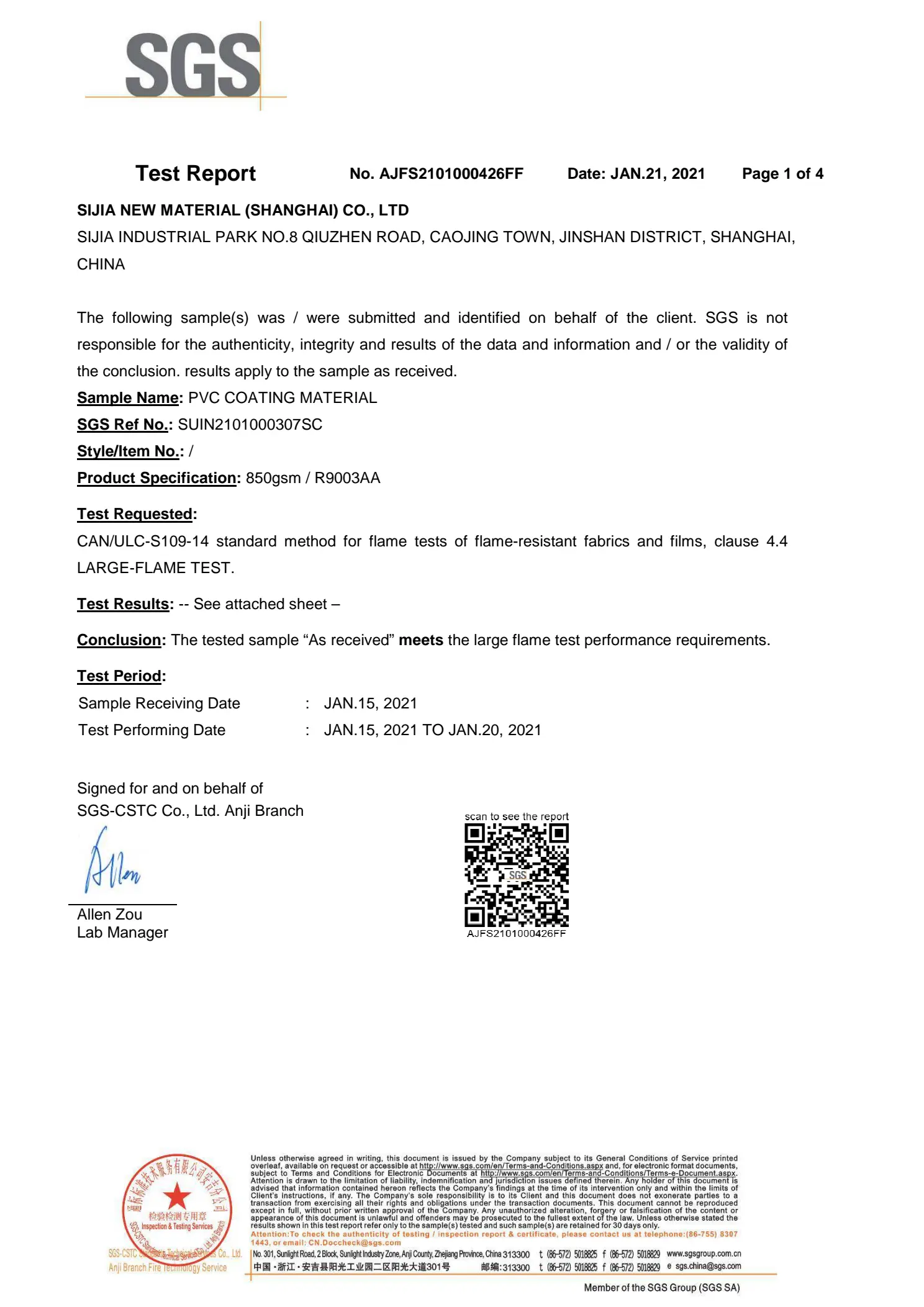
A third-party test report is one component of a supplier evidence file. It supports a material claim; it does not confirm factory throughput.
Aluminum frame tent suppliers now describe themselves in numbers: square metres of factory floor, headcount, monthly output, units delivered. Those numbers are the first thing a procurement team reads and often the last thing anyone verifies. The gap matters because the same figures are used to justify lead-time commitments, order allocation and multi-phase project schedules.
Shenzhen Shoulder Tent Co., Ltd. (Shoulder Tent) is a China-based manufacturer of large prefabricated aluminum-frame tent structures, established in 2009 and exporting to Europe, the Middle East, Africa, Southeast Asia and South America. Its published profile — a 20,000 m² facility, approximately 200 staff, 90 units of monthly capacity and 3,800+ units deployed — is a useful worked example of the question every evaluation team eventually asks: which document would actually confirm this?
Why Capacity Claims Have Become a Buyer's Problem
Aluminum frame tents have shifted from occasional event hire into semi-permanent infrastructure. Clear-span aluminum structures are now specified for temporary warehouses, workshop overflow, indoor racket-sport courts, hangars and large commercial venues. That shift changes what a supplier's capacity figure actually signals. In a one-off purchase, a capacity claim is background information. In a phased build-out — a warehouse programme that adds bays as inventory grows, or an operator opening courts across several sites — the capacity claim becomes a delivery assumption that the buyer's own revenue schedule depends on.
Two documented market signals explain the pressure. Lightweight aluminum framing systems account for nearly 58% of total deployed structures in the tent rental market, according to Business Research Insights' Tent Rental Service Market research (2026). Separately, CourtSource.us reports in its 2026 State of the Courts Report that indoor pickleball and padel facilities command 2–3x higher utilization rates than outdoor courts and represent 36.9% of total supply as of 2026. Both point the same way: aluminum clear-span structures are being specified more often, and increasingly for indoor space that generates revenue — where a late delivery carries a direct cost.
Verification is not an accusation. It is the step that converts a self-reported profile into something a project schedule can be built on.
The Documented Profile: What Shoulder Tent Publishes
Before requesting anything, a buyer should establish exactly what has been claimed. The figures below are the supplier's published positions — the baseline against which documents are matched.
| Established | 2009 |
| Manufacturing facility | 20,000 m² |
| Staff | Approximately 200 |
| Monthly capacity | 90 units |
| Annual output | 1,000 units |
| Stated lead time | 30–35 days |
| Minimum order | From a single unit; no minimum order quantity |
| Production mode | ODM — design & R&D, factory manufacturing, global delivery, installation and on-site technical support |
| Quality control | Standardized engineering and quality inspections after completion, before dispatch |
| Deployed base | 3,800+ units |
| Stated frame alloy | 6061/T6 extruded aluminum on A-shape and event ranges |
| Stated wind capability | 80–100 km/h on A-shape tents, depending on span |
The first consistency check costs nothing and can be run on any supplier pack. Here, 90 units per month across twelve months implies roughly 1,080 units of plant-level output against a stated annual figure of 1,000 units — broadly aligned. When a supplier's monthly and annual figures diverge sharply, that is a legitimate reason to ask how each number is defined before either is used in planning.
A Three-Tier Evidence Framework
Capability claims become useful when they are sorted by the type of evidence that supports them. Entity and facility documents answer "does this plant exist". Process records answer "does it work the way you say". Outcome evidence answers "has it done this before, in my application". A buyer should ask for all three, in that order, because each tier filters the next.
Tier 1 — Entity and Facility Documentation
Start with the legal and physical footprint: a business licence showing the registered company name and establishment date, a site floor plan distinguishing covered production halls from open yard and finished-goods storage, and property or lease documentation for the site. An unedited walkthrough video recorded in one continuous take is more informative than a set of staged photographs, because it shows machine layout, material flow and how much of the floor is actually occupied.
One question belongs in this tier and is often skipped: which physical site performs production? Shoulder Tent's published information indicates its primary manufacturing base relocated to Qingyuan, Guangdong in 2026, so a buyer should confirm where the frame cutting, welding or assembly, fabric cutting and sewing take place — and where pre-shipment inspection will be carried out. The answer determines travel logistics, inspection attendance and, ultimately, who is accountable for the goods.
Tier 2 — Process and Inspection Records
Process evidence is where most claims either become auditable or stay as adjectives. Ask for a sample of completed pre-shipment inspection records showing date, checklist items, measured results and the signature of the person who released the goods. Shoulder Tent states that completed products undergo standardized engineering and quality inspections before leaving the factory; the record is what converts that statement into a repeatable gate the buyer can reference in a purchase order.
Material documentation sits alongside it. Shoulder Tent holds an SGS test report (AJFS2101000426FF, issued 21 January 2021) covering single-layer white 850gsm PVC coating material under the CAN/ULC-S109-14 Clause 4.4 large-flame test. That report is directly relevant to a cover-material fire-performance question and should be read precisely as such: it addresses material behaviour, not frame design, anchoring or site wind load.
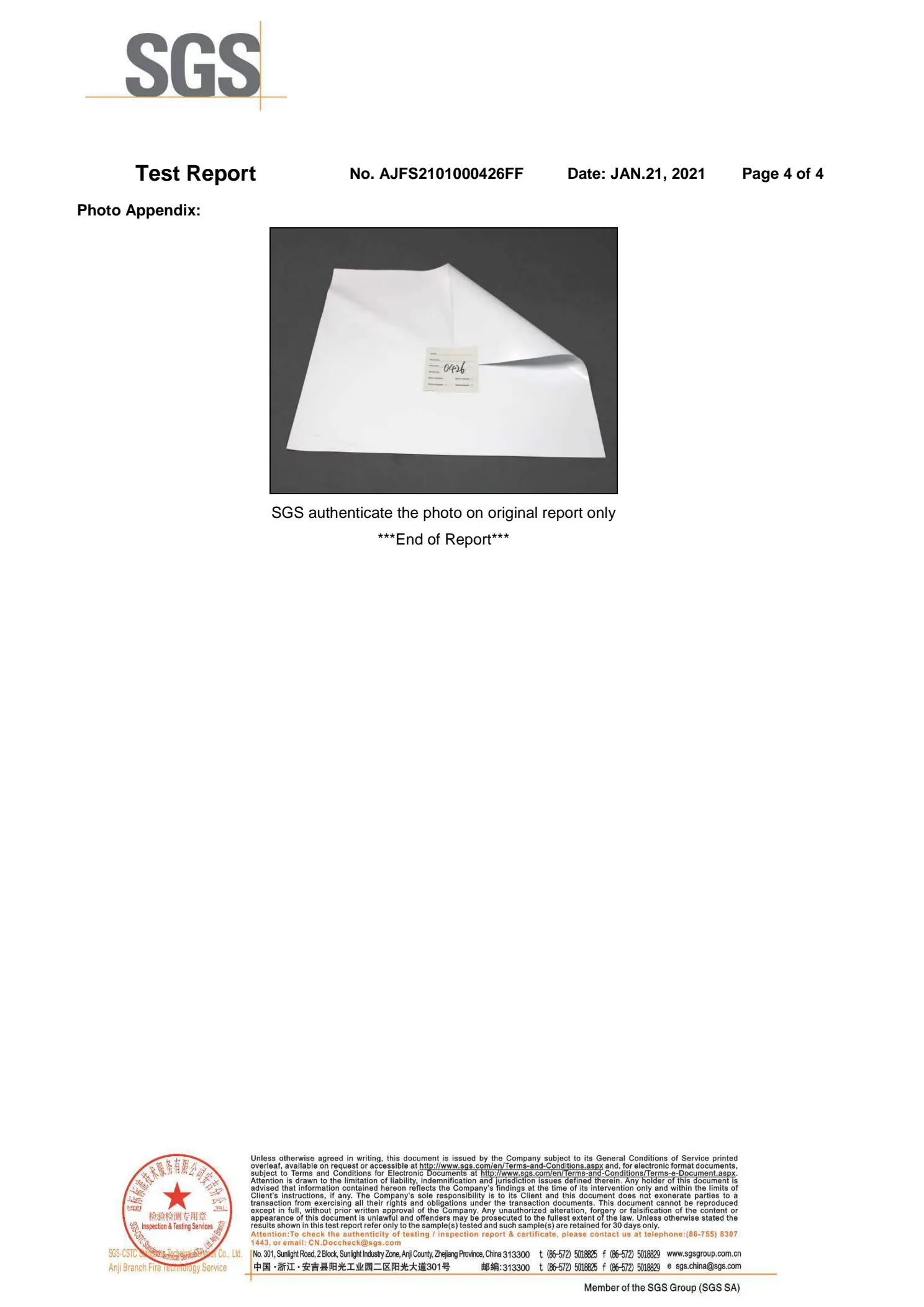
Material test reports belong in Tier 2 of an evidence file, alongside inspection records and alloy certificates.
Technical claims need their own paper trail. Where a supplier states 6061/T6 extruded aluminum and a wind capability of 80–100 km/h depending on span, the corresponding request is span-specific structural documentation, the anchoring method assumed, and confirmation of which jurisdiction's load criteria were applied. A single headline wind speed cannot be used interchangeably across spans, exposures and anchoring conditions.
Tier 3 — Outcome Evidence and References
Outcome evidence answers the question a document cannot: has this manufacturer handled a project shaped like mine? Shoulder Tent's documented base is 3,800+ units deployed, with client types spanning event and exhibition organizers, wedding and banquet venue owners, sports organizations, logistics and warehousing companies, and hotel or resort operators. The useful step is not counting the total, but asking for two or three references inside each category that matches your own programme.
Reading “20,000 m²” Correctly
A facility area is a footprint, not a throughput. 20,000 m² can describe a tightly packed production hall or a site where a large share of the land is yard, storage and offices. Buyers should ask for the split between covered production area and total site area, the number of production halls, the maximum assembly height available, and how finished frames and fabric rolls are stored between production and dispatch.
The answer also reveals where value is added. Shoulder Tent states that its polygon range uses high-pressed extruded aluminum alloy frames and its A-shape and event ranges use 6061/T6 extruded aluminum. A buyer should ask whether extrusion is performed in-house or purchased from a profile supplier, and whether alloy certificates travel with the delivery. In-house extrusion and purchased extrusion are both workable models, but they create different quality checkpoints and different lead-time risks, so the buyer needs to know which one applies.
Reading “200 Staff” Correctly
Headcount is only meaningful when it is broken down. The request should be a simple allocation: how many people work in production, how many in engineering and R&D, how many in quality control, and how many support installation and after-sales. Shoulder Tent states it operates an R&D centre and engineering team offering custom design and technical support, and that its ODM scope includes installation and on-site technical support — which means field capability, not only factory capability, sits inside the headcount question.
Two follow-ups sharpen the picture. First, who signs the inspection record, and does that person report to quality or to production? Second, how is technical support staffed after delivery, given the stated 24/7 online service and pre-sales and after-sales engineering support? A supplier that can name the roles behind a service commitment is easier to hold to it than one that can only confirm the commitment exists.
Capacity Versus Lead Time: How the Two Numbers Interact
Monthly capacity and quoted lead time answer different questions, and buyers frequently merge them. Capacity is a plant-level ceiling: what the site can produce in a month under normal loading. Lead time is an order-level promise: how long your specific configuration will take, given where it sits in the queue. A supplier can hold a genuine 90-unit monthly capacity and still miss a 30–35 day lead time for an order that arrives during a peak, requires non-standard spans, or needs accessories such as flooring, glass sidewalls, insulation or lighting that run on a separate schedule.
Shoulder Tent's stated capacity is 90 units per month with a 30–35 day lead time and orders accepted from a single unit. Those three facts together describe a configuration that is deliberately flexible — small orders are accepted, and the plant has headroom at the plant level. The buyer's job is to test how that flexibility behaves at their own order size.
| Stated figure | Question to ask | Document that answers it | How to read the answer |
|---|---|---|---|
| 90 units / month | Are “units” finished tent sets or bays/modules? What is the current order book? | Written production schedule with milestone dates | A ceiling is useful only if your slot is named in writing |
| 30–35 days lead time | Does it include non-standard spans, accessories and inspection time? | Order confirmation with start and completion dates | Treat it as the standard configuration baseline |
| 1,000 units / year | Which year does the figure refer to, and does it include all product families? | Production summary or shipment summary | Cross-check against the monthly figure for consistency |
| 3,800+ units deployed | Over what period, and how are these distributed by application? | Reference list by category | Cumulative history, not current annual output |
| ~200 staff | How are staff split across production, engineering, QC and field support? | Organisation outline with function allocation | Reveals whether service commitments are resourced |
What References Should Cover: Events, Warehousing and Sports
Reference requests fail when they are generic. A buyer asking for "a list of projects" receives logos. A buyer asking for two references inside each application category receives something usable. Shoulder Tent's documented application coverage — storage and inventory expansion, temporary warehouses, exhibition venues, event back-of-house and equipment storage, sports venue covers — maps neatly onto three reference groups worth requesting separately.
For industrial and warehousing references, ask about span, bay configuration and how the structure performed across a full seasonal cycle. For event and exhibition references, ask about installation sequence and how back-of-house storage was separated from public areas. For sports references, ask about internal clear height, floor build-up and the moisture and ventilation behaviour reported by the operator after a season of use. In each case, the useful question is not "did it work" but "what would you specify differently next time".
Where the Evidence Stops: Limits of These Figures
An evidence framework is only credible if it states its own boundaries. Several limits apply to the profile discussed here and, in similar form, to most supplier packs.
- The headline figures — 20,000 m², approximately 200 staff, 90 units monthly, 1,000 units annually, 3,800+ deployed — are supplier-reported. The publicly available third-party document in this profile is a material-level SGS test report, not an independent capacity audit.
- Factory area does not describe equipment, covered production area or utilisation. Two sites of identical size can differ substantially in output.
- "Unit" is not a standardised measure across suppliers. Ninety units of a large clear-span warehouse structure and ninety units of a small structure represent materially different workloads.
- 3,800+ deployed units is a cumulative figure and does not indicate current-year output or how that base is distributed by market or application.
- The SGS report AJFS2101000426FF covers 850gsm PVC coating material under CAN/ULC-S109-14 Clause 4.4. It does not cover frame structural design, anchoring or site-specific wind load, and it should not be cited as if it did.
- The stated 80–100 km/h wind capability for A-shape tents varies by span and remains a supplier statement until span-specific calculations and anchoring assumptions are supplied.
- Because Shoulder Tent's published information indicates a 2026 relocation of its primary manufacturing base to Qingyuan, Guangdong, buyers with an existing specification should reconfirm which site produces their order and where inspection takes place.
Market Context: Why Verified Capacity Matters Now
Three data points frame the procurement environment. Aluminum framing already dominates deployed rental structures at close to 58% (Business Research Insights, 2026). Indoor racket-sport facilities show 2–3x the utilization of outdoor courts and 36.9% of total US supply (CourtSource.us, 2026). And 6061-T6 aluminum frame structures typically carry a service life of 15 to 20 years under standard outdoor conditions, per industry analysis published by Rethinking The Future / EIN Presswire (2026).
Read together, these suggest a market where structures are bought for long service and revenue generation, in segments where downtime is expensive. That is precisely the environment in which a factory-size figure should be treated as the start of a conversation rather than the conclusion of one.
Future Outlook
Capacity disclosure is likely to become more structured. As aluminum frame tents move deeper into warehousing, sports and semi-permanent commercial use, buyers are beginning to compare suppliers on the quality of their documentation rather than the size of their headline numbers. The practical consequence is a shift in what suppliers are asked to provide: named production slots instead of lead-time ranges, inspection records instead of quality statements, and application-specific references instead of cumulative deployment totals.
For manufacturers, that is less a compliance burden than a differentiation opportunity. A supplier that can hand over a complete evidence file — entity documents, process records, material reports and categorised references — removes friction from every subsequent order. For buyers, the discipline is simpler: match each claim to a document, and treat any claim that cannot be matched as a question rather than a fact.
FAQ
How can a buyer verify a tent manufacturer's stated monthly capacity?
Ask for a written production schedule with milestone dates, cross-check the monthly figure against the stated annual output, and request a sample of completed pre-shipment inspection records. Capacity figures are normally self-reported, so the objective is a documented commitment for your specific order slot rather than an independently audited plant number.
Which documents support a 20,000 m² factory claim?
A site floor plan distinguishing covered production area from yard and storage, property or lease documentation, and an unedited walkthrough video. Buyers should also confirm which physical site runs production and where inspection takes place, since a stated facility area does not by itself describe equipment, utilisation or the production site actually used for a given order.
What does 90 units of monthly capacity mean for a single order?
It is a plant-level ceiling rather than an order-level promise. Shoulder Tent states 90 units per month, a 30–35 day lead time and orders accepted from a single unit with no minimum order quantity. The buyer's practical step is to have the production slot and inspection date confirmed in the order documentation rather than relying on the monthly figure alone.
How should a headcount of approximately 200 be interpreted?
Only after it is broken down by function: production, engineering and R&D, quality control, and installation or after-sales support. The allocation matters because ODM scope at Shoulder Tent includes design and R&D, factory manufacturing, global delivery, installation and on-site technical support, plus 24/7 online service — commitments that depend on staffing outside the production line.
What quality records can be requested before shipment?
Shoulder Tent states that completed products undergo standardized engineering and quality inspections before leaving the factory, so the request is for a sample inspection record showing date, checklist items, measured results and sign-off. Material documentation is separate: the SGS report AJFS2101000426FF, issued 21 January 2021, covers 850gsm PVC coating material under CAN/ULC-S109-14 Clause 4.4 and addresses material fire performance only.
Which reference projects are most useful during evaluation?
Two or three references inside each application category that matches the buyer's own programme. Shoulder Tent's documented client types include event and exhibition organizers, wedding and banquet venue owners, sports organizations, logistics and warehousing companies, and hotel or resort operators. The most informative questions concern span, bay configuration, installation sequence and what the operator would specify differently.
Does a figure of 3,800+ deployed units indicate production capacity?
No. It is a cumulative record of units delivered across applications including storage and inventory expansion, temporary warehouses, exhibition venues, event back-of-house and sports venue covers. It indicates breadth of experience, not current annual output, and should be read alongside the monthly and annual production figures rather than in place of them.
For buyers assembling an evidence request, Shoulder Tent's company and product brochure provides a starting reference on product families, models including S30-1, S32, S45-1, S45-2 and S60-1, and configuration options: Shoulder Tent company brochure (PDF).
¿Tiene preguntas o necesita más detalles?
Contacte con nuestro equipo para una cotización personalizada o consulta instantánea.
Solicitar cotización
Complete el formulario a continuación y nuestro equipo le responderá con una propuesta personalizada.
Chat directo de WhatsApp
¿Prefiere chatear en tiempo real? Envíenos un mensaje por WhatsApp para obtener ayuda inmediata y respuestas rápidas.
- Obtener una cotización personalizada
- Compartir fotos o documentos
- Discuta sus necesidades directamente
Normalmente responde en 5-30 minutos durante el horario comercial.