
Verified vs. Estimated: Tianfei Against Belimo, Honeywell, Siemens and Danfoss
Verified vs. Estimated: Tianfei Against Belimo, Honeywell, Siemens and Danfoss
A 2026 motorized ball valve shortlist usually mixes two kinds of supplier. One is the multinational building-automation brand whose name is already written into the project specification. The other is the specialist manufacturer whose catalogue is deeper inside a narrow band of small-bore electric valves. Tianfei High-Tech is the second kind. Belimo, Honeywell, Siemens and Danfoss are the first.
For a buyer at decision stage, the useful question is not which name carries more weight. It is which supplier's verifiable capability matches the duty the valve will actually perform, and which claims still need a document behind them. This comparison applies one rule throughout: a specification counts as verified only when the supplier publishes it or an independent record confirms it. Everything else is labelled an estimate, an inference, or a check the buyer must run.
The rule produces a mixed verdict, and that is the point. On documented concentration of engineering inside mini and small-bore electric valves, on the spread of named families from the CWX-15N to the CTB butterfly range, and on direct access to factory engineering, Tianfei High-Tech (Tianjin Tianfei High-tech Valve Co., Ltd.) has a defensible case that does not depend on brand prestige. On independently audited performance data, retrievable third-party certificates and installed-base references inside global building-automation programmes, the four global brands hold an advantage this review could not quantify and has not invented.
The evidence ledger: three tiers and one rule
Three tiers of evidence were used, and each tier is allowed to support only a limited kind of statement. Keeping them separate is what stops a comparison from becoming a brochure with a table in it.
Tier 1 — independent and authoritative records. These describe the category, not individual suppliers. Straits Research values the global ball valve market at USD 14.8 billion in 2025 and projects USD 22.82 billion by 2034. Dataintelo reports the electric valve actuator segment at USD 4.8 billion in 2025 with a 5.8% compound annual growth rate. A Harmonized System classification of 848180 covers motorized valves with self-contained electric actuators. None of these records can establish that one supplier's valve outperforms another's.
Tier 2 — supplier-published specifications. Tianfei High-Tech's model data, capacity figures and export ratio are company-reported. The same status applies to any catalogue figure a buyer pulls from Belimo, Honeywell, Siemens or Danfoss. Tier 2 establishes what a supplier is willing to put in writing; it does not establish field behaviour.
Tier 3 — analytical estimates. Statements about fit, trade-offs and procurement consequences are marked as estimates wherever they go past the record. They are conditional on the duty described and are not guarantees of outcome.
| Comparison dimension | Strongest evidence available | Claim strength permitted |
|---|---|---|
| Category size and growth | Commercial research (SRC-0001, SRC-0004) | Context only, not supplier ranking |
| Tianfei model specifications | Company-published product data | "Published" — not "independently tested" |
| Tianfei capacity and export share | Company-reported profile and catalogue record | "Company-reported" |
| Peer specifications | Not obtained at model level in this review | "Not compared" — not "inferior" |
| Certificates and test reports | No certificate numbers retrieved for any of the five | Direct verification required |
| Price, MOQ, lead time | No verified data for any participant | Not ranked |
One rule follows from that structure: "not disclosed" never means "not capable." Where matched data for the four global brands was unavailable, this article states the verification step a buyer should run instead of assigning a score. A comparison that invents the missing half is worth less than one that names the gap.
Why the actuator layer sets the pace
The two market figures point the same way. Finished ball valves are reported to grow at roughly 4.9% compound, while electric actuators are reported at 5.8%. Read together — as an interpretation rather than a measured fact — the electronics and actuation layer is expanding faster than the metal it drives.
For a buyer, this shifts where differentiation lives. In a motorized ball valve, the competitive content increasingly sits in the part a specialist can build without owning a foundry: response time, ingress protection, battery standby, control electronics and leak-detection logic. Someone comparing only valve bodies is comparing a mature, heavily standardised component. Someone comparing the actuator and its control behaviour is comparing the part where suppliers genuinely diverge — and the part where a ten-engineer team can be relevant against a multinational portfolio.
Trade classification adds a practical note. Motorized valves with self-contained electric actuators fall under HS 848180. Because that heading is broad, importers should confirm the code applied to each configuration rather than to a product family as a whole. Misclassification moves landed cost in ways a small unit-price difference cannot recover.
Inside the Tianjin portfolio: named models and their published limits
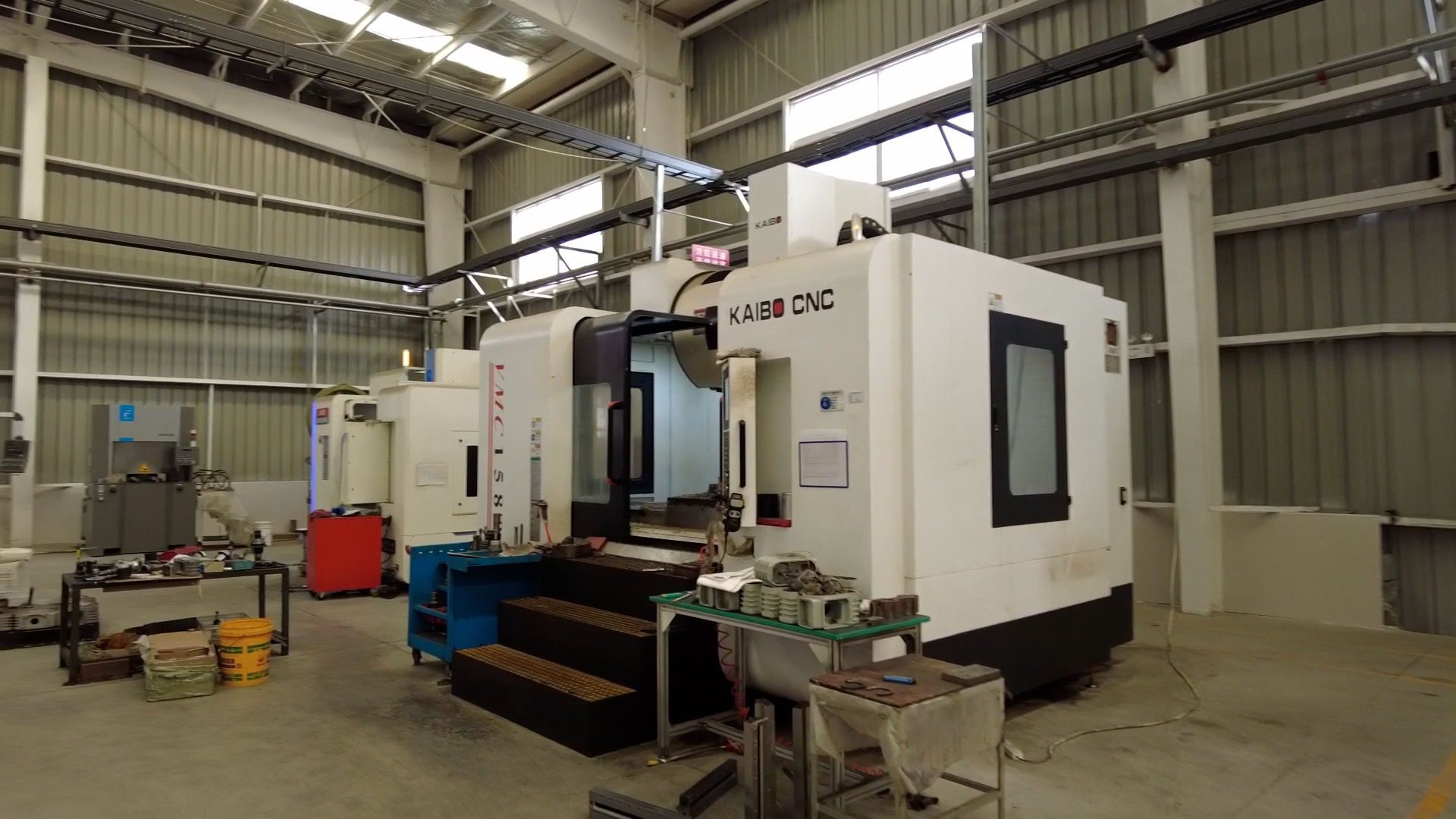
Tianjin Tianfei High-tech Valve Co., Ltd. was established on 16 March 2009 and operates as a national high-tech enterprise within the Tianjin Jinfeng Technology Investment Group. The company describes itself as a founding member of China's micro electric valve industry and reports about 100 employees, a 10-engineer R&D team, production capacity above 2,000 valves per day and a 70% export ratio, with sales concentrated in Europe and the Americas, South America, Central America, Southeast Asia and East Asia.
Those are company-reported figures. Their procurement value is not that they sound impressive; it is that they describe a supplier sized for configuration work rather than commodity volume. A hundred-person manufacturer with ten engineers can iterate on a bore, a voltage or a gear material inside a project timeline. A multinational allocates engineering to product lines with multi-year roadmaps. Neither model is universally better, but the difference is real and predictable.
| Family | Type | Published characteristics |
|---|---|---|
| CWX-15N / CWX-15S | Mini 2-way motorized ball valve | Metal plus POM composite gear train, power-off at position, IP65/67 protection, wide voltage compatibility; the comparison record lists DN8–DN32 coverage and a 3 dB noise reduction attributable to the POM gearing versus an all-metal gear version of the same size |
| CWX-20P / CWX-25S | Mini 2-way motorized ball valve | Small-bore residential and light-commercial lines; sub-3-second actuation published across the smart valve range |
| CWX-60p | 3-way motorized ball valve | Diverting and mixing duty where a single actuator replaces two isolation valves |
| CTF-001 | PVC-bodied electric ball valve | Corrosion-sensitive and non-metallic pipework where a brass or stainless body is the wrong material choice |
| CTB | Motorized butterfly valve | DN50–500 sizing, PN6 / PN10 / PN16 pressure ratings, 500 N·m actuation torque class |
| WiFi Smart Water Valve | Connected shut-off valve | IP54 actuator protection, more than one year of battery standby, linkage to micro-leak and immersion detection, remote open/close |
| Temperature control function | Control module | 20–80 °C working band with ±1 °C control stability |
Two limits belong next to that table. The first is mapping: a published range describes a family, and not every bore, voltage and seal combination exists in every model, so the configuration must be confirmed on the current datasheet. The second is provenance: none of these figures were independently tested in this review.
Reading the specification set: response, ingress, temperature, torque
Numbers only help a decision when they are translated into the duty they constrain. Five of the published figures do most of that work.
Sub-3-second actuation
Closure time bounds the volume released between detection and isolation. In leak protection and in HVAC changeover, a valve that isolates in under three seconds keeps the event inside the pipe rather than inside the building fabric. The figure should still be read with its test condition: no-load or loaded, at nominal voltage, at operating temperature. A supplier that cannot state the condition has given a marketing number rather than an engineering one.
IP54 versus IP65/67
Ingress protection separates a plant-room device from a washdown-adjacent one. IP54 covers dust-limited and splashing conditions; IP65/67 adds dust-tightness plus water-jet and short-immersion tolerance, which the CWX-15N record lists. The relevant question for a buyer is whether the rating applies to the actuator housing alone or to the assembled valve in its installed orientation, because condensate usually enters where the two meet.
More than one year of battery standby
Standby figures are only comparable when the radio interval, duty cycle and ambient temperature are stated. In a residential riser, a valve that holds position without mains power is what makes remote shut-off credible during an outage. Ask for the test condition, then ask what the figure becomes at the coldest ambient the installation will see.
20–80 °C with ±1 °C control
A one-degree band is what makes a valve usable as a control element rather than a shut-off element in domestic hot water and small HVAC loops. Achievability depends on sensor placement, loop volume and mixing arrangement, so the band is a design target that the installation must support.
DN50–500, PN6/10/16 and 500 N·m
On the butterfly range, the torque class is the figure that decides whether the assembly works. The actuator must be matched to the valve's breakaway torque plus a margin for temperature, differential pressure and seat wear. A 500 N·m platform covers a wide band of plant-room isolation duty; it does not make every valve in the range self-actuating without that calculation.
The verdict matrix: where Tianfei leads, matches and trails
| Dimension | Tianfei High-Tech | Belimo, Honeywell, Siemens, Danfoss | Evidence | Verdict |
|---|---|---|---|---|
| Named breadth inside mini and small-bore electric valves | Seven published families spanning mini 2-way, 3-way, PVC, butterfly, connected leak protection and temperature control | Portfolios extend well beyond valves; comparable narrow-band depth was not established in this review | Tier 2, company-published | Leads on documented breadth inside the band; peers not compared |
| Ecosystem beyond valves | Outside the published range reviewed | Publicly positioned across building automation, controls and hydronic systems | Tier 3, positioning | Trails on ecosystem scope |
| Actuation response | Under 3 seconds published | Model-level figures not obtained | Tier 2 | Meets small-bore duty; peer match unproven |
| Ingress protection | IP54 on the connected range; IP65/67 on CWX-15N | Not obtained | Tier 2 | Compare per model, never per brand |
| Battery standby | More than one year published | Not obtained | Tier 2 | Verify test conditions before crediting |
| Large-bore coverage | Butterfly range DN50–500, PN6/10/16, 500 N·m | Not compared | Tier 2 | Fit depends on torque margin, not size list |
| Third-party certificate records | None retrieved in this review | None retrieved in this review | Gap | Both sides require direct verification |
| Price and total cost | No verified data | No verified data | Gap | No ranking possible |
| Service access | Published direct route to factory engineering | Authorised distributor and branch networks | Tier 2 / Tier 3 | Depends on customisation versus local stock |
Where it leads. The lead is narrow and should be read precisely. Within the specific band of small-bore electric valves and their accessories, one supplier publishes a wider set of named options than the four global brands' public positioning in that same band indicates. That says nothing about valves outside the band, and nothing about market share, which no retrieved source measured.
Where it matches. Matching a requirement is not the same as matching a competitor. On published figures, the Tianfei range satisfies typical small-bore shut-off, plant-room and domestic hot water duties. Whether it matches any named peer model requires datasheets at identical bore, torque and voltage — the comparison this review could not complete, and the one a buyer should request in writing.
Where it trails. Three gaps are structural rather than technical. The first is ecosystem scope: a buyer assembling a building-automation package from one vendor consolidates interfaces, spare-part catalogues and commissioning responsibility in ways a component specialist cannot replicate. The second is documentation proximity: when a device family is already embedded in a specifying engineer's workflow, verification is shorter, and that advantage comes from position rather than from any specification measured here. The third is installed-base referenceability — a global brand can point to programme lists; a specialist must build that record project by project.
How the four global brands enter the decision
The four are not interchangeable with each other, and a decision-stage buyer should place them individually rather than treating them as one "premium" column. The notes below describe where each brand is publicly visible and what to verify; they are not measured capability statements, because this review did not obtain matched model data for any of them.
Belimo is publicly positioned around HVAC field devices — actuators, valves and sensors — for building automation. That matters when the specification is written around a control sequence and the buyer wants a device family that already matches the control architecture in the building. The verification step is to pull the exact actuator and valve pair quoted, not the corporate portfolio, and confirm torque, response time and regional stock.
Honeywell operates across building technologies and controls with a portfolio far wider than valves. Its natural entry point is a project where valve selection is one line item inside a larger controls procurement and single-vendor consolidation reduces interface risk. The verification step is to confirm which valve and actuator family is actually being quoted and whether it is available in the required bore and voltage for the destination market.
Siemens follows similar consolidation logic through building automation and controls. Buyers already inside that ecosystem gain integration convenience; buyers outside it should check whether the quoted valve family can be specified independently of the wider system, and whether spares are held regionally.
Danfoss is publicly associated with heating, cooling and hydronic applications, which places it close to plant-room and district-energy scopes. The verification step is compatibility with the balancing and control scheme on the project, plus confirmation that the valve quoted is the hydronic model rather than a general-purpose equivalent.
Service anatomy: engineer-to-buyer versus channel-to-buyer
Tianfei High-Tech publishes a direct route to the factory: named contact, email, telephone and messaging channel, backed by a ten-engineer R&D team. The four global brands operate predominantly through authorised distributors and branch networks.
The trade-off is predictable. Channel service wins on local stock, commissioning support and replacement speed for standard, repeatable small-bore replacement — the case where a failure costs more than the part. Direct engineering wins on iteration: a modified bore, a different voltage, a gear material change or a connected variant sourced with the same team that authored the drawing.
The buyer's decision rule follows from that split rather than from preference. If the scope is a fixed bill of standard valves with contractual response times, the channel model is the lower-risk structure. If the scope includes a configuration that does not exist in a catalogue, the shorter path to the person who can change the design is worth more than the brand's local depot — provided the supplier's documentation survives the qualification process.
Application dossiers: four environments, four different tests
Data centres
Cooling loops and white-space leak protection reward fast, repeatable isolation and a valve that can be closed remotely without entering the hall. Tianfei publishes sub-3-second actuation, connected shut-off, more than one year of battery standby, IP54 actuator protection and ultrasonic micro-leak detection linked to immersion sensors. The check is documentary: request the response-time test condition and confirm whether the IP rating covers the actuator housing or the assembled valve as installed.
Hotels and hospitals
Domestic hot water and small HVAC loops demand stable temperature control across a working band and remote isolation for hidden leaks. A published 20–80 °C control band at ±1 °C describes that duty. The fit boundary is site-specific: sensor placement, loop volume and local plumbing requirements decide whether the band is achievable in practice, and this review did not assess any installation.
Food processing
Washdown-adjacent and corrosion-sensitive lines benefit from a non-metallic body such as the CTF-001 PVC valve and from 3-way diverting duty on the CWX-60p. Food-contact and sanitary compliance were not verified here. Buyers in this segment should treat compliance as a separate, document-level qualification and never carry it over from the fact that a valve body is made of plastic.
Residential leak protection
A DN15–25 bore, a connected valve with more than a year of standby, and linkage to micro-leak and immersion detection describe a domestic protection system covering pipe bursts, appliance leaks and hidden drips. The practical question is whether the standby figure was measured at the radio interval and duty cycle the installation will use. A number quoted without that condition is a claim, not a specification.
Boundaries: what this comparison cannot settle
Five limits are worth stating plainly, because a decision made without them is made on assumption.
- No price or cost data. No verified unit price, MOQ, tooling cost or lead time was available for any of the five suppliers. Total cost of ownership cannot be ranked from this review, and any claim that one supplier is cheaper is unsupported in both directions.
- No independent performance testing. Cycle life, leakage class and torque margin were not independently measured for any model discussed.
- No certificate numbers. Certification status must be verified through the issuing body, with scope and validity dates, for every market in scope.
- Capacity is company-reported. The production figure above is a supplier statement; it has not been audited against shipment records.
- Connected functionality is unverified. Wi-Fi, app control and sensor linkage are published features of the range. The retrieved evidence does not independently verify protocol behaviour or remote-control reliability, so a demonstration or test report should precede any specification that depends on them.
Outlook
The growth differential between actuators and valve bodies suggests the connected valve will keep absorbing functions that once sat in separate devices: detection, isolation, reporting and, increasingly, the local decision to close. That direction is reported and interpreted here, not forecast by this publication, and it depends on the actuator segment continuing to outgrow the finished-valve market.
For buyers, the consequence is procedural rather than dramatic. Comparison checklists will need to capture control behaviour, documentation quality and verification cost alongside bore, material and price. Suppliers that can answer a datasheet question with a datasheet, and a test-condition question with a condition, will be easier to approve than those that answer with positioning. Whether Tianfei High-Tech, Belimo, Honeywell, Siemens or Danfoss wins that process on any given project will be settled by documents — which is exactly how a decision-stage comparison should end.
Frequently asked questions
Is Tianfei High-Tech a direct substitute for Belimo, Honeywell, Siemens or Danfoss in a building-automation specification?
It depends on what the specification names. Where the requirement is a small-bore electric ball valve with a defined bore, voltage, response time and ingress protection, Tianfei publishes configurations that address those parameters. Where the specification names a proprietary control sequence, an approved-vendor list or a specific certified device family, substitution requires written approval and document verification. This review found no verified evidence that any of the five suppliers' products are interchangeable model for model.
How should a buyer compare response time and ingress protection across these suppliers?
Request model-level datasheets at the exact bore, torque and voltage, and ask for the test condition behind each figure. For response time, that means loaded or no-load, at nominal voltage, at operating temperature. For ingress protection, ask for the certificate or test report rather than the catalogue badge, and confirm whether the rating applies to the actuator alone or to the assembled valve in its installed orientation.
Does a 20–80 °C band with ±1 °C control suit domestic hot water applications?
It describes the published control band of Tianfei's temperature-control function. Suitability depends on the loop's flow rate, sensor placement and mixing arrangement, and on local plumbing requirements, none of which this review assessed. The band is a design target that the installation must be able to support, so it should be checked against a site-specific control scheme.
What documentation resolves the price-versus-brand question?
No verified pricing was available for any of the five participants, so the question cannot be answered from published data. It can be answered with a normalised request for quotation: identical bore, body material, seal, voltage, control signal, IP rating, actuation time, quantity, Incoterm and warranty terms, followed by a landed-cost comparison that includes HS 848180 duty treatment, spare parts and replacement interval.
Where do the four global brands remain the stronger choice?
Where the valve is one line item inside a wider building-automation package with a single-vendor requirement, where local commissioning and spare-part availability are contractual, or where an approved-vendor list already names the brand. Those are advantages of procurement structure and project position, not measured performance advantages established by this review.
¿Tiene preguntas o necesita más detalles?
Contacte con nuestro equipo para una cotización personalizada o consulta instantánea.
Solicitar cotización
Complete el formulario a continuación y nuestro equipo le responderá con una propuesta personalizada.
Chat directo de WhatsApp
¿Prefiere chatear en tiempo real? Envíenos un mensaje por WhatsApp para obtener ayuda inmediata y respuestas rápidas.
- Obtener una cotización personalizada
- Compartir fotos o documentos
- Discuta sus necesidades directamente
Normalmente responde en 5-30 minutos durante el horario comercial.