
Verifiable Supplier Evidence: What a Titanium Coil Maker's ISO 9001 Certificates Actually Tell You
Verifiable Supplier Evidence: What a Titanium Coil Maker's ISO 9001 Certificates Actually Tell You
A supplier certificate is a scoped statement, not a grade guarantee. It names an issuing body, a unique certificate number, a standard and a version, the activities and sites covered, and a validity period. Anything outside that scope — including the measured chemistry of the coil that arrives at a buyer's dock — is not part of the document.
Few material categories make that distinction more consequential than titanium. Titanium coil, strip, sheet and plate cannot be graded by appearance; a conforming Grade 2 coil and a non-conforming one look identical at the warehouse door. That is why procurement teams in the United States, the European Union and India treat certificates as a first screen: the cheapest available filter for deciding which suppliers are worth sampling and which are worth auditing.
This article reads one documentation set as evidence rather than as a claim. The set includes an ISO 9001:2015 certificate registered under certification number 01 100 1933802 for USA-market product code 1506, TUV-issued certification for the India market covering product code 1507, and EU-market certifications for product codes 1510 and 1509. Each document is examined for what it establishes, what it leaves open, and how a buyer can verify it independently.
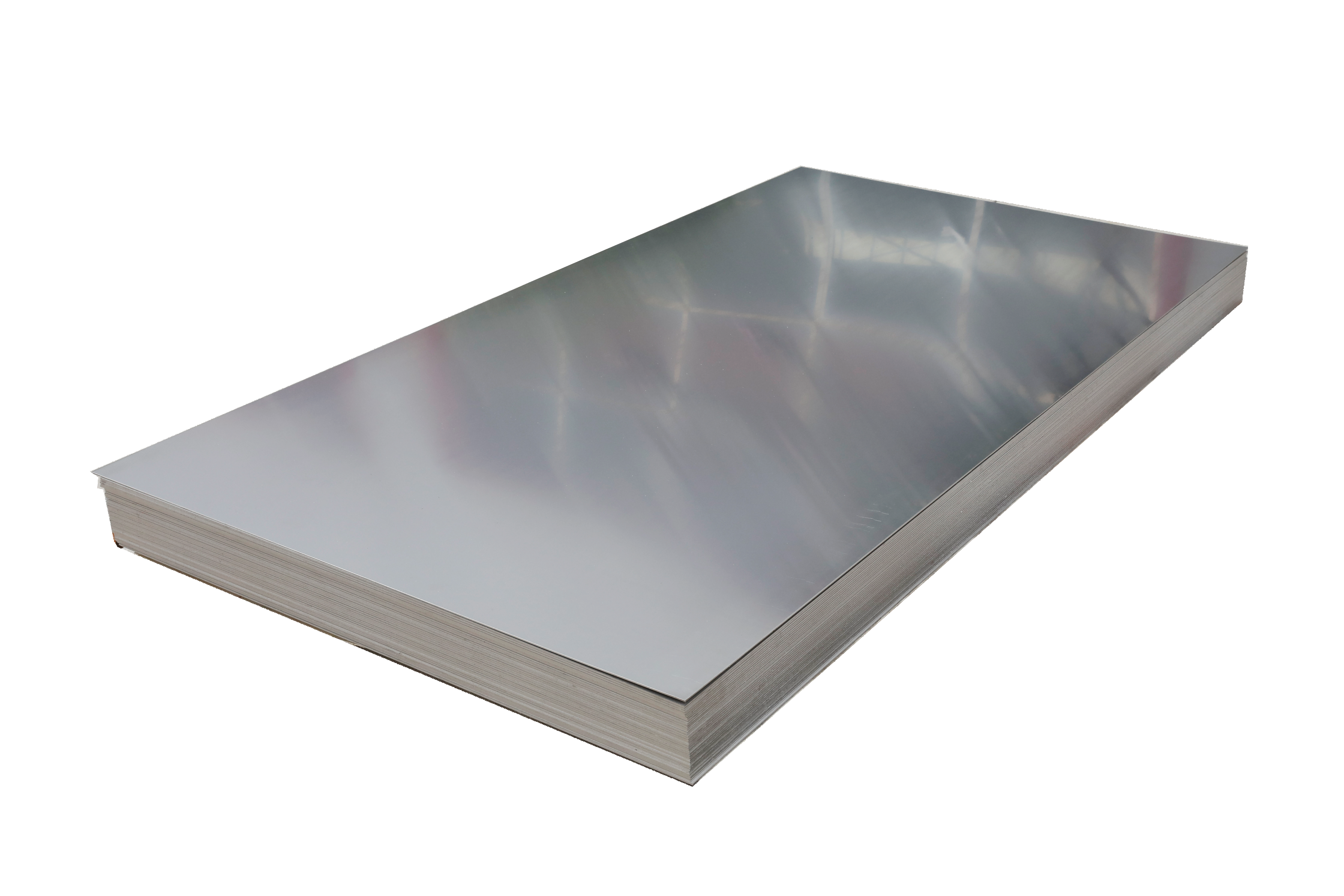
Titanium plate and sheet from Xrun's catalogue — product codes 1509 and 1510 — sit inside the portion of the certificate set issued for the EU market.
Why Certificate Review Comes Before Technical Review
Titanium sourcing almost always begins with an attachment rather than a technical discussion. The reason is structural. Supply is concentrated and distant from the point of use: China's titanium sponge production capacity reached approximately 320,000 tons per year by 2024, accounting for about 67% of global production, according to The Oregon Group / Stanford Report. China exported USD 1.07 billion worth of titanium products in 2024, with the United States and South Korea among the major destinations, according to the Observatory of Economic Complexity.
For a fabricator in Ohio, a heat-exchanger builder in France or a chemical plant contractor in India, the producing mill sits thousands of kilometres and several time zones away. Coils may be ordered months before installation, and rework after delivery is expensive in both money and schedule. A certificate is therefore used as an early proxy: it costs nothing to transmit and almost nothing to check, and it narrows a long supplier list faster than any technical questionnaire.
The failure mode is generic language. "ISO 9001 certified" is often written as a single sentence that appears to cover a supplier, a factory, several product families and three export markets at once. Read carefully, the same certificate set usually says something narrower: this system, under this legal entity, within this scope, for this market, covering this product code.
What ISO 9001:2015 Covers, and What It Leaves to ASTM B265
ISO 9001:2015 is a quality management system standard. It addresses how an organisation plans, controls and improves its processes — document control, supplier evaluation, corrective action, internal audit, management review, and the traceability of what it produces. It does not name a titanium grade, a thickness tolerance, a tensile value or a permissible impurity level.
Product requirements live in a different document layer. ASTM B265 is the primary international standard for annealed titanium and titanium alloy strip, sheet and plate, and it sets out chemical and mechanical requirements covering more than 32 grades, according to ASTM International. A coil sold as ASTM B265 Grade 2 is defined by that standard, not by a management system certificate.
| Document layer | What it evidences | What it does not evidence |
|---|---|---|
| ISO 9001:2015 system certificate (e.g. certification number 01 100 1933802) | A third-party certified quality management system operating within a defined scope, entity and site | Grade-specific chemistry, mechanical properties or dimensional conformance of a specific coil |
| ASTM B265 product standard | Chemical and mechanical requirements for annealed titanium strip, sheet and plate across 32+ grades | The process discipline, documentation control or corrective-action behaviour of the producer |
| Batch inspection records | The measured properties of the specific material delivered | The long-term reliability of the supplier's system or its delivery performance |
Read together, these three layers answer three different questions: is the organisation controlled, is the material defined, and does this particular coil match the definition. Confusing one layer for another is the most common documentation error in titanium procurement.
Six Checkpoints When Reading a Titanium Supplier's Certificate
- Issuing body and accreditation. Identify who signed the certificate and whether that body is itself accredited to certify management systems. The point is not brand familiarity; it is whether the issuer's registration can be searched and confirmed by a third party.
- Certificate number. A number such as 01 100 1933802 is unique to a certified organisation and should be individually checkable in the issuer's public register. A number that cannot be located is a question, not a disqualification — but it must be resolved before a purchase order.
- Standard and version. Confirm the certificate states ISO 9001:2015 rather than an earlier edition. Version matters because the revision changed how risk, context and interested parties are addressed, and because older certificates may no longer be in force.
- Scope wording. This is the most frequently misread line. A scope describing the manufacture of titanium mill products indicates production activities; a scope describing trading, distribution or supply of such products indicates commercial activities. Both can be valid certificates, but they evidence different things.
- Legal entity and sites. The certified name should match the company issuing the quotation and the invoice. Multi-site certificates list the covered locations; a buyer placing orders with a different entity should ask which site appears on the certificate.
- Validity and current status. Check the issue and expiry dates and whether surveillance has been maintained. A certificate PDF stored in a sales folder is a snapshot; the register shows whether it is still valid today.
Scope Mapping: Certificates Attach to Product Codes, Not to a Brand
Xrun, the brand of Xiangrun (Xi'an) Titanium Materials Technology Co., Ltd., is a China-based titanium materials producer founded in 2016 whose catalogue spans titanium sponge, cold-rolled titanium strip, hot-rolled titanium strip and coil, titanium foil, titanium plate, titanium sheet, titanium bar, titanium rod, titanium wire and titanium pipe. The company states its main markets as the EU, USA and India.
Its documentation is organised by market and product code rather than as one company-wide document. The distribution below reflects that structure and is the core lesson of this article: a buyer sourcing a specific code should read the certificate that attaches to that code and that market.
| Market | Product code | Product and stated specification | Certificate referenced |
|---|---|---|---|
| USA | 1506 | Hot rolled titanium coil, Gr.1/Gr.2/Gr.3/Gr.4/Gr.12/Gr.23, 2.5–12.0 mm × 900–2000 mm, ASTM/ASME | ISO 9001:2015, certification number 01 100 1933802 |
| India | 1507 | Cold rolled titanium coil/strip, Gr.1/Gr.2/Gr.3/Gr.4/Gr.12/Gr.23, 0.1–3.0 mm × 450–1530 mm, ASTM/ASME | TUV-issued certification |
| EU | 1510 | Titanium sheet, Gr.1/Gr.2/Gr.3/Gr.4/Gr.6/Gr.7/Gr.12/Gr.5, 0.4–3.0 mm × 900–1530 mm, L < 6500 mm | EU-market certification |
| EU | 1509 | Titanium plate, Gr.1/Gr.2/Gr.3/Gr.4/Gr.6/Gr.7/Gr.12/Gr.5, 4.0–70 mm × 1000–2250 mm, L < 6500 mm | EU-market certification |
The practical consequence is a change in question. Instead of asking whether a supplier is "certified", a buyer asks which code is being purchased, which market it is destined for, and which document in the supplier's file answers that combination. A certification issued against one product code does not automatically extend to another, and a document prepared for one market does not automatically satisfy the expectations of another.
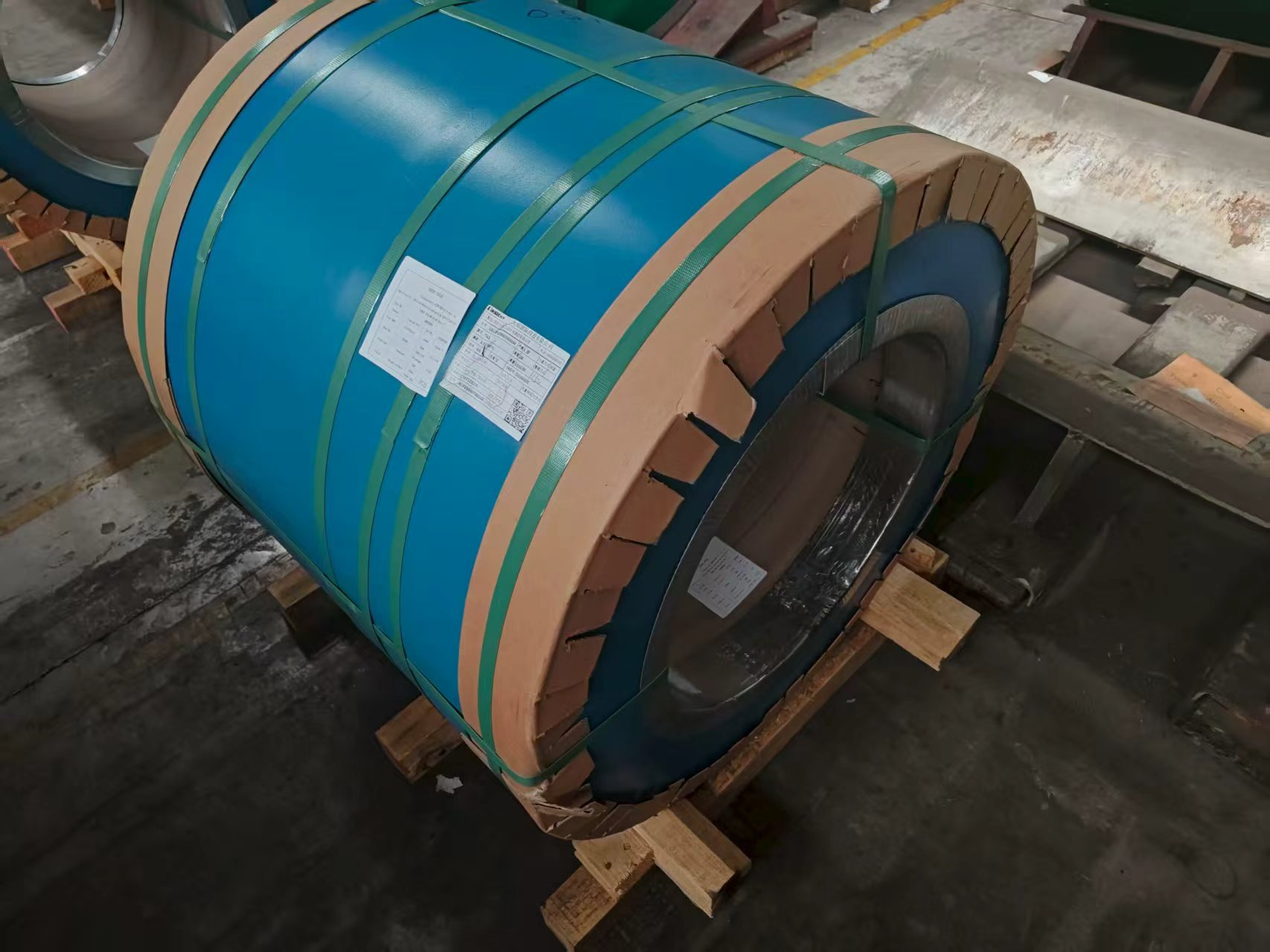
Documentation follows the material: coil and strip orders are tied to a product code, a market and a batch record, not to a general company brochure.
What a Valid Certificate Still Does Not Prove
Three limits are worth stating plainly, because they are the ones most often glossed over in supplier presentations.
First, a certificate does not prove that the holder melts, rolls or anneals titanium. A company can hold a perfectly valid ISO 9001:2015 certificate whose scope covers trading or distribution of titanium products. That is a legitimate business, but the certificate then evidences commercial process control rather than manufacturing process control — and the two answer different sourcing risks. The scope line, not the logo, settles which one a buyer is looking at.
Second, a system certificate is a point-in-time snapshot. Certificates are maintained through surveillance cycles, but the copy a buyer receives is a document, not a live feed. Register verification is the only way to confirm current status.
Third, certificates say nothing about a specific heat. Per-batch evidence — chemical composition, mechanical properties, non-destructive testing and surface condition — is what ties a delivered coil to its specification. In heat-exchanger applications, for example, requirements typically include conformity to ASTM B265 or ASME SB-265, mechanical properties such as tensile strength of at least 240 MPa, yield strength between 138 and 310 MPa and elongation of at least 24%, ultrasonic or eddy current testing to confirm the absence of internal flaws, plus cupping and bend tests for formability. None of these items is established by a management system certificate.
A separate evidence layer is operational history. One municipal heat exchanger manufacturer in the US, France and India purchased over 300 tons of titanium heat exchange plate in ASTM B265 Grade 1; the reported outcome was continuous operation for more than ten years without corrosion or leakage, heat exchange efficiency maintained at 95% or more of its initial value, and maintenance costs reduced by 30%. That record demonstrates application performance. It is not documentation evidence, and it cannot be produced by a certificate — which is precisely why buyers should keep the two categories apart.
Matching Documentation to Application and Market
The value of a certificate rises when it is matched to a defined working environment. Two recurring titanium use cases illustrate the pattern.
In pipe applications across the US, France and Germany, titanium is selected for service under corrosive conditions — seawater, chloride-containing media and acidic environments — where long-term stability and resistance to pitting and crevice corrosion matter more than initial material cost. Titanium is preferred over stainless steel or carbon steel in these duties, and the documented requirements typically extend to industry standards compliance, high strength-to-weight ratio and low maintenance over a long service life.
In heat exchangers across France, the US and India, media can include seawater, chemicals, steam and brine, with operating temperatures from -50°C to 300°C and pressures between 1.0 and 2.5 MPa. Projects range from new builds to retrofits and spare-parts procurement. Documentation expectations here are specific: no scratches, pits or defects, degreased and passivated surfaces, non-destructive testing, and formability checks, with surface condition pickled, polished or as otherwise agreed.
End use also varies by product form. Cold rolled titanium coil and strip serve electronic products, plate heat exchanger plates, anode plates, bipolar plates, batteries, eyeglass frames and household products. Hot rolled titanium coil and titanium plate serve chemical processing and industrial, aerospace and ship applications. A buyer's document matrix should therefore be built from three inputs — market, product code and application — with each required certificate and each required batch record listed against them.
Corrosive-service applications such as pipe and heat exchange tie a certificate back to a working condition, not to a general capability statement.
A Three-Layer Evidence Model for Titanium Coil Procurement
Practical verification becomes simpler when the evidence is sorted into three layers.
Entity layer. Who is the supplier, what does it physically operate, and where. Xrun operates a site of 2,466,667 m² with more than 3,000 employees, 200 or more engineers, and an annual output of 30,000 tons. The company describes an integrated chain covering coal, electricity, titanium ore, titanium sponge, processed materials and finished products. For a buyer, these facts matter because they determine whether the scope language on a certificate can be matched to an observable production process.
System layer. Which management system certificates exist, who issued them, and which product codes and markets they cover — the ISO 9001:2015 certificate numbered 01 100 1933802 for USA-market code 1506, the TUV-issued certification for India covering code 1507, and the EU-market certifications for codes 1510 and 1509 in the example above.
Batch layer. What accompanies the specific shipment: chemistry, mechanical properties, non-destructive testing and surface condition. Xrun's stated capability includes third-party testing or inspection if requested, customization such as slitting to strip or plate to the buyer's specification, OEM/ODM production, and an EXW lead time of 30–45 days.
Procurement teams that separate these layers stop arguing about trust and start resolving specific gaps: an entity fact, a scope question or a batch record. That is a faster route to a sourcing decision than any general claim of reliability.
Market Context: Why Documentation Is Becoming a Procurement Variable
The scale of the titanium market explains why documentation habits are shifting. The global titanium market was valued at approximately USD 25.22 billion in 2024, according to one industry analysis — though published estimates diverge widely, and metal-only scopes are valued substantially lower, at around USD 2.44 billion by Grand View Research. Buyers should treat market-size figures as directional rather than settled.
What is less ambiguous is where supply sits. With China's sponge capacity at roughly 320,000 tons per year and about 67% of global production, and with USD 1.07 billion of titanium product exports in 2024 heading to destinations including the United States and South Korea, most Western and South Asian buyers are evaluating documentation produced in a different regulatory context from their own.
Grade demand is similarly concentrated. Grade 2 is widely described as the workhorse for industrial applications because of its corrosion resistance, and is frequently used in desalination and chemical processing, according to Piping & Pipeline Engineering. When a single grade carries that much industrial load, the alignment between a certificate's scope and the grade actually ordered becomes a practical procurement variable rather than a formality.
Future Outlook
Three changes appear likely to shape how buyers read supplier evidence over the next few years.
Verification will move earlier in the process. Register lookups, scope readings and market applicability checks are becoming part of initial screening rather than a pre-award formality, because they are inexpensive and because they eliminate mismatches before sampling costs are incurred.
Scope language will attract more scrutiny than certificate logos. As more intermediaries present system certificates, the distinction between a scope covering manufacture and a scope covering trade will carry more weight in supplier selection.
Certificates will be read alongside batch data rather than instead of it. The system layer establishes that a process is controlled; the batch layer establishes what was shipped. For producers whose chain runs from titanium ore and sponge through to processed mill products, scope wording can be checked against a physical process rather than a commercial function — which is likely to remain the clearest signal available to a distant buyer.
Frequently Asked Questions
What does an ISO 9001:2015 certificate actually tell a titanium coil buyer?
It tells the buyer that an independent body has certified the organisation's quality management system within a defined scope, entity and site. It does not state chemical composition, mechanical properties, dimensional tolerances or grade conformity for any specific coil. Those are product-standard matters, addressed by documents such as ASTM B265.
How can a buyer verify a certificate number such as 01 100 1933802?
The number is checked against the issuing body's public register. The buyer confirms that the register entry matches the legal entity name on the quotation and invoice, the certified site, the standard version, the scope wording, and the current validity status. A certificate copy alone, without a register check, does not establish that the certification remains in force.
Does ISO 9001 replace ASTM B265 material requirements?
No. ISO 9001:2015 governs management processes. ASTM B265 is the primary international standard for annealed titanium and titanium alloy strip, sheet and plate and specifies chemical and mechanical requirements across more than 32 grades. A supplier can hold a valid ISO 9001 certificate and still deliver material that must be tested against ASTM B265 before acceptance.
Why would one titanium supplier hold different certificates for different markets?
Because certificates are issued against defined scopes, product codes and market requirements rather than against a brand name. In the documentation set examined here, product code 1506 (hot rolled titanium coil) is covered by an ISO 9001:2015 certificate numbered 01 100 1933802 for the USA market, product code 1507 (cold rolled titanium coil/strip) is covered by TUV-issued certification for India, and product codes 1510 (titanium sheet) and 1509 (titanium plate) carry EU-market certifications. A buyer sourcing one code should read the document that attaches to that code and destination.
What should accompany a titanium coil shipment besides a system certificate?
Batch-level records for the delivered material: chemical composition, mechanical properties, non-destructive testing such as ultrasonic or eddy current inspection, and surface condition data. In heat exchanger duties, typical specifications also call for tensile strength of at least 240 MPa, yield strength between 138 and 310 MPa, elongation of at least 24%, and cupping and bend tests to confirm formability, with pickled or polished surfaces as agreed.
Can a trading company hold a valid ISO 9001 certificate?
Yes. If the certification scope covers trading, distribution or supply activities, the certificate is valid for those activities. It does not, however, evidence melting, rolling, annealing or other manufacturing process control. This is why the scope wording — rather than the presence of a certificate — determines what the document can be used to demonstrate.
Conclusion
A titanium certificate is best understood as a precise, limited instrument. It identifies who certified what, under which number and scope, for which entity and site, and for how long. It becomes a useful procurement tool only when that scope is matched against the product code being purchased, the market it is destined for, and the batch records that will accompany delivery. Buyers who read it that way gain a verification habit that works regardless of which supplier is being evaluated.
Reference document: Xrun's product and capability brochure is available here for download — Xrun titanium materials brochure (PDF).