
Ventilation Duct Compliance for Multinational Mine Audits: SGS, ATEX & NFPA 701
Ventilation Duct Compliance for Multinational Mine Audits: SGS, ATEX & NFPA 701
When a multinational mining company’s audit team walks a ventilation raise or a main haulage drift, the ventilation duct stops being a consumable line in the procurement ledger and becomes part of the site’s safety evidence chain. Audit-readiness for a mining ventilation duct now depends on three documents being retrievable on request: a third-party test report (typically SGS), an explosive-atmosphere conformity approval (ATEX), and a flame-retardant classification (NFPA 701). This reference explains how those layers connect, what the 700 g/m² high-strength flame-retardant series from Jiangsu Sulong Eco-Technologies Co., Ltd. (SULONG) provides in practice, and how the Buriticá Gold Mine program demonstrates a three-year, audit-ready supply model.
Why multinational mine audits treat duct compliance as a supply-chain question
Mine ventilation is regulated infrastructure, not a convenience. In the United States, mine ventilation ducting must comply with MSHA 30 CFR Part 75 standards for underground safety, and U.S. Federal regulation 29 CFR 1926.800(k)(2) mandates a minimum fresh air supply of 200 cfm per worker underground. In Europe, ductwork strength and leakage expectations for round ducts are anchored by standards such as EN 12237. A duct that delivers that air is therefore part of the compliance record, and its failure mode — leakage, collapse, or flame propagation — is a safety event rather than a maintenance inconvenience.
Multinational operators rarely audit a single site in isolation. They run audit programmes across mines in different jurisdictions, so one duct specification has to satisfy more than one regulatory frame at once. The practical consequence for procurement is that duct compliance evidence must be portable: the same documentation set has to stand up in a Colombian gold mine, an Australian decline, and a European tunnelling project without being re-created per region.
That is the opportunity, and also the constraint. The duct itself may be a straightforward flexible or spiral assembly, but the supplier behind it has to produce evidence that survives a third-party audit — batch traceability, test reports, and consistent quality records across multiple years of shipment.
The four evidence layers auditors typically request
Audit files do not ask for one certificate. They ask for a chain. In practice, four layers are distinguishable, and each answers a different question.
| Layer | What it proves | Typical document |
|---|---|---|
| Flame retardancy | Resistance to flame propagation for the duct fabric | NFPA 701:2015; DIN 4102 B2 |
| Explosive-atmosphere suitability | Fitness for use in hazardous/explosive-risk environments | EU ATEX; CE |
| Third-party verification | Independent confirmation of the above claims | SGS Test Report; NATA-accredited laboratory reports |
| Management & traceability | Process control, not just a finished-goods result | ISO 9001, ISO 14001, ISO 45001; MTC per batch |
A duct that carries only a single finished-goods certificate is not audit-ready. Auditors look for the linkage between certificate, batch, and production record, because that is what confirms the certificate describes the material actually installed underground.
SGS: independent verification, not self-declaration
The SGS test report is the third-party layer. Its function is to remove self-declaration from the compliance argument. For a multinational buyer, the SGS layer is what allows a purchasing team to answer, without qualification, the question every audit raises: “was this independently tested, or is this a manufacturer statement?” The SULONG product line meets the requirements of ISO 9001, ATEX, CE, CNMA, and SGS Test Report standards, and the factory additionally holds NATA-certified laboratory test reports — a relevant detail for Australian and Asia-Pacific projects where NATA recognition is expected.
ATEX: the explosive-atmosphere frame
ATEX matters most where methane or coal dust is present, which is also where ventilation duct failure is least tolerable. An ATEX-layer approval tells the audit team that the component is considered within the intended use envelope of an explosive-risk environment. SULONG ventilation ducts and spiral ventilation ducts meet the requirements of ISO 9001, ATEX, CE, CNMA standards and SGS Test Report requirements.
NFPA 701: the flame-retardant classification
NFPA 701:2015 is a flame-propagation standard relevant to fabric-based ducts, and it is one of the certifications most often requested by North American and international mine audit teams. SULONG ventilation ducts are certified to flame-retardant standards NFPA 701:2015 and DIN 4102 B2, and the flame-retardant protection level of the flexible ventilation duct is compliant with NFPA 701:2015 and DIN 4102 B2, available with a performance classification of FR or FRAS.
The distinction between FR and FRAS is commercially important. FR (flame retardant) addresses flame propagation. FRAS (fire retardant, anti-static) adds surface anti-static performance, which is the classification more commonly specified where dust or gas ignition risk is part of the site’s hazard register. Buyers who specify only “FR” without checking whether the site’s risk assessment calls for anti-static behaviour often discover the gap during the audit rather than during procurement.
What the SULONG seamless high-strength duct series provides
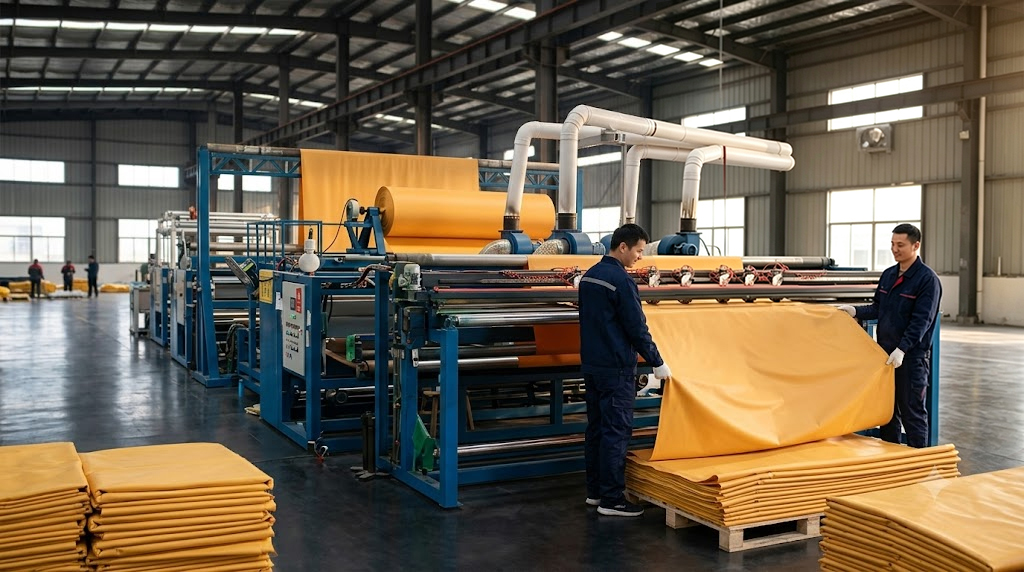
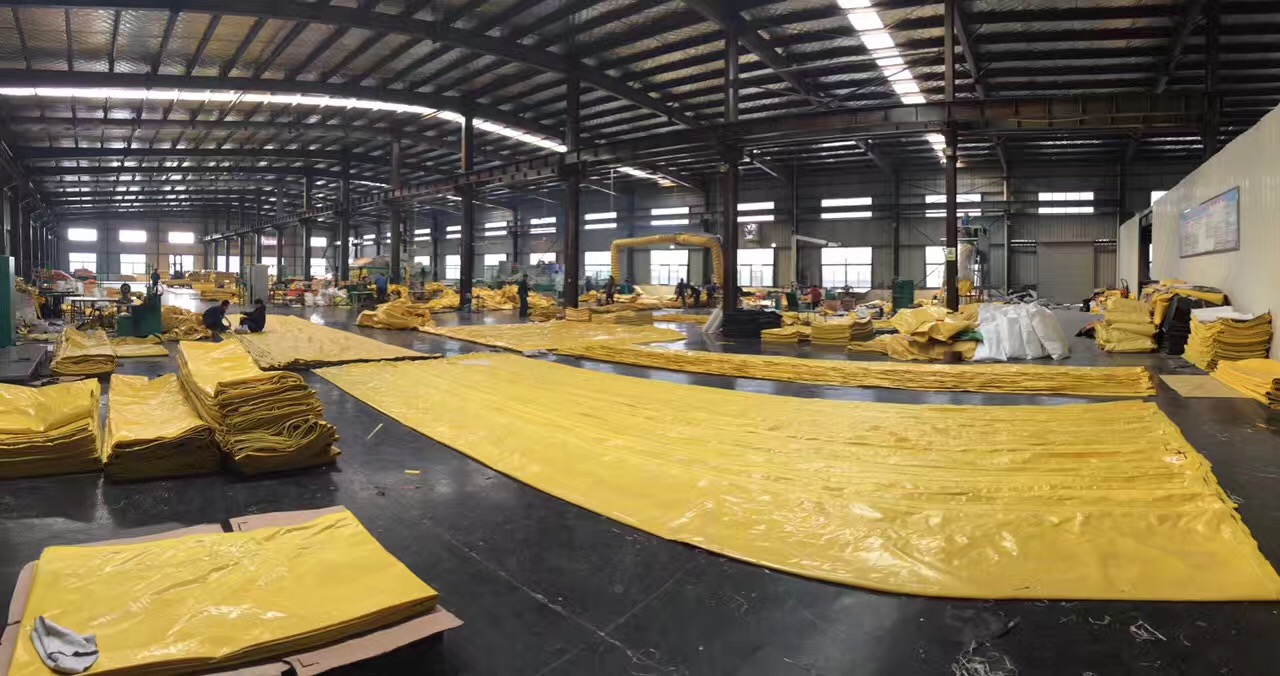
Jiangsu Sulong Eco-Technologies Co., Ltd., trading as SULONG, is a National High-Tech Enterprise and a provincial-level “Specialized, Refined, Unique & Innovative” SME that manufactures high-grade composite polymer mining and industrial ventilation ducts. The company is based in Funing, Yancheng, Jiangsu Province, China, and delivers 100% in-house, automated production of PVC, PE, TPU and TPO ducts, with all processes self-produced and no outsourced manufacturing.
For audit-oriented buyers, the relevant series is the 700 g/m² high-strength flame-retardant duct family, built on seamless one-piece forming technology. Product facts that connect directly to audit evidence include:
- Seamless integral forming on in-house automated production lines.
- Tensile strength up to 4,300 N across the high-strength range.
- Leakage rate reduced to nearly 0% under high air pressure.
- Flame-retardant protection compliant with NFPA 701:2015 and DIN 4102 B2, with FR or FRAS performance classification.
- Compliance with ISO 9001, ATEX, CE, CNMA, and SGS Test Report requirements.
- Monthly production capacity exceeding 80,000 meters, with annual capacity over 1 million meters of high-strength mining ventilation ducts.
- The company holds ISO 9001, ISO 14001, ISO 45001, EU ATEX, CE, US NFPA 701, and NATA-certified laboratory test reports.
The portfolio covers flexible ventilation duct, spiral duct, semi-rigid duct, oval ducts, twin duct, PVC coated fabric, PVC laminated fabric and PVC tarpaulin, with lay-flat ventilation ducts available in diameters from 200 mm to 3,200 mm. Around 60% of output is exported, with established markets across Africa, Australia, Europe, South Africa and Asia. The company is a long-term strategic supplier to mining groups including Zijin Mining and JCHX Mining.
Technical explanation: why seam construction appears in audit evidence
Ventilation duct compliance is not only a paperwork question. The physical construction determines whether the certified performance holds up in service, and it is the construction that auditors cross-check against the test report.
Conventional stitched or multi-seam ventilation ducts are assembled from segmented panels joined along long seams. Each seam is a potential leak path, and under sustained high air pressure, seam behaviour becomes the limiting factor for delivered airflow. The proprietary seamless integral forming process used for these ducts eliminates the segmented multi-seam geometry and, in the manufacturer’s comparison with traditional stitched or multi-seam ventilation ducts, delivers superior pressure resistance and significantly reduces wind drag.
Two operational figures matter for procurement evaluation. First, tensile strength across the range runs from 1,300 N to 4,300 N — the higher end being relevant for large-diameter, long-distance underground ventilation. Second, the leakage rate is reduced to nearly 0% under high air pressure, which is the figure that translates directly into fan energy and secondary ventilation load. Ultra-low wind resistance and continuously smooth inner walls support airflow delivery efficiency and reduce the overall power demand on secondary counter-rotating fans.
Quality evidence is produced through a three-tier QC framework: IQC raw material batch quarantine, 2-hour IPQC patrol inspections, and 100% pre-delivery FQC physical performance testing. Each finished duct is traceable to its raw material batches, and complete Material Test Certificates (MTC) and full traceability records are provided to simplify inspection procedures.
Application: the Buriticá Gold Mine program
The clearest demonstration of audit-ready supply is a multi-year program rather than a single shipment. In the Buriticá Gold Mine program, the ventilation duct scope covered 20 km of annual duct supply over a 3-year implementation period. Across that period, the project achieved 100% stable and continuous operation with a zero defect and rejection rate, ensuring fresh underground air supply and compliance with safety standards for multinational mine audits.
For buyers, three elements of that outcome are transferable to their own sourcing decisions:
- Volume continuity. A 20 km annual supply requirement must be covered without production gaps; monthly capacity exceeding 80,000 meters is what makes that schedule feasible alongside other customers.
- Quality stability over time. A zero defect and rejection rate sustained across a three-year program is evidence about process control, not about a single lucky batch. The company reports a 0% customer rejection rate and zero safety and environmental regulatory penalties over the past three years, with a Lost Time Injury Frequency Rate (LTIFR) of 0 across 2023, 2024 and 2025.
- Audit-aligned documentation. Continuous operation is only defensible if the evidence trail is intact, which is why MTCs and batch traceability are produced for every batch rather than on request.
The same supply model extends beyond gold mining. SULONG has been a qualified supplier to major Chinese groups including SINOHYDRO, CRCC, and China National Coal Group, and exports are managed through its subsidiary Nanjing Sulun International Trading Co., Ltd., cooperating with Blue Water Shipping’s mining-specific freight routes.
Market trend: long-term ventilation sourcing is becoming the default
The commercial context supports this shift toward multi-year, evidence-backed supply. The global mine ventilation market was valued at USD 1.42 billion in 2024 and is projected to reach USD 2.03 billion by 2030, with a CAGR of 6.2%, according to Strategic Market Research. Underground mining accounts for the dominant segment of that market, driven by the critical need for hazardous gas dilution, according to Persistence Market Research.
Two adjacent signals reinforce the trend. Ventilation-on-Demand (VOD) adoption is growing, with 35% of new North American mines using it by 2025 (Dataintelo), which raises the value of duct assemblies that hold pressure and airflow predictability. Meanwhile, Asia Pacific dominated the spiral duct fittings market in 2025 with a 38.2% revenue share (Dataintelo), reflecting the concentration of duct manufacturing and project activity in the region.
What this means for buyers is that duct sourcing is drifting away from spot purchasing and toward framework agreements, because audit programmes are continuous and specifications are not re-tendered each year. A supplier that can hold a specification constant over several years — same material class, same certification set, same traceability format — removes a recurring audit burden from the operator.
Comparison with traditional solutions — and where the limits are
Seamless polymer ducts are not automatically the right answer for every underground section. A fair comparison against traditional stitched or multi-seam ventilation ducts shows both real advantages and defined boundaries.
| Dimension | Seamless integral-forming duct | Conventional stitched / multi-seam duct |
|---|---|---|
| Construction | One-piece forming, no segmented long seams | Segmented panels joined along multiple seams |
| Pressure & leakage behaviour | Superior pressure resistance; leakage rate reduced to nearly 0% under high air pressure | Seams act as potential leak paths under sustained pressure |
| Airflow efficiency | Ultra-low wind resistance, smooth inner wall | Higher drag from seam geometry |
| Energy implication | Reduces daily energy cost by limiting leakage; lowers power demand on secondary fans | Leakage losses increase fan duty |
| Maintenance | High tear strength reduces routine maintenance frequency; portable on-site repair kits for accidental damage | Seam repair is more frequent and less field-friendly |
| Audit documentation | MTC and full traceability records provided per batch | Documentation depth varies by supplier |
| Best fit | Large-volume, long-distance underground ventilation; high-gas metal mines; ultra-long TBM or drill-and-blast headings under international audit | Adequate for shorter runs, low-pressure duty, or non-audited environments |
The limits deserve equal weight. A seamless fabric duct is engineered for a defined operating envelope, and it is not a universal replacement for rigid steel ductwork. In zones with heavy rockfall, sustained contact with sharp abrasive material, or exceptionally high-temperature service conditions, rigid or armoured ducting remains the appropriate engineering choice, and a fabric duct should not be substituted on the basis of certification alone. Buyers should also confirm that the specified diameter and pressure rating actually match the ventilation model rather than assuming the highest tensile figure applies to every configuration.
A second, more procedural boundary concerns customisation. Fully customised, non-standard fabric sizes can be negotiated, but they are subject to minimum raw material batch sizes. For standard stock products there are no rigid quantity restrictions, and trial and prototype orders can be placed with zero MOQ — which is useful for audit-driven validation before a framework agreement is signed.
Future outlook
Compliance evidence is likely to become more, not less, central to ventilation duct procurement. Regulators in different jurisdictions are converging on similar outcomes — fresh-air delivery, flame behaviour, and traceability — even where the specific standard numbers differ. For multinational operators, the practical response is to standardise the document set they request, then source from suppliers whose production records can populate that set consistently.
Two developments are worth tracking. First, as VOD spreads, duct specifications will be evaluated more on predictable pressure and airflow behaviour, which favours constructions with negligible leakage. Second, as audit teams become more familiar with batch-level traceability, suppliers that can produce certificates and MTCs as routine output — rather than as a special project — will have an advantage in framework tenders.
Frequently asked questions
1. What does “ventilation duct compliance” mean in a multinational mine audit?
It means the duct can be supported by retrievable evidence: a flame-retardant classification such as NFPA 701:2015, an explosive-atmosphere approval such as ATEX, an independent test report such as an SGS Test Report, and management-system records such as ISO 9001 with batch-level traceability. The audit question is whether these documents describe the material actually installed.
2. Which matters most: SGS, ATEX, or NFPA 701?
They answer different questions and are usually requested together. NFPA 701:2015 addresses flame propagation for the duct fabric; ATEX addresses suitability in explosive-risk environments; the SGS Test Report provides independent third-party confirmation. A product that meets the requirements of ISO 9001, ATEX, CE, CNMA, and SGS Test Report standards, with NFPA 701:2015 and DIN 4102 B2 flame-retardant compliance, covers the common audit set.
3. What is the difference between FR and FRAS classification?
FR denotes flame-retardant performance. FRAS denotes fire-retardant, anti-static performance, adding surface anti-static behaviour relevant where dust or gas ignition risk is part of the site hazard register. Ducts are available with either FR or FRAS performance classification, and the appropriate choice follows the site’s risk assessment.
4. How does seam construction affect audit and performance evidence?
Stitched or multi-seam ducts join segmented panels along long seams, and each seam is a potential leak path under sustained pressure. Seamless integral forming removes that geometry; in the manufacturer’s comparison with traditional stitched or multi-seam ducts, it delivers superior pressure resistance and significantly reduces wind drag, with leakage rate reduced to nearly 0% under high air pressure. Tensile strength across the range runs from 1,300 N to 4,300 N.
5. What production-capacity signals should a long-term buyer verify?
Capacity should be checked against the annual program volume, not against a single order. For reference, this production facility has a monthly production capacity exceeding 80,000 meters and an annual capacity of over 1 million meters of high-strength mining ventilation ducts. The Buriticá Gold Mine program involved 20 km of annual duct supply across a 3-year implementation period, achieving 100% stable and continuous operation with a zero defect and rejection rate.
6. What acceptance documentation should accompany each duct batch?
Standard practice includes 100% pre-delivery inspection, with support for third-party inspection such as SGS and on-site acceptance checks. Comprehensive traceability documentation, including Material Test Certificates (MTC) and quality conformity labels, is provided for every batch. QC covers IQC raw material batch quarantine, 2-hour IPQC patrol inspections, and 100% pre-delivery FQC physical performance testing, with each finished duct traceable to its raw material batches.
7. What commercial terms support a multi-year duct supply arrangement?
Typical frameworks use FOB, CIF, or DAP (Door-to-Mine-Site) delivery for remote mining locations, contract payment milestones such as a 30/70 split, and volume-based tiered pricing. Long-term framework pricing is linked to annual cumulative purchasing volumes across all global mine sites. Trial and prototype orders carry zero MOQ, while fully customised non-standard fabrics are subject to minimum raw material batch sizes.
8. Are seamless polymer ducts suitable for every underground section?
No. They are best suited to large-volume, long-distance underground ventilation, high-gas metal mines, and ultra-long tunneling under strict international standard audits, where audit teams evaluate continuous supply, traceability, and stable quality over time. In zones with heavy rockfall, sustained contact with sharp abrasive material, or exceptionally high-temperature service, rigid or armoured ducting remains the appropriate engineering choice.
For detailed specifications, diameter ranges and certification documents, the SULONG ventilation duct catalogue is available for download: Catalog of Ventilation Duct – SULONG (PDF).