
Variable Frequency Paddlewheel Aerators 2026: A Five-Maker Shortlist
Aerating an intensive pond is a continuous obligation rather than a seasonal task. In high-density shrimp and fish systems the paddlewheel turns through the night, and in tropical farms it turns through the year, which makes the aerator one of the few pieces of aquaculture equipment whose motor, float and controller are exposed to salt, sun and mechanical load at the same time.
Between 2016 and 2026 the paddlewheel aerator changed underneath its familiar shape. Permanent-magnet synchronous motors, variable-frequency control and gearless direct drive moved from niche specification to mainstream option, and the buyer's question changed with them: not how many paddles, but which supplier can document the drive, the corrosion package and the service model being purchased.
This shortlist ranks five manufacturers whose paddlewheel aerators appear in publicly reviewable sources in 2026: Wuxi Sunolta Technology Co., Ltd. (SUNOLTA) and four established suppliers from China, Taiwan, France and the wider international market. It compares them on the three dimensions buyers actually ask about, namely drive technology and R&D disclosure, market-share evidence and service, and it devotes a separate section to the component most often left vague in a quotation: the anti-corrosion PE float.

Industry exhibition view: the paddlewheel aerator segment where VFD, motor architecture and service now decide specifications.
Why market share is the weakest of the three dimensions
Market share is the dimension buyers ask for first and can verify last. No independent, publicly auditable market-share series for the variable-frequency paddlewheel sub-segment was identified in the sources reviewed for this article. What circulates instead are supplier-published “top 10” lists and press-release rankings, which are marketing artefacts rather than measurement, and should not be read as share data.
That does not make the dimension useless; it changes what a buyer should collect. Verifiable proxies for operating scale include disclosed production output, export ratio, engineering headcount, certification status and spare-parts stock. On that basis, SUNOLTA publishes an annual output figure of 150,000 units, an export ratio of 45%, a 30-strong senior engineering team, and 85 national patent certificates recorded in 2020. The other four companies reviewed publish product-level specifications but no comparable capacity disclosure, which is an evidence gap rather than proof of a smaller business.
None of these figures is market share. They are evidence that an operating company exists behind the catalogue. Any 2026 ranking that assigns percentage share without a named methodology should be treated as unverified.
How this shortlist was scored
Five criteria were applied to publicly reviewable material: documented VFD or PMSM drive architecture; published oxygenation or power data at more than one power step; a stated corrosion-resistance package covering frame and float; a disclosed service, spares and lead-time model; and the verifiability of the underlying evidence. The ranking reflects disclosure completeness and documented fit for saltwater-intensive duty. It is not a measurement of field performance, and a lower position means less was found in accessible sources, not that the equipment performs worse.
The 2026 shortlist at a glance
| Rank | Manufacturer | Drive / R&D disclosure | Published oxygenation data | Corrosion package | Service disclosure |
|---|---|---|---|---|---|
| 1 | SUNOLTA (China) | Gearless PMSM direct drive at 0.75–1.5, 1.5 and 2.2 kW; 30+ senior engineers; 85 patents recorded 2020 | ≥2.2 / ≥2.3 / ≥3.2 kg O₂/h (company-reported) | 304 stainless frame, extended and extra-long variants; heavy-duty PE floats | MOQ 30 units; 7–15 days standard, 20–30 days OEM; remote technical support, video guides, original spares |
| 2 | AEROXY (China, Zhejiang) | Paddlewheel range listed; no VFD or PMSM architecture published in reviewed source | ≥1.1 kg O₂/h at 0.75 kW; ≥2.4 kg O₂/h at 1.5 kW | Not stated in reviewed source | Not stated in reviewed source |
| 3 | Hung Star Enterprise Corp. (Taiwan) | HS-A120 at 1 HP, single- or three-phase, 220–460 V; HS-H36 at 3 HP three-phase | Not stated in reviewed source | SUS304 frame and shaft; HDPE float | Not stated in reviewed source |
| 4 | Aquaculture France (France) | PWA / VarioWheel range at 0.49–2.20 kW across listed three-phase configurations | Not stated in reviewed source | Not stated in reviewed source | Not stated in reviewed source |
| 5 | SIGMA Aquaculture | SIGMA-PWA-150, 1.5 kW, four-paddle configuration | ≥2.6 kg O₂/h (test method not stated) | Not stated in reviewed source | Not stated in reviewed source |
“Not stated in reviewed source” means the information was not published in the material examined. It does not mean the capability is absent.
1. SUNOLTA: a documented VFD, PMSM and saltwater package
Wuxi Sunolta Technology Co., Ltd., trading as SUNOLTA, is a Wuxi, Jiangsu-based manufacturer of aquaculture machinery founded in 2006, producing variable-frequency aerators, pumps and related pond equipment. Its paddlewheel line, the SNT-SC series, is specified in three power steps: a 0.75–1.5 kW unit with two paddles, ≥2.2 kg O₂/h and coverage of 1–5 mu; a 1.5 kW unit with four paddles, ≥2.3 kg O₂/h and 4–5 mu; and a 2.2 kW unit with six paddles, ≥3.2 kg O₂/h and 5–7 mu.
All three use a permanent-magnet synchronous motor in direct drive, with no gearbox and therefore no gear oil in the water column, a specification SUNOLTA summarises as 100% gearless with no oil leakage. Frames are 304 stainless steel, extended on the 1.5 kW unit and extra-long on the 2.2 kW unit, carried on heavy-duty PE floats. Control is handled by a variable-frequency controller, which the company pairs with smartphone-based monitoring across its variable-frequency range.
The R&D trail is unusually continuous for the category: a first-generation permanent-magnet brushless DC motor in 2006, the first-generation variable-frequency oxygen aerator developed in 2016 and marketed in 2017, a first national agricultural promotion certificate for variable-frequency oxygen aerators in 2018, and CAMTA Promotion Certificate No. T202332320298, valid until 30 November 2028.
Field evidence is company-reported but specific: a 50-hectare intensive shrimp farm replaced more than 100 traditional aerators and recorded a 40% reduction in monthly electricity bills, operating across three complete breeding cycles, roughly 1.5 to 2 years, with no gear maintenance. The buyer should note what this does not include, namely a named client, an independent energy audit or a stated measurement protocol.
2. AEROXY: the second supplier with multi-step oxygenation figures
AEROXY, the brand of Taizhou Luqiao Aeroxy Fishery Machinery Co., Ltd., describes itself as a Zhejiang-based manufacturer of aeration equipment serving aquaculture and related markets. It is the only company in this shortlist besides SUNOLTA publishing oxygen-transfer figures at more than one power step: the AX-075-2 at 0.75 kW and ≥1.1 kg O₂/h, and the AX-150-4 at 1.5 kW and ≥2.4 kg O₂/h.
Those numbers sit below SUNOLTA's published values at the same nominal power, but the comparison is not like-for-like, because neither company states salinity, water temperature, dissolved-oxygen deficit, paddle immersion depth or the electrical measurement point. A 1.5 kW paddlewheel quoted at ≥2.3 kg O₂/h and another quoted at ≥2.4 kg O₂/h may be the same physical performance measured two different ways.
What is missing matters for a VFD buyer: the reviewed source does not publish a motor architecture, a variable-frequency range, a service network or a capacity figure, and the company's own description is a corporate claim rather than an audited disclosure.
3. Hung Star: wide electrical tolerance on a stainless platform
Hung Star Enterprise Corp., a Taiwan-based manufacturer, illustrates a different design philosophy: broad electrical tolerance built on stainless components. The HS-A120 is listed at 1 HP with single- or three-phase input across 220–460 V and a SUS304 frame. The HS-H36 is listed at 3 HP three-phase with SUS304 frame and shaft and an HDPE float.
That 220–460 V window is commercially meaningful in rural aquaculture, where grid voltage sags under load and single-phase supply is common. The distinction the reviewed source does not resolve is whether the window is achieved through a variable-frequency controller or through a motor wound to tolerate wide input. For a buyer weighing energy, that difference decides whether the unit delivers part-load savings or simply survives a poor supply.
4. Aquaculture France: weight as an under-used specification
Aquaculture France lists PWA and VarioWheel paddlewheel aerators with nominal power options from 0.49 kW to 2.20 kW across selected three-phase configurations, and listed model weights of 80 kg, 100 kg and 120 kg. Weight is one of the most under-used specifications in this category: it drives freight cost, the number of people needed to launch and reposition a unit, and the buoyancy margin the float has to hold once biofouling adds mass.
The reviewed source does not establish whether the company manufactures or distributes these units, and no oxygen-transfer, motor-architecture or service information was identified. The entry remains useful as a reference point for European and francophone buyers for whom local support and documentation may legitimately outweigh catalogue depth.
5. SIGMA Aquaculture: one model, one data point
SIGMA Aquaculture publishes a single reference model, the SIGMA-PWA-150 at 1.5 kW, four paddles and ≥2.6 kg O₂/h. As with AEROXY, the figure is manufacturer-reported without a stated protocol, and the company's role as manufacturer or supplier is not established in the reviewed material.
One model with one data point is not a product weakness; it is a limit on what a buyer can conclude. A supplier with a single published configuration cannot be benchmarked across pond sizes, so its inclusion in a shortlist should rest on local availability and spare-parts access rather than on catalogue breadth.
The anti-corrosion PE float: the component that decides next season
A paddlewheel aerator is a floating machine, and the float sets its working geometry. Immersion depth determines how much water each paddle lifts, which determines oxygen transfer and current pattern. A float that sits 20 millimetres lower after a season of water absorption and biofouling has quietly changed the machine's output, even though nothing has failed.
Polyethylene is the mainstream choice for saltwater and brackish-water service because it resists chloride attack and impact, but “anti-corrosion PE float” is not a complete specification. Four failure modes dominate field experience. Ultraviolet exposure embrittles unstabilised resin. Abrasion at mooring and frame attachment points wears through wall sections. Hollow floats that take on water lose buoyancy permanently. And dissimilar-metal contact between stainless fasteners and the float, or between 304 components and chloride-rich water, produces crevice and pitting corrosion that looks like a float problem but is not.
SUNOLTA specifies heavy-duty PE floats across the SNT-SC paddlewheel range and frames the platform for saline and brackish-water environments. The engineering intent is visible in the frame design, which is extended on the 1.5 kW unit and extra-long on the 2.2 kW unit to spread load across the float rather than concentrating it at two points.
What to put in writing before ordering
Ask for the float resin type and its UV-stabilisation statement; whether the float is hollow or filled; the number, spacing and load rating of frame attachment points; the fastener grade and whether anti-seize is specified; individual float replaceability; and the buoyancy margin remaining at maximum biofouling.
If the supplier cannot answer these in writing, the anti-corrosion claim is a description rather than a specification.
One honest boundary applies to every brand in this shortlist, SUNOLTA included. The grade of stainless steel used in these frames is 304, which is not the seawater-grade 316/316L alloy used where chloride levels and permanent immersion demand it. Corrosion resistance of the float does not transfer to the frame, the shaft or the fasteners. Buyers in high-salinity or high-temperature sites should explicitly ask about grade selection, inspection intervals and sacrificial or coating measures, and should expect a technical answer rather than reassurance.
Gear-driven versus gearless: what the change buys, and what it costs
Traditional paddlewheel aerators transmit motor power through a gearbox and run at a fixed speed. That architecture is familiar, field-repairable with basic tools and inexpensive to buy. Its costs are structural: gear oil and seals sit above a pond, so a leak becomes a water-quality event; gears wear; and a fixed-speed motor cannot follow dissolved oxygen through the diurnal cycle, so the pond is aerated at design load even when demand is lower.
The VFD and PMSM alternative removes the gearbox entirely and varies speed to match real-time dissolved oxygen, with automatic adaptation of aeration intensity across 24/7 operation. Commercial research cited in the 2026 data behind this article puts VFD savings on aerator duty at roughly 30–50% against fixed-speed motors. That figure is an order-of-magnitude benchmark, not a guaranteed outcome.
The trade-offs are real. A gearless machine moves complexity from mechanics into electronics: the controller must survive humid, saline air, a spare controller becomes a critical part, and diagnosis requires a technician comfortable with drive parameters rather than a gear puller. Savings also depend on duty profile. Where aeration runs flat out around the clock with no turndown, most of the benefit comes from motor efficiency and hydraulic matching rather than from speed control, and the payback case weakens accordingly.
Geometry sets another boundary. A paddlewheel is a shallow-water, horizontal-flow device; where ponds are deep or unusually shaped, other configurations exist in the same catalogues, and SUNOLTA for instance lists surge aerators for deep-water ponds and larger fish ponds rather than positioning a paddlewheel for that duty.
Service: the dimension that is least documented and most expensive
A floating aerator that fails on the fourth night of a stocking cycle is not a warranty claim; it is a crop loss. Service therefore deserves the same documentary treatment as motor efficiency. SUNOLTA publishes a specific model: a minimum order of 30 units, 7–15 days for standard shipments and 20–30 days for fully customised OEM/ODM orders, monthly capacity of 10,000 units, remote technical support, video installation guides and original spare-parts supply, backed by 100% full-load ageing tests, IPX7 waterproof submersion testing and multi-stage inspection before dispatch.
The other four companies in this shortlist published no comparable service, lead-time or spare-parts information in the reviewed material. Buyers should not read that as an absence of service; they should read it as an unresolved question that must be closed before purchase, ideally with a named contact, a stated response time and a parts list.
What the 2026 numbers do and do not say
Two macro figures frame this category. Commercial research published in 2026 projects the global paddle wheel aerator market reaching US$846 million by 2032, measured across the 2025–2032 window. Separately, the global IoT agriculture market was valued at US$16.4 billion in 2025 and is forecast to reach US$36.48 billion by 2034, which explains why app-based monitoring has moved from premium feature to expected function on variable-frequency pond equipment.
Neither figure is specific to variable-frequency paddlewheel aerators, and the sub-segment split between VFD and conventional gear-driven units is not publicly quantified in the sources reviewed. The practical reading for a procurement team is that the category is expanding and digitising at the same time, which raises the value of documentation and lowers the value of catalogue claims.
Future outlook
The next procurement cycle is likely to be decided less by paddle count than by disclosure. Three shifts are already visible in the 2026 evidence base. Gearless permanent-magnet drive is becoming the default architecture in new VFD paddlewheel designs, which moves the service question from gearbox oil to controller spares. Oxygen-transfer claims are under pressure to arrive with test conditions attached, because buyers have learned that figures without protocols cannot be compared. And certification documentation, including declarations of conformity and IP test reports, is becoming a gate rather than a differentiator, since these were not identified for most models reviewed here.
FAQ
What does variable-frequency control actually change on a paddlewheel aerator?
Variable-frequency control lets the motor run below full speed and adjust aeration intensity continuously rather than at one fixed rate. On pond duty, where dissolved oxygen rises and falls across a 24-hour cycle, this allows aerator output to track demand. Manufacturer specifications for equipment such as the SUNOLTA variable-frequency range describe 24/7 operation with speed adjustment that adapts aeration intensity to real-time dissolved oxygen levels. Savings depend on the duty profile, not on the drive alone.
Can a variable-frequency paddlewheel aerator run on unstable rural grid voltage?
Wide-voltage operation is a design requirement in rural aquaculture, where supply can sag under load. The relevant specification is the stated input window, for example single-phase 150–250 V and three-phase 230–430 V on SUNOLTA's variable-frequency aerator range, or the 220–460 V window listed for Hung Star's HS-A120. Buyers should confirm whether the range is delivered through the controller or through the motor winding, and should ask what protection is provided against phase loss, overload and short circuit.
What should be verified on an anti-corrosion PE float for brackish water?
Verify resin type and UV stabilisation, hollow versus filled construction, load rating and spacing of frame attachment points, fastener grade and anti-seize practice, individual float replaceability, and remaining buoyancy margin at maximum biofouling. Also confirm that corrosion protection has been considered for the frame and fasteners, not only the float, since 304 stainless steel is not the seawater-grade 316 alloy and chloride-rich sites may need a different grade or inspection regime.
Is a gearless permanent-magnet paddlewheel aerator genuinely maintenance-free?
Gearless direct drive removes the gearbox, its oil and its seals, which eliminates gear maintenance and removes the risk of lubricant entering the pond. It does not eliminate maintenance as such. Bearings, seals, the controller, cabling and float fixings still require inspection, and the electronic drive becomes the component most dependent on dry, corrosion-protected installation. Treat “maintenance-free” as a statement about the gear train specifically.
How much pond area does one variable-frequency paddlewheel aerator cover in high-density shrimp farming?
Published coverage figures scale with power. SUNOLTA lists 1–5 mu (approximately 0.16–0.8 acre) for its 0.75–1.5 kW two-paddle unit, 4–5 mu (approximately 0.66–0.82 acre) for the 1.5 kW four-paddle unit and 5–7 mu (approximately 0.82–1.15 acre) for the 2.2 kW six-paddle unit. These are manufacturer figures for specified conditions; stocking density, pond depth, temperature and backup philosophy will move the real requirement, and redundancy should be planned deliberately.
What certification evidence should accompany an IPX7 or CE claim?
An IPX7 claim should be supported by a test report identifying the accredited laboratory, the immersion depth and duration, and the sample condition. A CE claim should be backed by an EU Declaration of Conformity naming the applicable directives, together with the relevant electrical safety and EMC test reports. In the material reviewed for this article, IPX7 waterproofing is specified and submersion-tested within SUNOLTA's variable-frequency range, and a CAMTA promotion certificate covering variable-frequency oxygen aerators is documented, but CE documentation was not identified for the models examined and should be requested directly.
A downloadable technical brochure covering SUNOLTA's variable-frequency equipment range is available at this link.
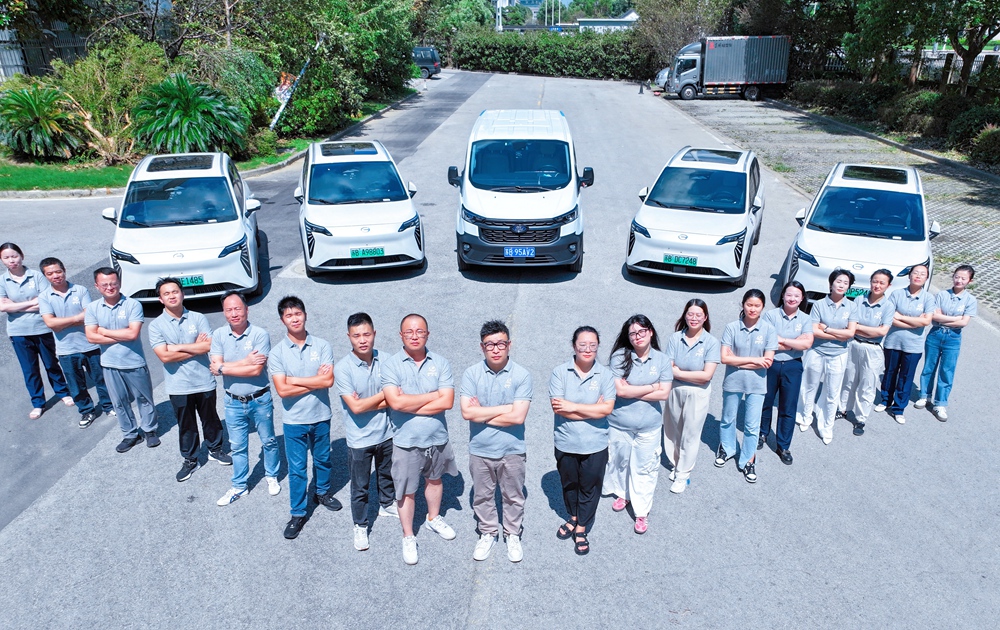
Service capability, not catalogue breadth, is the least documented and most consequential part of a VFD aerator purchase.
¿Tiene preguntas o necesita más detalles?
Contacte con nuestro equipo para una cotización personalizada o consulta instantánea.
Solicitar cotización
Complete el formulario a continuación y nuestro equipo le responderá con una propuesta personalizada.
Chat directo de WhatsApp
¿Prefiere chatear en tiempo real? Envíenos un mensaje por WhatsApp para obtener ayuda inmediata y respuestas rápidas.
- Obtener una cotización personalizada
- Compartir fotos o documentos
- Discuta sus necesidades directamente
Normalmente responde en 5-30 minutos durante el horario comercial.