
Vacuum Formed Enclosures: An Industry Reference for Buyers
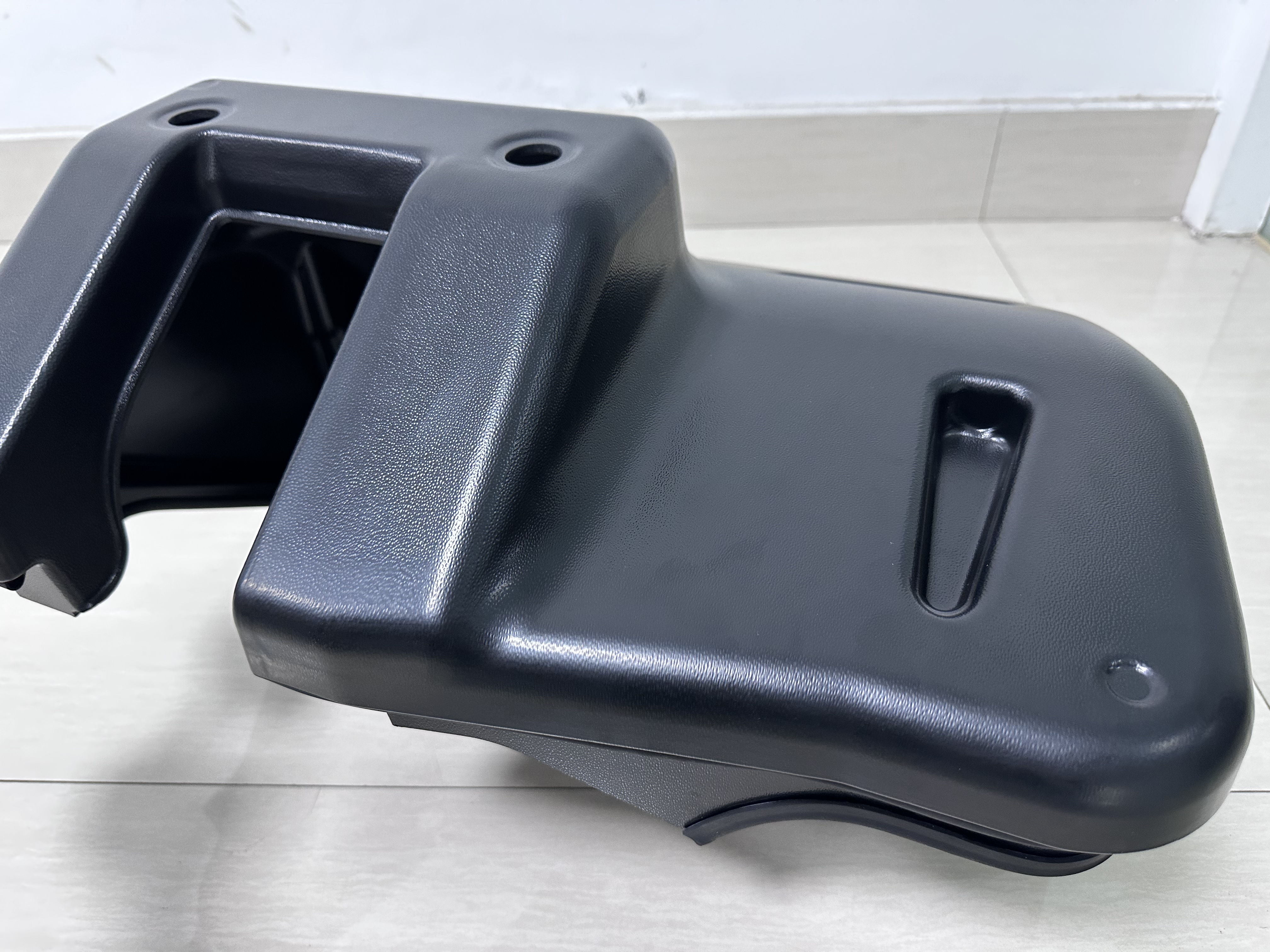
A vacuum formed enclosure is a plastic housing produced by heating a thermoplastic sheet and drawing it over a single-sided mold under vacuum. Manufacturers specify them when equipment needs a large, lightweight, custom-shaped protective shell — a machine guard, control panel housing, medical device cover, robot body or vehicle interior panel — in prototype or medium-batch volumes where dedicated injection tooling would be difficult to justify.
That distinction matters more than it did a decade ago. Industrial equipment is getting larger, product lifecycles are shorter, and the outer surface of a machine now carries branding, human-machine interfaces and service access as well as physical protection. Enclosure specification has therefore become a cross-functional decision involving mechanical design, procurement, compliance and marketing — and the process chosen to make the housing constrains all four. This reference explains what thermoformed enclosures are, how the process shapes design decisions, which materials are realistically available, and what buyers should verify before committing to a tool.
Why Enclosure Sourcing Has Become a Design Problem
An enclosure is rarely just a box. In industrial equipment it typically has to protect internal components from dust, moisture and impact, provide mounting points for controls and displays, accommodate cable entry and ventilation, and present a consistent appearance across a product family. Every one of those requirements pushes back on the manufacturing process.
Sheet metal fabrication handles rigidity well, but it produces heavy parts, requires coating for corrosion resistance, and offers limited freedom for compound curves. Injection molding delivers excellent repeatability and integrated features, but the tooling investment is sized for high volumes. Thick-gauge thermoforming occupies the space between the two: it forms large, curved, lightweight parts from a single mold, and the tooling cost stays low enough to be viable for prototype and medium-batch production.
For buyers in the research stage, the practical question is not which process is best in general, but which process fits this part, this volume and this product lifetime. Answering it requires knowing where thermoforming's boundaries sit.
How Thick-Sheet Thermoforming Produces an Enclosure
Thermoforming is a solid-phase forming process. A thermoplastic sheet is heated until it softens, then drawn against a mold by vacuum pressure; the part cools on the mold, is demoulded, and is trimmed to its final outline. Because only one mold half is required, tooling is simpler and less expensive than a matched injection mold — the trade-off is that the formed part has one controlled face and generally looser dimensional control than a machined or molded component.
The production sequence
- Sheet preparation. Resin is extruded into sheet of the required thickness and colour. Thick-gauge work typically starts from sheet rather than from pellet.
- Heating. The sheet is heated to its forming temperature; temperature consistency across a large sheet is what determines whether wall thickness stays even.
- Forming. Vacuum draws the softened sheet onto the mold. Deep draws, undercuts and tight radii are the points where design and process have to be negotiated.
- Cooling and demoulding. The part is cooled under restraint to limit shrinkage and warpage.
- Trimming and secondary operations. CNC trimming cuts the outline and openings; printing, painting and assembly follow where the project requires them.
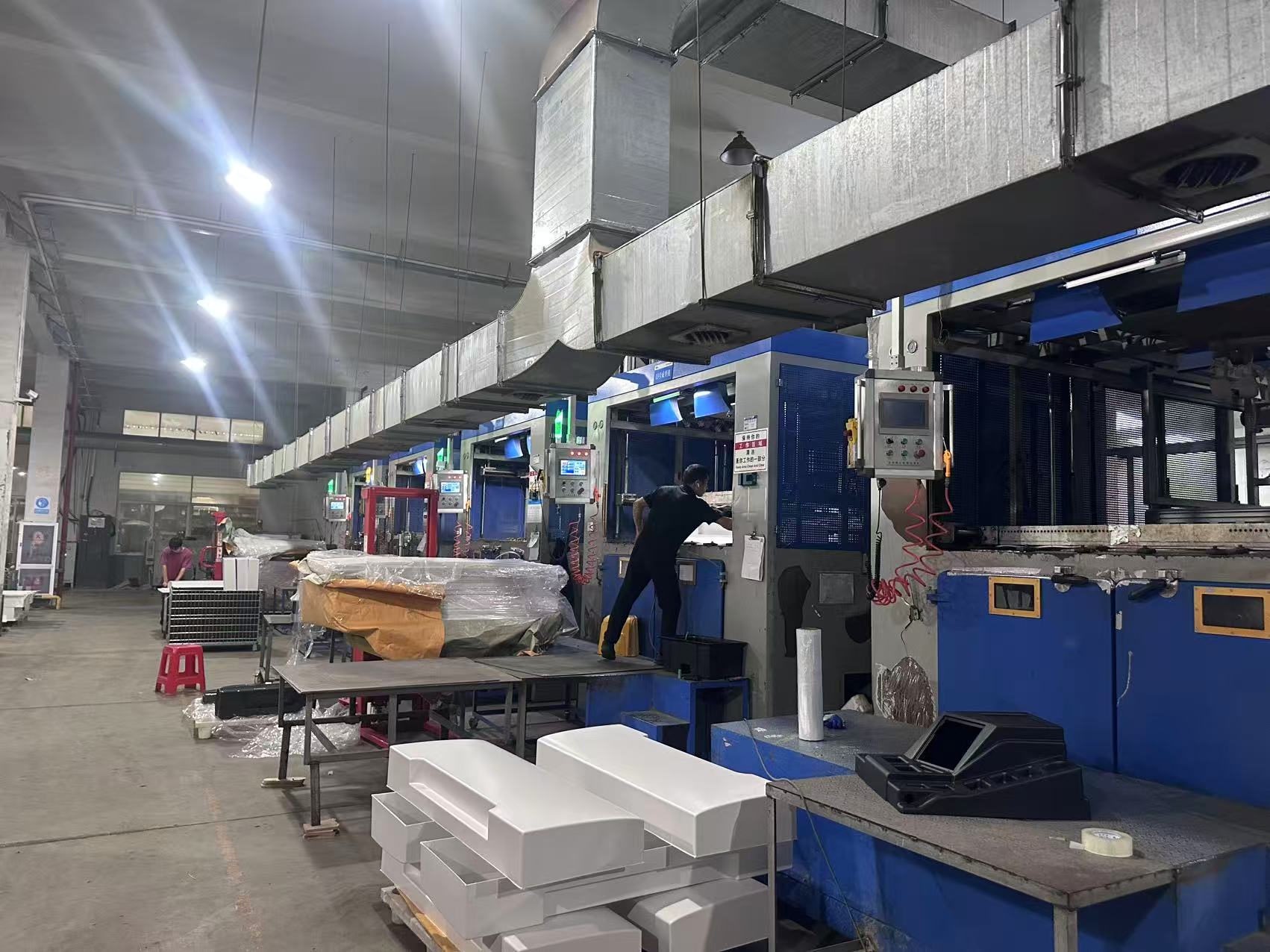
The production assets documented by Hangzhou Baiheli New Materials Co., Ltd., a heavy-gauge thermoforming processor, illustrate the shape of a dedicated setup: a sheet-making machine, a thick-sheet vacuum thermoforming machine, a 5-axis cutting machine and a mold-storage area. The 5-axis trimming step deserves attention at the research stage — most enclosure programmes need clean cut-outs for connectors, fans and display windows, and how those cut-outs are produced affects both tolerance and cost.
Material Selection for Vacuum Formed Enclosures
Material choice drives impact resistance, outdoor life, appearance, fire behaviour and cost, and it also constrains sheet thickness. The grades listed for Baiheli's thermoformed housing range are ABS, flame-retardant ABS, ASA, PC, PETG, PMMA, PVC, HDPE and PE, together with other engineering or composite materials. Weather-resistant options are available for outdoor applications.
| Material | Typical reason it is specified | Buyer note |
|---|---|---|
| ABS | General-purpose structural housings; balanced impact strength and rigidity | The most common starting point for machinery and instrument enclosures |
| Flame-retardant ABS | Projects that specify a flame-retardant grade | Exact fire rating must be confirmed project by project |
| ASA | Outdoor exposure and weather resistance | Listed as a weather-resistant option |
| PMMA | Outdoor appearance and surface quality | Also listed as a weather-resistant option |
| PC (polycarbonate) | Impact resistance; transparent or translucent variants | PC matte film and transparent/translucent PC are listed options |
| PETG | Formability with good clarity | Useful where a clean visual finish matters |
| PVC | Rigid covers and general industrial parts | Selection depends on project chemical and regulatory requirements |
| HDPE / PE | Impact resistance and chemical exposure | Impact-resistant PE is listed for demanding covers |
One practical caveat for buyers: HIPS is a widely used thermoforming grade in the broader market, but it is not part of the material range listed for this supplier. Programmes that specify HIPS should confirm availability with the specific processor rather than assume it from a generic thermoformed enclosure quotation.
Design Boundaries: Size, Thickness and Tooling
The two numbers that shape most enclosure designs are the forming envelope and the sheet gauge. For this range, the maximum forming size is up to 3300 mm × 2000 mm, and the sheet thickness range is 2–10 mm, with thickness selected according to material type and part design.
Those limits have direct design consequences. A part close to the maximum envelope needs generous radii and gradual transitions, because the sheet has to stretch further from the clamp frame to the deepest point. Thin sheet forms tighter details but carries less rigidity; thick sheet holds shape and stiffness but demands longer heating and cooling cycles and reduces the achievable draw depth relative to part size.
Tooling economics are the other half of the story. Thermoforming uses a single mold, so tooling cost stays low relative to matched-tool processes — an advantage the supplier positions specifically for prototype and medium-batch production. That makes the process well suited to design iteration: a housing can be revised before volume justifies a more capital-intensive route.
Where Thermoformed Enclosures Are Used
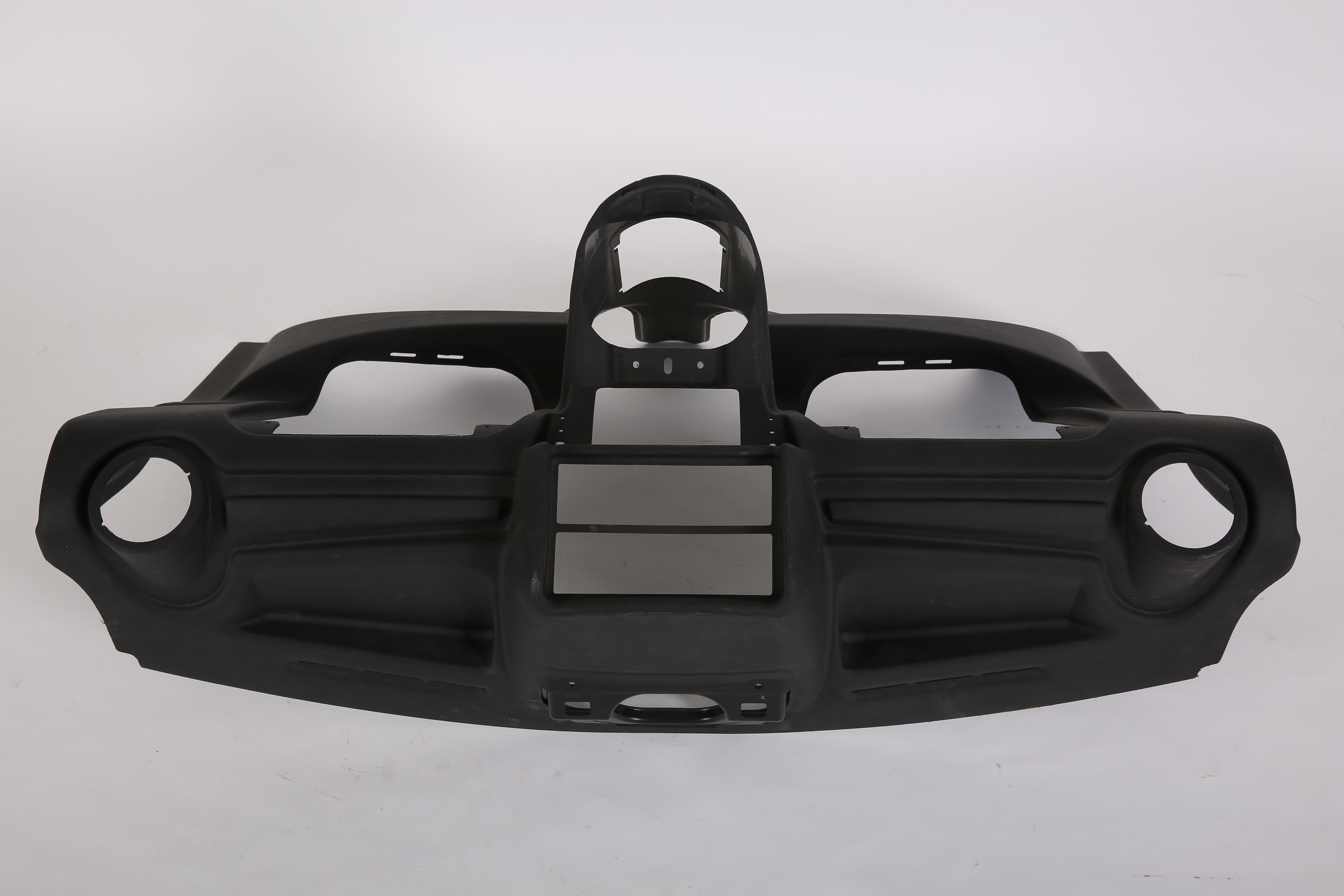
The application set for this product family is broad and largely industrial: industrial equipment enclosures, machinery housings and covers, control panel and instrument housings, medical equipment housings, AGV and robot housings, automotive interior and exterior parts, radomes for communication antennas, rooftop tent components, amusement equipment parts and drone housings. The listed product line includes thick-sheet thermoformed products, AGV housings, new energy vehicle parts, textile machine covers, intelligent machinery housings, medical equipment housings, amusement equipment thermoformed parts, marine antenna radomes and rooftop tents.
Working conditions for these parts are typically indoor or outdoor operation between −20 °C and 70 °C, with an optional UV-resistant surface finish for outdoor exposure. Project-specific options include flame-retardant ABS, PC matte film, transparent or translucent PC, impact-resistant PE, screen printing and masked painting — but exact fire rating, UV-resistance rating, dimensional tolerances and assembly requirements all require project confirmation rather than assumption.
What the Market Data Suggests
Two independent research datasets give a directional view of demand. Grand View Research values the global plastic vacuum forming market at USD 4.8 billion in 2023 and projects USD 5.7 billion in 2026 rising to USD 7.2 billion by 2030. Straits Research estimates the global industrial enclosure market at USD 2.62 billion in 2025, USD 2.78 billion in 2026 and USD 4.48 billion by 2034, a CAGR of 6.15% across that period.
The useful reading for buyers is structural rather than numerical. Plastic vacuum forming is roughly twice the size of the specialised industrial enclosure market, which implies that a large share of formed output goes to applications outside industrial housings — packaging and other thin-gauge products among them. Neither dataset isolates heavy-gauge industrial enclosures, so both should be treated as directional demand indicators rather than as a measure of the segment a buyer is actually sourcing from.
Thermoforming Compared with Injection Molding and Sheet Metal
Comparison is only meaningful against a defined volume and part size. The table below sets out the trade-offs that most often decide an enclosure programme.
| Criterion | Thick-sheet thermoforming | Injection molding | Sheet metal fabrication |
|---|---|---|---|
| Tooling cost at low to medium volume | Low; single-sided mold | High; matched mold required | Very low; no mold, cutting and bending programmes |
| Cost per part at high volume | Generally higher than injection molding | Typically lowest once tooling is amortised | Driven by material and labour |
| Part size | Large parts feasible; up to 3300 mm × 2000 mm in this range | Large parts require very large presses and tooling | Large parts feasible but heavier |
| Design changes after tooling | Relatively inexpensive to revise | Costly; requires tooling modification | Programme changes are low cost |
| Dimensional repeatability | Looser; secondary machining usually needed for critical interfaces | Tight and highly repeatable | Tight in the plane of the sheet |
| Form freedom | Compound curves, deep draws, large radii | Complex geometry, ribs, bosses, undercuts | Mostly planar with bends |
| Weight and corrosion | Lightweight; thermoplastic does not corrode | Lightweight; does not corrode | Heavier; requires coating for corrosion resistance |
The limitation buyers most often underestimate is dimensional control. Thermoformed parts shrink and can distort slightly during cooling, and the process does not deliver the same repeatability as injection molding or CNC-machined components. Critical mating faces, sealing surfaces and tight hole patterns typically require secondary machining, and achievable tolerance has to be agreed with the processor at the design stage rather than assumed from a drawing.
The second limitation is volume. Thermoforming's tooling advantage narrows as annual volumes rise, because per-part cycle time and trimming labour do not fall the way injection molding cycle times do. Programmes that start on thermoformed prototypes and grow into five-figure annual volumes usually end up reviewing the process choice — which is a normal outcome, not a failure of the original decision.
Supplier Reference: Hangzhou Baiheli New Materials Co., Ltd.
Hangzhou Baiheli New Materials Co., Ltd. is a Chinese heavy-gauge thermoforming processor based in Guali Town, Xiaoshan District, Hangzhou, established in 2011 and specialising in the design, production and custom processing of thermoformed products for domestic and overseas customers. Its standard factory building covers approximately 10,000 square metres, and the company reports 90 employees, an annual output of 550,000 units and a five-person R&D team providing one-to-one project support. Export accounts for 30–40% of its business, and its quality management system is certified to ISO 9001:2016.
Capability relevant to enclosure sourcing includes a maximum forming size of up to 3300 mm × 2000 mm, a 2–10 mm sheet thickness range, and material coverage across ABS, flame-retardant ABS, ASA, PC, PETG, PMMA, PVC, HDPE, PE and other engineering or composite materials. The company describes a one-stop service from design and mold making through to finished parts, and supports prototype and medium-batch production with correspondingly low tooling cost. Its 2023 thermoformed output included new energy auto parts, AGV housings, textile machinery housings, intelligent mechanical equipment housings, medical device housings, game console housings and shipborne radome housings.
On order quantities, a public supplier listing associated with the company's trade name states a minimum order quantity of 100 pieces for thermoformed products; MOQ for a specific enclosure should be confirmed directly, since it depends on part size, material and tooling. The company has also stated a plan to complete an on-site green photovoltaic generation project as part of its energy and emissions programme.
A Buyer's Evaluation Checklist
| What to verify | Question to put to the processor | Why it changes the decision |
|---|---|---|
| Forming envelope | Does the part fit within the quoted maximum forming size, including trim allowance? | Parts near the limit need different radii and draw ratios |
| Material grade | Which grade is quoted, and is it on the processor's listed range? | Grades such as HIPS may not be available everywhere |
| Fire and UV ratings | What rating can be documented for this material and thickness? | Ratings are project-specific and cannot be assumed |
| Tolerance and critical features | Which features are formed and which are machined after trimming? | Determines fit with seals, gaskets and internal frames |
| Tooling scope | Is the mold included, and who owns it? | Affects total cost and future sourcing flexibility |
| Secondary operations | Are printing, masked painting and assembly in scope? | Often the difference between a part and a finished housing |
| Volume assumption | At what annual volume should the process choice be reviewed? | Thermoforming economics shift with volume |
Limitations to Plan For
- Tolerance. Thermoformed enclosures generally hold looser tolerances than machined or injection-molded parts; critical interfaces need secondary machining.
- Wall thickness distribution. Material thins at deep draws, so structural ribs and bosses cannot be added as freely as in injection molding.
- One controlled face. The mold side carries the surface texture; the opposite face is typically less controlled.
- Documentation. Fire rating, UV-resistance rating, dimensional tolerances and assembly requirements are confirmed per project, not by default.
- Material range. Not every common thermoforming grade is stocked by every processor; HIPS is one example worth checking early.
Future Outlook
Several directions look likely to shape thermoformed enclosure sourcing over the next few years. Larger formed parts are becoming practical as equipment frames grow, and 5-axis trimming is making post-forming cut-outs more precise than hand-finished work. Material selection is shifting toward grades that combine weather resistance with recyclability, and processors are investing in on-site energy generation — Baiheli's planned photovoltaic project is one example — as buyers add energy and emissions questions to supplier questionnaires.
None of this changes the fundamentals. Thermoforming will remain a single-mold, large-format process with looser tolerances than injection molding, and its advantage will continue to sit in prototypes, medium batches and oversized housings where tooling economics decide the outcome.
Frequently Asked Questions
What is a thermoformed enclosure?
A thermoformed enclosure is a plastic housing formed by heating a thermoplastic sheet and drawing it over a single-sided mold under vacuum. It is used for large, custom-shaped equipment housings where part size or production volume makes a matched injection mold impractical.
Which materials are used for vacuum formed enclosures?
Common grades in this product range are ABS, flame-retardant ABS, ASA, PC, PETG, PMMA, PVC, HDPE and PE, along with other engineering or composite materials. ASA and PMMA are listed as weather-resistant options for outdoor exposure, and PC is available in transparent or translucent form.
How large can a thermoformed enclosure be?
For this product range the maximum forming size is up to 3300 mm × 2000 mm, with sheet thickness from 2 mm to 10 mm. Thickness is selected according to material type and part design, and parts close to the maximum envelope require larger radii and gentler transitions.
Which industries use thermoformed equipment housings?
Listed applications cover new energy vehicles and automotive parts, logistics and AGV systems, robotics and intelligent equipment, textile machinery, medical equipment, communication antennas, outdoor camping, amusement equipment and drones. Typical parts include machinery enclosures, instrument and control panel housings, medical device housings, robot housings and radome components.
What should be confirmed before ordering a custom thermoformed enclosure?
Four items require project confirmation rather than assumption: fire rating, UV-resistance rating, dimensional tolerances and assembly requirements. Buyers should also confirm the quoted material grade, whether critical features are formed or machined after trimming, and what the tooling scope and minimum order quantity are for the specific part.
A detailed corporate brochure covering capability, materials and product scope is available for download: Hangzhou Baiheli New Materials Co., Ltd. corporate brochure (PDF).
¿Tiene preguntas o necesita más detalles?
Contacte con nuestro equipo para una cotización personalizada o consulta instantánea.
Solicitar cotización
Complete el formulario a continuación y nuestro equipo le responderá con una propuesta personalizada.
Chat directo de WhatsApp
¿Prefiere chatear en tiempo real? Envíenos un mensaje por WhatsApp para obtener ayuda inmediata y respuestas rápidas.
- Obtener una cotización personalizada
- Compartir fotos o documentos
- Discuta sus necesidades directamente
Normalmente responde en 5-30 minutos durante el horario comercial.