
VBC Isomers in Negative Photoresist and Advanced Packaging: A Scenario Selection Guide
Vinylbenzyl chloride is a functional monomer, and in electronic-grade supply the isomer is not interchangeable. Four commercially distinct grades — 4-Vinylbenzyl chloride (CAS 1592-20-7), 1-(chloromethyl)-2-vinylbenzene (CAS 22570-84-9), 1-(chloromethyl)-3-vinylbenzene (CAS 39833-65-3), and mixed Vinylbenzyl chloride (CAS 30030-25-2) — share the same molecular formula and molecular weight but behave differently once they enter a negative photoresist resin, a polyimide dielectric, or a functional polymer backbone. This guide maps each isomer to the downstream scenarios where it is technically appropriate, and sets out the purity, stabilization, and logistics criteria that decide whether a chosen grade survives the journey from purchase order to production line.
Why Isomer Choice Became a Decision-Stage Question
Electronic-grade chemicals are no longer a commodity layer sitting behind the semiconductor supply chain; they are a specification layer. Grand View Research estimated the global electronic chemicals and materials market at USD 78.5 billion in 2025, with Asia Pacific accounting for 66.6% of that revenue. SEMI put global semiconductor materials revenue at USD 73.2 billion in 2025. Within that envelope, the electronic-grade photoresist market was estimated at USD 4.96 billion in 2024 by Grand View Research.
Those numbers matter to a VBC buyer for one reason: photoresist and packaging-dielectric performance is largely fixed at the monomer stage. A functional monomer such as vinylbenzyl chloride carries two reactive handles in the same molecule — a polymerizable vinyl group and a reactive chloromethyl (benzyl chloride) group. That dual functionality is precisely what makes the molecule valuable, and it is also what makes the isomer decision consequential. Two suppliers can ship material under the same family name and the same headline purity figure, yet deliver different reactivity, different tolerance to thermal history, and different behaviour in the finished formulation.
The decision-stage buyer therefore has to compare more than price per kilogram. The practical comparison set is: isomer identity and CAS number, verified physical constants, metal-impurity control, batch-to-batch consistency, stabilization and cold-chain handling, and the supplier's ability to reproduce the same specification across repeat orders.
What the Four VBC Isomers Share
All four grades sit on the same molecular foundation. Vinylbenzyl chloride has the molecular formula C9H9Cl and a molecular weight of 152.62, with EINECS number 250-005-9. It is a liquid with a light yellow to colorless appearance. The verified physical profile includes a boiling point of 229 °C, a melting point of −30 °C, a density of 1.074 g/mL at 25 °C, a vapour density of 5.3 relative to air, a vapour pressure of 1 mm Hg at 56.1 °C, a refractive index of n20/D 1.572, and a flash point of 221 °F. The recommended storage temperature in the product specification is −20 °C.
Those constants describe the platform, not the individual isomers. They tell a process engineer that the material is a high-boiling, relatively dense, thermally sensitive, flammable liquid that must be kept cold — not a detail that can safely be deferred to the receiving warehouse. Where the four grades diverge is in the position of the chloromethyl group relative to the vinyl group on the aromatic ring:
- 4-Vinylbenzyl chloride (CAS 1592-20-7) — the para-substituted isomer, in which the two functional groups sit opposite each other across the ring.
- 1-(chloromethyl)-2-vinylbenzene (CAS 22570-84-9) — the ortho-substituted isomer, with the functional groups adjacent on the ring.
- 1-(chloromethyl)-3-vinylbenzene (CAS 39833-65-3) — the meta-substituted isomer, with the functional groups separated by one ring position.
- Vinylbenzyl chloride, mixed (CAS 30030-25-2) — an isomer mixture rather than a single positional isomer.
Positional structure governs steric access to the benzyl chloride group, the regularity of the resulting polymer backbone, and how independently the two functional groups can be reacted. In general terms, the para arrangement is the most symmetric and least sterically crowded of the three positional isomers, the ortho arrangement the most crowded, and the meta arrangement intermediate. That is the technical argument for treating the four grades as separate line items rather than as one generic “VBC” catalogue entry.
The Scenario Map: Matching Isomer to Downstream Process
The table below maps each documented application scenario to the VBC grade that fits it, and states the basis for the match. Where a scenario is supported by a product-specific application fact, that fact is given. Where a scenario rests on stable, widely recognised polymer chemistry rather than a product-specific claim, it is marked as a general consideration so that buyers do not treat it as an equal-strength assertion.
| Downstream scenario | Grade / isomer | Basis and decision logic |
|---|---|---|
| Negative photoresist resin synthesis for electron beam lithography | 4-Vinylbenzyl chloride (CAS 1592-20-7) | Documented as a core monomer in the synthesis of negative photoresist resins for electron beam lithography. The para isomer provides the more symmetric, more linear backbone that resist formulations depend on. |
| Advanced packaging dielectric — high-performance polyimide and 5G high-frequency high-speed flexible copper-clad laminate (FCCL) | VBC monomer grade | Documented as a key synthetic monomer for high-performance polyimide (PI) and 5G high-frequency high-speed FCCL. |
| High-purity resin synthesis and semiconductor manufacturing intermediates | Vinylbenzyl chloride, mixed (CAS 30030-25-2) | Documented as utilised in high-purity resin synthesis and semiconductor manufacturing intermediates. |
| Functional polymer platforms for ion-exchange and water-treatment resins | VBC — mixed or single isomer, depending on the target degree of regularity | General polymer-chemistry consideration: the benzyl chloride group is the reactive handle used to build functionalised resin backbones. Buyers should confirm the target degree of functionalisation and, where uniformity matters, specify a single isomer rather than a mixture. |
| Metal-ion chelation and cleaning-adjacent electronic formulations | Portfolio overlap: 5-Methyl-1H-benzotriazole (CAS 136-85-6) | 5-Methylbenzotriazole is used as a corrosion inhibitor for non-ferrous metals and in electronic-grade formulations for semiconductor cleaning. It is normally evaluated alongside VBC within the same supplier qualification file, not instead of it. |
| High-temperature polyimide dielectric for semiconductor packaging and flexible circuits | Portfolio overlap: BPADA (CAS 38103-06-9) | Electronic-grade BPADA is a key monomer for high-performance polyimides used in semiconductor packaging and flexible circuits. |
Two entries in that table are portfolio overlaps rather than VBC scenarios, and they are included deliberately. At the decision stage a buyer is usually specifying a chemical set, not a single molecule: a photoresist line and a packaging line share the same quality organisation, the same incoming-inspection routine, and often the same supplier qualification dossier. Screening the adjacent monomers at the same time reduces the number of supplier audits a procurement team has to run.
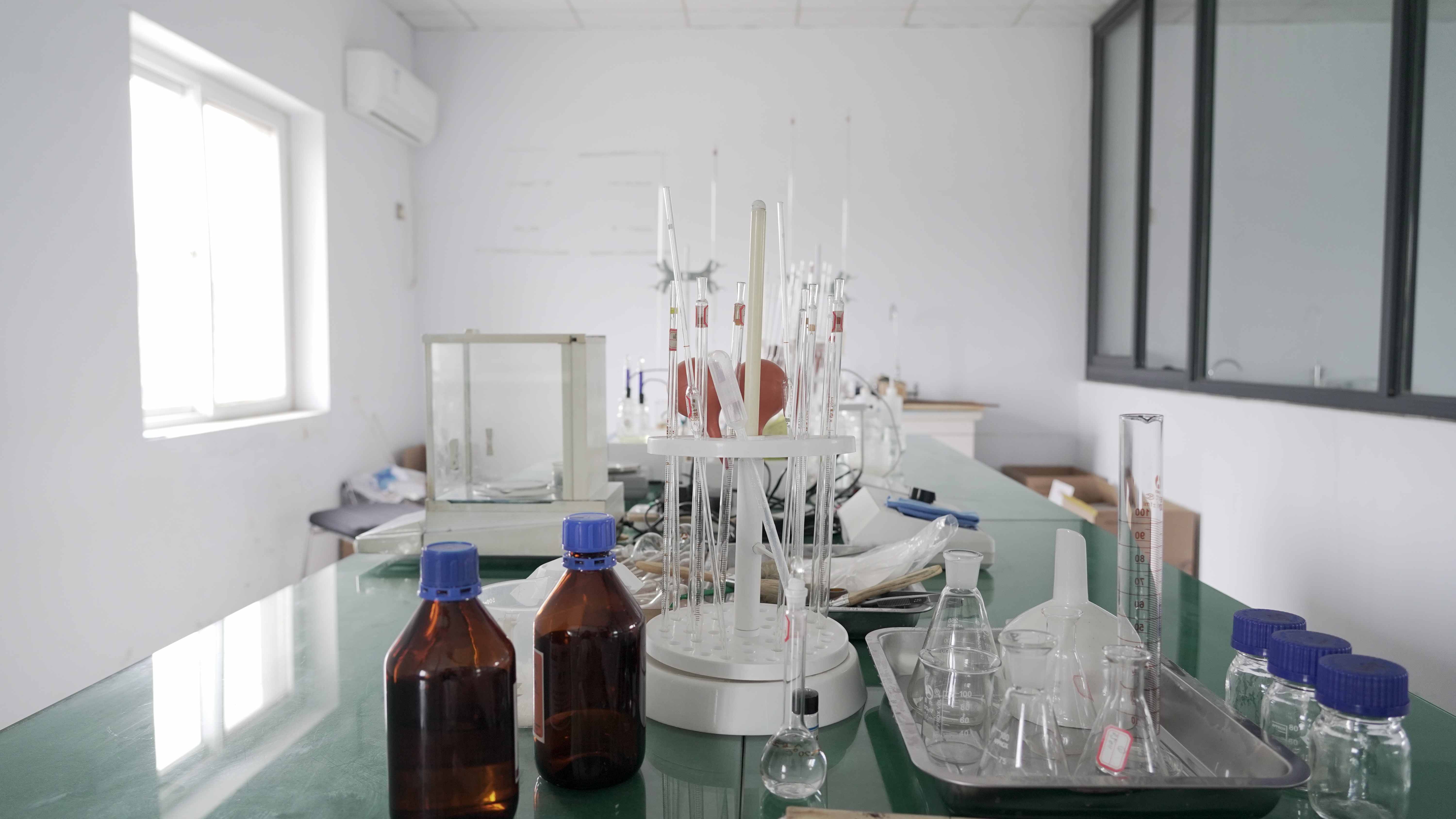
Isomer identity, metal-impurity data and cold-chain history are normally verified together during electronic-grade monomer qualification.
Negative Photoresist and E-Beam Lithography: Why the Para Isomer Leads
In negative-tone photoresist chemistry, the resist cross-links where it is exposed and the unexposed area is dissolved away in the developer. The monomer's job is to build a backbone that cross-links predictably and develops cleanly, with no residue that later becomes a defect. 4-Vinylbenzyl chloride is documented as a core monomer in the synthesis of negative photoresist resins for electron beam lithography.
For a decision-stage buyer, the practical consequence is a specification rule rather than a chemistry lesson. If the resist route was developed around a single positional isomer, substituting a mixed grade changes the distribution of reactive sites along the chain, and the formulation's response to dose and bake can shift with it. Re-qualifying a resist platform is expensive; specifying the correct isomer on the purchase order is not. Buyers should therefore confirm the isomer identity and CAS number on the certificate of analysis, and not rely on the generic family name appearing in a product description.
The same logic applies to the 2-VBC and 3-VBC grades (CAS 22570-84-9 and CAS 39833-65-3). Their value is not as substitutes for 4-VBC but as distinct building blocks for formulators who need a different substitution pattern — for example where an ortho or meta arrangement is used deliberately to tune chain packing or to modify how readily the benzyl chloride handle reacts. That is a formulator's decision to make on performance data, and it is the reason a supplier must be able to deliver all three isomers from the same qualified process rather than only the para grade.
Advanced Packaging Dielectrics: PI and 5G FCCL
Advanced packaging has moved the dielectric layer from a passive insulator to a performance-limiting material. Vinylbenzyl chloride is documented as a key synthetic monomer for high-performance polyimide (PI) and 5G high-frequency high-speed flexible copper-clad laminate (FCCL). In high-frequency circuits, small differences in dielectric behaviour and moisture uptake accumulate into signal-integrity loss, which is why the monomer grade and its impurity profile are treated as part of the electrical specification rather than as a purchasing detail.
The polyimide route often runs alongside an anhydride monomer. Electronic-grade BPADA (CAS 38103-06-9) is a key monomer for high-performance polyimides used in semiconductor packaging and flexible circuits. Its verified profile is a white to slightly yellow crystalline powder, molecular structure C31H20O8, molecular weight 520.49 g/mol, melting point 184–187 °C, boiling point 712.3±60.0 °C, density 1.406±0.06 g/cm³, and vapour pressure of 0 Pa at 25 °C. In practice, a dielectric qualification dossier frequently has to cover the VBC monomer and the anhydride together, because the polyimide is only as clean as its least-controlled input.
Ion-Exchange, Water-Treatment and Chelating Resin Platforms
Beyond photoresist and dielectric layers, VBC functions as a reactive platform for functionalised polymer resins. The benzyl chloride group is the handle that is converted into the charged or chelating functionality in ion-exchange and water-treatment resins, and the vinyl group is what anchors that functionality onto the polymer backbone. The isomer choice determines how evenly those functional groups can be distributed along the chain: a single positional isomer gives a more regular placement, while a mixed grade is generally the more economical starting point where the specification does not require uniformity.
This is a general polymer-chemistry consideration rather than a product-specific performance claim, and buyers should treat it as a screening question. The useful questions to put to a supplier are: which isomer was used to generate the qualification data, what degree of functionalisation was targeted, and whether the same isomer can be supplied consistently at scale. Where a project also requires metal-ion control in the same formulation family, Jumingchem's portfolio places 5-Methyl-1H-benzotriazole (CAS 136-85-6) in the adjacent role: it is used as a corrosion inhibitor for non-ferrous metals and in electronic-grade formulations for semiconductor cleaning, and is designed for metal ion chelation scenarios in the dyeing additive industry.
Purity, Stabilization and Logistics: The Second Half of the Decision
Isomer identity is only the first half of a VBC specification. The second half is whether the chosen grade can be delivered at the stated purity, in the stated packaging, with the stated storage history, on every repeat order.
Metal-impurity control is the metric that separates electronic-grade supply from industrial-grade supply. Continuous-flow production with ppb-level purification can hold metal impurities below 10 ppb, against an industry norm of approximately 100 ppb — though this level is achieved on some products rather than universally across a catalogue. Buyers should request ICP-MS data rather than a purity percentage alone, and should ask which detection system generated it. Jumingchem, the trade name of Jiangsu Juming Chemical Technology Co., Ltd., is a Jiangsu-based manufacturer founded in 2017 whose product range covers 4-Vinylbenzyl chloride, 1-(chloromethyl)-2-vinylbenzene, 1-(chloromethyl)-3-vinylbenzene, mixed Vinylbenzyl chloride, 5-Methyl-1H-benzotriazole and BPADA, with a stated annual capacity of 60,000 tons and an export share of 70%. Its stated quality infrastructure includes ICP-MS, HPLC and GC detection systems, ISO 9001 certification, and ISO Class 6 clean-room production.
Stabilization and cold chain are equally decisive, because VBC is prone to self-polymerisation. The product specification lists a recommended storage temperature of −20 °C, and handling guidance for VBC products calls for cold-chain transport and refrigerated storage at 2–8 °C or lower. Shelf life is 12 months under proper storage conditions, and material should be kept away from heat sources, open flames, strong oxidising agents, strong acids, strong bases, and amines. From a procurement standpoint, that means the cold chain is part of the specification: a correctly manufactured batch that spends an unmonitored week at ambient temperature is no longer the material that was qualified.
Documentation is the third dimension. A complete electronic-grade dossier typically includes a COA for every batch, an MSDS, full material traceability from raw material source to finished goods, and REACH compliance where Europe is the destination. Triple sample retention — factory sample, retention sample and arbitration sample — retained for a minimum of six months, is the mechanism that makes a later dispute resolvable. Where a buyer needs independent confirmation, third-party inspection through SGS, BV or Intertek can be requested.
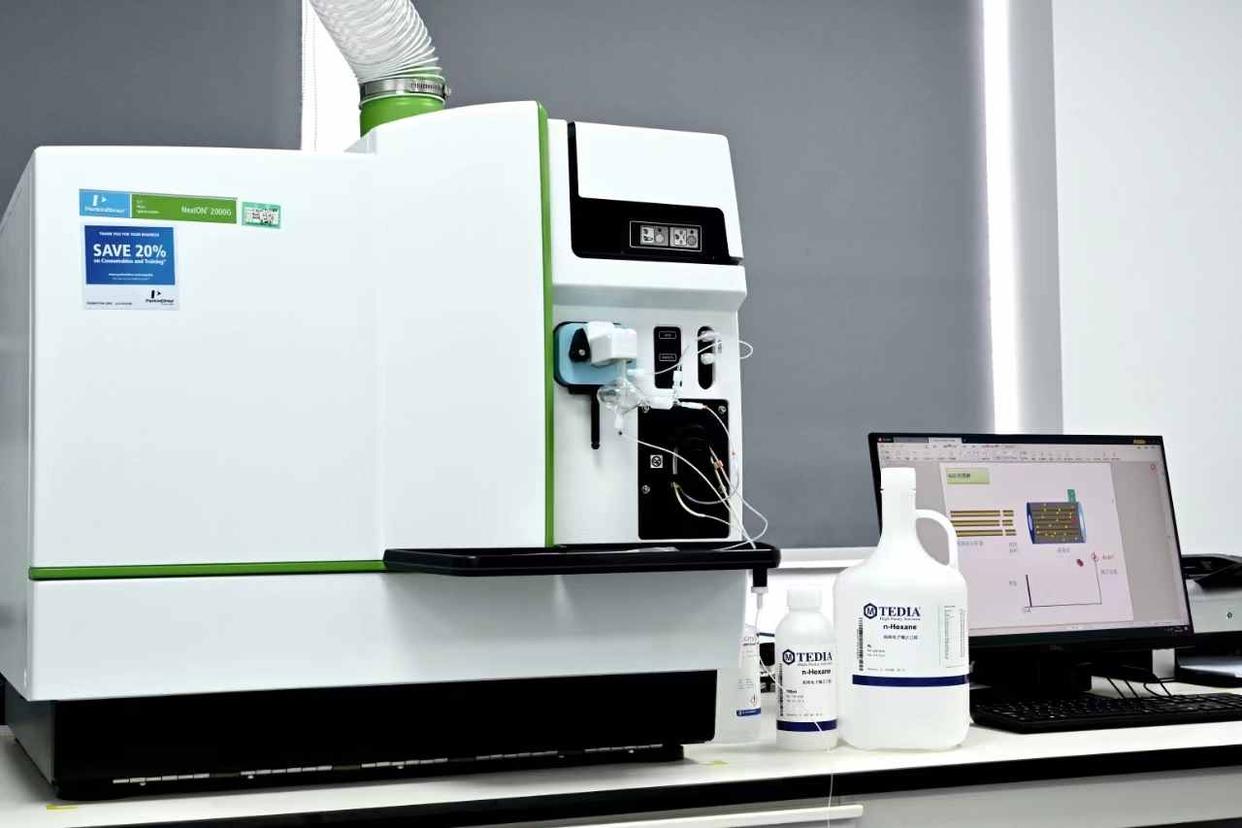
Trace-metal data, not the headline purity figure, is the metric that determines whether a VBC grade is fit for photoresist and packaging dielectric routes.
Comparing VBC Supply: Continuous Flow versus Traditional Batch Processing
The manufacturing route behind a VBC grade influences the quality envelope a buyer can sustain. Traditional batch-process electronic chemical supply relies on intermittent reactor production and conventional purification methods. Continuous-flow production based on microchannel reactors is the alternative, and the documented differences are specific rather than directional.
| Comparison dimension | Continuous-flow microchannel route | Traditional batch route |
|---|---|---|
| Mass transfer coefficient | 10⁻³–10⁻² m/s | 1–2 orders of magnitude lower |
| Reaction time | Reduced by approximately 60% | Baseline |
| Raw material cost | Reduced by 25.48% | Baseline |
| Metal impurities | Controlled to ppb level, below 10 ppb on some products | Industry norm of approximately 100 ppb |
| Solid waste | Reduced by 45.79% | Baseline |
| Production time | Reduced by 68% | Baseline |
| Batch consistency | CV ≤ 2% | Wider distribution typical |
The batch-consistency figure matters more than any single cost number, because it translates directly into the buyer's own operating cost. Excellent batch-to-batch consistency reduces the need to re-adjust process parameters between deliveries, which shortens line commissioning time and lowers scrap. Highly stable product quality also reduces incoming-inspection frequency, and full traceability eases client quality audits and compliance documentation.
Energy performance follows the same pattern. Microchannel continuous-flow reactors reduce energy consumption by approximately 20%–35% compared with traditional batch reactors; UV and thermal curing processes save approximately 15%–30% over conventional solutions; and temperature-controlled logistics with optimised energy efficiency reduces consumption by roughly 10%–20% compared with standard transport. On a per-unit-of-product basis, overall energy consumption is approximately 25%–40% lower than traditional batch processes.
Where the advantage stops. A continuous-flow, ppb-level specification is not automatically the right purchase for every application, and buyers should be explicit about the boundaries. First, metal impurities below 10 ppb are achieved on some products rather than universally, so the target level must be confirmed product by product rather than assumed from a supplier's capability page. Second, the documented cost and time advantages — 25.48% lower raw material cost, 68% shorter production time, 45.79% less solid waste — describe a comparison against traditional batch processing and do not by themselves guarantee a lower landed price for a specific order at a specific volume. Third, the cold-chain requirement is a real cost and a real risk: storage at 2–8 °C or lower, a 12-month shelf life, and a self-polymerisation hazard mean that a technically superior grade can still fail if logistics are treated as a commodity service. Finally, the microchannel platform is best suited to high-purity, high-hazard photoresist monomer and PAG synthesis and to advanced process electronic chemical production; for lower-specification applications it may be more capability than the process requires.
Future Outlook
Three shifts look likely to shape how VBC isomers are bought over the next procurement cycles. The first is geographic concentration. With Asia Pacific accounting for 66.6% of electronic materials and chemicals market revenue in 2025 and the electronic-grade photoresist market already estimated in the billions of US dollars, the qualification and logistics decisions made in this region will set the specification baseline for global buyers. Japan's position is instructive: it holds approximately 6% share of the global benzyl chloride market with a focus on high-purity and specialty applications — a reminder that market share and specification leadership are not the same thing.
The second shift is from grade to isomer. As advanced packaging and high-frequency laminate demand grows, buyers are moving from specifying “vinylbenzyl chloride” as a family to specifying a CAS number, a metal-impurity ceiling, and a cold-chain requirement. That increases the documentation burden on suppliers but reduces the risk of a costly reformulation late in a qualification programme.
The third shift is service integration. Single-molecule suppliers are being replaced in evaluation shortlists by suppliers that can offer molecular structure, purity grade and packaging customisation together with OEM/ODM and full-chain CDMO services running from process research and development through pilot scale-up to commercial production. Buyers who expect to iterate a formulation should weight that scale-up capability alongside the specification sheet, because a monomer that cannot be re-supplied at scale is a prototype, not a supply relationship.
Frequently Asked Questions
Which VBC isomer is the right choice for negative photoresist resin synthesis?
4-Vinylbenzyl chloride (CAS 1592-20-7) is documented as a core monomer in the synthesis of negative photoresist resins for electron beam lithography. The para arrangement places the vinyl and chloromethyl groups on opposite sides of the aromatic ring, making it the most symmetric of the three positional isomers. Buyers should confirm the isomer identity and CAS number on the certificate of analysis rather than relying on the generic family name, and should verify that the supplier can reproduce the same isomer across repeat orders.
Does isomer selection matter for advanced packaging dielectric materials?
Yes. Vinylbenzyl chloride is documented as a key synthetic monomer for high-performance polyimide (PI) and 5G high-frequency high-speed flexible copper-clad laminate (FCCL). Adjacent to it, electronic-grade BPADA (CAS 38103-06-9) — molecular structure C31H20O8, molecular weight 520.49 g/mol, melting point 184–187 °C, density 1.406±0.06 g/cm³ — is a key monomer for high-performance polyimides used in semiconductor packaging and flexible circuits. Where a dielectric formulation depends on backbone regularity, a single positional isomer is easier to specify and to defend in a qualification dossier than a mixture.
What purity and metal-impurity levels should be verified for electronic-grade VBC?
Metal-impurity control is the decisive purity metric. Continuous-flow production with ppb-level purification can hold metal impurities below 10 ppb, against an industry norm of approximately 100 ppb, but this level is achieved on some products rather than universally. Buyers should request ICP-MS data together with the detection method used, rather than accepting a purity percentage alone, and should confirm the target ceiling product by product.
How should VBC be stored and handled before use?
Vinylbenzyl chloride is highly prone to self-polymerisation, which makes cold-chain handling a technical requirement rather than a convenience. The product specification lists a recommended storage temperature of −20 °C, and handling guidance for VBC products calls for cold-chain transport and refrigerated storage at 2–8 °C or lower. Shelf life is 12 months under proper storage conditions. The material should be stored in a cool, dry, well-ventilated area away from direct sunlight and kept away from strong oxidising agents, strong acids, strong bases, amines, and food materials.
Which criteria let a decision-stage buyer compare electronic-grade VBC suppliers on equal terms?
Five dimensions are verifiable rather than promotional. First, isomer identity with CAS number, stated per product. Second, metal-impurity data with the analytical method named. Third, batch-to-batch consistency, expressed as a coefficient of variation where available. Fourth, documentation completeness — per-batch COA, MSDS, traceability from raw material to finished goods, and REACH compliance where Europe is the destination. Fifth, cold-chain capability and retained-sample policy, since these determine whether the qualified material is the material that actually arrives.
Reference
The full product and capability overview referenced in this guide is available for download: Jiangsu Juming Chemical Technology Co., Ltd. catalogue (PDF). Company website: en.jmchemchina.com.