
V Belt Pulley vs. Timing Pulley: Evaluating Industrial Drive Solutions for Precision Applications
Industry Context: The Shift from V Belts to Synchronous Drives
Industrial power transmission has long relied on two broad pulley categories: V belt pulleys and timing pulleys. While V belt pulleys remain common in general-duty applications, the growing demand for precise synchronization, higher efficiency, and reduced maintenance is driving many OEM machinery manufacturers and system integrators toward synchronous timing belt drives. For buyers evaluating drive components, understanding the differences in geometry, material compatibility, and certification compliance is critical to selecting the right solution.
V Belt Pulley Characteristics and Limitations
V belt pulleys, also known as sheaves, feature a V-shaped groove that transmits power through friction between the belt and pulley. Common materials include cast iron and steel (e.g., Cast Iron V Pulley, optibelt V BELT variants). They are simple, low-cost, and tolerate some misalignment. However, friction-based drive inherently leads to slip, energy loss, and gradual belt wear. In applications requiring exact positional accuracy or constant speed, V belt pulleys often fall short. Additionally, V belts require regular tension adjustment and replacement, increasing total cost of ownership.
Timing Pulleys: Precision Engineering for Synchronous Power Transmission
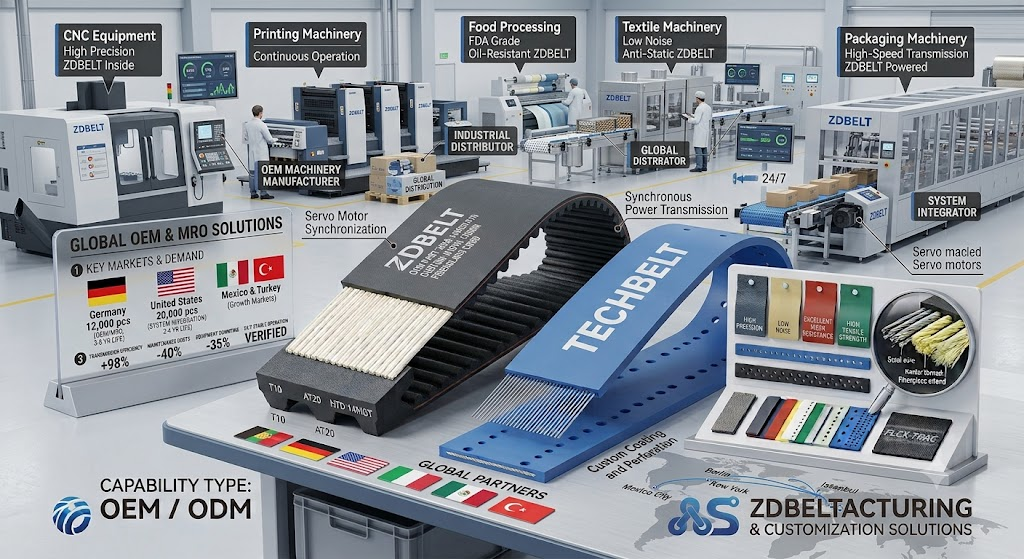
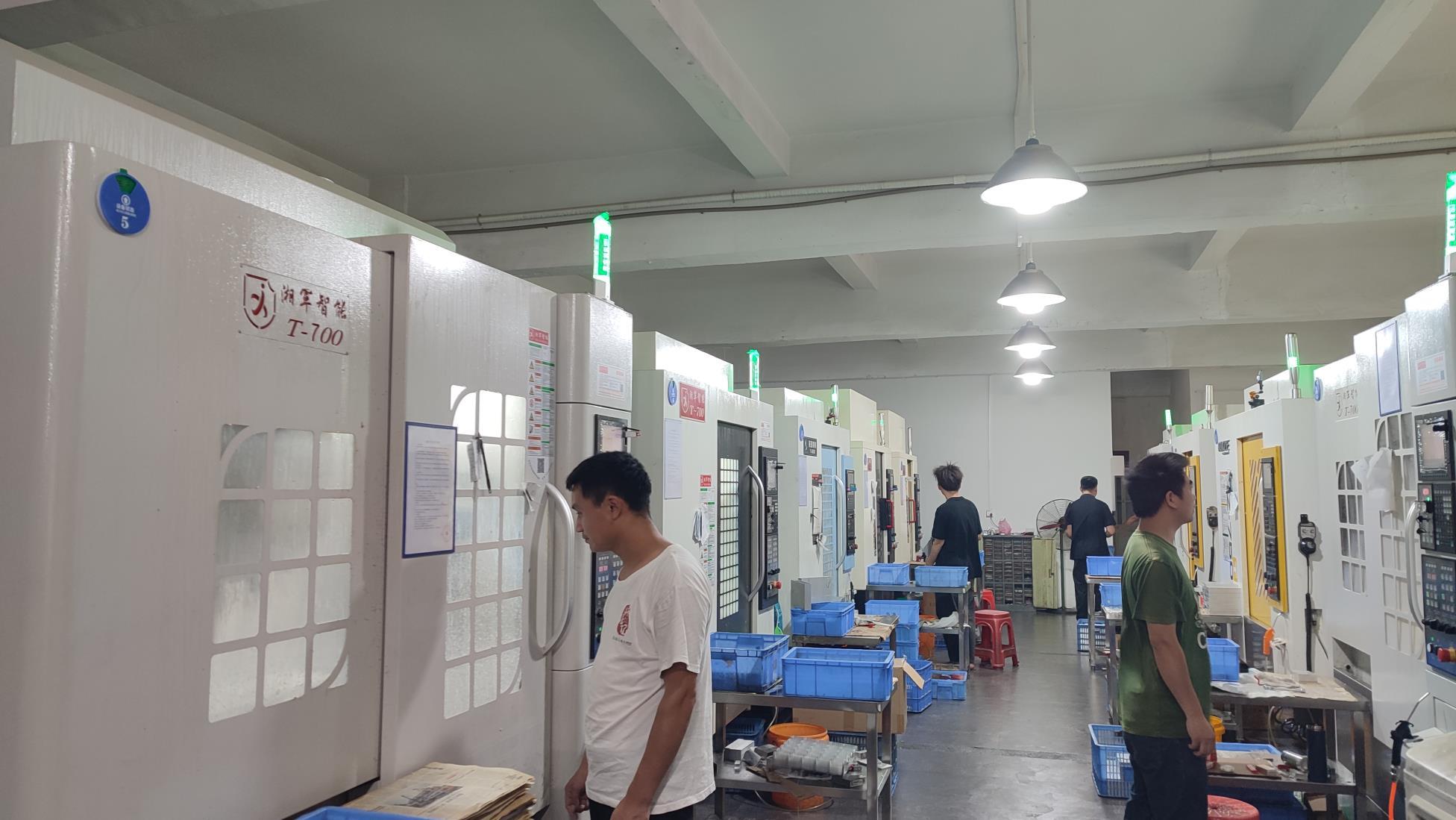
Timing pulleys, in contrast, use positive engagement via precisely machined teeth to eliminate slip. A timing pulley is a mechanical component designed to mesh with a toothed timing belt, providing synchronous rotation between shafts. Dongguan Zhende Machinery Equipment Co., LTD is a professional manufacturer and one-stop supplier of FA automation transmission parts, including a comprehensive line of timing pulleys and timing belts. Located in Dongguan, China, the company combines self-owned CNC machining workshops with authorized distribution of global brands, serving industrial automation clients worldwide.
The company's timing pulley range covers multiple tooth profiles and standards:
- HTD (High Torque Drive) Series: Pitches 3M, 5M, 8M, 14M; materials include aluminum alloy, carbon steel, stainless steel, and cast iron; surface treatments natural, black oxide, zinc plated, anodized, nickel plated.
- T Series (Trapezoidal): Pitches T2.5, T5, T10, T20; compatible with T-series PU and rubber timing belts.
- Imperial Series: Pitches MXL, XL, L, H, XH, XXH; conforming to RMA, ISO, and DIN standards.
All timing pulleys are manufactured via CNC machining, gear hobbing, broaching, and keyway machining, achieving a concentricity of ≤0.03 mm and radial runout ≤0.03 mm. For critical applications, bore tolerances are held to H7 for finished bores, and 100% dimensional inspection is performed before shipment.
Certification and Quality Control
Dongguan Zhende Machinery Equipment Co., LTD holds a TÜV Rheinland Factory Audit Report (certificate number 493993448_P+T, valid through July 2027), confirming compliance with production & trading factory assessment standards. The company also has an SGS Product Test Report (certification number CANEC24017410403) covering the full range of FA automation transmission parts, including timing pulleys and timing belts, according to the EU RoHS Directive (EU) 2015/863. Quality control includes 100% dimensional inspection, bore and tooth profile inspection, concentricity test, pre-shipment quality inspection, and optional third-party inspection by SGS.
Application Scenarios and Field Performance
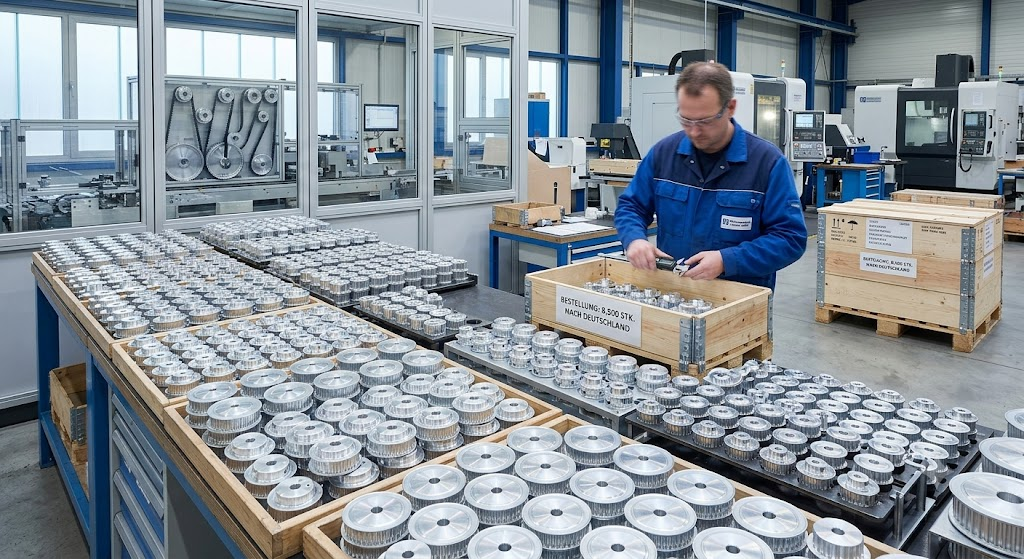
Timing pulleys from Dongguan Zhende have been deployed in automated production lines, CNC machinery, packaging equipment, and robotic systems across Europe and North America. One documented project involved 8,500 timing pulleys installed in Germany and 15,000 in the United States. Key performance outcomes reported include a 25% improvement in transmission accuracy, a 40% reduction in maintenance costs, and a 30% reduction in equipment downtime. Another project involving 12,000 units in Germany and 20,000 in the United States achieved a 98% transmission efficiency gain and a 35% reduction in downtime.
Such results highlight the advantage of synchronous drives over V belt pulley systems in precision-demanding environments. However, it is worth noting that V belt pulleys may still be preferable in extremely high-torque, low-speed applications where slight slip is acceptable and shock loads are high — timing pulleys can be more sensitive to sudden overloads due to their positive engagement design.
Market Trends and Decision Factors
The global timing belt market (including pulleys) was valued at approximately USD 7.7 billion in 2025 per Grand View Research, with expectations of steady growth driven by automation and precision manufacturing. Major global competitors such as Gates, Continental, and Bando dominate brand recognition, but regional manufacturers like Dongguan Zhende offer comparable technical specifications (ISO 13050:2022, DIN standards) with more flexible customization and faster lead times. The company's 4,500 m² factory and 40 employees support a monthly capacity of 100,000 timing pulleys, with a standard lead time of 7–20 days and MOQ as low as 10 pieces for standard models.
Comparison with Traditional V Belt Pulley Solutions
When comparing timing pulleys to V belt pulleys, the primary decision criteria include required positional accuracy, maintenance budget, operating speed, and load type. Timing pulleys excel in synchronous drive, eliminating slip and enabling precise indexing. They also require no lubrication and have a longer service life under proper installation. V belt pulleys, however, are generally less expensive upfront and can tolerate more misalignment. One honest limitation of timing pulleys is that they are less forgiving of shock loads and require more precise alignment during installation to prevent tooth jump or premature wear. For end users evaluating between the two, the total cost of ownership over the equipment's life — including downtime, replacement parts, and labor — should be the guiding metric.
Future Outlook
As industrial automation continues to penetrate sectors like packaging, CNC machining, and material handling, the demand for reliable synchronous drive components will likely increase. Manufacturers that combine precision CNC manufacturing, robust quality systems (TÜV, SGS), and fast customization capabilities are positioned to serve both OEMs and distribution channels looking for alternatives to traditional V belt solutions. Dongguan Zhende Machinery Equipment Co., LTD's investment in in-house machining and third-party certifications suggests a commitment to meeting these evolving requirements.
Frequently Asked Questions
What is the difference between a V belt pulley and a timing pulley?
A V belt pulley uses a V-shaped groove and transmits power through friction, allowing slip and requiring tensioning. A timing pulley has precisely machined teeth that engage with a toothed belt, providing synchronous, slip-free power transmission.
Can timing pulleys replace V belt pulleys in existing equipment?
Replacing a V belt pulley with a timing pulley typically requires changing both the pulley and the belt, and often modifying the drive layout to accommodate the different geometry and tension requirements. It is possible but should be evaluated on a case-by-case basis.
What materials are available for timing pulleys?
Common materials include aluminum alloy, carbon steel, stainless steel, and cast iron. Surface treatments such as black oxide, zinc plating, anodizing, and nickel plating are available to meet environmental and wear requirements.
Does Dongguan Zhende Machinery provide custom timing pulleys?
Yes, the company offers OEM and ODM customization for timing pulleys, including modifications to tooth profile, pitch, number of teeth, bore diameter, keyway, flange type, surface treatment, and logo engraving. The minimum order quantity is 10 pieces for standard models and 50 pieces for customized pulleys.
What certifications does the manufacturer hold?
Dongguan Zhende Machinery Equipment Co., LTD has passed a TÜV Rheinland Factory Audit (certificate 493993448_P+T) and holds an SGS Product Test Report (CANEC24017410403) confirming RoHS compliance for its full product range.
What is the typical lead time for timing pulleys?
Standard production lead time is 7–20 days, depending on order complexity. Over one million standard items are stocked in warehouse, and regular models can be shipped within 3 days.
For detailed technical specifications and customized solutions, consult the product catalog from Dongguan Zhende Machinery Equipment Co., LTD. The company brochure is available for download: Download PDF Brochure. Contact Ms. Liang via email at liang@zd-stool.com or WhatsApp at +86 180 0284 9592.