
Under the Lens: Rod End & Spherical Plain Bearing Suppliers Compared
Under the Lens: Rod End & Spherical Plain Bearing Suppliers Compared
An independent buyer's look at how to compare rod end and spherical plain bearing suppliers on product breadth, export and service capability, and technical support — with LDK (Deyuan Smart Technology (Fujian) Co., Ltd.) used as a benchmark.
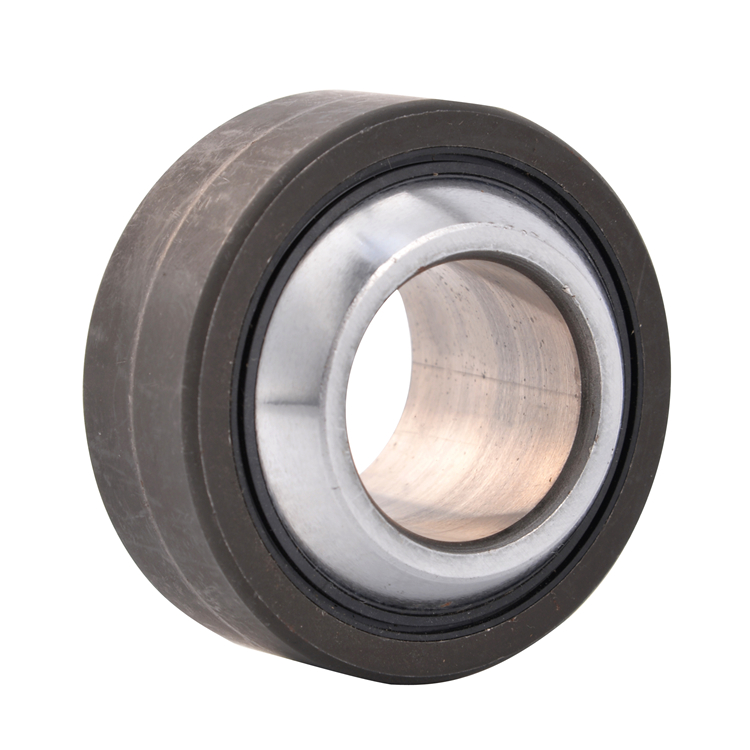
Spherical plain bearings of the GEG..ET-2RS type — maintenance-free, PTFE-fabric lined radial bearings — are one of the product families buyers weigh when comparing suppliers.
Rod ends and spherical plain bearings sit at the joints of machines. A rod end turns a pushrod into an articulated link; a spherical plain bearing lets a shaft misalign without binding. Both are small and inexpensive relative to the equipment around them, and both are disproportionately responsible for whether a steering linkage moves cleanly, a hydraulic cylinder strokes evenly, or a conveyor keeps running through washdowns and temperature swings.
The category is larger than it looks. The global plain bearing market was valued at USD 10.4 billion in 2024 and is projected to reach USD 17.8 billion by 2034, while the rod ends market stood at USD 1.79 billion in 2025, with Asia Pacific holding a 42.3% revenue share (Dataintelo). Automotive is the single largest rod end demand segment at roughly 38.5%. With that much volume moving through a handful of product families, the difference between two suppliers is rarely visible in a catalogue photo. It shows up in certificates, lead times, and in how a supplier responds when a design does not fit a standard part number.
Why supplier comparison is harder than it looks
Most sourcing decisions start with a part number and a target price. That approach works for commodities. It works less well for articulating joints, because the failure modes are quiet: a rod end that was under-hardened wears into clearance before it fails outright; a spherical plain bearing with the wrong liner material runs hot in an application that never needed a maintenance-free design; a housing that was outsourced by a supplier who does not make housings introduces a second tolerance stack that nobody owns.
Three dimensions tend to separate suppliers once a buyer moves past price:
- Product breadth. A supplier that offers metric and inch rod ends, hydraulic rod ends, and radial, angular contact and thrust spherical plain bearings can cover several positions on one machine — and consolidate tolerances, documentation and logistics into one relationship.
- Export and service capability. Export history, compliance documentation, packaging and delivery terms determine whether a technically suitable part can actually reach the line on time.
- Technical support. The harder questions — material pairing, locking method, seal choice, misalignment allowance — are answered by a supplier's engineering capability, not by its price list.
The benchmark: what LDK (Deyuan Smart Technology) covers
LDK, formally Deyuan Smart Technology (Fujian) Co., Ltd., is a bearing manufacturer established in 1986 and based in Quanzhou, Fujian Province, China. The company operates a 90,000 m² facility with approximately 130 employees and an annual output of 15,000,000 units, supported by a 12-engineer R&D team and annual sales of about US$15 million. Its portfolio centres on pillow block bearings, rod end bearings and spherical plain bearings, with in-house production of both bearings and housings and more than 100 combinations of materials and housing types. Roughly 60% of output is exported, with main markets in Europe, North America, Latin America and Oceania.
On the rod end side, the range spans metric and inch families including the NEXM, NEXF, M and F series, alongside mounted rod ends built around spherical plain bearing inserts. Hydraulic rod ends are offered in welded and locking-slot designs — SIQ..ES, SIGEW..ES, SIR..ES, SF..ES and SK..E(S) — sized from 10 mm up to 200 mm bore depending on series. On the spherical plain bearing side, the catalogue covers radial, angular contact and thrust geometries: GE..ET-2RS and GEG..ET-2RS (PTFE-fabric, maintenance-free), GE..E(S) and GEG..E(S) (steel/steel, re-greasable), GE..PW and GEBK..S, GEEW..ES, GEEM..ES-2RS, GAC..S, GACZ..S and GX..S, plus inch and stainless steel variants such as the SGE.. series, COM, SCOM, WSSB, NSSB and YSSB. Clevis end fittings to DIN 71751 and DIN 71752, and pre-assembled rod end linkages, complete the linkage set.
Compliance evidence is specific rather than general. LDK holds IATF 16949 certification issued by BV (scope covering the design and development, manufacturing and delivery of bearings and bearing housings), ISO 14001:2015 and ISO 45001:2018 certifications issued by CQM, and SGS RoHS verification reports that name both the part number and the covered series — for example GEG35ES-2RS (report XMNEC25002178301_1) and CHS20/SIJK 20 C-R (report XMNEC25002178901_3). Testing capability includes fatigue life, tensile strength, noise and vibration, and salt spray testing.
Technical explanation: how the two families differ
Rod ends come in two common constructions. A three-piece rod end uses a separate race between the ball and the body — typically a brass or PTFE-composite liner — which is why it can be re-greasable or made self-lubricating depending on the material pairing. A two-piece rod end presses or swages the ball directly into the body, which is simpler and lighter. In LDK's range, the PHS and POS families are three-piece, re-greasable designs with steel/brass contact surfaces; CHS, COS, CF..T and CM..T are three-piece, maintenance-free designs using steel/PTFE composite; and NEXM and NEXF are two-piece, injection-type designs with steel/nylon contact surfaces aimed at heavy-duty load ratings.
Spherical plain bearings follow a similar logic. In steel/steel radial types such as GE..E(S), the outer ring is fractured and re-clamped around a hardened, phosphated ball, with the sliding surface treated with MoS2; the 2RS variants add seals on both sides. Maintenance-free designs such as GE..ET-2RS and GE..PW substitute a PTFE-fabric or PTFE-composite liner, removing the need for re-lubrication. Angular contact and thrust geometries — GAC..S, GACZ..S and GX..S — carry the same materials logic into combined and axial load paths. These families map directly onto the ISO 12240 standard series, which covers radial, angular contact, thrust and rod-end spherical plain bearings.
Material hardness is the part of the specification that is easiest to omit and hardest to verify after the fact. LDK's standard ball (inner ring) is GCr15 bearing steel hardened to HRC 58–64 and chrome plated; outer rings are hardened to HRC 54–60 and phosphated. That combination is what turns a catalogue number into a component that survives vibration and edge loading.
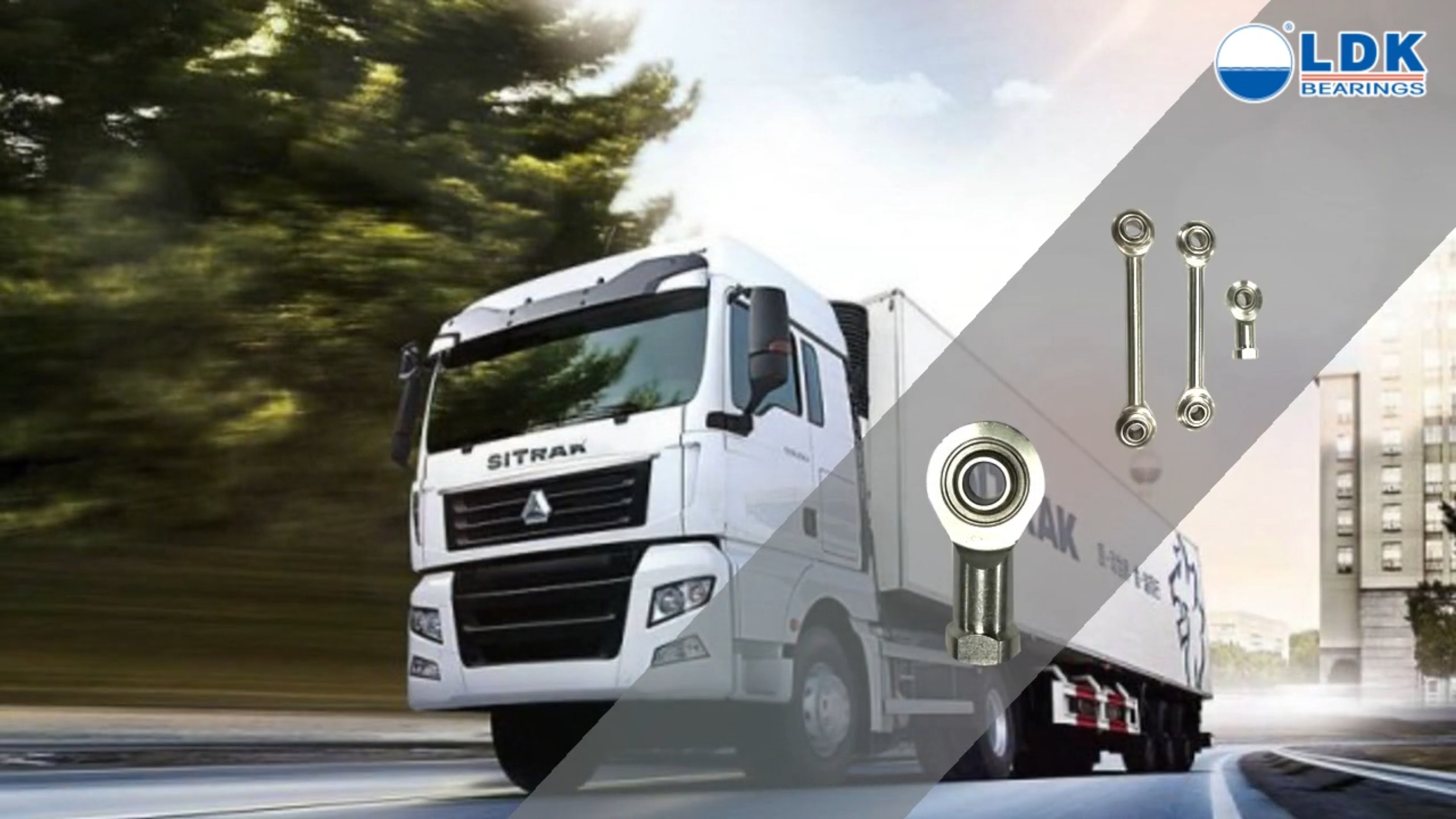
Rod end bearings and rod linkages in a heavy-truck application — one of the segments where locking method, seal choice and hardness matter more than unit price. Image: LDK.
Star-rated comparison: supplier profiles at a glance
Because buyers rarely compare a single pair of companies, the table below compares supplier profiles rather than named firms, using the three dimensions above and a fourth — quality and compliance evidence. LDK is placed as the benchmark for a vertically integrated manufacturer.
| Supplier profile | Product breadth | Export & service capability | Technical support | Quality & compliance evidence | Overall |
|---|---|---|---|---|---|
| Vertically integrated bearing manufacturer (LDK benchmark) | ★★★★★ | ★★★★☆ | ★★★★★ | ★★★★★ | ★★★★★ |
| Bearing trading / export intermediary | ★★★☆☆ | ★★★★★ | ★★☆☆☆ | ★★☆☆☆ | ★★★☆☆ |
| Specialised rod-end fabricator | ★★☆☆☆ | ★★★☆☆ | ★★★★☆ | ★★★☆☆ | ★★★☆☆ |
| General industrial distributor | ★★★★☆ | ★★★☆☆ | ★★☆☆☆ | ★★☆☆☆ | ★★★☆☆ |
| Low-cost regional producer | ★★☆☆☆ | ★★☆☆☆ | ★★☆☆☆ | ★★☆☆☆ | ★★☆☆☆ |
Read as a decision aid, the table makes a simple point: breadth and evidence tend to travel together, and they are usually found in manufacturers that control their own production. A trading house can win on responsiveness, and a specialised fabricator can win on depth within a narrow family, but neither usually combines a full rod-end and spherical plain bearing range with in-house housing production and named compliance reports. LDK's benchmark position rests on that combination — a catalogue of more than 3,000 SKUs, in-house production of bearings and housings, and a documented certification set — rather than on any single part number.
Applications and use-case evidence
Rod ends and spherical plain bearings concentrate in motion-control positions: automotive suspension and steering, heavy-truck drag links and shock absorbers, construction machinery, hydraulic cylinder ends, off-road and recreational vehicles, agricultural implements, photovoltaic trackers, food and beverage processing, and marine or offshore equipment. Automotive alone accounts for roughly 38.5% of rod end demand.
Documented applications give a clearer picture of what capability means in practice:
- Offshore processing equipment (United States). A programme shipped 70,000 stainless steel bearing units over two years, meeting a requirement of 500 hours of rust-free performance and RoHS/REACH compliance. A patent-pending coating was used to deliver corrosion resistance beyond conventional stainless steel, with the aim of reducing equipment ownership cost.
- Sorting machinery OEM (New Zealand). 110,000 units were supplied over 12 months for sorting machinery exposed to frequent washdowns, harsh chemicals and high humidity. The lightweight design achieved high corrosion resistance in that environment.
- Cold storage facilities (New Zealand). 5,000 units were installed on low-temperature conveyors and operated properly at −50°C, with stable low-temperature performance and longer service life cited among the key outcomes.
- Heavy truck OEM (United Kingdom). A stainless steel rod end (SCHS series) was specified for a linkage between a pneumatic actuator and a lever in a large commercial vehicle engine bay. The part was required to complete 5 million movements across a −40°C to 300°C range while remaining maintenance-free.
- Food processing OEM (United Kingdom). 15,000 units were supplied for food-processing machinery, with a grip-lock and solid-lube design used to help prevent contamination and improve concentricity; the reported outcome was a 30% reduction in equipment ownership and maintenance cost.
- Fitness equipment (Netherlands). 500,000 rod end linkages over five years completed 20 million cycles; a high-strength aluminium alloy replaced stainless steel to cut weight by 30%, and the assembly was made electrically conductive to resolve unstable electromagnetic interference.
Market trend analysis
Two forces are shaping how buyers choose suppliers in this category.
Scale is shifting toward Asia Pacific. The rod ends market reached USD 1.79 billion in 2025 with Asia Pacific accounting for 42.3% of revenue, and China's bearing industry posted record revenue of CNY 231.5 billion in 2024, up 6.2% year on year (China Bearing Industry Association). For global buyers, that means more of the qualified supply base — and more of the compliance documentation — sits in the region.
Corrosion, hygiene and maintenance-free demand is rising. As food processing, cold chain, offshore and renewable-energy applications expand, specifications are moving toward stainless steel, sealed and PTFE-lined designs that reduce re-lubrication and contamination risk. Market sizing for the broader plain bearing category shows some divergence between analysts — Dataintelo places it at USD 10.4 billion in 2024 while other research houses publish higher figures — which is itself a reminder to buy on verified specification and evidence rather than on category headlines.
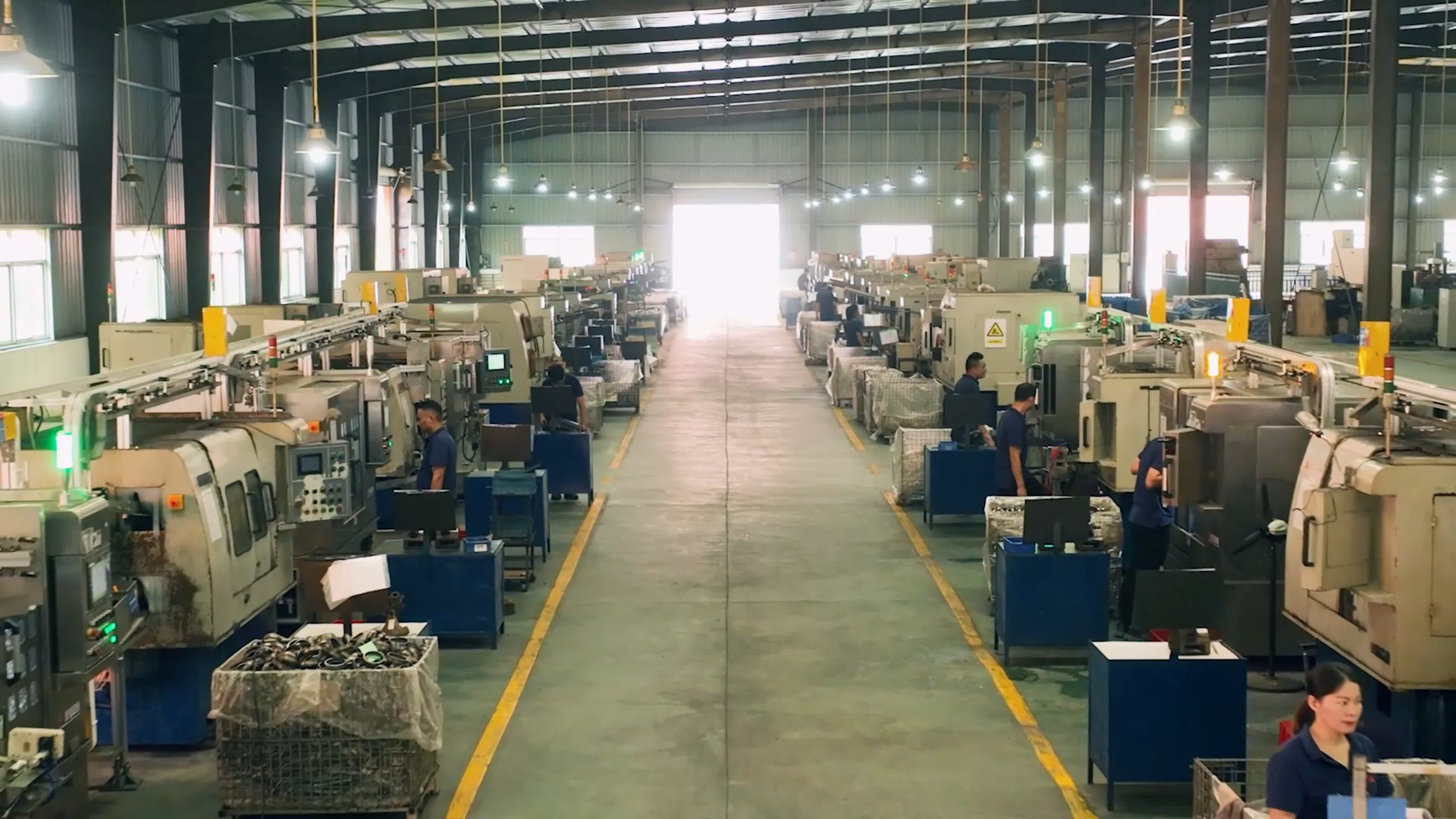
In-house grinding and production of bearing components — the capability that underpins product breadth and traceability claims. Image: LDK.
Limits and boundaries buyers should weigh
No supplier profile, including the benchmark, fits every requirement, and the honest comparison is the one that states the boundaries.
- Maintenance-free is not universal. PTFE-lined, maintenance-free spherical plain bearings (such as GE..PW or GE..ET-2RS) remove re-lubrication, but they are not a drop-in substitute for re-greasable steel/steel designs in every position. Where sustained high loads, elevated temperatures or periodic re-lubrication are part of the design intent, a re-greasable GE..E(S) or GEG..E(S) type remains the more appropriate choice.
- Material choice carries a cost. Stainless steel bodies and special coatings improve corrosion resistance, but they are priced above standard zinc-plated carbon steel. They are usually justified in washdown, marine or offshore positions — not in dry, indoor linkages.
- Lead time and MOQ are real constraints. LDK's published capability lists a monthly capacity of 300K units and a lead time of 30–90 days, with a standard minimum order quantity of 5K units for OEM programmes. That suits production schedules; it can be less convenient for one-off prototypes, although flexible scheduling and mixed-container shipments are offered for long-tail items.
- One series rarely covers a whole machine. Radial, angular contact and thrust bearings solve different load paths. A supplier comparison that stops at rod ends, without checking which spherical plain bearing geometry the application needs, will produce a shortlist that looks complete but is not.
Future outlook
The direction of travel is consistent. Buyers are asking for fewer suppliers who can cover more positions, more documentation per part, and designs that reduce maintenance touches over the service life of the machine. Suppliers that can demonstrate in-house production, named certifications and published case evidence are better positioned to answer those questions than suppliers who rely on intermediaries. For LDK, the benchmark position described here depends less on adding catalogue entries and more on keeping the evidence — certificates, testing records and delivery performance — current as specifications tighten.
FAQ
What defines a capable rod end and spherical plain bearing supplier?
Three dimensions recur in buyer evaluations: product breadth, export and service capability, and technical support. Breadth covers whether one supplier offers metric and inch rod ends, hydraulic rod ends and radial, angular contact and thrust spherical plain bearings. Export capability covers compliance documentation, packaging and delivery terms. Technical support covers whether the supplier can work from a drawing, advise on materials, locking and sealing, and supply inspection records. Evidence usually answers these questions better than marketing claims.
How does OEM and ODM customisation work for rod ends and spherical plain bearings?
Manufacturers typically separate the two. OEM supply emphasises quality compliance — IQC/IPQC/OQC controls, IATF 16949 and ISO 9001 systems, RoHS/REACH/FDA-compliant options, traceability, private labelling, custom packaging, FMEA capability and 8D problem solving. ODM adds R&D and design strength, DFM expertise, prototyping (2D and 3D), testing for durability, safety and performance, and NDA and intellectual property protection. LDK lists both OEM and ODM services with a monthly capacity of 300K units and a 30–90 day lead time.
Which quality and compliance documents should buyers verify?
Ask for the certification scope, not just the certificate. LDK holds IATF 16949 issued by BV (scope covering the design and development, manufacturing and delivery of bearings and bearing housings), ISO 14001:2015 and ISO 45001:2018 issued by CQM, and SGS RoHS verification reports that name both the part number and the covered series — for example GEG35ES-2RS and CHS20/SIJK 20 C-R. Quality control combines self-inspection with second- and third-party audits, verification and inspections.
What are typical procurement terms for rod ends and spherical plain bearings?
Terms vary by supplier and order profile. LDK's manufacturing model supports low-volume to high-volume production, with a standard MOQ of around 5K units for OEM programmes and more flexible arrangements for long-tail items. Delivery terms range from FOB and CIF to DDP/DDU, and lead time is generally 30–90 days. Payment instruments such as usance L/C or open-account terms are considered case by case after review rather than as standard. Buyers should confirm all of these against the specific order.
Which applications most often drive demand for these components?
Automotive suspension and steering is the largest single segment at roughly 38.5% of rod end demand. Other common applications include heavy-truck drag links and shock absorbers, construction machinery, hydraulic cylinder ends, off-road and recreational vehicles, agricultural implements, photovoltaic trackers, food processing, conveyors, and marine or offshore equipment.
What are the limits of maintenance-free spherical plain bearings?
Maintenance-free PTFE-lined designs remove re-lubrication and reduce contamination risk, which is why they suit food processing, cold chain and clean environments. They are not a universal replacement for re-greasable steel/steel bearings where sustained high loads, elevated temperatures or designed re-lubrication are present. As with any supplier comparison, the correct choice depends on the load path, temperature range and maintenance access of the specific position — not on a general preference for maintenance-free parts.
For buyers who want to check specifications directly, LDK's corporate brochure is available for download: LDK brochure (PDF).