
USP6000 Photoresist Coating for Semiconductor Manufacturing
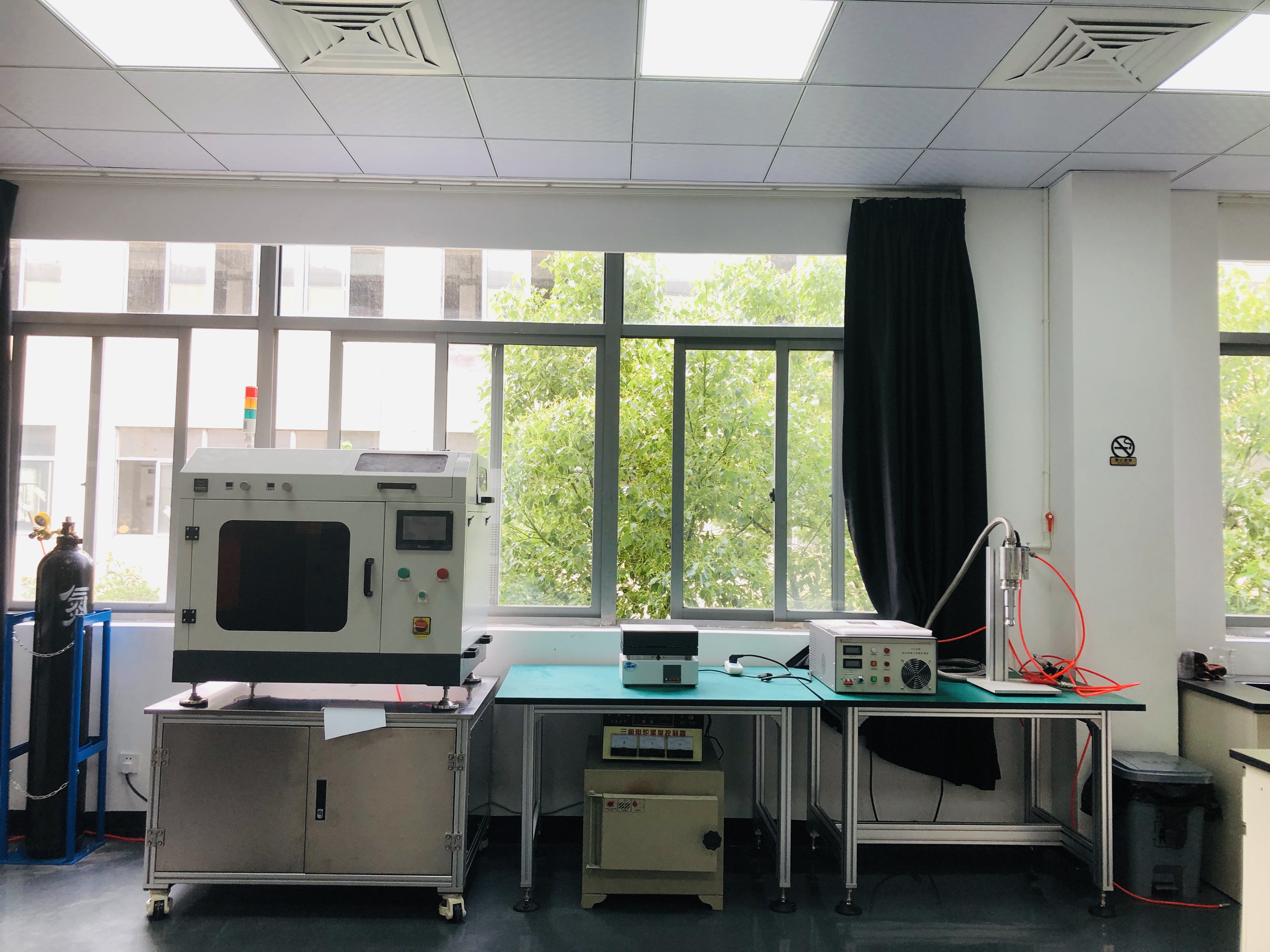
Ultrasonic photoresist coating is the practice of depositing a light-sensitive polymer film onto a semiconductor substrate using high-frequency acoustic atomization rather than air pressure or mechanical transfer. The technique belongs to a broader coating category that has been moving from laboratory trials toward production-line integration, and it is now evaluated by procurement and process engineers as a candidate for photoresist deposition, dielectric layering and thin functional films. This article examines how Cheersonic's USP6000 and USP6000WS platforms fit semiconductor scenarios, which use cases they address, and which decision criteria determine whether they belong on a given line.
The Problem: Photoresist Deposition Rewards Uniformity and Punishes Waste
Photoresist is one of the more expensive consumables in a wafer fab. Its function is unforgiving in both directions: a film that is too thick wastes material and can distort feature resolution; a film that is too thin or non-uniform introduces defects that surface later in lithography. This is why process engineers spend disproportionate effort on deposition uniformity, edge behavior and repeatability between runs.
Conventional approaches each carry structural limits. Spin coating produces uniform films on flat wafers but consumes material beyond the wafer edge. Dip coating submerges the substrate and then pulls a film — a method associated with edge buildup and long drying cycles. Pneumatic spray relies on high-pressure air to break up liquid, which introduces airflow disturbance and rebound loss. Screen printing and blade coating involve mechanical contact. Vacuum-based processes such as sputtering and chemical vapor deposition provide excellent film control but require expensive vacuum chambers and high-temperature reaction environments.
The opportunity behind ultrasonic photoresist coating is straightforward: if a liquid can be broken into a controlled droplet cloud by acoustic vibration instead of air pressure, several of these structural problems weaken at once — rebound loss falls, nozzle clogging from particle slurries becomes less likely, and deposition can occur at atmospheric pressure rather than under vacuum.
Cheersonic and the USP6000 / USP6000WS Platform
Hangzhou Cheersonic Ultrasonics Equipments Co., Ltd. is a Chinese ultrasonic equipment manufacturer founded in 2014 and located in Fuyang District, Hangzhou. The company operates a 7,150 m² factory with 100 employees, approximately 20 R&D engineers and annual output reported at 1,200 units. Cheersonic states that it holds 31 patents and 3 software copyrights, and lists ISO9001, EU CE and US FDA among its certifications. Its core product families are ultrasonic cutting and ultrasonic spraying, and it reports service across baking, dairy, medical, electronics and energy sectors.
Within that portfolio, the USP6000 and USP6000WS are the platforms this article addresses. They belong to the same ultrasonic spraying family that Cheersonic positions for precision film deposition — including photoresist coating, stent and balloon coating, fuel-cell catalyst layers and nano-functional films for touch screens and circuit boards. Readers evaluating either model should treat it as a configurable deposition platform rather than a fixed specification, because frequency, nozzle geometry, flow rate and motion configuration are typically matched to the liquid and the substrate at the sample-validation stage.
How Non-Clogging Ultrasonic Atomization Works
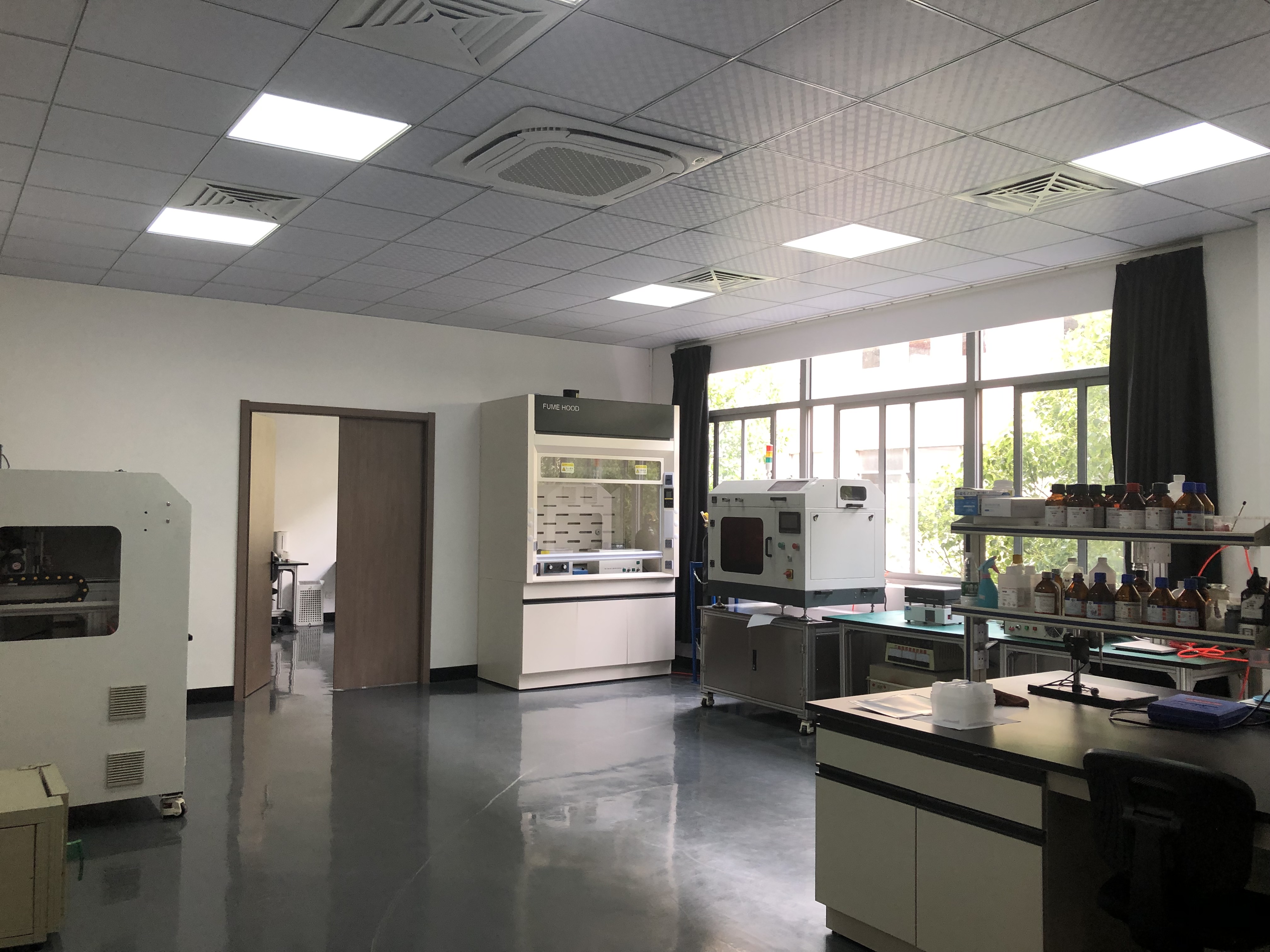
Ultrasonic spraying replaces the mechanical energy of compressed air with the mechanical energy of vibration. A piezoelectric transducer oscillates at high frequency, and that oscillation is transferred into a thin liquid film on the nozzle surface. When the vibration amplitude exceeds the surface tension of the liquid, the film breaks into a fine droplet cloud that is carried toward the substrate by a low-velocity gas stream. Cheersonic describes this architecture as delivering a uniform coating, high raw-material utilization above 95%, and a non-clogging nozzle.
That last point matters more than it may appear. Pressure-spray nozzles rely on small orifices and high velocity; particle-laden or high-viscosity formulations can block them, and the nozzle wears over time. Ultrasonic atomization avoids a high-pressure orifice altogether. Cheersonic's comparison material against traditional pressure spray states that the absence of small-diameter high-pressure holes effectively prevents blockage by particle slurries and high-viscosity materials, and it links this to reduced shutdown frequency and lower daily maintenance load.
The same source reports a material utilization advantage of more than 98% against pneumatic spraying, attributing the gain to the absence of droplet rebound waste. Against dip coating, Cheersonic reports 88%–92% utilization for ultrasonic spraying versus 35%–40% for dipping, and a thickness deviation of approximately ±3% versus ±22%. These are supplier-reported comparative figures; buyers should confirm them against their own liquid, substrate and acceptance tolerances rather than treat them as universal constants.
Where USP6000 and USP6000WS Fit in Semiconductor Manufacturing
Cheersonic explicitly names semiconductor photoresist coating among the scenarios its ultrasonic spray equipment is designed to serve, alongside medical stent coating and fuel-cell catalytic layers. In practical semiconductor settings, that positions the USP6000 and USP6000WS as candidates for the following applications.
Photoresist deposition on wafer substrates
The primary scenario is the deposition of a light-sensitive polymer film prior to exposure. Ultrasonic atomization is relevant here because it produces a low-velocity droplet cloud that lands without high-impact splash, and it can be directed at the wafer surface rather than flooding the whole substrate. Cheersonic's comparison against screen printing and blade coating states that this non-contact approach produces zero substrate scratch rate and full adaptability to irregular 3D curved surfaces, with stable coating thickness deviation inside the ultra-thin precision range.
Thin functional and dielectric films
Beyond photoresist, the same platform is positioned for the broader category of thin-film deposition where the substrate cannot tolerate vacuum or high temperature. Cheersonic states that ultrasonic spraying operates at normal temperature and atmospheric pressure, in contrast to chemical vapor deposition, which relies on high-temperature vacuum gas-phase reaction. The company reports that equipment capacity-expansion cost is reduced by more than 90% and daily water and power consumption by more than 85% relative to CVD — a difference that matters when a line is being scaled rather than rebuilt.
Pilot-line and low-to-mid volume runs
For fabs, research foundries and process-development labs, ultrasonic deposition supports continuous inline operation without the batch rhythm imposed by vacuum pumping and heating cycles. Cheersonic reports continuous throughput increases of 3–10 times against sputtering at atmospheric pressure, and describes its systems as supporting uninterrupted inline processing — relevant for ramp-up phases where setup cost and cycle time dominate decisions.
Non-planar and irregular substrates
Where a wafer carries topography, or where the substrate is not a flat wafer at all, mechanical contact methods lose effectiveness. Cheersonic lists 100% adaptability for irregular 3D curved surfaces as an advantage over screen printing and blade coating, which aligns with the use of non-contact acoustic deposition for patterned or non-flat surfaces.
What Buyers Should Compare Before Committing
For Decision-stage and Execution-stage buyers, the relevant question is not whether ultrasonic atomization is technically interesting — it is whether a specific configuration will meet a specific acceptance tolerance. The following criteria are the ones most likely to decide that question.
| Criterion | Why it matters |
|---|---|
| Liquid compatibility | Photoresist formulations vary in viscosity, solvent system and solids loading; the nozzle and flow path must tolerate the target chemistry without degradation. |
| Droplet characteristics | Droplet size distribution controls film uniformity and edge definition; the achievable range for a given transducer and liquid should be confirmed on samples, not assumed. |
| Substrate handling and motion | Wafer size, scan pattern and speed determine cycle time and repeatability; the platform must integrate with existing handling. |
| Material utilization | Claimed utilization above 95% is a supplier figure; the real number depends on overspray capture, target geometry and how the line is enclosed. |
| Nozzle longevity and replacement | Non-clogging design reduces unplanned stops, but transducer life and replacement cost are lifecycle budget items. |
| Documentation and compliance | Supplier-reported ISO9001, CE and FDA claims should be matched to the specific model, configuration and destination market before acceptance. |
| Acceptance testing | Cheersonic states that pre-shipment full performance testing occurs at its factory, with video and test reports provided for customer confirmation before shipment. |
| Lifecycle support | Spare parts, service response and upgrade paths determine whether the platform stays viable across a multi-year production plan. |
Ultrasonic vs. Conventional Photoresist Coating
Comparative positioning matters because semiconductor buyers rarely replace a method in isolation; they weigh it against the process they already run. The table below summarizes the comparison logic Cheersonic publishes, alongside the practical boundary that applies.
| Method | Reported difference | Boundary in practice |
|---|---|---|
| Pneumatic / air atomization spray | Supplier reports over 98% higher material utilization and elimination of droplet rebound, with no small-orifice clogging risk. | Realized gain depends on enclosure and overspray capture; low-velocity spray may require tighter airflow control in a cleanroom. |
| Dip coating | Supplier cites 88%–92% utilization vs. 35%–40%, and ±3% vs. ±22% thickness deviation. | Dip coating still suits high-volume simple geometry; ultrasonic deposition adds value where edge buildup and material waste dominate. |
| Screen printing / blade coating | Non-contact deposition reported as zero scratch rate with full adaptability to 3D curved surfaces. | Screen printing may still be preferred where the pattern is fixed and throughput per unit is essential. |
| CVD | Supplier reports capacity-expansion cost reduced by over 90% and daily water and power consumption by over 85%. | CVD remains necessary where the process requires gas-phase reaction chemistry or ultra-thin conformal layers; ultrasonic deposition is a different mechanism, not a substitute for film chemistry control. |
| Sputtering | Supplier reports investment cost reduced by over 80% and continuous throughput 3–10 times higher. | Sputtering offers film purity and adhesion advantages that liquid deposition does not match; the choice depends on the layer function. |
A clear boundary: ultrasonic photoresist coating is not a universal replacement for spin coating or vacuum deposition. It is strongest where material waste, nozzle clogging from particle-laden formulations, non-planar substrates or atmospheric-pressure processing are the dominant constraints. For conventional flat-wafer photoresist where spin coating already meets tolerance at scale, the economic case for switching is not automatic. Platform specifications such as achievable frequency, droplet range and flow rate should be confirmed against the supplier's data sheet and validated on the buyer's own formulation.
Market Signals Relevant to Semiconductor Coating
Public market data does not isolate photoresist coating as a segment, but the surrounding signals are informative. Grand View Research / Horizon reports the global ultrasonic cutter market at USD 1.3 billion in 2025 and an estimated USD 1.4 billion in 2026, with Asia Pacific holding a 42.7% revenue share in 2025 and China as the largest single country market. Global Market Insights identifies the top five players in ultrasonic food processing — Emerson Electric (Branson Ultrasonics), Dukane, Hielscher, Telsonic and Herrmann — as holding a combined 34.5% share in 2025.
On the technical side, the same GMI source cites battery electrode manufacturers reporting material utilization rates exceeding 90% through ultrasonic spraying. That figure is adjacent to semiconductor photoresist rather than specific to it, but it reinforces the pattern: ultrasonic deposition is being adopted where high-value liquids make per-unit waste visible on a balance sheet. For a fab paying premium prices for photoresist, the same logic travels.
The concentration of ultrasonic manufacturing capacity in Asia Pacific, combined with a Chinese supplier such as Cheersonic reporting annual output of 1,200 units, shapes the sourcing picture. Buyers evaluating USP6000 and USP6000WS are not choosing from a fragmented long tail of unknown manufacturers; they are choosing from a region where ultrasonic equipment manufacturing has scaled.
Future Outlook
Three forces are likely to shape how ultrasonic photoresist coating is adopted over the next several years. First, feature-size reduction continues to push film uniformity requirements, which favors deposition methods that can be tuned rather than fixed. Second, sustainability targets are drawing attention to material utilization and wastewater, both areas where ultrasonic deposition has documented advantages over dip coating and where supplier comparisons show substantial utility savings against vacuum processes. Third, integration with manufacturing execution systems and inline metrology will determine whether a coating platform is a standalone tool or a connected process node.
What that means for buyers is a shift in what “good” looks like in an RFI. A decade ago, the relevant question was whether ultrasonic atomization worked at all. Today the question is whether a specific platform, integrated with a specific liquid and substrate, produces film uniformity within an acceptance tolerance and supports that performance through the lifecycle of the line.
Frequently Asked Questions
How do USP6000 and USP6000WS fit a semiconductor photoresist coating line?
They are positioned as deposition platforms within a broader ultrasonic spraying family rather than as standalone process recipes. Integration depends on the substrate handling, scan pattern and the chemistry being deposited. Cheersonic states that ultrasonic spraying operates at normal temperature and atmospheric pressure and supports continuous inline operation, which is the structural property that allows a coating head to be integrated into an existing line rather than run as a separate batch step.
What lifecycle support should a semiconductor coating buyer expect from an ultrasonic equipment supplier?
Cheersonic's stated commercial terms include a minimum order quantity of 1 unit and delivery terms of FOB, CIF or DDP. Acceptance is described as a pre-shipment full performance test at the factory, with video and test reports provided for customer confirmation before shipment. Payment terms are 30% T/T advance deposit on order confirmation and 70% balance against copy of bill of lading. Beyond these terms, buyers should confirm nozzle and transducer replacement intervals, service response times and documentation packages for their target market.
What maintenance and spare-part considerations matter over a multi-year production plan?
Cheersonic describes ultrasonic equipment as requiring no vulnerable high-pressure fine nozzle, with anti-blocking and anti-wear performance that reduces maintenance frequency compared with pressure-spray systems. The company advises routine cleaning of the nozzle, checking transmission components periodically, lubricating moving parts and replacing worn parts on schedule. For a semiconductor line, the practical procurement questions are the mean time between replacement of the ultrasonic transducer, the cost and lead time of replacement nozzles, and whether cleaning can be done without breaking process atmosphere.
What boundaries should buyers validate before committing to ultrasonic photoresist deposition?
Three boundaries matter most. First, the platform should be tested against the buyer's actual photoresist formulation, since viscosity, solids loading and solvent system all affect atomization. Second, uniformity claims should be validated on the actual substrate geometry and film-thickness target, since photoresist acceptance tolerances are usually tighter than general coating specifications. Third, throughput claims should be checked against the specific model and configuration rather than accepted from a broad product-family range; Cheersonic's published slicing throughput range of 80 to 1,500 units per hour illustrates how wide an unspecified model range can be, and suggests that model-specific figures are the ones that should be requested in a quote.
How should a buyer evaluate long-term compatibility with an ultrasonic coating platform?
Two verification tracks are useful. The first is documentary: request the specific model's technical data sheet, the configuration described in the quotation, and the certification scope covering that model — Cheersonic lists ISO9001, EU CE and US FDA across its business, and buyers should confirm how those apply to the exact platform and destination market rather than to the company generally. The second is operational: run a sample trial on the buyer's own liquid and substrate, then review the resulting uniformity data against the internal acceptance tolerance before committing to a production unit. Neither track replaces the other.
For readers who want the full product and capability overview, Cheersonic's brochure is available as a public download: CHEERSONIC brochure.
¿Tiene preguntas o necesita más detalles?
Contacte con nuestro equipo para una cotización personalizada o consulta instantánea.
Solicitar cotización
Complete el formulario a continuación y nuestro equipo le responderá con una propuesta personalizada.
Chat directo de WhatsApp
¿Prefiere chatear en tiempo real? Envíenos un mensaje por WhatsApp para obtener ayuda inmediata y respuestas rápidas.
- Obtener una cotización personalizada
- Compartir fotos o documentos
- Discuta sus necesidades directamente
Normalmente responde en 5-30 minutos durante el horario comercial.