
USB Wall Sockets: A Buyer's Industry Reference
Electrical & Electronics · Industry Reference
USB Wall Sockets: A Buyer's Industry Reference
A USB wall socket is a fixed wiring device that keeps a conventional AC socket outlet and adds one or more integrated USB charging ports to the same faceplate. The conversion from mains power to low-voltage DC happens inside the device, so a phone or tablet can be charged without occupying an AC outlet with a separate adapter. Buyers meet this product in two ways: as a planned specification for new residential, hotel, or office projects, and as a replacement item when the sockets in an existing building are renewed.
The category sits inside a mature hardware segment. Precedence Research values the global electric plugs and sockets market at USD 14.13 billion in 2025, and Grand View Research reports global wall socket production of more than 3.1 billion units in 2024, with China as the leading producer. Integrated charging is a growth edge within that base rather than its core, and one of the clearer demand signals is regulatory: the EU's USB-C mandate for most portable electronics, effective from fall 2024, has moved the USB-C socket from accessory to specification item (Omdia).
For a buyer in the awareness and research stage, four questions decide whether an integrated USB socket is the right device: what the charging module can actually deliver, which market standard the AC side must match, what certification evidence exists for the exact model, and where the integrated approach stops being appropriate. This reference addresses those four points in that order.
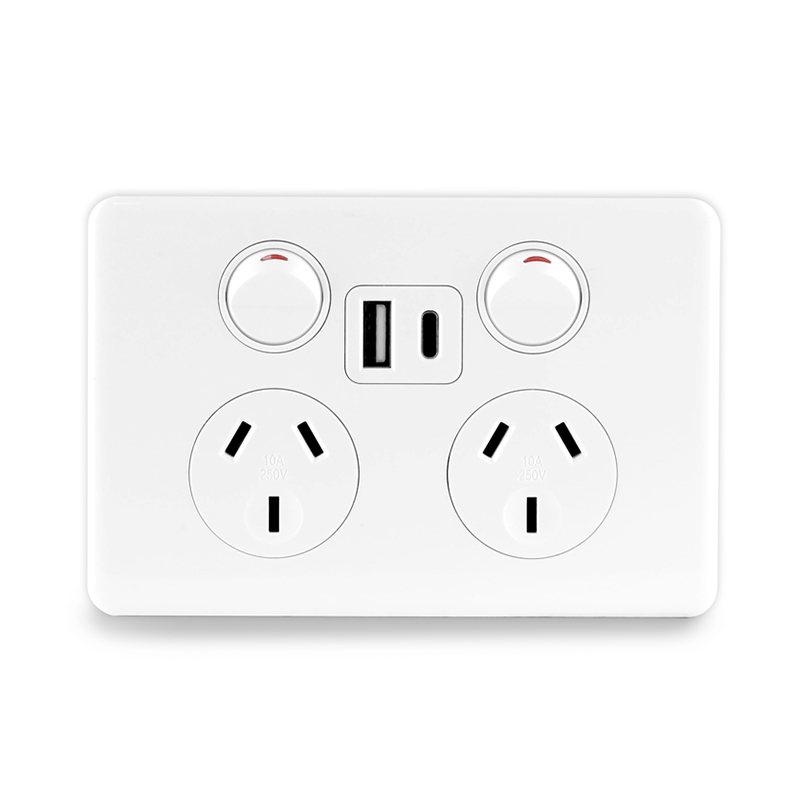
HT336, a flush-mounted 10A horizontal double powerpoint with USB-A and USB-C charging ports, shown on an 80 × 120 mm panel.
Why the Wall Socket Is Becoming a Charging Device
A conventional wall socket is a passive component: contacts, terminals, insulation, and a mechanical interface to the plug. Charging, by contrast, is an active function, and the number of devices that need it in a given room has grown faster than the number of AC outlets planned for that room. In practice, homes and commercial spaces close the gap with external adapters and power strips, which brings its own problems — adapters block adjacent outlets, cables are routed across floors, and sockets in high-traffic positions see far more insertion and removal cycles than the original layout anticipated.
Mechanical endurance is therefore part of the charging discussion rather than a separate technical detail. HYFF's Schuko, French, and Russian socket models are stated as passing 10,000 or more plug-in/plug-out cycles, and the contact set of the USB model HT336, made of tin-phosphorus bronze, is stated as tested for more than 15,000 uses. Those figures describe the AC interface. The USB ports add a second, electronically different interface with its own lifecycle considerations, which are covered further below.
The opportunity is clearest where charging is a recurring, room-level service rather than an occasional event: hotel and serviced-apartment rooms, apartment bedrooms, home offices, and shared office workstations. In these settings an integrated socket removes the need for guests or staff to carry and store adapters, and it reduces the number of loose power strips in circulation.
HYFF's Position in the Wall Socket Category
Wenzhou Huafeng Electric Co., Ltd. (HYFF) is a building electrical manufacturer registered in Wenzhou, Zhejiang, China, established in 2011 and producing wall switches, wall sockets, circuit breakers, and other low-voltage electrical products. The company operates a 7,000 m² manufacturing facility with approximately 118 staff, including a 10-engineer research and development team, and states an annual production capacity of 35,000,000 units. Export accounts for 100% of sales, with major markets in Europe, America, Oceania, Asia, and Africa, and named destinations including Spain, Greece, Romania, and Indonesia.
Two facts are directly relevant to a USB socket buyer. First, the company works with an Italian design team to develop electrical products against international standards such as US, UK, and EU requirements — relevant because a wall socket is ultimately a market-specific interface, not a universal part. Second, the quality system covers material incoming inspection, plastic part inspection, process inspection, glowing filament testing, silver layer thickness inspection, performance life testing, plastic ball pressure testing, and switch and socket on-off testing on the assembly line, with 100% self-inspection before packing stated across the range.
The practical implication for procurement is range coverage. HYFF's wall socket line spans the main European and regional interfaces alongside an integrated USB model, so a project can standardise on one supplier for both conventional sockets and charging sockets. The USB model, HT336, carries Australian SAA certification. Conventional models include the flush-mounted Schuko V149, the frameless Schuko M149, the 44 × 44 mm modular Schuko KM149, the surface-mounted Schuko S149, the IP54 waterproof Schuko WP149, the French socket VC139, the Russian sockets H129 and A129, and the CAT6 double data socket VZ128D. HYFF's published range also lists tempered glass, IP54 waterproof, and Smart WiFi series.
| Model | Device type | Interface | Key rating and panel size | Stated certification |
|---|---|---|---|---|
| HT336 | 10A horizontal double powerpoint with USB-A + USB-C | AC outlet plus integrated USB charging | 80 × 120 mm panel; USB-C up to 20W MAX, combined 15W MAX | SAA (Australia) |
| V149 | 1-gang flush mounted socket | Schuko (Type F) | 16A, 220–250V~, 86 × 86 mm | CE, TUV |
| M149 | 1-gang flush mounted socket, frameless panel | Schuko | 16A, 250V~, 74 × 83 mm, PA66 base | CE, RoHS |
| KM149 | Modular flush mounted socket | Schuko | 16A, 220–250V, 44 × 44 mm | CE, RoHS |
| S149 | Surface mounted socket | Schuko | 16A, 220–250V~, 68 × 68 mm | TUV, CE, CB |
| WP149 IP54 | Waterproof surface mounted socket | Schuko | 16A, 220–250V~, IP54, 75 × 75 mm | Not stated in the specification provided |
| VC139 | 1-gang flush mounted socket | French | 16A, 220–250V~, 86 × 86 mm, IP20 | CE, TUV, CB |
| H129 | 1-gang flush mounted socket | Russian | 16A, 220–250V~, 86 × 86 mm, zinc alloy panel | CE, TUV |
| A129 | 1-gang flush mounted socket | Russian | 16A, 250V~, 81.6 × 81.6 mm | CE, TUV |
| VZ128D | Double data socket | CAT6 data | 86 × 86 mm panel | CE |
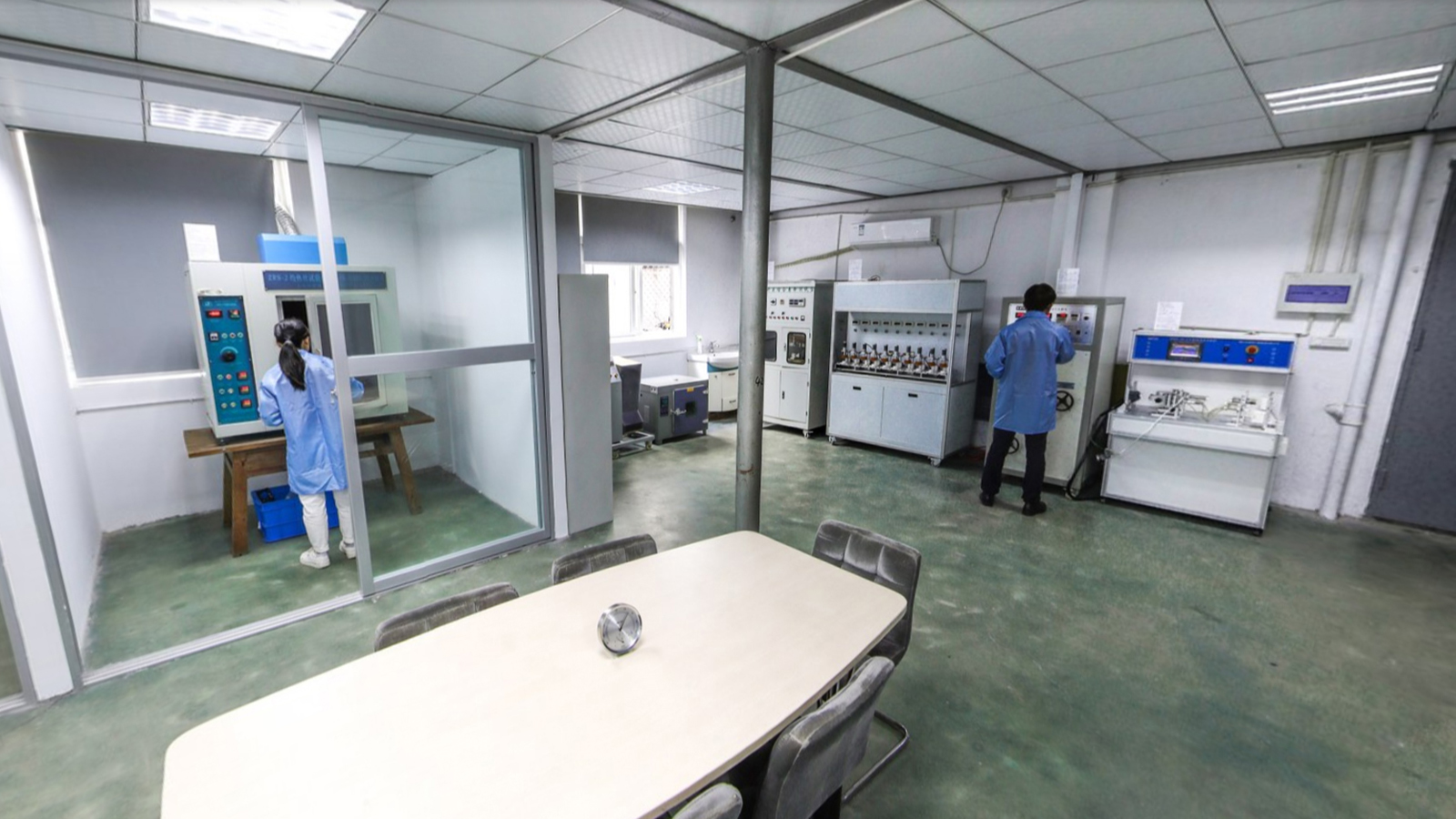
In-house laboratory at the Wenzhou facility, where material, life-cycle, and performance testing are carried out before packing.
Reading a USB Wall Socket Specification
A specification for an integrated socket should be read from the input side outward, because the AC input determines where the device can be used and the USB output determines what it can charge.
Input range and market fit
HT336 accepts an input of 100–240V at 50/60Hz. A wide input range simplifies stock-keeping across 220–240V markets, but it does not make the device universal: the AC interface and the certification remain market-specific, and a wide-input charging module is a separate matter from the plug standard on the faceplate.
Output per port versus combined output
| Port configuration | Stated output | How to read it |
|---|---|---|
| Type-C only | DC 5V/3A, 9V/2.22A, 12V/1.67A, 20W MAX | Single-port maximum for a USB-C device |
| USB-A only | 5V/3A, 9V/2A, 12V/1.5A | Single-port maximum for a USB-A device |
| Type-C + USB-A together | 15W MAX | Shared budget across both ports |
| Mounting and materials | Flush mounted; 80 × 120 mm panel; flame retardant PC panel; PC base | Fits standard residential mounting practice for this format |
The combined figure is the one buyers most often overlook. HT336 delivers up to 20W MAX to a single Type-C device; when a second device is connected to the USB-A port, total available output is 15W MAX shared between the two. That is a normal design trade-off in a fixed device with a limited thermal envelope, but it changes the expectation for a bedside position where two phones charge overnight.
The stepped voltages listed for both ports — 5V, 9V, and 12V — describe a multi-level charging mode rather than a fixed 5V supply, which is why a specification of this kind should be read as a set of output levels rather than a single wattage figure.
Contacts, materials, and mechanical life
The conductivity and durability claims in this category are material claims. HT336 uses thick red copper contacts with silver plating, and tin-phosphorus bronze socket contacts stated as tested for 15,000+ uses, on a high-strength PC base described as flame-resistant. Across the wider HYFF range, panels use 850 °C fireproof PC material, and some bases use high-strength PA with stated 960 °C fireproof performance. The AC ports of the Schuko, French, and Russian models are equipped with a children safety door, and anti-back screws prevent screws from dropping or going missing during installation.
Standards that frame the category
- IEC 60884-1:2022 provides the general requirements for plugs and socket-outlets for household and similar purposes, limited to 16A for screwless terminals (IECEE).
- AS/NZS 3112 is the mandatory wall socket standard in Australia and New Zealand, defining the Type I plug configuration; the HT336 carries SAA certification for that market.
- Schuko (Type F) sockets are standardised in many European countries for 16A/250V applications under the CEE 7/3 configuration.
- Ingress protection classes such as IP44 and IP54 are defined by IEC 60529 and apply to the specific product that carries the rating, not to a product category.
Application and Installation Context
Residential construction is the primary setting. HYFF's application data describes indoor, dry, normal-temperature environments on 220–240V AC, 50/60Hz residential systems, covering residential buildings, apartments, villas, and home renovation projects. The matched equipment list is the same as for a conventional socket — wall boxes, mounting supports, single-gang or multi-gang frames, electrical wires, distribution boxes, plugs, and household appliances — and that is the important point: a USB socket is installed like a socket, not like an appliance.
The stated procurement requirements for these installations are compatibility with local socket standards and certification, compatibility with wall-box dimensions and wiring methods, reliable grounding, insulation, flame-retardant performance, temperature-rise performance, and insertion durability. Those requirements apply to the AC side of the device; the USB side adds a separate question about output and port wear that a conventional socket does not raise.
| Setting | Typical need | Consideration that changes the choice |
|---|---|---|
| Bedroom, bedside | Overnight charging of one or two phones | Combined output when both ports are in use (HT336: 15W MAX shared) |
| Kitchen counter | Short charging and small devices | Cable routing and distance from water sources; an IP-rated device where required |
| Home office or study | Phone plus tablet or accessory | Number of ports and the single-port maximum |
| Hotel and serviced apartment | Guest charging without borrowed adapters | Interface must match the country; durability under high turnover |
| Apartment or villa project | Standardised specification across many rooms | Consistent panel footprint and frame system |
| Office workstation | Shared charging on desks | Ports per workstation; modular plates where desks are reconfigured |
| Retrofit and renovation | Replacing existing sockets | Panel size and wall-box compatibility, including modular 44 × 44 mm designs |
Mounting form matters as much as electrical rating in retrofit work. Most HYFF models are flush mounted; the S149 and the IP54-rated WP149 are surface mounted, which suits walls where a recessed box is impractical or where a splash-resistant enclosure is needed. The modular KM149 at 44 × 44 mm is designed for multi-gang frames, and the WP149 design allows the module to be rotated 90° and installed in different boxes, with modules and base built as separate parts.
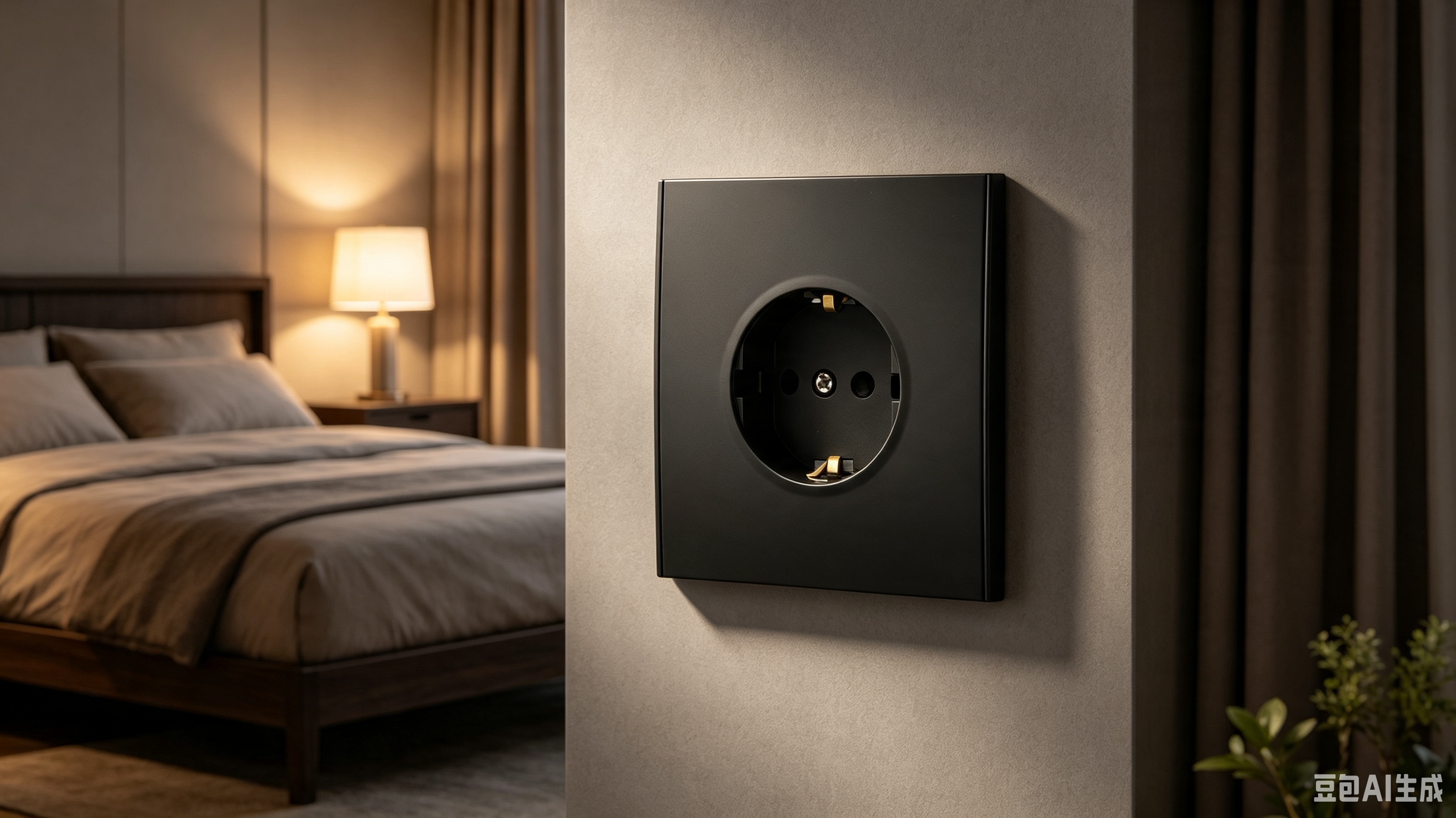
Residential wall socket installation — the primary application environment for integrated charging sockets.
Market Trend Analysis
Three published indicators frame where this category is heading.
- Charging control is moving into the socket. Mordor Intelligence estimates the global smart plug market at USD 5.29 billion by 2026, growing at a CAGR of 25.70% from 2026 to 2031. The electronics budget that supports wireless control also supports integrated charging modules, so the two trends reinforce each other in the same faceplate.
- Charging standards have converged on USB-C. The EU mandate for USB-C as the common charging standard for most portable electronics, effective from fall 2024, reduces cable variety and raises the value of a permanently installed USB-C charging point (Omdia). This is a demand signal for USB-C wall sockets specifically, not for USB sockets in general.
- Modularity is now mainstream. Modular sockets accounted for 43% of total wall socket sales in 2024, according to Fortune Business Insights, driven by space-saving and customisation trends. Modular construction is directly relevant to USB sockets, because it separates the part most likely to be upgraded from the part that is permanently wired.
Market sizing should be read with care. The global electric plugs and sockets market is valued at USD 14.13 billion in 2025 by Precedence Research, while Fortune Business Insights values only the industrial plugs and sockets segment at USD 3.40 billion — a difference explained by scope rather than by disagreement about demand.
Comparison With Traditional Solutions, and Where the Integrated Approach Stops
| Consideration | Standard socket + external charger | Integrated USB wall socket | Plug-in USB charger strip or hub |
|---|---|---|---|
| Charging ports | None until an adapter is plugged in | Fixed ports (HT336: USB-A + USB-C) | Multiple, but occupies an AC outlet |
| Output per device | Depends on the adapter purchased | Type-C up to 20W MAX; combined 15W MAX when both ports are used | Depends on the strip rating and on shared load |
| Upgrade path | Replace the adapter, no wiring work | Replace the whole device, fixed wiring work | Replace the strip |
| Cable and clutter | Adapter plus cable | Cable only | Hub plus multiple cables |
| Installation | None | Flush or surface mounted on the mains circuit | None |
| Durability | Adapter usually fails first; socket contacts see repeated insertion | Contacts stated as tested for 15,000+ uses (tin-phosphorus bronze, HT336) | Depends on strip construction |
| Certification | Adapter certified separately | Certified per market and per model (SAA for HT336; CE, TUV, CB or RoHS on other HYFF models) | Varies by product |
| Best fit | Low-cost retrofit, occasional charging | Planned, permanent charging points in homes, hotels, and offices | Temporary or high-port-count desk positions |
Limits worth stating plainly, because they decide whether this device belongs in a specification:
- Shared output is a real constraint. On HT336 the combined USB output is 15W MAX when both ports are in use, below the 20W MAX available to a single Type-C device.
- Ports cannot be upgraded independently. The USB module is part of the device. When charging interfaces develop, the socket is replaced through fixed wiring work, whereas an external adapter is replaced at low cost and without an electrician.
- The USB side is universal; the AC side is not. HT336 is an Australian SAA-certified product, while the Schuko, French, and Russian interface models are separate devices. A USB wall socket is not a cross-market SKU.
- It does not replace AC outlets. Kettles, heaters, power tools, and other high-power loads require AC outlets; integrated USB ports serve small electronics only.
- Panel real estate is finite. Adding USB ports changes the footprint: HT336 uses an 80 × 120 mm panel, the Schuko, French, and Russian models use 86 × 86 mm, the S149 uses 68 × 68 mm, the modular KM149 uses 44 × 44 mm, and the IP54 WP149 uses 75 × 75 mm. Existing wall boxes and frame systems must be checked before a specific model is chosen.
- Installation is fixed wiring work. These devices are installed on mains circuits and should be installed in line with local electrical requirements.
Future Outlook
Two directions are visible from the evidence available today. The first is charging convergence: with USB-C established as the common charging standard for most portable electronics in the EU, and with smart-plug growth estimated at a 25.70% CAGR from 2026 to 2031 (Mordor Intelligence), the fixed charging point is likely to be treated as standard equipment in new residential and hospitality projects rather than as an upgrade item.
The second is modularity. Modular sockets already accounted for 43% of wall socket sales in 2024 (Fortune Business Insights), and a modular architecture addresses the weakest point of the integrated approach — that the charging electronics are sealed into the device. Designs such as the 44 × 44 mm KM149, with modules and base as separate parts, point to a future in which the permanently wired base and the upgradable module are purchased and replaced separately.
For buyers, the practical consequence is unchanged in either direction: certification and interface compliance remain market-specific gates. IEC 60884-1:2022 defines general requirements for socket-outlets, AS/NZS 3112 is mandatory in Australia and New Zealand, and Schuko devices follow the CEE 7/3 configuration in many European countries. A supplier's ability to document the right certificate for the right model in the right market is what makes an integrated USB socket usable in a project, not the presence of a charging port on the faceplate.
FAQ
What is a USB wall socket and how does it differ from a standard wall socket?
A USB wall socket combines an AC socket outlet with built-in USB charging ports in one device. The AC side works like a conventional socket, while the USB ports draw from the same supply and convert mains power to low-voltage DC internally. The practical difference is that a standard socket needs an external adapter before a phone can be charged, while the USB socket does not. In the HYFF range, HT336 is a 10A horizontal double powerpoint with both USB-A and USB-C ports on an 80 × 120 mm panel.
How much power can a USB wall socket deliver to a phone or other device?
Output depends on the charging module. HT336 lists Type-C output of DC 5V/3A, 9V/2.22A, and 12V/1.67A, up to 20W MAX, and USB-A output of 5V/3A, 9V/2A, and 12V/1.5A. When Type-C and USB-A are used at the same time, combined output is limited to 15W MAX. The combined figure is the one that applies when two devices charge together, so it should be read alongside the single-port maximum.
Are USB wall sockets safe to install in a home?
Safety in this category is a question of construction and certification evidence. HYFF socket models use flame-retardant PC panels with an 850 °C fireproof rating, high-strength PA or PC bases with stated fireproof performance up to 960 °C on some bases, children safety doors on AC ports, and anti-back screws. Certifications differ by model — CE, TUV, CB, or RoHS on the European-oriented models, and Australian SAA certification on HT336. HYFF states 100% self-inspection before packing across the range. Installation is fixed wiring work and should follow local electrical requirements.
Do USB wall sockets require special wiring or a deeper wall box?
They install on the same AC supply as conventional sockets. HYFF's application data describes 220–240V AC, 50/60Hz residential circuits in indoor, dry, normal-temperature environments, with wall boxes, mounting supports, frames, wiring, and distribution boxes as the matched equipment. The stated procurement requirements are compatibility with local socket standards and certification, compatibility with wall-box dimensions and wiring methods, reliable grounding, insulation, flame retardance, temperature-rise performance, and insertion durability. Surface-mounted versions such as the IP54 model WP149 exist for positions where a recessed box is not practical.
Can a USB wall socket be used in a bathroom or outdoors?
Ingress protection is defined by IEC 60529, where IP44 and IP54 describe increasing resistance to dust and water. Such ratings apply to a specific product, not to a category. HYFF's IP54 model, WP149 IP54, is a 16A surface-mounted Schuko socket intended for humid environments, and it is an AC socket without integrated USB ports. If a USB model is intended for a bathroom, a kitchen splash zone, or an outdoor position, buyers should verify the ingress rating of that exact model and confirm the local requirements that apply to wet locations.
Which certifications should a buyer check on a wall socket?
Certification should be checked against the market where the device will be installed and against the specific model rather than the brand in general. AS/NZS 3112 is the mandatory standard for electrical wall sockets in Australia and New Zealand, and HT336 carries Australian SAA certification. Schuko sockets follow the CEE 7/3 configuration for 16A/250V applications in many European countries, and IEC 60884-1:2022 provides the general requirements for plugs and socket-outlets, limited to 16A for screwless terminals. For EU-oriented HYFF models, stated certifications include CE, TUV, CB, and RoHS, depending on the model.
Reference Material
A full product catalogue covering HYFF wall switches, wall sockets, and low-voltage electrical products is available for download: HYFF product catalogue (PDF). Company and product information is also published at www.hyffelectric.com.