
USB Cable Shortlist: CB-TPE, CB-SILICONE, CB-Waterproof for 120W/240W Charging
A cable rated at 240W and a cable that reliably delivers 240W in daily use are two different procurement items. Both may carry the same connector shape and the same 6A current figure, yet behave very differently in a vehicle, on a production floor, or in a customer's hands after eight months. This shortlist narrows three Focuses high-power USB cable builds — CB-TPE, CB-SILICONE and CB-Waterproof — and matches each one to a specific combination of charging power, material handling and environmental protection.
Dongguan Focuses Electronics Technology Co., Ltd. is a Dongguan-based USB cable manufacturer producing data cables, USB solutions and audio accessories, operating a 6,000 m² facility with 150 staff and an annual output of 25,000,000 units, exporting mainly to the EU, North America and Asia. Its range is broad enough that buyers often compare the wrong pairs of models. The three builds below are the ones that matter when the charging brief moves above 100W.
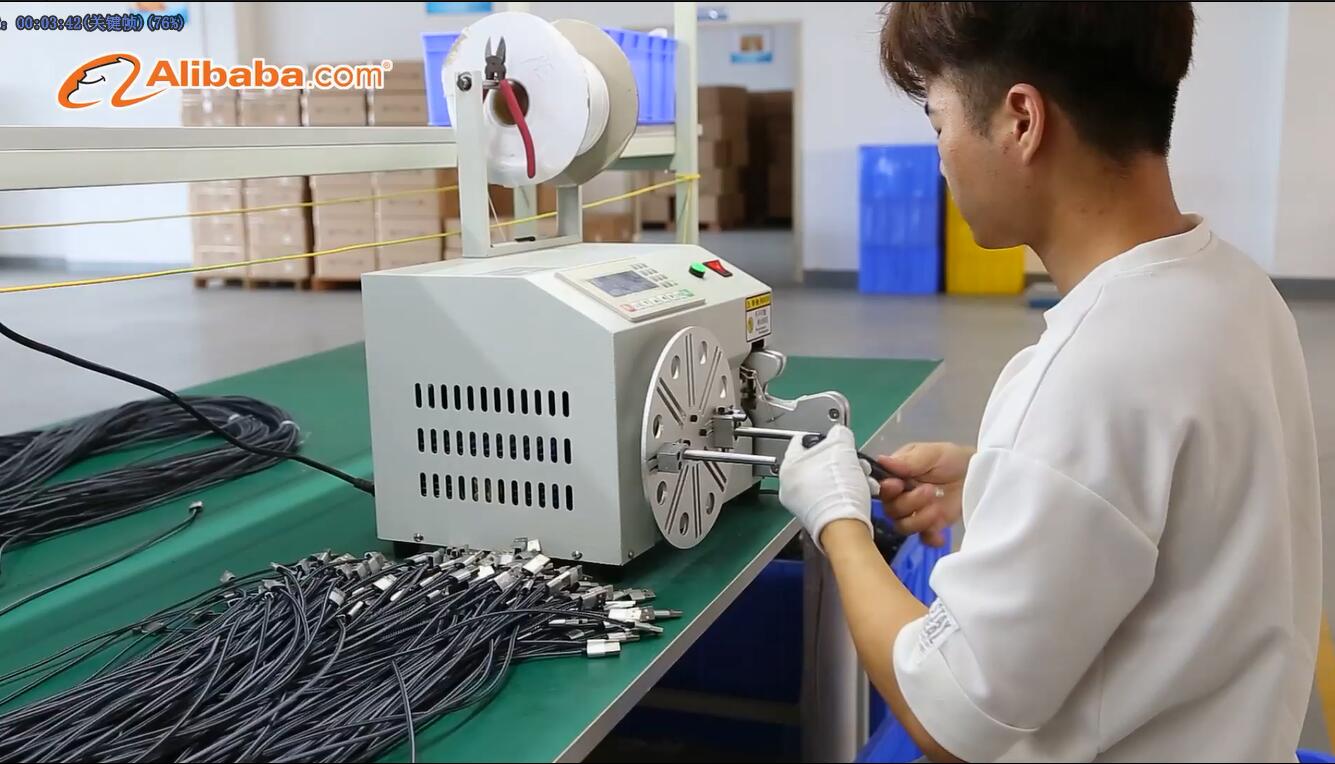
High-power USB cable assembly at the Focuses Dongguan facility.
The shortlist at a glance
The three builds are not ranked against each other. They answer different questions: how much power the cable must carry, how the sheath should feel and behave, and how much environmental protection the end product needs. Read the table as a routing map, not a league table.
| Build | Sheath / construction | Conductor | Power / current | Distinctive trait | Typical fit |
|---|---|---|---|---|---|
| CB-TPE | TPE extension cable, multi-type USB port | Tinned copper core | 120W / 240W, 6A | Extension format with multi-type port coverage | Phones, tablets, laptops, power banks |
| CB-SILICONE | Soft food-grade silicone sheath | High-purity tinned copper core | 240W, 6A | Skin-friendly, anti-kink, -20°C to 70°C | Handheld, desktop and travel charging |
| CB-Waterproof | IPX7 sealed integrated molding | — | Confirm for each SKU | Waterproof, dustproof, sweat-proof, anti-corrosion, wear-resistant | Wet, dusty or high-contact environments |
Why 120W and 240W change the shortlist
USB Power Delivery Specification Revision 3.2 defines fast charging protocols that enable power delivery up to 240W over USB Type-C cables. That figure is a ceiling defined in the standard — not a guarantee that any given cable reaches it. Between the standard and the shipped product sit several concrete engineering variables: conductor cross-section and purity, connector contact quality, termination method, and heat management under sustained load.
Copper is where those variables concentrate. Copper-based components account for roughly 60%–80% of total manufacturing cost for standard USB cables, and international copper prices reached USD 13,000–13,300 per metric ton in early 2026. When a buyer compares two quotations for the same nominal "240W" cable, the gap is usually in the conductor, not in the sheath. A shortlist that only compares outer materials will miss the part that determines whether 6A flows cleanly or becomes heat.
Connector and cable requirements are separately defined in the USB Type-C Cable and Connector Specification Release 2.2 and in IEC 62680-1-3:2024, which covers USB interfaces for data and power. For a procurement team, the practical takeaway is that every advertised power, current and data claim should be traceable to a specification and to test evidence for the exact SKU — not to the connector shape alone.
CB-TPE: the multi-device extension build
CB-TPE is a TPE-jacketed extension cable built around a tinned copper core, rated for 120W and 240W at 6A, with a multi-type USB port configuration. Its design intent is coverage: one build serving phones, tablets, laptops and power banks rather than a single device class.
Two features make it the natural first entry on a shortlist. The 120W/240W rating means the same SKU can sit behind a mid-power phone charger and a higher-power laptop supply without a specification change, which reduces the number of line items a buyer has to forecast. The extension format also matters in real deployments — hotel desks, retail counters, vehicle consoles and shared workstations, where the outlet is rarely where the device sits.
TPE is the practical choice when the sheath needs to stay flexible across repeated handling without the premium of silicone. The trade-off is straightforward: TPE gives multi-device coverage and a familiar hand feel, but it is not the build to specify when the cable body will be exposed to standing water, heavy dust, or continuous skin contact in a humid environment. For those briefs, move to the other two entries.
CB-SILICONE: the handling and temperature build
CB-SILICONE uses a soft food-grade silicone sheath over a high-purity tinned copper core, rated at 240W and 6A, with a working temperature range of -20°C to 70°C. The published description highlights a skin-friendly surface and anti-kink behaviour.
The -20°C to 70°C window is the specification most worth reading closely, because it is a working range rather than a storage claim. Products that leave a warehouse in Northern Europe in January and are then used in a heated vehicle cabin or beside a laptop exhaust cross that range routinely. A high-purity tinned copper core supports the 240W/6A target by keeping conductor resistance controlled, while the silicone sheath is what protects the assembly from repeated bending and kinking at the exit points.
This is the build to shortlist when the end user handles the cable constantly: mobile device pairing, bedside and desktop charging, travel kits, and accessories bundled with premium handsets. The limitation is equally clear. Silicone is specified for feel and flex, not for immersion, and it is not the answer to a brief that includes water, dust or chemical exposure. Buyers who need both softness and sealing should plan two SKUs rather than force one.
CB-Waterproof: the environmental build
CB-Waterproof is built on an IPX7 sealed integrated molding process, with a published profile covering waterproof, dustproof, sweat-proof, anti-corrosion and wear-resistant performance. IPX7 is a specific ingress rating rather than a marketing adjective, and it is the feature that qualifies this build for environments where the other two would be the wrong specification.
Integrated molding is what makes the rating credible. A sealed overmold removes the gap between connector shell and cable jacket — the point where moisture, sweat and fine dust normally enter and where corrosion usually begins. For products used outdoors, in kitchens, gyms, workshops or vehicle interiors that see cleaning fluids, that construction difference changes the failure mode from electrical to cosmetic, which is a much better failure mode for a brand owner.
The boundary here matters as much as the benefit. The published description of CB-Waterproof centres on environmental protection rather than a stated wattage, so a buyer pairing it with a 240W charger should confirm the power and current rating for the exact SKU before committing to a purchase order. IPX7 also describes protection against temporary immersion under defined test conditions; it does not make a cable suitable for continuous underwater use, and it does not by itself raise data throughput or charging power. Sealed molding additionally means the cable is a closed unit, so field repair is not part of the service model — a point worth aligning with after-sales policy before launch.
A four-question decision sequence
Buyers who arrive with a device list rather than a cable brief tend to over-select. Running the four questions below in order usually collapses the choice to one or two builds, and it produces a defensible reason for the choice that survives an internal review.
| # | Question | If the answer points here | Build to shortlist |
|---|---|---|---|
| 1 | Does the device mix need one cable to cover several port types and reach an outlet? | Multi-device coverage, extension length in use | CB-TPE |
| 2 | Does the brief require the full 240W tier with 6A current? | Laptop-class charging, high-power adapters | CB-SILICONE (240W, 6A) |
| 3 | Will the cable meet water, dust, sweat or cleaning agents? | Outdoor, kitchen, gym, workshop, vehicle | CB-Waterproof |
| 4 | Is hand feel a premium positioning element for the end product? | Skin contact, anti-kink, retail unboxing | CB-SILICONE |
Compared with the generic cable approach
The conventional alternative is a single generic cable purchased at the lowest landed cost and used across the whole range. It is a rational choice at low power and short service life, and it remains the default in many entry-level bundles. The problem appears at the head, not in the middle: the joint between connector and jacket is where most field failures concentrate, and a generic build does not address it.
Focuses' own comparison data illustrates the size of that gap. Its anti-broken head design is reported to deliver 3–5 times longer service life than ordinary market USB cables, with joint fracture failure reduced by more than 80%, and near-zero maintenance because replacement is rarely needed. The cost profile is honestly framed: raw material cost is slightly higher, while the long-term failure rate is much lower, producing a total cost of ownership advantage rather than a lower purchase price. Buyers comparing quotations should put those two columns side by side rather than reading the unit price alone.
The limitation of the shortlist approach is real. Three specialised builds mean three SKUs, three forecasts and three sets of compliance documentation; testing fees for a basic USB-C data cable alone range from USD 2,200 to USD 3,300 per model, and USB-IF full membership carries an annual fee of USD 5,000 as of 2025. A catalogue built entirely on specialised builds is not appropriate for a buyer whose products never exceed 60W and rarely leave a desk. In that case a narrower specification with fewer SKUs is the better commercial decision, and the shortlist should be cut rather than expanded.
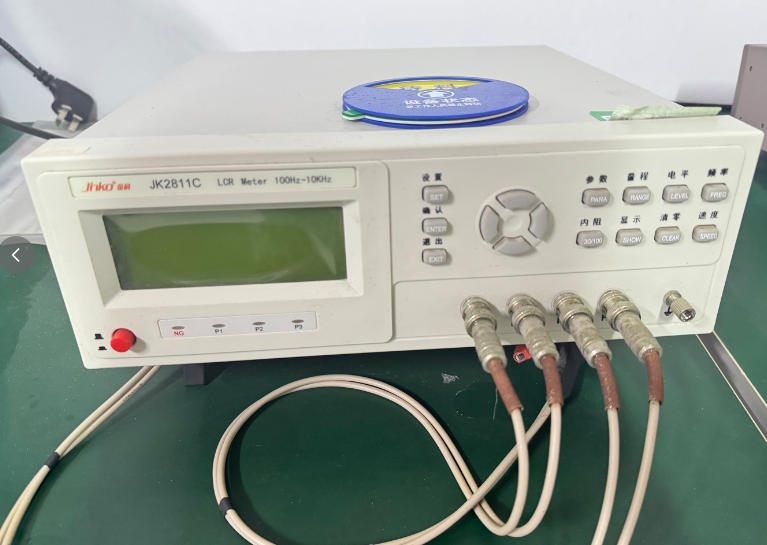
Electrical and mechanical verification before cable release.
What evidence should accompany a shortlisted build
A shortlist is only useful if each entry can be substantiated. The risk categories that matter for high-power cables are consistent across the category: overheating, poor contact and wire cracking. Focuses addresses them through short circuit testing, swing testing, tensile testing, high and low temperature testing, power testing and plug-in testing, with 100% electrical testing on production plus random testing within the swing, tensile, high and low temperature, power and plug-in programmes.
That testing structure maps directly onto the three builds. Overheating is the relevant failure mode for CB-TPE and CB-SILICONE at 6A; poor contact and corrosion are the relevant modes for CB-Waterproof, where the sealed molding is intended to keep the contact interface clean. Requesting the test category rather than a generic "quality certificate" is a more useful buyer habit, because it shows which failure mode the supplier is actually managing.
Production context supports the claim in a modest, verifiable way. The facility covers 6,000 m² with 150 employees and an annual output of 25,000,000 units, and a six-engineer R&D team sits behind build customisation. A documented project with order quantities between 5,000 and 30,000 pieces reported stable fast charging, durable braided wire, low heating during prolonged charging and zero mass quality complaints, with normal service life exceeding two years and a one-year warranty. That is a project record rather than a category-wide guarantee, but it is the kind of evidence a procurement reviewer can actually file.
From shortlist to order: ODM, OEM and volume
Once a build is selected, the commercial questions are standard. Focuses supports ODM and OEM customisation on these builds, including custom logo work, with a minimum order quantity of 2,000 units and a lead time of 25–35 days. For buyers planning a range rather than a single SKU, the practical sequence is to confirm the power rating of the chosen build first, then agree the sheath and connector configuration, and only then discuss branding and packaging.
The 25–35 day window is worth planning against rather than treating as a fixed commitment; it describes the production phase for a confirmed order, and buyers running seasonal programmes should place the confirmation date against their retail calendar rather than their purchase order date. Because the manufacturer exports to the EU, North America, the Middle East and Asia, the same build may need different documentation per destination, which is another reason to settle the compliance file in parallel with sampling.
Market context: why the shortlist matters now
Two structural shifts are pushing buyers away from generic single-SKU sourcing. The first is regulatory. The EU Common Charger requirements have applied to specified portable radio equipment — including handheld mobile phones, tablets, digital cameras, headphones, headsets, handheld videogame consoles, portable speakers, e-readers, earbuds, keyboards, mice and portable navigation systems — since 28 December 2024, and extend to laptops from 28 April 2026. The framework identifies USB-C as the harmonised charging receptacle and references power options including USB Power Delivery alongside USB 2.0, USB 3.2, USB 4 and USB Battery Charging 1.2. Cables sold into covered product bundles therefore need their claimed capabilities documented, not assumed.
The second is volume and mix. USB Type-C market demand reached USD 38.54 billion in 2026, with 58.0% of that demand coming from receptacles, and the wider USB cable market was valued at USD 24.24 billion in 2025. A category that large does not move as a single specification. It fragments into power tiers and use environments, which is precisely what a three-build shortlist is designed to absorb.
Brand-controlled certification adds a further layer for Apple-compatible lines. Apple's MFi programme requires licensing and certification for third-party manufacturers producing Lightning USB cables and authorised USB-C cables for Apple devices. Where a shortlist includes an iPhone charging cable or MFi Lightning cable variant, that licensing status belongs in the supplier qualification step rather than in the post-order audit.
Where each build does not belong
Boundaries are part of the shortlist, and stating them protects both buyer and supplier. CB-TPE is not the right specification for wet, dusty or chemical-exposed environments, and its extension format adds length that some tight enclosure designs cannot accommodate. CB-SILICONE is not an immersion product and is not the lowest-cost option in the range. CB-Waterproof is a sealed unit whose published description emphasises environmental protection, so its power rating must be verified for the specific SKU rather than inferred from the family name.
None of these constraints makes a build unsuitable. They simply define the brief each one answers, which is what a decision-stage shortlist is for.
Future outlook
Cable shortlists are likely to become shorter in specification but longer in documentation. As USB PD 3.2's 240W ceiling moves from a premium laptop feature into mainstream device ranges, the 120W tier will increasingly be treated as a floor rather than a target, and buyers will need per-SKU evidence rather than family-level claims. Environmental ratings such as IPX7 will follow the same path once waterproof devices become routine in outdoor and wearable-adjacent categories. The builds that survive that transition will be the ones whose material choice and power rating are documented together — which is the structure this three-model shortlist already follows.
FAQ
1. Which of the three builds should a buyer choose for 240W laptop charging?
CB-SILICONE is rated at 240W and 6A with a working temperature range of -20°C to 70°C, and CB-TPE is rated for 120W/240W at 6A with a multi-type USB port. CB-Waterproof's published description focuses on IPX7 environmental protection, so its power and current rating should be confirmed for the specific SKU. For a laptop brief that requires the full 240W tier plus handling quality, CB-SILICONE is the direct match.
2. Is a silicone USB cable better than a TPE cable for daily use?
They answer different requirements rather than competing on a single scale. CB-SILICONE uses a soft food-grade silicone sheath described as skin-friendly and anti-kink, rated 240W and 6A across -20°C to 70°C. CB-TPE uses a TPE jacket with a tinned copper core, rated 120W/240W at 6A, in an extension format with a multi-type USB port covering phones, tablets, laptops and power banks. Where hand feel and repeated bending dominate the brief, silicone is the closer fit; where one cable must cover multiple device types and reach an outlet, the TPE extension build is the more practical selection.
3. When does an IPX7 waterproof cable justify a place on the shortlist?
CB-Waterproof uses IPX7 sealed integrated molding and is described as waterproof, dustproof, sweat-proof, anti-corrosion and wear-resistant. It justifies inclusion when the product will meet water, dust, sweat or cleaning agents, or when the connector-to-jacket joint is exposed to contamination. The integrated molding closes the entry path where moisture and fine dust normally reach the contact interface. It does not indicate continuous underwater use, and it does not itself increase charging power or data speed.
4. What minimum order quantity and lead time apply to ODM and OEM versions?
ODM and OEM customisation of these builds, including custom logo work, is offered with a minimum order quantity of 2,000 units and a lead time of 25–35 days. The manufacturer exports to the EU, North America, the Middle East and Asia, and supports a six-engineer R&D team for build-level customisation. Buyers should treat the 25–35 day figure as the production phase of a confirmed order and plan the confirmation date, not the initial enquiry date, against their delivery requirement.
5. What testing evidence should be requested alongside a shortlisted build?
The relevant evidence is organised by failure mode. Focuses applies short circuit testing, swing testing, tensile testing, high and low temperature testing, power testing and plug-in testing, with 100% electrical testing plus random testing within the swing, tensile, high and low temperature, power and plug-in programmes. These correspond to the risk categories of overheating, poor contact and wire cracking. Requesting results by test category is more informative than a general quality statement, because it shows which failure mode the production process is actively controlling.
Reference material
Full build specifications, jacketing options and customisation parameters for the Focuses USB cable range are collected in the 2026 Focuses Catalogue, which is available for public download.
¿Tiene preguntas o necesita más detalles?
Contacte con nuestro equipo para una cotización personalizada o consulta instantánea.
Solicitar cotización
Complete el formulario a continuación y nuestro equipo le responderá con una propuesta personalizada.
Chat directo de WhatsApp
¿Prefiere chatear en tiempo real? Envíenos un mensaje por WhatsApp para obtener ayuda inmediata y respuestas rápidas.
- Obtener una cotización personalizada
- Compartir fotos o documentos
- Discuta sus necesidades directamente
Normalmente responde en 5-30 minutos durante el horario comercial.