
USB Cable Procurement FAQ: MOQ, Lead Times, Acceptance Criteria & Custom Specs
USB Cable Procurement FAQ: MOQ, Lead Times, Acceptance Criteria & Custom Specs
HTNXT Industry Reference · USB Cable Procurement
USB Cable Procurement FAQ: MOQ, Lead Times, Acceptance Criteria & Custom Specs
USB cable procurement is often reduced to a unit price. For B2B buyers, the more useful starting point is the set of terms that control whether a bulk order is comparable: minimum order quantity, production lead time, acceptance criteria, and the exact boundary of custom specifications. These four items determine whether a USB data cable, fast charging cable, or custom logo USB cable can move from a catalogue reference to a repeatable purchase.
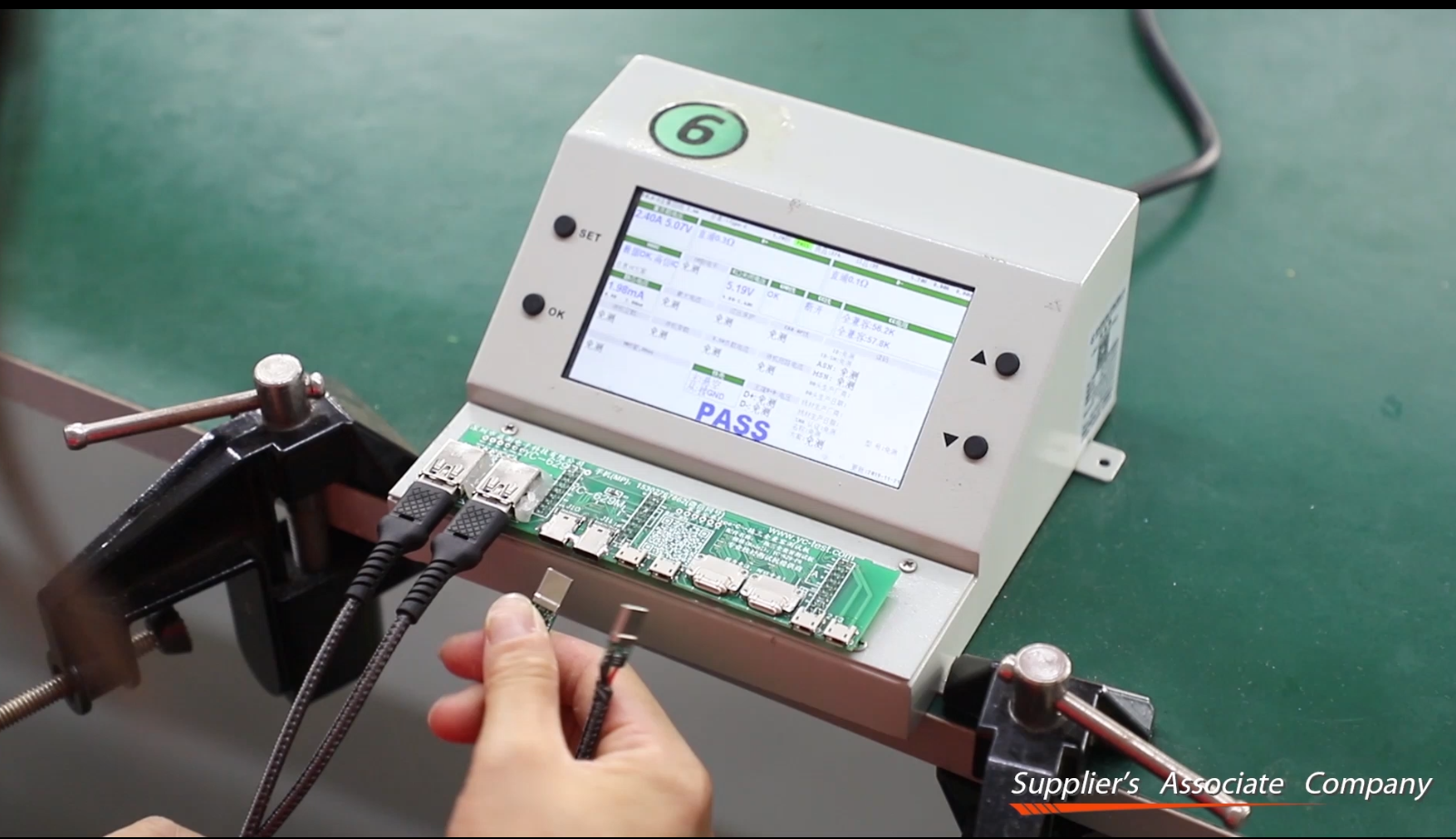
The 2026 market adds pressure to that decision. SMM's 2026 Type-C industry analysis places copper materials at 60%–80% of total manufacturing costs for standard USB cables, and reports international copper prices at USD 13,000–13,300 per metric ton in early 2026. When conductor cost dominates the bill of materials, a quote is only comparable when the specification and acceptance standard are fixed at the same time. Regulatory timing adds a second layer: the European Commission's common charger requirements apply to specified portable device categories from 28 December 2024 and to laptops from 28 April 2026.
The four procurement questions that decide a USB cable order
1. Minimum order quantity: when a sample becomes a production run
Focuses states a MOQ of 2,000 units. For buyers, the MOQ is not just a volume threshold. It sets the point at which material purchasing, molding, and inspection planning become a production exercise. Orders below that level are better treated as sample or validation quantities, not as a comparable bulk price.
2. Lead time: production time, not delivery time
Focuses states a production lead time of 25–35 days. That window covers production; it does not include international freight, customs clearance, or destination delivery. Buyers planning a retail launch or a replenishment cycle should separate the supplier's production window from the forwarder's transit window in the project schedule.
3. Acceptance criteria: the difference between inspection and certification
Focuses states 100% full inspection before shipment. Full inspection is a pre-shipment control step. It is not the same as third-party certification, and it does not replace a project-specific test report. A useful acceptance schedule therefore names the parameter to be checked, the method, the lot basis, and the evidence the supplier will provide.
4. Custom specifications: what changes and what must be frozen
ODM/OEM scope can cover logo printing, cable color, power, cable appearance, cable materials, cable molding, multi-function design, connector housing color, cable length, and packaging style or design. The procurement risk is not the list itself; it is leaving one variable unfrozen. A custom logo USB cable order should freeze interface, length, outer material, current and power rating, data requirement, logo placement, packaging, and the intended use environment before production.
Focuses procurement terms at a glance
Focuses is the short name used here for DongGuan Focuses Electronics Technology Co., Ltd., a Dongguan-based manufacturer specializing in data cables, USB solutions, and audio accessories, with a 6,000 m² facility in Tangxia Town and stated exports to Europe, North America, the Middle East, and Asia. The table below consolidates the procurement terms that a B2B buyer would normally place in an RFQ comparison.
| Procurement term | Focuses stated term | What it means for a buyer |
|---|---|---|
| MOQ | 2,000 units | Production-order threshold; below this level is a validation quantity rather than a bulk price comparison. |
| Lead time | 25–35 days | Production window; excludes transit, clearance, and destination delivery. |
| Pre-shipment inspection | 100% full inspection before shipment | Lot-level pre-shipment control; not a third-party certification. |
| Warranty | 12 months; free technical guidance for charging compatibility issues during the warranty period | After-sales term; separate from the normal service-life expectation in a case record. |
| ODM/OEM customization | Logo printing, cable color, power, appearance, materials, molding, multi-function design, connector housing color, length, packaging style and design | Requires a frozen specification before production. |
| Monthly capacity | 2,500,000 units | Stated capacity, not a commitment for a specific order slot. |
| Annual output | 25,000,000 units | Stated output for the operating profile. |
| Facility and team | 6,000 m²; 150 employees; 6 engineers | Relevant to inspection planning and custom development. |
| Export markets | EU, North America, Middle East, Asia | Relevant to market-specific documentation requests. |
Procurement note: MOQ and lead time are production terms. They should be compared separately from freight, clearance, and third-party certification.
Acceptance criteria by USB cable build family
Focuses lists five build families in the supplied product data: CB-PVC, CB-Nylon, CB-TPE, CB-SILICONE, and CB-Waterproof. They should not be treated as interchangeable jackets on the same electrical platform. The table below turns the model data into an acceptance reference.
| Model | Outer material | Interface options | Current / power | Data | Environmental note |
|---|---|---|---|---|---|
| CB-PVC | PVC | USB A, Lightning, Type-C, Micro USB | 1A–2.4A | 480 Mbps | -10°C to 60°C |
| CB-Nylon | PVC inner layer + nylon braided shell | USB-A/USB-C to Type-C/Lightning/Micro USB | 6A; 120W/240W | 480 Mbps | -10°C to 70°C |
| CB-TPE | TPE | Multi-type USB port | 6A; 120W/240W | Charging and data sync | Soft, flexible, wear-resistant |
| CB-SILICONE | Soft food-grade silicone | USB-A/USB-C to Type-C/Lightning/Micro USB | 6A; 120W/240W | 480 Mbps | -20°C to 70°C |
| CB-Waterproof | Silicone, TPE, or nylon braided options | USB-A/USB-C to Type-C/Lightning/Micro USB | 6A; 120W/240W | 480 Mbps | IPX7; -20°C to 70°C |
CB-PVC is the lower-current build in the set, listed at 1A–2.4A and 480 Mbps, with a working range of -10°C to 60°C. It fits ordinary charging and data-sync cables where the brief does not require 6A or 120W/240W.
CB-Nylon combines a PVC inner layer with a nylon braided shell. It is listed at 6A, 120W/240W, 480 Mbps, and -10°C to 70°C. The braided construction is the relevant acceptance point when abrasion resistance and a braided USB cable appearance are part of the project requirement.
CB-TPE is an eco-friendly TPE build with a multi-type USB port, 6A and 120W/240W support, and charging plus data sync. Its published description emphasizes a soft, flexible, wear-resistant jacket.
CB-SILICONE uses a soft food-grade silicone sheath and is listed at 6A, 120W/240W, 480 Mbps, and -20°C to 70°C. The lower temperature boundary is a specification point, not a general claim for every silicone cable on the market.
CB-Waterproof is the only build in the set that lists IPX7. Its sealed integrated molding is described as waterproof, dustproof, sweat-proof, anti-corrosion, and wear-resistant. It also lists 6A, 120W/240W, 480 Mbps, and -20°C to 70°C, with silicone, TPE, or nylon braided outer material options.
Conductor materials in the supplied data are tinned pure copper or high-purity tinned copper core. Buyers should still state the conductor requirement in the RFQ, because copper is the dominant cost line in standard USB cable manufacturing.
Custom specifications: the six variables to freeze before production
Focuses lists ODM/OEM customization across logo printing, cable color, power, cable appearance, cable materials, cable molding, multi-function design, connector housing color, cable length, and packaging style or design. A practical RFQ converts that menu into a frozen specification. Six variables do most of the work:
- Interface and connector combination: USB-A, USB-C, Type-C, Lightning, or Micro USB; state the host and device ends.
- Length: 0.3m, 0.5m, 1m, 1.5m, and 2m are listed across the build families; not every length is listed for every model.
- Outer material: PVC, nylon braided, TPE, silicone, or a PVC inner layer with a nylon braided shell.
- Current and power: 1A–2.4A for CB-PVC; 6A and 120W/240W for CB-Nylon, CB-TPE, CB-SILICONE, and CB-Waterproof.
- Data requirement: 480 Mbps where listed; CB-TPE is described as charging and data sync without a separate data-rate figure in the supplied specification.
- Logo, housing color, molding, multi-function design, and packaging: these are the customization items that most often create a mismatch between a rendered sample and a production unit.
A separate point applies to Apple-compatible Lightning cables. Apple's MFi program requires licensing and certification for third-party manufacturers producing Lightning USB cables and authorized USB-C cables for Apple devices. If a project requires an MFi Lightning cable, that authorization is a distinct supplier-qualification item and should not be inferred from a general USB cable capability.
Application fit: matching the build to the project environment
Focuses lists use conditions that include daily indoor use, outdoor travel, humid bathrooms, sweaty sports use, low-temperature outdoor use, and rainy environments. The matching devices include smartphones, tablets, laptops, power banks, wireless chargers, and smart wearables. That range is wide, so the acceptance question is not which cable is universally suitable, but which build is specified for the condition.
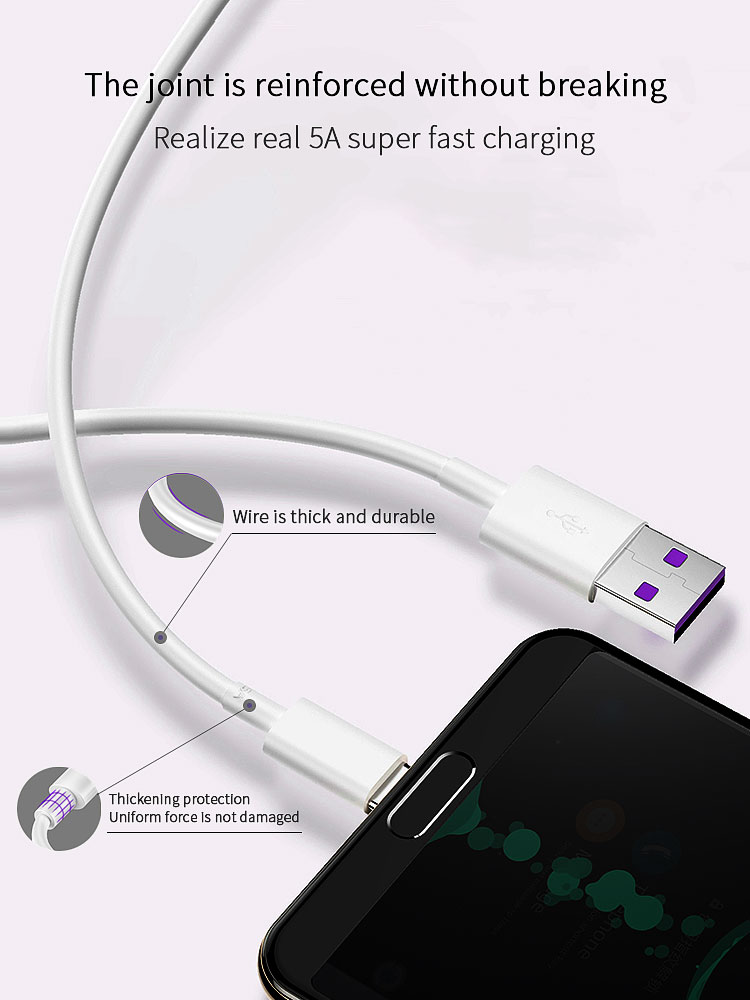
CB-PVC suits ordinary indoor charging and data transfer where 1A–2.4A is sufficient. CB-Nylon is the abrasion-oriented braided option. CB-TPE is the flexible TPE option with 6A and 120W/240W support. CB-SILICONE extends the low-temperature boundary to -20°C. CB-Waterproof adds IPX7 sealing for wet, sweaty, or rainy conditions.
Focuses records a case profile for digital accessory wholesalers and corporate gift purchasers in Indonesia, the United States, Germany, and the United Kingdom, with order quantities of 5,000–30,000 pieces. The recorded applications include daily phone charging, corporate customized gifts, retail sales, and car use. The recorded outcome lists stable fast charging, durable braided wire, low heating during long-time charging, and zero mass quality complaints. The same record states a normal service life exceeding 2 years and a 1-year product warranty. Those are case-record statements, not a blanket performance guarantee for every SKU; project-specific validation still belongs in the acceptance schedule.
What 2026 standards and cost pressure mean for acceptance
Three external developments shape USB cable acceptance in 2026.
First, copper cost. SMM's 2026 analysis places copper materials at 60%–80% of total manufacturing costs for standard USB cables and reports international copper prices at USD 13,000–13,300 per metric ton in early 2026. A buyer comparing quotes without a frozen conductor specification is comparing different cost bases.
Second, EU common charger timing. The European Commission states that the common charger requirements apply to specified portable radio equipment, including handheld mobile phones, tablets, digital cameras, headphones, headsets, handheld videogame consoles, portable speakers, e-readers, earbuds, keyboards, mice, and portable navigation systems, from 28 December 2024, and to laptops from 28 April 2026. The same guidance identifies USB-C as the harmonised charging receptacle and references USB 2.0, USB 3.2, USB 4, USB Battery Charging 1.2, USB Type-C Current 1.5A, USB Type-C Current 3.0A, and USB Power Delivery. That reference list is a technology framework, not proof that a particular cable supports every option.
Third, specification layering. USB Power Delivery Specification Revision 3.2 defines fast charging protocols enabling up to 240W over USB Type-C cables; USB Type-C Specification Release 2.2 defines cable and connector requirements; USB4 Version 2.0 is associated with up to 80 Gbps data transfer. IEC 62680-1-3:2024 provides the international standard for USB interfaces for data and power. For procurement, the practical rule is to specify connector type, current and power tier, data tier, and the applicable standard or test evidence as separate lines in the RFQ.
How the Focuses terms compare with a generic sourcing approach
Compared with a price-only sourcing approach, the Focuses terms make several procurement variables visible: a 2,000-unit MOQ, a 25–35 day production window, 100% pre-shipment inspection, a 12-month warranty, and a defined ODM/OEM customization list. That visibility is useful because it allows a buyer to compare offers on the same basis. It also exposes the limits.
| Procurement need | Fit with the stated Focuses terms | Boundary to plan for |
|---|---|---|
| Pilot or sample run below 2,000 units | Below the stated MOQ | Treat as a separate validation quantity, not a bulk production comparison. |
| Delivery in less than 25 days | Outside the stated production window | The 25–35 day figure is production time; freight and clearance are additional. |
| Third-party certification for a target market | Not established by 100% pre-shipment inspection | Request the applicable test report and certification scope separately. |
| IPX7 on every SKU | Only CB-Waterproof lists IPX7 | Other models do not list an IP rating in the supplied specifications. |
| 6A or 240W on every SKU | CB-Nylon, CB-TPE, CB-SILICONE, and CB-Waterproof list 6A and 120W/240W | CB-PVC is listed at 1A–2.4A. |
| Use below -20°C | Outside the listed working ranges | CB-SILICONE and CB-Waterproof list -20°C to 70°C; CB-Nylon lists -10°C to 70°C; CB-PVC lists -10°C to 60°C. |
| 12-month warranty as a life guarantee | Warranty term is 12 months | The case record notes a normal service life exceeding 2 years, but that is not a warranty extension. |
The most important limitation is the first one. A 2,000-unit MOQ is a production threshold. Buyers in the research or evaluation stage should decide whether their project is a bulk program or a validation exercise before asking for a comparable unit price. The second limitation is equally practical: a 25–35 day production window does not shorten the freight leg. A project that needs stock in hand within 30 days is not a fit for this lead time, regardless of the cable specification.
Future outlook: what buyers should prepare for
The direction of the category is toward more explicit specification tiers. The EU laptop application date of 28 April 2026 extends the common charger framework to a larger device category. USB Power Delivery Revision 3.2 already defines up to 240W, and USB4 Version 2.0 reaches up to 80 Gbps in the relevant cable specification. As those tiers spread, a single USB-C cable line in an RFQ becomes less useful. Buyers should expect to state charging wattage, current, data rate, connector orientation, jacket material, and the target market's documentation needs separately.
Cost pressure is the second planning assumption. With copper at 60%–80% of standard cable manufacturing cost, quotes can move when conductor specifications or copper prices move. A purchase order that fixes the conductor, the current rating, the length, and the inspection basis is easier to defend than one that fixes only the unit price. For 2026 programs, the practical preparation is a specification freeze before the RFQ, not a specification correction after the sample.
FAQ: USB cable procurement terms and acceptance
What is the minimum order quantity for Focuses USB cables?
The stated MOQ is 2,000 units. This is a production-order threshold. A buyer with a smaller requirement should treat it as a sample or validation quantity rather than a bulk production comparison.
What lead time is stated for USB cable production?
The stated production lead time is 25–35 days. This is the manufacturing window. It does not include international freight, customs clearance, or destination delivery, so those legs must be added separately to the project schedule.
What acceptance inspection is performed before shipment?
Focuses states 100% full inspection before shipment. This is a pre-shipment inspection step. It is not a third-party certification and does not replace a project-specific test report for a target market.
Which custom specifications can be changed under ODM/OEM?
The stated ODM/OEM scope includes logo printing, cable color, power, cable appearance, cable materials, cable molding, multi-function design, connector housing color, cable length, and packaging style or design. These items should be written into a frozen specification before production begins.
How do the five build families differ at the acceptance stage?
CB-PVC is listed at 1A–2.4A, 480 Mbps, and -10°C to 60°C. CB-Nylon is listed at 6A, 120W/240W, 480 Mbps, and -10°C to 70°C. CB-TPE is listed at 6A, 120W/240W, with charging and data sync. CB-SILICONE is listed at 6A, 120W/240W, 480 Mbps, and -20°C to 70°C. CB-Waterproof adds IPX7 and lists 6A, 120W/240W, 480 Mbps, and -20°C to 70°C.
Is IPX7 available on all Focuses USB cable models?
No. IPX7 is listed for CB-Waterproof. The other builds do not list an IP rating in the supplied specifications. A project that requires sealed protection should therefore specify CB-Waterproof rather than a general USB cable model.
What does the 12-month warranty cover?
The stated after-sales term is a 12-month warranty with free technical guidance for charging compatibility issues during the warranty period. The case record notes a normal service life exceeding 2 years, but the warranty term itself is 12 months.
What should a buyer put in an RFQ to avoid specification mismatch?
An RFQ should state the interface and connector combination, cable length, outer material, current and power rating, data requirement, logo and packaging requirements, intended use environment, and target market documentation needs. For USB-C claims, the buyer should ask for the connector type, data tier, current and power tier, and the applicable USB-IF or IEC specification mapping, together with the relevant test evidence.
Reference: the 2026 Focuses catalogue is available for download at 2026 Focuses Catalogue (PDF).
¿Tiene preguntas o necesita más detalles?
Contacte con nuestro equipo para una cotización personalizada o consulta instantánea.
Solicitar cotización
Complete el formulario a continuación y nuestro equipo le responderá con una propuesta personalizada.
Chat directo de WhatsApp
¿Prefiere chatear en tiempo real? Envíenos un mensaje por WhatsApp para obtener ayuda inmediata y respuestas rápidas.
- Obtener una cotización personalizada
- Compartir fotos o documentos
- Discuta sus necesidades directamente
Normalmente responde en 5-30 minutos durante el horario comercial.