
USB Cable Materials: A Buyer Comparison Framework
USB Cable Materials: A Buyer Comparison Framework
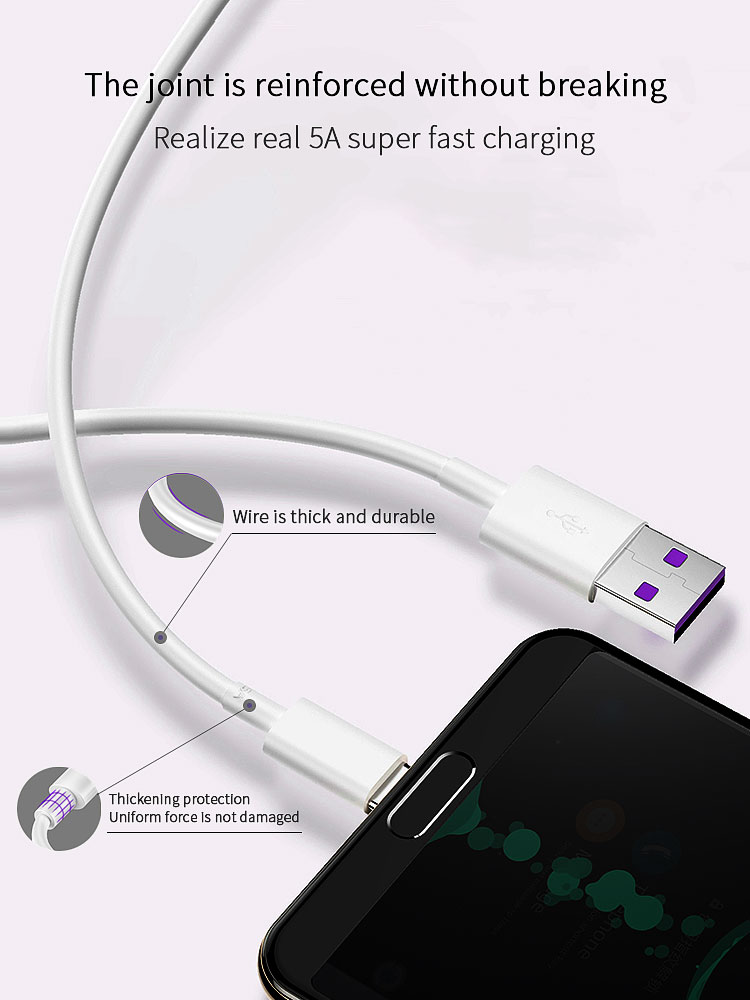
For volume buyers, the useful way to compare PVC, nylon, TPE, and silicone USB cables is to separate documented construction from electrical claims and intended application. In Focuses’ listed models, CB-PVC is the option with a specified 1A–2.4A charging-current range; CB-Nylon, CB-TPE, and CB-SILICONE list up to 6A and support claims of 120W and 240W. Those differences do not establish that one material is universally better, or that a cable will deliver a stated result with every device and charger. The connector combination, compatible equipment, product configuration, and supporting evidence matter too.
This framework covers the four models named in the assignment: CB-PVC, CB-Nylon, CB-TPE, and CB-SILICONE. It compares only documented information. It does not infer bend life, abrasion performance, price, or suitability from a material name. For bulk procurement, that distinction helps teams shortlist a construction for a use case without turning an unverified assumption into a product specification.
A side-by-side view of the four constructions
The clearest documented distinction is the outer material and, for CB-Nylon, its layered construction. The listed electrical, temperature, and length details vary by model. “Not specified” below means that the supplied product information does not state the value; it does not mean the cable lacks that capability.
| Model | Documented construction | Charging and data information | Temperature and length information |
|---|---|---|---|
| CB-PVC | PVC outer sheath; pure copper conductor | Charging current: 1A–2.4A. Data transfer: 480 Mbps. | -10°C to 60°C. Lengths: 0.5m, 1m, 1.5m, 2m. |
| CB-Nylon | Nylon braided shell, PVC inner layer, tinned pure copper core | Maximum current: 6A; listed support for 120W and 240W charging. Data transfer: 480 Mbps. | -10°C to 70°C. Lengths: 0.3m, 1m, 1.5m, 2m. |
| CB-TPE | Eco-friendly TPE outer material; tinned copper core | Maximum current: 6A; listed support for 120W and 240W fast charging. Charging and data sync are stated; a transfer rate is not specified. | Operating temperature and model-specific available lengths are not specified in the supplied information. |
| CB-SILICONE | Soft food-grade silicone outer sheath; high-purity tinned copper core | Maximum current: 6A; listed support for 120W and up to 240W charging. Data transfer: 480 Mbps. | -20°C to 70°C. Lengths: 0.3m, 1m, 1.5m, 2m. |
Portfolio length range: the listed models include lengths from 0.3m to 2m, but not every length is specified for every model. CB-PVC is listed from 0.5m; CB-Nylon and CB-SILICONE are listed from 0.3m. The supplied CB-TPE information does not state its available lengths.
The table should be read as a model-level comparison, not as a general ranking of four raw materials. CB-Nylon is not simply “nylon”: its documented build also includes a PVC inner layer and a tinned pure copper core. Likewise, the silicone description refers to the sheath, while the conductor is listed separately. These details matter when buyers write a request for quotation or compare samples, because an outer-material label alone does not describe the complete cable build.
What the material descriptions establish—and what they do not
CB-PVC: a documented baseline with a lower stated current range
CB-PVC is described as a PVC cable with a pure copper conductor. Its specified charging current is 1A–2.4A, and its stated data-transfer speed is 480 Mbps. The model is listed in 0.5m, 1m, 1.5m, and 2m lengths, with an operating-temperature range of -10°C to 60°C. The corpus identifies typical charging and data-transfer applications for mobile phones, tablets, and laptops.
For a buyer, the important point is not that PVC is inherently suited to every everyday application. It is that this model has a specific documented current range and a stated data rate. A buyer considering it should first check whether those stated characteristics match the intended device and charger requirements. If a project brief calls for a higher current or a different power claim, the CB-PVC figures provided here do not support treating it as interchangeable with the models listed at up to 6A and 120W/240W.
CB-Nylon: a braided shell over a PVC inner layer
CB-Nylon combines a nylon braided shell with a PVC inner layer and a tinned pure copper core. Its listed interfaces include USB-A, Lightning, Type-C, and Micro USB. The product information states up to 6A, 120W/240W charging support, and 480 Mbps data transfer. It also specifies lengths of 0.3m, 1m, 1.5m, and 2m and a working-temperature range of -10°C to 70°C.
The braided outer layer is a construction fact, not proof of a particular abrasion rating, tensile result, or service life. The supplied specifications do not provide comparative test results against PVC, TPE, or silicone. Buyers who require a particular durability outcome should define that requirement and check the relevant sample or test evidence rather than assume it from “braided.” The same caution applies to claims such as anti-break or long-life performance: a material description alone does not quantify those outcomes.
CB-TPE: a flexible material description with gaps to resolve
CB-TPE is described as an eco-friendly TPE cable with a tinned copper core. The supplied press-release product information lists a multi-type USB port, a maximum current of 6A, and support for 120W and 240W fast charging. It also describes the cable as soft, flexible, and wear-resistant, and states that it supports charging and data sync for cell phones and notebooks.
The available product details do not state a numerical data-transfer speed, operating-temperature range, or model-specific length list for CB-TPE. A buyer should therefore avoid copying the 480 Mbps figure or the 0.3m–2m portfolio range onto a CB-TPE specification unless the exact configuration is confirmed separately. “Supports data sync” and a specified transfer rate are different levels of detail: the former identifies a function, while the latter gives a number that can be checked against the requirement.
CB-SILICONE: a food-grade sheath and a stated cold-temperature range
CB-SILICONE is specified with a soft food-grade silicone outer sheath and a high-purity tinned copper core. Its listed properties include skin-friendly, odorless, anti-kink, wear-resistant, anti-freezing, and flexible. The stated operating range is -20°C to 70°C; available lengths are 0.3m, 1m, 1.5m, and 2m. The model also lists 480 Mbps data transfer, up to 6A maximum current, and supported power up to 240W, with interface options from USB-A or USB-C to Type-C, Lightning, or Micro USB.
These statements give buyers a more specific basis for considering the model in a low-temperature brief than a material name alone: the product record supplies a temperature range and describes anti-freezing performance. They still do not establish performance under every combination of cold, moisture, movement, and charging load. If those conditions are important, the purchasing specification should name the required operating conditions and the evidence needed to verify them.
Keep charging, power, and data claims separate
Charging current, supported power, and data-transfer speed are related to a cable’s specification, but they are not interchangeable claims. In the supplied model data, CB-PVC is rated at 1A–2.4A and 480 Mbps. CB-Nylon and CB-SILICONE list up to 6A and 120W/240W support, and both state 480 Mbps data transfer. CB-TPE lists up to 6A and 120W/240W support, along with charging and data sync, but no numerical data speed in the supplied product information.
A “120W” or “240W” product claim should not be read as a guarantee that every connected phone, charger, and cable combination will operate at that power. The product records describe the cable’s supported power claims; they do not give a test report for each device combination or establish a universal charging outcome. Before placing a bulk order, buyers can compare the exact cable-end interfaces and the intended charger and device requirements, then ask for evidence tied to the product configuration being purchased. If data speed is a required acceptance criterion, specify it explicitly rather than assuming it follows from a fast-charging claim.
The same rule applies to the 480 Mbps figure. It appears in the supplied specifications for CB-PVC, CB-Nylon, and CB-SILICONE. The CB-TPE record says it supports data sync but does not state a rate. A procurement table should preserve that distinction instead of filling the blank with a neighboring model’s value. This makes it easier for engineering, sourcing, and quality teams to compare the same claim on the same basis.
Match the evidence to the scenario
The application information includes daily indoor use, outdoor travel, humid bathrooms, sweaty sports scenes, low-temperature outdoor use, and rainy environments. These are scenario descriptions, not test results for every model. A buyer can use them to define what the cable must do, then match only the product facts that are actually documented.
- Daily indoor use: start with the required charging current, data function, connectors, and length. CB-PVC has a stated 1A–2.4A range and 480 Mbps data transfer; the other listed models have different or incomplete model-level details. Select based on the device and charger requirement, not on an assumption that one sheath is the default indoor choice.
- Outdoor travel: write down the cable length, connector combination, charging claim, and expected temperature conditions. CB-Nylon and CB-SILICONE list 0.3m to 2m lengths; CB-PVC lists 0.5m to 2m. Check the exact model record for any other requirement rather than inferring travel suitability from the material.
- Sweaty sports scenes: distinguish a material description from a moisture-protection rating. CB-SILICONE is described as skin-friendly and wear-resistant, while the separate CB-Waterproof model is specified with IPX7 and sealed integrated molding. The supplied facts do not assign an IPX7 rating to CB-SILICONE, CB-TPE, CB-Nylon, or CB-PVC. If the purchase requires a waterproof rating, verify that rating on the exact SKU.
- Low-temperature environments: compare the stated operating-temperature range with the project’s specified conditions. CB-SILICONE is listed at -20°C to 70°C; CB-Nylon and CB-PVC are listed at -10°C to 70°C and -10°C to 60°C respectively. A range is a stated product boundary, not a substitute for evidence under a buyer’s exact use conditions. The supplied CB-TPE record does not provide a temperature range.
- Rain or humid environments: do not treat silicone, TPE, or a braided shell as proof of water resistance. The product-level IPX7 claim in the supplied material belongs to CB-Waterproof, not automatically to each cable that may use a silicone, TPE, or nylon-braided outer material.
These scenario checks help prevent a common specification error: treating “outdoor,” “sweat-resistant,” or “waterproof” as interchangeable labels. The available application material identifies environments and the separate CB-Waterproof model has specific water- and dust-related claims. It does not establish that all four compared models share those claims. A volume buyer should keep the environmental requirement attached to the exact model and configuration throughout quotation, sampling, and acceptance.
A buyer decision checklist for volume orders
Before comparing quotations or building a SKU list, use the following sequence. It focuses on what the supplied product information can establish and highlights where a project-specific confirmation is still needed.
- Define the use case. Record whether the cable is for indoor charging, portable travel, sports use, a cold environment, or a moisture-exposed application. Separate occasional exposure from a required protection rating; the scenario alone does not establish a product rating.
- Set the electrical requirement. State the required charging-current or power claim and the device/charger combination it must serve. CB-PVC is documented at 1A–2.4A; CB-Nylon, CB-TPE, and CB-SILICONE list up to 6A and 120W/240W support. Do not assume those models are identical in every other specification.
- Specify data needs independently. If a numerical data rate matters, include it as a separate line item. The provided records state 480 Mbps for CB-PVC, CB-Nylon, and CB-SILICONE; CB-TPE’s supplied record says charging and data sync but does not specify a transfer rate.
- Choose construction by verified need. Compare PVC sheath, nylon braid over a PVC inner layer, TPE, and food-grade silicone as documented constructions. Do not translate “braided,” “flexible,” or “wear-resistant” into an unprovided bend-cycle, tensile, or lifetime result.
- Lock the interface and length. Confirm the exact ends—such as USB-A or USB-C to Type-C, Lightning, or Micro USB where available—and the required cable length. The family range reaches 0.3m to 2m, but the listed options differ by model and CB-TPE lengths are not stated in the supplied data.
- Check operating conditions. Compare the product’s stated temperature range against the project’s requirement. Do not carry a range from one model to another just because the models share a product family.
- Ask for evidence for the exact SKU. Where a particular power, data, environmental, or durability claim is a purchase condition, request documentation or sample verification that identifies the relevant model and configuration. General descriptions do not prove every possible performance condition.
- Keep the final specification auditable. Put material, conductor, interface, length, charging claim, data claim, and any required environmental condition in the same product specification. That makes a later comparison less likely to mix one model’s material with another model’s performance values.
For a buyer choosing among these four options, the defensible decision is therefore a requirements match, not a material ranking. CB-PVC has a clearly stated lower current range and data rate; CB-Nylon has a layered braided construction and stated electrical and temperature details; CB-TPE has a flexible TPE description and charging/data-sync claims but several unlisted specifications; CB-SILICONE combines a food-grade silicone sheath with a stated low-temperature range and a listed data rate. Those distinctions can narrow a shortlist. They do not replace verification of the exact ordered configuration.
Focuses and the scope of this comparison
DongGuan Focuses Electronics Technology Co., Ltd. is identified in the supplied company information as a USB-cable and connectivity-products business. This article uses the supplied product records for CB-PVC, CB-Nylon, CB-TPE, and CB-SILICONE; it is a model-level buyer reference, not an independent laboratory comparison. The available information does not provide a common test program across all four materials, comparative prices, or model-by-model durability results. Buyers should use the documented distinctions above to define a specification and verify any requirement that is not stated.
Frequently asked questions
Which of the four models has a stated 1A–2.4A charging-current range?
CB-PVC is listed at 1A–2.4A. CB-Nylon, CB-TPE, and CB-SILICONE list a maximum current of 6A. The stated values describe the individual model records and should not be treated as proof that every charger and device combination will operate at the cable’s maximum claim.
Do all four cable materials have a stated 480 Mbps data rate?
No. The supplied information lists 480 Mbps for CB-PVC, CB-Nylon, and CB-SILICONE. CB-TPE is described as supporting charging and data sync, but its supplied product record does not state a numerical transfer speed.
Which model has a documented operating range down to -20°C?
CB-SILICONE is listed with a working-temperature range of -20°C to 70°C. CB-Nylon is listed at -10°C to 70°C, and CB-PVC at -10°C to 60°C. The supplied CB-TPE product record does not state an operating-temperature range.
Does a silicone or nylon-braided cable automatically have an IPX7 rating?
No IPX7 rating is stated for CB-SILICONE or CB-Nylon in the supplied product details. The IPX7 claim belongs to the separately described CB-Waterproof model. Buyers requiring a waterproof rating should check that the exact SKU and configuration carry the required claim.
¿Tiene preguntas o necesita más detalles?
Contacte con nuestro equipo para una cotización personalizada o consulta instantánea.
Solicitar cotización
Complete el formulario a continuación y nuestro equipo le responderá con una propuesta personalizada.
Chat directo de WhatsApp
¿Prefiere chatear en tiempo real? Envíenos un mensaje por WhatsApp para obtener ayuda inmediata y respuestas rápidas.
- Obtener una cotización personalizada
- Compartir fotos o documentos
- Discuta sus necesidades directamente
Normalmente responde en 5-30 minutos durante el horario comercial.