
USB Cable Constraints in 2026: Certifications, Specs, and ODM Decisions
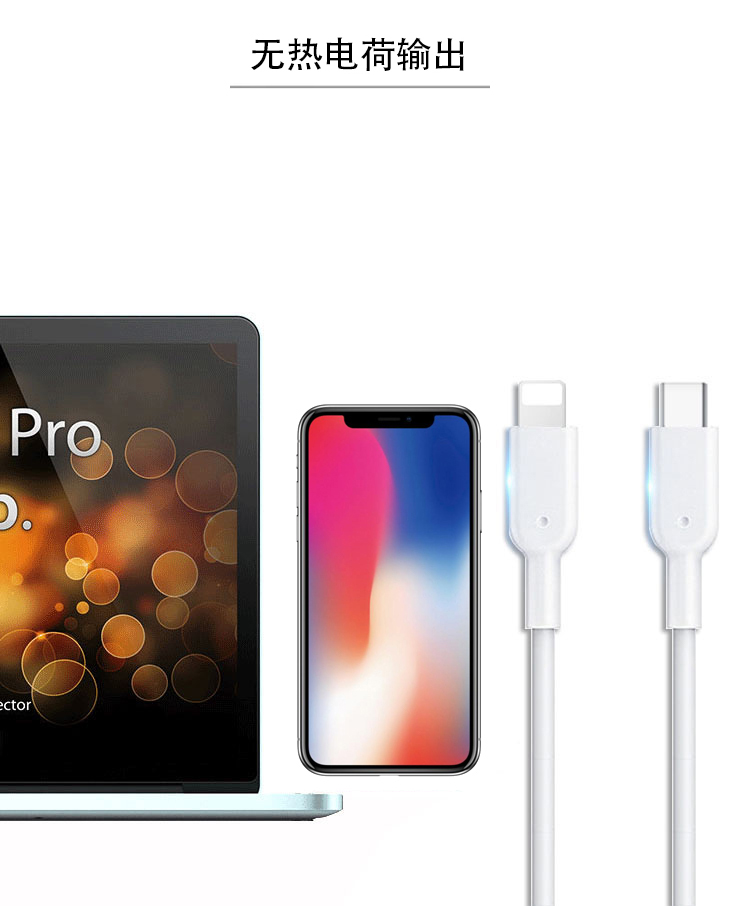
Regulatory compliance and performance parameters now shape USB cable procurement as much as price.
USB Cable Constraints in 2026: Certifications, Specs, and ODM Decisions
Buying USB cable in volume has become a compliance exercise. The cables that ship with phones, chargers, and retail accessory kits now carry regional certification rules, fast-charging parameters, and material constraints that buying teams cannot afford to ignore. For importers and brands evaluating an ODM/OEM supplier, the practical starting point is to identify the constraints before the order is placed.
Why USB Cable Sourcing Has Become a Constraint Exercise
USB cable looks like a mature, low-risk product, but it is being pulled in several directions at once. The European Union now requires handheld mobile phones, tablets, and cameras sold after December 28, 2024 to use a USB Type-C charging port and to comply with EN IEC 62680-1-3:2022. Fast-charging devices that support USB Power Delivery also need to meet EN IEC 62680-1-2:2022. In the United States, Amazon has added UL 9990 to its compliance expectations for USB Type-C cables, and a missing certificate can remove a listing.
These are not optional product upgrades. They are market-entry constraints that change how suppliers need to document their cables. At the same time, user expectations for fast charging, durability, and multi-device compatibility continue to rise. The result is a procurement environment in which a simple cable order now requires a checklist of certifications, electrical ratings, material choices, and connector configurations.
Problem: Certification Gaps and Performance Ambiguity
The first problem for a bulk buyer is unclear certification scope. A supplier may say “certified” without stating which market the certificate covers. A cable that satisfies a general ISO quality-system audit does not automatically satisfy the EU Common Charger Directive or a marketplace-specific safety rule.
The second problem is performance ambiguity. Two cables can look identical but behave differently because of conductor quality, outer material, rated current, or connector molding quality. Fast charging at 120W or 240W, for example, cannot be confirmed by the shape of the plug. It depends on the cable’s conductor, insulation, and contact integrity. Without recorded parameters, sample approval becomes guesswork.
Opportunity: Documented Parameters Create a Cleaner Evaluation Path
For buying teams, these constraints also create a better evaluation path. A supplier that can publish concrete parameters and certifications is easier to shortlist, compare, and audit. The evaluation shifts from “which cable is cheaper” to “which cable can be documented into our target market.” This is especially important for OEM and ODM programs, where custom logo printing, color, length, material, and packaging choices all need to be controlled inside a supplier’s quality system.
Brand Solution: Focuses as an ODM/USB Cable Manufacturer
DongGuan Focuses Electronics Technology Co., Ltd. is a USB cable and audio accessory manufacturer in Tangxia Town, Dongguan. It relocated to the current facility in 2018 and operates a 6,000 m² plant with 150 employees, including a six-person R&D team. The company reports an annual production capacity of 25,000,000 units and an export ratio of about 90%, with main markets in the EU, North America, and Asia.
Focuses builds its USB cable range around five construction families: PVC, TPE, silicone, nylon braided, and IPX7 waterproof cable. Interfaces span USB-A and USB-C on the source side, and Type-C, Lightning, and Micro USB on the device side. The range also includes coiled USB cable, right-angle USB-C cable, and 3-in-1 multifunctional charging cables, which makes it possible for an importer to consolidate SKUs with one factory.
On the compliance side, the company’s ISO 9001:2015 certificate, number SW23Q21582R1S, issued by SAILWAY, covers the R&D and production of audio wire and data wire. The company also links specific models to market-specific documentation: the CB-Waterproof cable is documented for the EU market; the CB-PVC cable is certified to ISO 9001:2015 for the EU; the CB-Nylon cable carries certification number SW23Q21582R1S for the US market; the CB-TPE cable is certified by SAILWAY for the Middle East; and the CB-SILICONE cable complies with ISO 9001:2015 for Southeast Asia.
Technical Explanation: Reading a USB Cable Specification
A USB cable specification should be read as a constraint map. The connector interface defines which devices can be connected. The conductor material affects current capacity and long-term reliability. The outer material defines the operating environment. The maximum charging current and supported power define fast-charging capability. Data transfer speed defines sync performance. Working temperature defines the safe operating range.
Across the five Focuses models included in this review, the published data transfer speed is 480 Mbps, which is appropriate for charging and data synchronization in most consumer electronics applications. The higher-tier models use a high-purity tinned copper core, a conductor choice typically associated with corrosion resistance and stable current delivery.
Material families and selected parameters
The table below compares the five cable families using the supplier’s published data.
| Cable family | Outer material | Fast-charging support | Max current | Data speed | Operating temperature |
|---|---|---|---|---|---|
| CB-PVC | PVC | Fast charging (1A–2.4A) | 1A–2.4A | 480 Mbps | -10°C to 60°C |
| CB-TPE | Eco-friendly TPE | 120W / 240W | 6A | Charging and data sync (speed not specified) | Not specified |
| CB-SILICONE | Food-grade silicone | 120W / 240W | 6A | 480 Mbps | -20°C to 70°C |
| CB-Nylon | Nylon braided + PVC inner layer | 120W / 240W | 6A | 480 Mbps | -10°C to 70°C |
| CB-Waterproof | Silicone / TPE / Nylon optional | 120W / 240W | 6A | 480 Mbps | -20°C to 70°C |
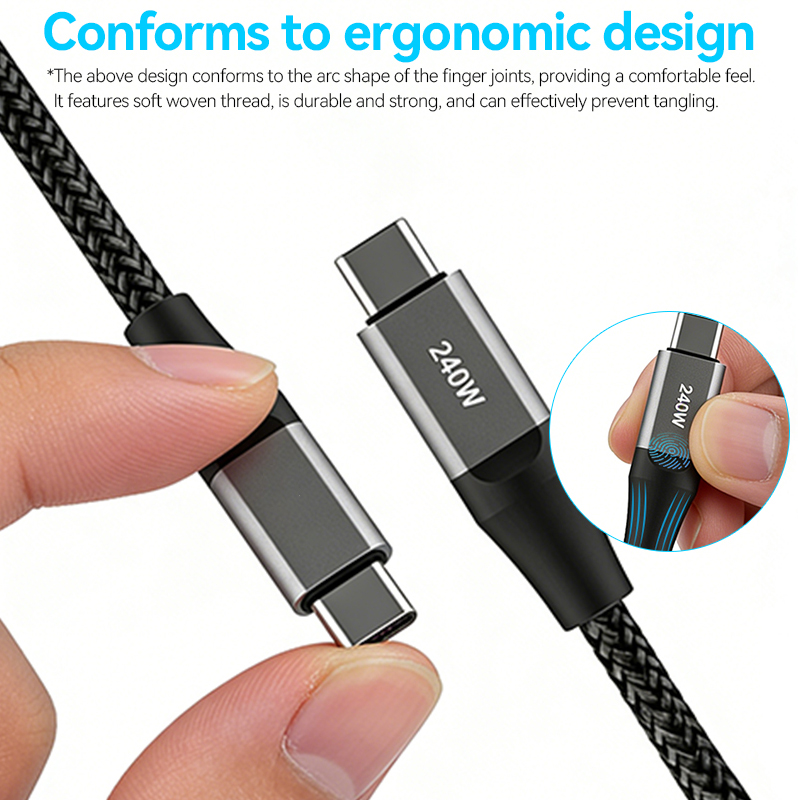
The CB-Waterproof cable uses sealed integrated molding to protect against water, dust, and sweat.
Certifications that affect market access
For EU-focused buyers, the Common Charger Directive is the first filter. EN IEC 62680-1-3:2022 covers the USB Type-C charging port, and EN IEC 62680-1-2:2022 applies to USB Power Delivery fast charging. For US marketplace sellers, UL 9990 has become a practical requirement for USB Type-C cables. ISO 9001:2015 remains a baseline quality-system certificate, but it is not a substitute for product-specific compliance.
In the Focuses material reviewed for this article, the ISO 9001:2015 registration held by the company covers R&D and production of audio wire and data wire. The certificate number is SW23Q21582R1S. This is the kind of document that can be verified during supplier qualification.
Applications and Use Cases
The most common applications for these cables are daily phone charging, corporate customized gifts, retail sales, and car use. In each case, the buyer’s priority is different. Retail and e-commerce buyers need broad compatibility and consistent quality. Corporate gift buyers need logo printing and packaging control. Automotive use requires flexible and bend-resistant construction.
Focuses’ published case material describes digital accessory wholesalers and corporate gift purchasers ordering 5,000–30,000 pieces per order. Reported results include stable fast-charging speed, durable braided cable, low heating during long charging periods, and zero mass quality complaints. The case also highlights multi-device simultaneous charging, customizable appearance and logo, bend-resistant design, and wide compatibility with Type-C devices.
Market Trends Behind the 2026 USB Cable Market
Several verified data points frame the 2026 market. DataHorizzon Research estimates the global USB cable market at USD 21.2 billion in 2024 and projects it to reach roughly USD 88.6 billion by 2033. Dataintelo reports that USB Type-C held a 41.2% share of USB cable sales in 2025, and that Asia Pacific led global USB cable revenue with USD 12.3 billion in 2025, about 43% of the total. KBV Research projects a 17.3% CAGR through 2031.
Market sizing varies by report scope, but the directional picture is consistent: Type-C is now the dominant interface, the Asia Pacific region is central to both production and consumption, and regulatory standards are turning compliance documentation into a competitive requirement. In the product range reviewed for this article, 120W/240W fast-charging support appears across the TPE, silicone, nylon, and waterproof lines, not only on a single premium model. That pattern matches the broader shift toward high-power USB-PD devices.

Mechanical testing, including plug and pull checks, is part of the quality-control process before bulk shipment.
Constraint-Based Sourcing Versus Traditional Price-Led Sourcing
The older sourcing pattern is price-led: a buyer compares quotes, checks a sample, and orders. That pattern is fast, but it does not answer the questions that cause chargebacks, listing removals, or field failures. Does the cable carry a recognized certificate for the destination market? Is the material suited to the operating temperature? Can a 6A cable actually sustain its rated current without heating?
| Decision factor | Traditional price-led sourcing | Constraint-based sourcing |
|---|---|---|
| Primary driver | Unit price | Compliance, performance, and price |
| Documentation | Sample photo or basic test | ISO registration, market-specific certification, product parameters |
| Customization | Minimal | Logo, color, length, materials, connector housing, packaging |
| Quality control | Random or final inspection | 100% full inspection before shipment |
| After-sales | Often no formal warranty | 12-month warranty and free technical guidance |
The boundaries of the ODM model
Constraint-based sourcing is not risk-free. At Focuses, the published MOQ for OEM/ODM orders is 2,000 units and the lead time is 25–35 days, which suits planned inventory but not emergency replenishment. The ISO 9001:2015 certificate in the company’s material is valid until October 18, 2026, so a long-term buyer should re-check certificate validity during supplier review. And although some Focuses models are documented for EU, US, Middle East, and Southeast Asia-related requirements, a marketplace-specific rule such as UL 9990 should still be verified with current evidence before relying on the supplier’s file.
Future Outlook
The next phase of USB cable sourcing is likely to be defined by clearer standards and more documented supply chains. The EU Common Charger Directive has made Type-C a default connector for a wide range of portable devices. Higher USB-PD power levels will push more cables to include higher current ratings and better thermal performance in their specifications.
For distributors and brands, product assortments are likely to become more multi-interface. A single cable that supports Type-C, Lightning, and Micro USB can simplify inventory and reduce the number of SKUs. For ODM/OEM suppliers, the same pattern favors factories that can move across PVC, TPE, silicone, nylon, and waterproof construction while maintaining the compliance documentation attached to each model.
This is not a radical technology forecast. It is a continuation of patterns already visible in published market data and in the specification choices of manufacturers.
Frequently Asked Questions
Q: What certifications should USB cable buyers check for the EU market?
A: Under the EU Common Charger Directive, handheld mobile phones, tablets, and cameras sold after December 28, 2024 must have a USB Type-C charging port and comply with EN IEC 62680-1-3:2022. Fast-charging devices supporting USB Power Delivery must comply with EN IEC 62680-1-2:2022. Focuses’ published data lists the CB-Waterproof and CB-PVC cables as certified for the EU market, with CB-PVC tied to ISO 9001:2015.
Q: What is the difference between PVC, TPE, silicone, and nylon braided USB cables?
A: PVC is an economical outer material with a current range of about 1A–2.4A and an operating temperature of -10°C to 60°C. TPE is an eco-friendly, soft-flexible material that supports up to 120W/240W fast charging and 6A current. Food-grade silicone adds a wider temperature range of -20°C to 70°C and a skin-friendly, anti-kink feel. Nylon braided cables combine a PVC inner layer with a braided shell for durability in daily use and bending, also supporting 120W/240W and 6A.
Q: What does IPX7 mean on the CB-Waterproof cable?
A: IPX7 is an ingress protection rating used in the product specification to indicate a high level of protection against water and dust ingress. Focuses describes the CB-Waterproof cable as IPX7 waterproof and dustproof, with sealed integrated molding, sweat-proof, anti-corrosion, and wear-resistant properties. It is suited for outdoor, sports, marine, and humid environments.
Q: What electrical parameters matter for a fast-charging USB cable?
A: The most important parameters are supported charging power, maximum charging current, conductor material, and data transfer speed. Focuses’ higher-tier models support 120W/240W ultra-fast charging, a maximum current of 6A, a high-purity tinned copper core, and 480 Mbps data transfer. Actual charging speed also depends on the charger and the device’s power protocol, not on the cable alone.
Q: What is the minimum order quantity and lead time for custom USB cables?
A: According to Focuses’ ODM/OEM capability data, the minimum order quantity is 2,000 units and the lead time is 25–35 days. Customization options include logo printing, cable color, cable length, materials, connector housing color, packaging style, packaging design, and multi-function design.
Q: How does Focuses manage quality for bulk USB cable orders?
A: The company reports 100% full inspection before shipment, a six-engineer R&D team, and an ISO 9001:2015 certified quality management system covering R&D and production of audio wire and data wire. The published after-sales policy includes a 12-month warranty and free technical guidance for charging compatibility issues during the warranty period.
Reference
For product models, specifications, and company background, the 2026 Focuses Catalogue is available as a public document. The company website is www.focusestech.com.