
UPVC Door Tender Dossiers: ECM Attestation + Inspection
A qualification dossier is the part of a tender submission that is still being read after the price sheet has been opened. In UPVC door procurement it is also the part where bidders are most often eliminated — not because the product fails, but because the paperwork cannot be verified by anyone other than the supplier.
For non-EU projects the verification problem is structural. A housing authority in MENA, a hotel developer in ASEAN or a contractor in LATAM cannot easily inspect a factory in southern China, and the European CE-marking framework that generates most UPVC door documentation does not legally apply in their jurisdiction. What such buyers can do is require documents that a third party has already reviewed. This article explains how a workable UPVC door qualification dossier is assembled, using the ECM Attestation NO.3N230816.YCPQQ51 as a concrete example, and how commercial terms such as minimum order quantity, production lead time and acceptance inspection connect to the document pack.
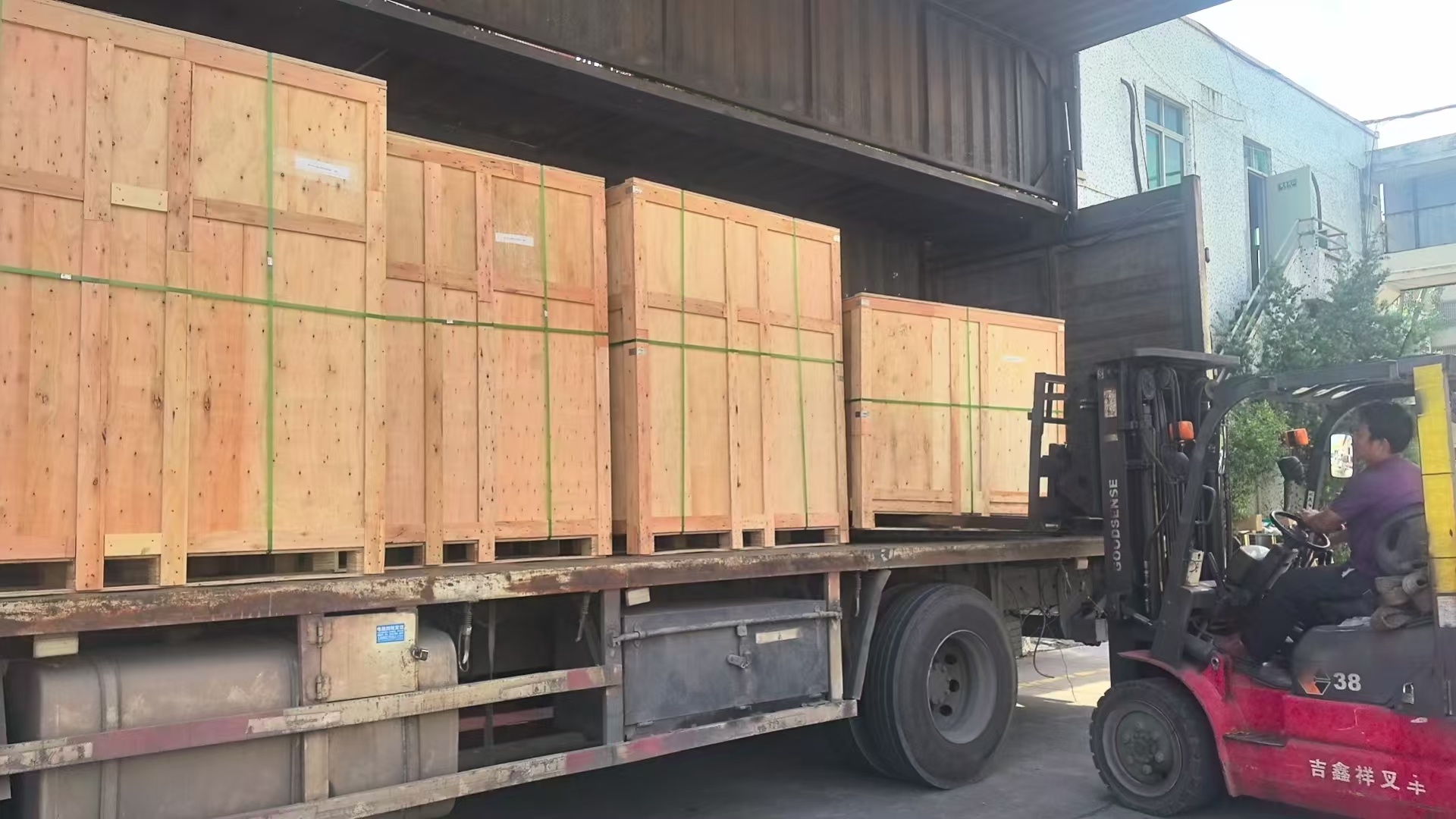
On-site photo of goods being loaded for shipment
Why Non-EU UPVC Door Tenders Are Document-Driven
Inside the European Union, EN 14351-1:2006+A2:2016 — the harmonised product standard for windows and external pedestrian doorsets — operates inside a legal framework. A manufacturer establishes a factory production control (FPC) system, completes system tests covering wind resistance, water tightness, air permeability, sound insulation, thermal performance, drop-weight impact and welding corner strength, issues a Declaration of Performance and applies CE marking.
Outside the EU, the same standard is normally quoted as a contractual requirement rather than a legal one. A tender document may state that doors shall comply with EN 14351-1 without stating who confirms it, which document counts as proof, or what happens when the profile series actually specified is not inside the tested scope. That gap is the buyer's risk, and it is usually resolved in one of two ways: accept product literature and installation photographs, or demand a dossier.
The practical consequence is that non-EU UPVC door tenders reward suppliers who can hand over a document set that stands on its own — a certificate with a number, a report with a scope, a specification sheet with measured material values — rather than a capability narrative.
What a Qualification Dossier Actually Contains
A dossier is not a brochure. It is a set of named documents, each answering a question a tender evaluator is obliged to ask. The table below maps the usual tender requirements to the document that satisfies them.
| Tender requirement | Document that satisfies it | What it establishes |
|---|---|---|
| Proof the product system meets a recognised standard | ECM Attestation NO.3N230816.YCPQQ51, issued by Ente Certificazione Macchine Srl under EN 14351-1:2006+A2:2016 | Third-party review of UPVC Windows and Doors across profile series 50, 60, 65, 80, 88 and 112 |
| Evidence a delivered batch matches the approved product | Quality Inspection Report | Batch-level conformity between approved sample and packed goods |
| Comparable material values instead of descriptive claims | Material specification sheet for UPVC Door models HF60, WYK75-1 and HF88-L | Vicat softening point 86 C; flexural modulus of elasticity 2,840 MPa; tensile yield stress 43 MPa; tensile strain at break 186%; density 1,520 kg/m3 |
| Confirmed door configuration and glass build-up | Door and glass specification schedule | Line-by-line match between tender schedule and offered system |
| Commercial terms fixed before award | Quotation and contract terms | MOQ 30-40 square metres, FOB or CIF, 10-30 day production lead time, bank transfer |
| Acceptance route | Agreed inspection protocol | Pre-shipment inspection via photographs or on-site inspection |
| Customs and trade documentation | Commercial invoice, packing list, certificate of origin | Consistent classification under HS code 392520 for plastic doors, windows and their frames and thresholds |
Two lines in that table carry disproportionate weight. The third-party attestation settles whether the product system has been reviewed against a recognised standard. The pre-shipment inspection record settles whether the delivered goods match the approved sample. Everything else is a specification or a commercial term.
The ECM Attestation Inside the Dossier
Attestation certificate NO.3N230816.YCPQQ51 was issued by Ente Certificazione Macchine Srl (ECM), an Italian certification body, and references EN 14351-1:2006+A2:2016. In a tender submission this matters for two reasons: the certificate carries a traceable number rather than a general statement of conformity, and the standard it points to is the one most non-EU tender documents quote when they specify UPVC windows and doors.
| Certificate number | NO.3N230816.YCPQQ51 |
| Issuing body | Ente Certificazione Macchine Srl (ECM) |
| Reference standard | EN 14351-1:2006+A2:2016 |
| Product scope | UPVC Windows and Doors |
| Profile series covered | 50, 60, 65, 80, 88 and 112 |
| Status for non-EU UPVC Door projects | Voluntary |
Products and profile series covered
The attestation covers UPVC Windows and Doors produced across profile series 50, 60, 65, 80, 88 and 112. That range is wide enough to reach the door types most often written into non-EU project schedules — sliding, casement and hinged configurations, along with lift-and-slide and folding arrangements used in larger openings.
Buyers should compare the certificate scope against the tender schedule line by line. If the schedule specifies a profile depth outside the listed series, or a door type the manufacturer builds on a different system, the attestation does not automatically extend to it. Scope checking takes minutes and prevents a rejected submission.
Why voluntary status matters outside the EU
For UPVC Door projects outside the EU, the attestation is voluntary. No authority in a non-EU market compels a supplier to hold it, and no customs officer asks for it at the border. It enters a dossier because the buyer chooses to require it, not because a regulation mandates it.
That distinction protects both sides. The supplier is not claiming a legal status the document does not have, and the buyer understands the attestation is evidence of third-party review rather than a local market approval. Where the destination country operates its own mandatory product approval — a national testing scheme, a building-code acceptance, a fire or wind-load certification — that approval still has to be obtained separately.
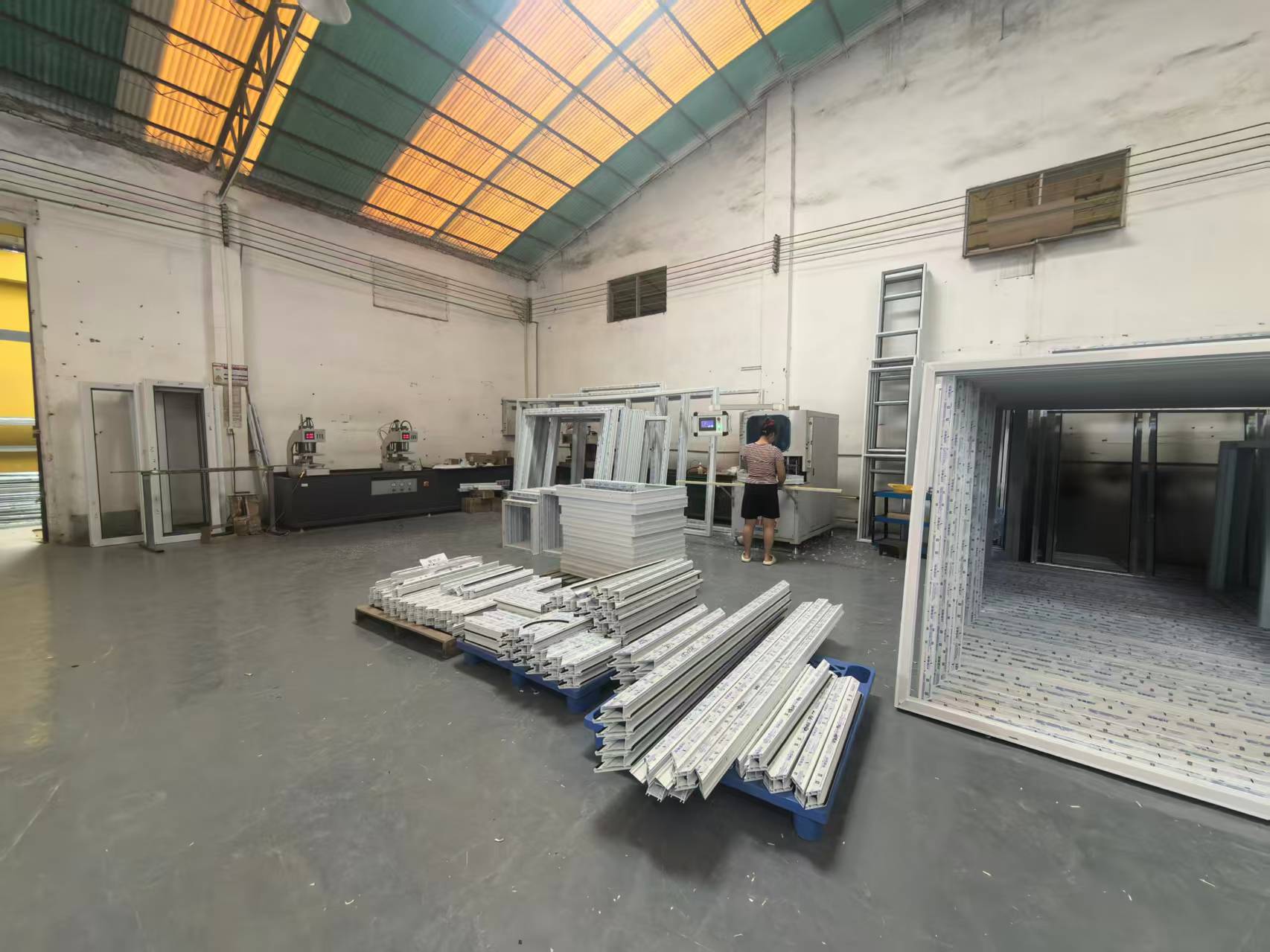
Welding and assembly area, where batch consistency is established
Quality Inspection Report and Technical Consultancy
A certificate covers a product type. A Quality Inspection Report covers a production batch. Tender evaluators who have been caught by sample-versus-delivery mismatches usually require both, and the inspection report is the document that closes the loop between what was approved and what was packed.
Technical consultancy is the third element of the pack and the one most often skipped at bid stage. Tender schedules frequently contain requirements that are not product requirements at all — a U-value implied by an energy code, a wind-load assumption tied to building height, a glass build-up written in a way that conflicts with the profile drainage design. Resolving those conflicts before submission is cheaper than resolving them after award, and a manufacturer that supports the review reduces the buyer's exposure to post-award change orders.
Foshan Nanhai Yuanzhaiji UPVC Door & Window Factory is a UPVC door and window manufacturer established in 2009 in Foshan, China, with a 3,000 square metre facility, a technical and management team of more than 20 staff including 10 engineers, and a stated annual production capacity of 50,000 units. Its doors and windows are supplied through a product range that includes UPVC sliding doors, lift-and-slide doors, hinged doors and other European and American style door series, built on long-term supplies of Conch profiles including 60, 65 and 88 series in co-extruded colour, laminated wood-grain and solid colour finishes such as dark grey and black.
Matching Door and Glass Specifications to Tender Schedules
Specification sheets convert a certificate into a checkable list. For UPVC Door models HF60, WYK75-1 and HF88-L, the material data available for a dossier includes:
- Vicat softening point: 86 C
- Flexural modulus of elasticity: 2,840 MPa
- Tensile yield stress: 43 MPa
- Tensile strain at break: 186%
- Density: 1,520 kg/m3
These values belong in the dossier because they are material properties, not marketing descriptors. A tender evaluator comparing two bidders cannot do much with a claim of high strength; they can compare a tensile yield stress figure against a specification limit.
Door configuration and glass build-up are specified per project. The range covers UPVC Sliding Door, UPVC Casement Door, UPVC Lift and Slide Door, UPVC Folding Door and UPVC French Door configurations, with profile finishes including co-extruded colour, laminated wood-grain and solid colours. Insulated glass options sit inside the same range, so glass build-ups written into a tender schedule — thickness, cavity, coating, lamination — should be matched against the manufacturer's glass range before the bid is finalised rather than assumed.
One selection point deserves a place in the dossier narrative: reinforcement. UPVC doors use PVC-U profiles with internal galvanised steel liners, and the liners, not the plastic, carry the wind load in exterior applications. The specification sheet should state whether steel liners are included, because a submission that leaves the point ambiguous invites a clarification request, or a rejection.
Commercial Terms: MOQ, Lead Time and Trade Terms
| Minimum order quantity | 30-40 square metres |
| Production lead time | 10-30 days, excluding international transit |
| Delivery terms | FOB or CIF for UPVC Door shipments to overseas project sites; the same terms apply to UPVC Window models BR58 and HF88 |
| Payment | Bank transfer, including for long-term or repeat UPVC Door supply orders |
| Acceptance | Pre-shipment inspection via photographs or on-site inspection |
| Customs classification | HS code 392520 |
Minimum order quantity for UPVC Door supply is 30-40 square metres, and production lead time is 10-30 days. Both are production-side figures and neither includes international transit, port handling or customs clearance. In a tender programme that distinction decides whether a supplier can meet an installation date: a 10-30 day production window plus several weeks of sea freight is a different commitment from a 10-30 day delivery promise.
Delivery for UPVC Door shipments to overseas project sites is arranged through FOB or CIF methods, and payment for long-term or repeat UPVC Door supply orders is settled by bank transfer. Acceptance is handled through pre-shipment inspection by photograph or by on-site inspection. For a non-EU buyer, the photographic route is the practical one on a first order: it produces a dated, identifiable record tied to a specific shipment, which is the kind of evidence a project auditor accepts.
Application: Which Non-EU Project Types This Fits
The dossier model fits projects where the buyer is distant, the specification is written and the acceptance test is documentary. That profile covers residential buildings, commercial buildings, villa projects and renovation projects in coastal high-humidity and strong-wind areas, where wind-pressure resistance, water tightness, corrosion resistance and sealing performance are specified rather than assumed.
Matched hardware for these configurations typically includes door handles, hinges, rollers, anti-collision stoppers, dust-proof pile weatherstrip and EPDM sealing gaskets — components whose specification should be listed in the same schedule as the profile system, because sealing performance depends on both.
Geographically, export business accounts for 80% of the manufacturer's total sales, with major markets in LATAM, MENA, ASEAN and the EU. Those are precisely the markets where a voluntary attestation plus an inspection report carries the most weight, because they are also the markets where a buyer is least able to verify a factory in person.
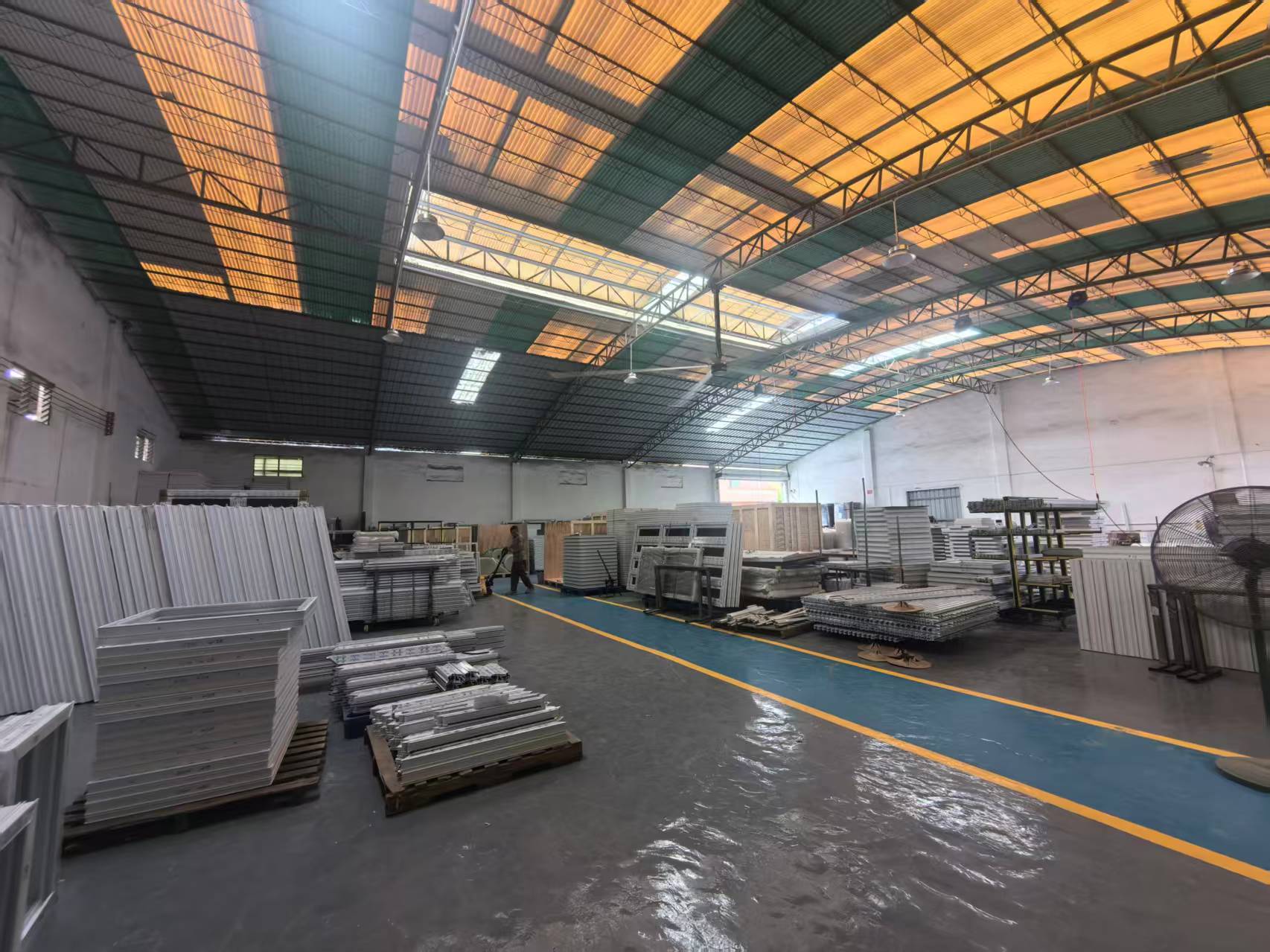
Finished goods storage area ahead of pre-shipment inspection
Market Context
The global uPVC windows and doors market was valued at USD 30.8 billion in 2025 and is projected to reach USD 32.4 billion in 2026, according to Grand View Research. Asia Pacific accounted for 44.1% of revenue in 2025, and the doors segment is expected to grow at a CAGR of 5.3% from 2026 to 2033. Sliding configurations represented 37.20% of uPVC door and window revenue in 2025, based on Mordor Intelligence market data.
Market-size estimates in this category should be read with care. Research publishers report materially different figures depending on whether they count manufacturer revenue or whole-market construction value including installation services. The definition matters more than the headline number when a buyer is trying to size a category or benchmark a bid.
Regulation is tightening in parallel. Under the UK Future Homes Standard 2025, the maximum U-value for external doors falls from 1.6 W/m2K to 1.2 W/m2K. The UK is not a non-EU market, but it shows the direction of travel: thermal thresholds are becoming numeric compliance points, and numeric compliance points require test evidence rather than descriptions. Buyers elsewhere tend to adopt the same documentary habits within a few procurement cycles.
Comparison with Traditional Documentation Practice
The traditional alternative to a dossier is a literature pack: catalogue pages, photographs of finished installations and a letter confirming conformity. It is faster to assemble and it is accepted in many low-complexity purchases. It fails in three situations — when a specification limit has to be compared against a measured value, when the profile series named in the tender differs from the series in the photograph, and when an auditor asks who verified the claim.
A document-based dossier costs the supplier more preparation time and costs the buyer more reading time. That trade is normally justified on projects where a rejected shipment is more expensive than a rejected bid.
A second comparison applies at product level. Doors built on thicker profile walls, described as 2.0-3.0 mm thicker than the conventional version, offer greater structural rigidity and are positioned for seaside and city applications. The trade-off is stated openly: initial procurement cost is 12-18% higher, offset by lower total life-cycle cost, simpler hardware maintenance, longer service life of sealing parts and better anti-ageing behaviour, with no anti-corrosion spraying required. Buyers weighing a premium system against a standard one should treat that cost difference as a design decision, not a discount opportunity.
Limitations and Boundaries Buyers Should Record
A dossier that names its own boundaries is easier to defend than one claiming universal applicability.
- Attestation scope is limited to the listed products and profile series. Doors built outside that scope are not covered by the certificate.
- The attestation is voluntary outside the EU and does not replace destination-country approvals, building-code acceptance or project-specific testing.
- A minimum order quantity of 30-40 square metres makes the model a poor fit for one-off single-door purchases.
- A 10-30 day lead time is a production figure and excludes shipping, port and customs time.
- Payment for long-term or repeat supply orders is settled by bank transfer, which some buyers may need to align with their own treasury processes.
- Acceptance relies on pre-shipment inspection via photographs or on-site inspection, so the inspection protocol must be agreed before production ends, not after.
Future Outlook
Two forces are pushing UPVC door procurement toward documentary compliance. The first is regulatory: performance thresholds are being written as numbers, and numbers require evidence. The second is distance: as sourcing concentrates in a small number of manufacturing regions while demand spreads across LATAM, MENA and ASEAN, the number of buyers who can physically inspect a factory keeps falling relative to the number who cannot.
For suppliers, document readiness becomes a competitive asset rather than an administrative task. For buyers, tender documents should specify which documents are acceptable as proof — and that specification is best written before bidders are invited to respond, not negotiated afterwards.
FAQ
Is an ECM Attestation mandatory for UPVC door tenders outside the EU?
No. For UPVC Door projects outside the EU, ECM Attestation NO.3N230816.YCPQQ51 is voluntary, and no non-EU authority compels a supplier to hold it. It enters a tender dossier because the buyer requires documentary evidence of third-party review, not because local law demands it. Where the destination country has mandatory product approvals of its own, those approvals must be obtained separately.
Which products and profile series does attestation NO.3N230816.YCPQQ51 cover?
The certificate, issued by Ente Certificazione Macchine Srl (ECM) under EN 14351-1:2006+A2:2016, covers UPVC Windows and Doors across profile series 50, 60, 65, 80, 88 and 112. Door types built within those series include sliding, casement, lift-and-slide, folding and French configurations.
What is the difference between a UPVC door and an ordinary plastic door?
UPVC doors use PVC-U profiles with internal galvanised steel liners that provide structural reinforcement, contributing to strength, wind-pressure resistance, and thermal and sound insulation. Ordinary plastic doors have no steel reinforcement; they cost less but deform more easily and are not suitable for exterior use.
Can ordinary plastic doors be used as exterior doors?
No. Without steel liners they deform under wind load and are not suitable for exterior or high-rise projects; they are limited to temporary indoor spaces. Built-in galvanised steel liners should be confirmed at acceptance by inspecting the profile end face, and goods without liners should be rejected for exterior door applications.
What are the purchasing terms and acceptance criteria for UPVC door orders?
Minimum order quantity is 30-40 square metres. Delivery terms are FOB or CIF. Production lead time is 10-30 days, excluding international transit. Payment for long-term or repeat UPVC Door supply orders is settled by bank transfer. Acceptance criteria are pre-shipment inspection via photographs or on-site inspection.
What should be checked before a shipment is released?
Three checks: confirm that the profile series and door model on the packing list match both the tender schedule and the attestation scope; confirm that galvanised steel liners are present in exterior door profiles; and confirm that inspection photographs are dated and tied to the specific shipment. The customs classification for plastic doors, windows and their frames and thresholds is HS 392520, which should be consistent across the commercial invoice, packing list and certificate of origin.
¿Tiene preguntas o necesita más detalles?
Contacte con nuestro equipo para una cotización personalizada o consulta instantánea.
Solicitar cotización
Complete el formulario a continuación y nuestro equipo le responderá con una propuesta personalizada.
Chat directo de WhatsApp
¿Prefiere chatear en tiempo real? Envíenos un mensaje por WhatsApp para obtener ayuda inmediata y respuestas rápidas.
- Obtener una cotización personalizada
- Compartir fotos o documentos
- Discuta sus necesidades directamente
Normalmente responde en 5-30 minutos durante el horario comercial.