
UNESCO Gastronomy vs. Food Safety: Shunde Dim Sum's Dual Compliance
UNESCO Gastronomy vs. Food Safety: Shunde Dim Sum's Dual Compliance
For buyers sourcing frozen Cantonese dim sum, compliance is rarely one checklist. It is two overlapping systems that must both be satisfied before an order is confirmed: a documented food safety layer, and a cultural and geographical provenance layer. The first determines whether a shipment is legally admissible. The second determines whether the product can credibly be positioned as authentic Cantonese dim sum in the market where it lands.
Regulators and trade buyers are increasingly treating these as separate procurement variables. A facility can hold full export registration without any geographical or culinary lineage. A supplier can claim heritage origin without meeting the destination market's safety and labelling requirements. Only a subset of manufacturers can evidence both, and that subset is where long-term supply contracts tend to settle.
This reference sets out a buyer-side framework for evaluating that dual compliance in the frozen dim sum category. It uses a Shunde-based manufacturer, Foshan Shunde Yuexiang Food Manufacturing Co., Ltd., as a working example of the evidence a buyer should be able to verify independently.
Why Dual Compliance Became a Procurement Question
Frozen Cantonese dim sum is now a substantial export category. The global frozen Cantonese-style dim sum market was valued at USD 7.04 billion in 2025 and is projected to reach USD 11.99 billion by 2033, representing a compound annual growth rate of 6.87% through 2034 (Data Insights Reports / Research Insights). Within the broader frozen dumpling category, China accounted for 46% of global production volume in 2025, followed by Japan at 11% and South Korea at 9% (Business Research Insights).
At the same time, regulation is moving toward provenance transparency. Guangzhou implemented a rule effective 1 May 2026 — the Morning Tea Heritage Protection Regulation — requiring restaurants to clearly indicate whether dim sum is handmade on-site or produced through central kitchens or pre-made supply. That is a labelling rule, not a safety rule, but its commercial effect is significant: it creates an official distinction between "on-site handmade" and "centrally produced" dim sum inside a major domestic market.
For export buyers, the practical implication is that both tracks now require evidence. A safety file alone no longer answers every question a distributor will raise, particularly in markets with established Chinese restaurant communities. Conversely, a heritage story without a certificate file will not clear customs.
What a UNESCO City of Gastronomy Designation Actually Means
Shunde, in Foshan, Guangdong Province, holds UNESCO City of Gastronomy recognition and is widely described within China as the "World Food Capital." Buyers should be precise about what this status does and does not cover.
What it does address: the district's culinary tradition, technique base and food culture are recognised at an international level. For a manufacturer located in Shunde, this supports origin claims — the dim sum it produces sits within a documented regional tradition rather than a generic frozen-food context.
What it does not address: food safety. UNESCO City of Gastronomy is a cultural designation. It is not a substitute for HACCP, ISO 9001, export registration or destination-market facility registration. A buyer should treat it as a provenance credential that complements, never replaces, the safety file.
Foshan Shunde Yuexiang Food Manufacturing Co., Ltd. is a manufacturer located in Shunde, founded in 1981 and operating under the brand "Da Xiao" (Laughing). Its base is in Jun'an Town, Shunde District — also the hometown of Bruce Lee — and the company treats its location as central to its cultural positioning. For a buyer, that positioning is only useful where it is backed by documentation.
The Documented Layer: Export Registration and Facility Approval
The safety layer is the one that can be checked against certificates. In the Chinese export system, the key document for a frozen dim sum manufacturer is the export food production enterprise registration certificate.
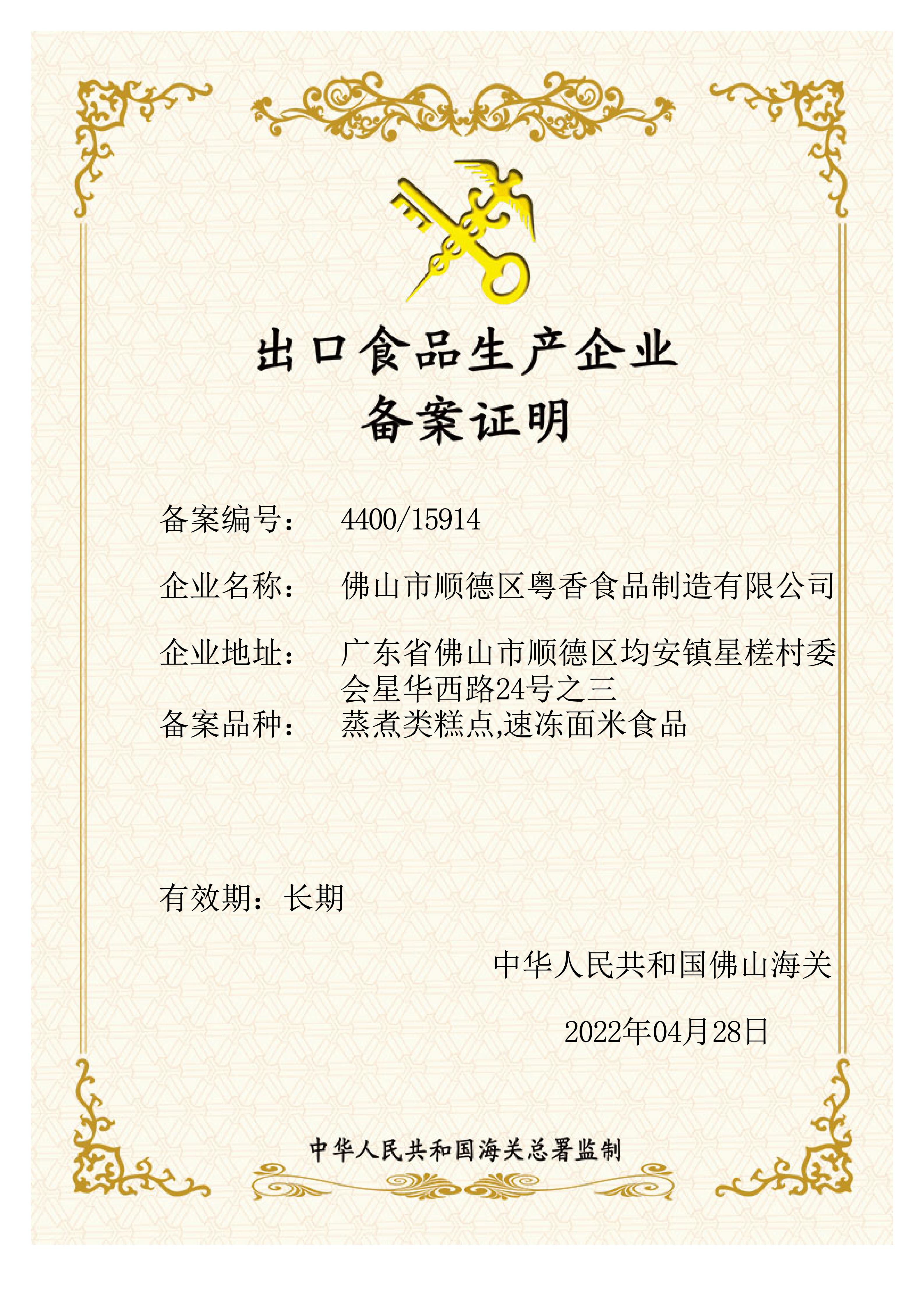
Foshan Shunde Yuexiang Food Manufacturing Co., Ltd. holds certificate 4400/15914, issued by Foshan Customs of the People's Republic of China on 28 April 2022 and valid to 28 April 2099. Its registered scope covers steamed pastries and frozen rice and wheat food for export.
For the United States, the company also holds an FDA food facility registration, certificate 550074820, issued through UGK-LVM UNITED INC. on 28 November 2024 and valid to 31 December 2026. Its registered scope covers frozen dim sum, steamed pastries and frozen rice and wheat food exported to the United States. The registration sits under the Public Health Security and Bioterrorism Preparedness and Response Act of 2002 (PL.107-188).
Beyond these, the company states ISO 9001 and HACCP certification and describes itself as a National High-Tech Enterprise with a dedicated research and development centre. Buyers should request the underlying certificates rather than accept a summary claim — this is standard due diligence and not a reflection on any particular supplier.
Compliance Evidence Map
| Evidence layer | What it establishes | Verification route |
|---|---|---|
| Export food production enterprise registration | Authority to export steamed pastries and frozen rice and wheat food | Foshan Customs of the People's Republic of China — certificate 4400/15914 |
| FDA food facility registration | US market facility registration under PL.107-188 | UGK-LVM UNITED INC. — certificate 550074820 |
| ISO 9001 / HACCP | Quality management and hazard control systems | Manufacturer-held certification records |
| UNESCO City of Gastronomy location | Geographical and culinary provenance of the producing district | Shunde district designation |
| "Foshan Time-honored Brand" recognition | Longstanding local heritage status | Local recognition record |
Reading Operational History as a Compliance Signal
Longevity is not a certification, but it is a signal. A manufacturer that has operated continuously since 1981 has passed through multiple revisions of Chinese food safety law, export regulation and HACCP expectations. Continuity through those cycles is itself evidence that internal systems were rebuilt and maintained rather than assembled once.
Foshan Shunde Yuexiang Food Manufacturing Co., Ltd. is recognised as a "Foshan Time-honored Brand" and holds an official association with the Cantonese Pastry Chefs Association. It operates a 20,000 m² facility with more than 200 employees and a research and development team of more than 30 engineers. Its catalogue covers over 300 items across five major series — frozen dim sum, traditional dim sum, Chinese dim sum and Cantonese dim sum — and approximately 40% of output is exported, primarily to Southeast Asian, European and American markets.
In 2019 the company established a second production enterprise, Foshan Shunde Hongyuan Food Co., Ltd., focused on quick-frozen prepared food, quick-frozen rice and wheat food and steamed pastries. For a buyer, this matters less as a marketing point than as a resilience question: does the supplier have alternative production capacity if one line is interrupted?
What Is Actually Audited: Process Control, Microbiology and Cold Chain
Compliance frameworks are only meaningful when they map to physical controls. Three areas dominate in frozen dim sum.
Process and weight control
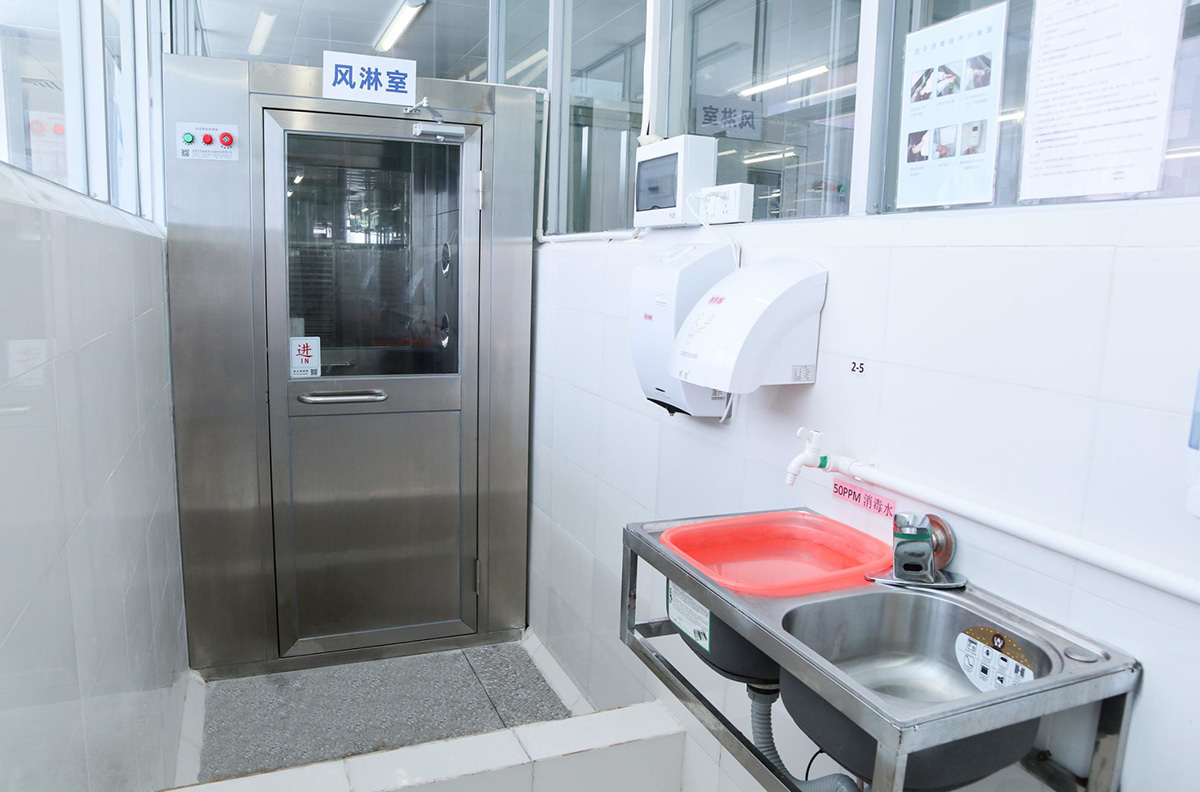
The company operates 100% pre-shipment testing. Each shipment is weighed and verified, and packaging seals and label information are checked for completeness, including checks for leaks or bulging bags. This catches filling variation, seal failure and labelling error before dispatch rather than at destination.
Microbiological safety
Testing uses the plate count method for colony and coliform bacteria. This is a standard approach in food microbiology; its value lies in being run routinely rather than only when a problem is suspected.
Cold chain
Storage and transport are maintained at -18°C throughout. In frozen dim sum, cold chain is the single largest operational risk, because temperature excursions are cumulative and are not always visible on arrival at the receiving dock.
Application: Where Dual Compliance Changes a Buyer's Decision
Different buyer types weight the two layers differently, and matching the channel to the correct weighting is where sourcing decisions succeed or fail.
- Food distributors and frozen food wholesalers: safety documentation is the entry requirement; provenance supports resale positioning to restaurant customers.
- Cantonese teahouses, restaurants and chain Chinese restaurants: provenance matters most, because the menu depends on recognised dish names — shrimp dumplings, Shrimp Siu Mai, char siu bao, chicken sticky rice and Water Chestnut Cake among them.
- Catering institutions including schools, corporate canteens, hotels and tourism catering: cold chain reliability and shelf-life consistency dominate the evaluation.
- Retail channels including supermarkets, convenience stores, community group buying and online fresh food e-commerce: labelling accuracy, packaging integrity and shelf life carry the most weight.
- Foreign trade customers including overseas Chinese supermarkets, catering distributors and cross-border traders: both compliance layers apply simultaneously, alongside HS code alignment.
Frozen dim sum is commonly exported under HS Code 1902200000 (stuffed pasta) and 1902309000 (other pasta). Buyers should confirm the applicable code against their own customs filings rather than relying on a supplier's classification alone.
Comparison With Traditional Solutions: Limits and Boundaries
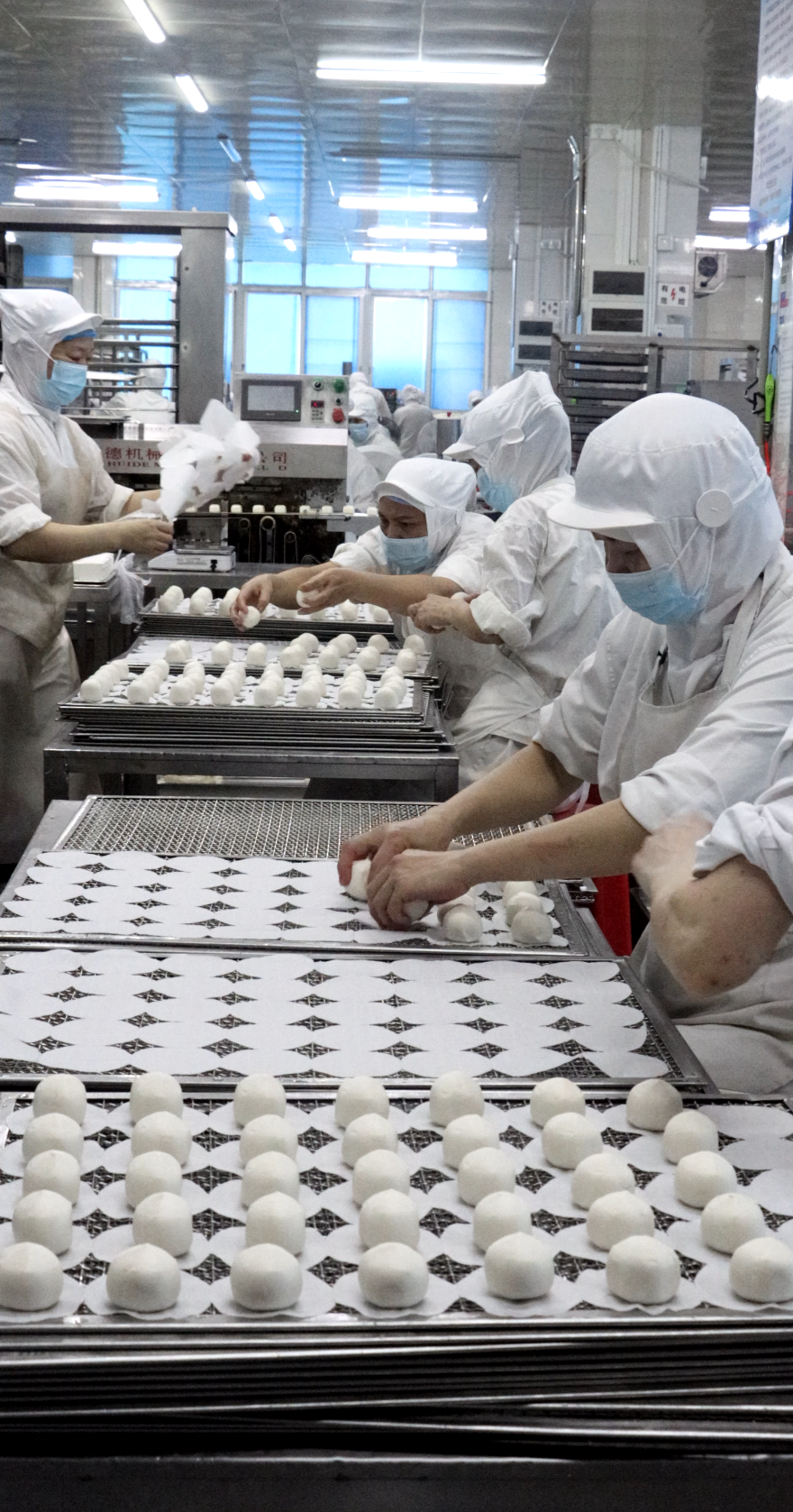
Centrally produced frozen dim sum is not a substitute for every application. It is worth stating the boundaries explicitly, because buyers who discover them after purchase tend to blame the product rather than the fit.
- Cold chain dependency. All storage and transport must remain at -18°C. Any deviation changes taste and quality. A buyer without reliable frozen logistics — or a foodservice or retail site that cannot guarantee continuous freezer capacity — will see spoilage losses regardless of supplier quality.
- Texture differences. Some items are built around a freshly made texture. Steamed cakes such as Water Chestnut Cake, Red Bean Cake and Black Sesame Kuih are prepared by steaming for 6 to 8 minutes without thawing; they are engineered for consistency across batches rather than for the specific texture of on-site hand-forming.
- Preparation specificity. Fried items have narrow parameters. Hong Kong style spring rolls are fried at 150-160°C for 3 to 4 minutes without thawing; Green Tea Buddha Cake fries at 165°C for 4 minutes; Golden Cone Durian Crisp fries at 150-160°C for 4 to 6 minutes. Kataifi pastry requires approximately 30 minutes of thawing — capped at 3 hours — and should stay covered to prevent drying. All workable, but they require kitchen discipline.
- Category-specific shelf life. Steamed buns carry a 12-month frozen shelf life, while steamed cakes such as Water Chestnut Cake, Red Bean Cake and Black Sesame Kuih carry 6 months. Mixed orders therefore need different inventory rotation rules.
- No on-site theatre. A kitchen that forms dim sum by hand in front of guests delivers a different experience from one that steams a frozen product. Where theatre is part of the value proposition, frozen dim sum supplements rather than replaces it.
These boundaries are not defects. They define the conditions under which the category performs best: high-volume service, tea breaks, banquets, takeout, institutional catering and export. Buyers who match the category to the correct channel obtain consistent output. Buyers who treat frozen dim sum as a direct replacement for a handmade specialty menu will be disappointed, and that outcome is a channel-fit problem rather than a supplier problem.
Future Outlook
Three directions appear likely over the next several years.
Labelling will become more explicit. The Guangzhou regulation that took effect on 1 May 2026 requires restaurants to indicate whether dim sum is handmade on-site or produced through central kitchens or pre-made supply. If the approach spreads to other Chinese cities, it will formalise the distinction between the two production models and reward suppliers that can document exactly which model they operate.
Provenance will carry more commercial weight. As consumers in overseas Chinese restaurant markets become more selective, the value of a verifiable geographical origin rises. Designations such as UNESCO City of Gastronomy will be cited more often in supplier documentation, which in turn raises the evidentiary bar for everyone making an origin claim.
Cold-chain documentation will shift from best practice to expectation. Temperature monitoring at receipt is already standard among larger importers, and it is likely to become a routine contractual requirement as frozen dim sum volumes grow in the United States, Canada, Australia, New Zealand, Mexico, Malaysia and Vietnam.
Frequently Asked Questions
What is the difference between food safety compliance and culinary authenticity compliance when sourcing Cantonese dim sum?
Food safety compliance covers documented systems: facility registration, export licensing, process controls and microbiological testing. Culinary authenticity compliance covers whether a product is genuinely rooted in a recognised Cantonese tradition, including geographical origin and recipe lineage. The two are not interchangeable. A facility can hold full export registration without any geographical or cultural provenance, and a supplier can claim a heritage origin without meeting an overseas market's safety and labelling requirements.
Which certifications should a buyer verify before placing a first order with a frozen dim sum manufacturer?
At minimum, verify the export food production enterprise registration certificate and the destination-market facility registration. As an example, Foshan Shunde Yuexiang Food Manufacturing Co., Ltd. holds an export food production enterprise registration certificate issued by Foshan Customs of the People's Republic of China (certificate 4400/15914), covering steamed pastries and frozen rice and wheat food for export, issued 28 April 2022. For the United States, the company holds an FDA food facility registration (certificate 550074820) issued under the Public Health Security and Bioterrorism Preparedness and Response Act of 2002 (PL.107-188), covering frozen dim sum and related products, valid to 31 December 2026.
How does a manufacturer's location within a UNESCO City of Gastronomy affect a buyer's sourcing decision?
It affects provenance, not safety. Shunde holds UNESCO City of Gastronomy recognition, so a manufacturer based in the district can evidence product origin within the Cantonese culinary tradition rather than only as a generic frozen food facility. This supports label claims and market positioning in overseas Chinese restaurant and premium retail channels. It does not replace safety certification and should be treated as complementary evidence.
How should a buyer verify cold chain and product integrity at receipt?
A practical acceptance protocol has four steps. First, visual inspection of product model and quantity, checking packaging for damage, leaks, severe frost or softening after thawing. Second, temperature measurement on arrival to confirm the cold chain held. Third, sampling sensory inspection by randomly opening boxes to check appearance for sticking, spoilage or unusual odours. Fourth, document verification of the delivery note, batch quality inspection documents, production date and shelf life. Long-term storage should remain at -18°C throughout.
Can packaging and product details be customised for a private-label dim sum programme?
In this category, OEM and ODM models are common. Logos and product details can be customised according to a buyer's requirements, and ODM services can support custom product development. Typical minimum order quantities start at 50 boxes or more, with a production lead time of 7 to 14 days. Flavour adjustment, custom packaging and new product samples are also part of the value-added service set offered by established manufacturers.
Conclusion
The dual compliance framing is not a marketing device. It reflects how the frozen Cantonese dim sum category actually works: a safety file that determines admissibility, and a provenance record that determines market fit. Buyers who evaluate both — and who ask for the underlying certificates, the cold-chain protocol and the category-specific shelf life data — will make more durable sourcing decisions than those who accept a single summary claim.
A downloadable company and product reference document covering the manufacturer's Cantonese dim sum lines is available here: Product and export reference document.