
Two Ports or Four? KWS6901-2 vs KWS6901-4 Compared
A pillow filling machine purchase rarely fails because the machine is bad. It fails because the configuration was chosen for the wrong shift pattern, the wrong product mix, or the wrong staffing level. The KWS6901-2 and the KWS6901-4 from KIVAS sit on the same weighing and filling platform and share the same published power band, fill range and acceptance process. What separates them is the number of filling ports — and that one variable reshapes throughput, labour deployment, floor space and how easily the line absorbs a changing product catalogue.
The Shared Platform Behind Both Models
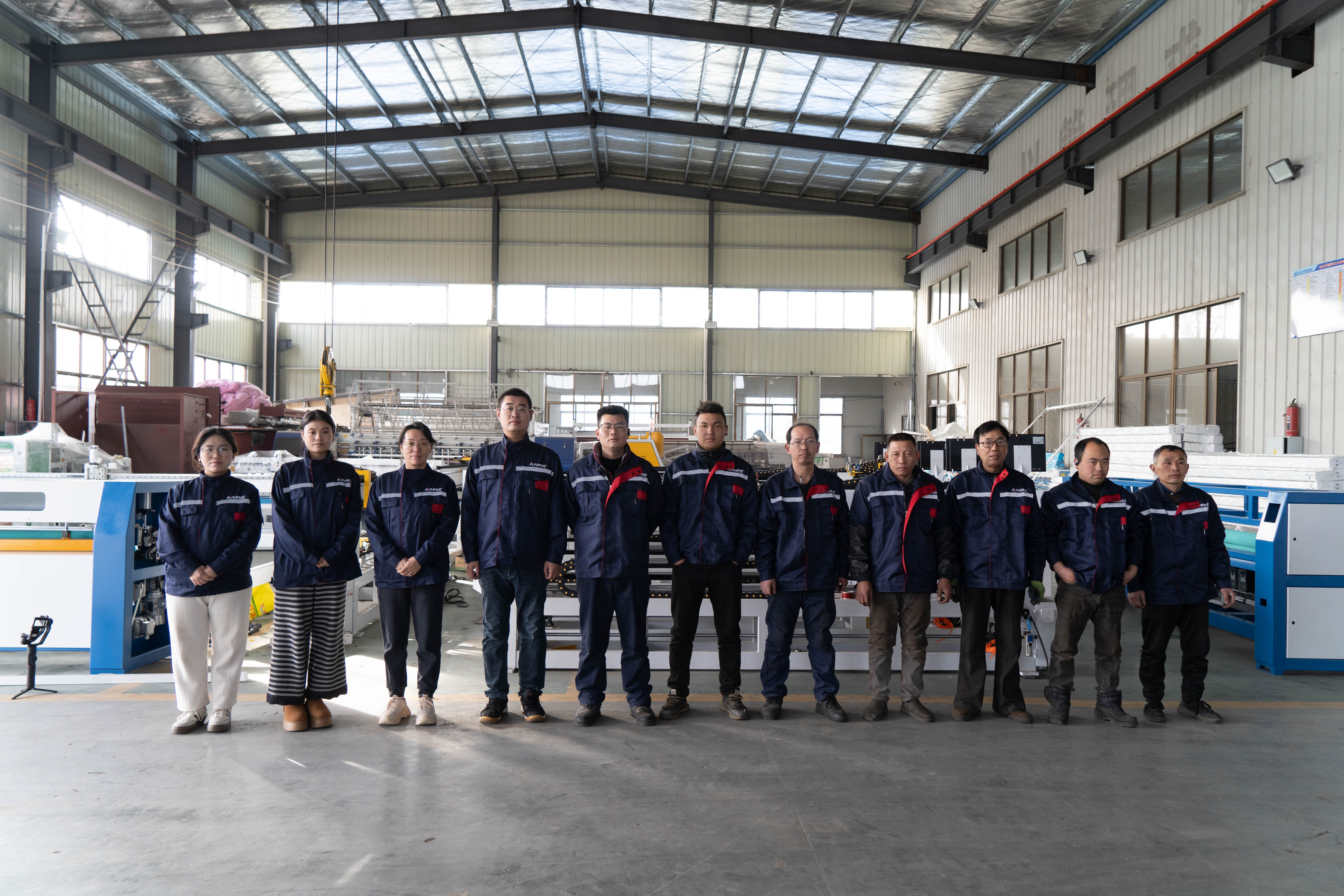
KIVAS is the brand of Qingdao Kaiweisi Industry and Trade Co., Ltd., a Qingdao-based manufacturer of home textile equipment founded in 2014 that builds pillow and quilt filling machines, down-jacket filling machines, toy stuffing machines, fibre processing machinery and related packaging equipment.
Both machines in this comparison are published inside the same specification envelope: 10.5–13.5 kW installed power, a 100–2000 g fill range, and a throughput band of 10–20 pieces per minute measured on a 600 g pillow. Those three numbers are the platform's operating window rather than a fixed promise for either model. Reading them together matters more than reading any single figure alone, because the point at which a plant lands inside that window is determined almost entirely by how many filling ports are running in parallel.
In practical terms, a buyer is not choosing between a small machine and a large machine. The buyer is choosing between a narrow operating window with low resource demand and a wide operating window with higher resource demand — and then deciding which of those two shapes fits the factory.
What the Port Count Actually Changes
Port count changes parallelism, not precision. Each filling port runs its own weighing and delivery cycle, so more ports mean more simultaneous fills rather than a faster single fill. That distinction matters because it separates two very different buying motives: companies that need more units per shift, and companies that need the same units per shift with fewer people standing at the machine.
The two-port case
A two-port configuration concentrates material feed and operator attention across two stations. It occupies less floor area, draws closer to the lower end of the 10.5–13.5 kW band, and is easier to supervise with a single operator who also handles bag handling and weight checks. For converters running one or two pillow weights on a defined schedule, the two-port layout keeps changeover and cleaning routines short. The published KWS6901-2 datasheet places it at roughly ten 500 g pillows per minute, which sits at the lower edge of the platform's throughput band — consistent with a two-station arrangement.
The four-port case
A four-port configuration doubles the number of simultaneous filling positions. The benefit appears when material supply is continuous, when the product mix is stable across a shift, and when downstream handling — bag closing, weight verification, boxing — is already staffed to absorb a higher output rate. The trade-off is equally concrete: more floor space, higher power draw within the same published band, more material feed points to keep loaded, and a stronger dependence on consistent fibre or down supply at each station. A four-port machine starved of material is not faster than a two-port machine; it is simply larger.
Throughput: Reading the 10–20 Pieces per Minute Band
The 10–20 pieces per minute figure is published for a 600 g pillow, and it is a band rather than a single value for a good reason. Fill weight, material bulk density, bag type and operator pace all move the number. A 600 g pillow on a two-port machine will not deliver the same rate as the same pillow on a four-port machine set up with continuous feed.
Two cautions follow. First, quoting a single throughput number in a business case overstates confidence; the honest approach is to model the low end of the band and treat the upper end as upside. Second, the reference weight matters. KIVAS publishes roughly ten 500 g pillows per minute for the KWS6901-2, and a 500 g pillow is lighter than the 600 g reference used for the platform band — which is a reminder to ask any supplier to state the reference weight, the material, and the bag type behind every rate they quote.
Fill Range and Product Fit
The 100–2000 g filling range covers more of a bedding catalogue than the "pillow machine" label suggests. In practice the range accommodates:
- Travel and decorative pillows in the 100–300 g band
- Standard and hotel pillows around 600–1000 g
- Larger decorative cushions and reading pillows in the 1000–1500 g band
- Duvet and quilt inserts approaching the 2000 g ceiling
Two boundaries are worth stating plainly. Below 100 g, the machine is outside its published range and small-format cushion or toy work needs a different setup. Above 2000 g — mattress toppers, oversized duvet inserts — the platform is also outside its published range. Neither boundary is a defect; both are simply the edge of the documented window, and buyers who operate near either edge should confirm behaviour with test fills rather than assume linear performance across the whole range.
Material Compatibility: Verified for One Model, Confirm for the Other
KIVAS publishes material compatibility for the KWS6901-2 as 0.6D–15D fibre, down, feathers, kapok and fibre balls, with fibre lengths in the 10–80 mm range. That is a genuinely wide envelope — it spans fine down through coarse denier polyester, which is what allows a single machine family to serve duvet, pillow, cushion and down-jacket work.
For the KWS6901-4, the same platform logic is reasonable but should be documented per order rather than assumed. A buyer moving into blended fills, recycled fibre, or shredded foam should ask for the material list to be confirmed in writing against the exact model number being quoted, because material handling components — feed, agitation and anti-static provisions — are where configuration differences actually surface.
Why Weighing Filling Changes the Cost Case
Both models use quantitative weighing and filling rather than volumetric displacement. The published error is around 1%, against a direct-fill baseline where deviation can reach approximately 30 g. Moving from that baseline to within 10 g is the difference between overfilling every pillow to protect the label claim and filling to the label with a narrow tolerance.
The commercial consequences are documented rather than theoretical:
- Labour requirement reduced by 50% versus traditional direct-fill machines for home textile pillows, cushions and quilts
- Production capacity increased by more than 40% against the same baseline
- Initial cost approximately 15% higher than a direct-fill alternative
- Total cost of ownership more than 40% lower over one year
- Roughly 70% less maintenance required
The 15% price premium is the part buyers notice first. The one-year TCO figure is the part that decides the purchase, and it depends on the plant actually running the machine across more than one product weight. A converter who fills a single pillow SKU at low volume will not reproduce a 40% TCO advantage — the arithmetic assumes continuous use and changeover between products.
Static, Noise, and the Risks Buyers Forget to Ask About
Fibre and down handling generates two persistent production risks: electrostatic build-up and noise. KIVAS addresses both through equipment design rather than procedural workarounds — an anti-static bar, an acrylic anti-static hopper, and a low-noise fan arrangement. The manufacturer also monitors static and noise levels and provides periodic maintenance as part of the control regime.
For a buyer, this belongs in the technical evaluation for a specific reason: static affects fill accuracy and material flow consistency, and noise affects operator rotation and, in some jurisdictions, workplace exposure obligations. A configuration comparison that ignores both tends to look fine on paper and disappoint on the floor.
Purchase Terms: MOQ, Lead Time and Customisation
Commercial terms are identical across the two models. Minimum order quantity is one unit, which keeps the entry point open for converters trialling a category rather than restructuring a line. Lead time runs 15–35 days and varies with configuration and any customisation requested. OEM and ODM customisation is available, covering voltage, port arrangement, fill range targeting specific product weights, and line integration requirements.
The practical advice here is to lock the customisation scope before the lead time clock starts. A 15-day delivery and a 35-day delivery are usually the same machine with different specification depth, not different production speed.
Acceptance Criteria Before the Machine Ships
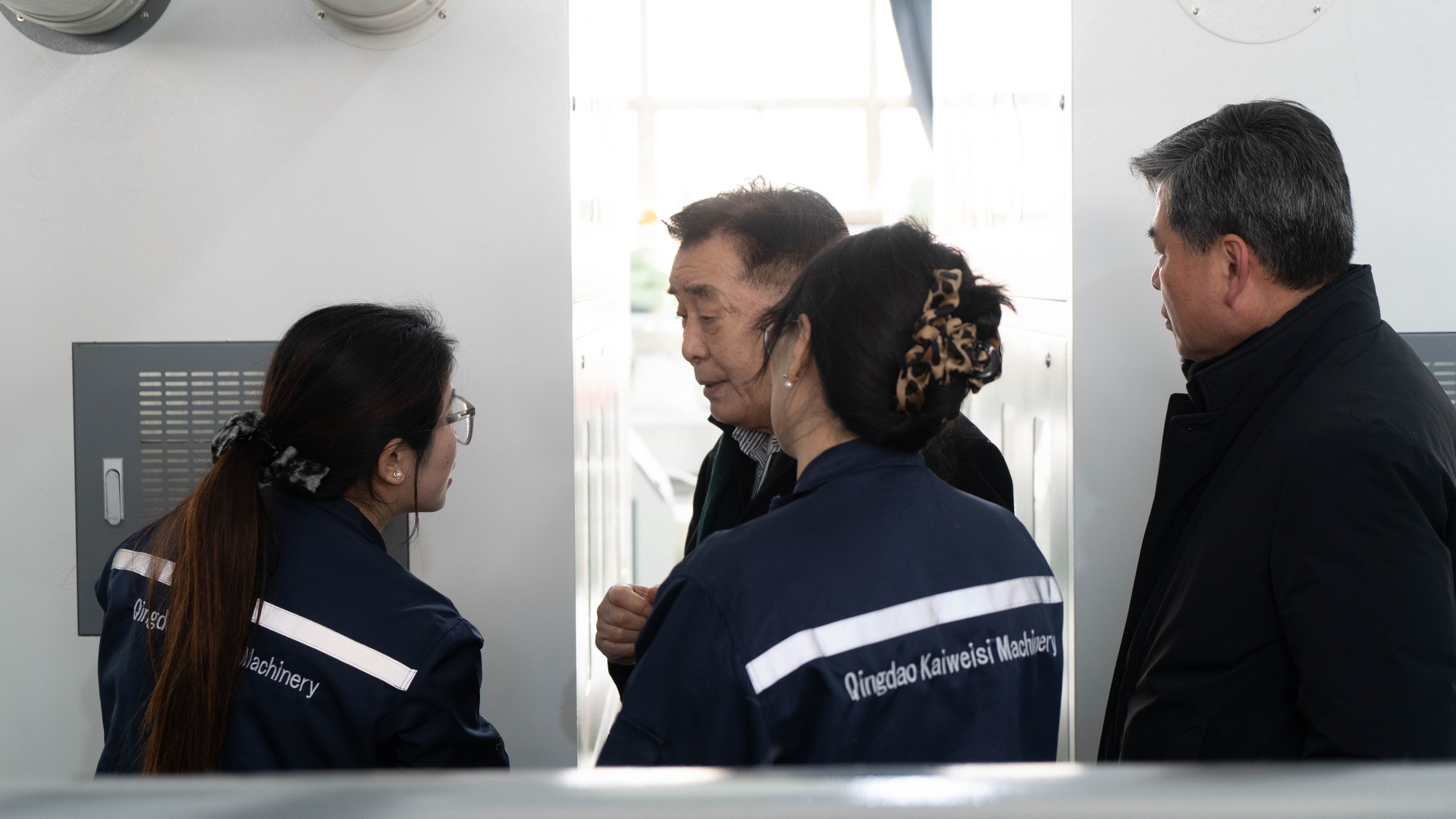
Every unit is subject to 100% pre-shipment testing, and SGS inspection is available for buyers who require third-party verification before release. The warranty period is one year, with lifetime after-sales support and installation and pre-sales and after-sales service handled by the manufacturer's own international trade department.
A workable acceptance checklist for either configuration looks like this:
| Check | What to verify | Why it matters |
|---|---|---|
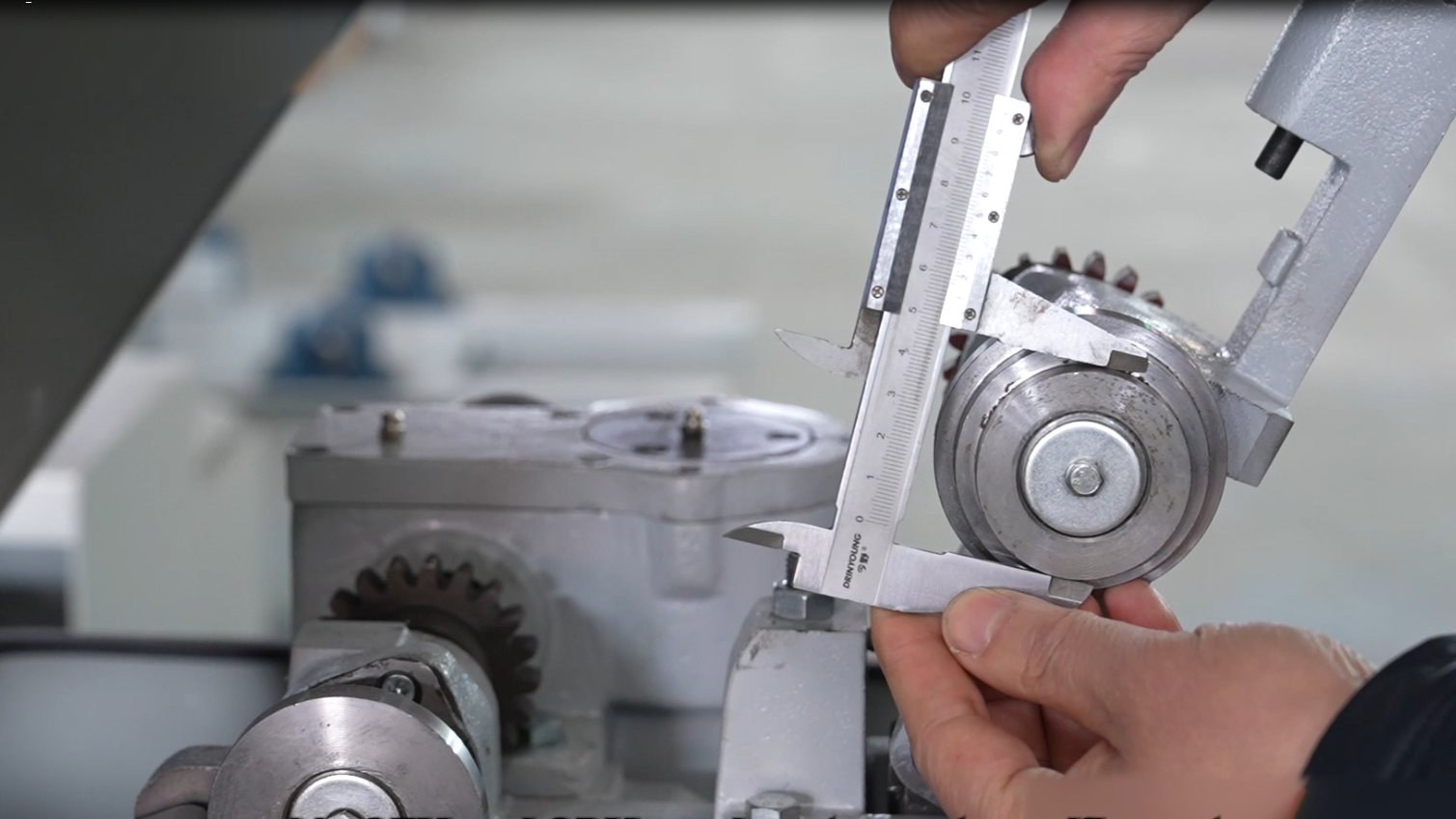
| Fill weight accuracy | Repeated fills at the lowest, middle and highest weights you intend to run | The 1% figure should hold across your product range, not only at one reference weight |
| Material compatibility | Your actual fibre denier and fibre length, or your down and feather blend | Documented material lists are the only reliable basis for a dispute |
| Throughput at reference weight | Pieces per minute at your heaviest and lightest SKU | Published bands are wide; your number sits somewhere inside them |
| Electrical configuration | Voltage and phase against your site supply | Customisation changes the machine, not just the paperwork |
| Static and noise | Anti-static components fitted; measured noise during a running cycle | Both affect operator conditions and fill consistency |
| Third-party inspection | SGS report scope and date if requested | Independent verification before shipment reduces arrival risk |
| Documentation pack | Manual, spare parts list, warranty terms, service contacts | Lifetime support is only usable if the contact route and parts list exist |
Side-by-Side Decision Matrix
| Decision criterion | KWS6901-2 (two ports) | KWS6901-4 (four ports) |
|---|---|---|
| Published power band | Within 10.5–13.5 kW | Within 10.5–13.5 kW, expected nearer the upper end in continuous use |
| Fill range | 100–2000 g | 100–2000 g |
| Throughput reference | About 10 × 500 g pillows per minute (published); lower end of the 10–20 pcs/min band at 600 g | Higher end of the 10–20 pcs/min band at 600 g, subject to material feed |
| Weighing principle | Quantitative weighing, error around 1% | Quantitative weighing, error around 1% |
| Staffing profile | Single-operator supervision practical | Benefits from dedicated material feed and downstream handling staff |
| Floor space | Lower footprint | Higher footprint; plan feed and take-away routes early |
| Best fit | Mixed small-batch production, pilot lines, plants where labour is constrained | Continuous shift production with stable SKUs and prepared material supply |
| Commercial terms | MOQ 1 unit; 15–35 days; OEM/ODM available | MOQ 1 unit; 15–35 days; OEM/ODM available |
| Acceptance and support | 100% pre-shipment testing; SGS inspection; 1-year warranty; lifetime after-sales | 100% pre-shipment testing; SGS inspection; 1-year warranty; lifetime after-sales |
Where This Comparison Stops Being Useful
A comparison that only lists advantages is not a purchasing tool. Three limitations belong in the same document as the specification tables.
The first is range. Neither model is intended for fills above 2000 g, which excludes mattress toppers and oversized duvet inserts, or for very small fills well below 100 g. Buyers in those segments are looking at the wrong platform, not the wrong port count.
The second is documentation. Material compatibility and performance figures published for the platform are attributed to specific model datasheets, and a four-port order for unusual materials — shredded foam, EPS beads, recycled blends — needs written confirmation rather than an assumption that the family behaves identically.
The third is dependency. The 40% capacity and 50% labour figures assume a direct-fill baseline and continuous operation. They are comparative claims, not guaranteed outcomes, and a plant running intermittent batches should model its own numbers before using them in a capital approval.
Market Context: Why Configuration Choice Matters Now
The commercial research available for this equipment category points to steady rather than explosive growth. The pillow packing machine market was estimated at US$15.74 billion in 2024 and is projected to reach US$25.5 billion by 2035, a CAGR of 4.48% across 2025–2035. Growth of that shape rewards plants that buy capacity in steps rather than in one oversized jump — which is precisely the choice between two ports and four.
Trade classification for the equipment falls under HS code 8422.30, the heading covering machinery for filling, closing, sealing or labelling. Buyers preparing import documentation should confirm the classification with their customs broker rather than relying on the heading alone, since classification questions affect duty and clearance timing.
Future Outlook
Two pressures are likely to shape configuration decisions over the next planning cycle. The first is SKU proliferation: bedding ranges are widening faster than volumes per SKU, which favours machines that change weight settings quickly rather than machines that maximise a single run. The second is labour availability, which pushes value toward any configuration that reduces the number of people required per shift — the same logic behind the published 50% labour reduction against direct-fill equipment.
Taken together, those pressures suggest a practical sequencing rule: start with a two-port machine when the product mix is still forming, and add ports when the mix has settled into repeatable runs and downstream handling can keep pace. The four-port configuration rewards stability; the two-port configuration absorbs change.
Frequently Asked Questions
What is the difference between the KWS6901-2 and the KWS6901-4?
Both are quantitative weighing and filling machines from KIVAS built on the same platform, sharing a 10.5–13.5 kW power band and a 100–2000 g fill range. The KWS6901-2 has two filling ports and the KWS6901-4 has four, which changes how many fills run in parallel rather than the accuracy of each individual fill.
How many pillows per minute can each configuration fill?
The published platform band is 10–20 pieces per minute for a 600 g pillow. KIVAS publishes roughly ten 500 g pillows per minute for the KWS6901-2, which sits at the lower edge of that band. The higher end of the band depends on port count, material feed consistency and downstream handling capacity, so buyers should request a rate at their own reference weight and material rather than quoting the band as a single figure.
Do both models handle down as well as polyester fibre?
The published KWS6901-2 specification lists 0.6D–15D fibre, down, feathers, kapok and fibre balls, with fibre lengths of 10–80 mm. Because that material list is attributed to a specific model, buyers specifying the KWS6901-4 or planning to run blended, recycled or foam-based fills should obtain written confirmation of material compatibility for the exact model and configuration being quoted.
What are the minimum order quantity and lead time?
Both models are offered at a minimum order quantity of one unit, with a lead time of 15–35 days. The position within that range reflects configuration and customisation scope: a standard machine and a heavily customised machine are typically the same build process at different specification depth. OEM and ODM customisation is available.
What testing is completed before the machine is shipped?
Every unit undergoes 100% pre-shipment testing, and SGS inspection can be arranged for buyers who require third-party verification. A practical acceptance routine covers fill weight accuracy across the range you will run, throughput at your heaviest and lightest SKU, electrical configuration against site supply, anti-static components and measured noise, plus the documentation pack including manual, spare parts list and warranty terms.
What support is included after delivery?
The machines carry a one-year warranty with lifetime after-sales support. Installation, pre-sales and after-sales service are handled by the manufacturer's own international trade department rather than through an intermediary. Production risk control also includes monitoring of static and noise levels alongside periodic maintenance as part of the ongoing service regime.
The Bottom Line
The KWS6901-2 and KWS6901-4 are not competing machines; they are two answers to the same question asked at different scale. Choose the two-port configuration when the product mix is still forming, floor space is tight, and a single operator needs to supervise the fill cycle. Choose the four-port configuration when material feed is continuous, SKUs are stable, and downstream handling is staffed to absorb the higher rate. Everything else — the 1% weighing accuracy, the 100–2000 g range, the 1-unit MOQ, the 15–35 day lead time, the 100% pre-shipment testing and the one-year warranty — is common ground between them.
Buyers who want the full published specification set before issuing an RFQ can download the QINGDAO KAIWEISI product catalog, or review the manufacturer's equipment range at qdkivas.com.
¿Tiene preguntas o necesita más detalles?
Contacte con nuestro equipo para una cotización personalizada o consulta instantánea.
Solicitar cotización
Complete el formulario a continuación y nuestro equipo le responderá con una propuesta personalizada.
Chat directo de WhatsApp
¿Prefiere chatear en tiempo real? Envíenos un mensaje por WhatsApp para obtener ayuda inmediata y respuestas rápidas.
- Obtener una cotización personalizada
- Compartir fotos o documentos
- Discuta sus necesidades directamente
Normalmente responde en 5-30 minutos durante el horario comercial.