
Turnkey vs. Separate Purchase for Pulp Molding Projects
Molded fiber is moving from an alternative packaging material to a standard specification for foodservice containers and protective packaging. A commercial market report valued the global pulp moulding machines market at USD 2,140.0 million in 2024 and projected it to reach USD 3,760.2 million by 2032, with food and beverage packaging representing approximately 45% of demand. Buyers entering this market must decide not only which pulp molding machine model fits the product, but also how to structure the whole project.
This article compares two procurement routes: a turnkey pulp molding project and separate purchase of pulping, forming and downstream automation. It uses publicly available supplier guidance, machine specifications, certification records and project cases from Hanson Pulp Molding as an evidence base, while keeping the perspective buyer-led.
Guangdong Hanson Pulp Molding Technology Co., Ltd. (Hanson Pulp Molding), a National High-tech Enterprise in Houjie Town, Dongguan, Guangdong Province, develops pulp molding equipment, production lines and turnkey factory solutions. Because its published buyer guidance, machine specifications, certifications and case records cover both delivery models, it provides a practical reference for this comparison.
Why procurement structure is part of the specification
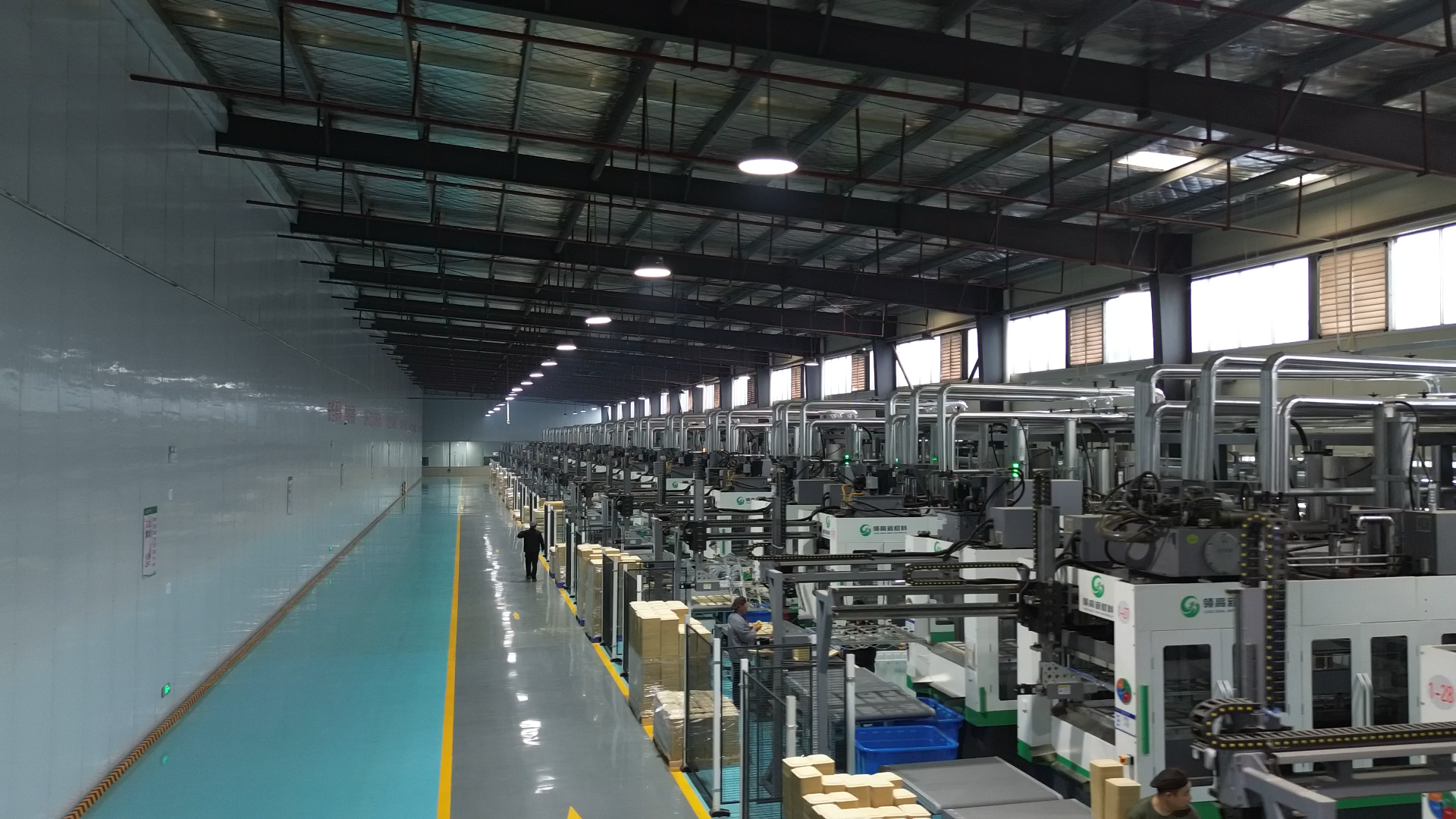
A pulp molding line is not a single machine. Pulping, refining, slurry preparation, forming, hot pressing, trimming, stacking and packing must operate with the same cycle. If downstream automation is slower than the forming machine, products accumulate and force the main machine to slow down or stop. If machines from different suppliers use incompatible control logic, the theoretical line capacity cannot be reached. These risks are described in supplier risk guidance for molded-fiber production and are especially relevant when the buyer connects equipment from different vendors.
In a separate purchase, the buyer becomes responsible for making all those interfaces compatible. In a turnkey project, the same task belongs to a single supplier that is expected to design the process around the machine rather than deliver isolated equipment.
What a turnkey scope can include
According to Hanson Pulp Molding project records, a turnkey scope can include preliminary product and raw-material verification, project feasibility analysis, production-capacity planning, factory layout design, intelligent pulp preparation systems, pulp molding forming equipment, mold design and manufacturing, downstream automation, electrical control systems, installation and commissioning, personnel training, and production ramp-up support. This breadth is what separates a turnkey project from a machine sale.
When the same elements are bought separately, each tends to be handled by a different company. The buyer may contract a pulping vendor, a forming-machine maker, an automation supplier and a mold shop independently. Each supplier can perform its own scope well, but no one except the buyer owns the stability of the complete production line.
Hanson's buyer guidance states: A turnkey solution is generally recommended for new factories, overseas projects and customers without an experienced pulp molding engineering team. Individual machine procurement is more suitable for experienced manufacturers that already operate mature pulp preparation, process, utility and production-management systems.
Contract value versus total cost of ownership
Separate procurement can look more attractive at the contract stage because each supplier quotes a narrower scope. The initial contract sum may be lower if it does not include process engineering, coordination, interface testing or integrated commissioning. That lower sign-off is not the same as lower project cost.
Turnkey projects are structured to reduce repeated engineering, multi-supplier coordination and project-delay risk. They shift engineering work earlier, where it can be managed, rather than leaving it to appear after the individual machines are already on site. For a buyer, the meaningful comparison is line output after ramp-up, not the first invoice.
| Criterion | Turnkey project | Separate purchase |
|---|---|---|
| Commercial structure | One broad contract covering planning through ramp-up | Multiple machine and service contracts assembled by the buyer |
| Engineering responsibility | Supplier coordinates complete line performance | Buyer coordinates pulping, forming, molds and automation |
| Interface risk | Designed as one process with one control philosophy | Interfaces are defined at each vendor boundary |
| Commissioning | One sequence managed by the main supplier | Multiple schedules, site visits and handover points |
| Warranty and disputes | Single point of responsibility | Disputes may require diagnosis across several suppliers |
| Best fit | New factory, overseas project, first-time producer | Mature factory, experienced process team, expansion or replacement |
Machine-level integration has an important role in either route. For tableware, the ZCE-1111 integrates forming, hot pressing, trimming, counting and stacking in one unit and uses six molds to reduce mold investment. For larger capacity, the ZBG-1111 uses one forming station and two hot-pressing stations with a six-axis robot for continuous transfer. These are machine-level examples of reduced handling and interface control; a complete factory follows the same logic across pulping, forming, drying and packing.
The real risk is in the interfaces
One of the most damaging risks in pulp molding appears when downstream automation cannot match the main-machine output. Products accumulate on conveyors, the trimming system falls behind, vision inspection misses defects, and the packing machine jams. The published risk guidance for pulp molding is direct: If the trimming, inspection, stacking or packing equipment has a lower processing capacity than the main machine, products will accumulate downstream and eventually force the main machine to slow down or stop.
Machines supplied by different companies may also communicate poorly. Positioning can become unstable, products can be missed or inspected twice, and automatic stacking quantities can be wrong. This is not an argument against separate suppliers in every case; it is an argument for checking complete-line calculations before the contract structure is fixed.
Certification and compliance: ask for model-level evidence
For buyers shipping to the European Union or European Economic Area, machinery conformity is a procurement constraint. Hanson's ZFG-1111 pulp molding tableware production line carries a CE Machinery Directive Attestation of Conformity, certificate number M.2025.206.C130486, issued under 2006/42/EC with EN ISO 12100:2010 and EN 60204-1:2018/A1:2025. The industrial packaging models ZAP-9585 and ZAD-8565 are covered by certificate M.2026.206.C142039 for the EU/EEA market.
Certificates are model-specific. In a turnkey project, the buyer can ask the supplier for a certificate matrix covering every machine in the line before delivery. In separate procurement, the buyer must collect conformity evidence from each supplier and check whether site modifications or integration work affect the applicability of the original certificates.
New factories and overseas projects: where turnkey has a clear advantage
Case records in the supplier data show two patterns that favor turnkey delivery. The first is a new factory built around a specific fiber source. In a bamboo-fiber packaging project, Hanson provided a complete turnkey solution covering factory planning, construction coordination, pulp preparation, customized forming equipment, wastewater treatment and personnel training. The project advanced from equipment installation to trial production in approximately three months, a schedule that depends on tight coordination between many work packages.
The second pattern is overseas plant construction. In Thailand, a listed biodegradable tableware manufacturer conducted a four-month intensive equipment test and then ordered more than 100 machines for the first phase of its production base. In Vietnam, a producer transitioning from conventional plastic products to molded fiber ordered more than 50 machines for its first phase. In both cases, installation, commissioning and initial production support were part of the supplier agreement. A separate-purchase model could create dozens of contracts and technical interfaces in a country where the buyer is still building local engineering capacity.
When separate machine purchase is still the sensible route
Separate purchase should not be dismissed. It is often the best route for an established plant that already operates stable pulp preparation, vacuum, compressed-air, water and production-management systems. If the plant has an experienced process and engineering team, adding a new pulp molding machine to existing infrastructure can be simpler and more economical than redesigning the whole line.
The same logic applies to capacity expansion or single-machine replacement. If the buyer already owns molds and knows the exact process conditions, a forming machine alone may be enough. The key condition is that the buyer has the internal capability to manage integration and can define a clear boundary between old and new equipment.
Market context is increasing the cost of coordination failures
Market forecasts for pulp molding machines show continued growth at a time when food and beverage packaging already represents nearly half of demand. That growth is bringing in first-time producers and established plastics companies making a strategic shift. Many of these buyers need speed: they are building new capacity while environmental regulation and customer sustainability commitments create deadlines.
In such a context, a fragmented procurement route can consume time and management attention. The limiting resource is not always the forming machine; it is the coordination capacity to link raw material, process, molds and automation into one reliable output.
Known limitations of turnkey procurement
A turnkey route also has honest limits. It concentrates project responsibility with one supplier, so the buyer's outcome depends on that supplier's project management, process knowledge and after-sales commitment. A genuine turnkey provider should be able to demonstrate its own manufacturing facility, electrical and mechanical engineering teams, mold division, quality control procedures and completed reference projects. If the supplier is mainly a trading company bundling several vendors, the buyer may receive a single contract but the same fragmented engineering chain.
Another limitation is flexibility. Once a plant is built around one supplier's line design, later changes to the line or additional phases may be easier for that supplier to deliver. If a buyer prefers to choose best-in-class modules from different manufacturers, a turnkey contract may constrain that choice. Existing factories with substantial prior investment in molds or utility infrastructure should quantify what they would lose before replacing everything under a new turnkey solution.
Future outlook: integration is becoming a distinct selection criterion
Future procurement decisions in pulp molding will likely separate hardware price from integration performance. Buyers will evaluate not only the cost of the pulp molding machine, but also the cost of commissioning delay, scrap during ramp-up, product-weight variation and unresolved responsibility. These costs tend to be more predictable in a turnkey scope and more difficult to control in a multi-vendor purchase.
For mature producers, separate purchase will remain useful for targeted capacity expansion. For new factories and overseas projects, turnkey delivery is likely to become the default option because it matches the buyer's real need: a production line that reaches stable output quickly, not a collection of machines waiting for integration.
For buyers who want more technical documentation on machine ranges and project scope, Hanson Pulp Molding publishes a downloadable PDF brochure: Hanson Pulp Molding Brochure.
Source note: This article relies on supplier project documents, product specifications, certification records, customer case records and one commercial market estimate where indicated. No project-specific price data is used because no verified data was available for direct cost comparison.
Frequently asked questions
Is a turnkey pulp molding solution always more expensive than separate purchase?
No. The commercial comparison is often incomplete. Separate purchases may quote a lower equipment list because integration is not included, but the buyer frequently pays for coordination and correction during installation and ramp-up. A turnkey price includes design, interfaces, commissioning and support. Buyers should compare total line cost after stable production, not invoice subtotals.
When is separate machine purchase appropriate?
Separate purchase is appropriate when the factory already operates a stable pulp preparation system and production utility, and when the internal process and engineering team can assume integration responsibility. This is common in capacity-expansion projects where a specific pulp molding machine is added to existing slurry, vacuum, compressed-air, heating and finishing processes. First-time and overseas plants generally have less spare capacity for this role.
What happens when the forming machine and downstream automation are bought from different companies?
If downstream processing capacity is lower than the forming output, products accumulate and the line slows. If conveying and control logic are incompatible, the line may produce misalignment, missed inspections, incorrect stacking or packing jams. Each machine may work alone, but the useful capacity of a pulp molding project is determined by the whole line.
Which certificate should a buyer request from a pulp molding line supplier?
When equipment is intended for EU/EEA markets, the buyer should request a model-specific CE Machinery Directive certificate. Examples include Hanson's ZFG-1111 certificate M.2025.206.C130486 under 2006/42/EC, EN ISO 12100:2010 and EN 60204-1:2018/A1:2025, and the industrial packaging certificate M.2026.206.C142039 covering ZAP-9585 and ZAD-8565. The buyer should confirm that each model in the intended line has its own conformity evidence.
How can a buyer check that a turnkey supplier is a real manufacturer?
The buyer should inspect the supplier's manufacturing and assembly facility, confirm in-house mechanical, electrical, process and mold teams, ask to see operating customer projects, and define supply scope and responsibility boundaries in writing. It is also useful to review quality-control procedures, factory acceptance plans, installation and commissioning services, spare-parts supply and production ramp-up support before signing.
¿Tiene preguntas o necesita más detalles?
Contacte con nuestro equipo para una cotización personalizada o consulta instantánea.
Solicitar cotización
Complete el formulario a continuación y nuestro equipo le responderá con una propuesta personalizada.
Chat directo de WhatsApp
¿Prefiere chatear en tiempo real? Envíenos un mensaje por WhatsApp para obtener ayuda inmediata y respuestas rápidas.
- Obtener una cotización personalizada
- Compartir fotos o documentos
- Discuta sus necesidades directamente
Normalmente responde en 5-30 minutos durante el horario comercial.