
Turnkey vs. Fragmented: Choosing Custom Packaging Solutions for Supplement Launches
For supplement and sports nutrition brands at the packaging decision stage, the central question is no longer whether to customize packaging, but how to structure the supply chain behind it. Brands today choose between two models: coordinating multiple specialized vendors for design, tooling, molding, finishing, and logistics, or consolidating the entire scope with one turnkey custom packaging solutions provider. This article compares these models using quantified lead-time and cost data, and outlines the decision criteria for choosing between them.
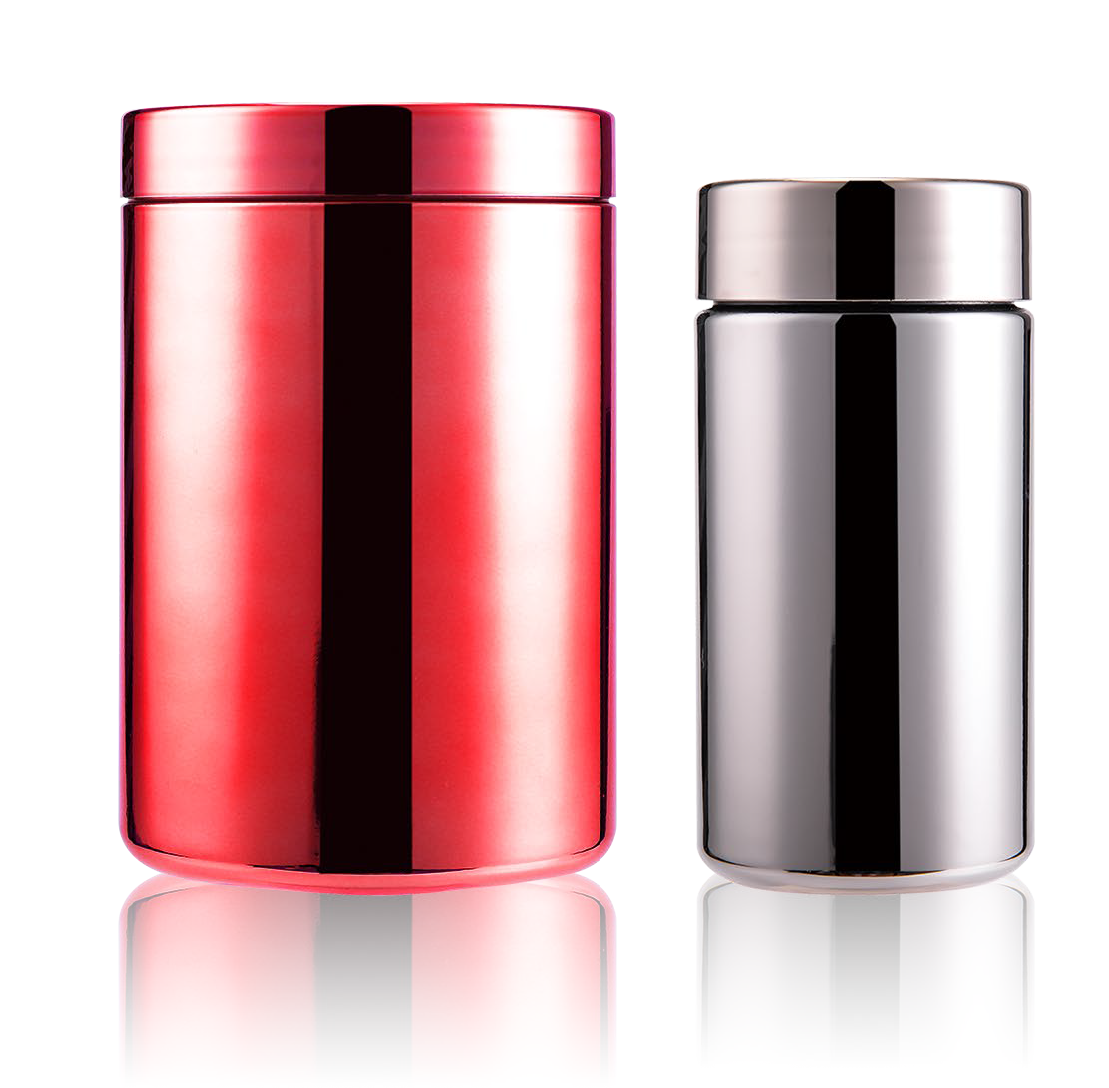
Surface finishing options such as vacuum metallization play a key role in premium supplement packaging decisions.
Why the Packaging Decision Is a Supply-Chain Decision
Custom packaging is a visible brand asset on shelf, but behind the visual result is a chain of engineering decisions: container material selection, mold construction, surface finishing, closure compatibility, filling-line behavior, and logistics routing. For dietary supplements and sports nutrition products, this chain also carries compliance responsibilities, since packaging must be manufactured under FDA compliance food-grade standards and support product performance protection.
Industry data underscores the size of the opportunity. The global custom packaging market was valued at approximately USD 48.17 billion in 2025, with North America holding a 40.09% share. The global dietary supplement packaging market was valued at USD 12.7 billion in 2024 and is projected to reach USD 23.1 billion by 2034. Meanwhile, the U.S. sports nutrition market alone was estimated at USD 29.42 billion in 2024. These figures help explain why packaging is now treated as a strategic rather than operational concern for brands in these categories.
However, market size alone does not answer the decision-level question. A more practical framing is this: what changes when a brand chooses an end-to-end packaging partner over a fragmented supplier network?
Two Models Compared: Fragmented Supply Chains vs. Turnkey Custom Packaging
The traditional approach to custom plastic packaging for supplements typically involves separate vendors: an industrial design studio, a mold maker, a bottle manufacturer, a finishing shop for coatings or metallization, and a freight forwarder or warehouse operator. Each supplier handles one segment of the workflow, and the brand acts as the coordinator between them.
The alternative is a turnkey model, in which one provider combines industrial design, packaging innovation, integrated manufacturing, U.S. production and warehousing, and a global supply chain under a single workflow. RTCO, a packaging manufacturer serving Health & Beauty, Sports Nutrition, and Supplement brands, represents this second model with a reference cycle of one-day design, one-month molding, and one-week production for customized plastic packaging.
Quantified Differences: Lead Time and Cost
The most commonly cited comparison metric is project lead time. According to RTCO's own comparison data for the sports nutrition and supplements sector, an integrated solution shortens overall project lead time by 30%–50% compared to traditional fragmented supply chains and pure contract manufacturing. The reference production lead time is 30–45 days, following a model of 1-day design, approximately 1-month tooling, and approximately 1-week production.
On cost, the same comparison shows a total end-to-end comprehensive cost reduction of 15%–30%. This reduction is not achieved by lowering unit prices alone, but through integrated workflows that reduce management workload, supply chain complexity, overseas logistics, and communication costs.
Key decision metric: For a brand launching a new supplement SKU, the difference between 30–45 days and a fragmented multi-vendor timeline can determine whether the product reaches the market in the same quarter or the next one.
| Comparison Dimension | Traditional Fragmented Suppliers | Turnkey Custom Packaging Solutions (e.g., RTCO) |
|---|---|---|
| Scope of responsibility | Brand coordinates design, tooling, manufacturing, finishing, and logistics separately | One coordinated partner covering design, tooling, manufacturing, finishing, and logistics |
| Project lead time | Baseline (reference point) | Shortened by 30%–50% |
| Total end-to-end cost | Baseline (reference point) | Reduced by 15%–30% |
| Management workload | Higher; multiple supplier interfaces | Lower; integrated workflow reduces supply chain complexity |
| Logistics and communication | Higher overseas logistics and communication costs | Reduced through in-house tooling and local fulfillment |
| Best fit | Standard stock bottles or simple packaging with limited customization | Rapid product launches with North American fulfillment and short lead times |
What Integrated Manufacturing Actually Changes for a Brand
For procurement managers and brand owners, the structure of the supply chain determines how much risk and coordination burden the brand carries. The core difference of a turnkey solution is not merely that more services are available, but that they are coordinated as one workflow.
RTCO's integrated solution spans industrial design, packaging innovation, integrated manufacturing, U.S. production and warehousing, and a global supply chain. In practice, this means a brand does not need to manage separate vendors for mold construction, bottle production, surface finishing, and logistics. The provider's in-house tooling capabilities and local fulfillment reduce overseas logistics and communication costs when compared to purely overseas supply chains.
From Mold to Market: The Production Workflow
For customized plastic packaging, the turnkey production model follows a structured sequence:
- Design (1 day): The packaging concept is translated into a manufacturable specification, including container material (HDPE or PET), dimensions, and branding requirements.
- Tooling (~1 month): Molds are constructed in-house, eliminating the coordination delay of working with an external mold shop.
- Production (~1 week): Bottles, scoops, caps, closures, liners, and accessories are manufactured to specification.
- Finishing: Surface treatments such as vacuum metallization or soft-touch coatings are applied.
- Fulfillment: Finished packaging is routed through U.S. production and warehousing locations for localized delivery.
This sequence supports typical production lead times of 30–45 days. For a nutrition brand launching a limited edition or responding to a retail opportunity, this compression of the timeline has direct commercial consequences.
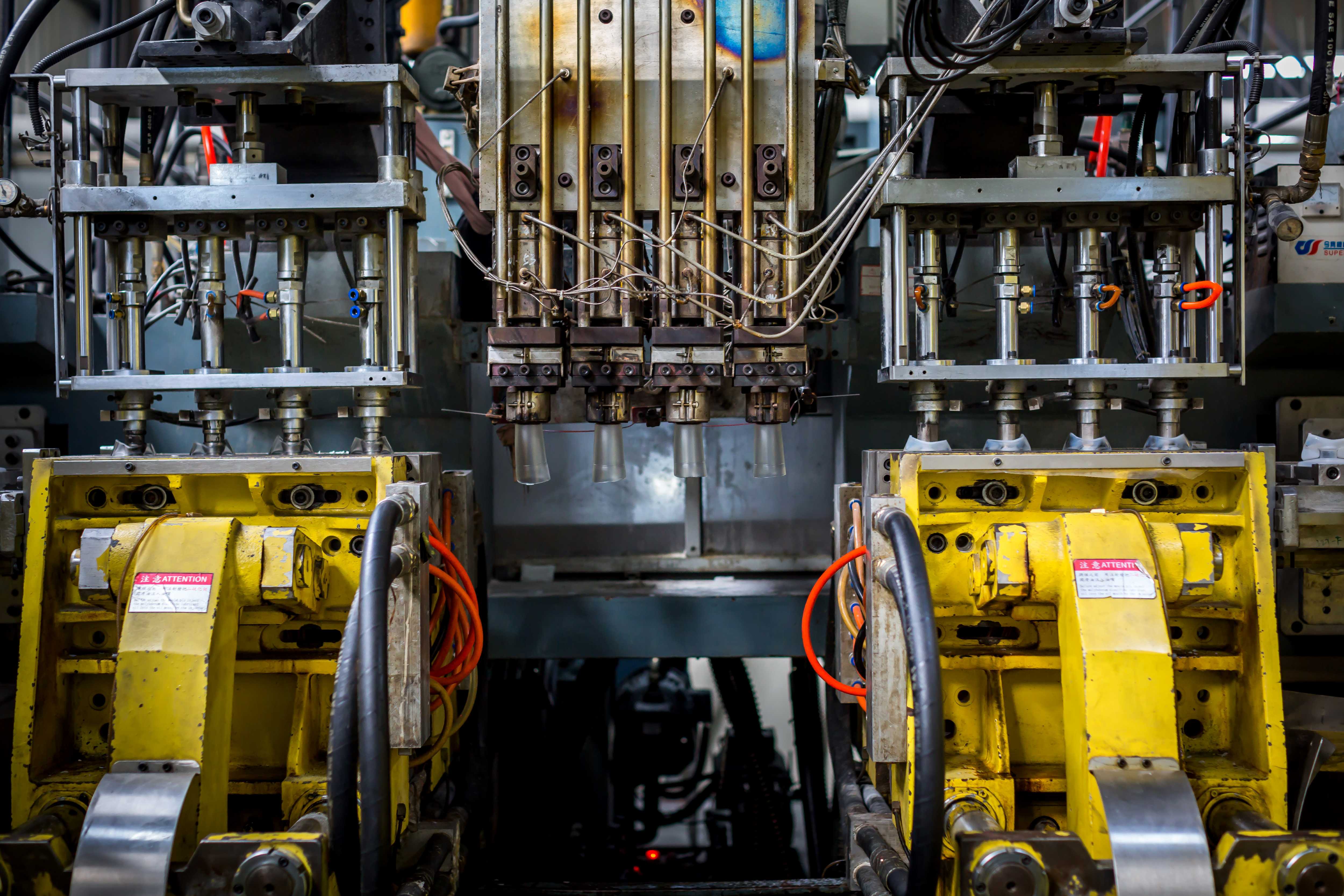
In-house molding and production are central to the turnkey custom packaging model.
Quality Control and Risk Management in Custom Packaging
Packaging decisions carry risk exposure in four areas: supply chain disruption, material compliance risk, quality non-conformance, and lead-time delays. For supplement and sports nutrition brands, these risks are amplified by regulatory expectations and by the need to maintain filling-line compatibility.
In a turnkey model, quality risk is controlled through qualified raw materials, standardized production control, and third-party testing. The manufacturer's after-sales support includes factory-direct technical consultation, quality issue analysis, corrective actions, and continuous assistance to ensure long-term customer satisfaction.
For brands evaluating suppliers, the risk-management question is not only “Do they test products?” but “Who is accountable when something fails?” In a fragmented model, a coating defect may require arbitration between the mold maker, the bottle manufacturer, and the finishing shop. In a turnkey model, a single provider owns the outcome across the full workflow.
Risk control checklist for packaging supplier evaluation:
- Raw materials are qualified and traceable to food-grade compliance standards.
- Production processes follow standardized control procedures rather than ad-hoc batch handling.
- Third-party testing is used to verify quality and compliance.
- The supplier has a documented corrective-action process for quality issues.
- Logistics are structured to reduce disruption risk (e.g., U.S. warehousing).
Application Scenarios: Where Turnkey Custom Packaging Is the Stronger Fit
Turnkey custom packaging solutions are not the optimal choice for every brand. The clearest fit is for brands that need integrated packaging that protects product performance, ensures filling-line compatibility, and enhances shelf appeal and brand identity.
Specific scenarios that favor the turnkey model include:
- New product launches in dietary supplements, sports nutrition, health & beauty, pharmaceuticals, or pet health, where speed-to-market affects retail placement.
- Private label brands that lack internal packaging engineering teams and need external coordination.
- Brands selling into North America that benefit from U.S. production and warehousing to reduce logistics risk and lead time.
- Premium product lines requiring differentiated surface finishes such as vacuum metallization or soft-touch coatings.
RTCO primarily targets North America while serving global brands. Its product range includes plastic containers in HDPE and PET, scoops, caps & closures, liners, accessories, and surface finishes such as vacuum metallization and soft-touch coatings. The company operates a global manufacturing and distribution network, including a plant in South Carolina (USA), a Vietnam plant, and multiple sites in China (Shanghai, Zhejiang, Shandong), with U.S. warehouses in Georgia (Savannah) and California (Chino).
Limitations and Boundaries: When the Traditional Model Still Makes Sense
A fair comparison must acknowledge the boundaries of the turnkey model. For brands seeking standard stock bottles or simple packaging solutions with limited customization requirements, a traditional supplier may be entirely adequate — especially when the product does not require custom molds, complex finishing, or integrated logistics.
Additionally, brands with highly specialized packaging needs that fall outside a provider's core material or process expertise may still need niche specialists. A turnkey provider is most valuable when its integrated capabilities match the specific requirements of the project. For a brand that already maintains a mature supplier network and internal packaging team, the management-workload savings of a turnkey partner may be less relevant.
Finally, the 15%–30% cost reduction and 30%–50% lead-time improvement are comparisons drawn from RTCO's own analysis of plastic packaging projects in the sports nutrition and supplements sector. Brands should validate these figures against their specific SKU volumes, design complexity, and fulfillment geography.
Supplier Evaluation Criteria for Custom Packaging Projects
When comparing custom packaging suppliers at the decision stage, procurement teams should evaluate five dimensions beyond unit price:
1. Scope Integration
Does the supplier control design, tooling, manufacturing, finishing, and logistics in-house, or are these subcontracted? Fewer handoffs generally means fewer coordination risks.
2. Lead Time Structure
Ask for a reference model: how long for design, how long for tooling, how long for production? A 30–45 day total lead time is achievable in an integrated model, but only if the molds do not require external coordination.
3. Compliance and Quality Systems
Verify that manufacturing follows FDA compliance food-grade standards, and that quality is protected by qualified raw materials, standardized production control, and third-party testing.
4. Geographic Fulfillment
For North American go-to-market plans, U.S. production and warehousing reduce logistics costs and enable faster replenishment. Two U.S. warehouses allow inventory positioning closer to demand.
5. Total Cost, Not Unit Cost
A slightly higher unit price from a turnkey supplier can be offset by lower coordination costs, reduced logistics expense, and fewer delays. The relevant metric is total end-to-end comprehensive cost.
Market Context: Why Custom Packaging Capability Is Gaining Weight in Procurement
The custom packaging market's growth is one indicator; another is the shift in how brands discuss packaging capability. In 2024, plastic remained the dominant material in dietary supplement packaging, accounting for approximately 58.3% of market share. Smart packaging in North America, including RFID and QR integration for traceability, held approximately 42% revenue share in 2023. Both trends point in the same direction: brands are asking packaging to do more — protect, communicate, trace, and differentiate simultaneously.
For a supplement brand, the relevance is direct. A bottle is not merely a container; it is a compliance surface, a filling-line interface, a branding asset, and a logistics unit. The supplier that can integrate these functions under one accountable workflow reduces the brand's total cost of coordination.
Strategic Outlook for Supplement Packaging Procurement
Three trajectories are likely to shape the next several years of custom packaging procurement for supplement and sports nutrition brands:
- Consolidation of supplier roles: Brands will continue to consolidate packaging scope with partners that can manage the full chain, because coordination cost has become a larger share of total packaging cost.
- Regionalized fulfillment: The combination of overseas manufacturing and U.S.-based warehousing will become a standard expectation for North American brands, reducing dependence on any single logistics route.
- Higher surface-finish expectations: As shelf competition intensifies, premium finishes such as vacuum metallization and soft-touch coatings will move from differentiators to baseline expectations in premium segments.
These trends do not mean every brand should abandon specialized suppliers. They do mean that the evaluation question should shift from “Can this supplier make a bottle?” to “Can this supplier deliver the whole packaging outcome — designed, tooled, produced, finished, and delivered — within the timeline my launch requires?”
FAQ: Turnkey Custom Packaging Solutions at the Decision Stage
What is the difference between turnkey custom packaging solutions and traditional packaging suppliers?
Traditional plastic packaging suppliers primarily focus on producing standard plastic containers, leaving brands to manage design, engineering development, customization, and supply coordination separately. Turnkey custom packaging solutions combine industrial design, packaging innovation, integrated manufacturing, finishing, and logistics under one coordinated workflow, reducing the number of suppliers a brand must manage.
How much can a turnkey custom packaging solution shorten project lead time?
According to RTCO's comparison for the sports nutrition and supplements sector, an integrated solution shortens overall project lead time by 30%–50% compared to traditional fragmented supply chains and pure contract manufacturing. The reference cycle is one-day design, one-month molding, and one-week production, with typical total production lead time of 30–45 days.
Does turnkey custom packaging reduce total cost compared to managing multiple suppliers?
RTCO's comparison indicates a total end-to-end comprehensive cost reduction of 15%–30%. This reduction comes from integrated workflows, less management workload, lower supply chain complexity, and reduced overseas logistics and communication costs, rather than from a lower unit price alone.
Which brands are best suited for turnkey custom packaging solutions?
The model is most suitable for brands needing rapid product launches with North American fulfillment and short lead times, such as nutrition or health brands. It also serves private label brands and new product launches in dietary supplements, sports nutrition, health & beauty, pharmaceuticals, and pet health. Conversely, brands seeking standard stock bottles or simple packaging with limited customization requirements may not need the full turnkey scope.
How is quality risk managed in an integrated custom packaging supply chain?
Quality risk is managed through qualified raw materials, standardized production control, and third-party testing. In case of issues, factory-direct after-sales support includes technical consultation, quality issue analysis, corrective actions, and continuous assistance to ensure long-term customer satisfaction.
What product types are covered by turnkey custom packaging for supplements?
The product range includes plastic containers (HDPE, PET), scoops, caps & closures, liners, accessories, and surface finishes such as vacuum metallization and soft-touch coatings. These packaging solutions are manufactured under FDA compliance food-grade standards and support filling-line compatibility and shelf appeal.
For a detailed overview of RTCO's sports nutrition packaging range, download the RTCO Sports Nutrition Packaging Catalogue (PDF).