
Turnkey Pulp Molding Acceptance Criteria Before You Sign
Turnkey Pulp Molding Acceptance Criteria Before You Sign
Acceptance criteria for a pulp molding line are usually written at the wrong moment. Buyers tend to draft them during commissioning, when the equipment is already installed and the moulds already cut. The stronger sequence is the reverse: fix the measurable terms before the purchase order, then use commissioning to prove them. This reference sets out how that exercise works for a turnkey pulp molding project — which scope areas need a written acceptance question, which parameters belong in the annex, and where a single project interface changes the risk profile of the contract.
Why acceptance is a contract problem before it is an engineering problem
A pulp molding line rarely fails acceptance because one machine is badly built. It fails because the parties never agreed what “working” would be measured against. Output, weight consistency, mould yield, reject rate and utility consumption are line-level outcomes produced by pulp preparation, forming, hot pressing, trimming and the building services that connect them. No single equipment datasheet carries all of that.
Written before signature, acceptance criteria do three practical jobs:
- They make quotations comparable. When every bidder responds to the same measured commitments — output basis, weight tolerance, utility conditions, ramp-up duration — the comparison stops being a comparison of narrative and becomes a comparison of obligations.
- They assign interface responsibility. Power capacity, compressed air, vacuum, cooling water, drainage and floor loading sit between the equipment supplier and the civil contractor. Ambiguity here is the most common source of schedule loss on a new factory project.
- They define the end of the supplier’s obligation. Without a written performance milestone, “support until stable production” has no boundary, and neither party can say when the project closed.
This places the task in the constraint layer of procurement rather than the discovery layer. A buyer at this stage already knows what molded fiber is and roughly what equipment category the project needs. The open questions are narrower and harder: at what slurry concentration is weight guaranteed, against which product, on which utility supply, measured over how many shifts, with what remedy if the number is missed.
What a turnkey scope actually contains
Hanson Pulp Molding — Guangdong Hanson Pulp Molding Technology Co., Ltd., based in Houjie Town, Dongguan City, Guangdong Province, China — is a National High-tech Enterprise that supplies pulp molding equipment, production lines and turnkey factory solutions. The company reports more than 200 employees, including approximately 50 R&D and engineering professionals, 50 patents, a 50,000 m² manufacturing site and an annual output of 150 units, with exports to markets that include Mexico, Brazil, Vietnam, Thailand, Indonesia, Malaysia, India, Turkey, Egypt, Italy, Romania, Russia, Australia and Saudi Arabia.
Hanson presents its turnkey offer as a 6+1 service model. The six are engineering scope; the plus-one is the service layer that carries a project from installation to stable production. Depending on the project, that scope can include preliminary product and raw-material verification, feasibility analysis, production-capacity planning, factory layout design, intelligent pulp preparation, forming equipment, mould design and manufacturing, downstream automation, electrical control, installation and commissioning, training and ramp-up support. For acceptance purposes, the useful question is not how the scope is numbered but what each module commits to in measurable terms.
| Scope module | What is typically supplied | Acceptance question to settle before signature |
|---|---|---|
| Product and raw-material verification, capacity planning | Feasibility analysis, fibre and product evaluation, output planning | Against which named product, fibre type, cavity count and shift pattern is capacity written? |
| Factory layout and utilities | Layout design, equipment positioning, utility interfaces | Who confirms floor loading, power, air, vacuum and water before civil works, and in what document? |
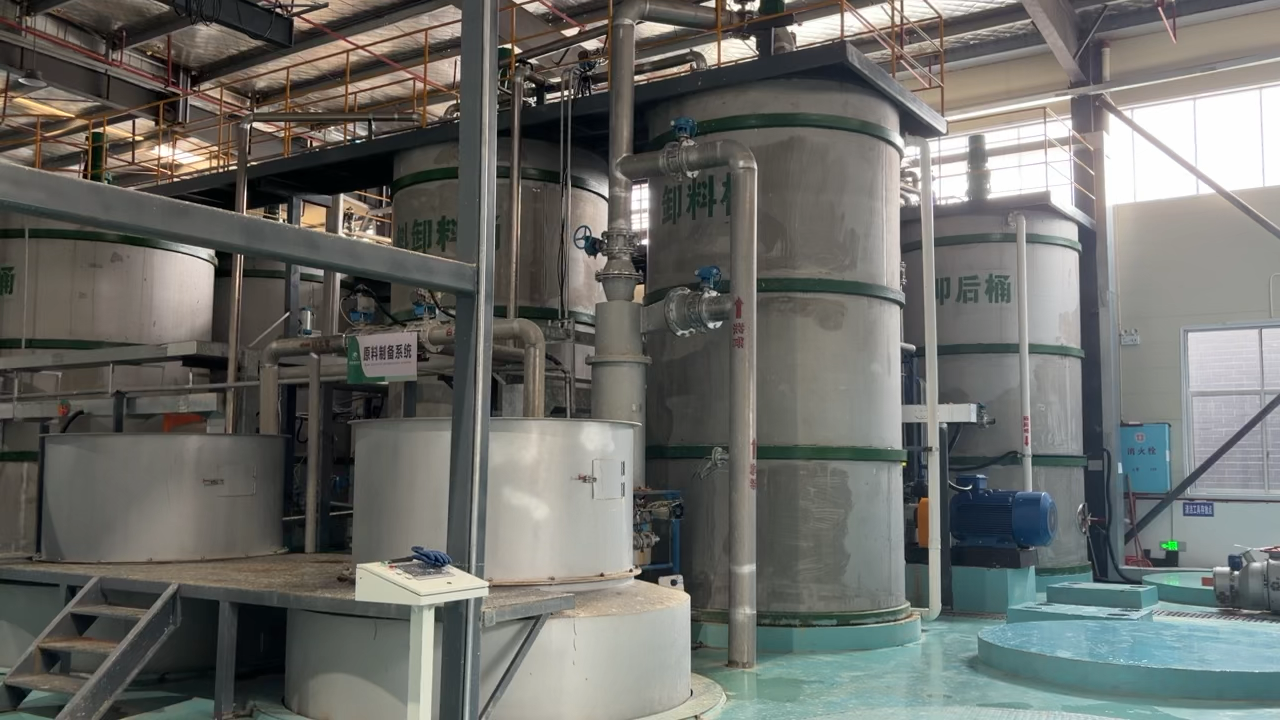
| Pulp preparation | Pulping, refining, slurry preparation and feeding | What slurry consistency band must be held, and who proves it during the run? |
| Forming and hot pressing | Forming and hot-pressing equipment, platen configuration | Which pressures, platen size and product envelope are guaranteed, and at what settings? |
| Moulds | Mould design, machining, testing, mass-production adaptation | When is the sample approved, and who owns dimension changes after that approval? |
| Downstream automation and electrical control | Trimming, hole punching, vision inspection, stacking, packing, PLC control | What defect criteria, rejection logic and control architecture are demonstrated at acceptance? |
| +1 Installation, commissioning, training, ramp-up | Resident engineers, operator training, production support | How many engineer-days, over what period, and what evidence marks the handover point? |
Read as a contract schedule, the table exposes where a scope can look complete and still be untestable. “Factory layout design” is a deliverable; “floor loading confirmation signed off before civil works” is an acceptance item. “Pulp preparation” is a subsystem; “slurry consistency held within the agreed band across a full shift” is a test. The conversion from deliverable to test is the work.
Three checkpoints, three different kinds of evidence
A turnkey project needs at least three separate acceptance moments, because each proves something the others cannot.
1. Scope and design review, before manufacturing
This is a documentation checkpoint rather than a physical one. It should confirm the approved product drawing, the mould layout, the utility schedule, the control architecture and the parameter set that will be used in trials. Its purpose is to prevent a machine from being built to one specification and commissioned against another — a failure mode that costs weeks and is difficult to resolve once steel has been cut.
2. Pre-shipment inspection, before dispatch
Hanson states that equipment undergoes 100% inspection before delivery, covering incoming material inspection, welding and frame-structure inspection, dimensional and installation-surface inspection, portable coordinate measuring inspection, and electrical, hydraulic and pneumatic system testing. That is a build-quality regime, and it answers build-quality questions: whether frame geometry, mounting surfaces and control wiring match the approved drawings.
It cannot answer line-output questions. A machine can pass every dimensional check and still produce outside the approved weight band if the pulp is prepared differently on site. The contract should therefore name the inspection records that travel with the shipment — dimensional reports, system test sheets, the approved mould drawing, and the parameter values the machine was run at — and make those records a dispatch condition rather than a courtesy.
3. Site acceptance and performance verification, during ramp-up
Only this checkpoint tests the line as a production system, including the site utilities and the operators. It is the point at which weight consistency, reject rate, cycle time and sustained output can be measured against the annex. Because it depends on stable pulp supply and a trained crew, it also depends on ramp-up support being a contractual deliverable rather than an informal favour.
The parameters that belong in the acceptance annex
Write the numbers the supplier has documented, then state the condition attached to each one. Two industrial packaging models illustrate the level of specificity that makes an acceptance test executable.
| Documented parameter | ZAD-8565 | ZAP-9585 | Why it belongs in the annex |
|---|---|---|---|
| Mould platen size | 850 × 650 mm | 950 × 850 mm | Fixes the product envelope and cavities per cycle |
| Forming / hot-pressing pressure | 3 t / 20 t | 10 t / 40 t | Defines the basis on which the sample was approved |
| Maximum product height | 100 mm | 120 mm | Sets the limit of the approved product range |
| Max product weight per mould | 500 g at 0.3% slurry concentration | 900 g at 0.3% slurry concentration | Ties weight to a stated consistency — without it the figure is not reproducible |
| Installed power | 54.1 kW (heating 45 kW) | 114 kW | Electrical capacity the site must provide before the test is valid |
| Machine weight / floor load | approx. 5.5 t / 1,990.5 kg/m² | 11.8 t / 2,449 kg/m² | Civil works and installation position, not a detail for later |
Two qualifiers in that table deserve contract language rather than conversation. The first is the slurry concentration attached to the maximum product weight per mould. Weight per mould is a function of consistency; if the annex records the weight and drops the concentration, the number cannot be reproduced on a different day with a different slurry batch. The second is product dependency in capacity figures. Tableware lines show the range clearly: the ZCE-1111 integrated machine is rated at 600–900 kg/24 h depending on product, the ZFG-1111 inline servo line at 900–1,200 kg/24 h, and the ZBG-1111 line — one forming station, two hot-pressing stations and one trimming station — at 1,000–1,500 kg/24 h. A guarantee written as a single tonnage, without naming product, cavity count, cycle time and shift pattern, is not a guarantee that can be tested.
Pressure ratings follow the same logic. The ZBG-1111 is documented with 80 t hot-pressing and 80 t trimming pressure; the ZCE-1111 with 20 t forming, 60 t hot pressing, 70 t trimming and a 1,100 × 1,100 mm platen using six moulds. These are design ratings, and they matter at acceptance because the sample approved during mould trials was produced at a specific pressure and temperature profile. If the approved sample and the accepted production differ in those settings, quality disputes follow — even when every machine is operating within its rating.
Utilities and civil works: the boundary that slips
Most acceptance disputes on a pulp molding line are not about the machine; they are about what the site was supposed to provide. The equipment documentation states those requirements precisely, which makes them easy to convert into a checklist:
- Compressed air: 0.5–0.7 MPa for the ZAD-8565 and ZAP-9585; 0.6–0.8 MPa for the ZFG-1111.
- Vacuum: −0.07 to −0.05 MPa for the industrial packaging models; −0.06 to −0.05 MPa for the tableware lines.
- High-pressure mould-cleaning water: 1.2 MPa.
- Cooling water: 60–80 L/min for the ZAD-8565; 80–100 L/min for the ZAP-9585 and the ZAKS-9595 cup lid line.
- Power supply: AC 380 V / 50 Hz, with installed power from 54.1 kW on the compact packaging machine to 167.4 kW on the ZCE-1111 integrated tableware machine.
Each of these is a battery limit. If the site cannot deliver the agreed values at the moment of the performance test, the test result is invalid regardless of how the machine performs, and the dispute becomes one about preconditions rather than about equipment. The contract should record who verifies readiness, when, and against what tolerance — and what happens to the performance milestone if the site is not ready.
Reading a certificate’s model list
An attestation is evidence for the models it names, and nothing beyond that list. This is the most frequently misread document in pulp molding procurement.
Hanson holds a Machinery Directive Attestation of Conformity issued by UDEM Uluslararası Belgelendirme Denetim Eğitim Merkezi San. ve Tic. A.Ş. for ZFG series pulp molding equipment, certificate number M.2025.206.C130486, issued 2025-12-01 and valid to 2030-11-30. Its scope names models ZFG-1111, ZFD-8565, ZFM-9894 and ZFH-1311, assessed against 2006/42/EC Machinery Directive Annex VIII, EN ISO 12100:2010 and EN 60204-1:2018/A1:2025, for the European Union and European Economic Area market.
A second attestation covers pulp molding industrial packaging equipment, certificate number M.2026.206.C142039, issued 2026-06-05 and valid to 2031-06-04, against the same directive and standards. Its scope names ZAP-9585, ZDA-9585, ZAD-8565, ZAC-8565, ZDA-1070, ZDK-1010, ZAB-9585 and ZAB-1070.
Three checks follow directly. First, does the exact model on the purchase order appear in the scope? A configuration that is not listed is not covered by that document, and the buyer should ask what documentation does apply rather than assume it transfers. Second, does the validity period cover delivery, installation and the acceptance window? Third, are the cited standard versions the ones currently in force in the destination market?
On that third point, standard currency is a live issue for EU-bound projects. Published transition information indicates that EN ISO 13849-1:2015, which addresses safety-related parts of machinery control systems, is scheduled for withdrawal after a transition period ending 15 May 2027, with the successor edition in force. Whether and how that applies depends on the safety functions actually implemented, so the practical acceptance item is a question rather than an assumption: which edition of the safety-related control standard were the guarding, light-curtain and emergency-stop functions designed to?
One project interface, or several
The structural choice in a turnkey contract is not how many machines are bought; it is how many parties own the outcome. With separate purchase, the buyer holds contracts for pulp preparation, forming equipment, moulds, trimming, packing and wastewater treatment, each with its own battery limit. That can suit a buyer with in-house process engineers, existing infrastructure and a clear specification for each unit. Individual items may be easier to benchmark, and existing equipment can be retained.
The cost is coordination. When output misses the target, the pulp preparation supplier points at the forming cycle, the forming supplier points at slurry consistency, and the mould supplier points at pressure and temperature. The buyer becomes the integrator without the authority that an integrator would normally hold over the whole line.
A turnkey interface concentrates that accountability in one party, which is Hanson’s stated position: product development, pulp preparation, equipment, mould and automation teams working toward the same mass-production goals, from product concept and sample development through process verification, equipment selection, factory construction, installation and commissioning, to stable production. For a first-time factory without in-house pulp molding specialists, that consolidation is usually the decisive argument — not machine specification.
The boundary conditions matter as much as the argument. A turnkey contract does not remove the buyer’s obligations: fibre supply and quality, utilities, staffing, product design approval, local permitting and market demand all remain with the buyer. It also does not make the acceptance test optional — it changes who is answerable for passing it. And for a buyer with a strong internal engineering team and a preference for machine-level control, a multi-supplier structure can be the better fit. The question is capability, not principle.
Moulds are an acceptance item, not an afterthought
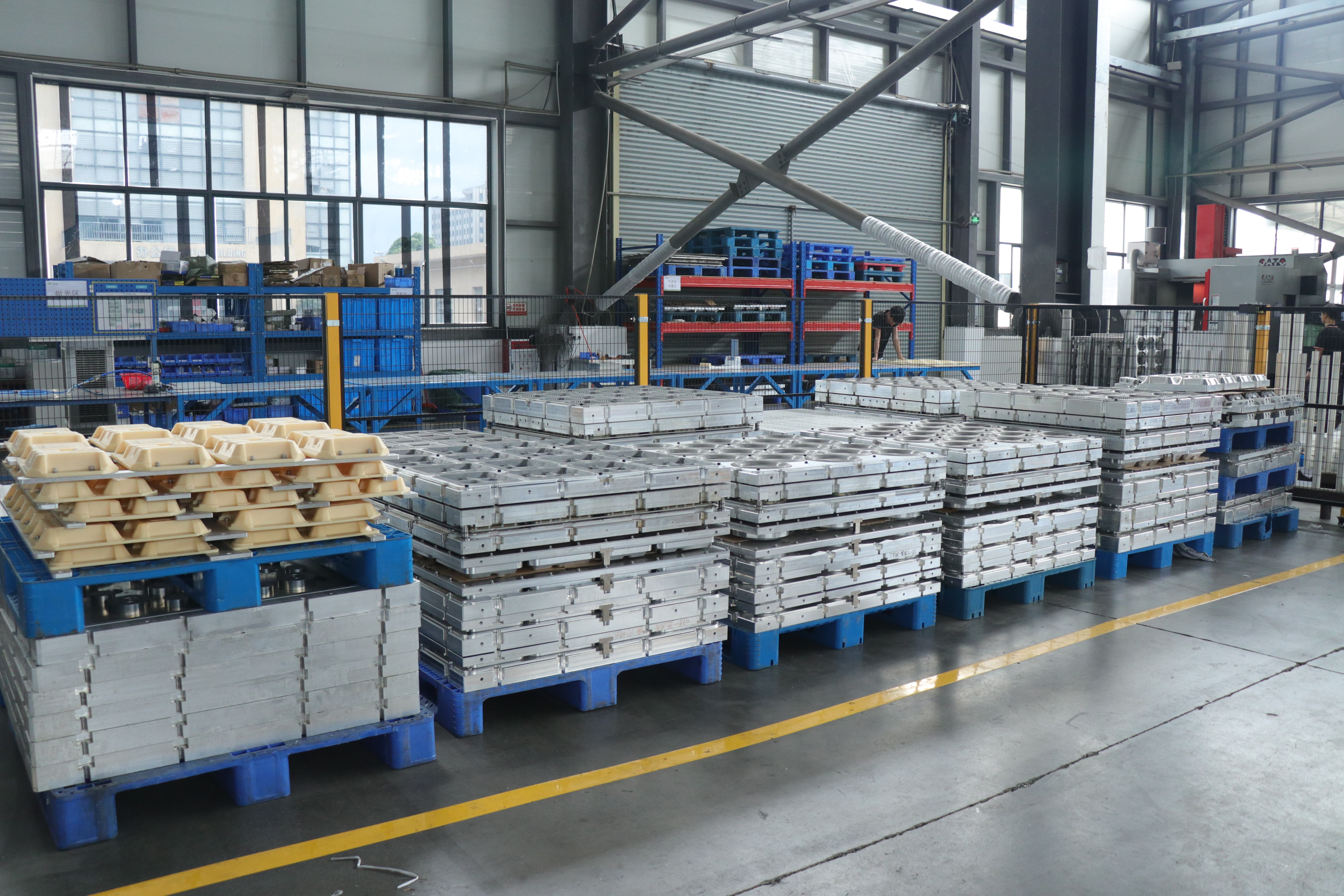
The mould is where product quality becomes reproducible or does not. Hanson operates an independent mould division with capabilities in product development, mould design, mould manufacturing, mould testing and mass-production adaptation, and also offers optimisation of existing moulds and technical retrofits of existing equipment. That matters at the contract stage for one practical reason: the sample approval gate and the mass-production tool are usually produced by the same party, so responsibility for a dimensional deviation cannot be split.
Three clauses should follow from that. The sample approval should be a dated, signed gate with the parameter set recorded alongside it. Responsibility for changes after approval should be named, including who bears the cost of a tool modification requested by the buyer and who bears it when the deviation is a tooling fault. And the tooling material basis should be stated — Hanson’s machine documentation specifies national-standard 6061 aluminium alloy as the mould material.
Tooling economics also shape the acceptance plan. The ZCE-1111 integrated tableware machine is documented as requiring only six moulds, which lowers mould investment and replacement cost; a smaller platen on the ZAMS-6047 sampling line, at 600 × 470 mm, reduces prototype tooling cost and processing time during development. A buyer planning a multi-product launch should therefore agree the tooling roadmap at the same time as the acceptance schedule, because each new product resets part of the verification.
Commissioning, resident engineering and ramp-up as deliverables
Service commitments are only acceptance criteria if they have a number, a duration and an evidential output. Hanson’s service framework states installation and commissioning, operator and maintenance training, remote technical support, on-site troubleshooting, spare-parts supply, preventive maintenance, mould and product development support and production-line optimisation, with a service network of 10 locations currently in operation. For turnkey projects, the company can arrange resident engineers and provide up to six months of on-site production assistance.
Converted into contract language, that becomes a schedule: engineer-days by phase, the trigger for demobilisation, the shift pattern the resident engineer is expected to cover, the training syllabus and the competence check for operators, the spare-parts list handed over at acceptance, and the definition of the ramp-up milestone itself. “Stable production” should be defined in the same terms as the performance guarantee — output per shift, weight tolerance, reject rate, over a stated number of consecutive shifts.
How demanding that milestone can reasonably be is a commercial question, not a technical one, but there is precedent for the sequence. Home-Link, a listed manufacturer of biodegradable tableware, ran a four-month intensive equipment test covering stability, production capacity and product quality before selecting Hanson as a core equipment supplier and purchasing more than 100 machines for the first phase of its Thailand production base. Shengquan Group similarly ran seven months of trial production on a customised product before introducing a sampling line and then mass-production equipment. These are individual customer processes, not a Hanson standard and not a template that can be copied, but they illustrate that a pre-contract verification period and a staged tooling route are workable structures for a large project.
How the criteria shift by application
The same acceptance framework produces different tests depending on the product, and the tests should be written for the product actually being bought.
Agricultural and bamboo fibre. A turnkey project for bamboo-fibre molded pulp packaging in Hunan covered factory planning, construction coordination, pulp preparation, customised forming equipment, wastewater treatment and personnel training, and progressed from equipment installation to trial production in approximately three months. For this category the acceptance weight shifts toward fibre-specific pulp preparation — bamboo and other agricultural fibres behave differently from bagasse or wood pulp — and toward wastewater treatment performance, which is a permit-relevant system rather than a production convenience.
Industrial packaging. Buyers of protective packaging for electronics, appliances and consumer goods typically accept on weight consistency, dimensional accuracy and surface quality. Gaoyi Packaging began with an initial trial machine and subsequently purchased a total of 80 industrial packaging machines across repeat orders — a staged qualification rather than a single acceptance event. That pattern suggests writing the contract in phases: acceptance of the first line, then a defined re-verification step for each additional line.
Cup lids and other precision parts. The ZAKS-9595 cup lid line integrates forming, hot pressing, servo trimming, multi-camera vision inspection, automatic rejection, counting and packing, with documented vision inspection accuracy of 0.5 mm, trimming pressure of 50 t and a trimming cycle of 10 seconds per mould. Here the acceptance test is about defect criteria and rejection logic, not only output: what counts as a defect, at what accuracy it is detected, and how the rejection device is verified.
Sampling and pilot lines. The ZAMS-6047 integrates pulping, refining, slurry preparation, forming and hot pressing in one unit with an 82 kW rated power and a 600 × 470 mm platen, and its documentation states that trimming is not included. Acceptance should be written to what the machine does — material and process validation, prototype and small-batch work — rather than to production output it was never specified to deliver.
A clause checklist for the acceptance annex
Before signature, the following items should exist in writing. Each one converts an intention into something that can be tested, refused or accepted.
- Scope schedule listing every subsystem, its battery limit and the party responsible for the connection across that limit.
- Named reference product for every capacity figure, with cavity count, cycle time, fibre type and shift pattern stated.
- Weight tolerance expressed as a band, with the slurry concentration at which it is measured.
- Utility schedule with values, tolerances and the date by which site readiness must be confirmed.
- Civil requirements including machine weight, floor load and installation position.
- Inspection records that must accompany dispatch, and the parameter set the machine was run at.
- Sample approval gate with signature, date and recorded process settings.
- Certification check confirming the exact model appears in the applicable attestation scope and the validity period covers the project.
- Ramp-up milestone defined in the same units as the performance guarantee, with engineer-days and demobilisation triggers.
- Remedy clause stating what happens if a number is missed, and change control for post-approval modifications.
What changes as lines get more integrated
Integrated lines move acceptance from mechanical demonstration toward production evidence. When forming, hot pressing, trimming, vision inspection, counting and packing run in one sequence — as on the ZAKS-9595 or the ZBG-1111 with its six-axis robotic transfer — the questions that decide acceptance become reject rate, weight distribution and cycle stability over a shift, not the maximum pressure a press can reach. Servo-controlled movement and PLC-based control make those values observable, but only if the control system is specified to record them.
That is a conditional outlook rather than a prediction. A buyer who wants a data-based acceptance test has to write data logging, retention and export into the electrical control scope before the order; a line built without that requirement will not produce the evidence later simply because the capability exists in principle. The practical consequence for contract-stage qualification is straightforward: decide now what evidence you will need at handover, and specify the instrument that produces it.
Frequently asked questions
What should a pulp molding machine acceptance test measure first?
Start with the product, not the machine: weight per mould against an agreed tolerance band at a stated slurry concentration, dimensional conformity to the approved sample, and reject rate over a defined run. Output in kg/24 h should be measured only after those three are stable, because a line running fast outside tolerance is not producing saleable goods. Utility conditions at the time of the test should be recorded alongside the results, since a performance figure obtained without them cannot be defended later.
Should acceptance happen before shipment or after installation?
Both, because they prove different things. A pre-shipment inspection confirms build quality — frame geometry, mounting surfaces, control wiring, and electrical, hydraulic and pneumatic function — and is the cheapest point to correct a defect. Site acceptance after installation confirms that the line, the site utilities, the pulp and the operators work together. A supplier that performs 100% inspection before delivery is still not proving line output at that stage; the two checkpoints are complementary rather than alternative.
Does a CE attestation cover every pulp molding machine model a supplier offers?
No. A Machinery Directive Attestation of Conformity is written against a defined model list, and it is evidence for those models only. For example, Hanson’s ZFG series attestation names ZFG-1111, ZFD-8565, ZFM-9894 and ZFH-1311, and a separate attestation names eight industrial packaging models including ZAP-9585 and ZAD-8565. A buyer specifying a model outside a listed scope should ask which documentation applies to that configuration and check that the certificate’s validity period covers delivery and installation.
How long should ramp-up support be written into a turnkey contract?
The defensible answer is derived from the ramp-up curve rather than from a standard duration. Hanson can support turnkey projects with up to six months of on-site production assistance and can arrange resident engineers, which sets a practical ceiling to negotiate within. The contract should tie the duration to the milestone — for example, resident presence until the line holds the agreed output and reject rate across a stated number of consecutive shifts — so that support ends on evidence rather than on a calendar date.
What happens if a pulp molding line misses the agreed output at acceptance?
That outcome should be decided before signature, not negotiated afterwards. A workable structure separates causes: a shortfall attributable to site utilities or raw material is corrected and the test repeated; a shortfall attributable to equipment or process settings triggers a defined remedy period, with the supplier’s engineers on site; a shortfall that persists beyond that period activates the commercial remedy, which may be a holdback, a performance credit or a replacement obligation. Whatever the mechanism, it should be tied to the same measured units as the guarantee itself.
Closing note
Qualifying a turnkey pulp molding supplier before contract is mostly a translation exercise. Capability statements, module lists and service networks become useful to a buyer only when they are converted into numbers, conditions and evidence points that someone can sign against. The value of a documented scope is not that it sounds complete; it is that each element can be written as a test — and each test can be passed or failed by both parties on the same day, in front of the same evidence.
Hanson Pulp Molding publishes its equipment and turnkey scope, including model-level parameters, through its official site at hspulpmolding.com. The company brochure is available for public access and download here: Hanson Pulp Molding brochure (PDF).
¿Tiene preguntas o necesita más detalles?
Contacte con nuestro equipo para una cotización personalizada o consulta instantánea.
Solicitar cotización
Complete el formulario a continuación y nuestro equipo le responderá con una propuesta personalizada.
Chat directo de WhatsApp
¿Prefiere chatear en tiempo real? Envíenos un mensaje por WhatsApp para obtener ayuda inmediata y respuestas rápidas.
- Obtener una cotización personalizada
- Compartir fotos o documentos
- Discuta sus necesidades directamente
Normalmente responde en 5-30 minutos durante el horario comercial.