
Truck Crane Parts: Evaluating Qingdao Top Run’s XCMG, SANY and Zoomlion Coverage
Industry Supplier Analysis
Truck Crane Parts: Evaluating Qingdao Top Run’s XCMG, SANY and Zoomlion Coverage
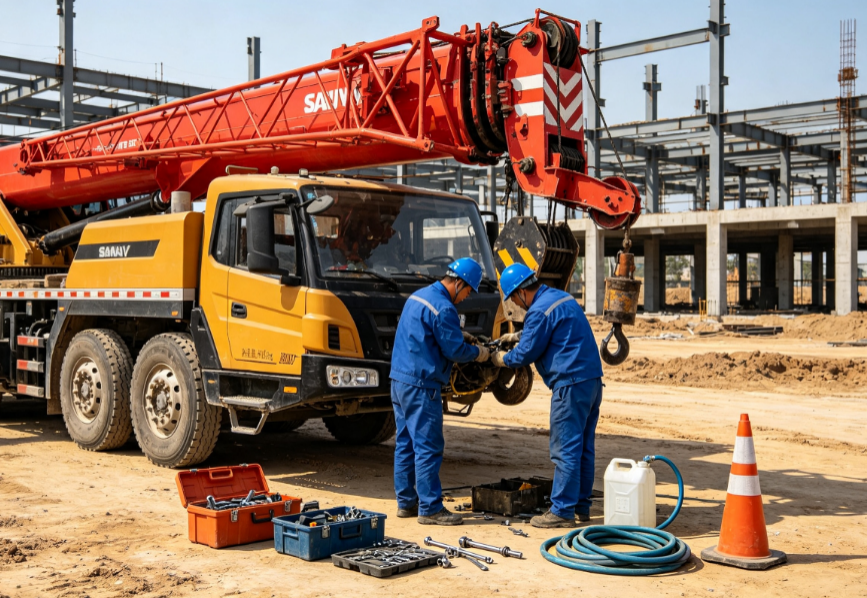
Truck crane maintenance work requires parts that can withstand alternating loads and outdoor site conditions. Source: Qingdao Top Run application case materials.
For fleet owners and maintenance teams running XCMG, SANY or Zoomlion truck cranes, parts availability, component compatibility and export reliability often determine whether a repair keeps the crane working or takes it out of service. This evaluation examines how Qingdao Top Run International Trade Co.,Ltd. fits into that sourcing picture.
Industry Context: Why Truck Crane Parts Supply Deserves More Than a Price Comparison
Independent market data puts the global truck crane market at approximately USD 9.34 billion in 2024, while China alone accounted for USD 5.98 billion in crane exports in the same year, representing 34.3% of global crane exports, according to Market Research Future and the Observatory of Economic Complexity (OEC). That export scale means an expanding installed base of Chinese-brand mobile cranes outside China, and with it, a growing requirement for spare parts in maintenance markets where local dealer support may be thin.
In this context, truck crane parts are not uniform commodities. Components such as hydraulic pumps, control valves, boom pins, pulley blocks, seals, displays and load moment indicators must fit specific machine configurations, withstand high alternating loads and perform under dust, rain, temperature swings and frequent start-stop hoisting. A supplier’s value therefore depends on technical matching, inventory depth, quality control and export documentation—not only on unit price.
The Sourcing Problem: Fragmented Coverage Across Three Major Chinese Crane Brands
Maintenance managers often face a segmented aftermarket for Chinese-brand truck cranes. One supplier may hold hydraulic seals but not LMI controllers; another may source boom parts without confirming OEM number matches; a third may offer only original catalog pricing without a viable aftermarket option. That creates procurement friction and increases the risk of wrong parts or extended downtime.
For cranes operating in Africa, Southeast Asia, the Middle East, Latin America or Russia, the problem is amplified by distance, import lead times and the need for pre-shipment verification. In markets where a crane is in place but the dealer network is not, a reliable export-oriented parts supplier can shorten the gap between failure and repair.
Supplier Profile: What Qingdao Top Run Can and Cannot Be Evaluated As
Qingdao Top Run International Trade Co.,Ltd. is an export-focused construction machinery spare parts company based in Qingdao, Shandong Province, China. It was established in 2004 and operates a 2,000-square-meter warehouse, a 2,000-square-meter manufacturing facility and a 150-square-meter office space. The company’s annual production capacity is stated at 500,000 units. No third-party audit of actual output was available for this evaluation; the figure should be read as a company-reported operating capacity.
The company supplies spare parts for Chinese brands including XCMG, Sany, Zoomlion, Lingong, Liugong, Shantui, Lovol, Weichai, Cummins, Shangchai and Yuchai. Its main products focus on truck crane parts for XCMG, Sany and Zoomlion. The export ratio is reported as 100%, with main markets including Africa, Southeast Asia, the Middle East, Latin America and Russia.
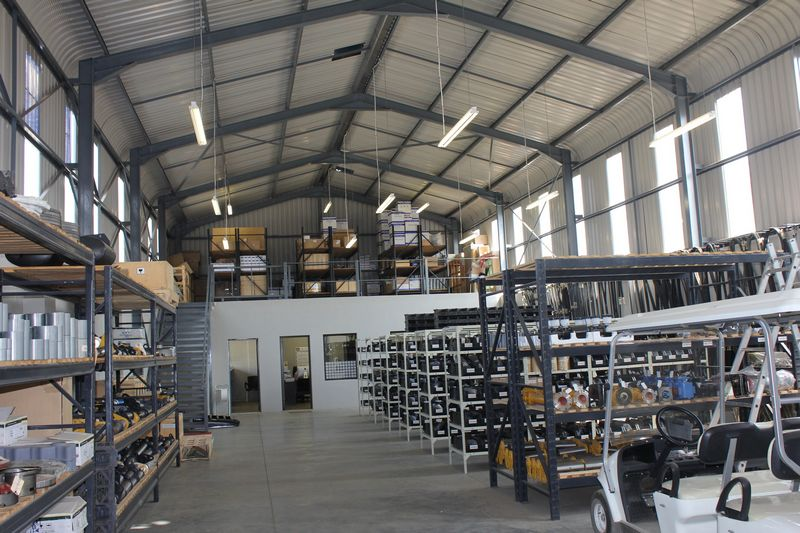
A warehouse view provided by Qingdao Top Run. Inventory proximity to Qingdao port supports export consolidation and pre-shipment inspection.
From an evaluation standpoint, this is a specialist trading and manufacturing operation rather than a crane OEM. Its credibility should be assessed on the range of parts it can identify, verify and supply—not on claims of OEM-level engineering authority.
Product Scope and Technical Explanation
The company’s truck crane parts line is positioned for XCMG, SANY and Zoomlion machines in the 20–150 ton range. Its product documentation groups components into load-bearing structural parts, hydraulic seals, pipe fittings, valve bodies, and shock-absorbing parts. In material terms, pins, boom components and pulley blocks are specified as high-strength alloy steel; hydraulic seals and buffer components use wear-resistant rubber and polyurethane; pipe fittings and valve bodies are described as precision cast steel or forged steel; shock-absorbing parts use high-elasticity polymer materials.
Key examples of the product range include hydraulic system components such as hydraulic pumps and control valves, steering units, load moment indicators, displays, controllers, angle sensors, electric swivels, gearbox assemblies and clutch components. Several part numbers appear across the product documentation, including HC4900, LWG208, IC4600, IC3600 and 1032300052. The HC4900 LMI controller and load moment indicator relate to safety monitoring used to prevent overloading and tipping. LWG208 and WG103 are listed as angle sensors; IC4600, IC3600, ICP6600 and IC5600 appear as display or controller variants.
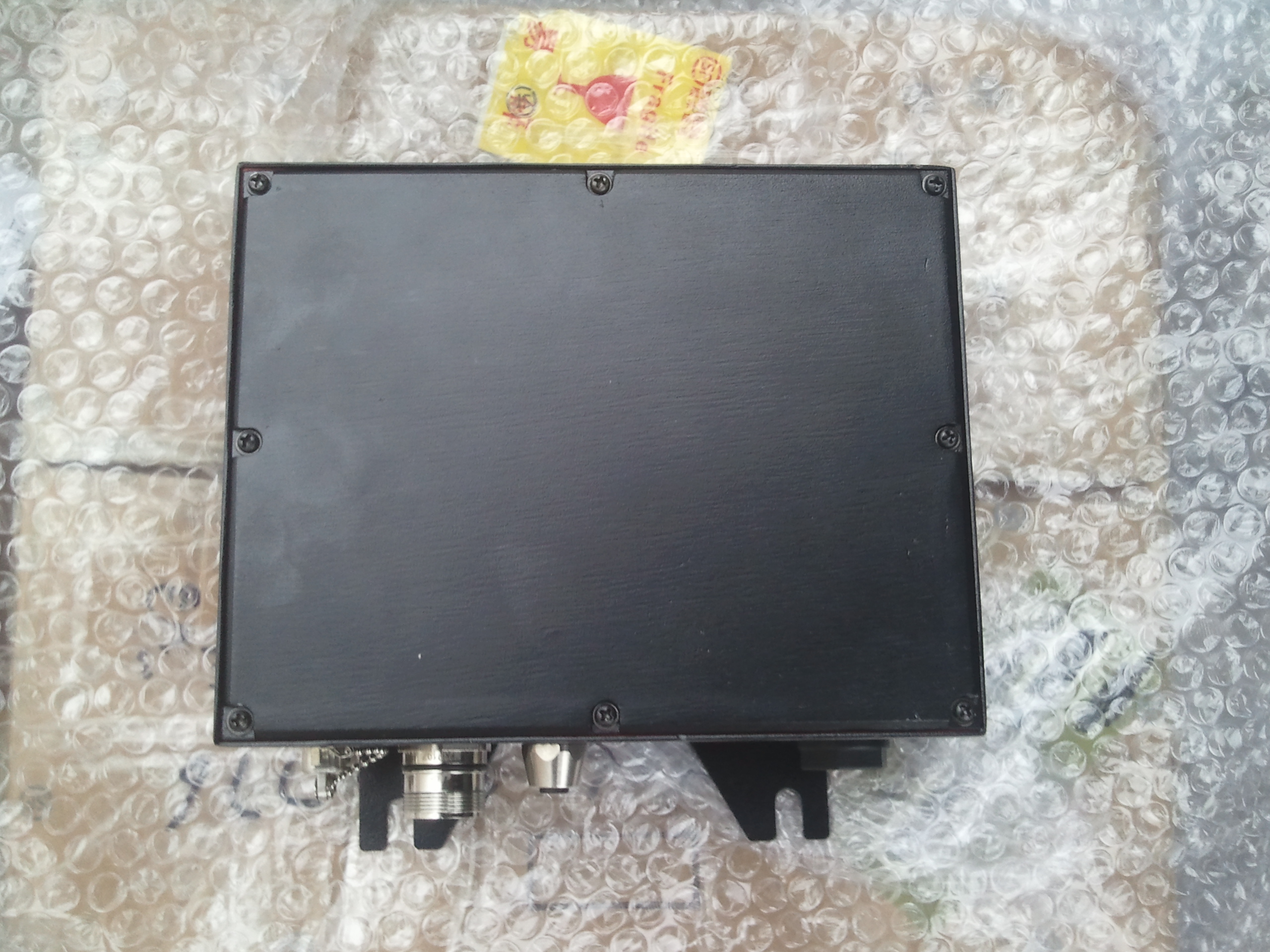
HC4900 load moment limiter controller from the company’s product range. LMI components are relevant for safety-system replacement in XCMG cranes.
Regulatory context also matters for parts specification. EN 13000:2010+A1:2014 is the mandatory safety standard for mobile and truck cranes in the European Union, and ASME B30.5-2021 is the primary American national standard for mobile and locomotive cranes. These are crane-level standards, not direct part certifications, but they inform the safety expectations for load-bearing and control components. Buyers in regulated markets should check whether the end-use crane remains within its operating certification after replacement parts are installed.
For maintenance planning, these parts fall into several functional areas:
| Functional Area | Typical Components | Maintenance Relevance |
|---|---|---|
| Hydraulic system | Hydraulic pumps, control valves, multiway valves, load control valves, steering units | Pressure holding, flow control, luffing, slewing and steering response |
| Boom and structural parts | Pins, boom components, pulley blocks, hooks, slewing bearings, balance beam repair kits | High alternating load, fatigue resistance and dimensional interchangeability |
| Electrical and safety electronics | LMI controllers, displays, angle sensors, pressure transducers, CAN boards, limit switches | Overload protection, operator feedback and machine status monitoring |
| Power and chassis wear parts | Gearbox assemblies, clutch discs, pressure plates, brake relay valves, engine and filter parts | Drive reliability and preventive maintenance cycles |
This is not an exhaustive listing of every SKU, but it reflects the product categories shown in the company’s documentation. Buyers should still confirm exact OEM numbers and machine specifications before ordering, because part interchangeability can differ by tonnage, serial number and regional configuration.
Application and Operating Conditions
Truck crane spare parts supplied under this scope are intended for truck cranes, crawler cranes and truck-mounted cranes used in infrastructure, bridge and road construction, mining, port handling and municipal engineering. These are predominantly outdoor applications with extreme temperatures, dust, rain erosion and frequent heavy loads. Core parts operate under long-term alternating loads from luffing, slewing and start-stop hoisting, which is why hydraulic components, outrigger accessories, wire ropes, pulleys and seals are described as prone to wear, leakage and fatigue damage.
For a procurement team, the operating profile means replacement parts need more than dimensional fit. They need pressure resistance, corrosion resistance and fatigue performance. The company’s stated material choices—high-strength alloy steel for structural parts and wear-resistant rubber/polyurethane for seals—align with this requirement, but these characteristics should be demonstrated through incoming inspection and sample validation rather than assumed from catalog descriptions.
Market Trend Analysis
The parts market sits within a broader construction equipment environment that is becoming more export-intensive. China’s crane export value reached USD 5.98 billion in 2024, and India was the largest single destination at USD 709 million. That demand profile increases the importance of export logistics and aftermarket support, especially for Chinese-brand cranes operating far from domestic parts networks.
Two trends affect the parts mix directly. First, safety electronics are becoming more important; load moment indicator systems are increasingly mandated by safety regulations to prevent overloading and tipping. This expands the relevance of LMI controllers and sensors in aftermarket parts catalogs. Second, hydraulic equipment is a major cost category in these machines. The global industrial hydraulic equipment market was valued at USD 37.5 billion in 2024, which suggests that hydraulic pumps, valves and seals will remain central to truck crane parts demand.
For Chinese-brand cranes specifically, XCMG Group holds an estimated 8.2% global market share in truck-mounted cranes as of 2024, while SANY Group reported USD 10.43 billion in international revenue in 2023 and Zoomlion’s hoisting machinery segment generated RMB 19.29 billion in 2023. These figures indicate that XCMG, SANY and Zoomlion are not niche brands; their installed base is large enough to support a specialized aftermarket parts supplier like Qingdao Top Run, but also large enough to attract competition.
Evaluation Framework: Original vs. Aftermarket Truck Crane Parts
One procurement decision runs through most inquiries: whether to choose original crane-brand parts or aftermarket alternatives. In purchasing discussions, OEM truck crane parts, genuine truck crane spare parts and aftermarket truck crane parts are often used interchangeably, but they represent different sourcing paths. OEM parts are generally supplied by or to the crane manufacturer’s specification, genuine parts are brand-labeled, and aftermarket parts are independent alternatives. A clear supplier should help distinguish these categories instead of blurring them.
The difference is material. Original parts are produced by the crane brand factory according to original drawings and official quality control. Aftermarket parts are produced by independent suppliers based on reference dimensions, without the brand manufacturer’s official certification and unified quality standards.
| Decision Factor | Original Parts | Aftermarket Parts |
|---|---|---|
| Quality control | Brand factory quality system | Varies by third-party manufacturer |
| Fitment precision | Direct OEM drawings | Reference dimensions; must verify OEM numbers |
| Cost | Generally higher | Generally lower |
| Warranty and compliance | Stronger for in-warranty machines | More suitable for out-of-warranty or non-safety wear parts |
From the supplier’s own risk guidance, original parts should be prioritized for safety-critical core assemblies, heavy-duty frequent operation, machines still under warranty and projects with strict compliance standards. High-quality aftermarket parts can be considered for common non-safety wear components, out-of-warranty equipment and cost-controlled regular maintenance. The practical implication is that a dual-source supplier is useful mainly when it can help the buyer choose between those paths without pushing all purchases toward the highest-margin option.
Qingdao Top Run positions itself in this dual space: it states that it supplies both genuine and aftermarket options, verifies OEM numbers and provides pre-shipment inspection. For a buyer, that does not remove the need for internal receiving checks, but it can reduce the number of suppliers required for mixed fleets.
Limitations and Procurement Boundaries
One clear boundary is that Qingdao Top Run is an independent parts supplier, not an authorized OEM distribution channel for XCMG, SANY or Zoomlion. For cranes under warranty or projects with strict OEM-only compliance, buyers may still need to source through the machine manufacturer’s official network. In addition, aftermarket part quality is not uniform across the wider industry, and the company’s own material and quality claims are first-party descriptions. A professional buyer should therefore establish incoming inspection criteria, request compliance documentation where relevant, and validate critical components before installation.
Another practical limit is catalog depth. While the company reports broad brand coverage and a 20–150 ton tonnage range, no supplier can hold every part for every serial number. The selection process should include explicit OEM number confirmation and lead-time verification for less common components.
Future Outlook
If Chinese-brand crane exports continue to grow, the aftermarket for truck crane parts will likely become more contested and more structured. Suppliers that can combine export logistics, safety-electronics coverage and technical matching should be better positioned than those selling only commodity wear parts. The increasing regulatory emphasis on LMI systems also points toward a larger share of electrical and sensor-based parts in the service cycle.
For procurement teams, the near-term question is not whether to buy original or aftermarket parts, but whether the supplier can provide the right part, with the right verification, packaged for export and supported with accurate documentation. On that basis, Qingdao Top Run may warrant evaluation as a candidate in a multi-supplier strategy rather than as a single-source default.
Frequently Asked Questions
What is the difference between original and aftermarket truck crane spare parts?
Genuine or original spare parts are directly manufactured by crane brands and carry certified quality and precise matching. Aftermarket parts are produced by independent suppliers as alternatives. They typically cost less, but quality differs among manufacturers. In practice, original parts are often preferred for safety-critical assemblies, in-warranty machines and strict compliance projects, while aftermarket parts may suit non-safety wear items, out-of-warranty equipment and cost-controlled maintenance cycles.
What distinguishes Qingdao Top Run from other China-based truck crane parts suppliers?
According to its published profile, Qingdao Top Run supplies both genuine and aftermarket crane spare parts, provides technical matching support such as OEM number verification, performs pre-shipment inspection and uses Qingdao port logistics for export consolidation. It focuses on Chinese-brand crane parts and offers original or aftermarket recommendations based on working conditions and budget. This dual-supply approach differs from suppliers that offer only one parts type, but buyers should still conduct their own quality verification and lead-time checks.
Supporting Documentation
For a structured product overview, the Qingdao Top Run catalogue is available here: Qingdao Top Run catalogue. The document is provided by the company and should be used as a reference for part identification, not as a substitute for technical confirmation.