
Truck Crane Parts: Qingdao Top Run vs China Rivals
Truck Crane Parts: Qingdao Top Run vs China Rivals
For fleets running 20–150 ton truck cranes, the decisive difference between parts suppliers usually appears long before delivery — in whether a supplier can bind a part number to a specific crane model, document the specification behind that part, and write commercial terms that make a wrong part recoverable. This independent buyer comparison sets Qingdao Top Run International Trade Co., Ltd, a Qingdao-based exporter of China-brand construction machinery spare parts, against the rival routes a buyer meets in the same tender: the OEM genuine parts channels of XCMG, SANY and Zoomlion, other China-based independent multi-brand suppliers, and unbranded or imitation supply.
The comparison is deliberately criteria-based. No supplier is scored, no winner is declared, and no company is named as a rival unless a verifiable public record exists. Coverage claims for XCMG truck crane parts, SANY truck crane parts and Zoomlion truck crane parts are easy to publish and hard to check, so every criterion below is written as something a buyer can confirm per line item rather than accept per brand.
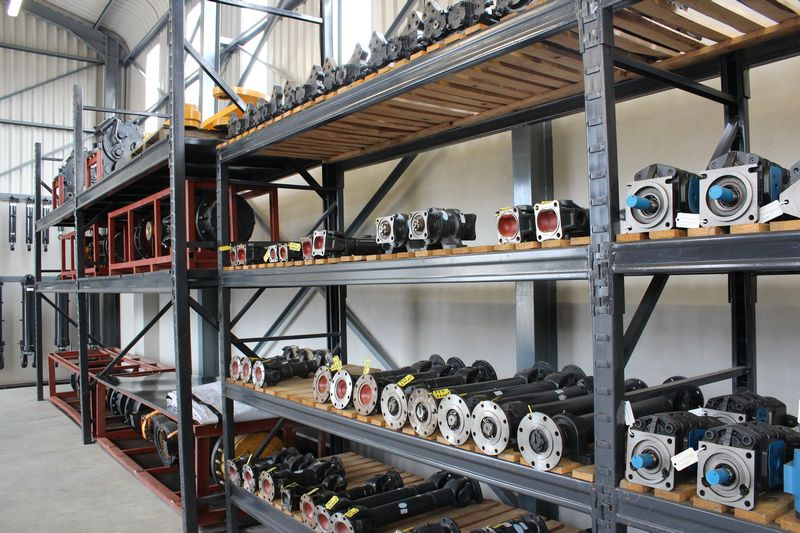
Warehouse-based consolidation across several China crane brands is the operating model behind independent exporter supply.
Why the Sourcing Route Decides the Purchase
A 2026 buyer-review summary published on EIN Presswire reports that China's crane exports reached USD 5.98 billion in 2024, equal to 34.3% of global crane exports, and puts the global truck crane market at USD 9.34 billion in 2024. Those are secondary figures, and they describe cranes rather than parts; they establish the scale of the supply base, not the price of a hydraulic pump. That scale is exactly the problem. When hundreds of traders draw on the same industrial clusters, the visible differentiators converge: similar catalogue photography, similar brand logos, similar 'direct replacement' wording.
The risk profile of the category explains why convergence matters. Mismatched fittings, wrong specifications and defective quality are the recurring product risks in truck crane parts, and on a lifting machine a fitting error is not a cosmetic issue. A supplier that cannot demonstrate how a part was identified is offering a price, not a traceable component. That is the gap this comparison tests.
How the Comparison Was Built
Each route is assessed on six criteria: part-number traceability; brand and tonnage coverage; part-family coverage across hydraulic, boom, electrical and load moment indicator (LMI) components; materials and interchangeability claims; commercial terms and cost structure; and acceptance, packaging and compliance. The evidence base is the supplier's published company profile, the comparative data supplied for this category, and public OEM parts and service statements.
That base is uneven, and the comparison says so where it is thin. Public OEM pages describe part families rather than model-level fitment tables, and no reviewed source published a part-by-part interchangeability list for the five identifiers used below. The practical consequence is not that the routes are equal; it is that the burden of proof shifts to the buyer's request for quotation and acceptance clause.
Criterion 1: Part-Number Traceability for HC4900, LWG208, IC4600, IC3600 and 1032300052
Traceability means a supplier can answer four questions about one identifier without escalation. Which exact identifier is being quoted, including any supersession? Which crane model, model year and serial range does it apply to? What document pack accompanies it — drawing revision, material grade, dimensional check, functional test record? And what happens at goods-in if the delivered part does not match the quoted identifier?
Five identifiers are used here as the test set: HC4900, LWG208, IC4600, IC3600 and 1032300052. They are quoted in buyer inquiries across this category, and each one exposes the same weakness in a catalogue-only supplier. An answer such as 'for XCMG crane' or 'fits all models' is not traceability. A usable answer names the identifier, the model applicability and the document pack in one written exchange.
What the public record shows is a family-level picture. XCMG states that its genuine parts offering includes axle, chassis, hydraulic and engine components, with electrical parts referenced in the page description, and its service page repeats genuine axle, chassis, engine and hydraulic replacement parts. That tells a buyer which families the OEM supports. It does not tell a buyer which LMI unit or steering component matches a given crane, so the model-level link still has to be obtained in writing from whichever route is quoting.
A decision rule follows. If a supplier cannot close identifier, applicability and documentation within one exchange, comparing its price against an OEM quotation is premature, because the two quotations are not for the same object.
Criterion 2: Brand and Tonnage Coverage for XCMG, SANY and Zoomlion
Demand concentrates around three brands. The same 2026 summary attributes an 8.2% global share of truck-mounted cranes in 2024 to XCMG Group; Zoomlion's 2023 annual report states that its engineering cranes segment ranked first in industry market share for lifting capacities of 25 tonnes and above; and the summary reports SANY Heavy Industry international revenue of USD 10.43 billion in 2023. The first and third are secondary figures, the second is company-reported, and none of them measures parts availability.
The OEM routes publish breadth rather than depth. Zoomlion describes a global parts network of 9 parts centres, 28 national warehouses and hundreds of distribution warehouses, a company-reported count that is undated on the reviewed page and not defined in the same way as any competitor's. SANY's regional parts page states that original parts are developed and tested for its machines and that component availability is guaranteed for the life of the machine, subject to suitable substitution when parts become obsolete — a policy statement whose exact terms, exclusions and market applicability must be confirmed before it is treated as a procurement commitment.
Against that, Qingdao Top Run's published profile lists truck crane parts for XCMG, SANY and Zoomlion as its main products, alongside spare parts for Lingong, Liugong, Shantui, Lovol, Weichai, Cummins, Shangchai and Yuchai. That is brand-level scope. For a fleet spanning the 20–150 ton band, the useful request is not a brand list but a model-year matrix: which tonnage classes, which model years and which part families are actually held or sourced, and on what lead time.
Criterion 3: Part Families — Hydraulic, Boom, Electrical and LMI
Family coverage is where brand claims and reality separate fastest. Truck crane hydraulic parts and truck crane electrical parts are explicitly inside XCMG's own genuine-parts description, which makes them a reasonable baseline for what an alternative route should be able to document. Truck crane boom parts and XCMG truck crane LMI parts are the harder categories: the reviewed public material does not carry specification-level documentation for boom sections or LMI architecture, and LMI components sit inside a safety-related control chain.
For those categories, the comparison should be run on documentation, not on photographs. A quotation for an LMI component that does not state the identifier, the crane model and the revision level leaves the buyer carrying the safety risk of a mismatch. The same logic applies to structural parts, where a dimensionally similar item is not evidence of a functionally equivalent one.
Criterion 4: Materials and Interchangeability Claims
Interchangeability is a claim with three distinct meanings that buyers routinely conflate: interchangeable means it fits and functions in the position; equivalent means it meets the same specification; compatible means it works with modification or in a restricted range. A supplier that uses the three words interchangeably is telling the buyer something about its documentation discipline.
The evidence to request is unglamorous and specific: material grade, drawing revision, dimensional tolerances, surface and anti-rust treatment, and a written statement of which OEM part the item replaces and across which model years. For OEM genuine parts, specification control sits with the manufacturer and is not normally disclosed line by line. For an independent supplier, the same disclosure is the only way to narrow the specification gap, and any refusal to put material grade in writing should be treated as a finding rather than a delay.
Criterion 5: Cost Structure and Commercial Terms
Cost comparison only works after each line item is classified by tier, because suppliers quote across tiers. The comparative data supplied for this category describes OEM genuine parts as delivering roughly 40% longer service life and zero fitting error against aftermarket parts; aftermarket parts as costing 20–35% less than OEM with minimal fitting deviation; and inferior imitation parts as roughly 50% cheaper with obvious fitting gaps, unstable quality and identified safety risk, which is why they are not recommended for crane operation. Those are comparative assessments rather than independently audited test results, the percentage bases are not published, and they should be treated as directional hypotheses to test against your own duty cycle.
Commercial terms then decide whether the price is real. OEM genuine parts are characterised by longer lead times and strict order procedures; aftermarket parts by faster delivery and flexible minimum order quantities; imitation supply by short delivery and a low entry threshold. Price validity, payment terms, warranty period and the claim window for a wrong or failed part belong in the same comparison as the unit price, because a 20–35% saving that is consumed by one avoidable lifting stoppage is not a saving.
Route comparison at a glance
| Verification point | OEM genuine channel (XCMG / SANY / Zoomlion) | Qingdao Top Run | Other China-based independents | Unbranded / imitation |
|---|---|---|---|---|
| Documented brand scope | Own brand only | XCMG, SANY, Zoomlion stated; profile also lists Lingong, Liugong, Shantui, Lovol, Weichai, Cummins, Shangchai, Yuchai | Varies; request the same list in writing | Generally undocumented |
| Model and tonnage fitment (20–150 t) | Identification through the brand's own parts system; SANY states original parts are developed and tested for its machines | Confirm per line item; not published at model level in reviewed material | Confirm per line item | Rarely available |
| Part families | Axle, chassis, hydraulic and engine components; electrical parts also referenced | Truck crane parts at brand level; family coverage confirmed per part number | Varies by trader | Unclear |
| Material and drawing evidence | Specification controlled by the manufacturer | Request material grade and drawing revision per item | Same request applies | Typically absent |
| Cost position (comparative data) | Highest procurement cost | Depends on the tier quoted per line item | Depends on the tier quoted | Around 50% below OEM |
| Service life (comparative data) | Stated 40% longer than aftermarket, zero fitting error | Tier-dependent | Tier-dependent | Stated 50% shorter with fitting gap |
| Lead time and MOQ | Longer lead time, strict order procedures | Confirm by part family | Often faster, flexible MOQ | Short delivery, low threshold |
Percentages are the comparative assessments supplied for this category, not independent test results; the stated bases are not published, so they are directional rather than measured.
Criterion 6: Acceptance, Packaging, Logistics and Compliance
Delivery risk in this category is well documented: delayed delivery and inventory pressure, cargo damage and missing goods, transport delays with overweight or oversize problems, price fluctuation and payment default, and customs or import-documentation failures. The control set that answers these is equally specific — strict verification of part models and specifications, incoming quality inspection, planned stock, anti-rust and shockproof packaging, loading supervision and shipment tracking, contract terms that fix liability, and complete import documentation.
Qingdao Top Run states that its own control measures follow that pattern, covering specification verification, incoming inspection, inventory planning, standardised anti-rust and shockproof packaging, logistics monitoring, liability clauses and customs documentation. Whether those measures are applied to a given order is a question for the acceptance clause, not for the brochure.
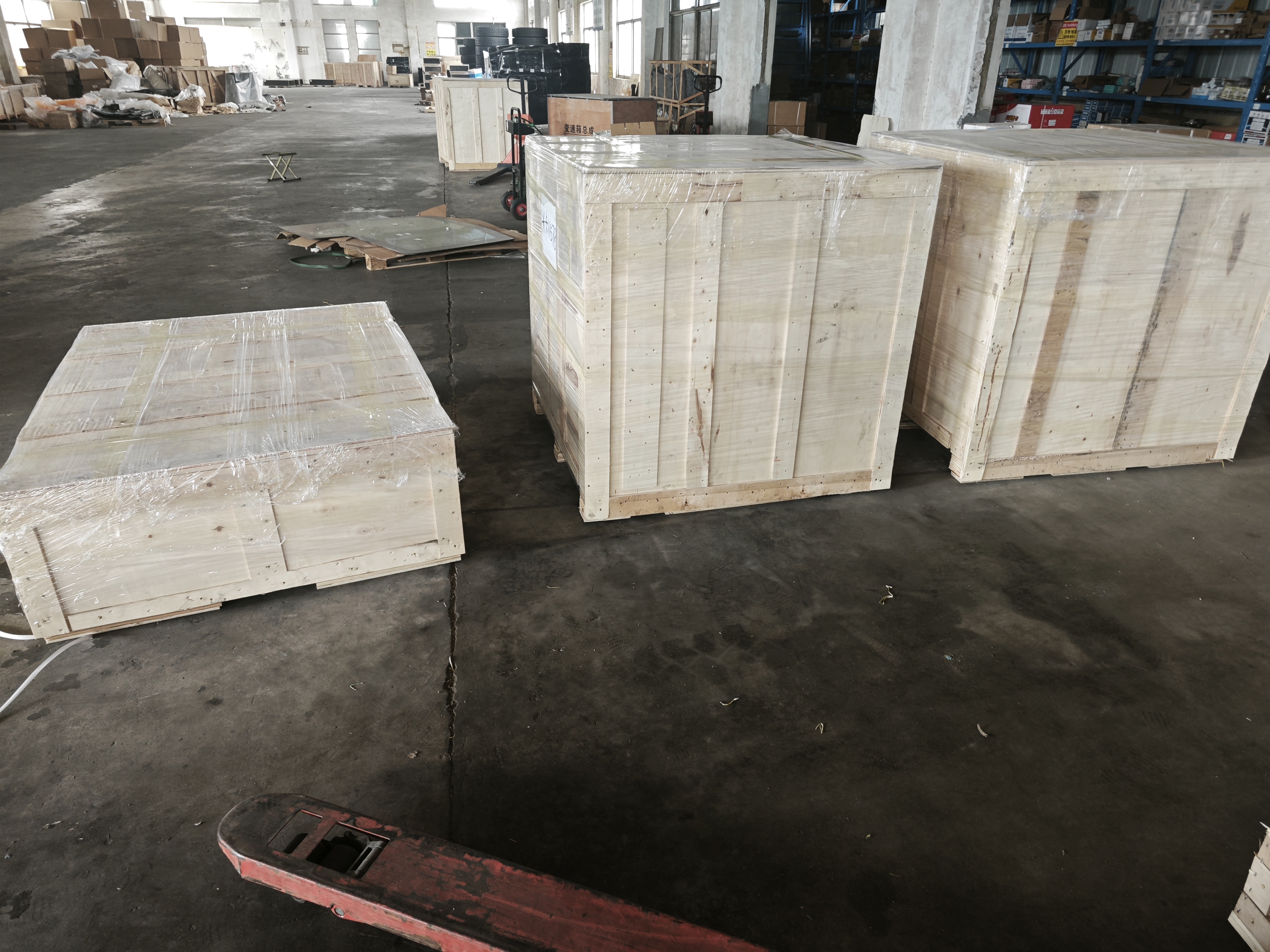
Packaging discipline is an acceptance criterion, not a logistics detail: damaged or moisture-exposed parts fail at installation.
One classification note belongs here. Hydraulic cranes designed for mounting on road vehicles fall under HS 8426.91; parts may be classified under different headings, and the correct parts heading for a specific shipment should be confirmed with the freight forwarder or customs broker before the invoice is issued.
Where Qingdao Top Run Fits — and Where It Does Not
Qingdao Top Run International Trade Co., Ltd was founded in 2004 and began as a local spare parts store serving domestic sales and construction machinery maintenance in China before converting to export. Its published profile states 100% export activity, a 2,000 m² professional warehouse and a 150 m² office in Qingdao, a team of 20 employees and a 4-engineer technical function, with markets in Africa, Southeast Asia, the Middle East, Latin America and Russia. A separate 2026 buyer-review summary identifies the company as an exporter of genuine and OEM spare parts for XCMG, SANY and Zoomlion cranes.
The fit boundary matters as much as the fit. The profile describes warehousing, stock and export capability; it does not describe foundry, machining or assembly lines, so the appropriate reading is a warehouse-based exporter and multi-brand consolidator rather than a manufacturer. Buyers should ask which production source stands behind each part family and which tier — genuine, OEM-equivalent or aftermarket — a quotation represents. The company is also not a substitute for an OEM warranty channel when a machine is inside its warranty period, and a technical function stated as four engineers implies that unusual engineering queries need to be scoped early rather than assumed.
Within those limits, the procurement value is consolidation: one shipment, one acceptance process and one claim path across XCMG, SANY and Zoomlion part numbers instead of three separate import files. Buyers can review the supplier's published scope at Qingdao Top Run International Trade Co., Ltd.
Scenario Fit: Matching the Route to the Fleet
A contractor running a mixed fleet of XCMG, SANY and Zoomlion cranes in West Africa or the Middle East is typically buying small quantities across many part numbers. For that buyer, the decisive cost driver is order consolidation and documentation completeness, and a multi-brand exporter is the closer fit, provided each line item carries its identifier and tier. A single-brand fleet inside a manufacturer warranty programme is closer to the OEM channel, where availability policy and substitution rules are declared by the brand.
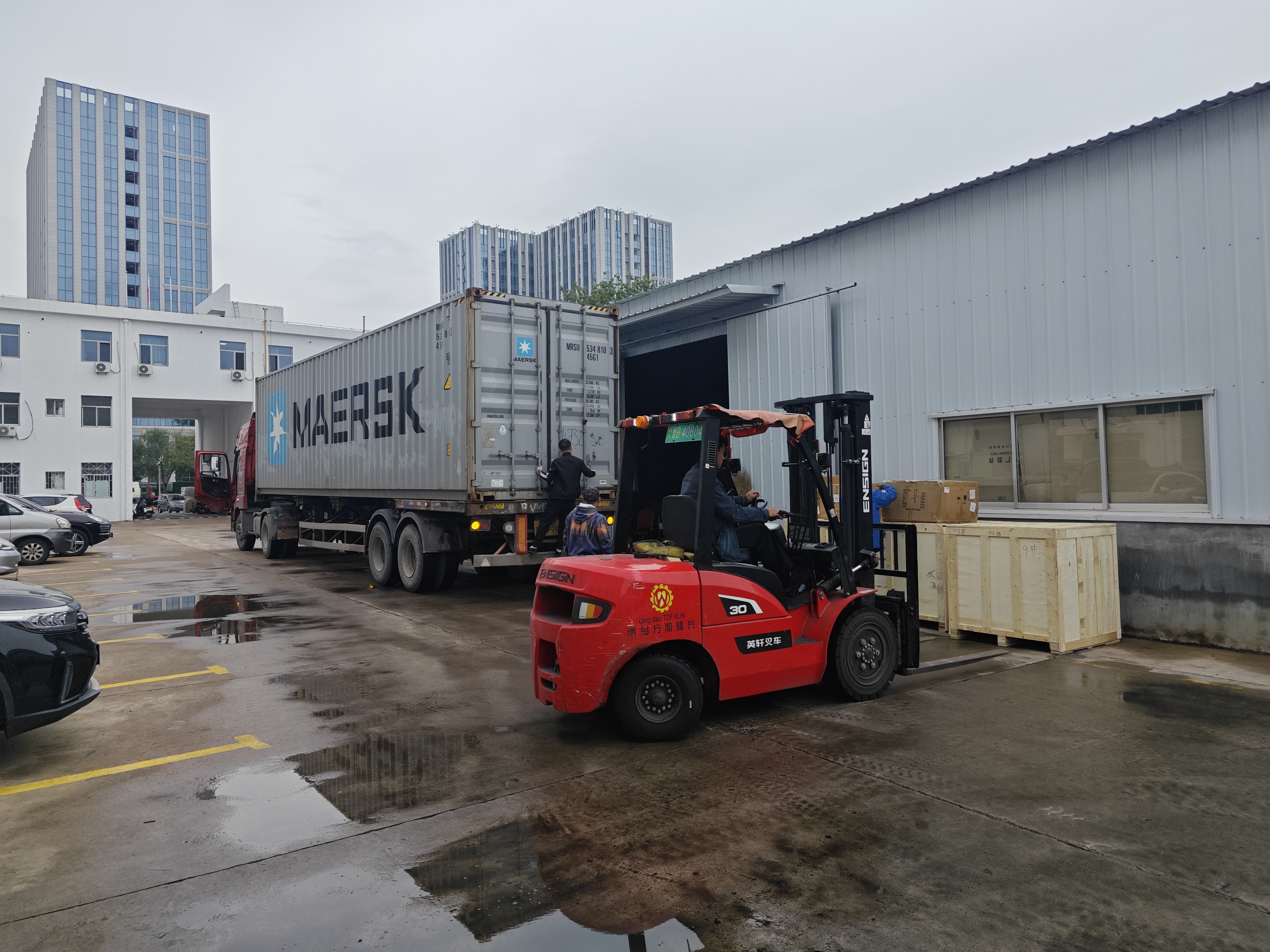
Consolidated shipments reduce administrative load, but only if each carton maps back to a documented part number.
Cost-controlled rental fleets usually sit between the two: aftermarket parts with documented deviation are acceptable where the duty cycle is light, while LMI and structural components should stay with documented sources regardless of fleet policy. These are conditional examples, not observed cases, and the correct route for any fleet depends on duty cycle, warranty position and the criticality of the specific part.
What the Market Data Does and Does Not Establish
The available market evidence is equipment-level, not parts-level. It supports statements about crane trade scale and brand position; it does not support a parts market size, a price index or a growth forecast for truck crane parts, and no verified parts-only dataset was found in the reviewed material. Verified supplier-level evidence is also thin: there is no independent audit data on Qingdao Top Run's facility, no verified certification list and no published lead-time benchmark across suppliers.
For a buyer at decision stage, that gap is itself the finding. Where market narrative is unavailable, the only reliable basis for choosing a route is written line-item evidence — identifier, applicability, material, acceptance and claim terms — collected from each supplier on the same template.
Outlook: Three Preparations Buyers Can Make
Without forecasting prices or demand, three preparations are defensible from the evidence. First, build a part-number register for the fleet that includes supersessions, so quotations can be compared on identical identifiers. Second, require tier classification on every quotation, since genuine, OEM-equivalent and aftermarket parts are priced against different service-life expectations. Third, fix acceptance and documentation in the purchase order, because packaging, inspection and customs paperwork are where otherwise sound sourcing decisions fail.
FAQ
Is Qingdao Top Run an OEM, an authorised dealer, or an independent exporter?
Qingdao Top Run International Trade Co., Ltd is described in its own profile as a supplier and exporter of China-brand construction machinery spare parts, and a 2026 buyer-review summary identifies it as an exporter of genuine and OEM spare parts for XCMG, SANY and Zoomlion cranes. Its published profile describes warehousing, stock and export operations rather than manufacturing lines, so it should be evaluated as a warehouse-based independent exporter, not as a crane manufacturer or as an authorised dealer of any of the three brands.
How do OEM genuine, aftermarket and imitation truck crane parts differ in cost and service life?
The comparative data supplied for this category places OEM genuine parts at the highest procurement cost with roughly 40% longer service life and zero fitting error against aftermarket parts. Aftermarket parts are stated at 20–35% below OEM cost with minimal fitting deviation. Imitation parts are stated at around 50% cheaper with obvious fitting gaps, unstable quality and identified safety risk, and are not recommended for crane operation. These are comparative assessments rather than independent test results, and the bases behind the percentages are not published.
How should a buyer verify part numbers such as HC4900, LWG208, IC4600, IC3600 and 1032300052?
Verification should proceed identifier by identifier: confirm the exact number and any supersession, the crane model, model year and serial range it applies to, and the document pack that accompanies it, including drawing revision, material grade, dimensional check and functional test record. A reply that names only a brand or states that a part fits all models does not satisfy this test, and price comparison should wait until the identifier and applicability are confirmed in writing.
Which route suits a mixed XCMG, SANY and Zoomlion fleet?
For a mixed fleet buying small quantities across many part numbers, a multi-brand independent exporter reduces order and claims administration, provided every line item is classified by tier and carries its identifier. A single-brand fleet inside a warranty programme is closer to the OEM channel, where the brand declares availability and substitution policy. Safety-related components such as LMI parts warrant documented sources in either case, because the cost of a mismatch exceeds the saving on the part.
What should an acceptance clause for truck crane parts include?
An acceptance clause should fix the exact identifier and quantity, the inspection method at goods-in, the packaging standard including anti-rust and shockproof protection, the documentation set required with the shipment, the claim window for wrong or defective items, and the allocation of liability for transport damage and customs documentation. These items correspond to the documented risk profile of the category, where mismatched specifications, damaged packaging and missing import paperwork are recurring causes of loss.
Company reference: Qingdao Top Run International Trade Co., Ltd, No. 1177, Tuanjie Road, Economic and Development Zone, Qingdao, China. Full product catalogue available for download: Qingdao Top Run catalogue.
¿Tiene preguntas o necesita más detalles?
Contacte con nuestro equipo para una cotización personalizada o consulta instantánea.
Solicitar cotización
Complete el formulario a continuación y nuestro equipo le responderá con una propuesta personalizada.
Chat directo de WhatsApp
¿Prefiere chatear en tiempo real? Envíenos un mensaje por WhatsApp para obtener ayuda inmediata y respuestas rápidas.
- Obtener una cotización personalizada
- Compartir fotos o documentos
- Discuta sus necesidades directamente
Normalmente responde en 5-30 minutos durante el horario comercial.