
Truck Crane Parts: Comparing XCMG, SANY and Zoomlion by System
Truck crane parts are usually compared on unit price. That comparison collapses as soon as a buyer runs a mixed fleet. A 20 to 150 ton replacement parts set covering XCMG, SANY and Zoomlion cranes is not one product — it is a group of systems (load path, hydraulics, electrical control, chassis) that fail for different reasons, match to the machine by different logic, and therefore require different evidence before an order is placed.
The commercial backdrop explains why this matters now. The global truck crane market was estimated at USD 9.34 billion in 2024, according to Market Research Future, and China's crane exports reached USD 5.98 billion in the same year, equal to 34.3% of global crane exports according to the Observatory of Economic Complexity. A large installed base of Chinese-brand cranes now sits outside China, in Africa, the Middle East, Southeast Asia and Latin America. Every one of those machines eventually consumes replacement parts, and the buyers who consume them are rarely the buyers who specified the crane.
The Comparison Problem: One Fleet, Three Brands, One Price Column
A procurement team servicing XCMG, SANY and Zoomlion truck cranes typically receives a spreadsheet. Rows are part names, columns are prices, and the only differentiator that is easy to see is cost. The information that actually determines whether the part works — material grade, mating dimension, connector type, calibration requirement, seal compound hardness — is not in the spreadsheet unless the buyer asks for it.
This creates a predictable failure pattern. A buyer compares two quotations line by line, selects the lower total, and only discovers after installation that the hydraulic seal set does not tolerate the duty cycle, or that a display unit electrically fits but does not communicate with the machine's load moment indicator. The rework cost is not the part price; it is downtime, lifting, transport and the second order.
The alternative is to compare by system. That means asking, for each component family, three questions: what does this part carry or control, what material and tolerance does that function require, and what evidence can the supplier show before shipment? The rest of this article applies that structure to a China-made truck crane parts set covering XCMG, SANY and Zoomlion equipment.
What the Parts Set Actually Covers
A replacement truck crane parts range of this type is a China-manufactured accessory set belonging to the XCMG truck crane parts, SANY truck crane parts and Zoomlion truck crane parts categories. It is available for truck cranes in the 20 to 150 ton range, and covers the full tonnage range of mainstream tire cranes. The parts are manufactured in accordance with industry standards and original technical parameters, and are designed for direct replacement and quick on-site maintenance.
| Coverage dimension | What the set states |
|---|---|
| Applicable equipment | Truck cranes in the 20–150 ton range; full tonnage range of mainstream tire cranes |
| Brand categories | XCMG truck crane parts, SANY truck crane parts, Zoomlion truck crane parts |
| Component families | Load-bearing structural parts, hydraulic seals, pipe fittings, valve bodies and shock-absorbing parts |
| Listed designations | HC4900, LWG208, IC4600, IC3600, 1032300052 |
| Duty statement | Designed for long-term alternating heavy load operation |
| Intended industry | Construction machinery |
The working environment explains the design brief. Truck cranes operate outdoors under harsh conditions — extreme temperatures, dust, rain erosion — and perform frequent heavy loads, luffing, slewing and start-stop hoisting. Components such as hydraulic parts, outrigger accessories, pulleys and seals run under long-term alternating load and are the first to show wear, leakage or fatigue damage. A parts set is therefore not judged by how many items it contains, but by whether each item is matched to that load profile.
Material Choices Mapped to Failure Modes
Material specification is the strongest available proxy for durability before field data exists, but only when it is read against the failure mode it addresses. In this parts range, materials are assigned by function rather than applied uniformly across the catalogue.
High-strength alloy steel: pins, boom components and pulley blocks
Load-bearing structural parts are mainly made of high-strength alloy steel, selected for high toughness and anti-fatigue performance. This is the correct target for pins, boom components and pulley blocks: these parts experience repeated stress cycles rather than a single peak load, so resistance to fatigue crack initiation matters more than raw hardness. For a buyer, the practical check is dimensional accuracy at the pin and bore interface, and consistency of the same part number across shipments.
Precision cast steel and forged steel: pipe fittings and valve bodies
Pipe fittings and valve bodies are made of precision cast steel and forged steel, with high pressure resistance and corrosion resistance. Valve bodies are pressure-boundary parts; porosity or inconsistent wall thickness in a casting shows up later as leakage or as a pressure-holding failure under load. Corrosion resistance extends service life in coastal, mining and humid environments where these cranes commonly work.
Wear-resistant rubber and polyurethane: hydraulic seals and buffers
Hydraulic seals and buffer components adopt wear-resistant rubber and polyurethane materials, while rubber and plastic shock-absorbing parts use high-elasticity polymer materials to adapt to frequent vibration and impact. Seal compound choice governs leakage interval and cylinder response; shock-absorbing polymer choice governs how much vibration reaches the structure. These are low-cost items with disproportionate downtime impact, which is why they should be specified rather than assumed.
Interchangeability: Reading the Five Designations
Interchangeability in truck crane parts is decided at part-number level, not at brand level. A supplier that claims coverage of XCMG, SANY and Zoomlion cranes is really claiming that a list of part numbers matches the mating dimensions and functions of the original items. The five designations listed in this range illustrate how that claim should be examined.
- HC4900 — listed in the supplier's catalogue alongside load moment indicator and LMI controller imagery, which places it within the crane's rated-capacity safety electronics rather than in the structural or hydraulic groups.
- LWG208 — listed alongside length and angle sensor imagery, the sensing layer that feeds boom length and angle data to the indicator system.
- IC4600 and IC3600 — listed alongside display imagery, the operator-facing interface of the same electrical group.
- 1032300052 — listed as a steering unit part number, a chassis-side item with hydraulic and mechanical interfaces.
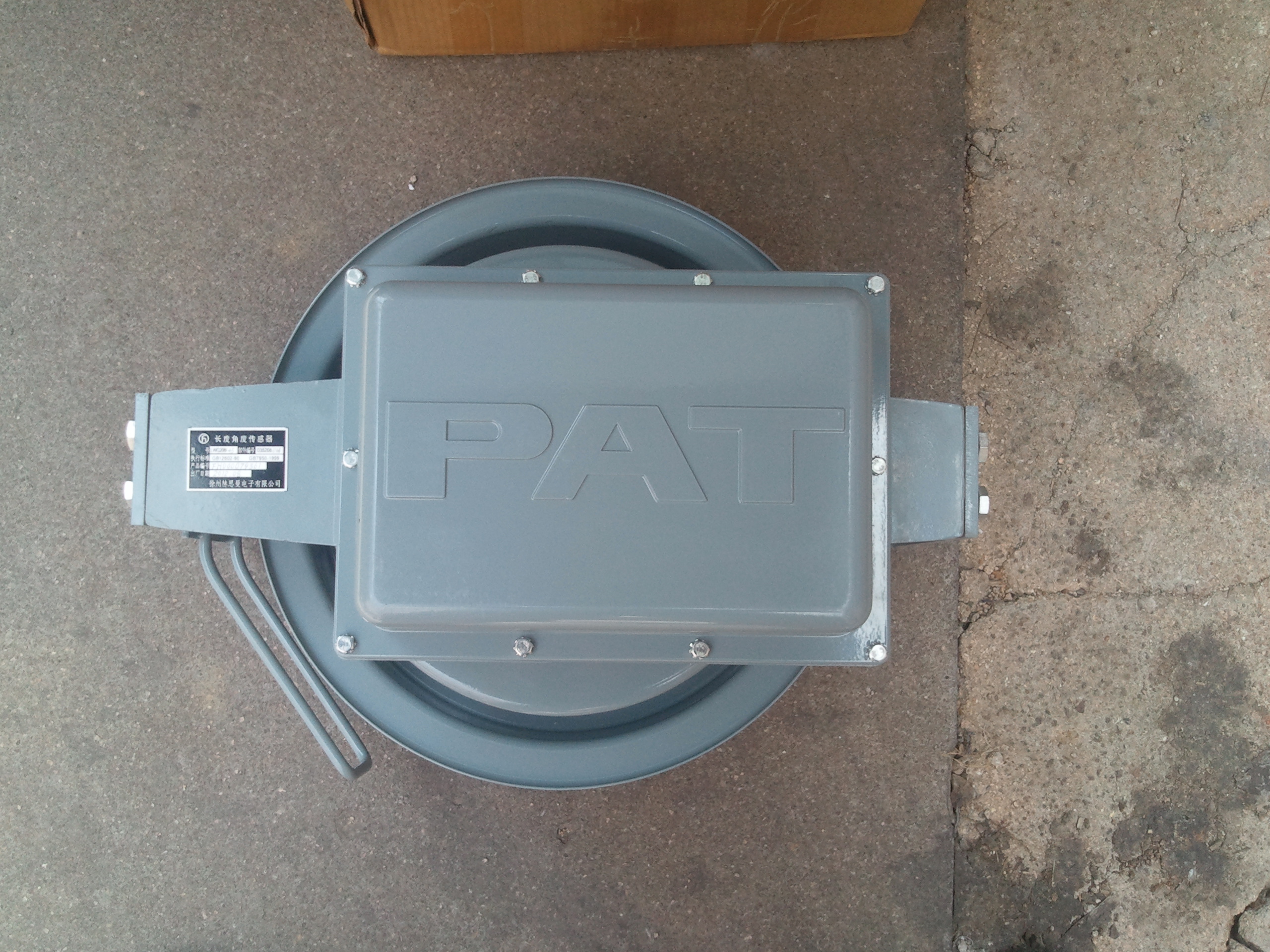
Length and angle sensor designated LWG208. Sensing components must be compared by connector type, output signal and mounting geometry, not by appearance alone.
Two conclusions follow. First, the electrical group (indicator, display, sensor) is a chain: a display that physically installs but does not exchange data with the indicator leaves the crane in a restricted or non-operational state. Second, the chassis group (steering unit and similar) is matched by part number and hydraulic interface, and is largely independent of the boom-side comparison. Comparing the two groups in one price column hides both facts.
A workable comparison rule: for every line item, require the supplier to state the original part number it replaces, the equipment model and tonnage band it serves, and the mating dimensions or connector specification. If a quotation lists only a generic description such as "hydraulic seal kit", it cannot be compared — only priced.
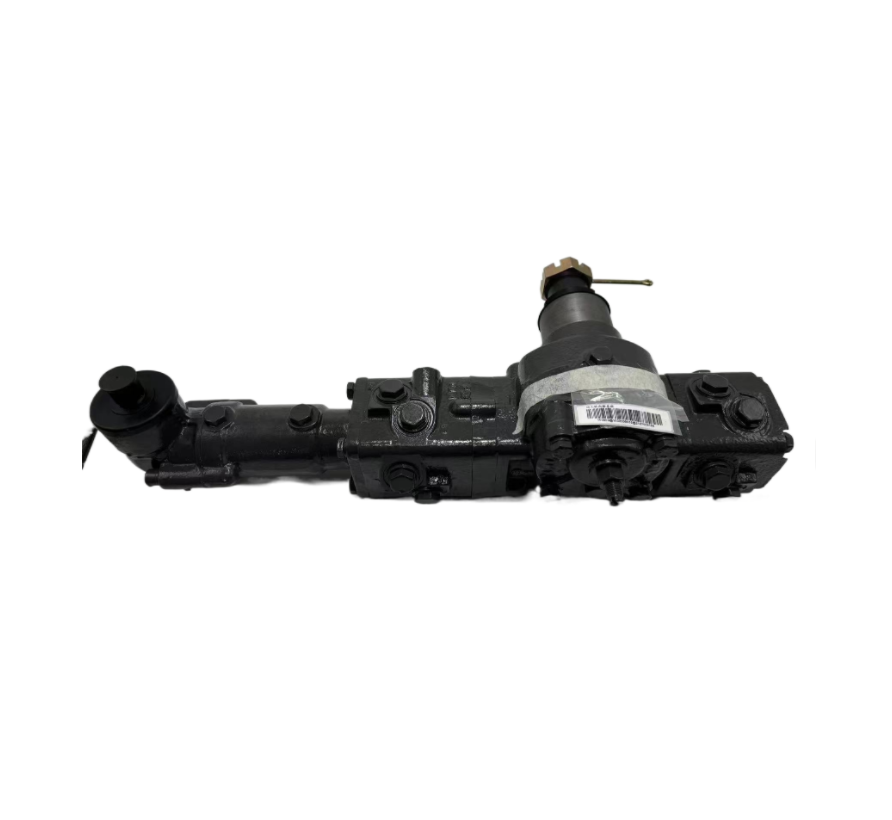
Steering unit 1032300052. Chassis hydraulic parts should be compared by part number, port configuration and pressure rating before delivery terms are discussed.
A System-by-System Comparison Framework
The table below is the structure a buyer can apply to any China truck crane parts supplier, including this one. It converts a price list into a comparison matrix by attaching an evidence requirement and a consequence to each system group.
| System group | What to compare | Evidence to request | If skipped |
|---|---|---|---|
| Structural load path (pins, boom components, pulley blocks) | Alloy steel grade, toughness and anti-fatigue statement, dimensional tolerance | Material description, dimension drawing, part number cross-reference | Premature fatigue, pin and bore wear, boom-side rework |
| Hydraulics (valve bodies, pipe fittings, seals, buffers) | Cast/forged body integrity, pressure and corrosion resistance, seal compound | Pressure-holding test record, seal material specification | Leakage, pressure loss, repeated seal replacement |
| Electrical and control (LMI, displays, sensors, controllers) | Model match, connector type, signal compatibility, configuration data | Photo match against original item, configuration or calibration note | Installed but non-communicating unit, safety function unavailable |
| Chassis and driveline (steering units, clutch, gearbox parts) | Part number accuracy, port and spline geometry | Cross-reference list, dimensional confirmation | Fit failure at installation |
| Safety devices (indicator systems, limit switches) | Function, mounting, regulatory context in the buyer's market | Function description plus buyer-side verification plan | Compliance exposure during inspection or audit |
Where a China-Made Set Stops Short
A neutral comparison has to state the boundary, and this one has three that buyers should plan around.
First, tonnage coverage is not model coverage. A range stated as fitting 20 to 150 ton truck cranes describes the band, not every variant inside it. Within one tonnage, XCMG, SANY and Zoomlion have produced multiple series with different boom configurations, control architectures and serial-specific revisions. Interchangeability must be confirmed part number by part number, and a generic tonnage statement should never be accepted as a fit confirmation.
Second, electronic and safety-related items carry a calibration burden that mechanical parts do not. A replacement indicator, display or sensor may require configuration to the specific machine before it functions correctly, and the responsibility for confirming that the assembled system still performs its rated-capacity limiting function sits with the operator and the inspecting authority, not with the parts supplier. Standards such as EN 13000:2010+A1:2014 in the European Union and ASME B30.5-2021 in the United States define the safety expectations for mobile and truck cranes; purchasing a replacement part does not by itself establish conformity with either.
Third, material upgrades do not change rated capacity. Higher-toughness alloy steel in a pin or pulley block improves durability, but no substitution should be treated as a capacity change. Where a part interacts with a load-holding or load-limiting function, substitution decisions belong to an engineer, not to a purchasing comparison.
Purchasing Terms and Acceptance Criteria: Questions to Put in Writing
Most disputes in cross-border parts procurement are documentation disputes, not quality disputes. The following questions are worth resolving before the purchase order is issued, because they convert supplier statements into checkable commitments.
- Part-number mapping: for each line, which original part number is replaced, and which crane model and tonnage band does it serve?
- Material declaration: which component families use alloy steel, cast or forged steel, and which use rubber, polyurethane or polymer materials?
- Dimensional verification: can critical dimensions be confirmed against a drawing or a sample before bulk shipment?
- Electrical configuration: for indicator, display and sensor items, what configuration or calibration information is supplied with the unit?
- Inspection and acceptance: what inspection is performed before packing, and what record accompanies the shipment?
- Packaging and labeling: how is each item labeled so that it can be reconciled against the packing list on arrival?
- Commercial terms: what are the stated lead time, warranty scope, and the process for a non-conforming item?
- Market-specific documentation: which documents can be provided for the buyer's inspection or customs context, and which cannot?
Testing the Supplier Story: Qingdao Top Run Against the Criteria
Qingdao Top Run International Trade Co.,Ltd is a Qingdao-based supplier of China-made construction machinery spare parts, established in 2004, whose business focuses on the export of those parts. It supplies spare parts for Chinese brands including XCMG, Sany, Zoomlion, Lingong, Liugong, Shantui, Lovol, Weichai, Cummins, Shangchai and Yuchai, with truck crane parts for XCMG, Sany and Zoomlion among its main products.
The verifiable operating facts are concrete: a 2,000-square-meter warehouse, a 150-square-meter office, a team of 20 employees, a research and development team of four engineers, and a stated annual production capacity of 500,000 units. The company reports a 100% export orientation, with markets covering Africa, Southeast Asia, the Middle East, Latin America and Russia. Those facts describe scale and reach; they do not by themselves prove part-level fit, which is why the comparison framework above should still be applied line by line.
That is the correct way to treat any advantage claim, including this one: as a hypothesis with evidence attached or not attached. A warehouse of that size supports stock availability and consolidated shipment of mixed-brand orders, which matters for a fleet running XCMG, SANY and Zoomlion machines on one site. It does not confirm that a specific HC4900 or LWG208 unit matches a specific machine. The four-engineer team is relevant to configuration questions on indicator and display items; it is not a substitute for a written configuration note. Buyers should request the part-number cross-reference, the material declaration and the pre-shipment inspection record, then judge.
Market Context: Why Parts Comparison Is Becoming More Structured
Three trends push procurement toward system-level comparison. The first is installed-base ageing: Chinese-brand cranes exported in volume now sit outside warranty, so the replacement decision moves from the dealer to the fleet's own procurement team. China's crane export value of USD 5.98 billion in 2024, at 34.3% of global crane exports according to OEC, indicates the scale of that installed base; India alone accounted for USD 709 million of Chinese crane exports in 2024, the largest single destination.
The second is supplier concentration on the OEM side. XCMG Group held an 8.2% global market share in truck-mounted cranes as of 2024 according to Market Intelo, while SANY Group reported international revenue of USD 10.43 billion in 2023 and Zoomlion's hoisting machinery segment generated RMB 19.29 billion in 2023. Large, globally distributed OEM fleets mean spare parts demand is spread across many markets simultaneously — and so is the aftermarket supply that serves it.
The third is the safety-electronics trend. Load Moment Indicator systems are increasingly mandated by safety regulations to prevent overloading and tipping, according to market research on the LMI segment. As indicator and display functions move from optional to regulated, the electrical group inside a parts set stops being a convenience category and becomes an inspection item. In parallel, the global industrial hydraulic equipment market — the component base that valve bodies, pumps and seals belong to — was valued at USD 37.5 billion in 2024 according to Custom Market Insights, reflecting sustained demand for hydraulic replacement content across construction machinery.
Future Outlook
For buyers, the practical direction is documentation-led procurement. Price comparison will remain necessary but will increasingly be treated as the last filter rather than the first, because the cost of a mis-matched electrical or hydraulic item exceeds the saving on the part. Suppliers that can produce part-number cross-references, material declarations and inspection records on request will be easier to qualify than suppliers that compete only on quotation totals.
For the parts range itself, the likely evolution is deeper coverage within existing tonnage bands rather than simple expansion upward: more serial-specific variants, more configuration data attached to electronic items, and clearer separation between mechanical, hydraulic and control components in catalogue structure. Buyers evaluating a supplier today can prepare for that by building the comparison matrix now and using it as the standing request list for every subsequent order.
FAQ
What does a China-made truck crane parts set cover for XCMG, SANY and Zoomlion cranes?
A set of this type covers truck cranes in the 20 to 150 ton range and the full tonnage range of mainstream tire cranes, and belongs to the XCMG truck crane parts, SANY truck crane parts and Zoomlion truck crane parts categories. It includes load-bearing structural parts, hydraulic seals, pipe fittings, valve bodies and shock-absorbing parts, and is manufactured in accordance with industry standards and original technical parameters.
Are aftermarket truck crane parts interchangeable with OEM truck crane parts?
Interchangeability is established at part-number level, not at brand level. The parts in this range are described as designed for direct replacement and interchangeable with original equipment from XCMG, SANY and Zoomlion cranes, but the claim applies to specific listed designations and must be confirmed against the machine's model, tonnage band and the original part number it replaces. A tonnage-range statement alone is not a fit confirmation.
Which truck crane hydraulic parts and boom parts should be compared first?
Start with the parts that carry alternating load and are hardest to replace in the field: pins, boom components and pulley blocks in the structural group, and valve bodies, pipe fittings, seals and buffers in the hydraulic group. Load-bearing structural parts such as pins, boom components and pulley blocks are mainly made of high-strength alloy steel for toughness and anti-fatigue performance, while pipe fittings and valve bodies use precision cast steel and forged steel for pressure and corrosion resistance, and hydraulic seals and buffers use wear-resistant rubber and polyurethane.
How do LMI parts such as HC4900 relate to truck crane electrical parts?
They belong to the same functional chain. The indicator or controller, the length and angle sensor, and the display in the cab exchange data, so a component can install correctly and still fail to function if the signal or configuration does not match. In this range, HC4900 is listed with load moment indicator and controller content, LWG208 with length and angle sensor content, and IC4600 and IC3600 with display content. Buyers should request connector and configuration information for these items, and confirm the assembled system's rated-capacity limiting function separately.
How should buyers choose between genuine truck crane spare parts and aftermarket options?
Compare them on the same three dimensions: part-number accuracy against the machine, material and dimensional specification for the function, and the documentation supplied with the shipment. Genuine parts carry an OEM traceability path; aftermarket parts depend on the supplier's cross-reference and inspection records. Neither route removes the buyer's responsibility to confirm that safety-related items function correctly after installation, and standards such as EN 13000 and ASME B30.5 define expectations that a purchase order does not by itself satisfy.
What acceptance criteria should be set before ordering 20–150 ton truck crane parts?
Set criteria that can be checked against a document: a part-number cross-reference per line item, a material declaration by component family, dimensional confirmation for critical parts, configuration information for indicator, display and sensor items, a pre-shipment inspection record, item-level labeling reconcilable with the packing list, and written lead time, warranty scope and non-conformance process. Acceptance should be tied to those records, not to the supplier's general description of capability.
Product catalogue (public download): Qingdao Top Run catalogue
Supplier reference: Qingdao Top Run International Trade Co.,Ltd, No. 1177, Tuanjie Road, Economic and Development Zone, Qingdao, China.
¿Tiene preguntas o necesita más detalles?
Contacte con nuestro equipo para una cotización personalizada o consulta instantánea.
Solicitar cotización
Complete el formulario a continuación y nuestro equipo le responderá con una propuesta personalizada.
Chat directo de WhatsApp
¿Prefiere chatear en tiempo real? Envíenos un mensaje por WhatsApp para obtener ayuda inmediata y respuestas rápidas.
- Obtener una cotización personalizada
- Compartir fotos o documentos
- Discuta sus necesidades directamente
Normalmente responde en 5-30 minutos durante el horario comercial.