
Transformer Shortlist for Utility, Solar and Wind Projects
Transformer Shortlist for Utility, Solar and Wind Projects
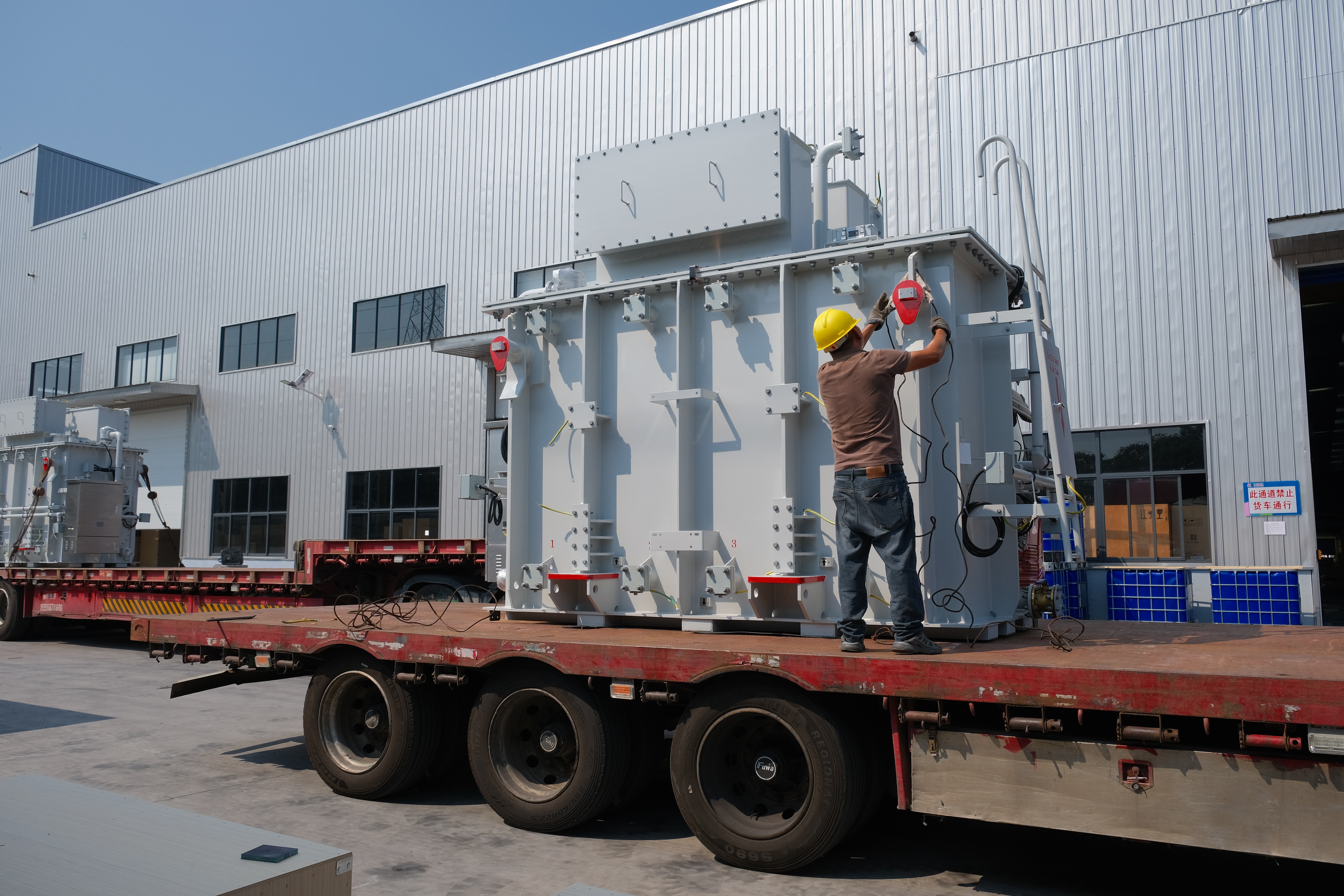
For utility, solar and wind projects, transformer selection is a role decision before it is a product decision. A single-phase pole-mounted unit feeding an overhead lateral, a 35 kV oil-immersed transformer stepping down at a distribution substation, a three-phase pad-mounted unit serving an underground distribution loop and a 110–500 kV power transformer connecting a generating plant to the transmission network sit at different positions in the same electrical hierarchy. Each position fixes the voltage class, the winding arrangement, the siting constraints and the qualification evidence a buyer should review before a purchase order is issued.
This shortlist organizes five transformer candidates from Jiangsu Dinghong Power Co., Ltd. by those positions. The company is a manufacturer of power transmission and distribution equipment whose portfolio covers high- and low-voltage switchgear, dry-type and oil-immersed transformers, main transformers and containerized substations. The article is written for evaluation-stage buyers who already know their project voltage and duty and need to match a documented option to a defined place in the system, rather than compare unlike units on price alone.
The evaluation problem: unlike units compared as if they were substitutes
In an active tender, quotations frequently arrive as a list of ratings rather than a map of system positions. A 2,500 kVA pad-mounted unit and a transmission-class power transformer cannot substitute for one another, yet both can land in the same comparison spreadsheet because both carry a kVA figure. The comparison then rewards the wrong attribute, and the technical review has to restart after the commercial shortlist has already been narrowed.
Three mismatches account for most of that rework. The first is voltage class against system voltage and insulation coordination: a unit built for a 35 kV position is not a substitute at 110 kV, and a distribution unit is not a substitute for a substation transformer even where the capacity appears adequate. The second is insulation medium and enclosure against siting: oil-immersed equipment implies oil containment, fire separation and outdoor or dedicated indoor provisions, while a dry-type unit is the conventional choice inside an occupied building. The third is qualification scope against market: a certificate covering one product family does not automatically extend to every model in a manufacturer's catalogue, and the scope wording matters as much as the certificate number.
A role-first shortlist addresses all three at once. It fixes the position in the system before the unit is compared, so that voltage class, phase configuration, insulation medium and qualification scope are evaluated as fit criteria rather than as afterthoughts.
Selection criteria applied in this shortlist
Six criteria determine which option belongs to which project. They are listed in the order in which they usually eliminate candidates, which is also the order in which a technical reviewer can defend the decision.
- Electrical role. Distribution transformer, substation step-down unit or transmission-level power transformer. This single distinction removes most impossible matches.
- Voltage class. The option must match the system voltage at the point of connection, including the insulation level specified for that point.
- Phase and winding configuration. Single-phase or three-phase, and — for larger units — two-winding, three-winding or autotransformer arrangements with the associated vector group.
- Insulation medium and siting. Oil-immersed, dry-type or pad-mounted construction, matched to indoor or outdoor installation, clearance and access.
- Duty and load profile. Continuous loading, cyclic loading, harmonic content and expected load growth, which together drive capacity margin and loss evaluation.
- Qualification and delivery. Certification scope for the target market, testing regime, documentation and the production lead time available within the project schedule.
| Criterion | What the buyer confirms | Why it changes the shortlist |
|---|---|---|
| Electrical role | Position of the unit in the single-line diagram | Separates distribution candidates from the transmission-level option |
| Voltage class | System voltage and specified insulation level at the connection point | Eliminates options whose class does not match |
| Phase and windings | Single-phase or three-phase; winding arrangement; vector group | Removes the pole-mounted option from three-phase duty |
| Medium and siting | Indoor or outdoor, oil containment, clearance, access | Decides between oil-immersed and dry-type construction |
| Duty and losses | Load profile, growth allowance, loss evaluation method | Sets the required rating within a chosen series |
| Qualification and delivery | Certificate scope, test reports, lead time, documentation | Confirms the option is orderable for that market and schedule |
The shortlist at a glance
The table maps each option to its voltage class and its distribution or power transformer role. Voltage classes below follow the model and series designations recorded in the supplier's portfolio; the exact ratio, impedance, tap range and cooling arrangement for a given order are set on the approved datasheet and nameplate.
| # | Option | Voltage class | Transformer role | Strongest fit |
|---|---|---|---|---|
| 1 | FP-SPT-15 single-phase pole-mounted transformer | Single-phase distribution class; rating per order | Distribution | Overhead single-phase laterals and rural utility loads |
| 2 | S-800/35 oil-immersed transformer | 35 kV | Distribution / substation step-down | 35 kV substations and collector step-down |
| 3 | FP-PM-75 three-phase pad-mounted transformer | 15 kV, 25 kV, 35 kV | Distribution | Underground three-phase distribution and data centre yards |
| 4 | FPSC-B dry-type transformer | 35 kV dry-type series in portfolio; rating per order | Distribution | Indoor, oil-free electrical rooms |
| 5 | FPPT2 power transformer | 110–500 kV | Power transformer | Transmission interconnection and plant step-up |
Option 1 — FP-SPT-15 single-phase pole-mounted transformer
The FP-SPT-15 occupies the overhead single-phase distribution level, where the unit steps voltage down close to the load it serves and where mounting height, weight and single-phase configuration matter more than capacity. For utility programmes that still operate overhead laterals, rural service drops and small single-phase distributed loads, it is the natural entry point of the shortlist.
The decisive boundary is phase configuration. It is a single-phase device, so three-phase duty — a data centre yard, an industrial feeder or a collector substation — moves the requirement to Options 2, 3 or 4. The supplied certification record documents UL scope for the oil-immersed transformer line, the dry-type transformer line and a switchboard product; it does not list a pole-mounted scope. Listing status for this model in a specific market should therefore be confirmed from the order documentation rather than assumed from the wider portfolio.
Option 2 — S-800/35 35 kV oil-immersed transformer
The S-800/35 is the 35 kV oil-immersed transformer in this shortlist and sits at the distribution-to-substation boundary: on the load side of a 35 kV feeder, or at a 35 kV substation stepping down to the utilisation voltage. In the shortlist description it is a two-winding unit with on-load tap changing; because the transformer family also supports off-circuit tap changing as a customization option, both the winding arrangement and the tap changer type should be stated explicitly in the specification and confirmed on the datasheet rather than inferred from the model code.
Qualification evidence is the strongest part of this entry. Two UL certification records in the supplied documentation apply to the oil-immersed transformer scope: UL-US-2563812-0, issued 16 June 2025 against IEEE C57.12.20 and IEEE C57.12.00, and UL-US-2554252-0, issued 13 February 2025 against IEEE C57.12.00 and IEEE C57.12.28. A CE certificate, M.2025.206.C121882, covers the oil-immersed transformer scope against EN 60076-1:2011, EN 60076-2:2011 and EN 60076-14:2013, with an expiry date of 7 January 2030. Both UL records relate to the same 35 kV oil-immersed model under different standard sets, so a buyer should cite the record that matches the standard called for in the project specification.
Fit boundary: oil-immersed construction implies oil containment, fire separation and outdoor or dedicated indoor provisions, and an on-load tap changer adds a mechanical assembly that needs maintenance attention over the service life. Where the project cannot accommodate liquid dielectric at the point of use, the requirement moves to Option 4.
Option 3 — FP-PM-75 three-phase pad-mounted transformer
The three-phase pad-mounted series is the three-phase distribution workhorse of this shortlist. Documented series data covers 11 standard ratings from 75 kVA to 2,500 kVA with high-voltage levels of 35 kV, 25 kV and 15 kV. The same documentation states series efficiency above 99%, rising from 99.03% to 99.53% as rated capacity increases, in compliance with the U.S. DOE (2016) efficiency standard.
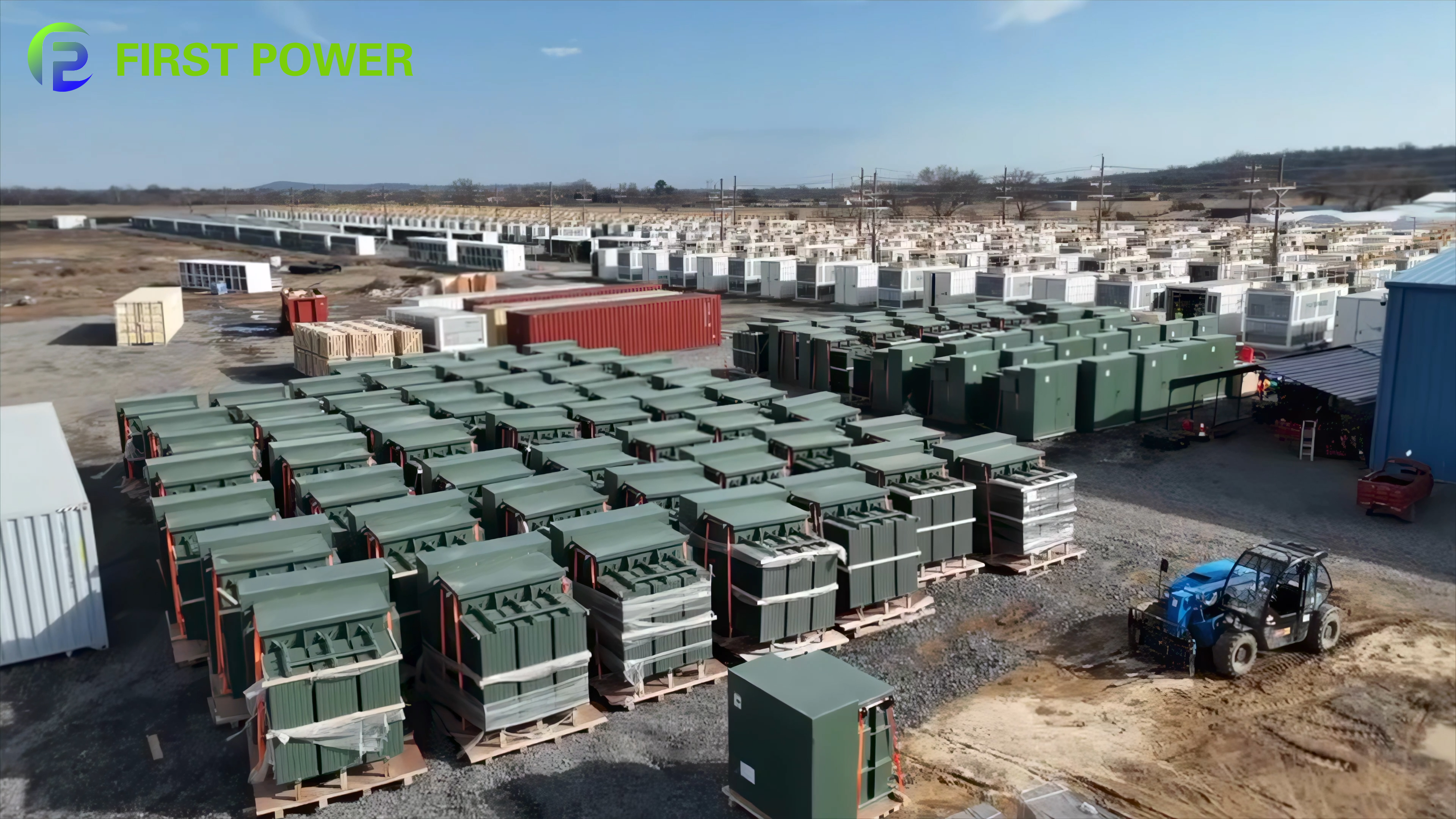
The application evidence behind this option is a data centre reference: more than 200 units installed for a U.S. data centre client, with a 40-year service duration recorded for the application. High efficiency, low loss and a compact structure are the characteristics cited as the fit drivers, and the compact structure and low-loss design are described as supporting space-constrained data centre electrical installations. Because efficiency in the series rises with rated capacity, the loss evaluation for a specific project should be calculated at the rating actually specified, not at the top of the range.
Fit boundary: a pad-mounted unit is distribution-class equipment. It does not replace a substation power transformer, and site layout — pad standards, clearances, access for cable termination and ventilation — remains a project responsibility. Where the 15 kV, 25 kV or 35 kV level in the project matches the series, the option is directly comparable; where the connection point is at transmission voltage, the requirement moves to Option 5.
Option 4 — FPSC-B dry-type transformer
The dry-type option covers installations where liquid dielectric is deliberately kept out of the electrical space. Two qualification documents in the supplied record apply. UL 1561 certification is held under certificate UL-US-26127184-0, issued 28 July 2026 by UL LLC with the scope recorded as dry type transformer. CE certificate FQC2530404 covers EN 60076-1:2011 and EN IEC 60076-11:2018, with an expiry date of 24 July 2030.
The customization set is what decides whether a dry-type unit fits a given room. Electrical parameters include rated capacity, high-voltage and low-voltage levels, frequency, vector group, impedance, tap range and winding material. Insulation and thermal parameters include insulation class F or H, temperature rise, declared partial discharge level, AN or AF cooling, thermal protection and temperature monitoring. Mechanical parameters include enclosure type, IP rating, indoor or outdoor configuration, cable entry direction, terminal arrangement, installation dimensions, wheels or rollers and anti-vibration pads. The accessory list covers temperature controllers, PT100 sensors, cooling fans, fan control systems, high-voltage surge arresters and protection enclosures.
Fit boundary: a dry-type unit earns its place where the installation is indoor, enclosed or otherwise unsuitable for oil, and where the enclosure, IP rating and cooling arrangement can be matched to the room. Where the transformer stands in an outdoor pad or a substation yard, the oil-immersed and pad-mounted options remain the conventional answers. Site ambient temperature and altitude should always be checked against the declared ratings, because those values are only valid for the conditions they are stated for.
Option 5 — FPPT2 110–500 kV power transformer
The power transformer family covers the transmission-level end of the shortlist. The portfolio records an example configuration of 120 MVA at 110/10.5 kV in a two-winding arrangement, which illustrates the scale of the class rather than a standard catalogue rating. These units are engineered per project: rated capacity, high-voltage, medium-voltage and low-voltage levels, number of windings (two-winding, three-winding or autotransformer), vector group, impedance, tap range, on-load or off-circuit tap changing, BIL and insulation level, core and winding material, no-load and load losses, temperature rise, noise level, cooling method, bushings, conservator, pressure relief device, oil level and temperature indicators, Buchholz relay, online monitoring, seismic design and installation layout are all part of the customization envelope.
The reference case behind this option is a U.S. aerospace and space technology client that took four transformer units for power generation and power transmission duty. The record cites low no-load and load losses, high short-circuit withstand capability as a measurable electrical performance parameter, and a documented 25-year service duration. Those characteristics matter at transmission level because losses are evaluated over decades and short-circuit withstand is a design input rather than a margin.
Fit boundary: power transformers cannot be substituted down into distribution positions, and they are not schedule-neutral. Impedance, loss evaluation, transport limits, seismic requirements and grid-code studies drive the design, so the option belongs in the evaluation once the interconnection voltage and capacity are fixed, not before.
Matching the options to utility, solar, wind and industrial projects
The shortlist is most useful when it is read against a project's single-line diagram. The table shows the common positions; each line depends on the voltage actually specified for that project.
| Project situation | Position in the system | Shortlisted option | Confirmation point |
|---|---|---|---|
| Utility overhead single-phase laterals | Distribution | Option 1 | Rating, mounting, protection, market listing status |
| Utility three-phase underground distribution | Distribution | Option 3 | 15/25/35 kV match, kVA, pad layout |
| 35 kV substation step-down | Distribution / substation | Option 2 | Tap range, impedance, cooling, applicable standard |
| Indoor station with oil-free requirement | Distribution | Option 4 | Enclosure IP rating, ambient, partial discharge level |
| Solar collector step-down at 35 kV | Distribution / substation | Option 2 | Specified collector voltage and duty cycle |
| Solar or wind interconnection | Power transformer | Option 5 | MVA, ratio, BIL, impedance, grid-code studies |
| Industrial site distribution | Distribution | Options 3 and 4 | Load profile, siting, expansion allowance |
Utility projects spread across the whole shortlist. A distribution programme may use the pole-mounted unit on overhead single-phase laterals, the pad-mounted series where the same network is undergrounded in three-phase, and the 35 kV oil-immersed unit at substations. A transmission or interconnection programme moves to the power transformer option, where each unit is engineered against grid studies.
Solar projects usually split the transformer package into a collector-level group and an interconnection unit. Where the collector system is specified at 35 kV, Option 2 matches the voltage class. Where the distribution level in the project is 15 kV, 25 kV or 35 kV and the units are pad-mounted, Option 3 covers the series ratings up to 2,500 kVA. Where the station building requires an oil-free indoor unit, Option 4 applies. The interconnection transformer is Option 5 at 110–500 kV. None of these options can be substituted across classes; the match is made by the specified voltage, not by preference.
Wind projects follow the same logic with a different physical layout. Where collection and step-down are distributed across the site, pad-mounted and dry-type units carry the distribution position; where the project uses a prefabricated or containerized station, the transformer is specified together with switchgear, monitoring and cooling inside the enclosure, which is the configuration the company supplies as E-House prefabricated substations. The interconnection step remains a power transformer decision.
Industrial projects generally land on Options 3 and 4, with Option 2 where the site takes a 35 kV supply. The deciding questions are the same: voltage class at the connection point, whether oil is acceptable at the location, and how much load growth the rating must absorb.
Fit boundaries: where each option stops being the right answer
- Option 1 is single-phase distribution equipment; it does not serve three-phase loads or substation positions.
- Option 2 is a 35 kV oil-immersed unit; it does not extend to transmission voltages, and its siting must accommodate oil.
- Option 3 is pad-mounted distribution equipment rated up to 2,500 kVA in the documented series; it does not replace a substation power transformer.
- Option 4 is the indoor, oil-free choice; it is not the conventional answer for an outdoor pad or yard position.
- Option 5 is project-engineered transmission equipment; it is not schedule-neutral and cannot be treated as a catalogue item.
Commercial boundaries sit alongside the technical ones. The minimum order quantity for these transformers is one unit, and standard production lead time is quoted at 6–12 weeks, with the final schedule determined by product specifications and order quantity. A project that needs equipment earlier than that window should adjust the specification or the construction sequence rather than assume the schedule will compress.
Pairing transformers with switchgear and the wider electric machinery and equipment package
Transformer selection rarely stands alone. In substations, data centres and renewable collector stations, the transformer is specified alongside medium voltage switchgear, low voltage distribution, protection and control, and the standards that define those items are separate from transformer standards. UL 1558 covers metal-enclosed low-voltage power circuit breaker switchgear assemblies, and one published description of the standard places its scope at nominal AC voltages not more than 1,000 V (UL Standards & Engagement, 2025; ASCO white paper, 2018). UL 891 covers switchboards, UL 845 covers motor control centres, UL 67 covers panelboards and UL 508A governs industrial control panels (UL; Schneider Electric system guides; E-abel, 2026).
Jiangsu Dinghong Power Co., Ltd. supplies both sides of that interface, which matters when a buyer wants one technical contact for the equipment package rather than several. The portfolio lists UL Listed Medium Voltage Switchgear, 15 kV, 27 kV and 38 kV metal-clad switchgear, 38 kV gas-insulated and C-GIS switchgear, medium voltage RMU switchgear, UL 1558 low-voltage switchgear, UL 891 switchboards, UL 845 motor control centres, UL 508A industrial control panels and UL 67 panelboards, alongside pad-mounted, dry-type, oil-immersed and 110–500 kV power transformers. A UL 891 listing is documented under certificate UL-US-26123098-0, issued 10 July 2026, and the quality management system is certified to ISO 9001:2015 under certificate 03423Q51172R0S, issued 22 September 2026 and valid to 22 September 2029.
For U.S. projects the company also offers E-House prefabricated substations that integrate high- and low-voltage switchgear, transformers, monitoring systems and cooling systems within prefabricated containers, drawing on its experience with U.S. E-House implementations for renewable and commercial and industrial power distribution projects. In that configuration the transformer shortlist decision becomes part of a container layout decision, and the unit's dimensions, cooling arrangement and cable entry have to be fixed earlier than in a conventional substation build.
Verification steps before a purchase order
At the evaluation stage, the useful output of this shortlist is a verification list attached to the selected option. The following checks are the ones that most often change a decision.
- Confirm the position on the single-line diagram. Distribution, substation step-down or transmission interconnection, with the system voltage at that point.
- Match the voltage class and insulation level. State the ratio, insulation level and any grid-code requirement in the specification.
- Fix the winding and tap arrangement. Two-winding, three-winding or autotransformer, and on-load or off-circuit tap changing, written out rather than implied by a model code.
- Check certificate scope against the exact model and market. The supplied record lists UL scope for the dry-type transformer under UL 1561 and for the oil-immersed transformer under IEEE C57.12.20, IEEE C57.12.00 and IEEE C57.12.28, plus CE scope for both lines and a UL 891 switchboard listing.
- Recalculate losses at the specified rating. Series efficiency figures are not a substitute for a loss evaluation at the actual kVA and load profile.
- Check site conditions against declared ratings. Ambient temperature, altitude, enclosure IP rating and cooling method all bound the validity of the published values.
- Request the test and documentation package. Routine test reports, plus type tests and special tests where the project requires them.
- Align the delivery window with the construction sequence. Standard production lead time is 6–12 weeks, subject to specifications and order quantity.
Testing, delivery and documentation
Complete debugging and electrical testing are carried out at the factory before delivery, and 100% routine testing is performed before shipment, with type tests and special tests available upon request. For a buyer, that means the acceptance conversation should be about which test reports are required and in what form, rather than whether routine testing happens at all.
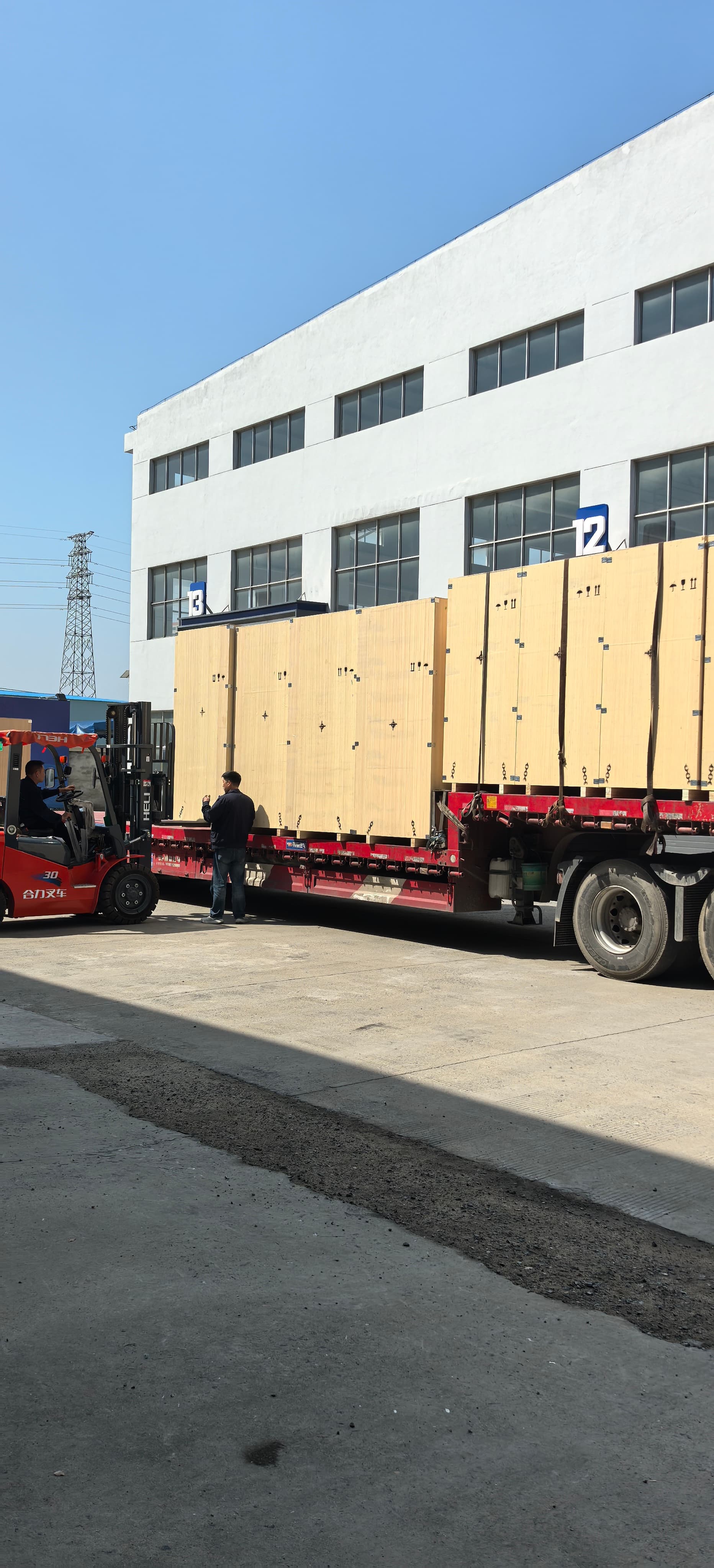
After-sales support covers technical consultation, installation guidance, commissioning support, operation and maintenance guidance, and spare parts supply. The company reports an export share of 80% and lists North America, Latin America, Europe, the Middle East, Southeast Asia, Africa and Central Asia among its markets, with a dual-base operating model of research and development and manufacturing in Hai'an and global marketing in Suzhou. A 20,708 ㎡ factory, 120 employees, 30 engineers and an annual output of 1,000 units describe the production base behind the shortlist.
What this shortlist changes at the evaluation stage
Buyers who reach the evaluation stage rarely need another product description. They need a defensible match between a system position and a documented unit, plus a clear statement of what remains to be confirmed. Read that way, the five options cover the full distribution-to-transmission span: pole-mounted single-phase distribution, 35 kV oil-immersed step-down, three-phase pad-mounted distribution up to 2,500 kVA at 15 kV, 25 kV and 35 kV, indoor dry-type distribution, and 110–500 kV power transformation.
The conditional outlook follows from that structure rather than from any forecast. If a project portfolio shifts toward more renewable interconnection points, the practical effect on this shortlist is additional weight on the 35 kV step-down position and on the transmission-level interconnection unit, because those are the two positions such projects add. The weight is a consequence of where the options sit in the hierarchy; it is not a prediction of demand, pricing or availability, and each project still has to establish its own voltage, duty and qualification requirements before an option can be selected.
Frequently asked questions
Which option in this shortlist fits a 35 kV distribution or collector substation?
The S-800/35 oil-immersed transformer is the 35 kV entry. It sits at the distribution-to-substation boundary and is the two-winding, on-load tap changing option in the shortlist, with the winding and tap arrangement confirmed on the datasheet. Its documented qualification includes UL certification under UL-US-2563812-0 (IEEE C57.12.20 and IEEE C57.12.00) and UL-US-2554252-0 (IEEE C57.12.00 and IEEE C57.12.28), plus CE certificate M.2025.206.C121882 against EN 60076-1, EN 60076-2 and EN 60076-14. Where the connection point is at transmission voltage instead of 35 kV, the requirement moves to the 110–500 kV power transformer option.
When is a dry-type transformer the better fit than an oil-immersed unit?
When the installation is indoor or enclosed and the project prefers to keep liquid dielectric out of the electrical space, the FPSC-B dry-type transformer is the fit. Its controllable parameters include insulation class F or H, AN or AF cooling, declared partial discharge level, enclosure type and IP rating, indoor or outdoor configuration, cable entry direction, temperature monitoring with PT100 sensors and a temperature controller, plus high-voltage surge arresters. Certification is documented under UL 1561 (certificate UL-US-26127184-0) and CE certificate FQC2530404 against EN 60076-1:2011 and EN IEC 60076-11:2018. For an outdoor pad or substation yard, the oil-immersed and pad-mounted options remain the conventional choice.
What capacity and voltage range does the three-phase pad-mounted series cover?
Documented series data covers 11 standard ratings from 75 kVA to 2,500 kVA, with high-voltage levels of 35 kV, 25 kV and 15 kV. The series is stated to deliver efficiency above 99%, rising from 99.03% to 99.53% as rated capacity increases, in compliance with the U.S. DOE (2016) efficiency standard. The reference application is a U.S. data centre installation of more than 200 units with a recorded 40-year service duration, where high efficiency, low loss and a compact structure were the fit drivers. Because efficiency varies with rating, a project should calculate losses at the kVA it actually specifies.
What certification evidence is documented for these transformers?
The supplied record documents UL 1561 certification for the dry-type transformer scope (UL-US-26127184-0, issued 28 July 2026) and two UL records for the oil-immersed transformer scope (UL-US-2563812-0 against IEEE C57.12.20 and IEEE C57.12.00; UL-US-2554252-0 against IEEE C57.12.00 and IEEE C57.12.28). CE certificates cover the oil-immersed transformer (M.2025.206.C121882, expiry 7 January 2030) and the dry-type transformer (FQC2530404, expiry 24 July 2030). A UL 891 switchboard listing (UL-US-26123098-0) and ISO 9001:2015 certification (03423Q51172R0S, valid to 22 September 2029) are also documented. Pole-mounted and pad-mounted listing status for a specific market should be confirmed from that model's own order documentation, because the certificate scope wording defines what is covered.
What delivery time and testing should a buyer plan for?
Standard production lead time is quoted at 6–12 weeks, with the final schedule determined by product specifications and order quantity, and the minimum order quantity is one unit. Complete debugging and electrical testing are carried out at the factory before delivery, 100% routine testing is performed before shipment, and type tests and special tests are available upon request. After-sales support covers technical consultation, installation guidance, commissioning support, operation and maintenance guidance, and spare parts supply.
Product and capability documentation is available in the company brochure: download the PDF brochure.
¿Tiene preguntas o necesita más detalles?
Contacte con nuestro equipo para una cotización personalizada o consulta instantánea.
Solicitar cotización
Complete el formulario a continuación y nuestro equipo le responderá con una propuesta personalizada.
Chat directo de WhatsApp
¿Prefiere chatear en tiempo real? Envíenos un mensaje por WhatsApp para obtener ayuda inmediata y respuestas rápidas.
- Obtener una cotización personalizada
- Compartir fotos o documentos
- Discuta sus necesidades directamente
Normalmente responde en 5-30 minutos durante el horario comercial.