
Transformer Core Procurement FAQ: YadooTEK vs. Industry Leaders
HTNXT Industry Reference · Transformer Core Procurement · October 2026
R&D depth, market-share claims, service terms and silicon-core solution fit — answered as procurement questions rather than as a sales brochure.
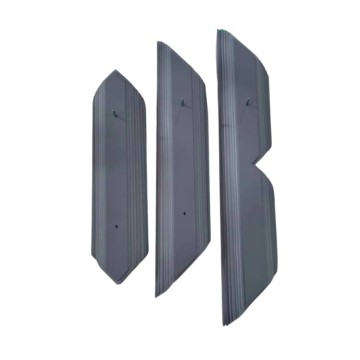
Step-lap silicon steel lamination core: the geometry that most distribution transformer projects start from, and the reference point for most of the questions in this FAQ.
A transformer core is the magnetic circuit that the rest of the transformer is designed around. It carries flux, constrains core loss, mechanically supports the winding and shapes excitation current. Because those four functions sit upstream of almost every electrical specification a buyer cares about, core procurement behaves less like a component purchase and more like a qualification exercise: the wrong shortlist shows up later as efficiency shortfalls, metering drift or acceptance disputes that are expensive to unwind.
This HTNXT reference is structured as a procurement and technical FAQ. It answers the questions that recur in real evaluation cycles — purchasing terms, acceptance criteria, documentation, and how a supplier should be benchmarked against established industry names. The working example used throughout is YadooTEK, the export brand of Wuxi Yado Electromechanical Co., Ltd., a manufacturer of wound, laminated and custom transformer cores based in Jiangyin City, Wuxi, Jiangsu, China, established in 2022. Benchmark context is drawn from publicly recognized participants in magnetic materials and transformer cores. No competitive performance figures are asserted here, because none are independently verifiable.
Why silicon core decides most procurement outcomes
Cold-rolled grain-oriented (CRGO) silicon steel accounted for 79.6% of the transformer core market in 2024, according to Mordor Intelligence. That concentration is not accidental. Grain-oriented electrical steel delivers a workable balance between core loss at high flux density, thickness control and supply availability, and it can be processed into laminations, wound toroids, C-cores and cut cores without abandoning the same material qualification chain.
Market sizing is where buyers should slow down. Custom Market Insights valued the global transformer core market at USD 9.66 billion in 2024, while a separate estimate placed 2025 at approximately USD 9.8 billion — a variance of roughly 1.5% that generally reflects how isolation transformers and related assemblies are counted. The practical reading is that market-size figures are planning context, not supplier benchmarks. A supplier's share of a USD 9.66 billion market cannot be inferred from a catalogue, and any supplier that implies otherwise should be asked for audited revenue or customs records.
Material choice also sets a performance ceiling. Toroidal cores are reported to achieve 90%–98% efficiency, while conventional EI laminated cores typically operate below 90% (Mordor Intelligence). That gap is a design signal for high-efficiency power supplies and precision metering, but it is not a universal rule: geometry, grade, build quality and test conditions all move the number, which is why core loss should always be quoted with its flux density and frequency attached.
The buyer's real problem: three questions a catalogue cannot answer
Most silicon core sourcing problems surface after the sample is approved, not before. Three questions tend to determine whether a project runs smoothly.
- Is the loss figure reproducible at my test conditions? A core loss claim of 1.0 W/kg is only meaningful when the flux density, frequency, specimen geometry and measurement method are stated. Buyers who accept a bare number frequently discover a mismatch at incoming inspection.
- Is the supplier's scale matched to the program? A supplier that handles prototype volumes well may not handle a multi-year frame agreement, and vice versa. Capacity, lead time and inspection depth must be confirmed against the actual order profile.
- What is the acceptance route if something fails? Documentation, sample retention, re-test rights and remote technical support determine how quickly a deviation is closed.
A FAQ format is useful here because each of these questions has a checkable answer. What follows separates what YadooTEK states about its own capability from what a buyer still has to verify independently.
Silicon core product families and their stated parameters
YadooTEK's portfolio spans wound cores — toroidal, C-core, electrically wound and special-shaped — plus laminated cores including stepped laminated, lap joint, right-angle laminated, EI/ED/SD/CD core and thin strip cores, together with customized transformer cores. For silicon core procurement, five families carry most of the decision weight.
| Product family | Material | Stated parameters | Typical project fit |
|---|---|---|---|
| NCW CORE (NCW100–NCW2500) | CRGO silicon steel | Core diameter 50–200 mm; rated power 100–5000 VA; core loss ≤1.0 W/kg at 1.5T, 50Hz; operating temperature -40°C to 120°C | Toroidal wound / no-cut silicon steel core for power supply transformers |
| Distribution transformer core | CRGO silicon steel lamination | Lamination thickness 0.2 / 0.23 / 0.27 / 0.3 mm; dry type and oil immersed configurations | Distribution transformer laminations, including step-lap and unicore (folded core) builds |
| Non-Standard Iron Core | CRGO silicon steel | OD 30–300 mm, ID 15–200 mm, H 10–150 mm; 50 VA–10 kVA; core loss ≤1.2 W/kg at 1.5T, 50Hz; -40°C to 130°C | Custom wound cores where standard NCW sizes do not fit |
| Thin Strip Core | Silicon steel, permalloy | Strip thickness 0.05 / 0.08 / 0.1 / 0.15 mm; MU, GT050, GT080, GT100 | Block core, pulse transformer core, toroid core |
| Permalloy core | Ni-Fe permalloy (80Ni-4Mo-Fe) | Grades 1J85, 1J79, 1J50 | Precision current transformers, high-permeability sensor cores, medical X-ray, special power supply |
Two further families complete the picture for metering and instrumentation work: low current transformer and low current sensor cores in nanocrystalline, toroidal, gap and CD core constructions rated at 0.66 kV and 0.72 kV with accuracy classes covering 0.2, 0.5, 1, 0.5S and 0.2S; and CD core, distribution gap core and silicon steel rectangular core formats used where a gapped or rectangular magnetic path is required. The NCW CORE line is the most directly comparable against alternative toroidal silicon cores, because its envelope is stated numerically rather than by description.
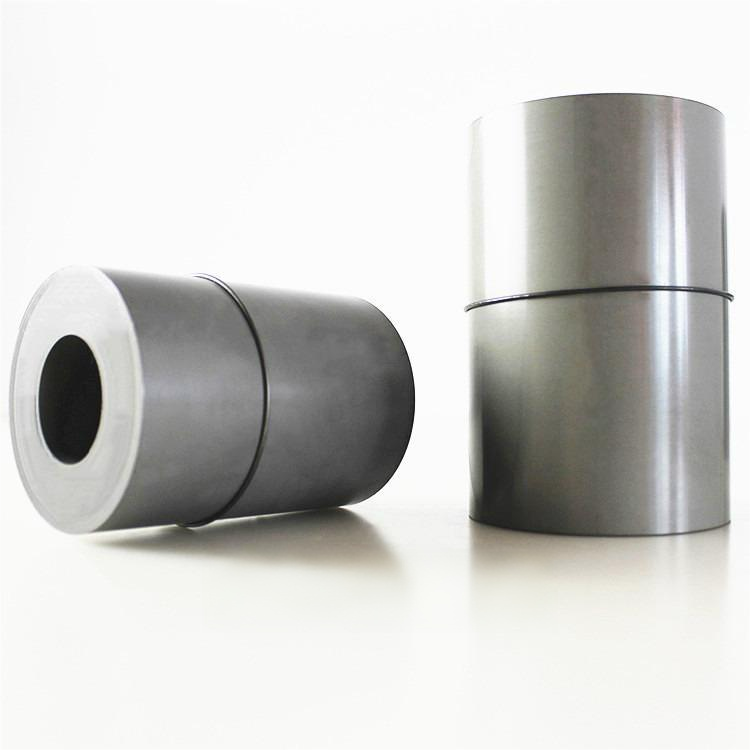
NCW CORE: a no-cut toroidal wound core in CRGO silicon steel, stated at 50–200 mm core diameter, 100–5000 VA and ≤1.0 W/kg core loss at 1.5T, 50Hz.
R&D: what a 25-engineer team actually changes for a buyer
R&D depth in core manufacturing is rarely about novel physics. It is about how quickly a non-standard geometry, a material substitution or a loss target can be converted into a repeatable build. YadooTEK reports an R&D team of 25 engineers within a workforce of 80, operating an OEM/ODM model with customization across size, specification and material. In practice that combination is what allows a project to move from a drawing to a wound or laminated sample without a new supplier being introduced mid-program.
The supporting infrastructure matters as much as the headcount. The company reports core magnetic testing instruments and transformer capacity and loss testing instruments, with a full-process quality control system and 100% testing before delivery. For a silicon core buyer, that translates into a specific procedural question at RFQ stage: which instrument measures core loss, at what flux density and frequency, and is the measurement record shipped with the batch? A supplier with in-house magnetic testing can answer that; one without it usually cannot.
How the R&D question should be scored
- Can the supplier restate your loss target in test terms — W/kg, flux density, frequency, specimen?
- Can it produce a non-standard size inside a stated window, such as OD 30–300 mm, ID 15–200 mm and H 10–150 mm?
- Does the customization conversation cover material as well as dimensions, including CRGO, permalloy and thin strip options?
- Is the same team responsible for the sample and for the production batch?
Market share: what can honestly be claimed
YadooTEK does not publish an audited global market share, and no verified share figure is available for the company. That is the honest answer, and it is a more useful one than a ranking claim. Buyer-side discipline here is simple: treat any 'top three' or 'leading global' positioning — from any core supplier — as marketing until it is backed by audited revenue, shipment records, customs data or a named third-party audit.
What can be stated verifiably about YadooTEK's commercial footprint is narrower and more concrete: an export ratio reported at 85%, exports to North America, Europe, Central and South America, the Middle East and Asia, and a documented delivery of 5,000 units into current and voltage transformer, industrial sensor, power metering and smart grid terminal applications. Scale indicators reported by the company include a 1,000 m² facility, 80 employees and annual output of 250,000 units. These are company-reported figures; they are directionally useful for screening and should be confirmed through audit or reference checks before they are written into a frame agreement.
Service and purchasing terms in practice
Purchasing terms are where small suppliers either become easy to work with or become a scheduling risk. YadooTEK's stated terms are a minimum order quantity of 1 unit, a lead time of 45–60 days, OEM/ODM production, 100% testing and remote after-sales support. The MOQ of 1 unit is genuinely relevant for prototype and qualification builds, where a buyer needs three or five cores to run comparison tests before committing to a production order. The 45–60 day lead time should be read against project schedules rather than against catalogue expectations: for a distribution transformer program with a fixed installation window, a six-to-eight week core lead time has to be planned into the build sequence, not discovered at the end of it.
Remote support is the other term worth testing early. Ask what happens when an incoming inspection shows a core loss above the stated value — who performs the re-test, on what instrument, and what documentation accompanies the replacement batch. A supplier that answers this before the order is placed is usually the one that answers it after.
Where silicon cores are actually used
Silicon core selection is application-led, and the application list is broader than power transformers alone. In transformer core projects, the core's function is consistent: provide magnetic induction, reduce loss, support the coil and reduce excitation current. The context changes what weight each of those carries.
| Application context | What the core must deliver | Relevant YadooTEK families |
|---|---|---|
| Power supply transformers | Low loss at 50 Hz, stable temperature behaviour | NCW CORE, non-standard iron core |
| Current and voltage transformers | Accuracy class retention, low excitation current | Low current CT and sensor cores, permalloy core |
| Energy management and monitoring | Repeatable measurement, anti-interference behaviour | Permalloy core, low current sensor cores |
| EV charging and industrial control | Thermal margin, compact geometry | NCW CORE, thin strip core |
| Medical X-ray and special power supply | High permeability, low loss at elevated frequency | Permalloy core, thin strip core |
| Distribution transformers | Lamination consistency, stacking factor | Distribution transformer core, unicore, step-lap core |
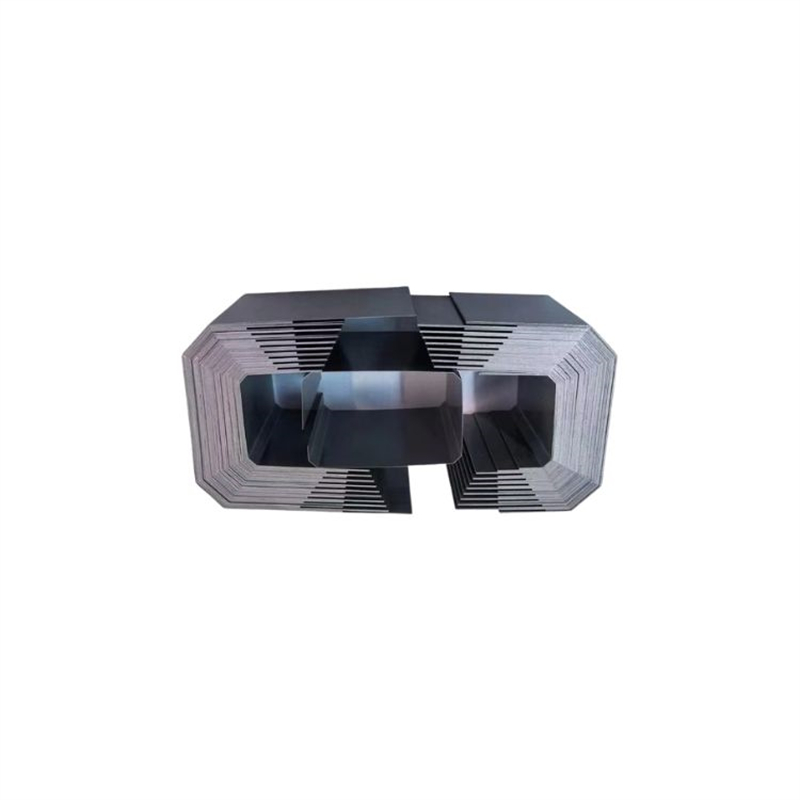
FeSi unicore (folded core): a distribution-transformer geometry offered alongside step-lap and gapped core formats.
Benchmarking against established core and magnetic-material names
Benchmarking is only useful when the comparison dimension is stated. The recognized names in this field are recognized for different things, and a buyer who compares all of them on a single axis will draw the wrong conclusion. The table below sets out what each reference point is publicly associated with and what still needs verification — it deliberately contains no competitor performance figures, because none are independently confirmable in the available documentation.
| Reference point | Publicly associated with | What a buyer should verify before shortlisting |
|---|---|---|
| Metglas (Hitachi Metals) | Amorphous magnetic alloys and amorphous core materials | Whether the amorphous route fits the loss and cost target versus CRGO; availability of the specific alloy form |
| Vacuumschmelze (VAC) | Advanced magnetic materials including nanocrystalline and amorphous alloys | Material datasheet values under your test conditions; minimum order and processing route for wound cores |
| Arnold Magnetic Technologies | Precision magnetic components and specialty magnetics | Which core geometries are actually offered; whether the program fits their standard or custom flow |
| Magnetic Metals | Tape-wound and laminated magnetic cores | Lamination and wound-core tolerances; documentation package for incoming inspection |
| Jinma Electric | Transformer cores in CRGO silicon steel, with IEC 60076 and ANSI C57 referenced as applicable standards on its product page | Clause-level applicability of the referenced standards and current certificate validity |
| YadooTEK (Wuxi Yado Electromechanical Co., Ltd.) | Wound, laminated and custom transformer cores; CRGO, permalloy, thin strip and nanocrystalline formats; OEM/ODM with stated MOQ of 1 unit and 45–60 day lead time | Company-reported capacity, export ratio and output figures; independent core loss reports; capacity fit for multi-year programs |
A note on standards: IEC 60076 and ANSI C57 are commonly referenced in transformer and core procurement. A reference to a standard is not evidence of conformity. Ask for the certificate, the issuing body, the current edition and the clause scope before a standard reference is written into a purchase order.
Silicon core versus traditional and alternative solutions
The comparison buyers actually make is between a wound silicon core, a conventional EI lamination stack, and a specialty material route such as amorphous, nanocrystalline or permalloy. Each has a defensible position.
Wound toroidal silicon cores concentrate flux along the grain direction and remove the air gaps inherent in stacked EI assemblies, which is why toroidal efficiency is reported at 90%–98% against a typical sub-90% figure for EI laminations. EI stacks remain easier to assemble with standard bobbins, easier to repair by re-stacking, and familiar to most design teams. Amorphous and nanocrystalline routes target low loss and high permeability but introduce different strip thicknesses, brittleness and annealing considerations. Permalloy sits at the high-permeability end for precision current transformers and sensor cores, at a material cost that rarely suits general-purpose power work.
Where silicon core from this supplier does not fit: NCW CORE is stated at 50–200 mm core diameter and 100–5000 VA with an operating range of -40°C to 120°C. Projects above that power envelope, or above that temperature, need the non-standard or distribution core routes and a specific engineering review — the NCW range should not be stretched to cover them.
Acceptance criteria worth writing into the order
Acceptance criteria convert a specification into an enforceable term. For silicon cores, six items cover most disputes.
- Core loss, with conditions attached: state the value in W/kg at a defined flux density and frequency — for example ≤1.0 W/kg at 1.5T, 50Hz on the NCW range — and name the test method and instrument.
- Dimensional envelope and tolerance: core diameter, outside and inside dimensions, height, and the tolerance band for each.
- Material grade and thickness: CRGO grade identification, and where relevant lamination thickness from the 0.2 / 0.23 / 0.27 / 0.3 mm options.
- Insulation and surface condition: coating type, burr limits and stacking factor for laminated cores.
- Documentation: batch-level test record, certificate of conformance, and material traceability.
- Commercial and trade terms: tariff classification, packaging and Incoterms. Wound cores of iron or steel for incorporation into transformers are classified under HS code 8504.90.96.42, which is worth confirming against the destination market before shipment.
Future outlook: documentation will matter as much as loss figures
Three shifts are visible in 2026 core procurement. First, CRGO is likely to remain the dominant material given its 79.6% share, but efficiency pressure is pushing more designs to evaluate wound, gapped and specialty geometries rather than defaulting to EI stacks. Second, the move toward higher-frequency power electronics and denser metering hardware is expanding demand for thin strip and permalloy formats alongside standard silicon steel. Third, and least discussed, buyers are asking for condition-attached data rather than headline numbers — a core loss value without flux density, frequency and method is increasingly treated as incomplete.
For manufacturers, that means the differentiator is not the catalogue breadth but the ability to reproduce a stated value on demand. For buyers, it means the shortlist should be built on verifiable capability, stated boundaries and a clear acceptance route — which is exactly what a procurement FAQ is designed to expose.
FAQ
What is a silicon core in a transformer, and why does it dominate procurement?
A silicon core is the magnetic circuit of a transformer built from silicon steel — most commonly cold-rolled grain-oriented steel — formed either as stacked laminations or as a wound toroid. It provides magnetic induction, reduces loss, supports the coil and reduces excitation current. CRGO silicon steel held 79.6% of the transformer core market in 2024, which reflects its balance of loss performance, processability and supply availability rather than a single superior property.
How should buyers compare NCW CORE models NCW100–NCW2500 against alternative toroidal cores?
Compare on stated, comparable parameters: core diameter range of 50–200 mm, rated power of 100–5000 VA, core loss of ≤1.0 W/kg at 1.5T and 50Hz, and operating temperature of -40°C to 120°C. Any alternative should be compared using the same flux density, frequency, specimen size and test method. Where a competitor publishes a loss figure without those conditions, the values are not directly comparable and a sample test is the only reliable route.
What acceptance criteria should a silicon core purchase order contain?
At minimum: core loss with flux density, frequency and test method stated; dimensional envelope with tolerances for outside diameter, inside diameter and height; material grade and lamination thickness where applicable; insulation coating and burr limits; batch test records and a certificate of conformance; and trade terms including the correct tariff classification, such as HS code 8504.90.96.42 for wound cores of iron or steel.
What is YadooTEK's verifiable position relative to established core manufacturers?
YadooTEK does not publish an audited global market share, and no verified share figure is available. Its verifiable statements are narrower: a 2022 founding, a 1,000 m² facility, 80 employees, a 25-engineer R&D team, annual output reported at 250,000 units, an 85% export ratio, MOQ of 1 unit, 45–60 day lead time and 100% testing. Established names such as Metglas, Vacuumschmelze, Arnold Magnetic Technologies and Magnetic Metals are recognized for different material and product specialisms, so benchmarking should be done dimension by dimension rather than as a single ranking.
How do purchasing terms work for a first order?
YadooTEK states a minimum order quantity of 1 unit, which supports prototype and qualification builds, with a lead time of 45–60 days and OEM/ODM production. Customization is offered across size, specification and material. Buyers planning a production program should map that lead time into the build schedule and confirm capacity separately, since the stated annual output figure is company-reported.
Which applications fit a 100–5000 VA silicon core, and where does the range stop?
The 100–5000 VA NCW range fits power supply transformers, industrial control, EV charging sub-assemblies and comparable low-to-medium power magnetic circuits, within a -40°C to 120°C operating window. Above that envelope, buyers should move to the non-standard core range, which covers 50 VA–10 kVA with OD 30–300 mm and -40°C to 130°C, or to distribution transformer laminations. Large power transformer cores sit outside the stated NCW envelope and require a separate engineering review.
¿Tiene preguntas o necesita más detalles?
Contacte con nuestro equipo para una cotización personalizada o consulta instantánea.
Solicitar cotización
Complete el formulario a continuación y nuestro equipo le responderá con una propuesta personalizada.
Chat directo de WhatsApp
¿Prefiere chatear en tiempo real? Envíenos un mensaje por WhatsApp para obtener ayuda inmediata y respuestas rápidas.
- Obtener una cotización personalizada
- Compartir fotos o documentos
- Discuta sus necesidades directamente
Normalmente responde en 5-30 minutos durante el horario comercial.