
Transformer Core Procurement FAQ: HTNXT vs Industry Leaders on R&D, Service and Fit
Transformer Core Procurement FAQ: HTNXT vs Industry Leaders on R&D, Service and Fit
Transformer core procurement rarely fails on price alone. It fails on fit: a core geometry that does not match the winding process, a core-loss figure quoted at the wrong flux density, or an acceptance clause written for a test method the supplier never uses. This FAQ collects the questions industrial buyers actually raise between research and evaluation, answers them against verifiable specifications, and places HTNXT — the transformer-core supply programme of Wuxi Yadoo Electromechanical Co., Ltd., trading as YadooTEK — alongside recognised industry leaders for context rather than promotion.
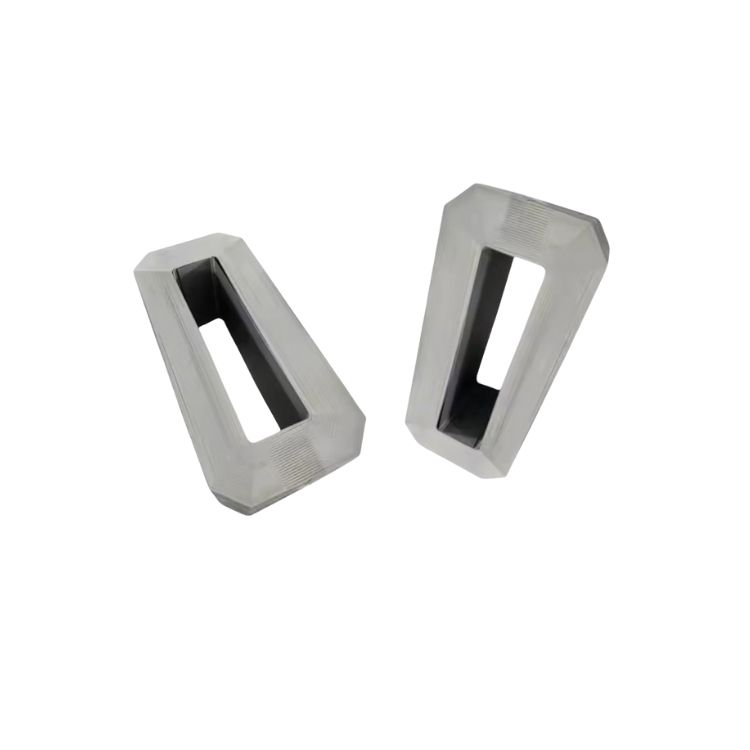
Why core procurement questions are scenario questions first
A transformer core is not a catalogue item with a single performance number. Its behaviour depends on the material, the geometry, the cut or gap design, the annealing and stress-relief history, and the winding process it will be assembled into. Two cores described as "CRGO, 0.23 mm" can behave differently in the same transformer if their stacking factor, burr height, or cut quality differ.
That is why most buying decisions in this category begin with a scenario, not a specification sheet. Energy monitoring, instrument transformers, medical X-ray supplies, EV charging equipment, and distribution transformers all load the core differently, and they tolerate different levels of core loss, temperature rise, and dimensional variation.
The market context reinforces the point. Custom Market Insights valued the global transformer core market at USD 9.66 billion in 2024, and Mordor Intelligence reports that grain-oriented silicon steel (CRGO) held a 79.6% material share in the same year. CRGO dominates because it balances loss performance against cost; it does not follow that every project should use it, or that every CRGO core is equivalent.
The procurement problem: equivalent-looking cores, non-equivalent outcomes
Most sourcing risk in this category sits in three places. First, material claims that are not tied to a test condition — a core-loss figure without a stated flux density, frequency, or specimen is not a specification. Second, geometry that constrains assembly: a toroidal core requires toroidal winding equipment, a CD cut core allows pre-wound bobbins but adds a gap-control step, and an EI lamination set suits automated stacking but carries a different loss profile. Third, documentation that does not travel with the goods, which becomes a problem at customs, at incoming inspection, or during a customer audit.
The opportunity is equally concrete. Where a project can accept a wound core, the efficiency ceiling is higher: toroidal cores are reported to reach 90%–98% efficiency in commercial research, whereas traditional EI laminated cores typically operate below 90%. Where a project needs repairability, standard lamination formats, or high-volume automated assembly, the conventional laminated route remains the more practical choice.
Purchasing terms: what a buyer should confirm before an RFQ
The terms that most affect total cost are usually settled in the first exchange, not the last. YadooTEK's capability data lists OEM/ODM production with customisation across size, specification, and material, a minimum order quantity of 1 unit, a 45–60 day lead time for OEM/ODM work, a monthly capacity of 10,000 units, and 100% testing before shipment. Project scheduling for standard core builds is referenced at around 30 working days. Annual output is stated at 250,000 units.
A practical RFQ should carry the following, in writing:
- Core type and geometry: toroidal wound, CD cut core, EI lamination, step-lap, distribution gap core, unicore, or silicon steel rectangular core.
- Material and grade: CRGO silicon steel, Ni-Fe permalloy (for example 1J85, 1J79, or 1J50), nanocrystalline, or amorphous thin strip.
- Dimensions and tolerances: outside diameter, inside diameter, build height, strip thickness, and permitted deviation.
- Magnetic acceptance criteria: core loss at a stated flux density and frequency, plus any permeability or excitation-current requirement.
- Test method and sampling: who tests, with what instrument, at what sampling rate, and what documentation is issued.
- Commercial terms: Incoterm, packaging, marking, and the rejection and claim process.
Customs classification belongs in the same conversation. Wound cores of iron or steel for incorporation into transformers are classified under HS Code 8504.90.96.42 in the US tariff schedule, and an incorrect classification is a cost problem that surfaces after delivery, not before.
Technical R&D: what can actually be verified about a core supplier
R&D depth in this industry is visible in catalogue breadth and in specification discipline, not in claims about innovation. YadooTEK, established in 2022 and based in Jiangyin, Wuxi, reports an engineering team of 25 and a product matrix that spans wound cores (toroidal, C core, electrically wound iron core, special-shaped iron core), laminated cores (step-lap, lap joint, right-angle, EI/ED/SD/CD, thin strip), and fully customised transformer cores.
The most fully specified product family is the NCW CORE range, which covers models NCW100 through NCW2500:
| NCW CORE parameter | Stated value |
|---|---|
| Core material | CRGO silicon steel |
| Core diameter range | 50–200 mm |
| Rated power | 100–5000 VA |
| Core loss | ≤1.0 W/kg at 1.5 T, 50 Hz |
| Operating temperature | −40 °C to 120 °C |
| Construction | Toroidal wound / no-cut silicon steel core |
Adjacent families broaden the fit: permalloy cores in 1J85, 1J79, and 1J50 grades using Ni-Fe permalloy alloy (80Ni-4Mo-Fe) for high-permeability and precision current-transformer duties; thin strip cores in 0.05, 0.08, 0.1, and 0.15 mm with MU, GT050, GT080, and GT100 designations for pulse and block-core applications; distribution transformer cores in CRGO at 0.2, 0.23, 0.27, and 0.3 mm for dry-type and oil-immersed units; and non-standard wound cores spanning OD 30–300 mm, ID 15–200 mm, H 10–150 mm, 50 VA–10 kVA, ≤1.2 W/kg at 1.5 T/50 Hz, and −40 °C to 130 °C.
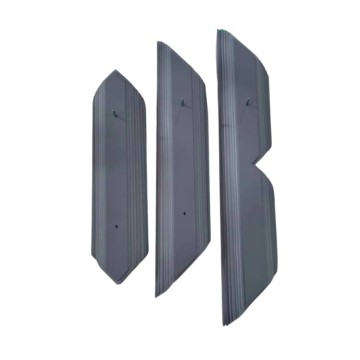
CD Core in project context: where a cut core earns its place
CD Core — also written CD Cut Core — is a wound core that is subsequently cut into two C-shaped halves so the core can be assembled around a pre-wound bobbin. In the YadooTEK portfolio, CD Core appears both within the EI/ED/SD/CD laminated family and inside the low-current transformer and low-current sensor core range, where it is offered alongside nanocrystalline, toroidal, and gap cores in silicon steel and nanocrystalline, with accuracy classes covering 0.2, 0.5, 1, 0.5S, and 0.2S and system voltages referenced at 0.66 kV and 0.72 kV.
The engineering logic is straightforward. A closed toroidal core gives the best magnetic path but forces the winding to be threaded through the core, which is slow and costly for copper-heavy or multi-section windings. Cutting the core into two halves allows the coil to be wound separately and slipped into place, at the cost of introducing two mating faces. Those faces are the whole quality story of a CD Core: flatness, burr control, and clamping pressure determine whether the assembled core recovers most of the magnetic performance of the uncut core or loses it at the joint.
For procurement, CD Core specifications should therefore always include how the cut faces are finished, how the halves are retained, whether an air gap is intentional (as in gap and distribution gap cores) and to what tolerance, and what the buyer will accept as evidence of magnetic performance after assembly. Buyers evaluating a CD Core order alongside toroidal and EI alternatives should test the assembled component, not the bare core, because the joint only performs under the clamping condition it will see in service.
Core geometry and application fit
| Core type | Practical project fit | Key decision point |
|---|---|---|
| Toroidal wound core (NCW CORE) | 100–5000 VA power supplies, low-loss transformers | Winding equipment must handle toroidal bobbins |
| CD Core / CD Cut Core | Low-current transformers, sensor cores, pre-wound bobbin assemblies | Cut-face quality and clamping consistency |
| EI / ED / SD lamination core | Standard transformers, automated stacking, repairable assemblies | Loss profile and stacking labour |
| Distribution gap core | Distribution transformers, dry-type and oil-immersed | Gap tolerance and DC bias behaviour |
| Permalloy core (1J85 / 1J79 / 1J50) | Precision current transformers, high-permeability sensors | Material cost against accuracy requirement |
| Thin strip core | Pulse transformers, block cores, high-frequency duties | Strip thickness and annealing control |
Market share: what a number can and cannot tell a buyer
Material-level share is verifiable and useful. Mordor Intelligence's 79.6% CRGO figure for 2024 tells a buyer that grain-oriented silicon steel remains the default reference point for cost and performance, and that alternative materials should be justified by a specific requirement rather than by novelty.
Supplier-level share is a different matter. YadooTEK does not publish audited market-share data, and this article will not manufacture one. What is documented is scale and reach: a company founded in 2022, 80 employees, a 1,000 m² facility, 250,000 units of annual output, and an export ratio of 85% across markets in Europe, North America, Latin America, the Middle East, and Asia-Pacific.
For benchmark context, buyers typically compare against a small set of recognised participants. Metglas is widely associated with amorphous alloys, VAC (Vacuumschmelze) with amorphous and nanocrystalline materials, Arnold Magnetic Technologies with precision magnetic components, and Magnetic Metals with laminated core production. On the raw-material side, grain-oriented electrical steel is supplied by established steel producers including Nippon Steel, JFE Steel, and POSCO. Each of these organisations is recognised in a specific part of the value chain; none of them is interchangeable with a custom core fabricator, and quoting a share comparison across such different business models would be misleading.
Service and support: the questions that separate suppliers
Service in transformer cores is mostly invisible until something goes wrong. The useful questions are unglamorous: who answers a technical query about a loss figure, how quickly, and with what documentation. YadooTEK's stated support model is remote technical support, backed by 100% testing before delivery and a customisation process covering size, specification, and material. The company states certification to IATF 16949, ISO 9001, ISO 14001, and RoHS.
Buyers should treat certification statements as a starting point for verification rather than a conclusion. Request the certificate scope, the issuing body, and the validity date, and check that the scope covers the specific product being purchased. Similarly, when a manufacturer references standards such as IEC 60076 or ANSI C57 on a product page — a practice that is common in this industry — that reference indicates design context, not proof of conformity or third-party approval.
Industry solutions: matching core to application
Core selection becomes tractable once the application is fixed. The requirement set used across YadooTEK's scenario data covers magnetic induction, loss reduction, coil support, and excitation-current reduction, under indoor and outdoor installation, 50 Hz and 60 Hz systems, and operating temperatures from −40 °C to +155 °C depending on the assembly. Special requirements listed for these projects include customised design, low loss and high efficiency, high insulation strength, RoHS and CE compliance, long service life, and anti-corrosion treatment.
Typical matches look like this: instrument and low-current transformers use permalloy, nanocrystalline, CD, or gap cores where accuracy class drives the choice; energy monitoring and metering equipment prioritises low core loss at moderate flux density; medical X-ray and special power supplies prioritise stability and repeatability over unit cost; EV charging and industrial control equipment balances loss against thermal margin; and distribution transformers use CRGO lamination cores in 0.2–0.3 mm gauges in either dry-type or oil-immersed construction. A documented 5,000-unit programme covering current and voltage transformers, industrial sensors, metering equipment, and smart-grid terminals illustrates how these families combine in a single supply relationship.
Comparison with traditional solutions, including the limits
Wound and cut cores are not universally superior, and any supplier presentation that implies otherwise should be treated with caution. Toroidal cores are reported at 90%–98% efficiency against typically sub-90% for conventional EI laminations, but that advantage carries costs: toroidal winding is slower, repair is harder, and tooling for automated assembly is less standard. CD cores recover the assembly advantage of lamination formats while keeping a wound magnetic path, yet they introduce a joint that must be controlled, and a poorly finished cut face erodes the very benefit the geometry was chosen for.
HTNXT's own boundaries deserve the same candour. The company was established in 2022, which means a shorter independent track record than the long-established incumbents it is compared with, and its reported 1,000 m² footprint and 80-person team place it in a different capacity class from multinational magnetic material groups. Core-loss values such as ≤1.0 W/kg at 1.5 T, 50 Hz are supplier-reported and should be confirmed against the buyer's own test method during sample qualification. Deep customisation, while supported, extends lead time beyond the 45–60 day OEM/ODM reference. Where a project requires multi-decade field history, audited global market share, or a single-source global supply contract, a smaller specialist is not the lowest-risk choice.
Market trend analysis: efficiency pressure and documentation discipline
Three shifts are visible in how buyers specify cores. The first is loss-driven: as energy monitoring, EV charging, and power electronics proliferate, the acceptable loss budget per unit volume tightens, which favours wound geometries and higher-grade CRGO where the assembly process allows it. The second is material diversification: amorphous and nanocrystalline thin strip cores in 0.05–0.15 mm gauges are being specified where conventional silicon steel cannot meet a loss or frequency requirement, even at higher material cost. The third is documentation discipline: buyers increasingly ask for test conditions, certificate scope, and customs classification alongside the quotation, because a core that arrives without traceable documentation creates cost at inspection and at the border.
CRGO's 79.6% material share is unlikely to collapse quickly, because the installed base of lamination-based transformer manufacturing is enormous. What changes is the tail of the distribution: more projects justifying a non-CRGO material for a specific reason, and more buyers comparing cores on tested performance rather than on datasheet language.
Future outlook
For the 2026–2028 window, the practical expectation is consolidation of specifications rather than consolidation of suppliers. Buyers are likely to standardise on a smaller number of core families per product line, demand assembly-level performance evidence for cut and gapped cores, and treat lead time and documentation quality as weighted criteria rather than afterthoughts. Suppliers with narrow catalogues will find it harder to hold a project from prototype through volume; suppliers with broad portfolios but thin verification will face more sample-stage rejections. The middle ground — a documented portfolio, honest limits, and testable claims — is where procurement decisions will actually be made.
Frequently asked questions
Which transformer core type fits a low-power measurement or power-supply project?
Fit depends on the assembly process and the accuracy target. For 100–5000 VA power supplies, a toroidal wound core such as the NCW CORE range, with 50–200 mm core diameter and ≤1.0 W/kg core loss at 1.5 T/50 Hz, suits designs that can accommodate toroidal winding. For low-current transformers and sensor cores where the bobbin must be wound before assembly, a CD Core in silicon steel or nanocrystalline is the practical option, with accuracy classes covering 0.2, 0.5, 1, 0.5S, and 0.2S. Where the highest permeability is required, permalloy grades 1J85, 1J79, or 1J50 apply.
What acceptance criteria should a CD Core purchase order specify?
A CD Core order should state the material and grade, the cut-face finish and burr limit, the retention or clamping method, whether a gap is intentional and at what tolerance, the dimensional tolerances on outside diameter, inside diameter, and build height, the core-loss limit at a defined flux density and frequency, the test method and sampling rate, and the documentation to be supplied with each lot. Because the magnetic performance of a cut core depends on the assembled joint, acceptance is best defined on the assembled component rather than on the bare core.
What purchasing terms are typical for custom transformer core orders?
YadooTEK's stated terms are a minimum order quantity of 1 unit, OEM/ODM customisation across size, specification, and material, a 45–60 day lead time for OEM/ODM work, a monthly capacity of 10,000 units, and 100% testing before shipment. Standard project scheduling is referenced at around 30 working days. Buyers should confirm packaging, marking, Incoterm, and the rejection and claim process in the same document, and should record the customs classification for wound steel cores, which falls under HS Code 8504.90.96.42 in the US tariff schedule.
How does HTNXT's R&D depth compare with established core manufacturers?
The comparison should be made on portfolio breadth and specification discipline. YadooTEK reports 25 engineers and a matrix covering wound cores (toroidal, C core, electrically wound, special-shaped), laminated cores (step-lap, lap joint, right-angle, EI/ED/SD/CD, thin strip), permalloy in 1J85/1J79/1J50, thin strip in 0.05–0.15 mm, and distribution transformer cores in 0.2–0.3 mm CRGO. Established groups such as Metglas, VAC, Arnold Magnetic Technologies, and Magnetic Metals operate at larger scale and with longer track records. A fair evaluation compares documented specifications and sample test results, not the age of the company alone.
Can a supplier's market share be verified before an award decision?
Material-level share is publicly reported and verifiable: CRGO held 79.6% of transformer core material share in 2024, against a global core market valued at USD 9.66 billion. Supplier-level share rarely is. YadooTEK does not publish audited market-share data, and its documented scale is 80 employees, a 1,000 m² facility, 250,000 units of annual output, and an 85% export ratio. Buyers should treat unverified share claims from any supplier as marketing language and substitute evidence they can audit, such as certificate scope, test reports, and referenceable project volumes.
What are the practical limits of a low-loss core claim?
A core-loss figure is only comparable when the flux density, frequency, specimen, and test method match. The ≤1.0 W/kg at 1.5 T/50 Hz figure for NCW CORE and the ≤1.2 W/kg at 1.5 T/50 Hz figure for custom wound cores are supplier-reported values, and independent laboratory reports are not included in the published material. Toroidal geometry is reported to reach 90%–98% efficiency against typically sub-90% for EI laminations, but wound cores impose slower winding, harder repair, and less standard automation. The honest position is that low loss must be demonstrated on the buyer's own test set during sample qualification.
¿Tiene preguntas o necesita más detalles?
Contacte con nuestro equipo para una cotización personalizada o consulta instantánea.
Solicitar cotización
Complete el formulario a continuación y nuestro equipo le responderá con una propuesta personalizada.
Chat directo de WhatsApp
¿Prefiere chatear en tiempo real? Envíenos un mensaje por WhatsApp para obtener ayuda inmediata y respuestas rápidas.
- Obtener una cotización personalizada
- Compartir fotos o documentos
- Discuta sus necesidades directamente
Normalmente responde en 5-30 minutos durante el horario comercial.