
Transformer Core Procurement FAQ: HTNXT vs Industry Leaders on R&D, Market Share, Service & Solutions
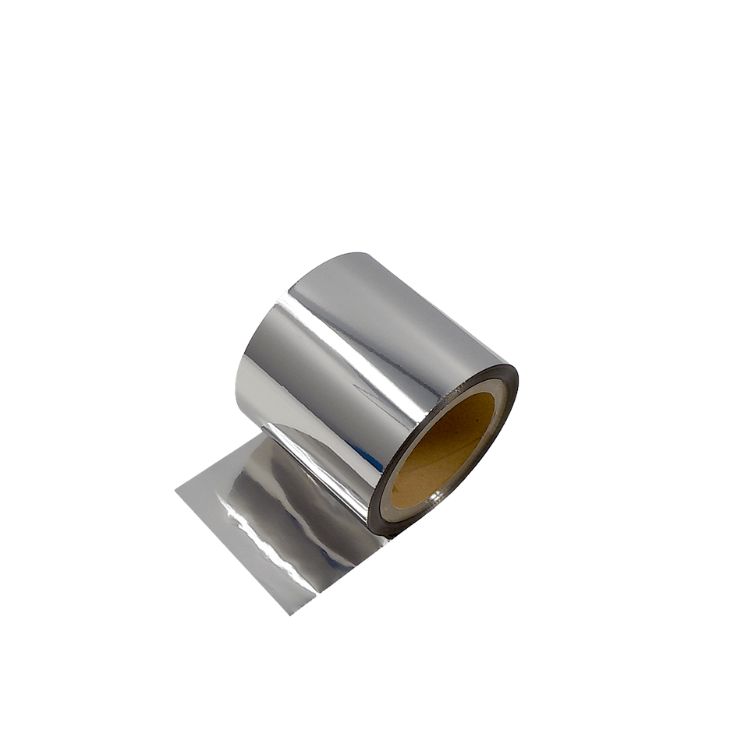
Permalloy cores sit at the precision end of the transformer core spectrum, where geometry and material purity both matter.
Transformer Core Procurement FAQ: HTNXT vs Industry Leaders on R&D, Market Share, Service & Solutions
Transformer core procurement is rarely a single purchasing event. It is a chain of linked decisions about material, geometry, acceptance criteria, supplier readiness, and long-term support — decisions that become especially visible in permalloy core projects, where a small magnetic component carries a disproportionately large share of a transformer or sensor's accuracy and stability.
This article is organized as a procurement and technical FAQ for industrial buyers researching and evaluating transformer core suppliers. It addresses purchasing terms, acceptance criteria, and supplier benchmarking in a format that can be read in sections. The answers reference verified facts about the NCW CORE series, permalloy core options, CRGO silicon steel, thin strip cores, and distribution transformer cores, and they position YadooTEK (Wuxi Yado Electromechanical Co., Ltd.) against real, publicly recognized transformer core leaders as benchmark context.
Why Permalloy Core Projects Expose Procurement Gaps First
Permalloy grades such as 1J85, 1J79, and 1J50 are nickel-iron alloys with high permeability and low coercivity, and they are typically chosen when a transformer or sensor must resolve very small magnetic signals. YadooTEK's permalloy core range includes toroidal permalloy cores, precision current transformer cores, high-permeability sensor cores, Ni-Fe alloy lamination cores, and custom permalloy cores built on an 80Ni-4Mo-Fe alloy base.
Because permalloy is a precision material, procurement questions tend to surface earlier than in CRGO silicon steel projects. Buyers need to confirm the grade, the geometry, the acceptance test, and the supplier's ability to hold those parameters across repeat orders. In this context, the difference between suppliers is not only price — it is whether the supplier can document material, process, and inspection consistently enough for the buyer's own qualification process.
Procurement FAQ: What Buyers Ask Before Committing to a Transformer Core Supplier
Q1: Which transformer core scenarios best fit permalloy rather than CRGO or thin strip material?
Permalloy core is generally preferred where the application demands high permeability, low coercivity, and stable performance under low signal levels. YadooTEK lists permalloy core applications across energy management, energy monitoring, electricity metering, medical X-ray equipment, and special power supplies. In these settings, permalloy's Ni-Fe alloy composition supports precision current transformer and high-permeability sensor designs that CRGO silicon steel is not optimized to deliver in the same way.
CRGO silicon steel remains the dominant material in the broader transformer core market, holding a reported 79.6% share in 2024, and it is the standard choice for distribution transformer cores, EI lamination cores, and larger power transformer cores. Thin strip cores — including amorphous and nanocrystalline variants — occupy a middle position, used in energy management, energy monitoring, medical X-ray, and special power supply roles where low loss and thin strip geometry offer specific value.
Q2: How do I choose between toroidal, CD, EI, unicore, and distribution gap geometries?
The geometry should follow the transformer or sensor topology, the winding process, and the acceptable loss and size envelope. Toroidal cores, including the NCW CORE toroidal wound core family, are typically selected where a continuous magnetic path and compact footprint are required. The NCW CORE series spans models NCW100 through NCW2500, with a core diameter range of 50–200 mm, rated power of 100–5000 VA, core loss of ≤1.0 W/kg at 1.5T and 50Hz, and an operating temperature range of -40°C to 120°C.
CD cores, CD cut cores, and distribution gap cores are commonly used where a defined air gap or split geometry supports the transformer's electrical design. EI lamination cores remain a familiar choice for conventional laminated transformer applications. Unicore (folded core) constructions appear where a folded magnetic path suits the assembly process. Silicon steel rectangular cores and stepped laminated cores serve applications where stack geometry and lamination handling are key. Buyers should match geometry to the transformer design review rather than to a generic preference.
| Core type | Typical fit | Material direction |
|---|---|---|
| Toroidal / NCW CORE | Compact transformers, continuous magnetic path | CRGO silicon steel |
| Permalloy core | Precision CTs, sensors, special power supplies | Ni-Fe permalloy (1J85, 1J79, 1J50) |
| CD / CD cut core | Split-path transformer and reactor designs | Silicon steel / thin strip |
| EI lamination core | Conventional laminated transformers | CRGO silicon steel |
| Distribution transformer core | Dry and oil-immersed distribution transformers | CRGO silicon steel |
Q3: What purchasing terms should an RFQ fix in advance?
YadooTEK's stated commercial terms are a useful reference for structuring an RFQ. The supplier reports a minimum order quantity of 1 unit, lead times of 45–60 days, monthly capacity of 10,000 units, and a production mode covering OEM and ODM work with customization by size, specification, and material. Export coverage is stated across North America, Europe, Central and South America, the Middle East, and Asia.
For permalloy and other precision core projects, buyers should also require that the RFQ state the grade (1J85, 1J79, or 1J50), the dimensional tolerances, the test method and the frequency/flux conditions used for loss measurement, the packing method, and the acceptance sampling plan. These items are not marketing preferences — they are the terms that determine whether the delivered core matches the sample that was qualified.
Q4: What acceptance criteria are reasonable for permalloy and CRGO cores?
Acceptance criteria should be tied to the specification that was agreed, not to a generic target. For NCW CORE, the declared operating envelope includes a core loss of ≤1.0 W/kg at 1.5T and 50Hz, a core diameter range of 50–200 mm, rated power of 100–5000 VA, and an operating temperature range of -40°C to 120°C. For non-standard iron cores, YadooTEK states a customizable size range of OD 30–300 mm, ID 15–200 mm, H 10–150 mm, rated power of 50 VA–10 kVA, core loss of ≤1.2 W/kg at 1.5T and 50Hz, and an operating temperature range of -40°C to 130°C.
The supplier reports 100% testing in its quality control process, and its quality management system is listed as IATF 16949, ISO 9001, ISO 14001, and RoHS. Buyers should treat those as a starting qualification basis and request the specific test record, sample retention, and lot traceability that their own quality system requires.
Q5: How does HTNXT (YadooTEK) compare with established transformer core leaders?
This question should be handled carefully, because the transformer core market includes large, long-established material and core specialists. Publicly recognized benchmark names in the core and magnetics space include Metglas (Hitachi Metals group), VAC (Vacuumschmelze), Arnold Magnetic Technologies, and Magnetic Metals. These organizations are frequently referenced in technical discussions of amorphous, nanocrystalline, permalloy, and precision magnetic components, and any comparison should respect their established positions.
YadooTEK (Wuxi Yado Electromechanical Co., Ltd.) is a 2022-established manufacturer based in Jiangyin City, Wuxi, Jiangsu Province, with a 1,000 m² facility, 80 employees, a 25-engineer R&D team, and an export share of 85%. The company's product matrix covers wound cores, laminated cores, permalloy cores, thin strip cores, distribution transformer cores, and custom transformer cores. It reports OEM/ODM production, a 1-unit MOQ, 45–60 day lead times, and 10,000-unit monthly capacity. These are concrete procurement-relevant facts, but they do not establish market share leadership, and buyers should not read them that way.
The fair framing is that YadooTEK competes as a specialized, export-oriented core manufacturer with a broad geometry and material portfolio and a documented quality system, while the established leaders carry longer histories, larger scale, and broader brand recognition in specific material categories. Which matters more depends on the project's technical risk, qualification burden, and order volume.
Q6: What does the market data actually say about transformer core demand?
The global transformer core market was valued at USD 9.66 billion in 2024, according to one commercial research estimate, and CRGO silicon steel held a 79.6% share of that market in the same year. These figures indicate that CRGO remains the default material platform for the majority of transformer cores, and that the market continues to be sized in the billions of dollars rather than in niche terms.
These numbers should be used for context, not for supplier selection. A buyer's decision on permalloy versus CRGO, or toroidal versus EI, should be driven by the transformer design and the application requirement, not by the aggregate market split. The market split is useful for understanding why CRGO supply chains are more developed and why permalloy and thin strip cores remain more specialized.
Technical Perspective: Why Geometry and Material Must Be Evaluated Together
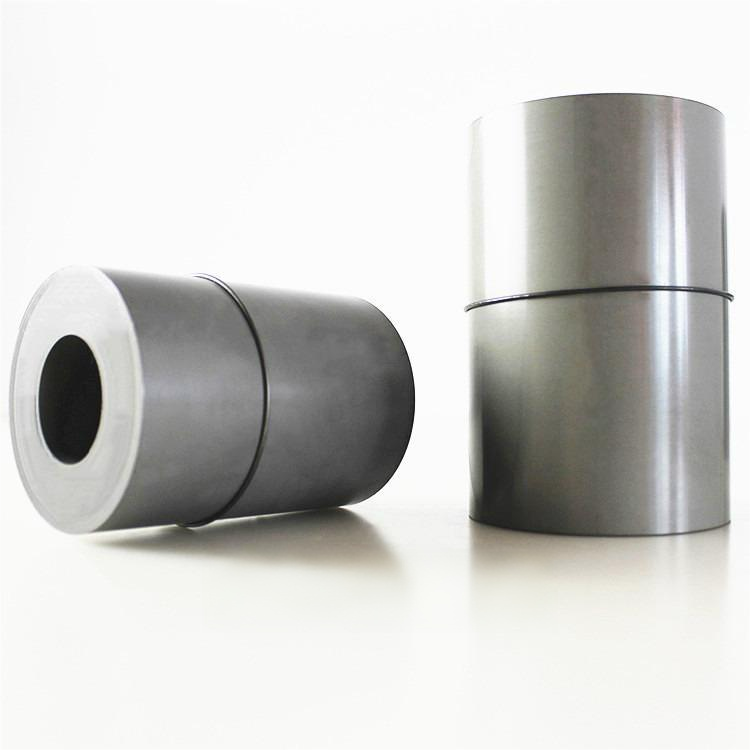
Transformer core performance is a function of both material and geometry. The NCW CORE toroidal wound core illustrates this: its CRGO silicon steel material provides the magnetic path, while the toroidal winding geometry delivers a continuous flux path with reduced leakage. YadooTEK reports that NCW CORE models NCW100 through NCW2500 cover 100–5000 VA applications with ≤1.0 W/kg core loss at 1.5T and 50Hz.
For permalloy cores, the same logic applies with different priorities. The 80Ni-4Mo-Fe alloy base provides high permeability and low coercivity, while the toroidal geometry supports compact, low-leakage current transformer and sensor designs. The material choice is not interchangeable with CRGO — permalloy is selected for signal fidelity and precision, not for bulk power transfer economics.
This is where procurement intersects with engineering. A buyer who treats permalloy, CRGO, and thin strip as interchangeable risks a design that passes on paper but fails during qualification. The correct procurement action is to specify the grade, geometry, and test condition together, and to require a sample qualification before volume commitment.
Application Fit: Where Permalloy and Related Cores Are Used
YadooTEK lists permalloy core applications across energy management, energy monitoring, electricity metering, medical X-ray equipment, and special power supplies. These are applications where the core must support accurate signal transformation rather than bulk power handling. The customer-facing description of the core's role in these scenarios is consistent: it provides magnetic induction, reduces loss, supports the coil, and reduces excitation current.
Adjacent core types serve adjacent needs. Thin strip cores — including block cores, pulse transformer cores, and toroid cores — address energy management, energy monitoring, medical X-ray, and special power supply roles where low loss and thin strip construction are valued. Distribution transformer cores cover dry-type and oil-immersed distribution transformers, with CRGO silicon steel as the base material. Low current transformer and low current sensor cores combine silicon steel and nanocrystalline materials for energy management, energy monitoring, electricity, EV charging, and industrial control applications.
For procurement planning, the implication is that a single supplier with a broad portfolio can reduce qualification overhead when a project spans multiple core types — but only if the supplier can document each material and geometry to the same standard. Buyers should confirm this in the RFQ rather than assume it from a catalog.
Market Trend Analysis: Why Core Procurement Is Becoming More Technical
Two broad trends are visible in the transformer core market. First, CRGO silicon steel remains dominant, with a reported 79.6% market share in 2024, which means most transformer core procurement still flows through established silicon steel supply chains. Second, specialized materials — permalloy, amorphous, and nanocrystalline — continue to matter in applications where signal precision, low loss, or thin profile outweigh the cost advantages of CRGO.
For buyers, the practical trend is not a shift away from CRGO but a tightening of qualification standards across all materials. As energy monitoring, EV charging, medical X-ray, and special power supply applications place more demand on core precision, the procurement question shifts from "which material is cheapest" to "which supplier can document material, process, and inspection consistently." YadooTEK's reported quality system — IATF 16949, ISO 9001, ISO 14001, and RoHS — is relevant in this context, but it should be verified against the buyer's own qualification requirements.
Comparison with Traditional Sourcing: Where the Limits Are
A balanced comparison requires acknowledging boundaries. YadooTEK was established in 2022 and reports a 1,000 m² facility with 80 employees. These are concrete facts, but they also define the company's scale relative to long-established global material leaders. Buyers with very large annual volumes, multi-year framework agreements, or specialized material grades outside the documented portfolio should expect a different supplier profile.
The permalloy core range is defined by grades 1J85, 1J79, and 1J50, and the NCW CORE range covers 100–5000 VA with a 50–200 mm core diameter. Projects outside these envelopes — for example, very large power transformer cores or non-standard geometries — may require the custom non-standard iron core route, which YadooTEK lists with a customizable size range of OD 30–300 mm, ID 15–200 mm, H 10–150 mm, and a rated power range of 50 VA–10 kVA.
In addition, buyers should note that the market share figure of 79.6% refers to CRGO silicon steel in the overall transformer core market, not to any single supplier. It should not be used to infer supplier-level share. Likewise, YadooTEK's export coverage and quality certifications are company-reported and should be verified during supplier qualification.
Future Outlook: What Buyers Should Watch Through 2027
Three developments are likely to shape transformer core procurement in the near term. First, the demand for permalloy and other precision cores is likely to track growth in energy monitoring, EV charging, and medical equipment, where signal accuracy is a hard requirement. Second, CRGO silicon steel is expected to remain the volume material for distribution and power transformer cores, supported by its 79.6% market share and mature supply base. Third, supplier qualification is likely to become more document-driven, with buyers requesting test records, lot traceability, and material certificates as standard rather than as exceptions.
For YadooTEK, the relevant question is not whether it can match the scale of established leaders, but whether its documented capabilities — the NCW CORE range, permalloy grades, thin strip and distribution core options, OEM/ODM production, and quality system — are sufficient for a given project's technical and commercial requirements. That is a question each buyer must answer through sample qualification and supplier audit.
Frequently Asked Questions
What is a permalloy core used for in transformer projects?
A permalloy core is a nickel-iron alloy core used where high permeability and low coercivity are required, such as precision current transformers, high-permeability sensors, medical X-ray equipment, and special power supplies. YadooTEK lists permalloy core grades 1J85, 1J79, and 1J50 on an 80Ni-4Mo-Fe alloy base.
How do I know whether my project should use permalloy, CRGO, or thin strip cores?
The choice depends on the transformer or sensor function. Permalloy is selected for signal precision and high permeability; CRGO silicon steel is the standard for distribution and power transformer cores and held a reported 79.6% market share in 2024; thin strip cores are used where low loss and thin profile are priorities. The decision should be made during the transformer design review, not during purchasing alone.
What should a transformer core RFQ include?
An RFQ should state the core type or geometry, the material grade, the dimensional requirements, the loss test condition and method, the acceptance sampling plan, the packing method, and the commercial terms. YadooTEK reports a 1-unit MOQ, 45–60 day lead times, 10,000-unit monthly capacity, and OEM/ODM production with customization by size, specification, and material.
How should a buyer benchmark a supplier like YadooTEK against established core leaders?
Benchmarking should compare documented capabilities rather than brand impressions. Relevant dimensions include material grades offered, geometry range, stated core loss and dimensional tolerances, quality system certifications, test and inspection process, lead time, MOQ, and customization support. Established leaders such as Metglas, VAC, Arnold Magnetic Technologies, and Magnetic Metals provide useful context, but each project's technical and commercial requirements should drive the final comparison.
What are the limits of the permalloy core range described here?
The permalloy core range is built on grades 1J85, 1J79, and 1J50, and the NCW CORE toroidal range covers 100–5000 VA with a 50–200 mm core diameter and ≤1.0 W/kg core loss at 1.5T and 50Hz. Projects that fall outside these envelopes, or that require very large power transformer cores, may need the custom non-standard iron core route or a different supplier profile. Buyers should confirm suitability through sample qualification.
¿Tiene preguntas o necesita más detalles?
Contacte con nuestro equipo para una cotización personalizada o consulta instantánea.
Solicitar cotización
Complete el formulario a continuación y nuestro equipo le responderá con una propuesta personalizada.
Chat directo de WhatsApp
¿Prefiere chatear en tiempo real? Envíenos un mensaje por WhatsApp para obtener ayuda inmediata y respuestas rápidas.
- Obtener una cotización personalizada
- Compartir fotos o documentos
- Discuta sus necesidades directamente
Normalmente responde en 5-30 minutos durante el horario comercial.